Journey Around The Globe
ready for the next destination
Easter Break Trip 2012 – 5th destination: Zagreb, Croatia
ZAGREB, CROATIA: Zagreb may not attract as many tourists as Dubrovnik in Croatia, but as the capital and the biggest city of Republic of Croatia, it has very well-preserved medieval old city architecture and cobbled streets, which are not only charming, but also gives you tastes of both old and new world. Zagreb is situated on many slopes. It is someway a walkable city, if you are ready to climb up and down the small hills. The surrounding villages and countryside of Zagreb are beautiful and historical as well, which we couldn’t explore this time. But we sure did enjoy the drive before entering the main city of Zagreb.
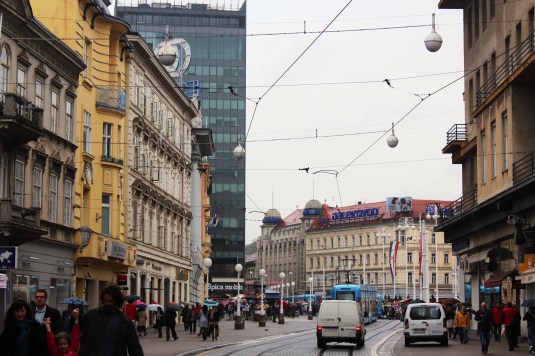
- The streets of Zagreb near old town
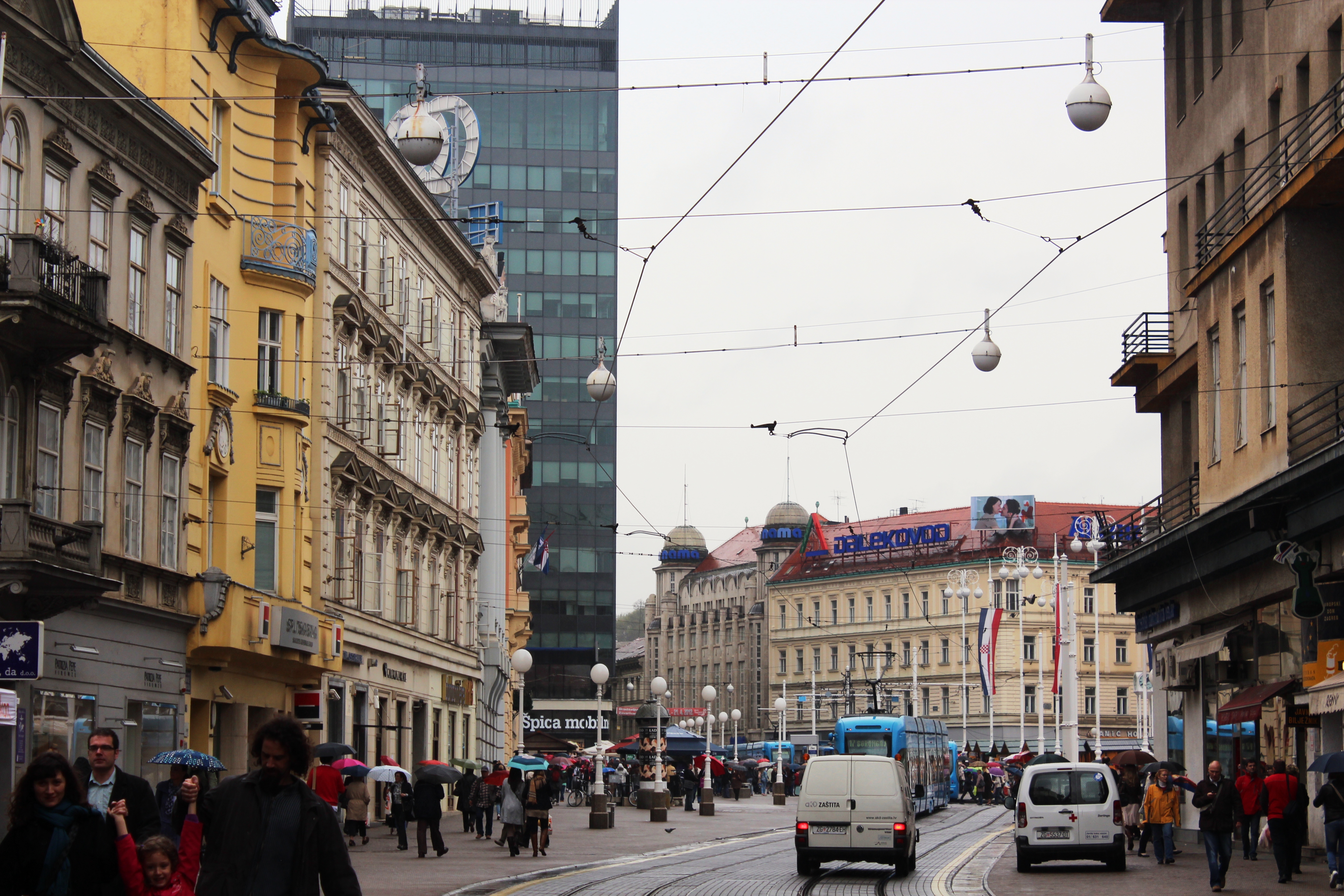
Old Zagreb consisted of 2 cities: The Upper Town (Gornji grad) and the Lower Town (Donji grad). Most of the restaurants and tourists sites are located in these 2 towns.
TIME OF TRAVELLING: We took a long road trip during the Easter break of 2012, around first week of April. Zagreb was our 5TH stop amongst 6 other cities. It took us about 3 hours (~ 215 miles) by car to reach here from Budapest, Hungary. Weather was not in our favor here. We got rain the night we reached there. Next morning it started with little drizzle, which turned to heavy rain by the afternoon and it continued for rest of the day.
OUR HOTEL: We stayed in International Hotel in Zagreb. It is situated about 10-15 of walk to King Tomislav Square. Breakfast wasn’t free here but free Wi-Fi allowed us to update our status on Facebook every now and then 🙂
WHAT TO BUY AND EAT IN ZAGREB: There are a few open markets in the old city center near Kaptol and Dolac. You sure will find unique goodies here to take back home. Many souvenir shops sell these same items but be careful of their high prices. It was kind of hard to find souvenir shops other parts of the town other than the old city center. Kaptol and Dolac are the best places for souvenir hunting.
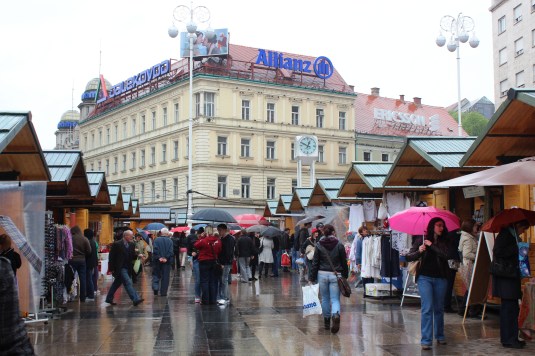
- Open market in Ban Jelacic Square
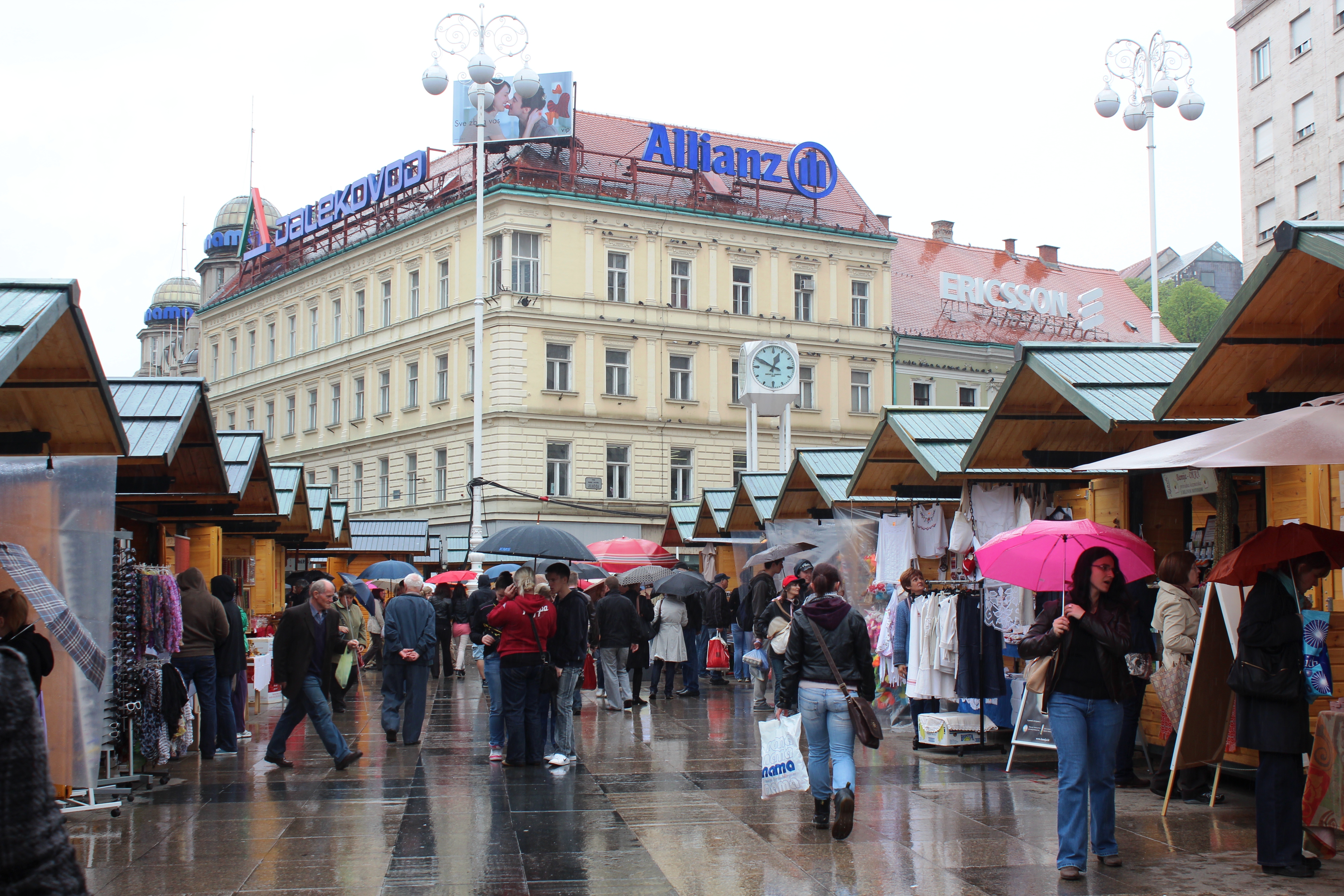
We didn’t try any Croatian dish this time. We had dinner in our hotel lounge, we asked the waitress about trying out some traditional Croatian food, and she couldn’t give us any specific dish. Next day, kids wanted to eat pizza and pasta for lunch… so that’s what we had. But the restaurant we sat in was a nice one on the middle of a street along with other restaurants right beside Dolac Market.
PLACES WE VISITED: Most of the tourist attractions of Zagreb are within walking distance and you can cover all of them in about few hours. We took a “City Center Sightseeing Route on Foot” from our hotel, which not only showed us what to see after what, but also gave us a brief history of each of the spot, which I thought was incredible.
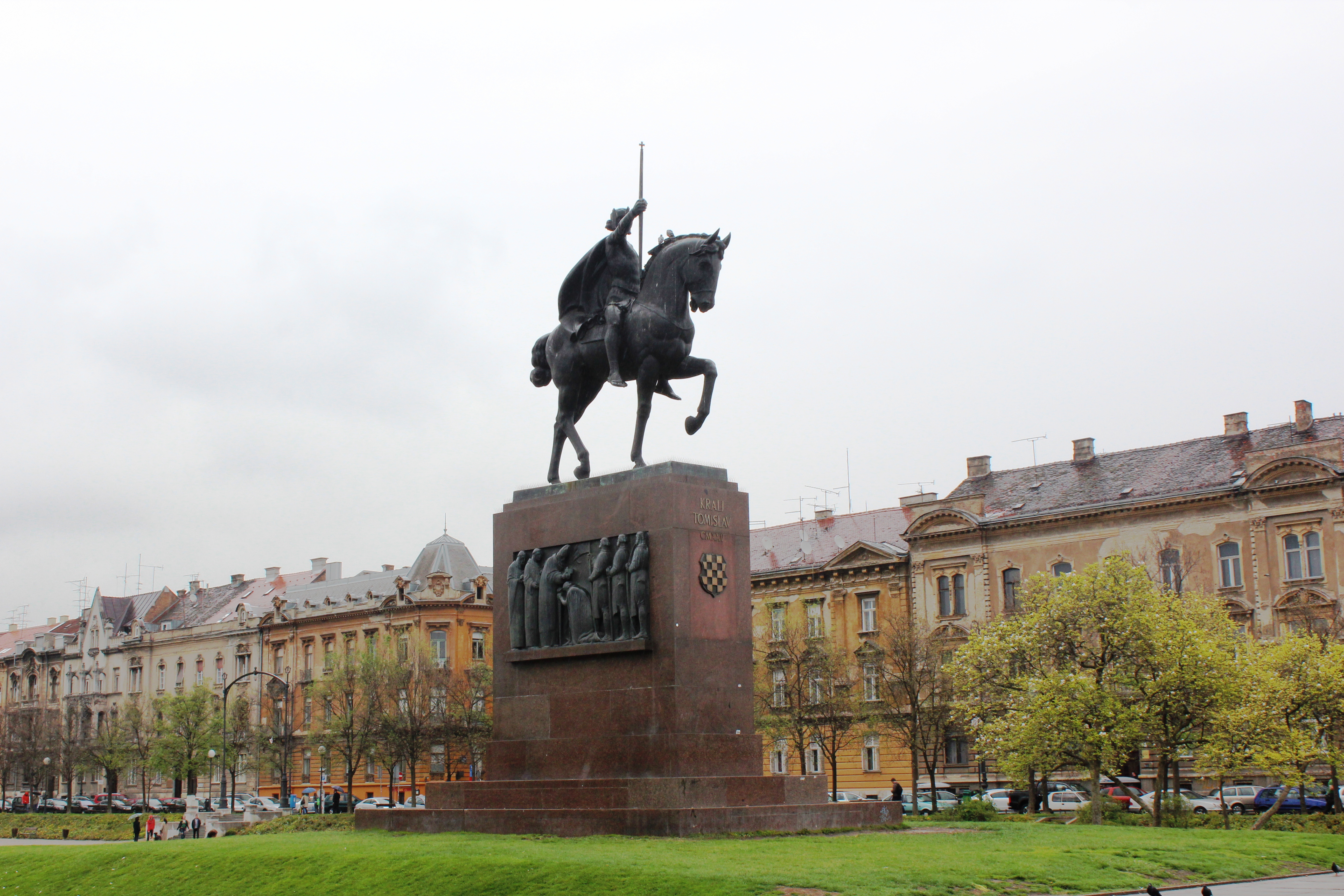
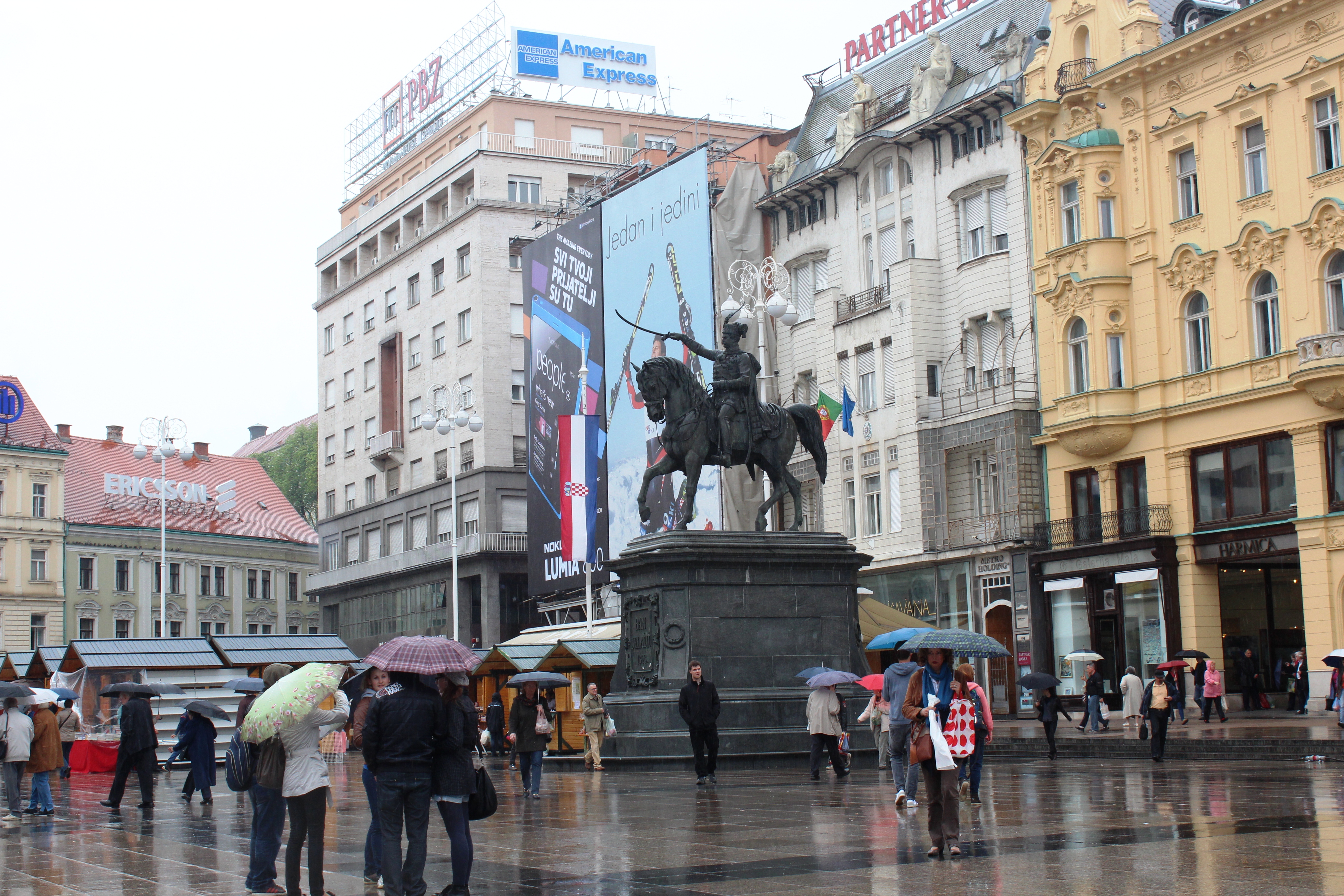
1) KING TOMISLAV SQUARE:A monument dedicated to Tomislav, Croatia’s first king, dominates the square carrying his name. He was crowned as king in the year 925. Despite dying mysteriously 3 years later, his status as founder of the Croatian state has never been in doubt. The statue of Tomislav on horseback was completed in 1938 but the outbreak of WWII prevented the statue from being installed in its current location until 1947. This big square is located right opposite of the main train station.

- Statue of King Tomislav in King Tomislav Square
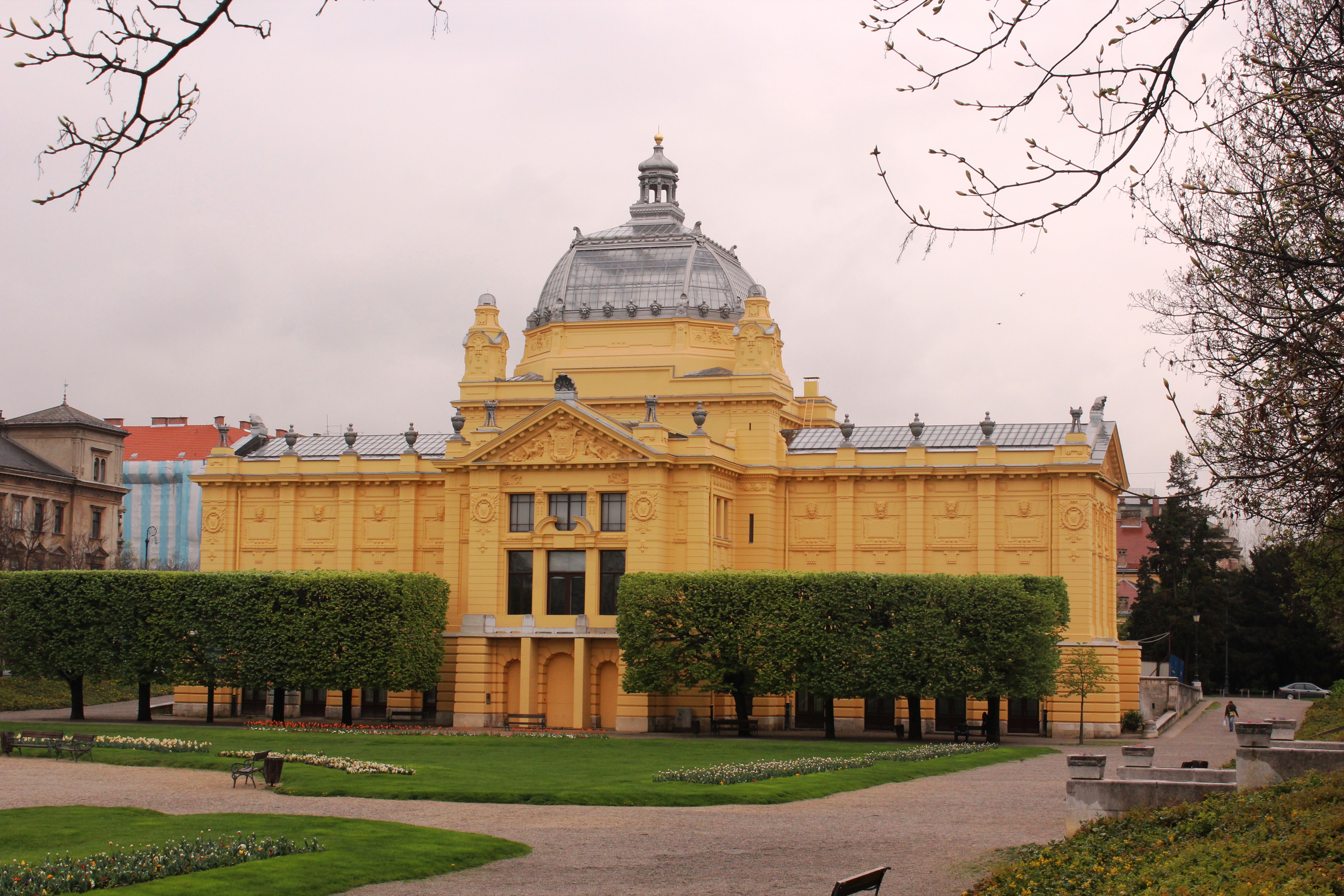
At the northern end of King Tomislav’s square The Art Pavilion is located (the big yellow building). The ceremonial opening took place in 1898 accompanied by a grand exhibition of contemporary artists. This is Zagreb’s first dedicated space for art shows, and has been an important venue for high-profile exhibitions ever since.

- The Art Pavilion of Zagreb, Croatia at the northern end of King Tomislav Square
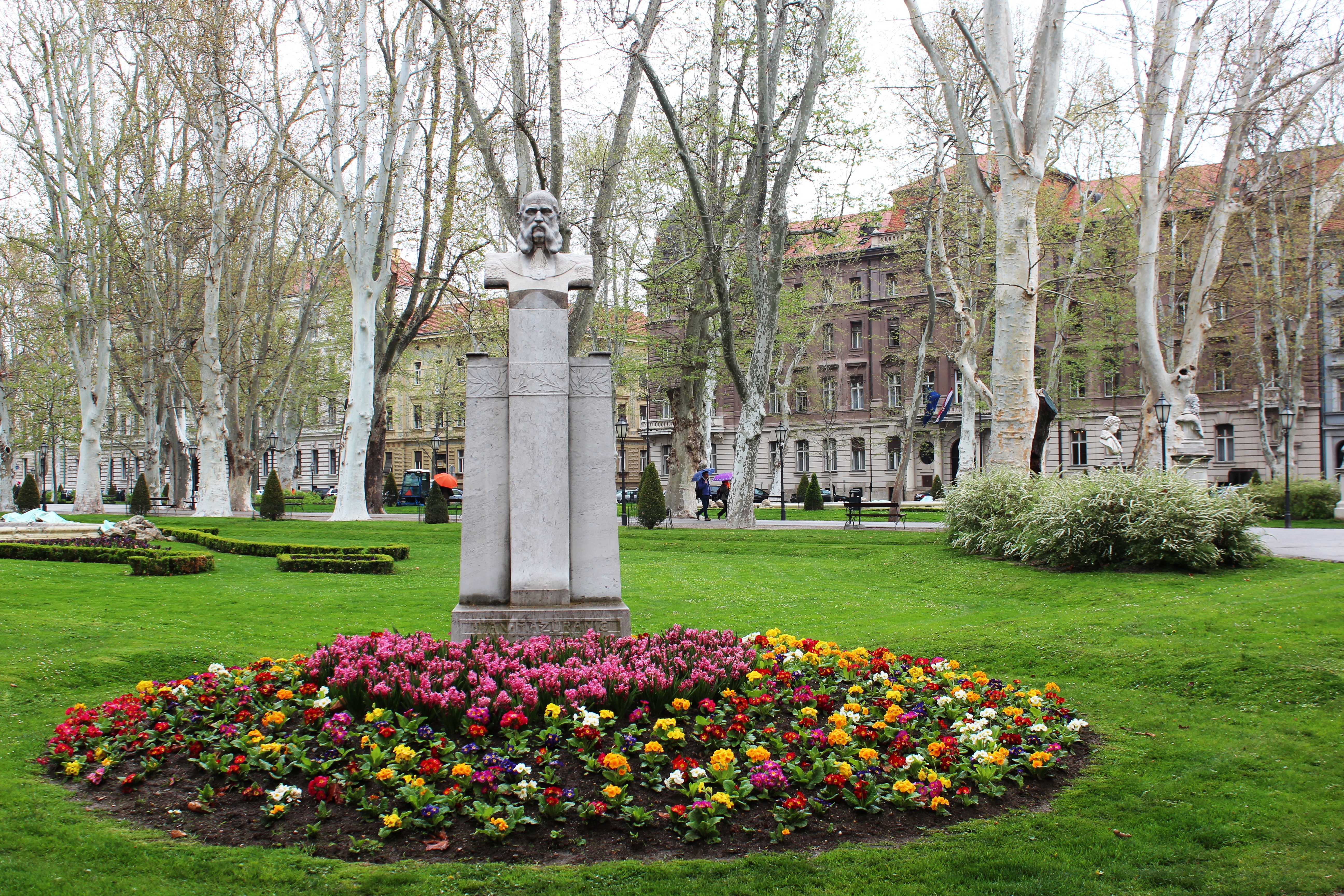
2) ZRINJEVAC: This is one of the green squares of the city and the best loved of them all. in the late 19th century this was a meadow where cattle market took place. Now it is an elegant promenade with imported trees, wrought iron handstand, fountains, and busts of notable figures. It was a bit quiet when we went there, but the large green space with nicely decorated flowers and statues make this square a well worth to visit it.

- Zrinjevac Square
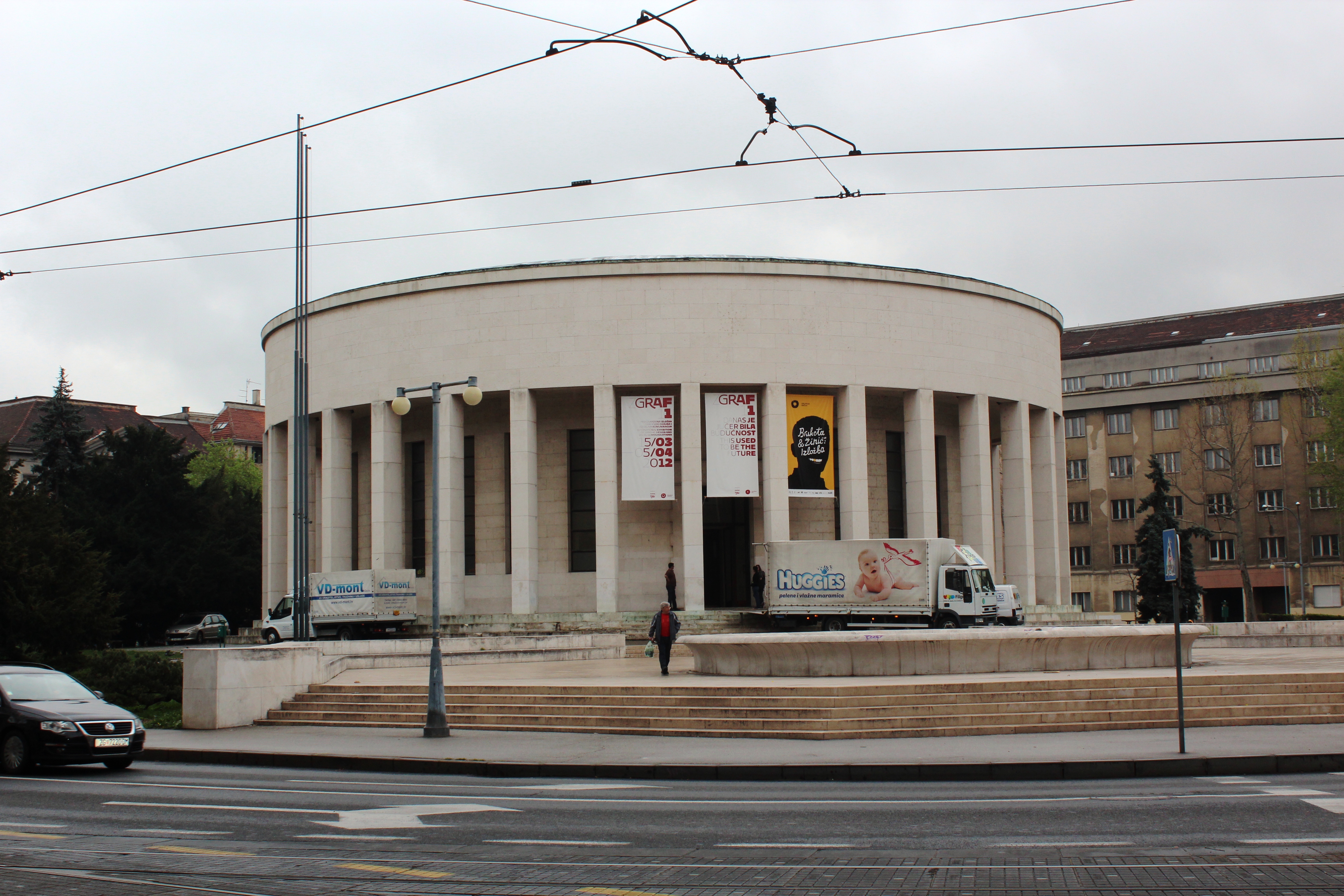
3) THE EX-MOSQUE: This circular building is the headquarter of the Croatian’s Artist’s Association, located in “Victims of Fascism Square” (Trg zrtava fasizma). It was originally used as an exhibition pavilion before being turned into a mosque during WWII – complete with the additional minarets. After the war the minarets were dismantled and the building returned to its original function, although it is still referred to fondly as “The Mosque” by the locals.

- The ex-mosque in Victims of Fascism Square
4) COUNT JOSIP JELACIC SQUARE: Central focus of modern Zagreb is Ban Jelacic Square (Trg bana Jelacica). Situated just below the hillside settlements of Kaptol and Gradec, it has served as the city’s commercial heart ever since 1641. Most of the buildings around the square date from the 19th century. This was Zagreb’s main marketplace. Now it is the center of Zagreb’s social life and the most popular meeting points for the locals. There is a big open market at one side of the statue of Josip Jelacic where you can find hand-crafted local trinkets at a modest price.

- Ban Jelacic Square
5) KAPTOL: Today’s Zagreb was created of 2 medieval villages (Kaptol and Gradec) which were developed during centuries in two adjacent hills/neighbors. At the present, they make Zagreb’s Upper Town and the City Center. Kaptol is the hill where the Zagreb Cathedral of Assumption stands.
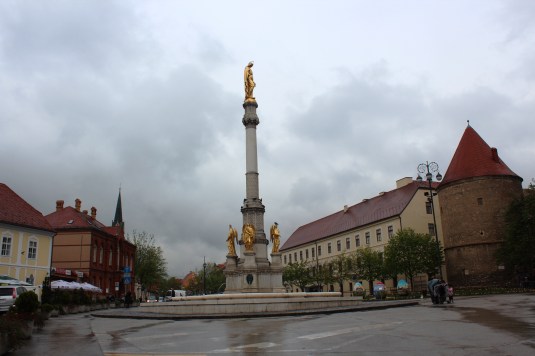
- Kaptol
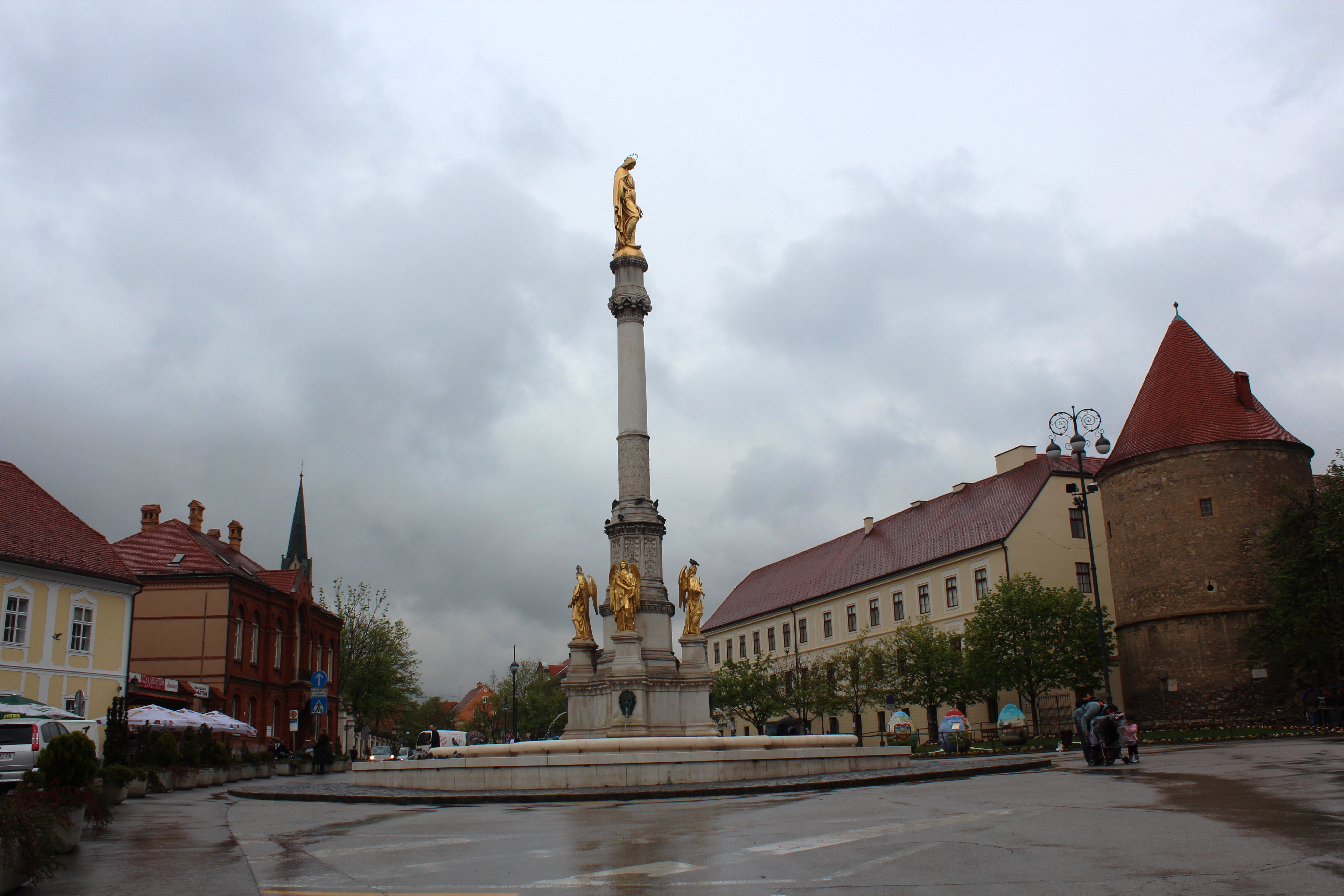
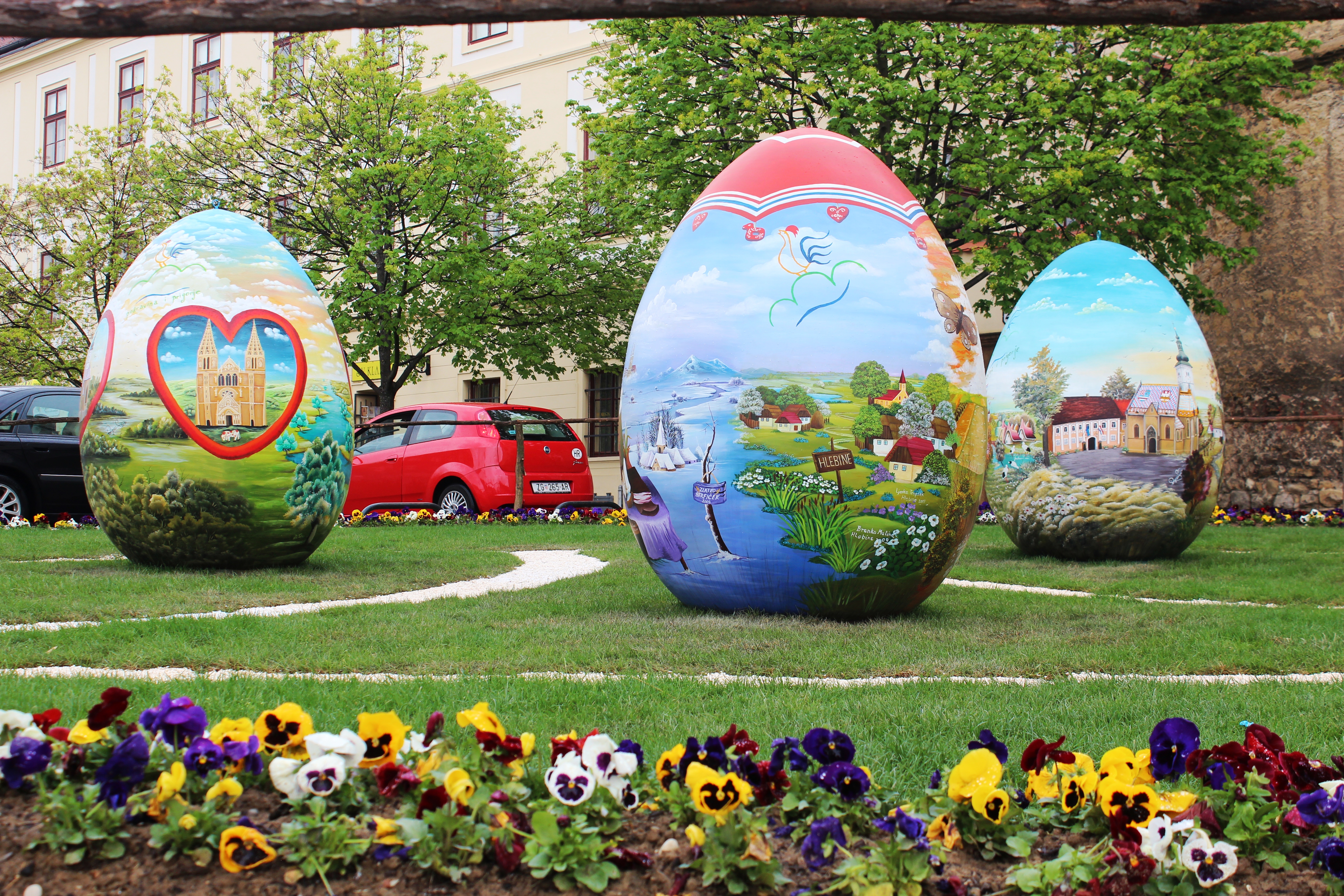
Kaptol is only few steps away from Dolac Market and also very close to Count Josip Jelacic Square. There are a very few cafes and souvenir shops here. It was nicely decorated with Easter eggs featuring traditional Naïve art in front of the cathedral.
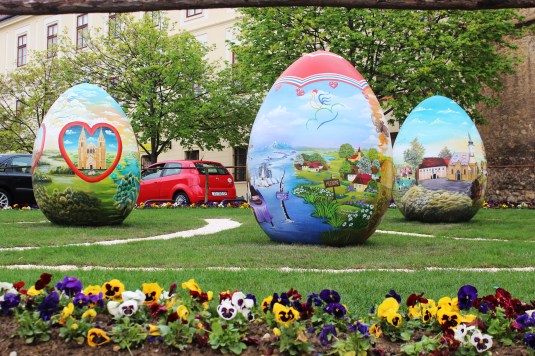
- Easter decoration painted by local Croatian Naive artists
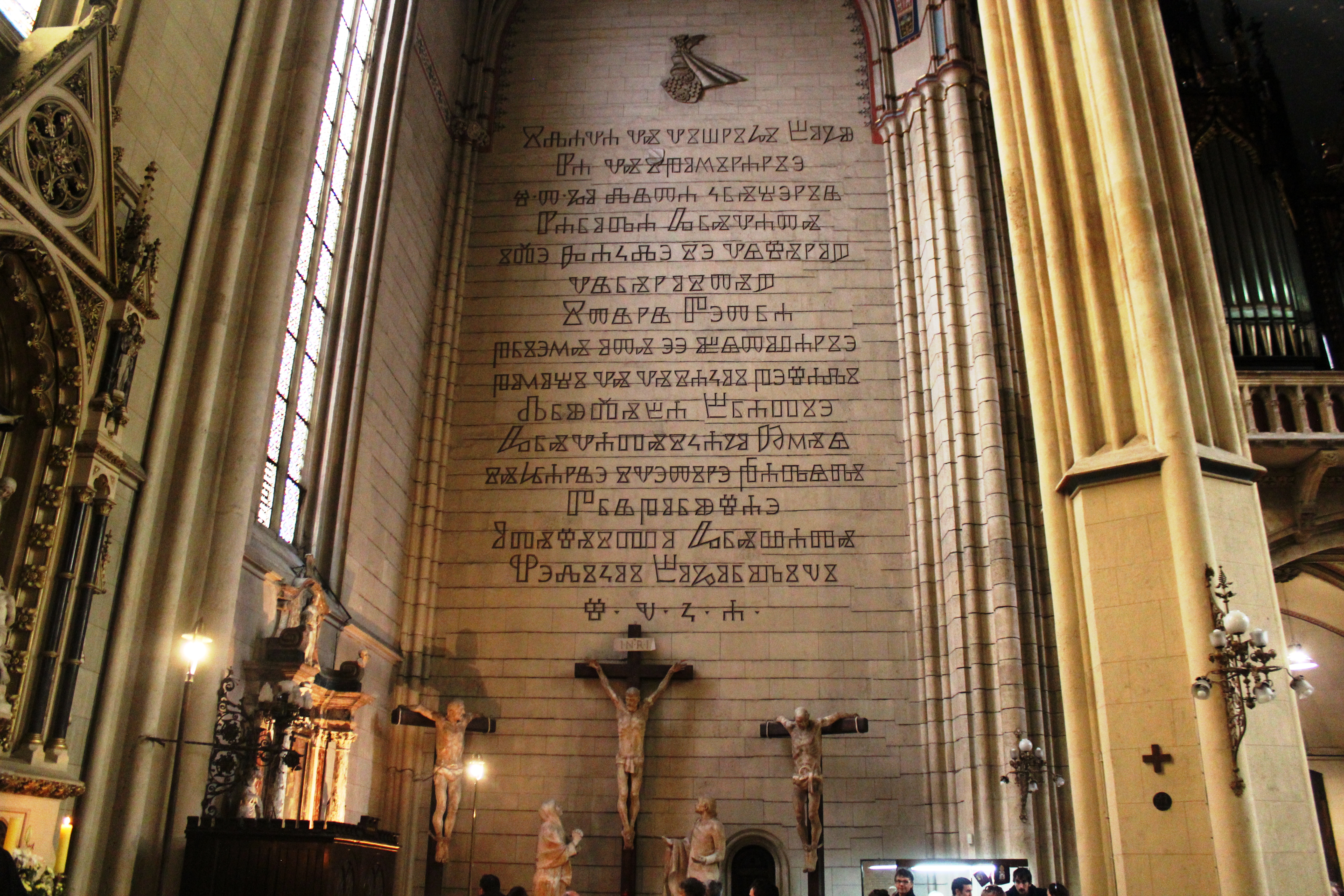
6) CATHEDRAL of THE ASSUMPTION of the BLESSED MARY or ZAGREB CATHEDRAL: This cathedral is one of Zagreb’s defining symbols that brings glamour and elegance to the city. It is the most famous building in Zagreb, and the tallest building in Croatia. Although it is largely Neo-Gothic structure, the cathedral was founded in 1093 A.D. This is a must-see in Zagreb. The present church organ is from 1987 and the Baroque pulpit is from 1698.

- Inside Zagreb Cathedral of Assumption
7) DOLAC MARKET: This has to be Zagreb’s one of the most attractive features. It’s only a few steps from the cathedral. This bustling place is affectionately known as “the belly of Zagreb”, due to the mouth-watering array of irresistible food stuffs brought here from all part of Croatia. The market dates from the early 20th century, when the city authorities decided to tear down all the houses on Dolac to make room for a modern marketplace. It is the most visited and the best known farmer’s market in Zagreb. You will find traditional open market with stalls selling trinkets, fresh produce, and souvenirs at much lower price than any other places in the city. And if you are hungry, don’t go too far to look for food, you will find tons surrounding this area.

- Colorful trinkets in Dolac Market

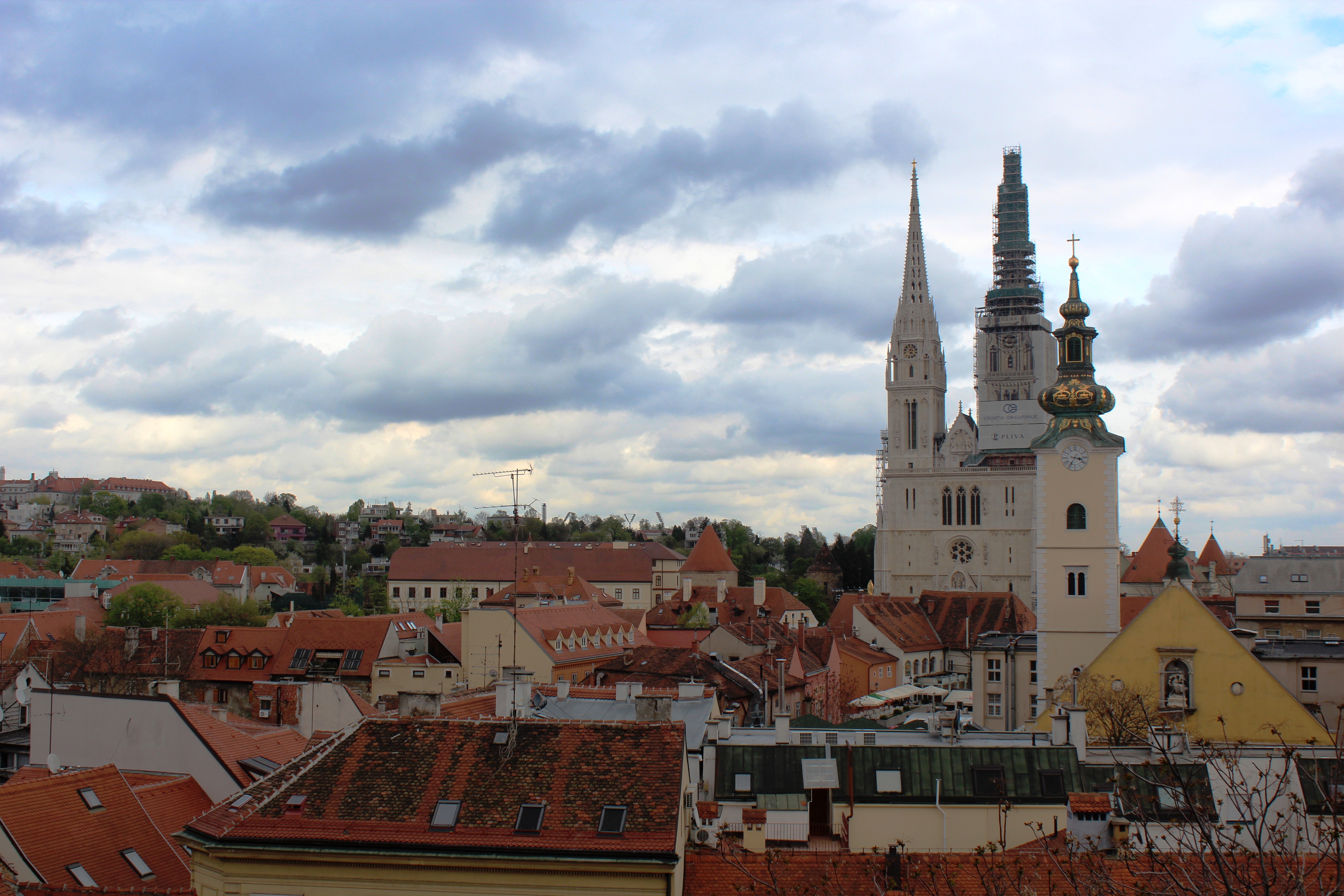
8) GRADEC – UPPER TOWN: Gradec is the hillside across Kaptol. The popular Zagreb blue funicular will take you straight there. A single funicular ride costs 6 kuna per person and 6 or below rides free. Although Upper Town may not be the center point of all hustling and bustling and may look like a ghost town when walking around some streets, it has some historical spots and some of the important governmental buildings of the city. Behind St. Catherine’s church there is a beautiful view from Gradec towards Kaptol, the cathedral, Dolac market, and the main square. It was wonderful walking down the hill back to the lower part of the city, instead of taking funicular again.

- View of the Lower Town and Cathedra of Assumption from Gradec
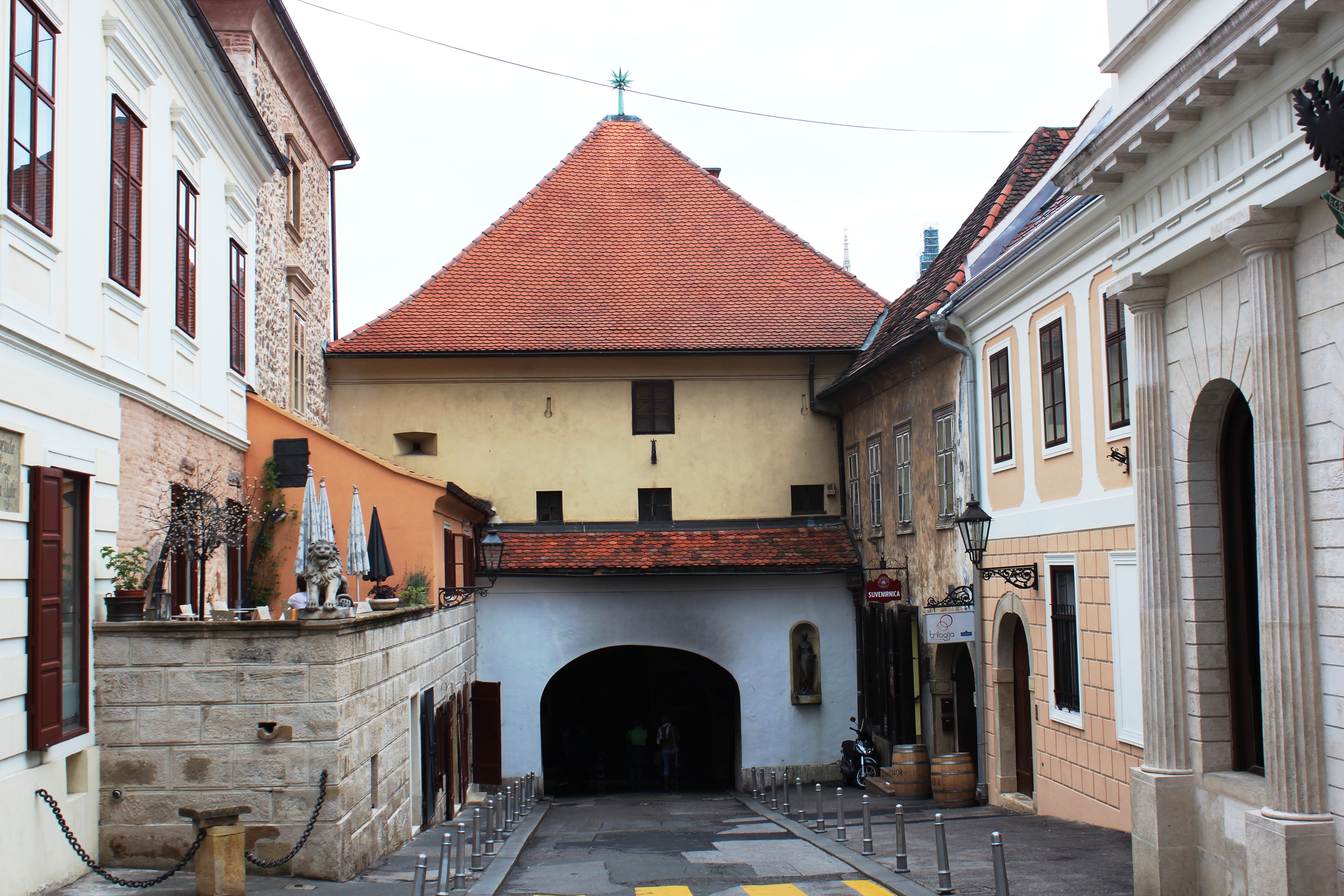
9) THE STONE GATE: Built in the Middle Ages, it is the only old town gate that has remained intact. Under the arch of the gateway is a chapel dedicated to the Virgin Mary. It holds a painting of the Virgin that was miraculously saved from a devastating fire in the year 1731, and the chapel has been a place of pilgrimage ever since. Please be silent and respect the worshippers if you are just passing through the Gate.
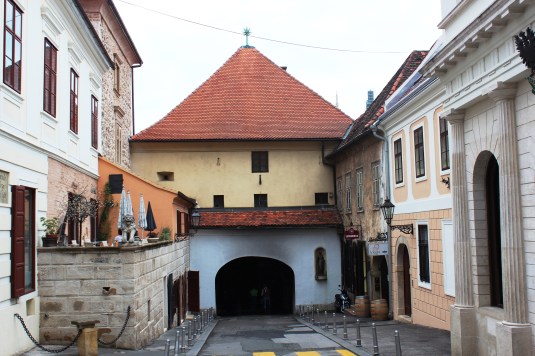
- The Stone Gate in the Upper Town/Gradec
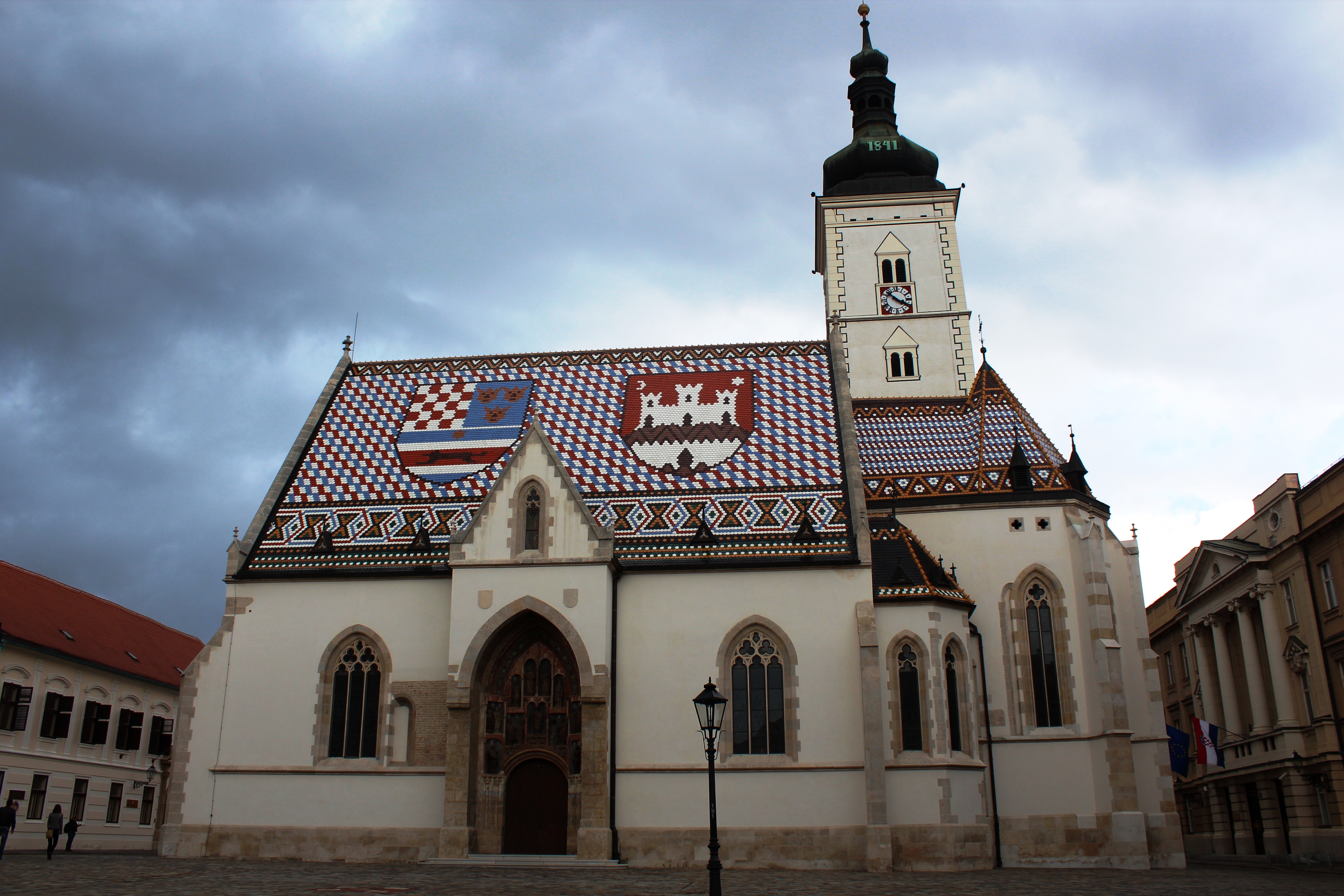
10) ST. MARK’S SQUARE: It is the heart of Upper Town, having formerly served as the main market square of the settlement of Gradec. Dominating the square is the 13thcentury Church of St. Mark, a Romanesque church which still retains much of its original shape. The Croatian Sabor or Parliament is also located in this square, right of the church (if you are facing the entrance of the church). The Parliament has held its sessions at this location ever since 1737. It was here the members voted to severe political ties from the Austro-Hungarian Empire in 1918 and from Yugoslavia in 1991.
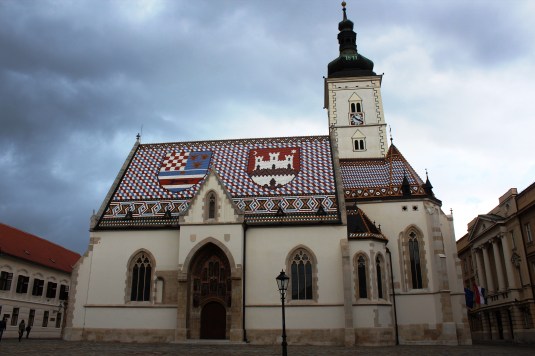
- St. Mark Church in St. Mark Square in Gradec
11) MUSEUM of BROKEN RELATIONSHIPS (MUZEJ PREKINUTIH VEZA): One thing that I really regret for not doing in Zagreb is going to this museum. This is located in the Upper Town Gradec. It’s permanent display is an opportunity to experience a unique emotional journey through dozens of love leftovers collected from all around the world. It won Kenneth Hudson Award 2011 for the most innovative museum in Europe. It would have been interesting going through people’s personal items which reflect their emotions and feelings towards love and relationships.
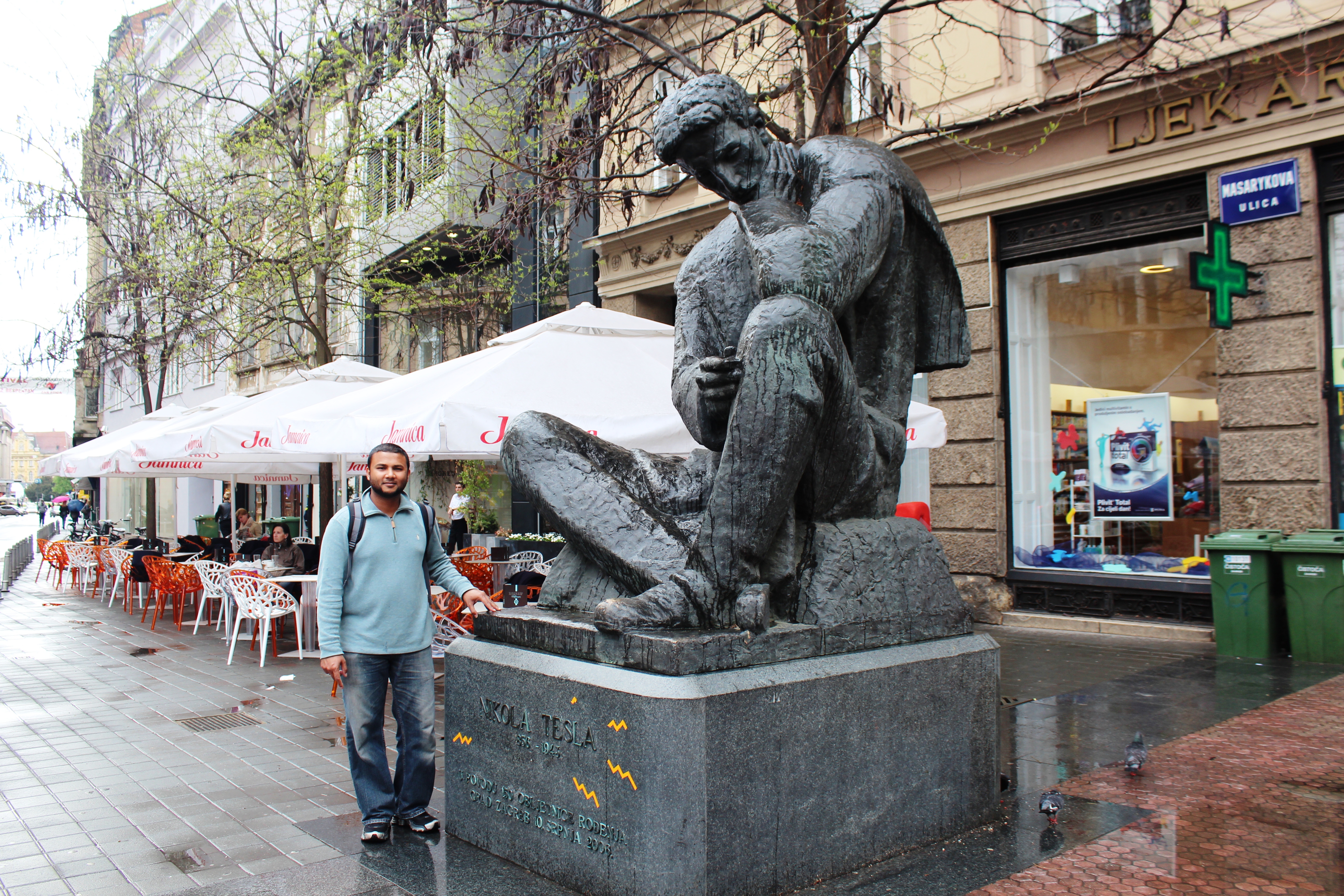
12) NIKOLA TESLA: Statue is by the intersection of Masarykova and Teslina that was placed there on the 150th anniversary of the birth of this exceptional scientist and innovator. Nikola Tesla was born and raised in Croatia and after finishing his education in Europe Tesla sought his fortune in the USA, where he was instrumental in the development and introduction of alternating current, x-rays, remote control devices, and radio waves. Thanks to Tesla’s vision we can use the internet and mobile phones today.

- My hubby with the Statue of Nikola Tesla
Related articles
- Croatia Part 1 (poisedtoseek.wordpress.com)
- And Then I Went Hiking (iuoverseas.wordpress.com)
Related articles
- And Then I Went Hiking (iuoverseas.wordpress.com)
- Croatian police ban far-right parties’ rally (dokmz.wordpress.com)
Share this:

Half a day in Vaduz, Liechtenstein, surrounded by the Alps
VADUZ, LIECHTENSTEIN: Liechtenstein, officially known as Principality of Liechtenstein, is the 3rd smallest country in Europe and 7th smallest in the world sharing its borders with Switzerland and Austria. It is the only country laying entirely in Alps. It’s capital Vaduz is a cozy, little town that gives magnificent views of the mountains and Rhine valley in almost every direction you look.

- Magnificent view of the Alps, Rhine valley from top of the hill near Vaduz Castle
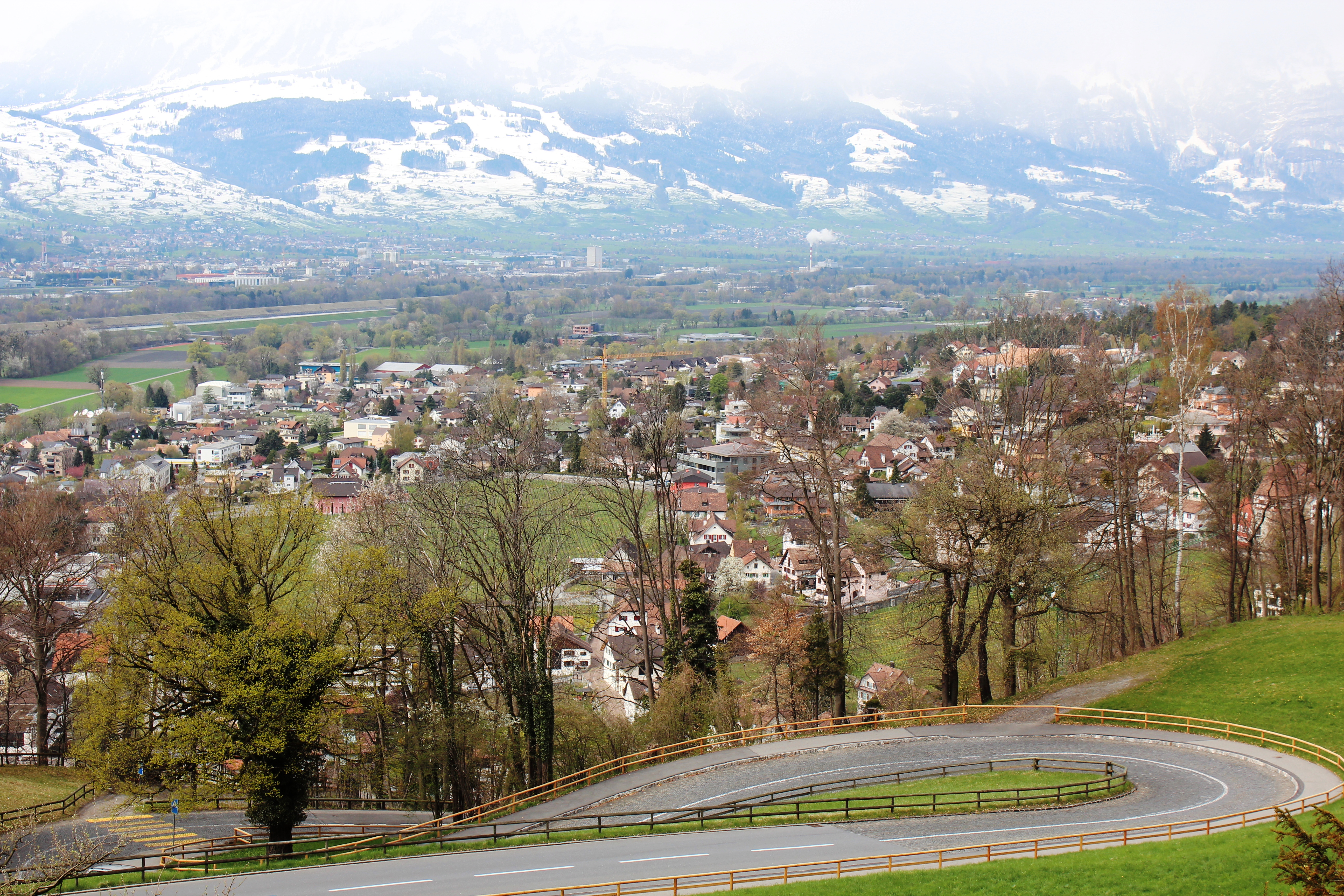
This is a very neat and clean city with many helpful friendly locals. Tourist can spend days in this tucked away city of Vaduz exploring the mountains and the nearby villages. It’s amazing how a country this small has so much to offer to its guests and locals.
;
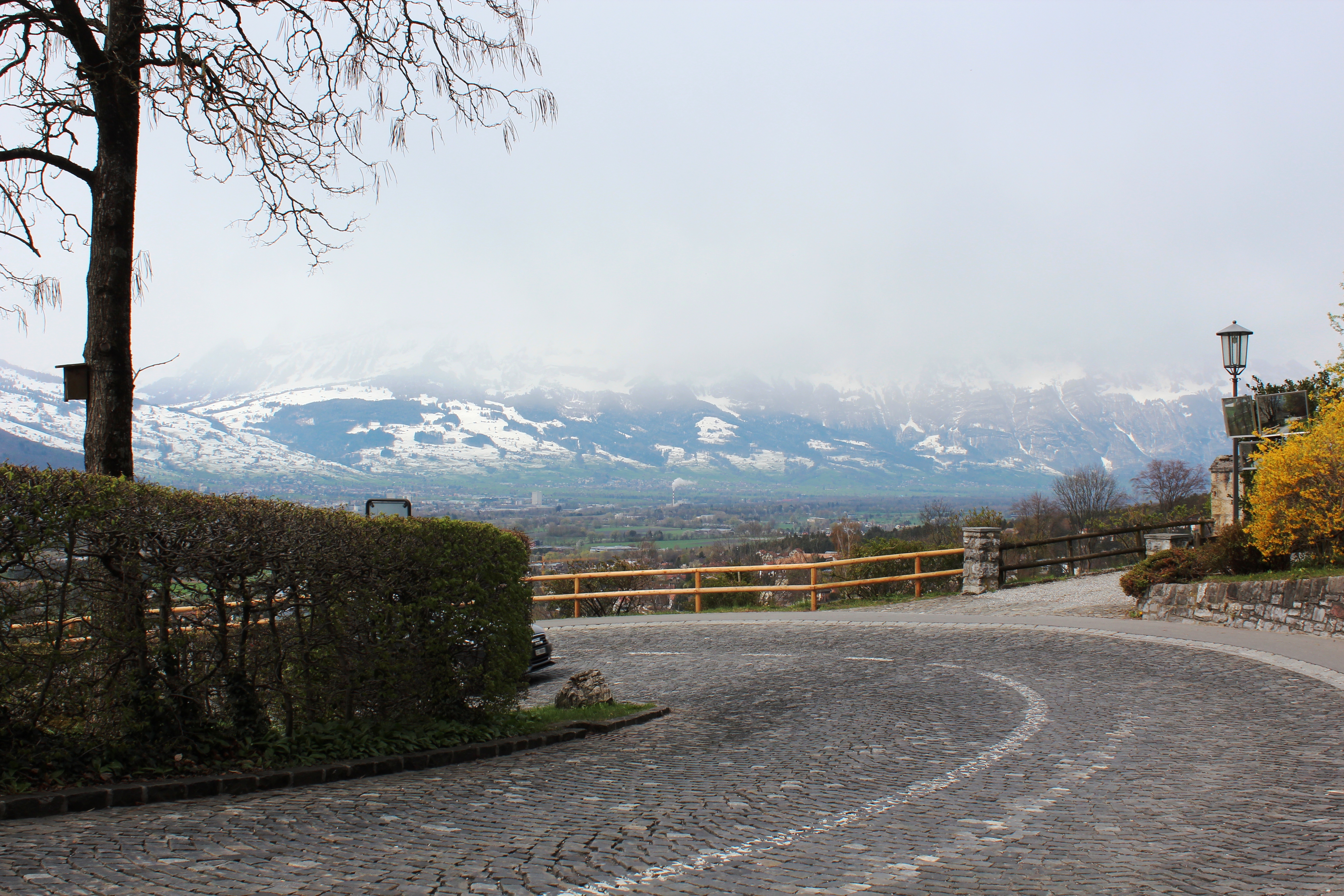
- Driving on the mountain towards Vaduz Castle
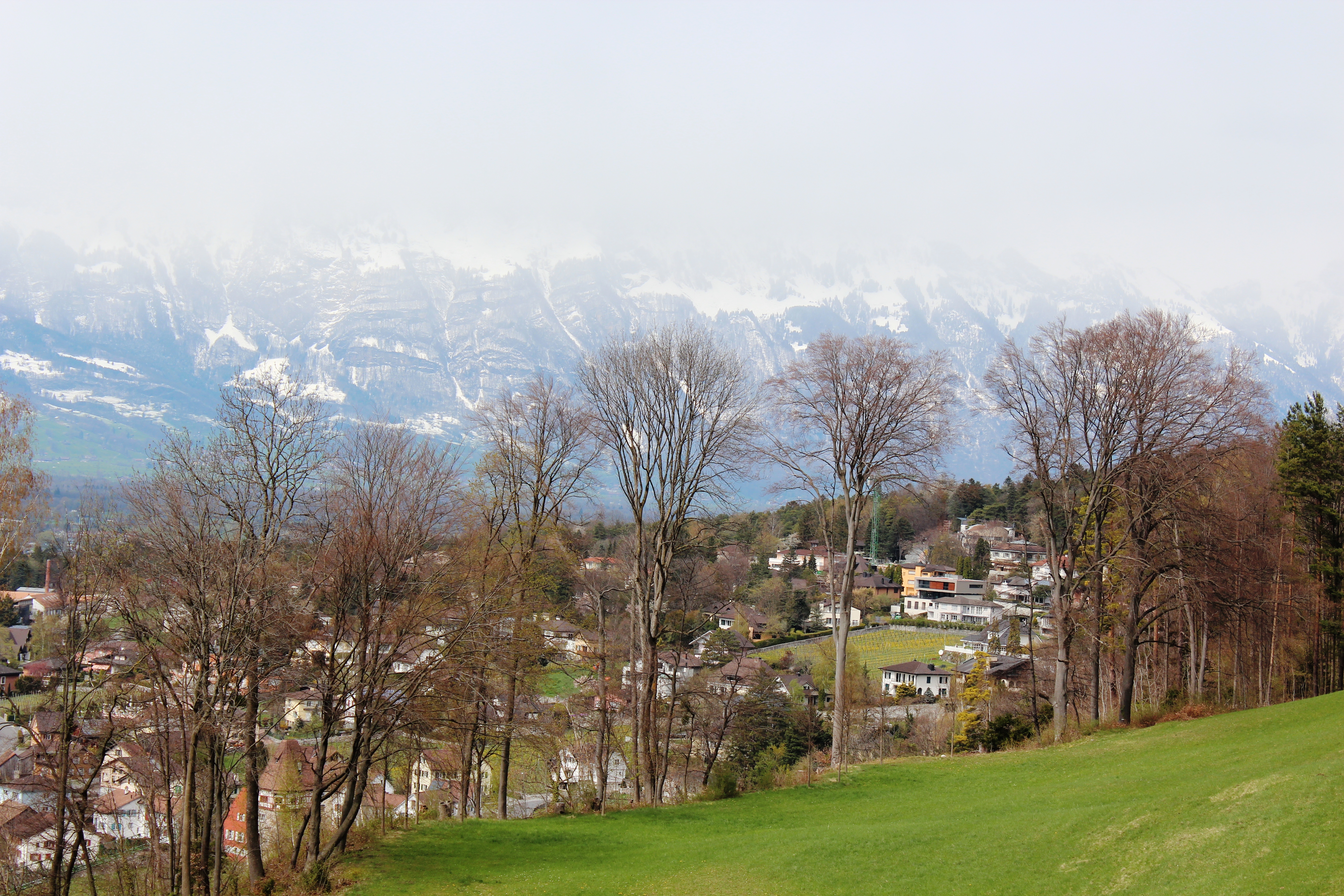
TIME OF TRAVELLING: We took a long road trip during the Easter break of 2012, around first week of April. This was our last stop amongst 6 other cities. It took us about 6 hours (~ 370 miles) by car to reach here from Ljubljana, Slovenia. Since Vaduz is surrounded by the Alps, summer comes here late. It was still a bit chilly around that time. We had to wear jackets and hats during our visit.

- Beauty everywhere
OUR HOTEL: Vaduz is an expensive city. Hotels here can be very pricey too. We stayed in Dornbirn, Austria, about 22 miles away from Vaduz. Our hotel was Harry’s Home Dornbirn. It was literally walking distance from the city center of Dornbirn. Our room had a kitchen with stove, microwave, and a small refrigerator and it was nicely decorated with very modern and contemporary art works and furniture. I felt like I am living in an IKEA world. Breakfast and Wi-Fi weren’t included but we received great customer service from the front desk people.
WHAT TO BUY AND EAT IN VADUZ: One of the best thing you can buy from Vaduz is cuckoo clock. They come in different types and price ranges. The cheapest one we saw was around 125 euros. You can get battery operated or the traditional winding clocks. These clocks are hand-made in Black Forest region of Germany. Other than that Swiss knives, watches are very popular here, since Switzerland is just around the corner. There is a big souvenir shop on Stadtle (the city center/pedestrian street).
Again, since Switzerland is right there, you shouldn’t miss the opportunity of eating lots and lots of silky Swiss chocolates. You will find them almost at every souvenir shops.
PLACES WE VISITED: Although Vaduz is a very tiny city in a tiny country of Liechtenstein, you can spend hours to enjoy the breathtaking views of Alps and its surrounding small villages. We spent only few hours there, but the scenic views of this small town are unforgettable.
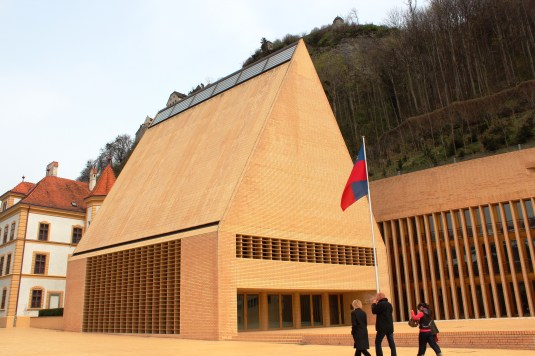
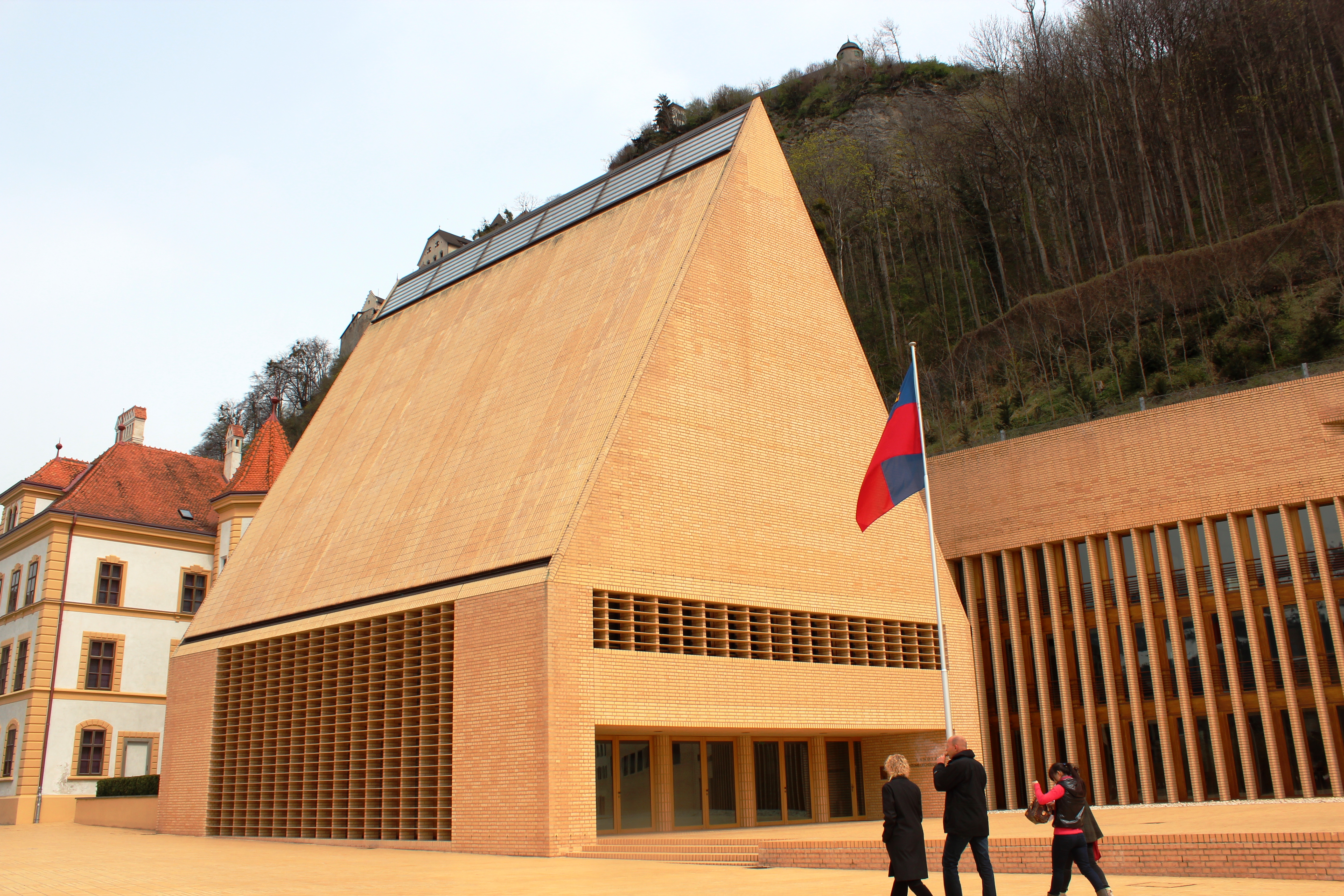
- Liechtenstein Parliament on Stadtle
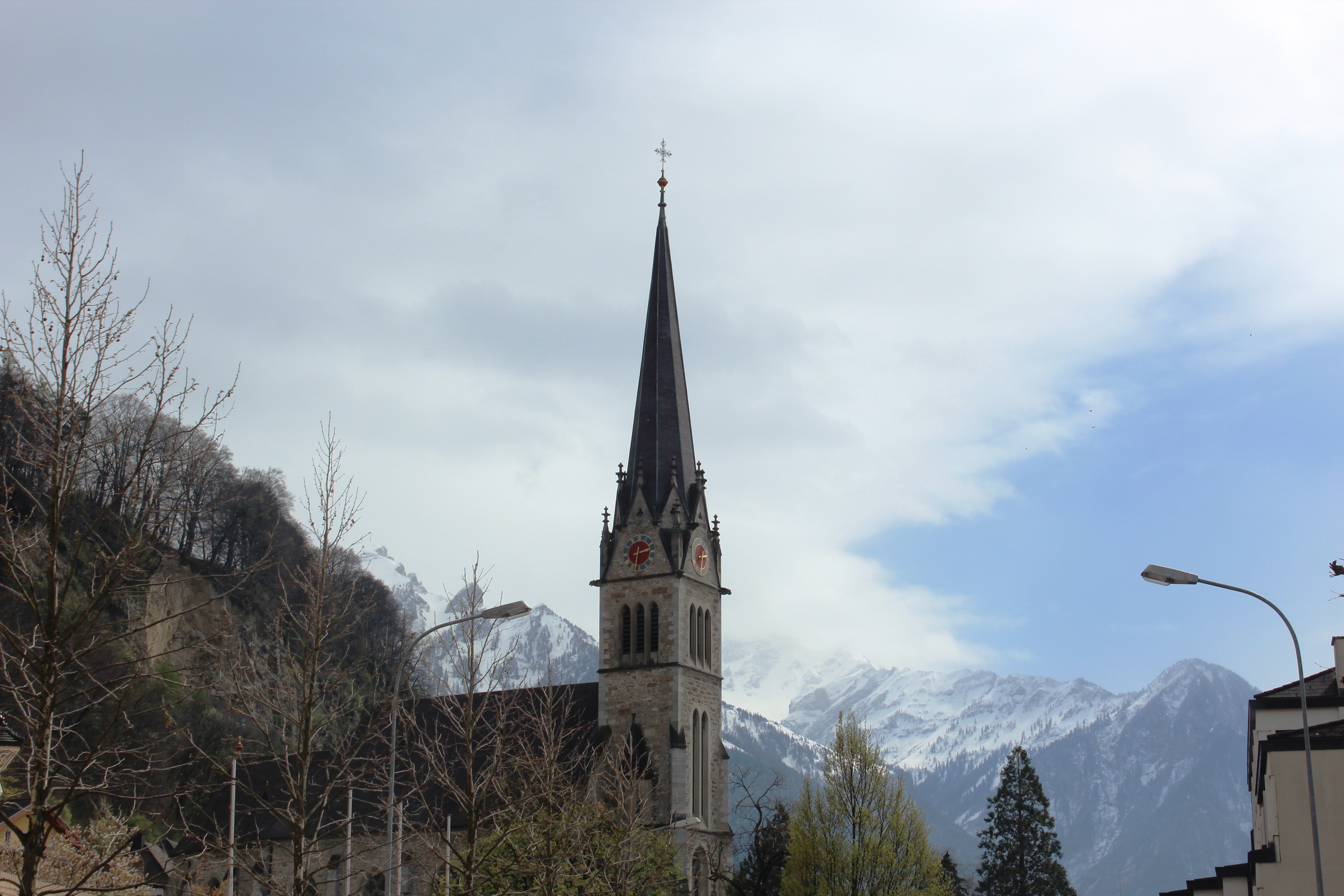
1) CATHEDRAL of ST. FLORIN or VADUZ CATHEDRAL: This is a neo-Gothic church which was built in 1874. It is beautifully situated at the beginning of the city center Stadtle and right beside the Vaduz Music School. Although it is not as impressive inside as out, it is well worth a visit. There is a set of very beautiful bronze sculptures outside the church below the steps. One of the sculptures depicts Mary holding new-born baby Jesus and other one Mary holding the body of Jesus after his crucifixion.
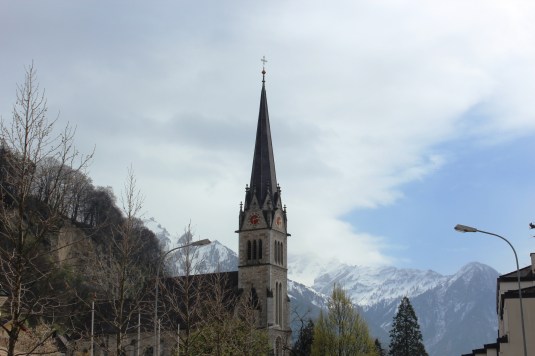
- Tower of Vaduz Cathedral or St. Florian Cathedral
2) STADTLE: This is the main city center and a very beautiful pedestrian street. It has Liechtenstein Parliament (the triangular building) at one end of the street, Government House (right beside the parliament) and Vaduz City Hall (with 2 horse statues in the front) at the other end. You will also see few museums on this street, like Stamp Museum and Land Museum (Kuntmuseum). Tourist information center is also located here. Enjoy the beautiful and interesting sculptures on this street. You can see Vaduz Castle up on the mountain from here. Cathedral of St. Florin is very close too, may be 5 minutes of walk. This is the center of town’s most shops, restaurants, and a popular gathering point.

- A bronze statue on Stadtle
3) VADUZ CASTLE: The castle is over 700 years old and underwent major restorations between 1905 and 1920. Currently it is the palace and official residence of the Prince of Liechtenstein. It is not open to the public and cannot be visited.
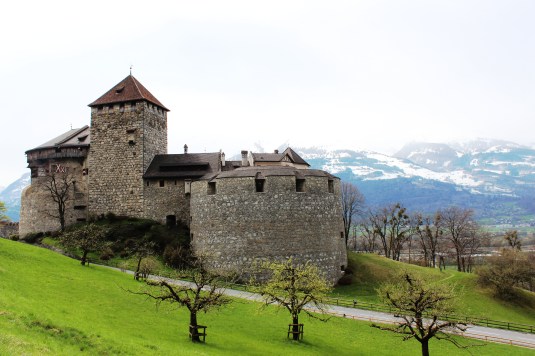
- The magnificent Vaduz Castle
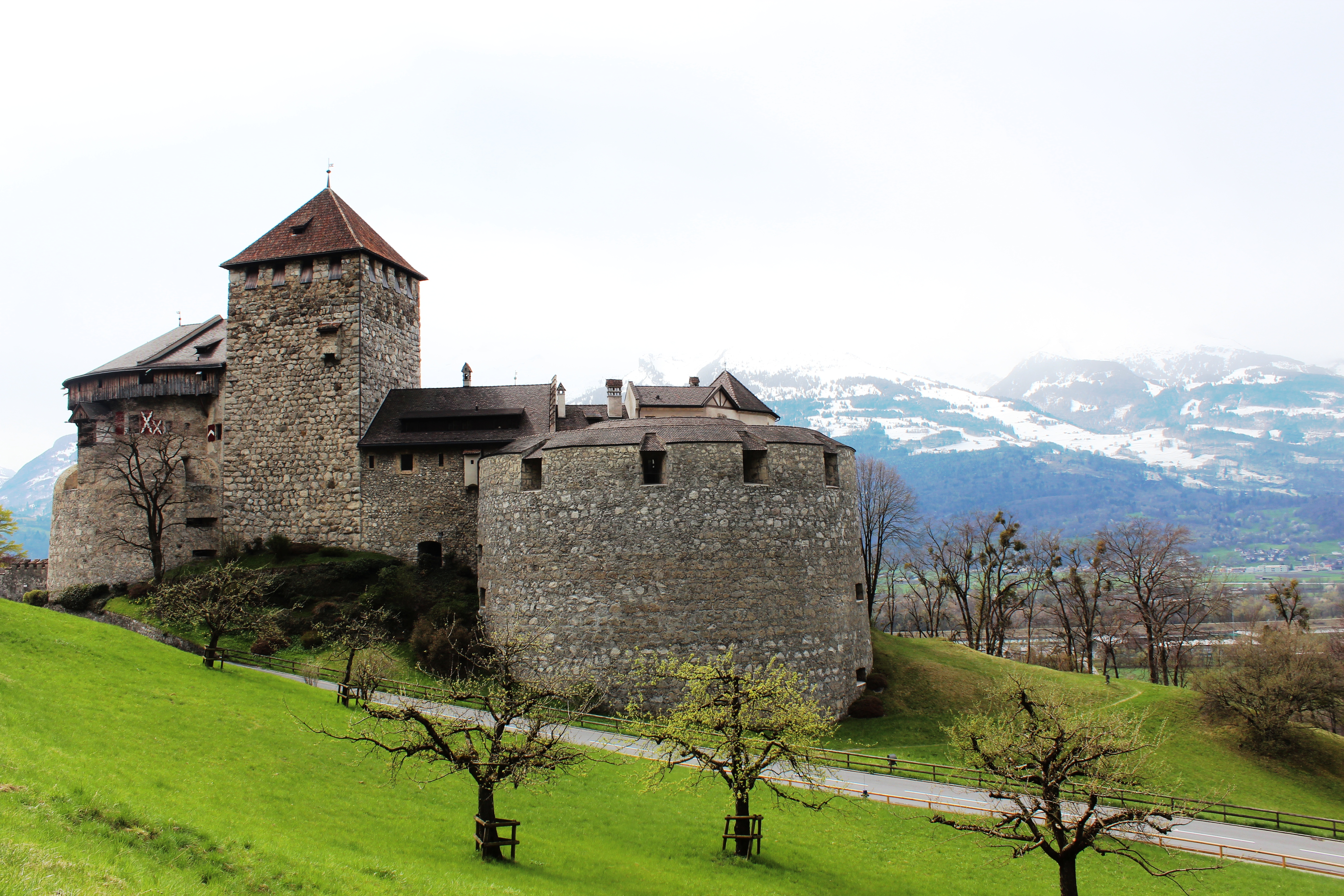
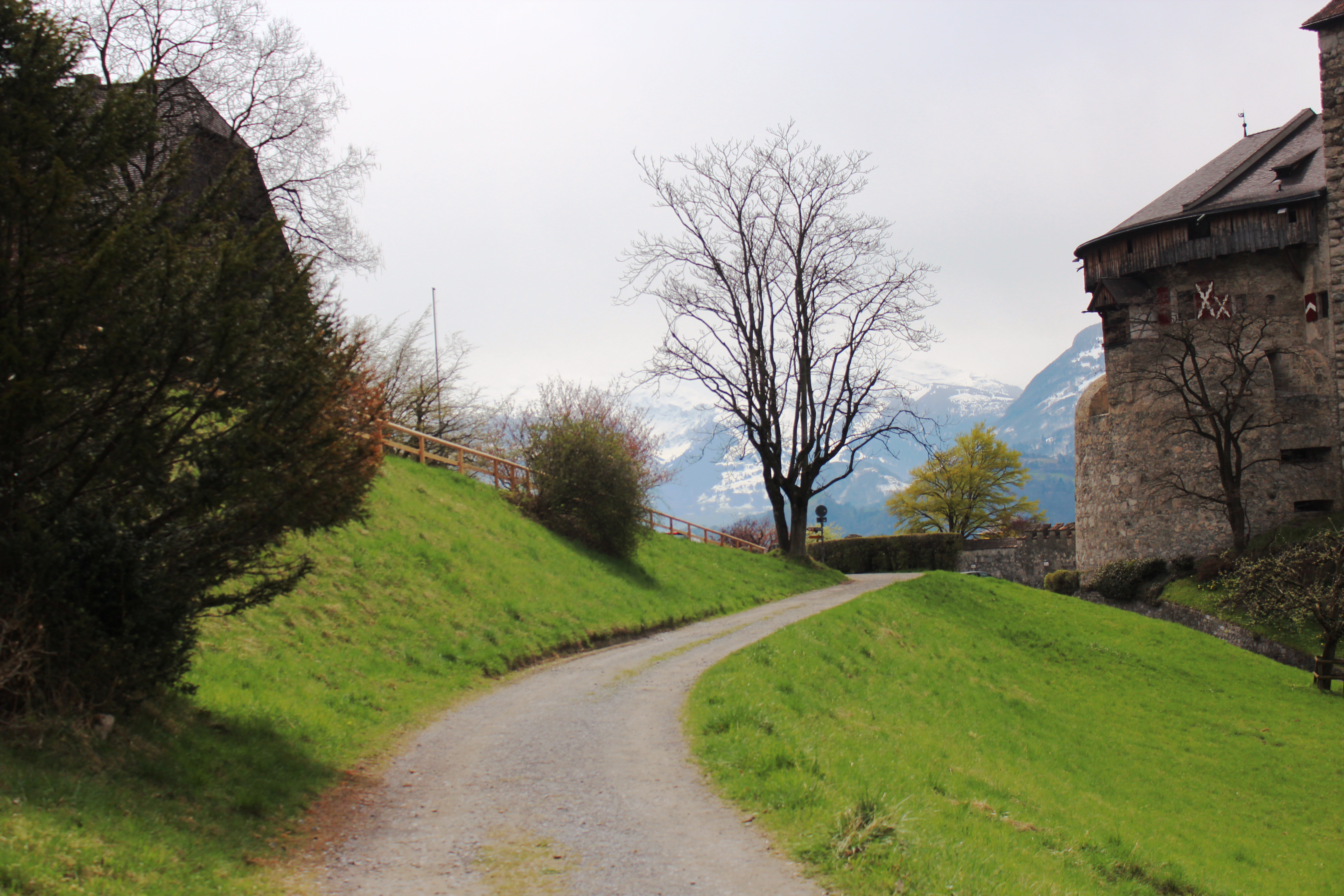
This is a must see in Liechtenstein. The castle is located on the hill high above the town of Vaduz surrounded by snow-capped mountains. It overlooks the adjacent villages at the bottom. You can take your car up there and park in the free parking area. Then go for a walk/hike and enjoy the fresh mountain air, green meadows, and white snowy mountains. You will get a breathtaking fantastic view of the Alps.
;

- Hiking trail by the castle
;
Related articles
- A day in Liechtenstein (happyheartofeurope.wordpress.com)
Related articles
- A day in Liechtenstein (happyheartofeurope.wordpress.com)
Share this:

Kasteel Keukenhof (Keukenhof Castle) in Holland
This is my 3rd and final post on our trip to the Tulip Festival in Keukenhof, the Netherlands last weekend…I promise.
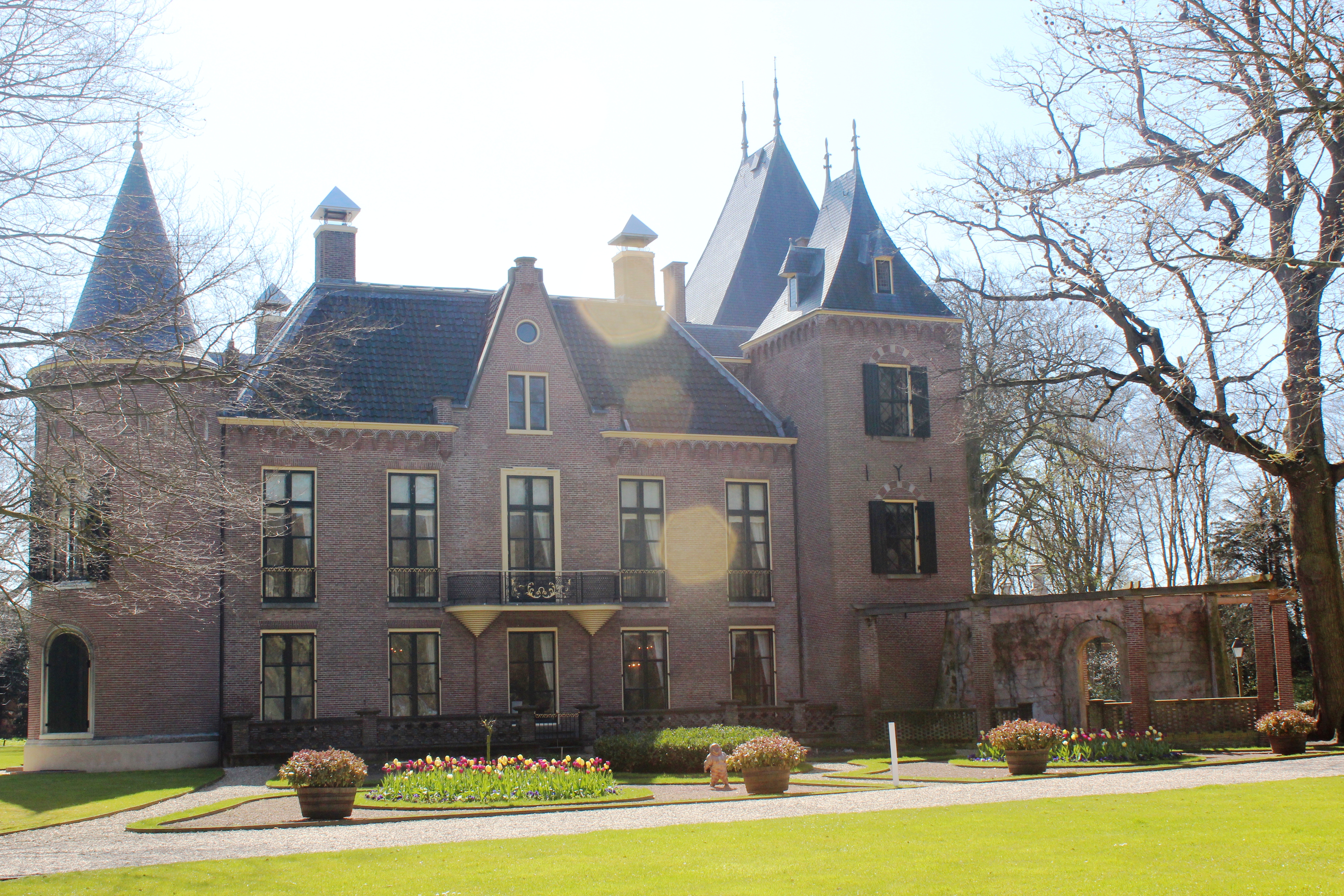
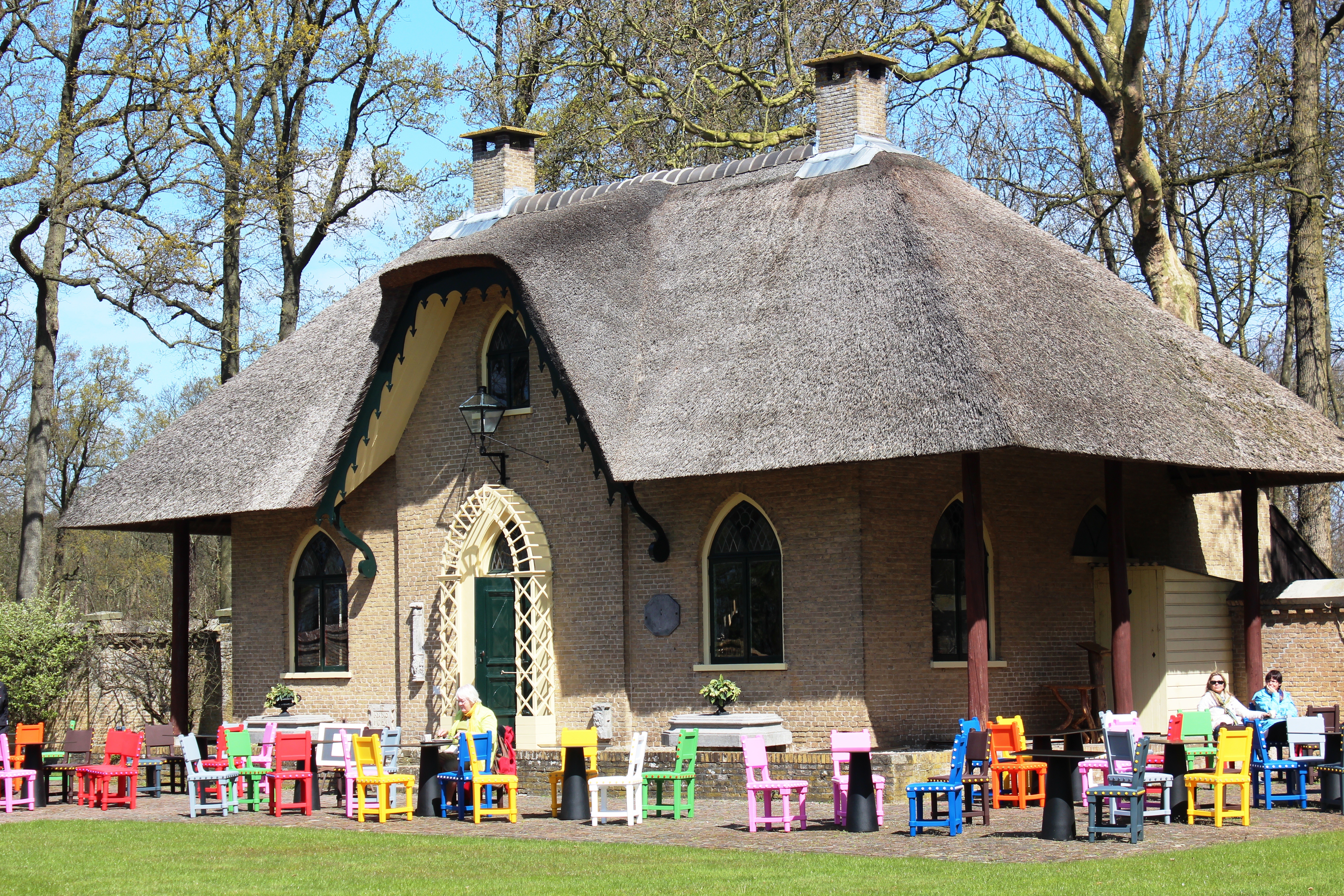
Last day, which was a Sunday, in Keukenhof was very easy going. We have already seen the flower parade and tulip garden on Saturday. Sunday was the day we wanted to visit Keukenhof Castle or Kasteel Keukenhof, which was only 5 minutes of walk from the garden. The castle can only be accessed by a guided tour (1 pm and 3 pm everyday) and the tour was about hour and half long. The surrounding of the castle and the nearby gardens are very calm and beautiful too.
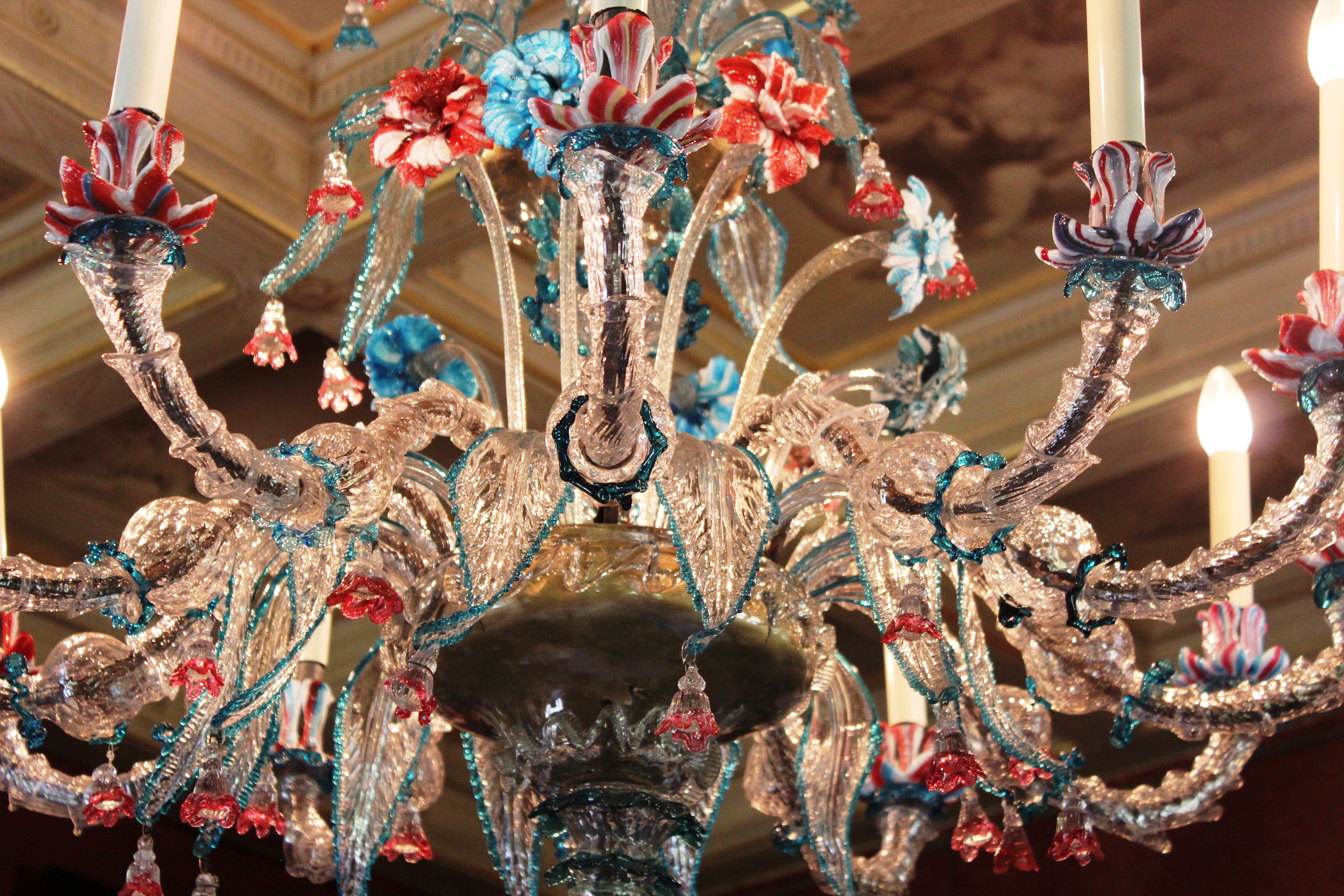
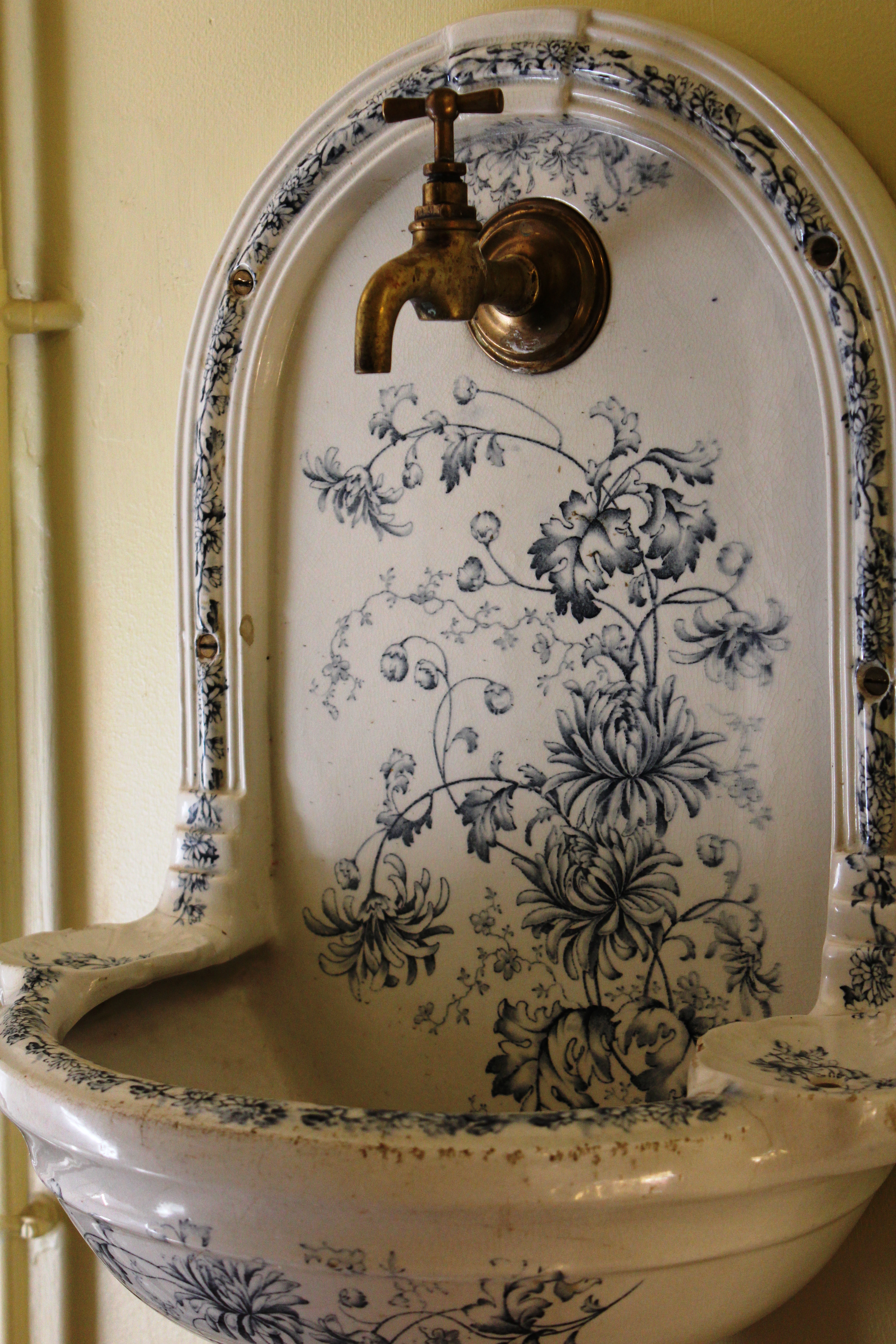
The history of this castle goes back to the mid-17th century. The most amazing part of this castle is that many of the furniture and belongings of this castle are from the original owners from couple centuries back. For example, the bookcase and books/encyclopedia in the library; sink, oven, and the stove in the kitchen, some decors, paintings, some China and original Delft serving wares, and chandeliers (just to name few of those) are still in display in the castle. The castle was donated to the state by its owner in 2003. Now it is being used as a venue for private parties as well as for concerts, fairs, and festivals.
We had wonderful time visiting Kasteel Keukenhof, hope you get some taste of it thru my pictures here.


Related articles
- Tulip (snappicture.wordpress.com)
- Visit Keukenhof Gardens in Lisse, Holland (springhomeandgardenshow.wordpress.com)
- Keukenhof Gardens: The Place to Be in Springtime (kindfoodfarm.wordpress.com)
- A kaleidoscope of color – Holland’s Tulip Fields (janetnewenham.wordpress.com)
- Spring is around the corner… I hope. (goingtoseedinzone5.wordpress.com)
Share this:

Tulips, Tulips Everywhere in Keukenhof, The Netherlands
This is the continuation of my previous post on Tulip Festival in Keukenhof, The Netherlands.
We reached Keukenhof on a Friday night, attended the flower parade on Saturday morning, then in the afternoon we headed for the flower garden in Keukenhof. Although it was raining in the morning, afternoon turned out to be a quite nice one to enjoy this huge garden. We spent few hours in the garden, then took a boat tour in the canals around the tulip fields. General publics are not allowed to roam around in the flower fields (although we saw bunch of people walking, taking pictures there), so boat tour is the only option to try to get close to the fields.
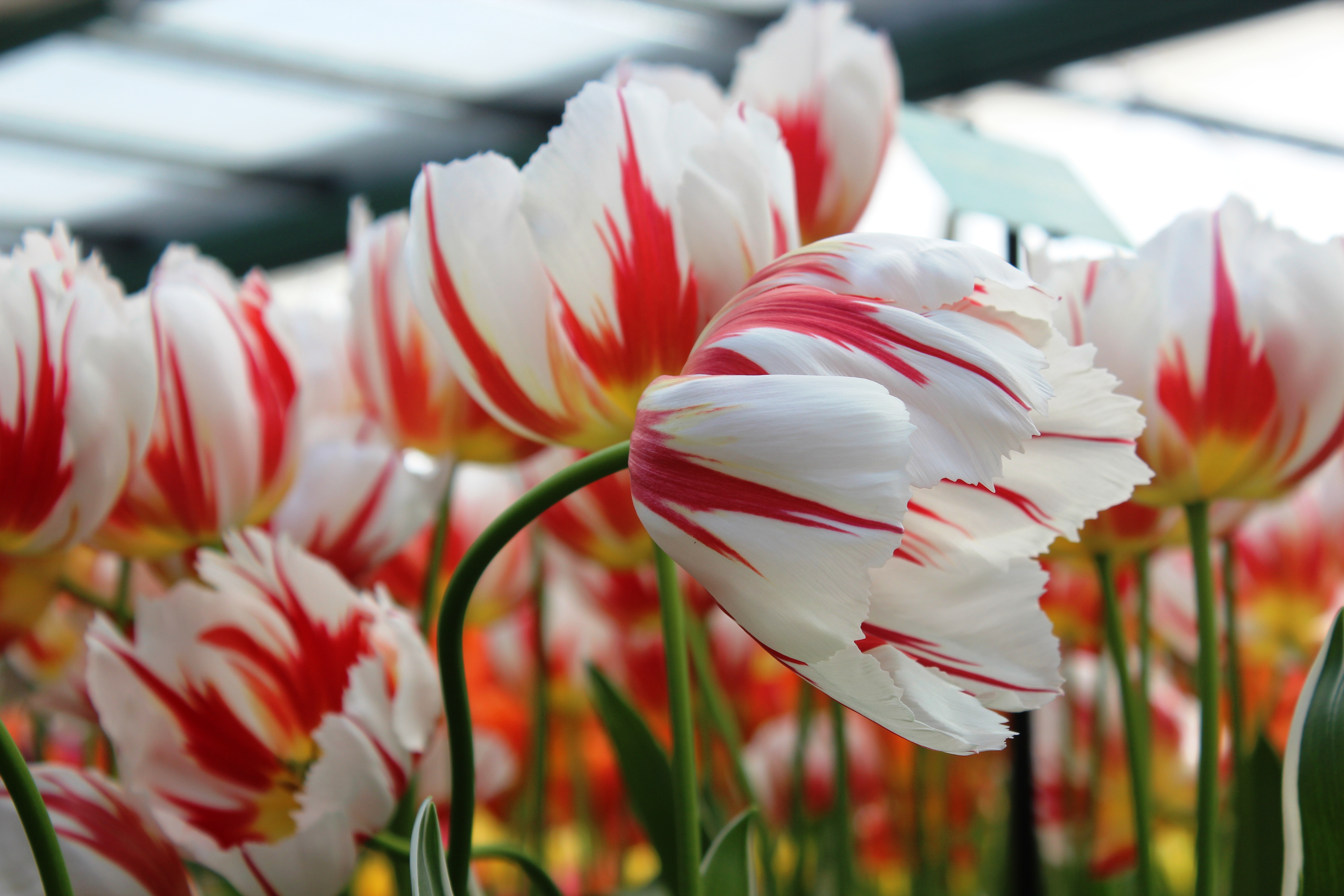
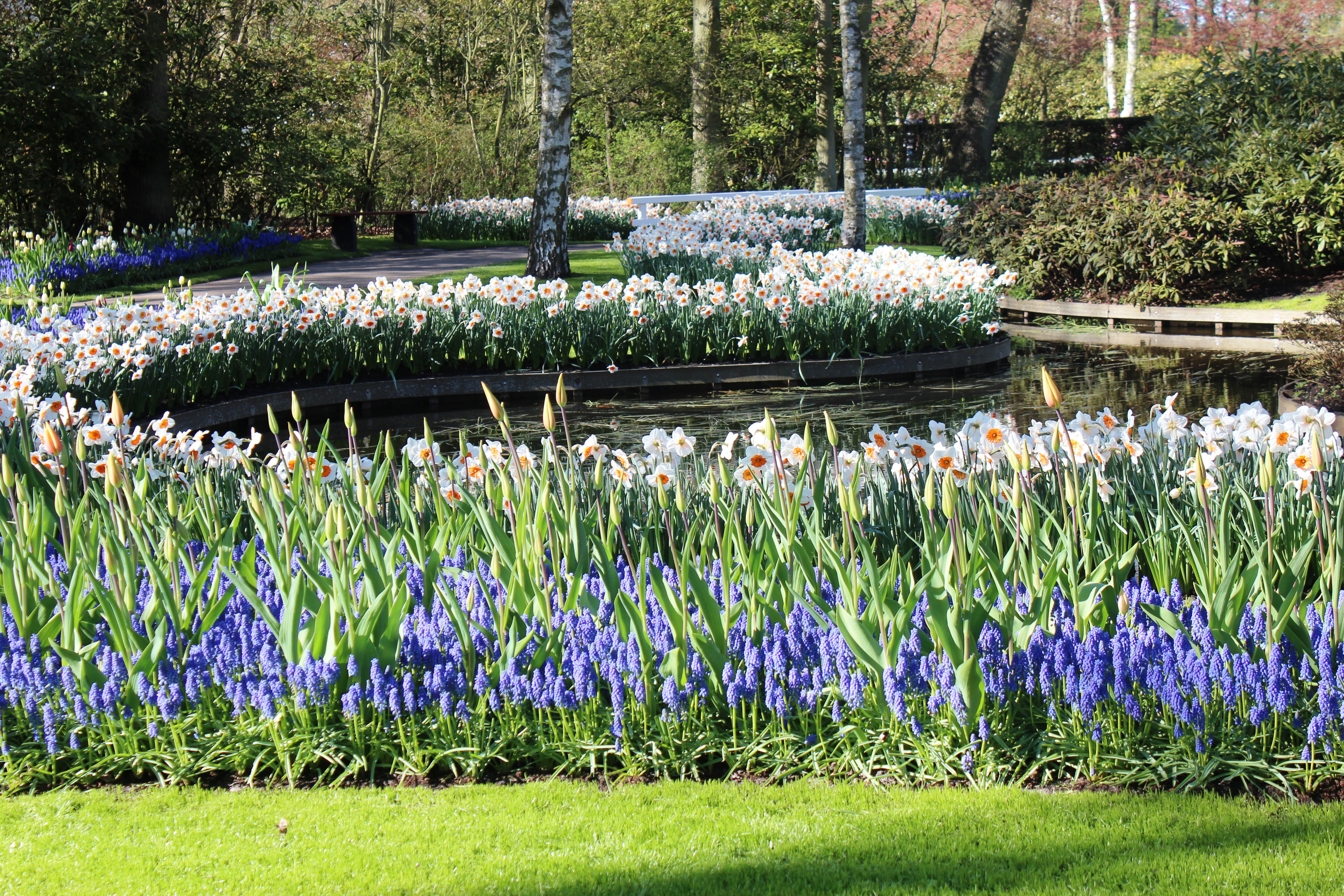
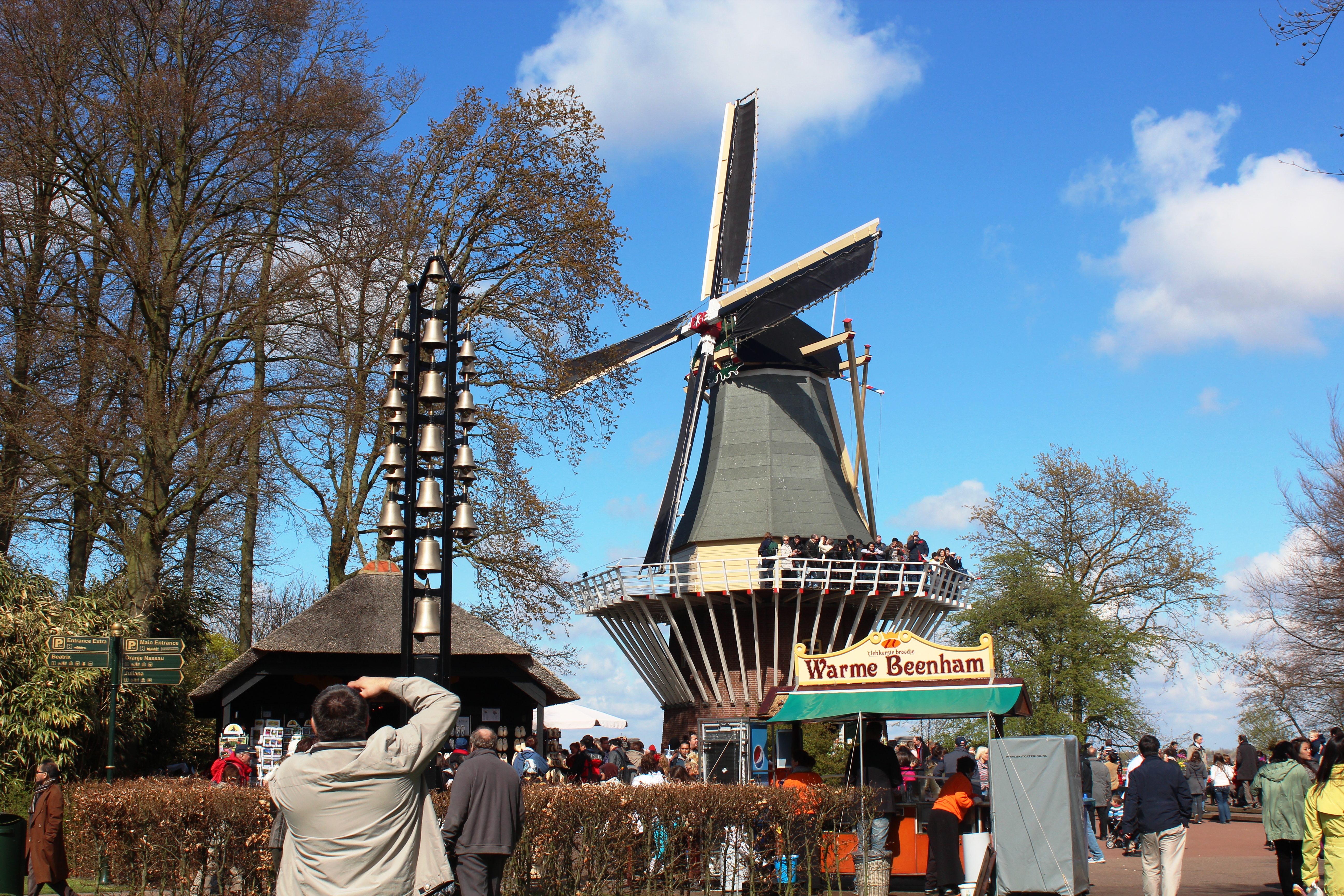
Without any doubt, Keukenhof is the capital of tulip (although these tulip bulbs originally came from Turkey few centuries ago). We saw miles after miles of tulip, daffodil, and hyacinth fields outside the main garden. It is the place to see spring blossom. The theme of this year was “Poland: The Heart of Europe“. More than seven million flowers make up this garden. Every corner has surprises waiting for you and to inspire you. The garden does not ONLY display tulips. It is decorated with different colors of daffodils and hyacinths, along with other kinds of flowers. There are some special indoor houses that display real works of art with flowers like orchids and other exotic flowers. The shades of colors and the shapes of the petals of these flowers are endless. I tried my best to capture these beauties within my capabilities, but you really have to see them in real life to appreciate the hard works that gardeners/designers put into making this garden the ultimate place to enjoy spring.



Related articles
- A kaleidoscope of color – Holland’s Tulip Fields (janetnewenham.wordpress.com)
- Visit Keukenhof Gardens in Lisse, Holland (springhomeandgardenshow.wordpress.com)
- Photos of Spring – Tulips and Daffodils in New Hampshire (newenglandsnarrowroad.wordpress.com)
- Tulipomania Revisited (kiwsparks.wordpress.com)
- Spring is around the corner… I hope. (goingtoseedinzone5.wordpress.com)
- Tulips at Dunsborough Park Garden (hurtlingtowards60.wordpress.com)
- Keukenhof Gardens: The Place to Be in Springtime (kindfoodfarm.wordpress.com)
- Flower Parade in Keukenhof, the Netherlands (journeyaroundtheglobe.com)
- Tulips in full color (anniejanae.wordpress.com)
- Food and Flowers in Amsterdam (thebotanicalbaker.wordpress.com)
- Tulip (snappicture.wordpress.com)
- Flower Parade in Keukenhof, the Netherlands (journeyaroundtheglobe.com)
- Tulips in full color (anniejanae.wordpress.com)
- Food and Flowers in Amsterdam (thebotanicalbaker.wordpress.com)
- Tulip (snappicture.wordpress.com)
Share this:

Flower Parade in Keukenhof, the Netherlands
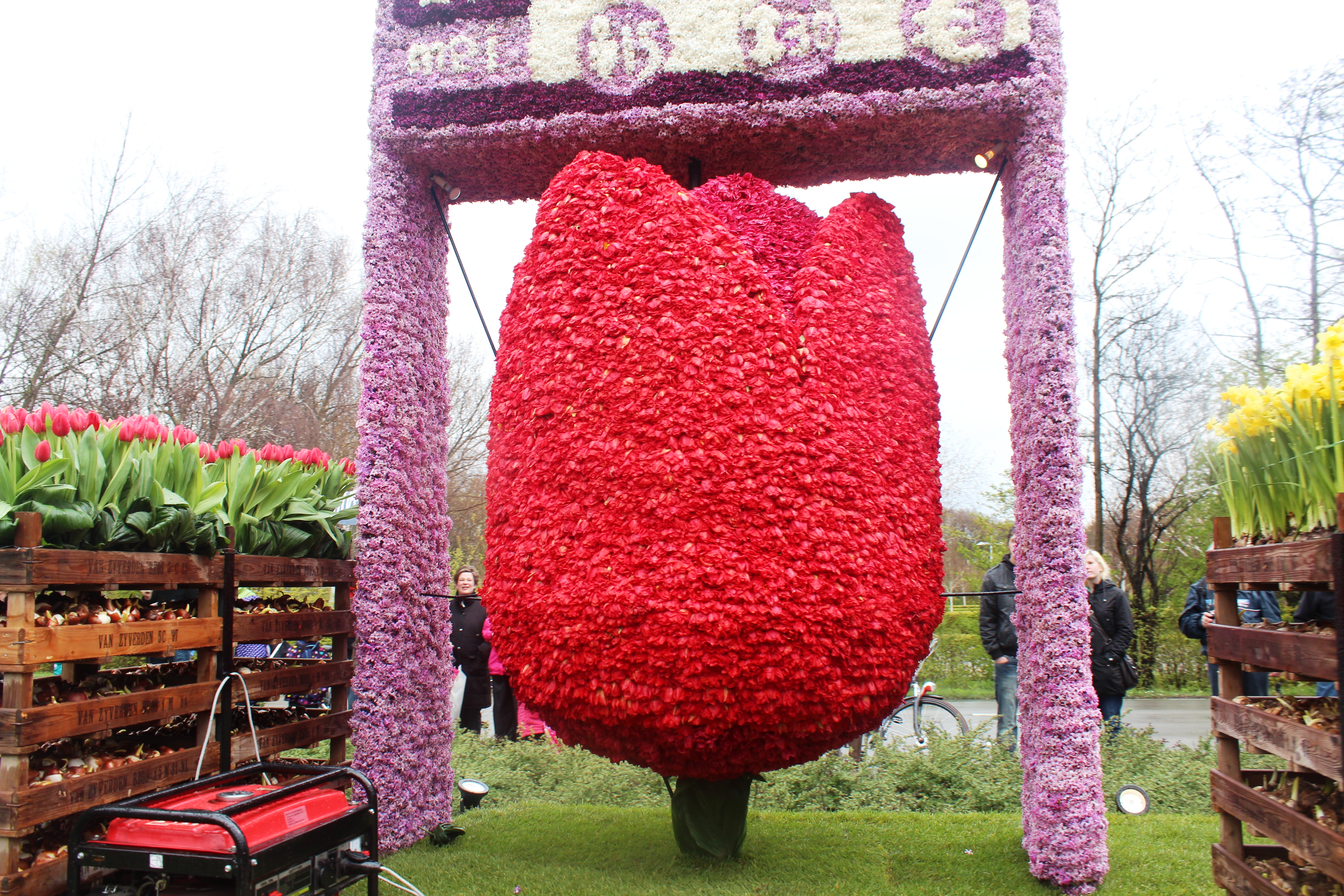
Tis the season for tulips everywhere and what better place is there to celebrate this time of the year other than Keukenhof, Nederlands (the Netherlands)? This past weekend we made a trip to Keukenhof to visit the biggest tulip garden and the flower parade in the whole wide world. This is one of the three posts that I will share on our trip to Keukenhof.
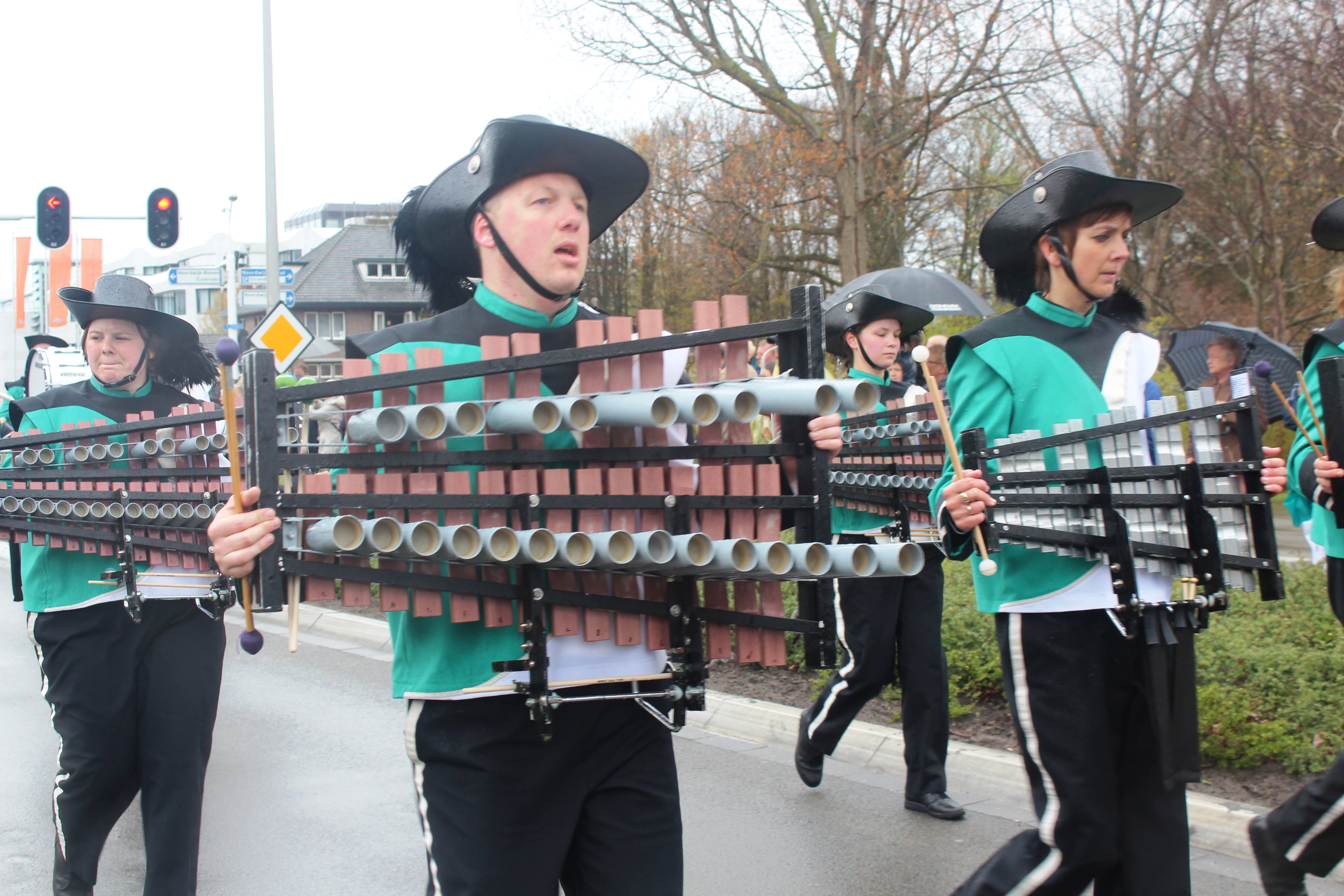
It was drizzling, raining, pouring…everything, but nothing stopped the most famous parade in the Netherlands. Hundreds and thousands of spectators gathered around the route to see this 40 km long parade with their umbrellas and rain coats. This annual event starts in the morning at 9:30 and ends at 9 at night (taking 2 breaks in the middle). The parade is called the “face of Spring”, which usually consists of about 20 floats and more than 30 motorcars all covered and decorated lavishly with flowers. This unique parade can only take place in spring when the hyacinths, tulips, and daffodils are in bloom. The theme of this year was “Communication”. You can see the colorful flowers, hear the bands playing their festive music, and smell the sweet hyacinths in the air.
I tried my best to take out my camera in the rain and take pictures of the moving vehicles while holding onto my flying umbrella. Hope you like them…

Related articles
- Keukenhof Gardens: The Place to Be in Springtime (kindfoodfarm.wordpress.com)
- Visit Keukenhof Gardens in Lisse, Holland (springhomeandgardenshow.wordpress.com)
- Food and Flowers in Amsterdam (thebotanicalbaker.wordpress.com)
- A kaleidoscope of color – Holland’s Tulip Fields (janetnewenham.wordpress.com)
Share this:

Business Excellence Award 2020 from AI Global Media for The Most Entertaining Personal Travel Blog – Pacific Northwest USA

Top Posts & Pages


Authors
 Globe Runner
Business Excellence Award 2020 for The Most Entertaining Personal Travel Blog – Pacific Northwest USA

Business Excellence Award 2020 from AI Global Media

 Journey Around The Globe