Journey Around The Globe
ready for the next destination
Hasselt Japanese Garden in Hasselt, Belgium
HASSELT JAPANESE GARDEN: Hasselt Japanese Garden is a little piece of Japan in Belgium. This is a miniature version of the real natural beauty reconstructed the way Japanese have been doing for centuries. This is a must-see spot in Hasselt since it’s the biggest Japanese garden in Western Europe. Built about 20 years ago, the art of landscaping of this imperial garden depicts calm mountain scenery, with soothing sound of river, and view of rocks. Japanese style house, cherry blossoms, a Shinto temple, water-falls, and clear water are just some ideal things to give its visitors some inner peace and tranquility.
Enjoy the pictures that I took during our visit and don’t forget to visit Hasselt Japanese Garden if you are ever in Belgium:

- Hasselt Japanese Garden in Hasselt, Belgium
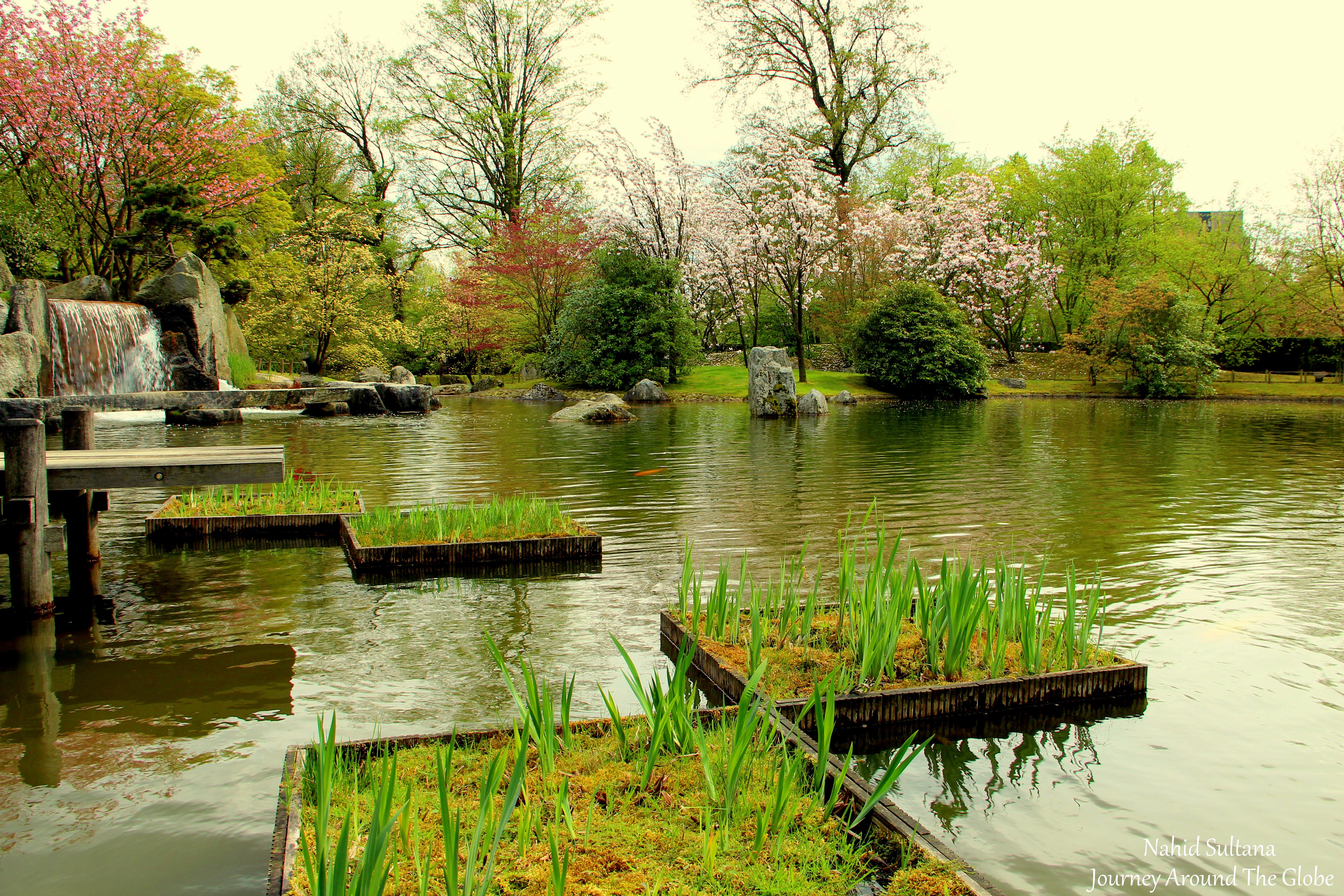

- Hasselt Japanese Garden in Hasselt, Belgium
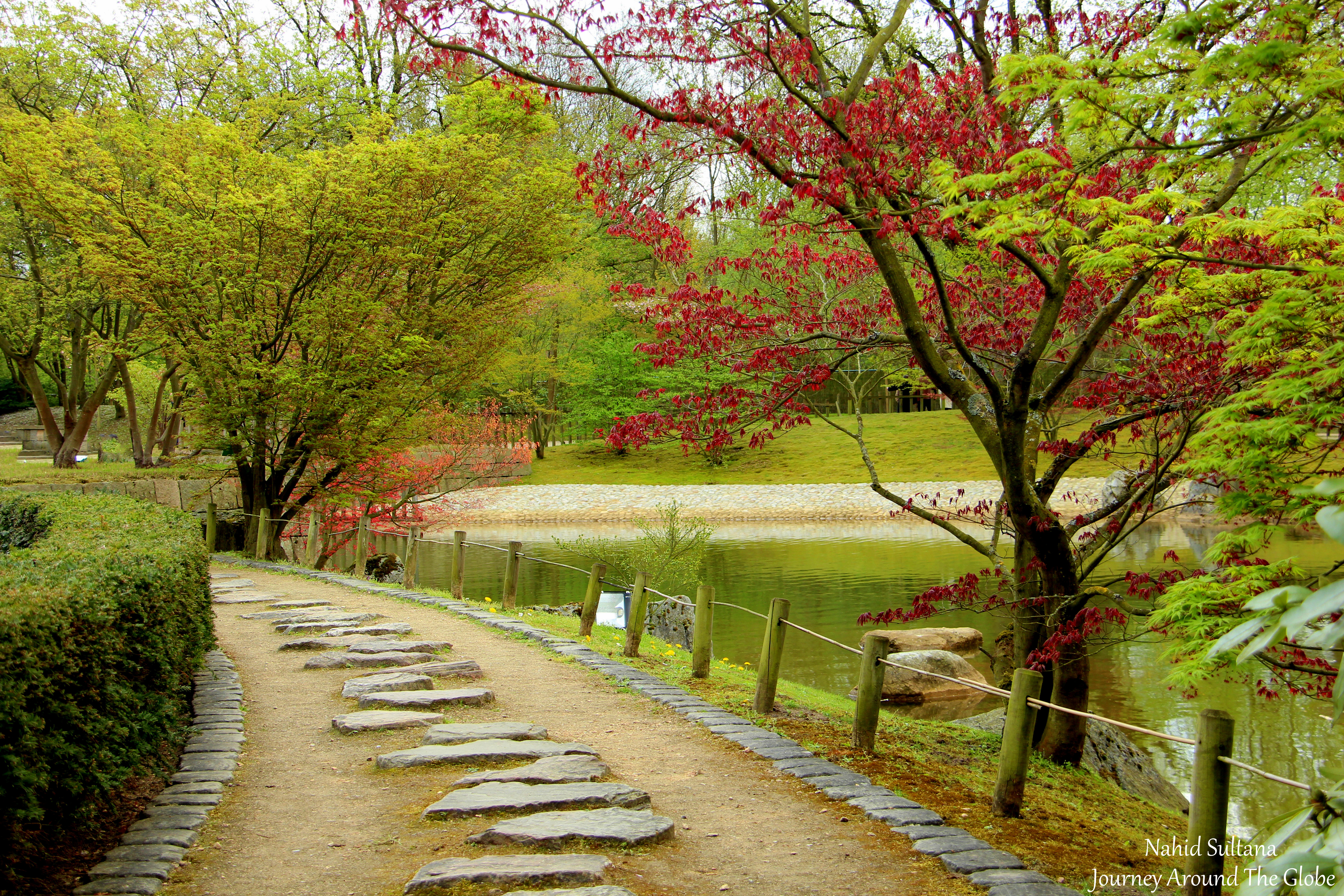

- Hasselt Japanese Garden in Hasselt, Belgium
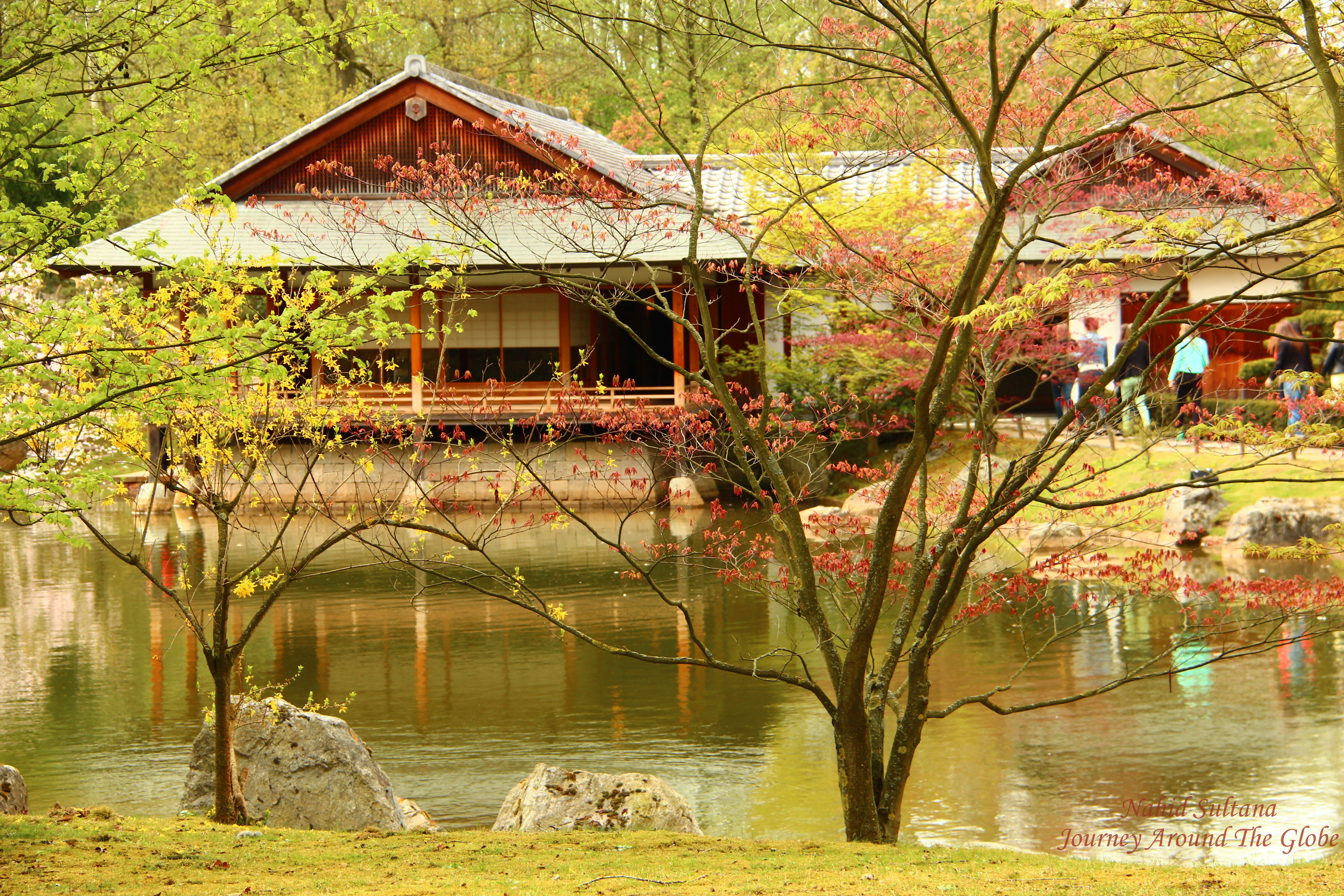

- Hasselt Japanese Garden in Hasselt, Belgium
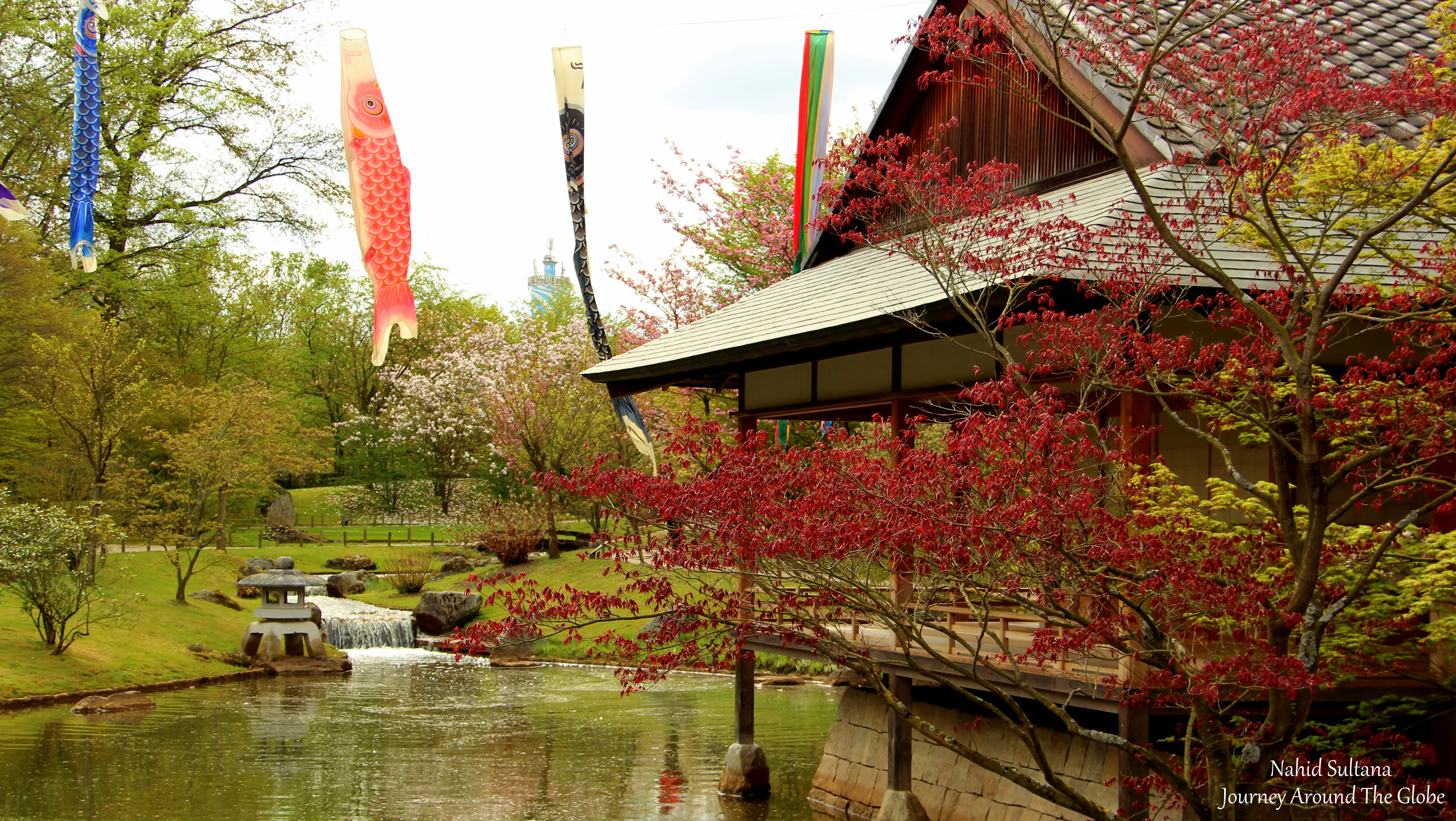
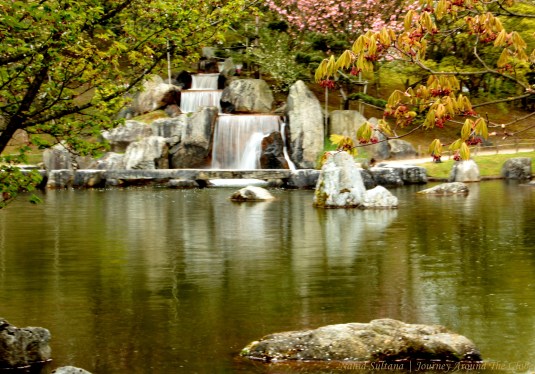
- Hasselt Japanese Garden in Hasselt, Belgium
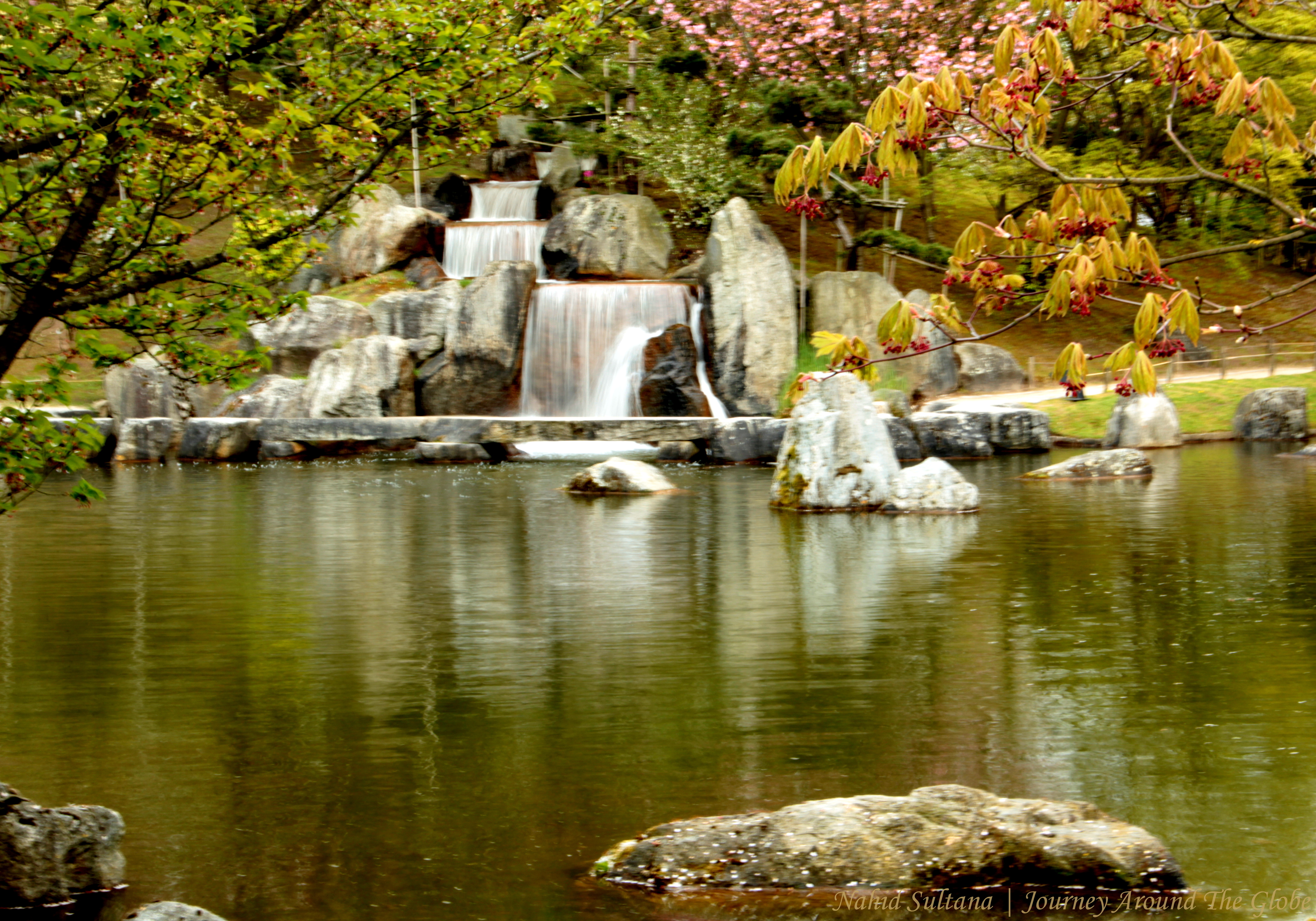
Entry fee to the garden is 5 euros per person (kids 12 years and below are free). The park is open from 2 – 6pm during the summer time. Couple hours inside the park is sufficient. We didn’t find any place to have lunch (thank god we brought sandwiches with us that day) but you can find tea and some snacks in the center of the park, just follow the sign.
Related articles
- Belgium’s Leading 10 Spring Yard Locations (fightwarm71.wordpress.com)
- Weekendtip: Blossom tour (30smagazine.wordpress.com)
- 7 Japanese aesthetic principles to change your thinking (thismomentjapan.wordpress.com)
Share this:

Frankfurt am Main
FRANKFURT, GERMANY: Frankfurt or Frankfurt am Main (Frankfurt by Main) is situated by River Main within driving distance from Bonn or Düsseldorf or Cologne. This is an ultra-modern city with color and contrast. It has lots of Sexy futuristic architectures standing next to very well-preserved old buildings, many historic churches, and number of welcoming squares. Frankfurt airport is the 3rd largest airport in Europe and draws millions of passengers each year. The city was heavily destroyed during WWII but no one can tell it by its present look.

- Walking around old district of Frankfurt, Germany
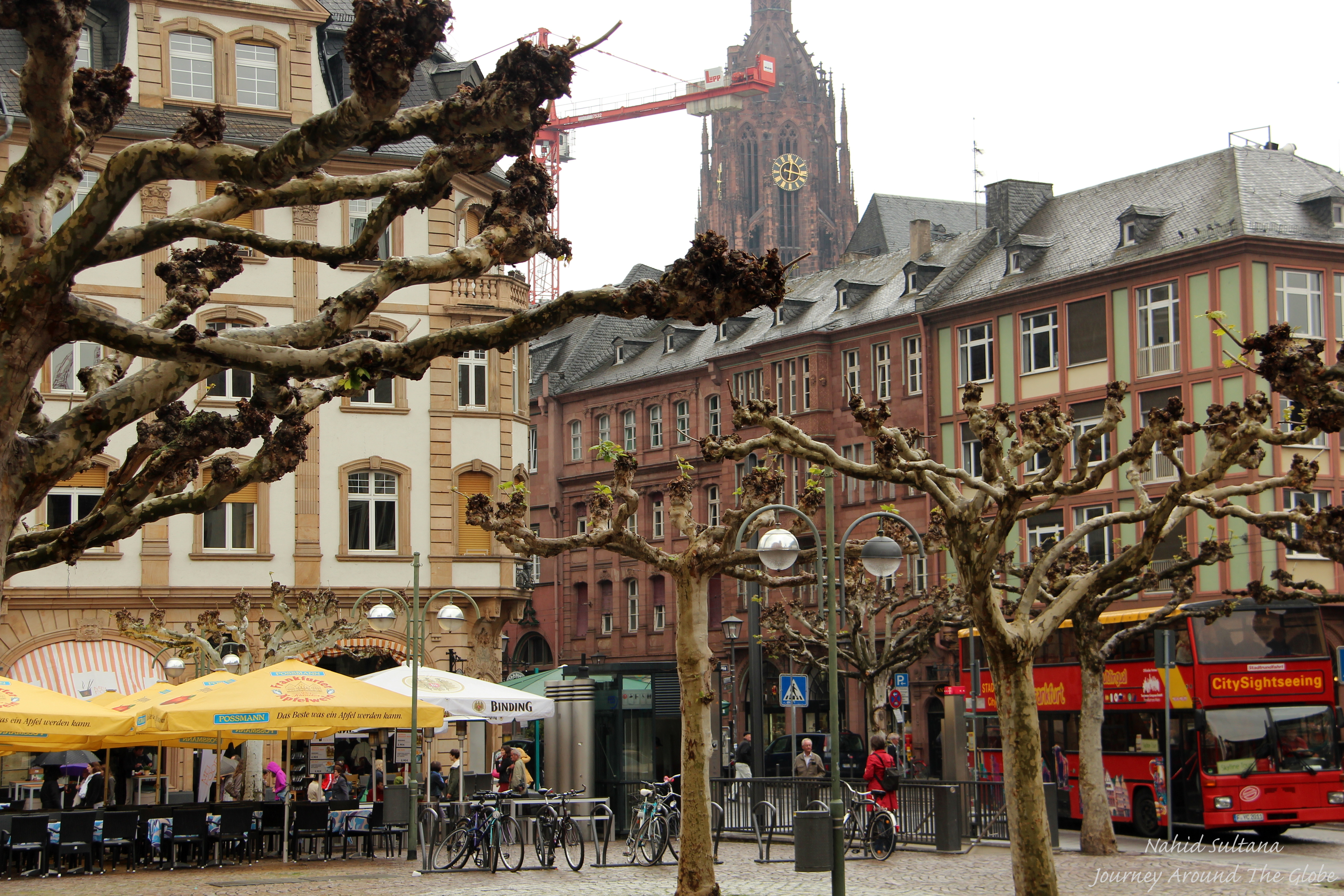
TIME of TRAVEL: We hopped 4 cities in Germany during a long weekend break in May 2013. Frankfurt was our 2nd stop after Bonn and before Heidelberg. Since this year the winter was pushed out about by couple of weeks in Europe, we ended up having some cold and rainy days during this trip. The day we were out to enjoy Frankfurt, we had clouds, rain, sun, cold, and warm weather all in one day.
OUR HOTEL: We stayed in “Novotel – Frankfurt City” in Frankfurt. It was not in the city center which we usually prefer when we travel by car. City center was only 5 stations away from our location which was next to Frankfurt West Station. We stayed in Novotel many times and usually they never fail to make us happy with their services. We had free Wi-Fi but no breakfast. This time I actually packed all sorts of snacks and drinks with us, especially for the kids. So we had good breakfast during our whole trip.
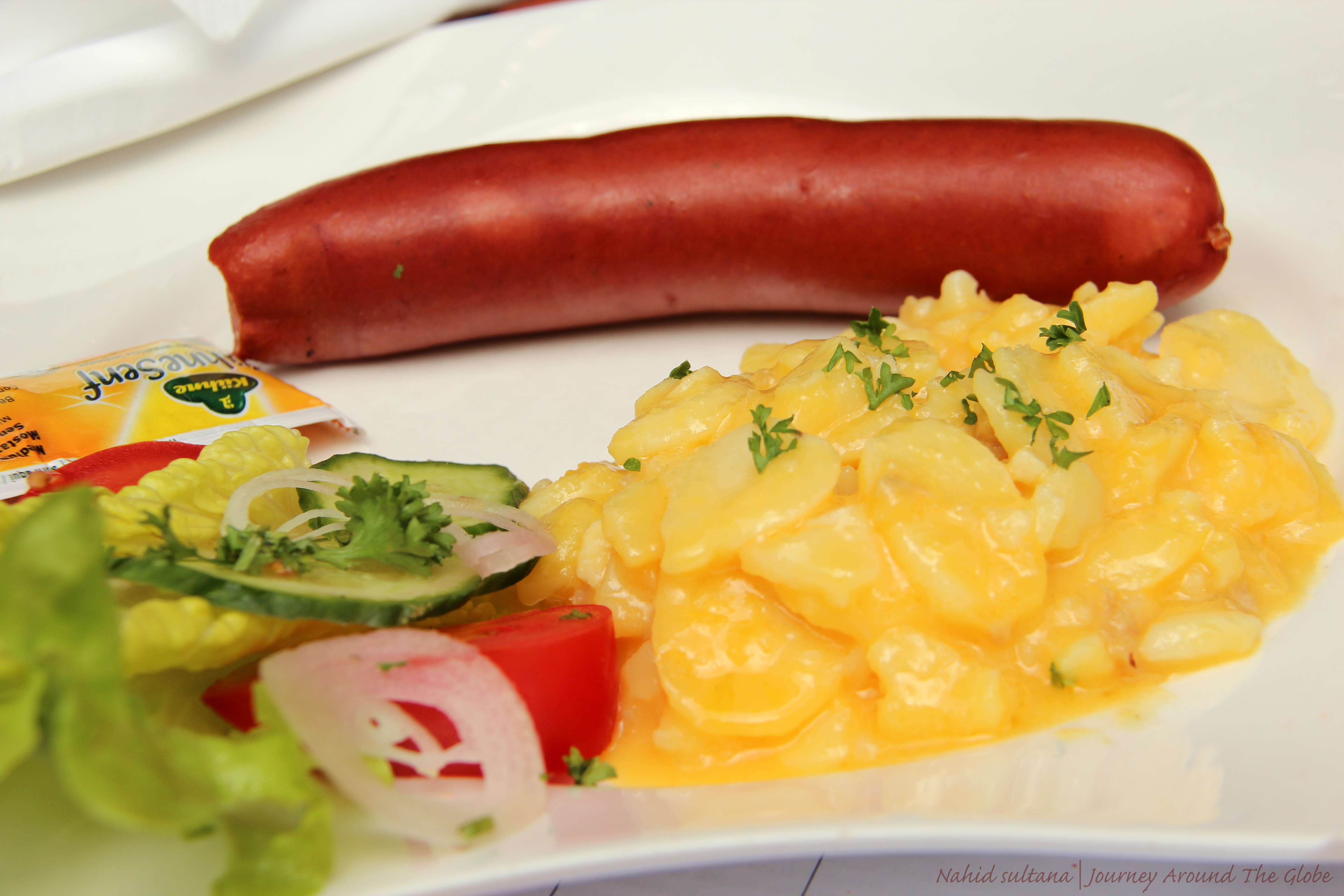
EATING and SHOPPING: Frankfurt is the place for variety of different kinds of hotdogs, frankfurters, and sausages. We had lunch in a small restaurant in Romerberg there. I had a piece of big beef frankfurter with potato salad and garden salad…no one can beat that taste of frankfurter, it was absolutely the best giant hot-dog I ever had.
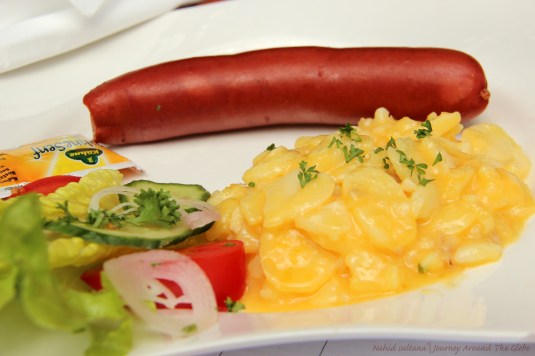
- My lunch in Frankfurt – a frankfurter with potato salad and garden salad mix
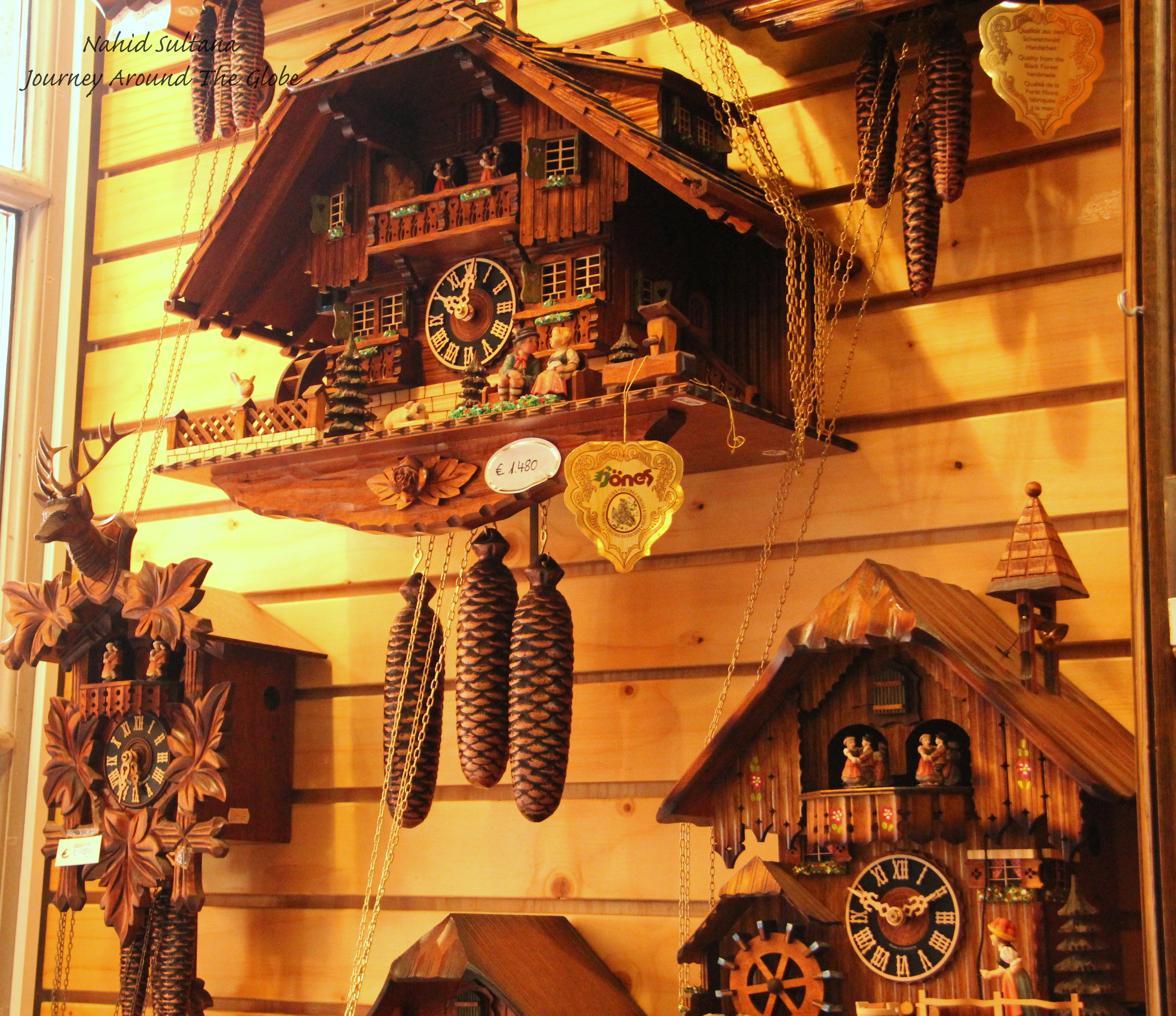
Souvenir stores in Frankfurt usually have many designs of cuckoo clocks and Bavarian style decorative beer mugs along with other typical gift items like t-shirts, key-rings, and etc. The cuckoo clocks range from 15/20 euros to few hundreds euros. Beer mugs also come in many designs and prices. Old town of Frankfurt has many souvenir shops, but Romerberg has tons of good ones. Also don’t forget to visit Zeil, which is the fashion street of this cool city. You can find stores selling cheap/reasonable priced things to high-end brand name places.
- Cuckoo clocks are everywhere in the souvenir shops of Frankfurt, Germany
PLACES WE’VE VISITED: We spent about a whole day in Frankfurt. Our original plan was to spend 2 days here but later we decided to stay one day in Frankfurt and another day to drive to Heidelberg and spend half a day in its old town before heading home. Frankfurt has lots of good museums and tourists can easily spend days exploring those as well as other modern and historic sites.
1) SANKT KATHARINENKIRCHE (ST. KATHERINE CHURCH): This Gothic style church with flanking tower, artistic windows, and Baroque columnar portals was built in 1681. This was city’s main Protestant church. It was heavy destroyed during WWII in 1944 and was rebuilt in 1954. Beautiful Late-Gothic Katherine figure and some gallery pictures are from the 17th century but the glass windows are from recent time in 1954.
The church is open Monday – Friday 2 – 5 pm and there is no entry fee.
2) LIEBFRAUENKIRCHE: This is another old Gothic church of Frankfurt, standing there since 1344. Originally it was a chapel of the Virgin Mary. The belfry was erected in 1478. Later in the 18th century the tower was heightened in Baroque style with Rococo decoration. This was also destroyed in 1944 and was rebuilt in 1954. Some figures from Baroque altars were destroyed in war along with many other historical items. The church is very elegantly decorated with nice pattered stained-glass windows and some large paintings.
It’s free to enter the church and is open daily from 5:30 to 9 pm. The church is very close to Zeil and Hauptwache.
3) PAULSKIRCHE (ST. PAUL’S CHURCH): The early church was built in 1790 replacing a Gothic church. In 1848, this was the venue of the first German National Assembly where First German Constitution was resolved. During heavy air raids in Frankfurt during WWII in 1944, the Paulskirche was one of the many buildings that were hit. As no water was available to extinguish the fire hence it burnt out completely. But the church was rebuilt immediately after the war. As a symbol of democratic freedom and national unity, the “House of All Germans”, it was finished in time for the 100th anniversary of the first German National Assembly in May 1948.
Currently, the building is a memorial site. First level is more like museum of this church and all the important events that took place here in the history of Germany. Upper level has a prayer hall with a contemporary high-ceiling, simple altar with only a stone podium, and a not-so traditional nave.
Paulskiche is located in Paulsplatz separating from Romerberg by a small street. There is no fee to go inside and visit the museum or prayer hall.
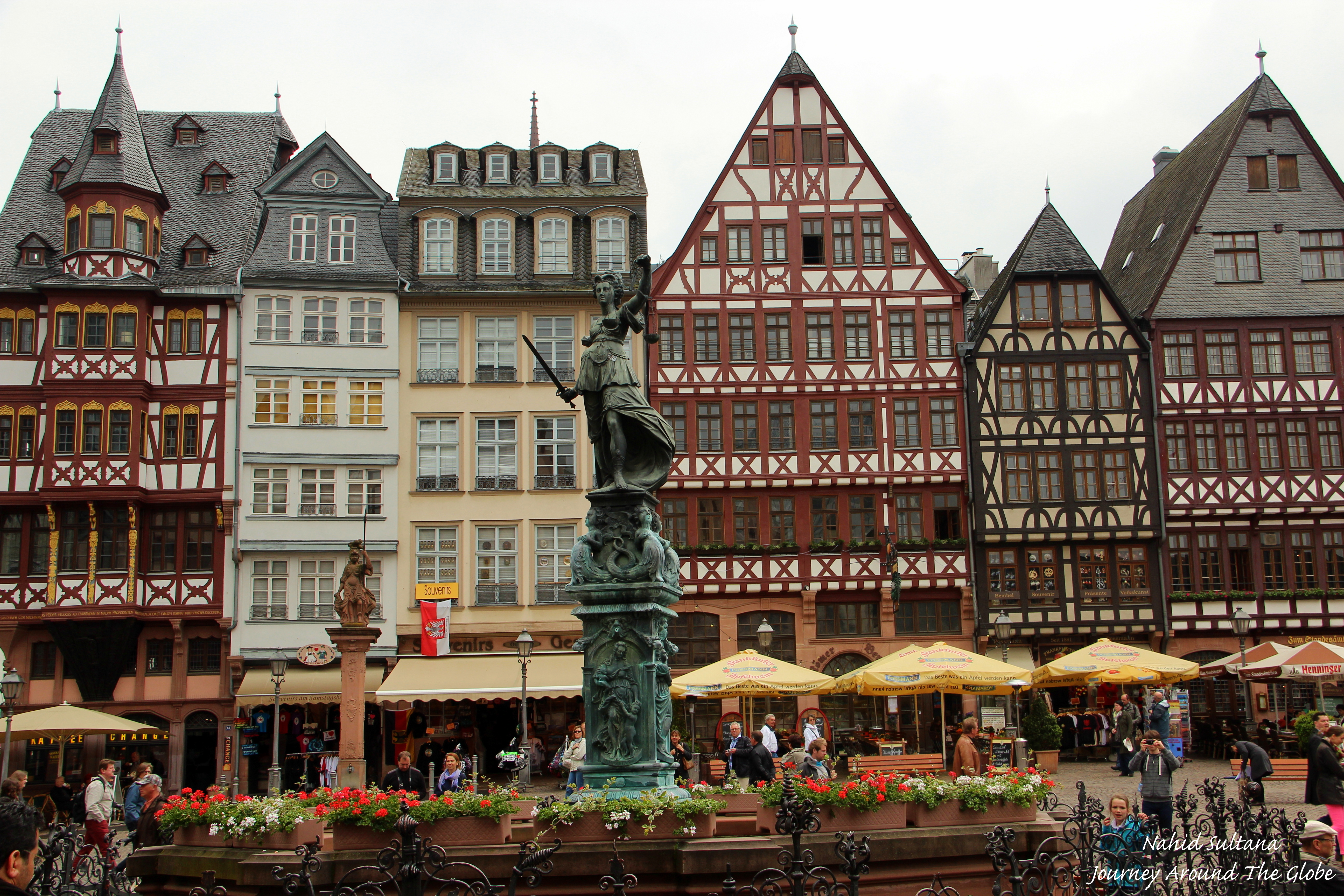
4) ROMERBERG, RATHAUS (TOWN HALL), and ALTE NIKOLAIKIRCH (ST. NICOLAI CHURCH): Romerberg or Romerplatz is probably the most famous spot of the old center of Frankfurt. Many of its historic buildings from the 14th or 15th century were destroyed during WWII and were later rebuilt. On one of sides of Romerberg is the town hall, one side is occupied with Alte Nikolaikirche, and one side of it has magnificent old German-style half-timber houses with souvenir shops and some cafes. A small metal circle in the ground can be seen in front of Alte Nikolaikirche that commemorates fall of communism which is believed to be the spot where many books on communism were burnt.
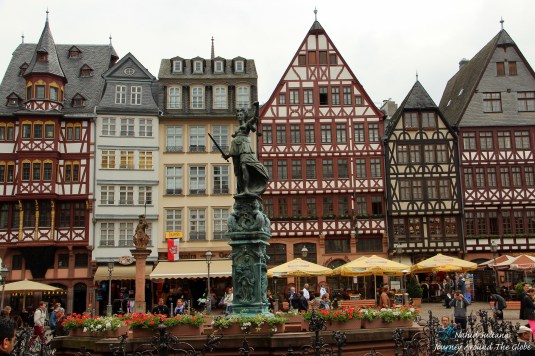
- Romerberg, the main square of Frankfurt, Germany
The Late Gothic structure town hall at one side of Romerberg was built in 1408 in and was one of the first buildings to be reconstructed in 1952 after war-time destruction.
Alte Nikolaikirche is the red and white designed building in another side of Romerberg which has been boldly standing in this spot since 1150. In 1951 the church went through reconstruction for being destructed during WWII. At that time the portal structure of from the 13th century was preserved and still can be seen on one of the walls there. The church also houses some medieval gravestones from 1370. It’s a very small church with a simple altar but beautifully designed stained-glass windows are nice.
- Buildings of Romerberg and Alte Nikolaikirche (on the right) in Frankfurt, Germany
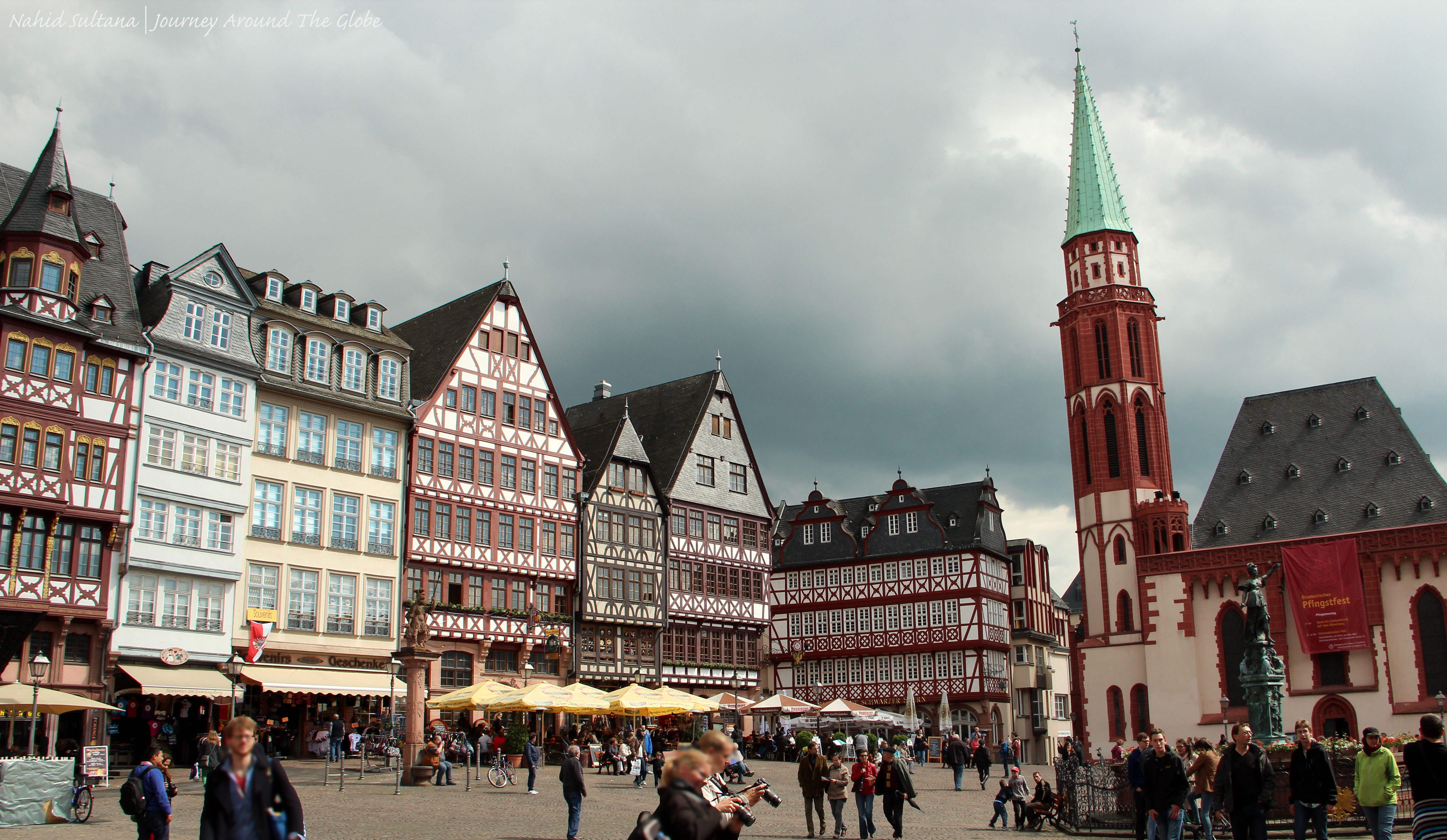
The church is open daily from 10 to 8 pm (April – September) and from 10 to 6 pm (October – March).
5) DOM ST. BARTHOLOMAUS: This once used to be the Coronation church of German Emperors from the 16th to 18th century. The Gothic construction of it started in 1315 and took until 1514 to finish. This was also damaged during the war in 1944 and was again built in 1953. The Gothic portals with bronze doors and relief are from the recent time in mid-20th century. But gorgeous Gothic altars and some gravestones are from the 15th century. The grand organ and choir stalls add immense beauty to this place, everything in this Dom is truly very beautiful.

- Inside Dom St. Bartholomaus in Frankfurt, Germany
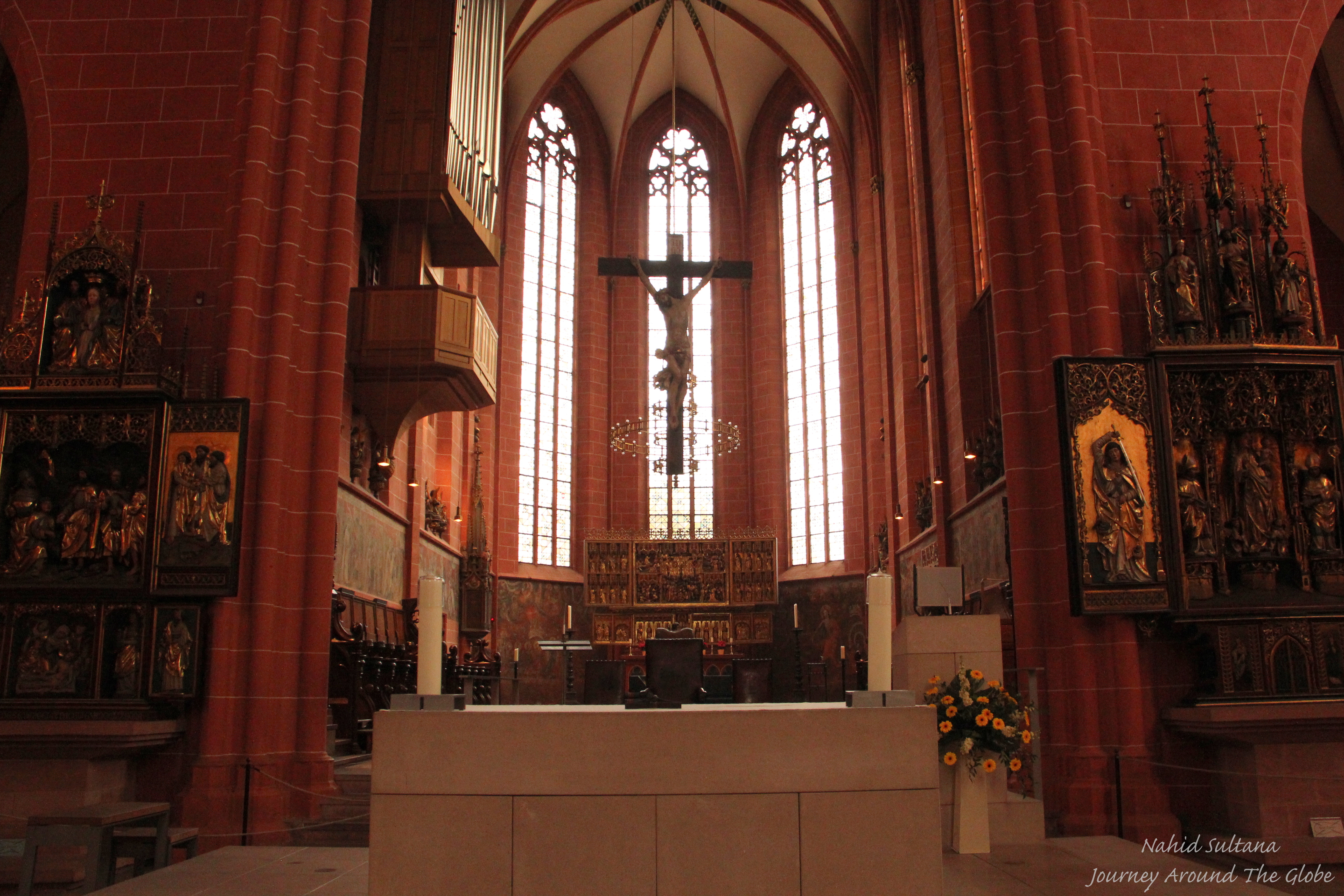
The church is open Monday – Thursday and Saturday 9 am – 12 pm and 2:30 pm – 6 pm. Friday –Sunday it’s open from 2:30 pm to 6 pm. It’s located right next to Romerberg and no fees to go inside.
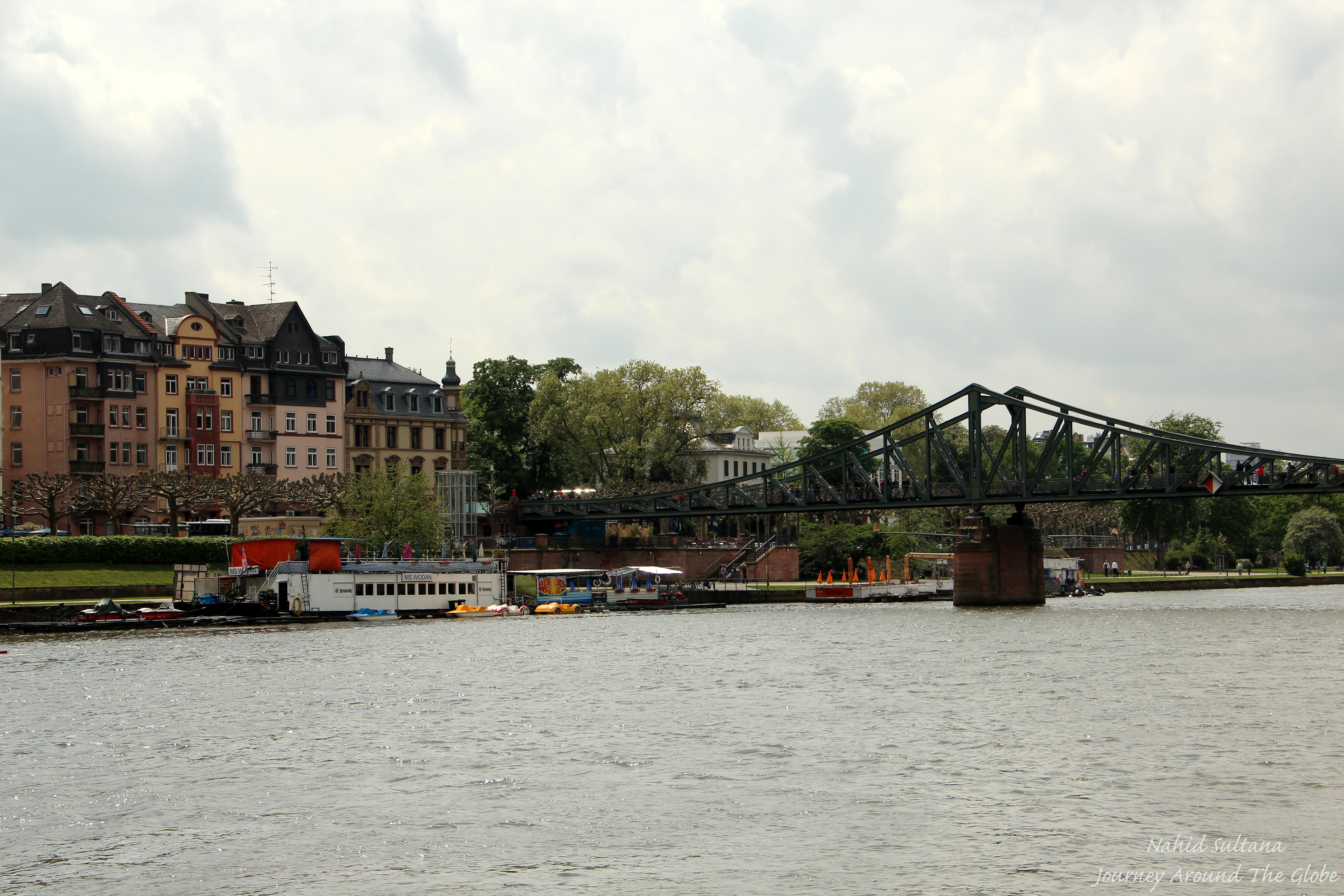
6) EISERNER STEG (IRON BRIDGE) and River MAIN: We didn’t have to go too far to see River Main…probably took us 2-3 minutes from the Dom to reach the promenade.
Eiserner Steg is the most well-known pedestrian bridge on River Main from 1869. Both the river and the bridge offer great view of the city and its famous skyline. We didn’t cross the bridge and go to the other side, but that’s where all the museums are.

- River Main and pedestrian Iron Bridge in Frankfurt, Germany
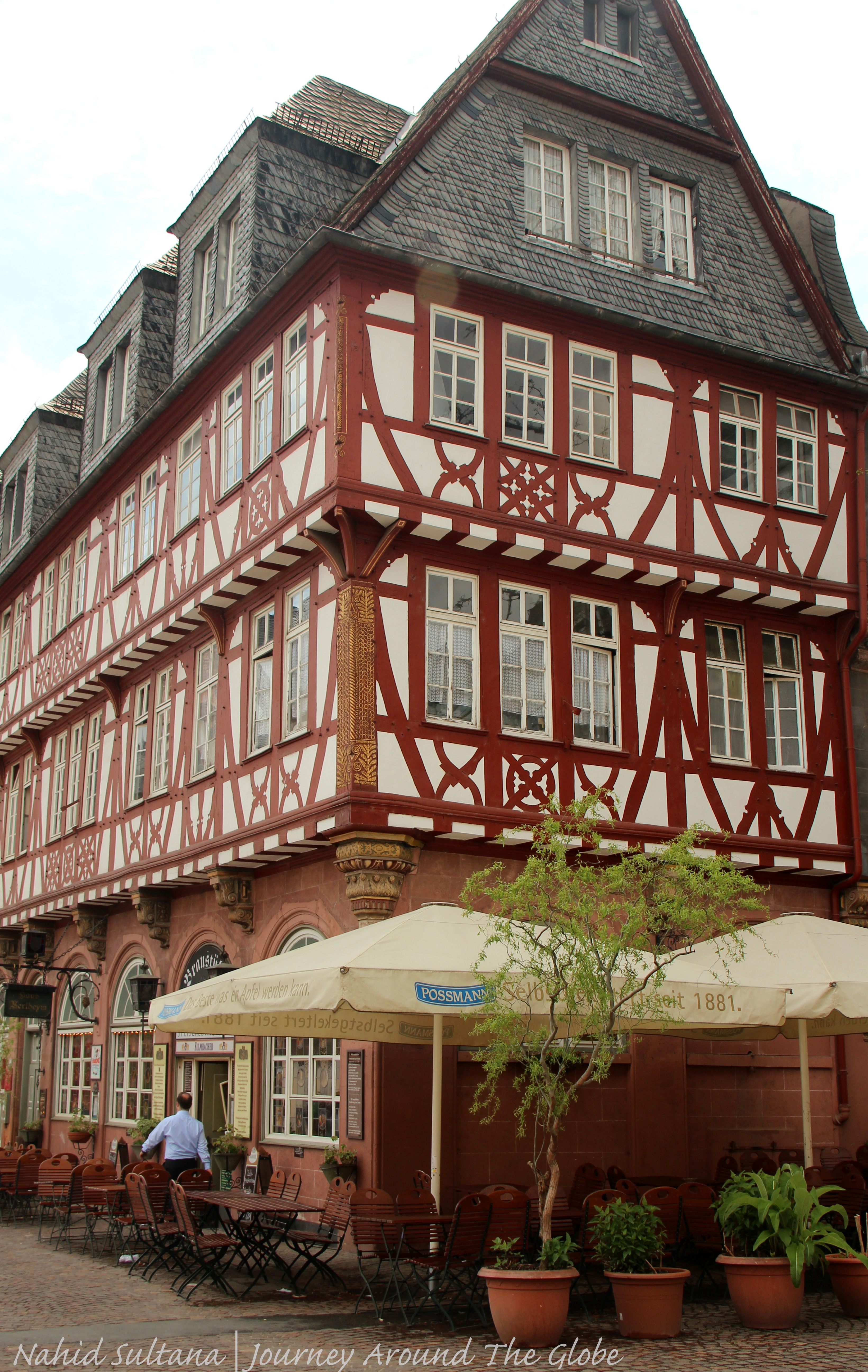
7) HAUS WERTHEIM: This Late Renaissance style house is from 1600. This is the only original half-timber house to have survived war-time destruction of the old town. It is now a café/restaurant in the old town which adds colors and patterns to the surroundings.

- Haus Wertheim from the 16th century in Frankfurt, Germany
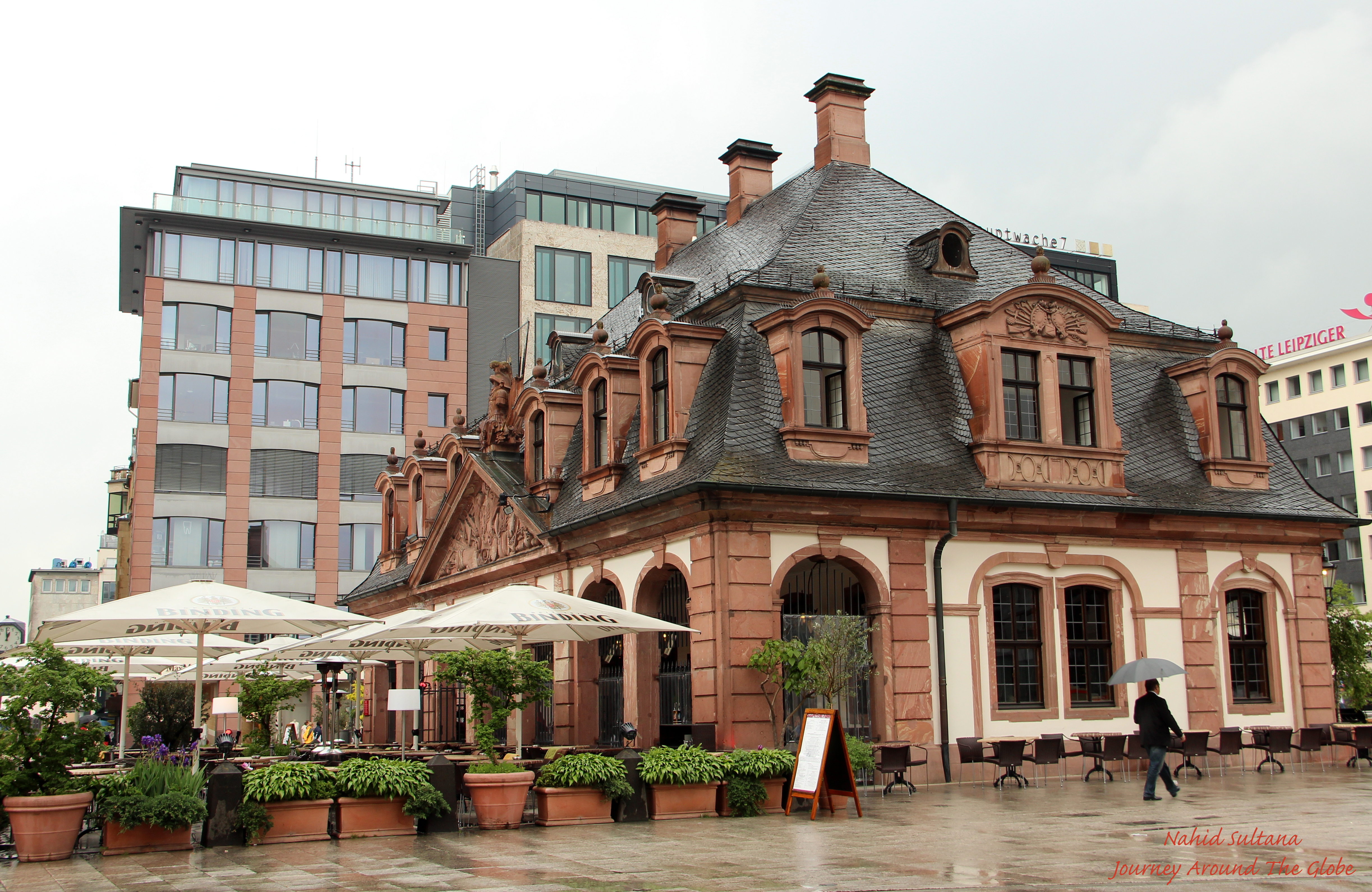
8) HAUPTWACHE and ZEIL: This is the heart of modern Frankfurt. The place got its name from a building from the early 18th century that is presently a café now, Café Hauptwache. This is the station we took to explore the modern and historic Frankfurt. Katharinenkirche is also located here.

- The cafe after which this place was named Hauptwache in Frankfurt, Germany
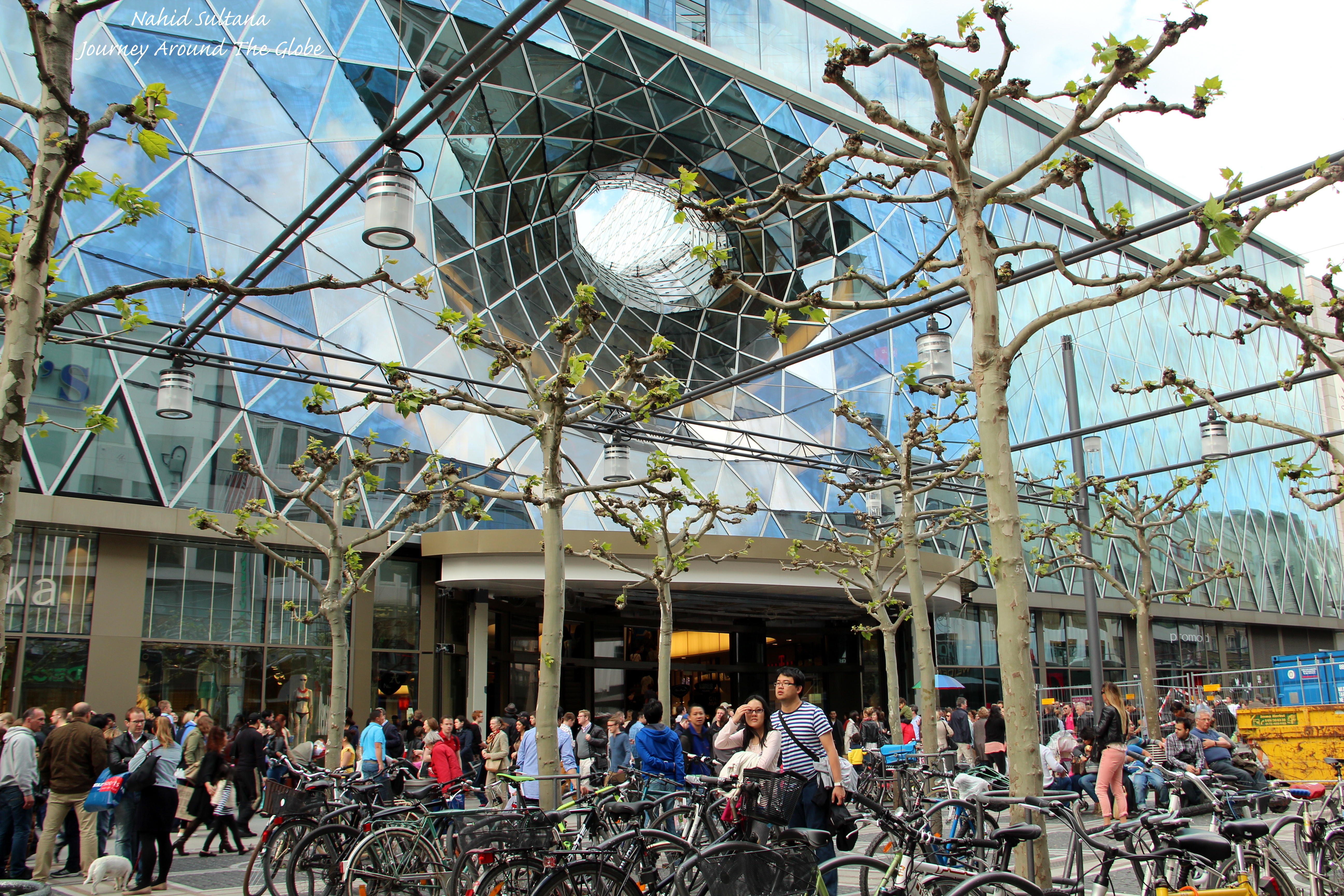
Zeil is the shopping district of Frankfurt and a paradise for people who like top-notch shopping experiences. Located very close to Hauptwache, Zeil has some outstanding architectures to gaze upon and many charming street performers to entertain every second of your time here.
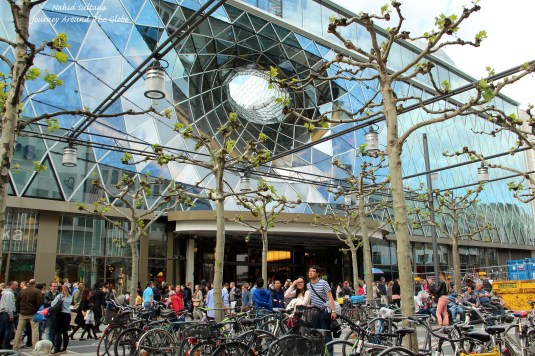
- A futuristic building in Zeil – Frankfurt, Germany
Related articles
- Frankfurt am Main (confuzzledom.wordpress.com)
- Views from Frankfurt (fdufour.wordpress.com)
- Travelblog Helsinki – Frankfurt (8englishclub.wordpress.com)
- Gibson Music Room in Frankfurt am Main (adithyaentertainment.wordpress.com)
- May 19th (dewerd1.wordpress.com)
- Vacation Day 4 – Dreichenhain, Frankfurt and Berlin (gameusall.wordpress.com)
- Frankfurt Sehenswürdigkeiten, Tourist attractions in a glance. (yilinghe.wordpress.com)
Share this:

Beethoven’s birth place – Bonn, Germany
BONN, GERMANY: Situated by River Rhine, Bonn is the former capital of West Germany. But it is best known for being the birthplace of one of the famous composers of all time, Ludwig van Beethoven, despite his utmost disgust towards his hometown. For its rich culture and admiring atmosphere, Bonn makes a great day trip from nearby cities like Dusseldorf, Cologne, or Frankfurt.
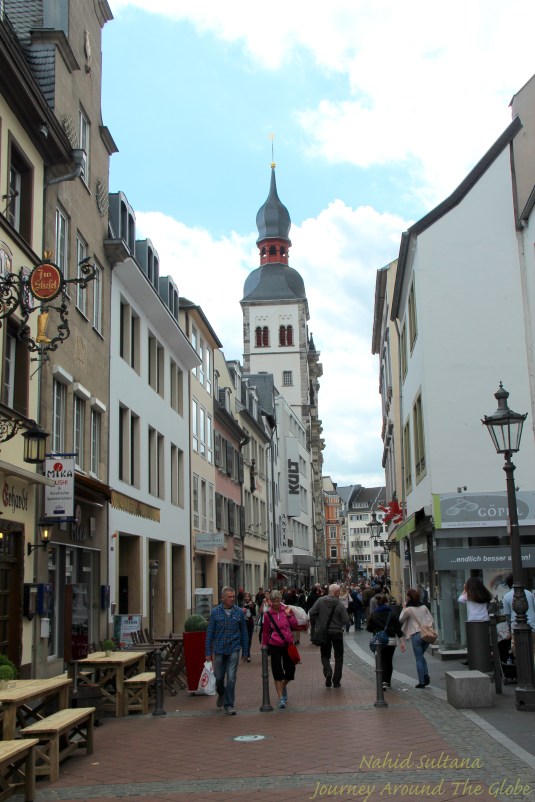
- Walking towards city center of Bonn, Germany

TIME of TRAVEL: We visited Bonn in the first week of May 2013 while we were visiting other nearby cities in Germany like Dusseldorf, Frankfurt, and Heidelberg. The day turned out to be a nice one. Although little bit of cold and cloudy at times but luckily didn’t get any rain.
EATING and SHOPPING: After searching for a good restaurant to eat, we ended up having Sri Lankan food from a cart in Marktplatz. There is McDonald’s, Pizza Hut, and other quick places in and around Marktplatz. Unlike other city centers, we didn’t see any place packed with restaurants here in Bonn, maybe we weren’t looking at the right place.
Bonn is very proud of its talented son Beethoven. You will find many souvenirs and other gifts items with his picture on it, as well as his composed music on CDs. City center is the hub for shopping and has almost all the popular stores along with many unique local places.
PLACES WE’VE VISITED: We stopped in Bonn while driving from Dusseldorf to Frankfurt. Our main interest was to see Beethoven’s house and museum but we ended up spending few hours in its city center. Other than the following places, we drove by two important buildings of Bonn while heading towards Frankfurt. First one was Villa Hammerschmidt which served as the residence of the German president when Bonn was the capital of West Germany, presently this is the secondary residence of the president. Second one was Palais Schaumburg, which was office of Germany’s chancellor and today it is used as a secondary headquarters for the chancellor.
1) STIFTSKIRCHE (COLLEGIATE CHURCH): Its bold brick exterior attracted us from outside, so we decided to check it out from inside. But the church was closed, only could peak thru and take some pictures from the other side of the gate. The church is located near City center but not inside the pedestrian zone.
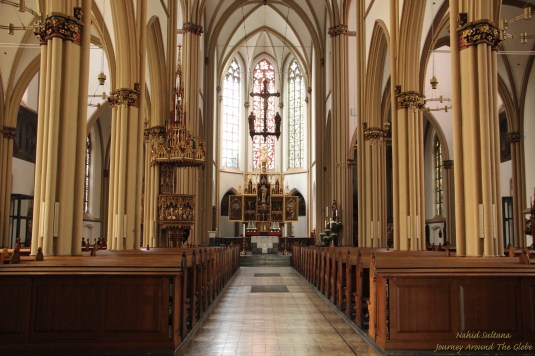
- Inside Stiftskirche in Bonn, Germany
2) BEETHOVEN-HAUS: Visiting this museum was our primary purpose of visiting Bonn. As I mentioned before, Bonn is the birthplace of Ludwig van Beethoven…one of the great composers of all time. Beethovan-Haus is the house where he was born in 1770 and is now a museum dedicated to his work and life. The Beethoven family lived for some years in this yellow house which today houses the world’s largest Beethoven collection with more than 150 original documents from the time he spent in Bonn and Vienna. His handwritings, music notes, instruments, and many of his belongings are in display here. The museum is well worth the visit and definitely a historical landmark of the city.
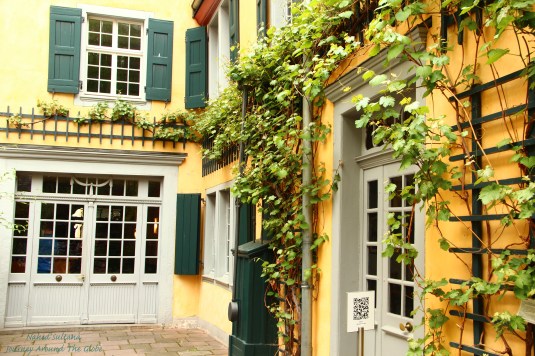
- Beethoven-Haus – birthplace of the great composer Beethoven in Bonn, Germany

The museum is located in the city center. There are few levels to explore in the museum and took us about an hour for the tour. No photos are allowed inside the house but we could take some picture in the garden and the courtyard. Ticket is 5 euros per adult and 10 euros per family (with 2 kids and 2 adults). Opening hours are 10 – 6:30 pm everyday and 11 – 6:30 pm on Sundays. Everything in the museum is in German, we took English audio guide for 2 euros which is a must for non-Germans.
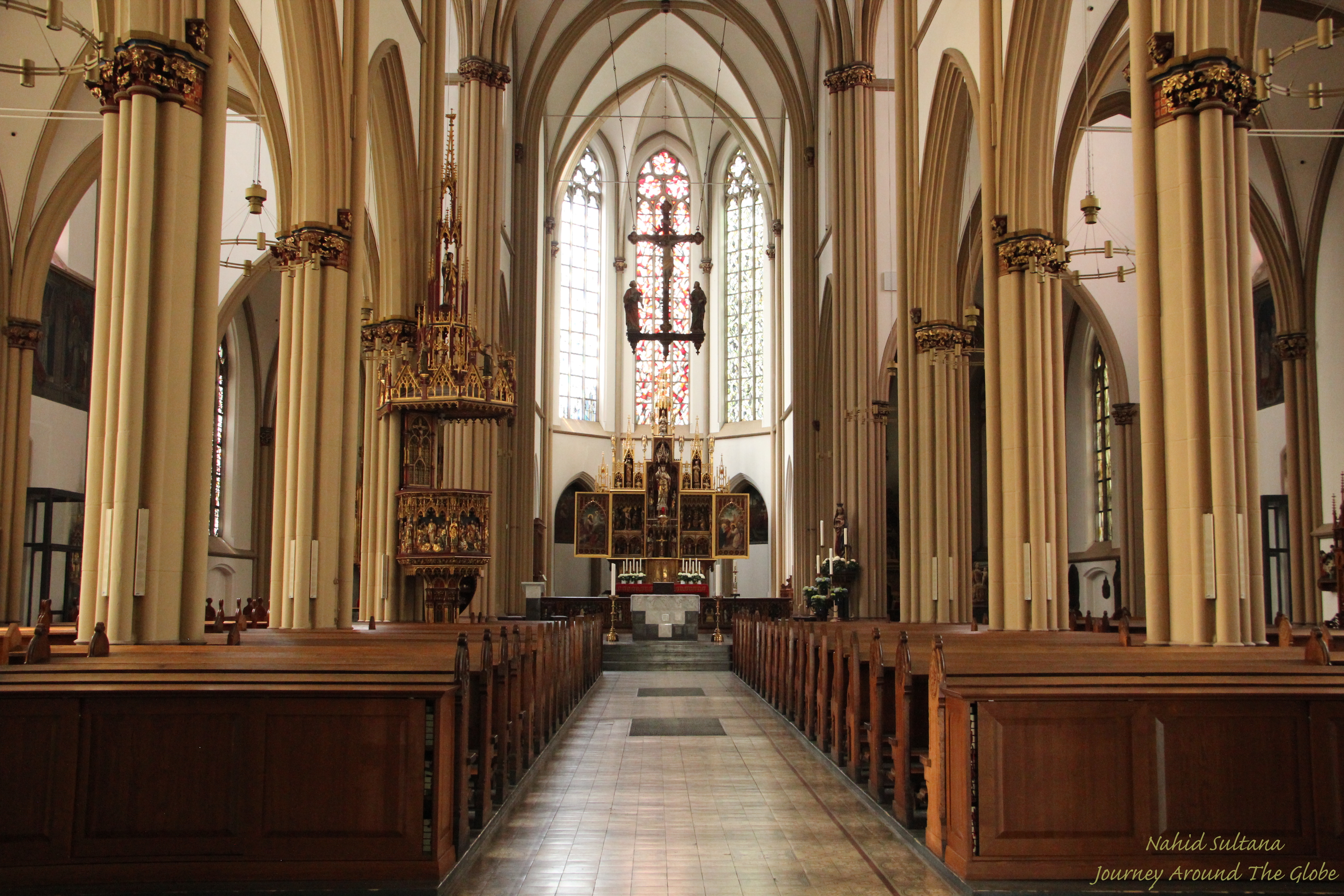
3) STIFTUNG-NAMEN-JESU-KIRCHE (CHURCH of the HOLY NAME of JESUS): This is a must-see church in Bonn. The interior design is very different from any other churches we’ve seen so far. The columns and ceiling decorated with blue, grey, and golden paints gave this church that unique look. It’s free to enter and is located in city center very close to Beethoven-Haus.
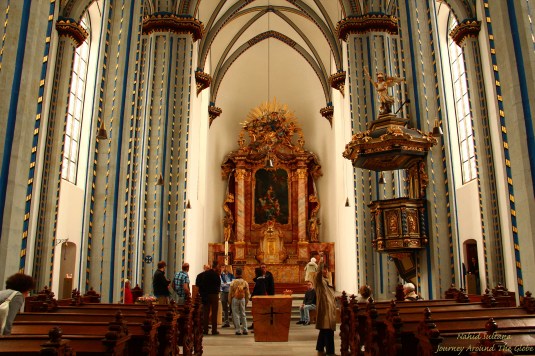
- Inside STIFTUNG-NAMEN-JESU-KIRCHE (CHURCH of the HOLY NAME of JESUS in Bonn, Germany
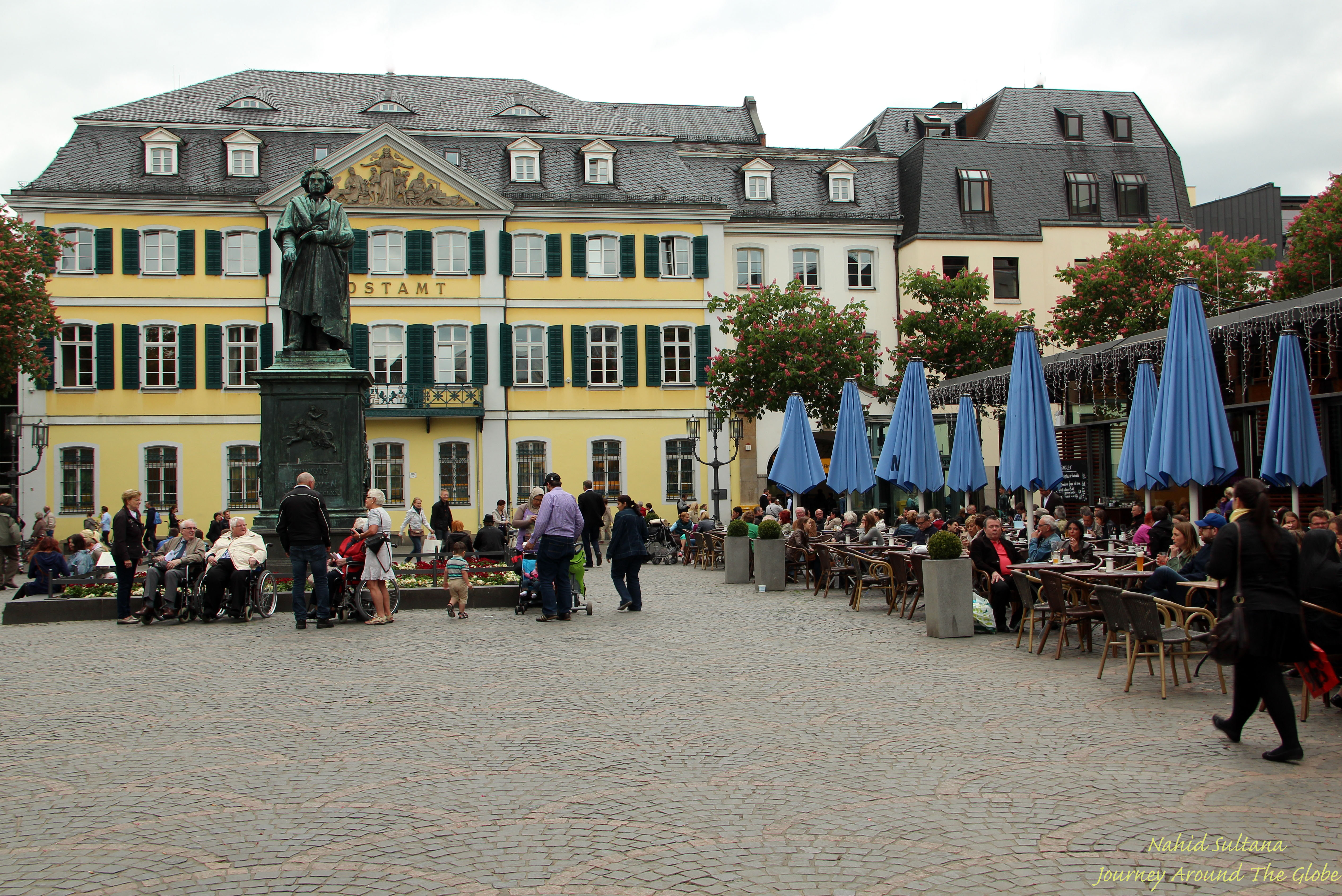
4) MUNSTERPLATZ and DAS BONNER MUNSTER: Munsterplatz is a big square in Bonn’s city center. A statue of Ludwig van Beethoven in front of beautiful post office adds boldness to this place.
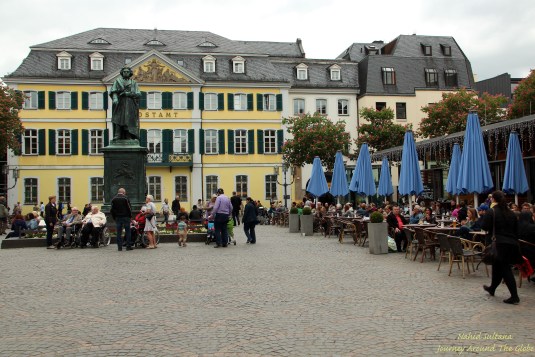
- Statue of Ludwig van Beethoven in Munsterplatz in Bonn, Germany
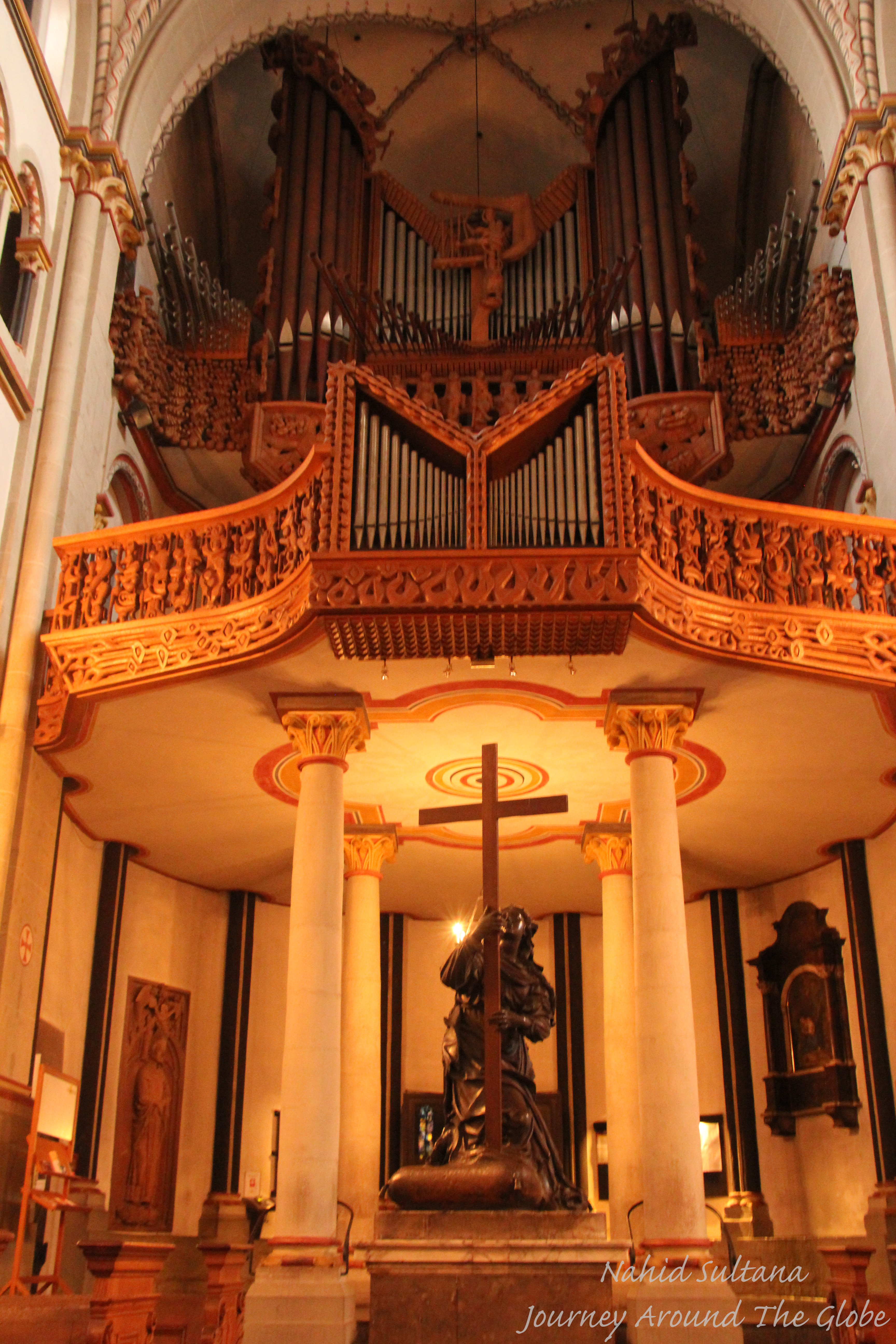
Das Bonner Munster is a beautiful Romanesque basilica in Munsterplatz. This is one of the oldest churches in Germany, dating back to the 13th century. The basilica is beautiful inside and outside. Main altar is extravagant and very ornate. Nicely curved huge organ is also notable in this church.
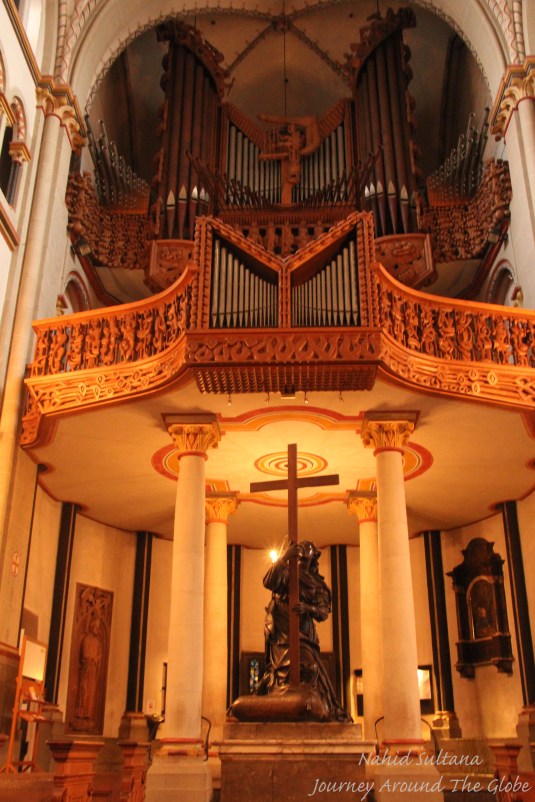
- The old church organ inside Das Bonner Munster in Bonn, Germany
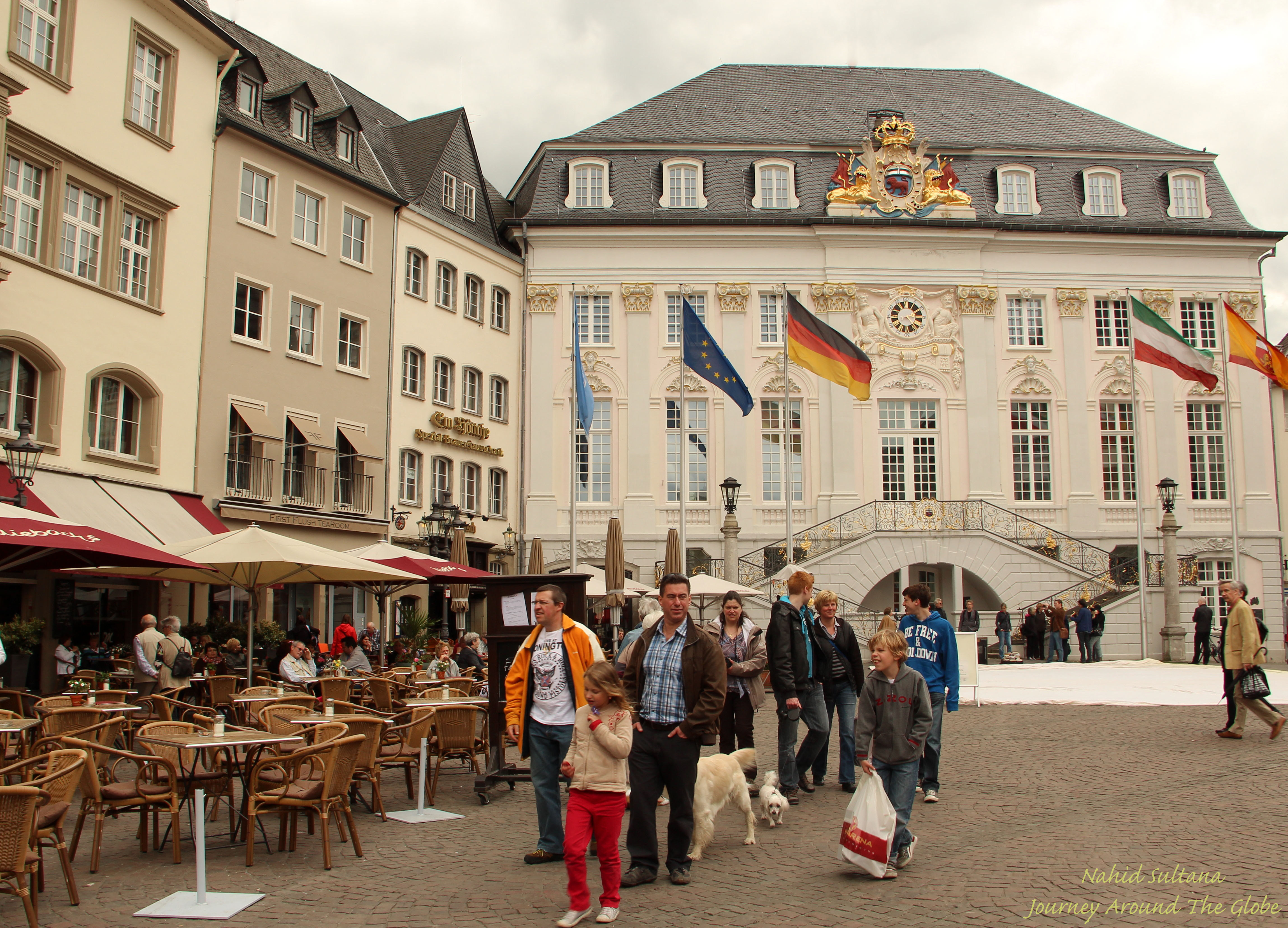
5) MARKTPLATZ and ALTES RATHAUS (OLD TOWN HALL): Marktplatz is probably the liveliest square/place in the city center. Surrounded by many shops, cafes, restaurants this is THE place to hang out and watch locals pass by. There was a farmer’s market when we went there on a Friday and was open as late as 4pm. Marktplatz houses Altes Rathaus or old town hall of Bonn. This is an elegant white building at one end of the square.
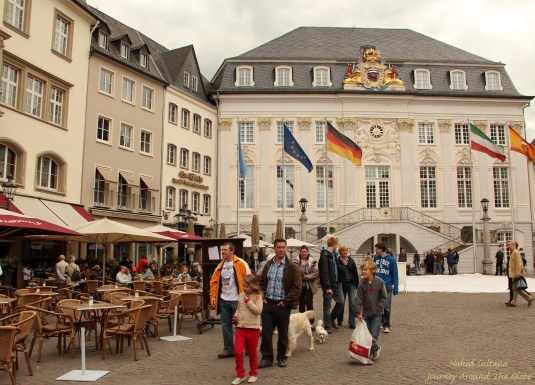
- Altes Rathaus (Old Town Hall) on the right in Marktplatz of Bonn’s city center
Related articles
- Bonn (Germany) (wedoeurope2013.wordpress.com)
- May 7 – Beethoven’s 9th, Matmos ‘Rose’ (drelectromix.wordpress.com)
Share this:

Half a day in Dinant, Belgium
DINANT, BELGIUM: Belgium never stops surprising us with its coolness and charming little towns. Situated by River Meuse, Dinant is a French-speaking (Wallonia) part of Belgium in Province de Namur. The name for the town of Dinant was first recorded about 800 BC. The first bridge of this town was built around 1080 AD. In those old days, Dinant’s main activity was to manufacture copper. Interestingly, Dinant is home town of Adolphe Sax, the famous Belgian musician who invented saxophone.

- River Meuse and City of Dinant from the citadel in Belgium
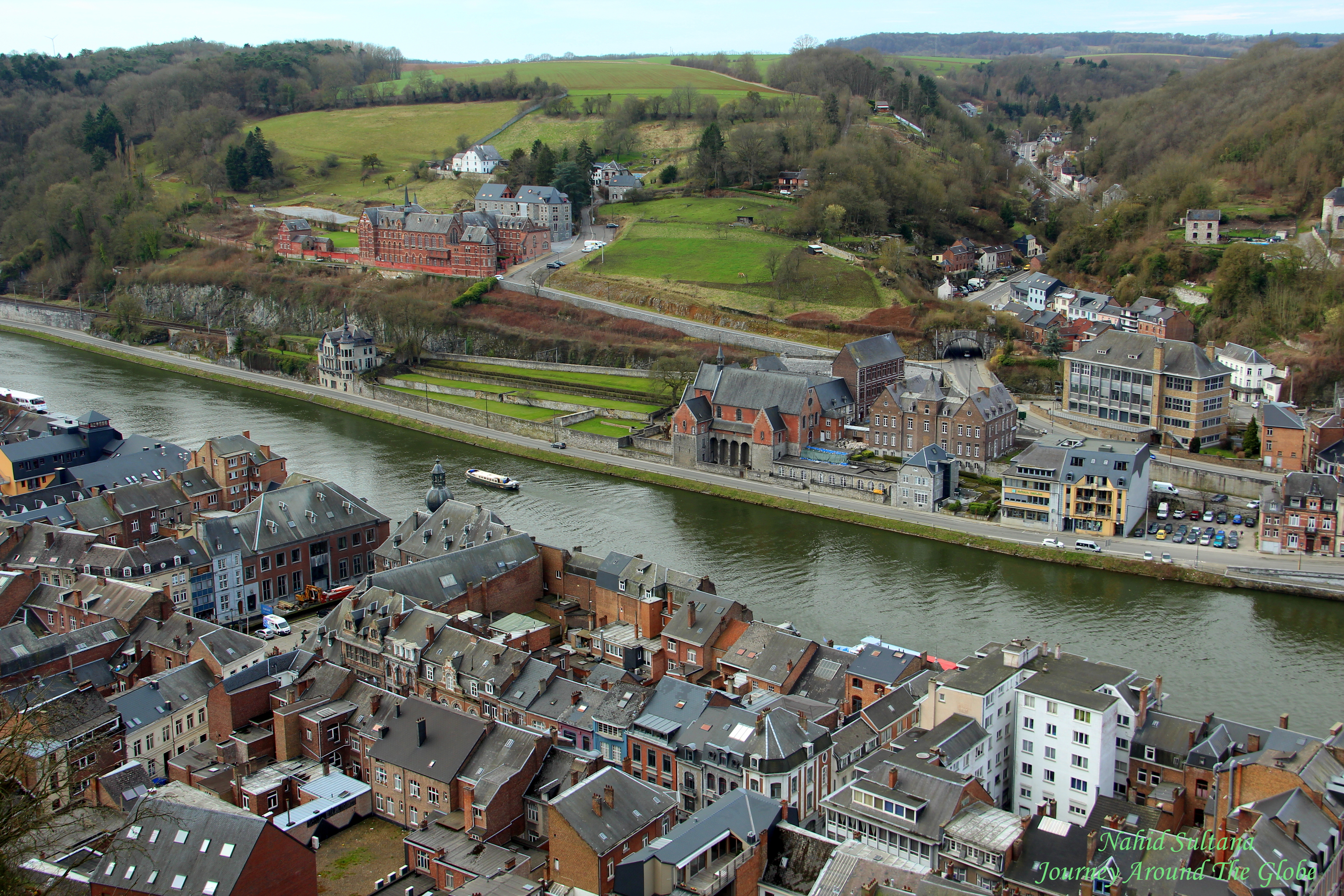
Dinant would be a perfect place for a day-trip from Brussels or other cities of Belgium. We didn’t take river cruise on Meuse, but saw some boats and water-taxis for visitors to hop on for a lovely tour around the river.
TIME of TRAVEL: It was a bright and sunny Sunday of April, 2013 when we visited Dinant. My uncle-in-law from Chicago was here visiting us. The day turned out to be a fantastic one for exploring. After Dinant, we went to Durbuy (another Wallon city in Belgium close to Dinant) for the latter half.
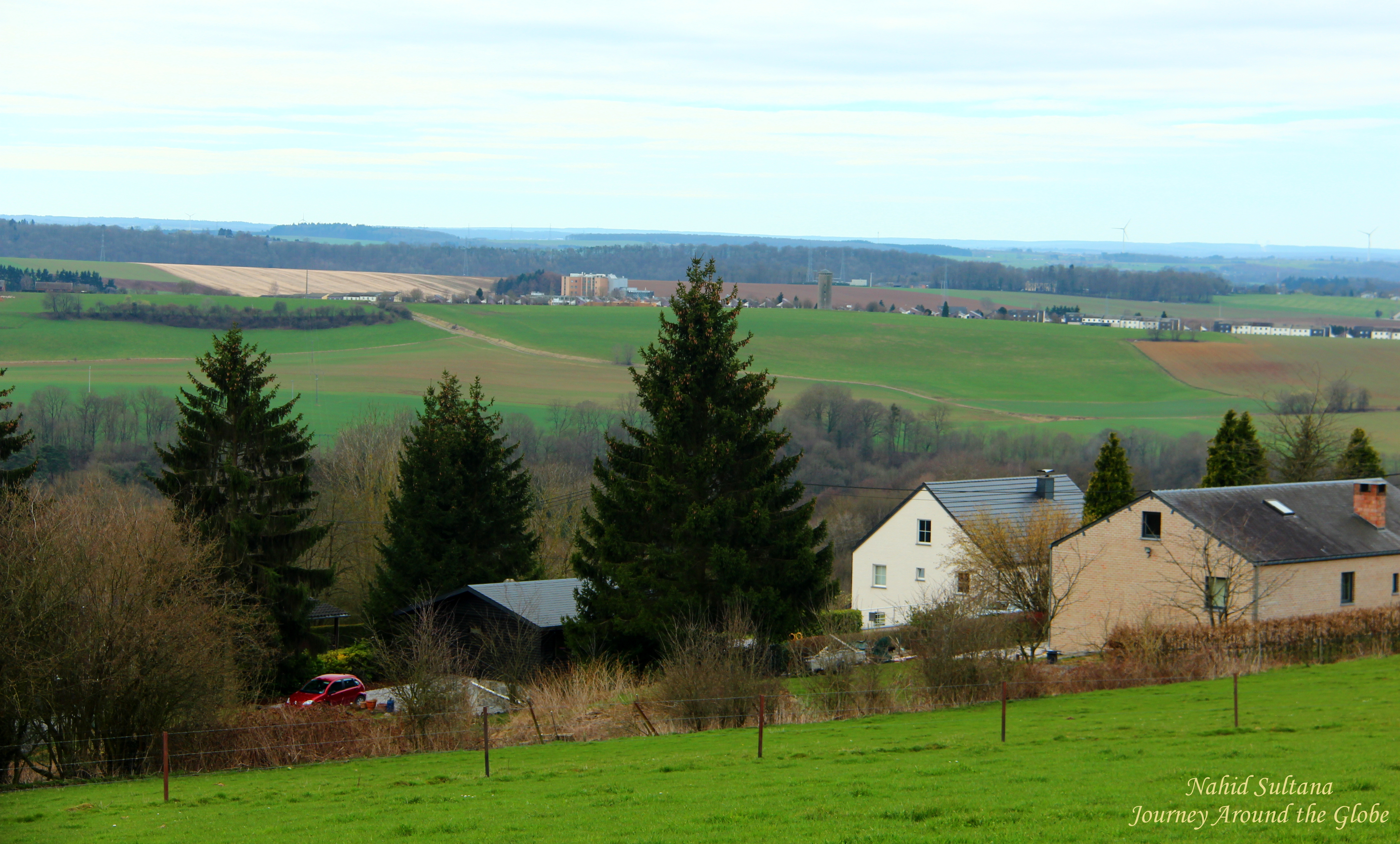
- A beautiful day in Wallonia, on our way to Dinant from Tervuren, Belgium
EATING and SHOPPING: There are many big and small restaurants and cafes by River Meuse. You can enjoy good food with good view near the Saxophone Bridge (not sure if this is the actual name of the bridge). We had some quickies in a fast food type small place.
I didn’t see too many souvenir shops here, may be one or two by the river side and one inside Dinant Citadel. I am sure if you explore small streets, you can find some specialty places.
PLACES WE’VE VISITED: We spent few hours in Dinant. Walking around the citadel, then taking cable car down to the lower city, and strolling by River Meuse were fantastic. Small cities like these may not have world-famous tourist spots but the charm they cultivate is something you can’t find in big cities.
1) DINANT CITADEL: Visiting Dinant Citadel is like visiting many centuries of history. The first fortress was built at its current spot towards 1040 AD. This fortress was erected between 1818 and 1821 under the Dutch regime. It once used to dominate the Meuse Valley from a height of 100 meters. The stairway of 408 steps to connect the citadel with lower town was constructed in 1577 and the cable car was installed in 1954.

- The steps of Dinant Citadel from the 16th century (on the left) and cable car on the top
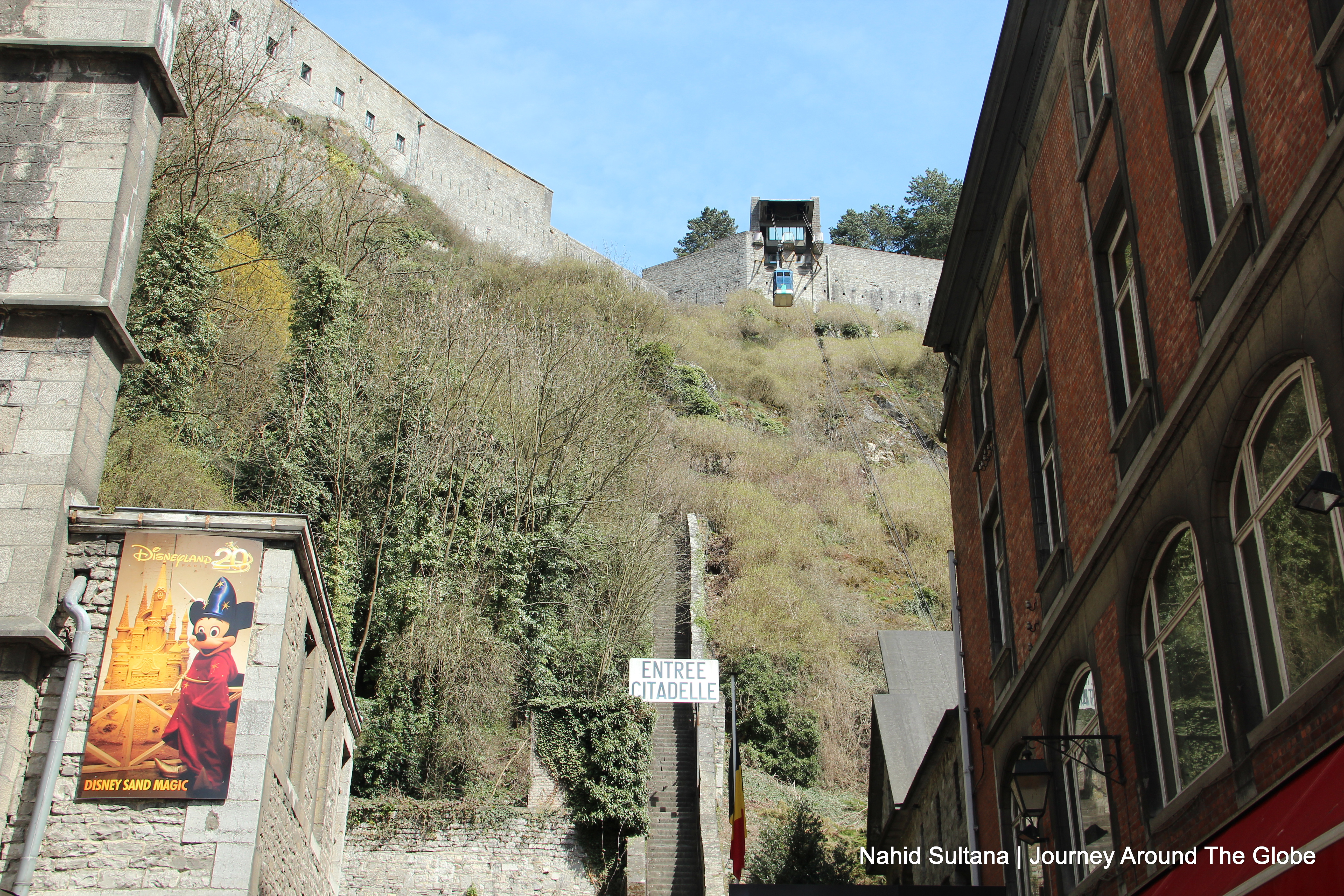
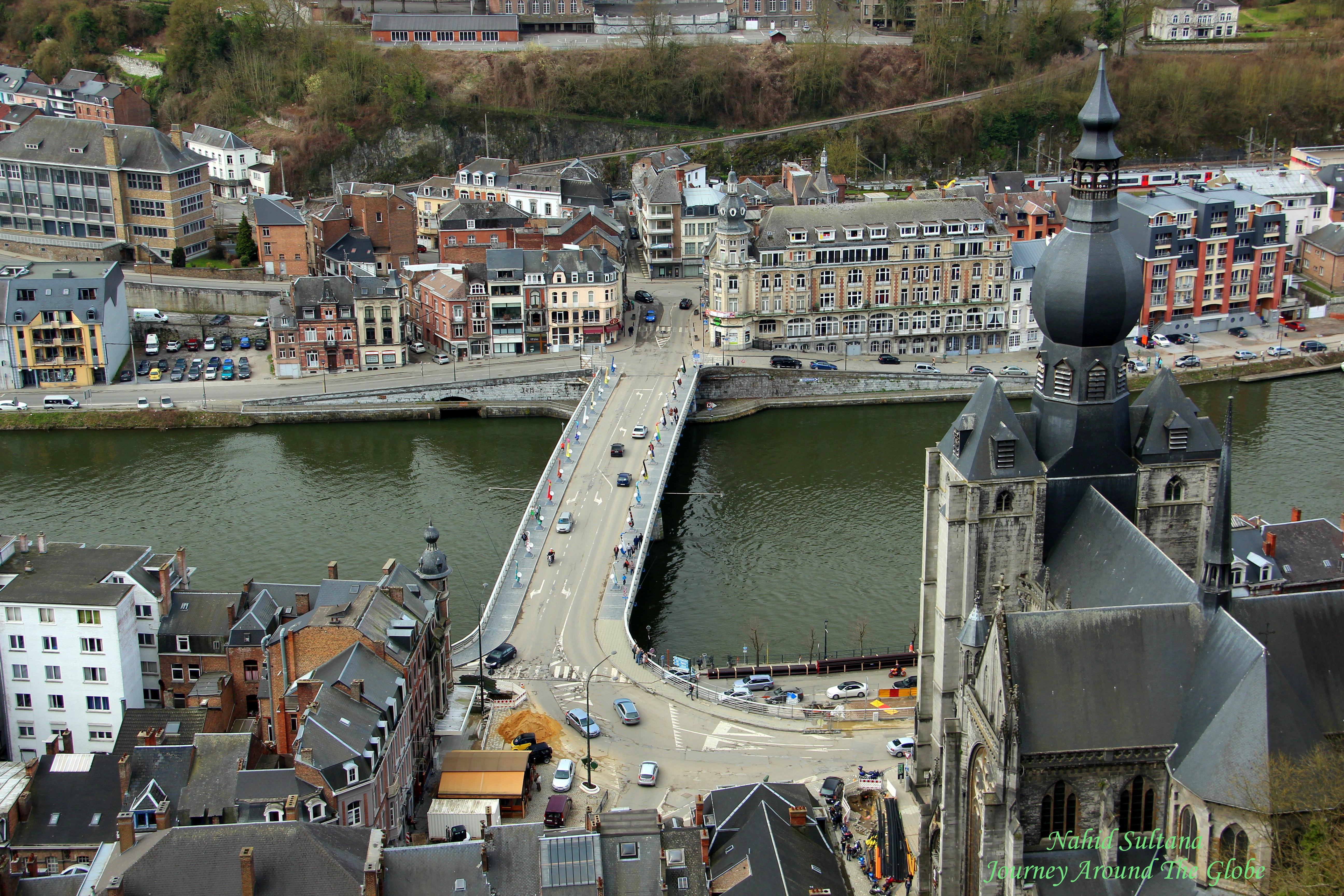
Dinant Citadel gives a splendid view of the city and River Meuse from up above. You can see the French border only 12 km away and famous Bayard Cliff on your left from the view-point of this fortress. The massive defense wall can be seen from far away and lower part of the city. There are many small galleries and museums depicting life in 1820, prisoners’ cells, torture room, armory, and a collapsed shelter cave/trench from 1914. This is like a big park great for strolling and wandering around while discovering old history. Looking at those century-old walls take you back in time when Dinant used to be a tiny city.
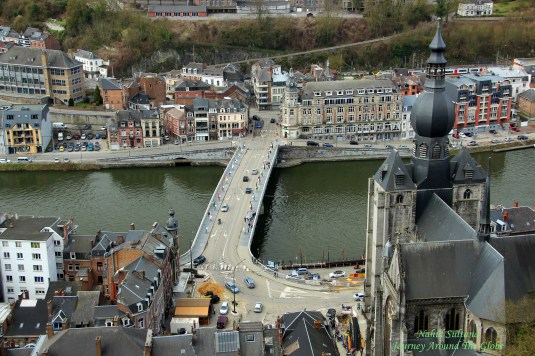
- Breathtaking view of the city and river from Dinant Citadel in Belgium
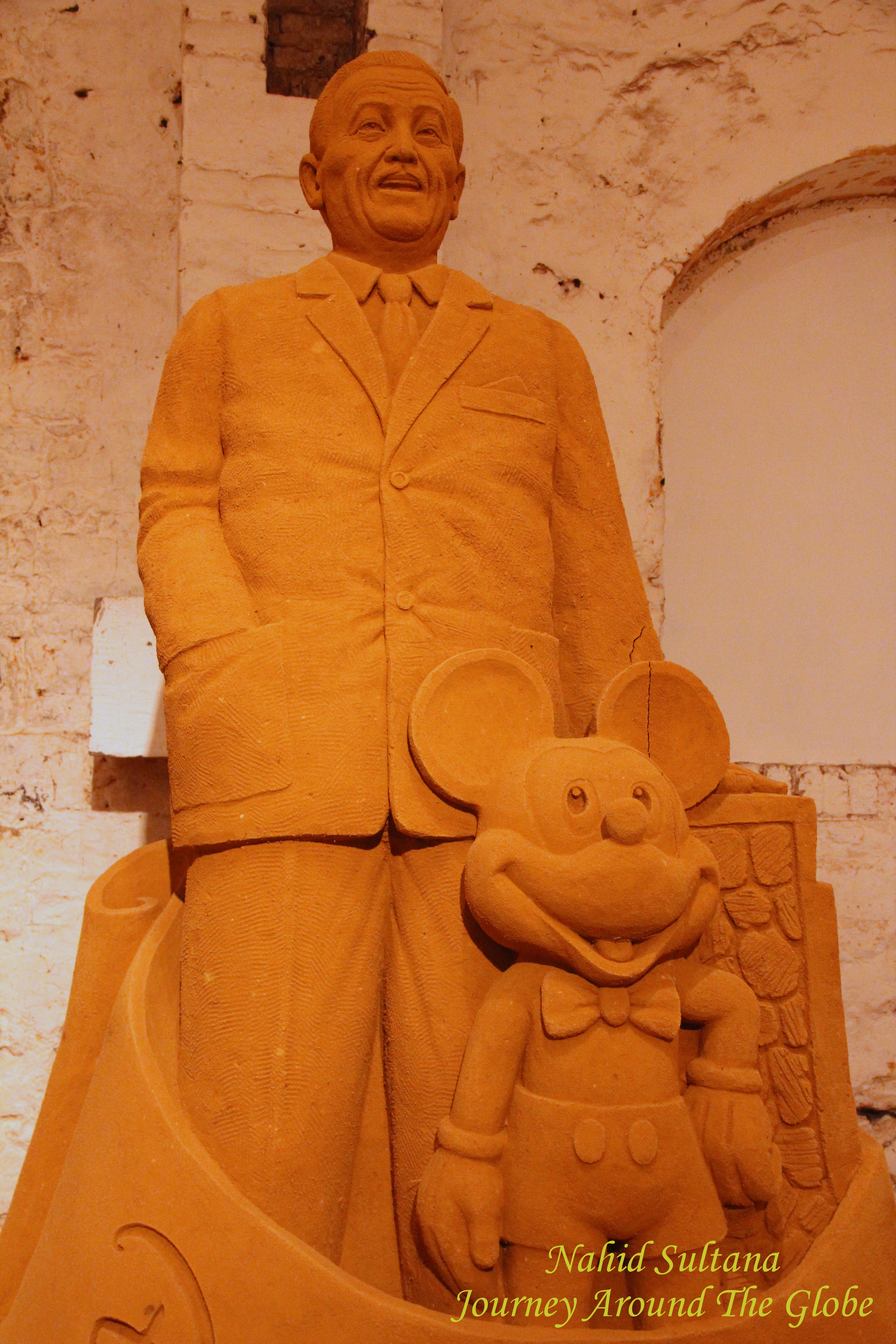
An underground temporary exhibition, Disney Sand Magic, was at display inside the citadel during our visit. We got to see many sand sculptures of famous Disney characters and castles from the movies and TV shows. It took us about 15-20 minutes to see few rooms full of these sculptures in an underground space of the citadel.
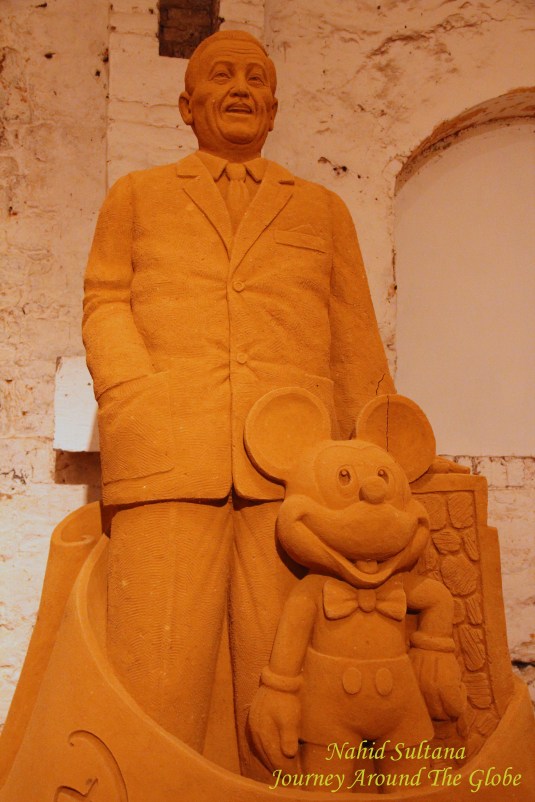
- Sand Sculpture of Mr. Walt Disney and Mickey Mouse in Disney’s Sand Magic in Dinant Citadel, Belgium
Citadel + cable car + Disney Sand Magic cost 11 euros per person and 9 euros per kid. There is a free parking for citadel visitors on the hill. The citadel is open from 10 – 5 (10 – 6 during high season). There is a small snack and souvenir shop in the main courtyard of this fortress.
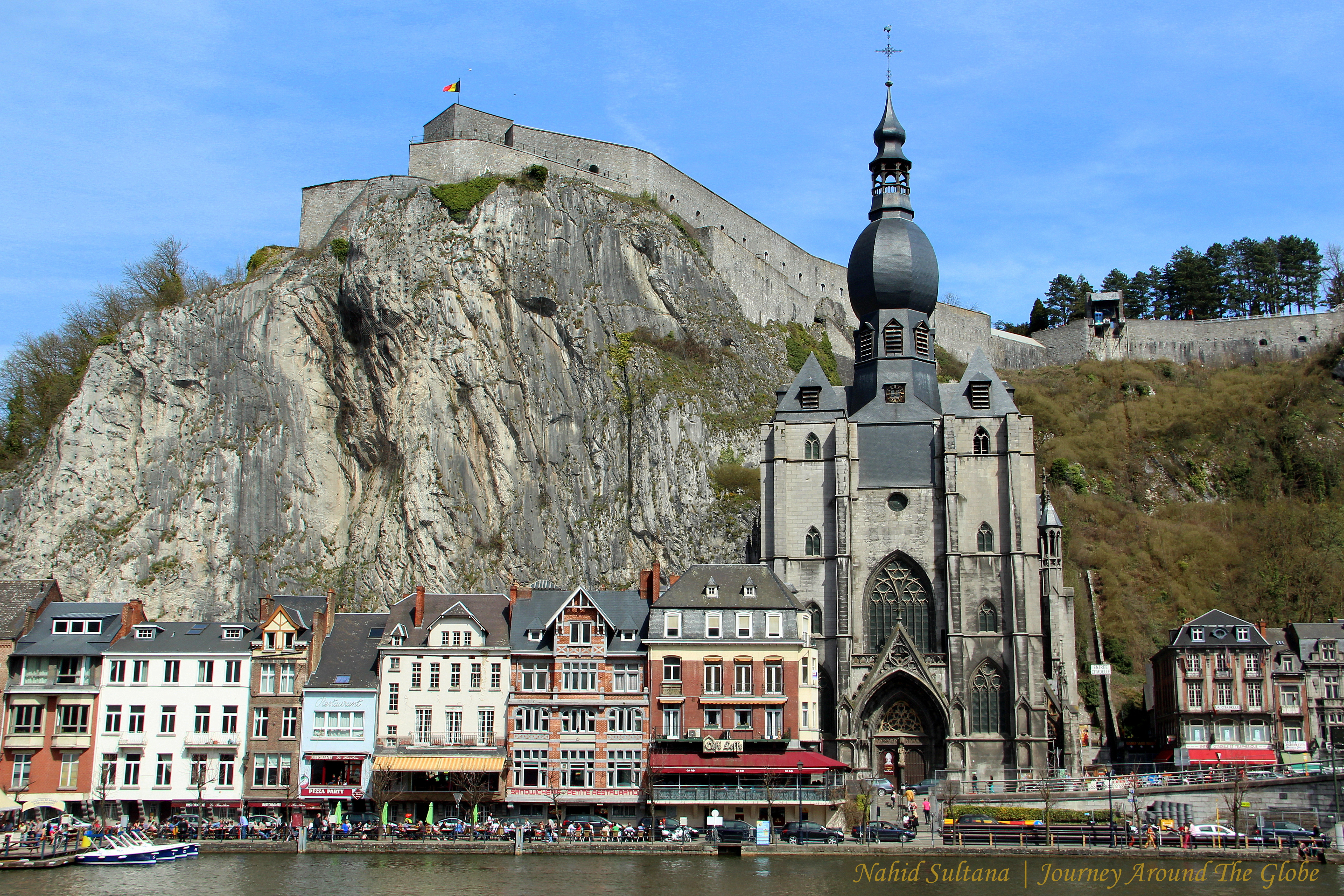
2) COLLEGGIATE CATEHDRAL: Located at the foothill of Dinant Citadel, this beautiful cathedral is a unique signature and landmark of the city. Visitor’s shouldn’t miss the chance of going inside to see its gorgeous interior (also because it’s free). Decorative altar, giant stone columns, and stained-glass windows are very nice. Cross the saxophone bridge and go on the other side of the river to get a prettier outlook of the cathedral.
- Collegiate Cathedral of Dinant and the citadel in the backdrop with River Meuse flowing in the front in Dinant, Belgium
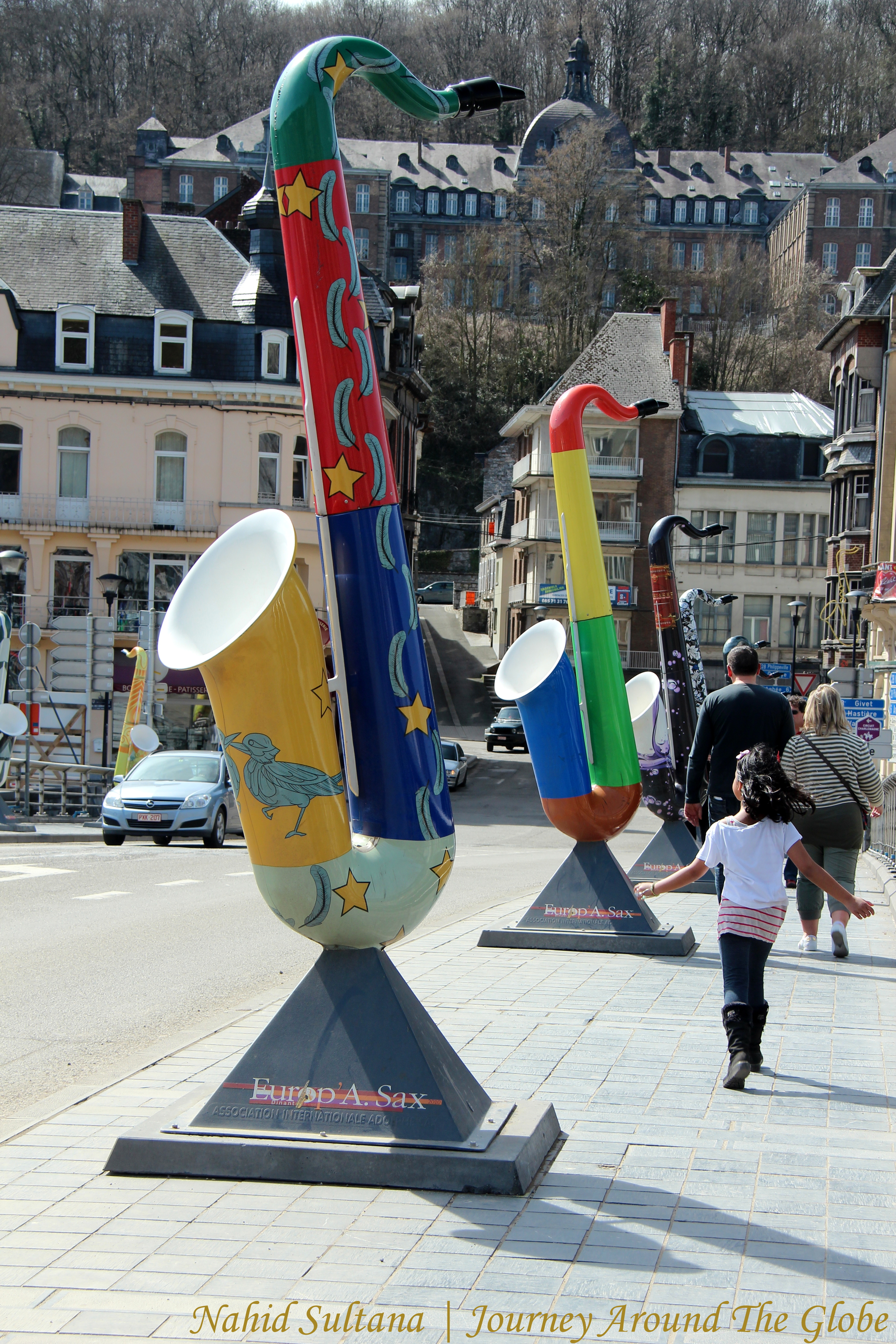
3) SAXOPHONE BRIDGE and RIVER MEUSE: I really don’t know the exact name of the bridge, but this is the closest one to Collegiate Cathedral. The bridge is dedicated to Charles de Gaulle who had been wounded there on 1914. I call it Saxophone Bridge because both sides of this bridge is decorated with many colorful and artistic saxophones.

- Saxophone bridge in Dinant, Belgium
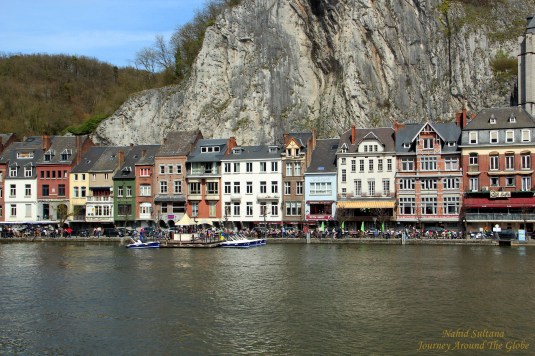
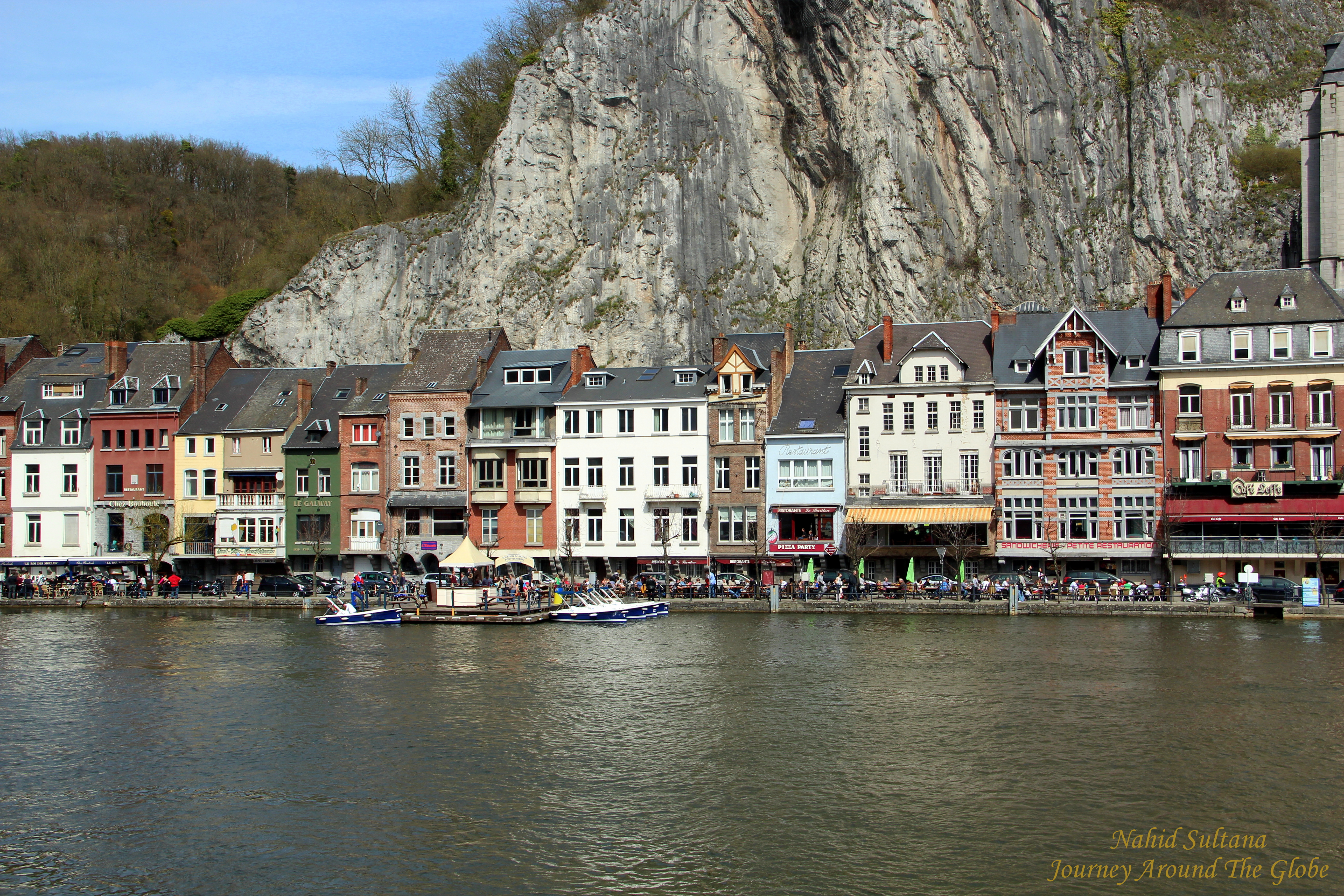
Once we were done with the citadel and visiting cathedral, we crossed the bridge and went to the other side of the river. Lines of old buildings by the river with the cathedral and fortress in the back look brilliant. Take time to just walk by River Meuse while enjoying cozy old atmosphere of the city.
- Old buildings by River Meuse in Dinant, Belgium
Related articles
- Wallon capital of Belgium – Namur (journeyaroundtheglobe.com)
- Visiting the smallest town in the world – Durbuy, Belgium (journeyaroundtheglobe.com)
- Dinant (teddynykiel.wordpress.com)
- World Bank Must End Support for Honduran Palm Oil Company Implicated in Murder (alethonews.wordpress.com)
Share this:

A small Bulgarian town – Plovdiv
PLOVDIV, BULGARIA: Plovdiv is one of the oldest towns in Europe, dating back to more than 4000 years BC. Old town of Plovdiv lies on a natural elevation…mostly few hills. Visitors can walk through different historical ages, see ancient buildings, and feel the spirit of this lovely town. Many well-preserved remains survived from this flourished town, liked old buildings, paved streets, fortifications, walls, water-supply, and sewerage.

- Old town of Plovdiv, Bulgaria
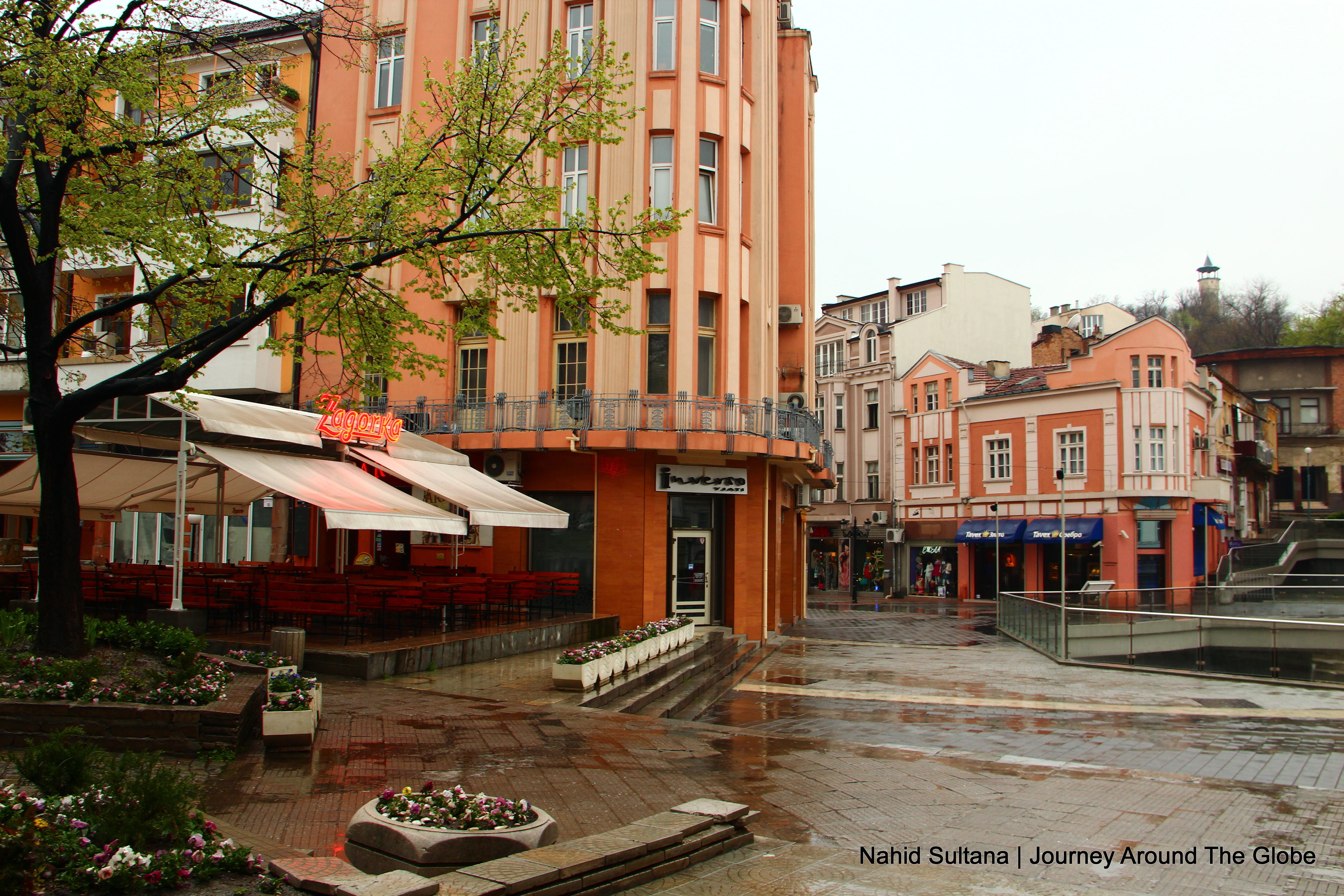
There weren’t many tourists during our visit. But this is one of the popular destinations near Sofia and makes a great day-trip if you are up to get some charming ancient taste.
TIME of TRAVEL: We chose a bad day to visit Plovdiv. We visited Sofia during the Easter Break of 2013. The weather forecast said it would rain little bit…but darn it. It was drizzling almost all and was raining heavily in the late afternoon. We were all wet and cold, especially when we had to wait for our amateur guide to bring the car (he lost the way and couldn’t find us…ugh) to pick us up. We weren’t prepared for that weather at all.
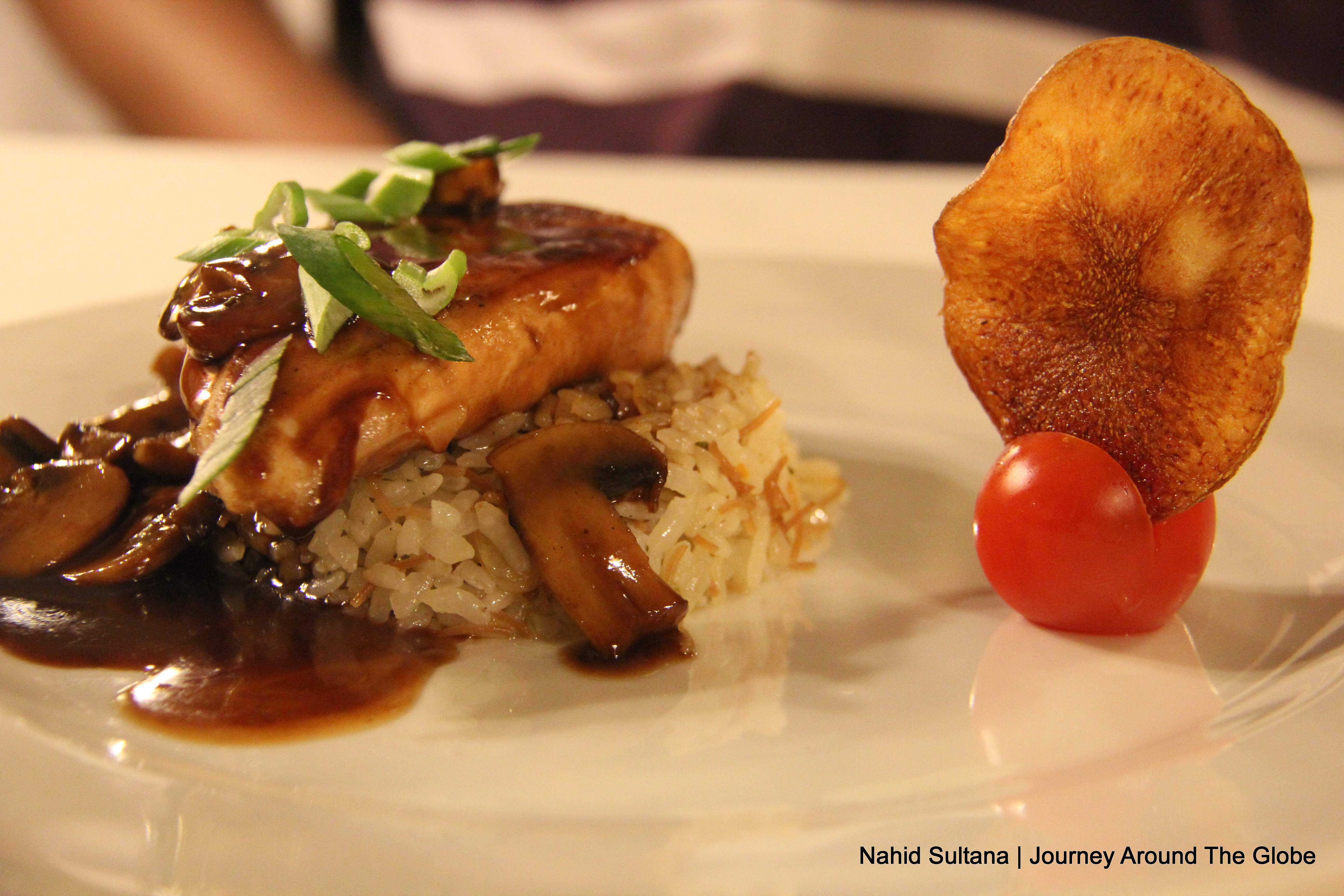
EATING and SHOPPING: There are few nice restaurants in old town of Plodiv. We had lunch in a restaurant, called “Phillippopolis” which is itself a historic building of the town with an art museum on the upper floor. The restaurant serves traditional Bulgarian dishes along with some infusions. Every dish we ordered was fan-tabulous.

- One of our dishes in Restaurant Philippopolis in Plovdiv, Bulgaria
For shopping, although we couldn’t look around much for the silly rain, lines of stores are located near Djoumaya Mosque in the old town. They looked very appealing but didn’t want to go to all the stores with my wet boots and umbrella and disturb their lazy times…blah.
PLACES WE’VE VISITED: We spent about 4/5 hours in Plovdiv. We could have seen more if the weather was not as bad. But I think we did ok even in the rain. We mainly stayed in the old town of Plovdiv, therefore, all these locations were done on foot.
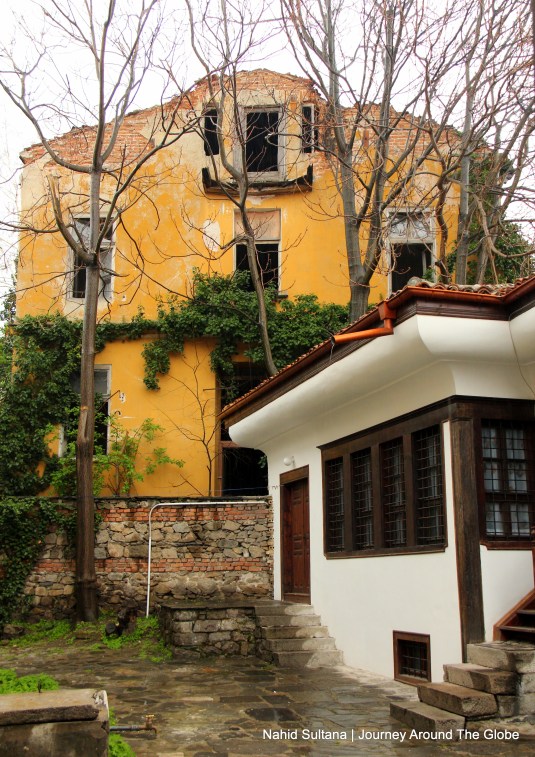
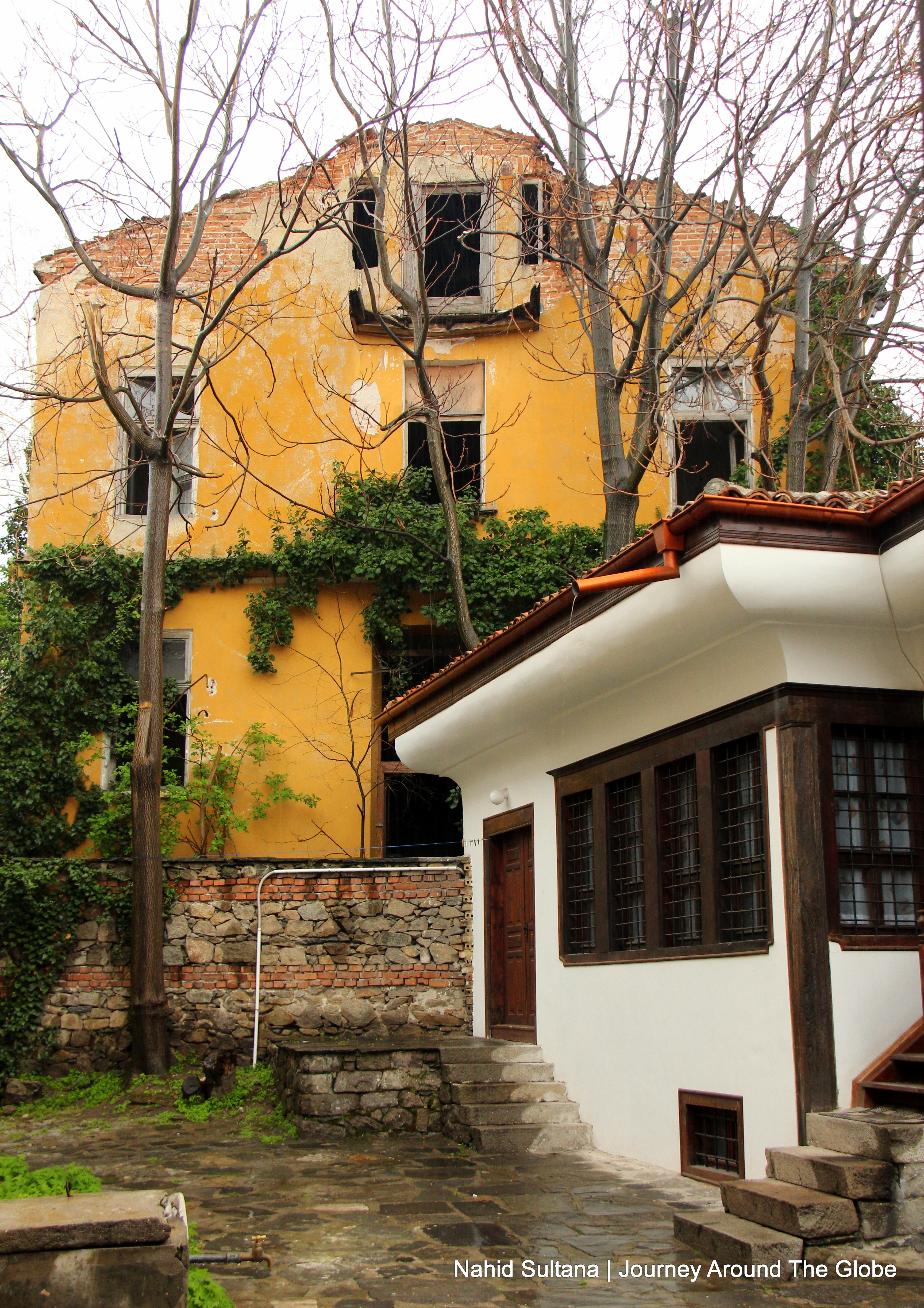
- Old buildings of Plovdiv, Bulgaria
1) VIRGIN MARY CHURCH: The original church at this spot was built in the 9th century. But the current edifice is from the mid-19th century. It’s free to enter but taking photo is prohibited.
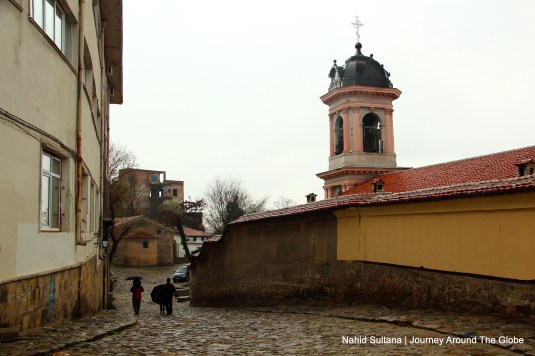
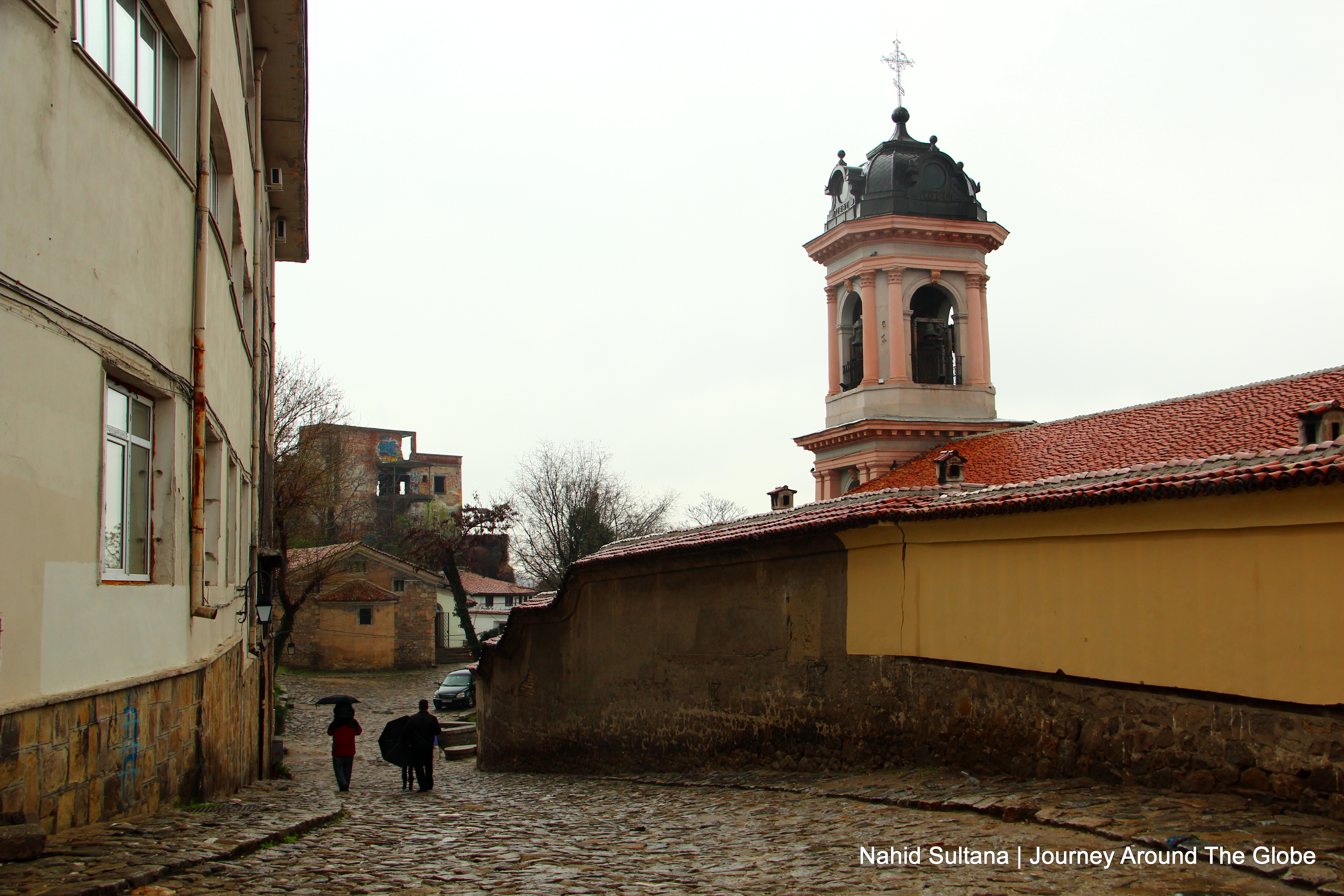
- Steeple of Virgin Mary Church in Plovdiv, Bulgaria
2) ST. DIMITAR CHURCH: The present day church from 19th century was built on the site of a much older Christian basilica. This is also located in old town very close to Virgin Mary Cathedral. It’s free to enter but we weren’t allowed to take any photos.
3) ROMAN AMPHITHEATER: Theater was built somewhere around 1st millennium. The open area for the audience had 28 concentric rows with marble seats. Performances, forums, People’s Assembly, gladiator fights, and other major events used to take place in this stadium since Phillippopolis didn’t have an amphitheater, the typical Roman venues for such games. It ceased functioning in the 5th century when the structure was demolished and the building materials plundered.

- Roman amphitheater from the 1st century in Plovdiv, Bulgaria
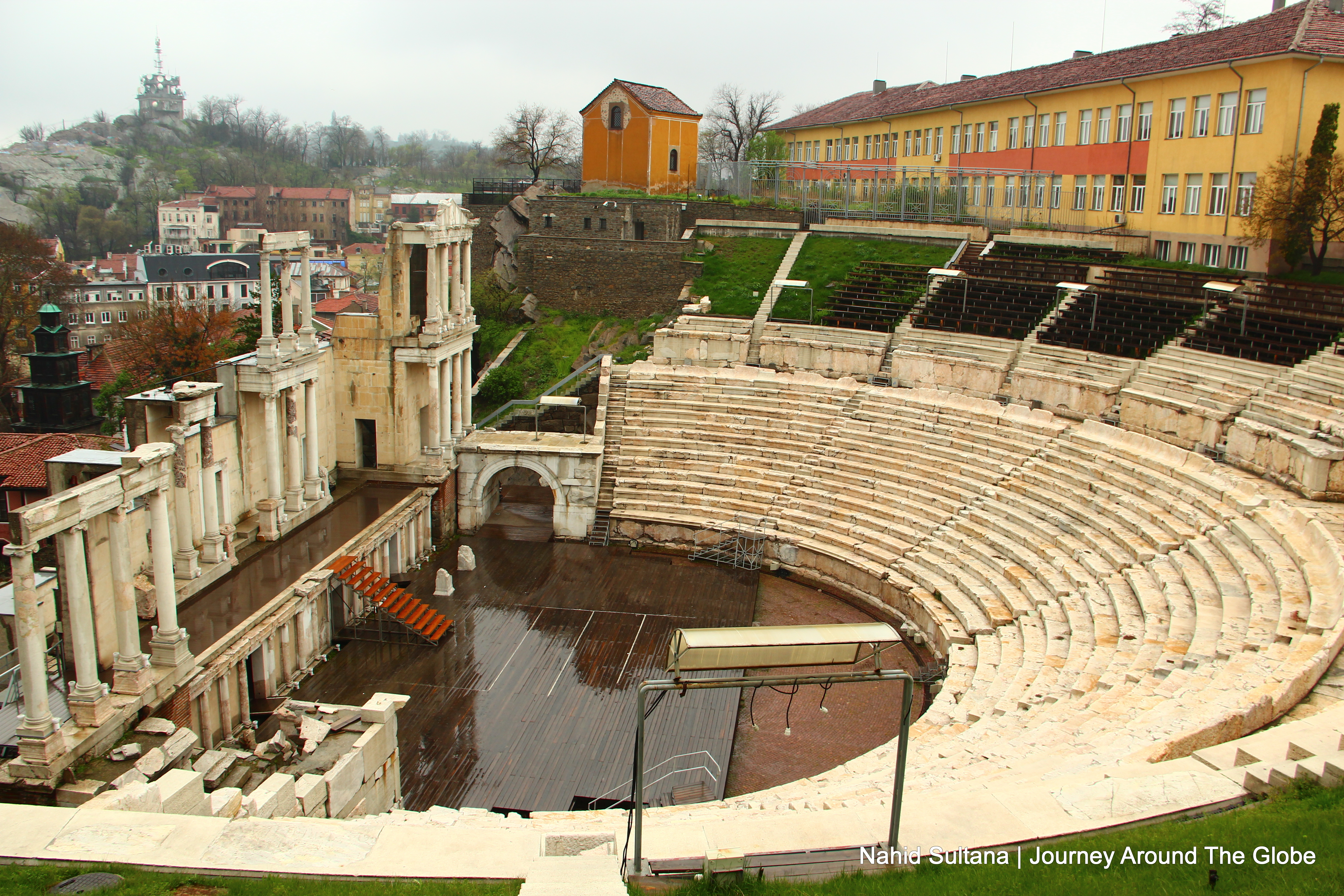
The theater is open from 9 – 6 pm (Mon-Sun) during the summer time and 9 – 5:30 (Mon-Sun) during winter time. Ticket is 5 LV for adults (kids under 7 is free). There are some guided tours available which tourists can take from the ticket office.
4) ANCIENT STADIUM of PHILIPPOPOLIS: In the center of old town near Djoumaya Mosque, known as Djoumaya Square, the ancient stadium of Phillippopolis can be seen in a preserved underground area. The stadium was built in the 2nd century AD with seating capacity for 30000 spectators. This is one of the most notable facilities from Ancient Phillippopolis. In this uncovered area you can see a unique combination of some remains from an ancient street, a fortification wall, and an aqueduct.

- Underground ancient stadium of Philippopolis and Djoumaya Mosque in the back in Plovdiv, Bulgaria
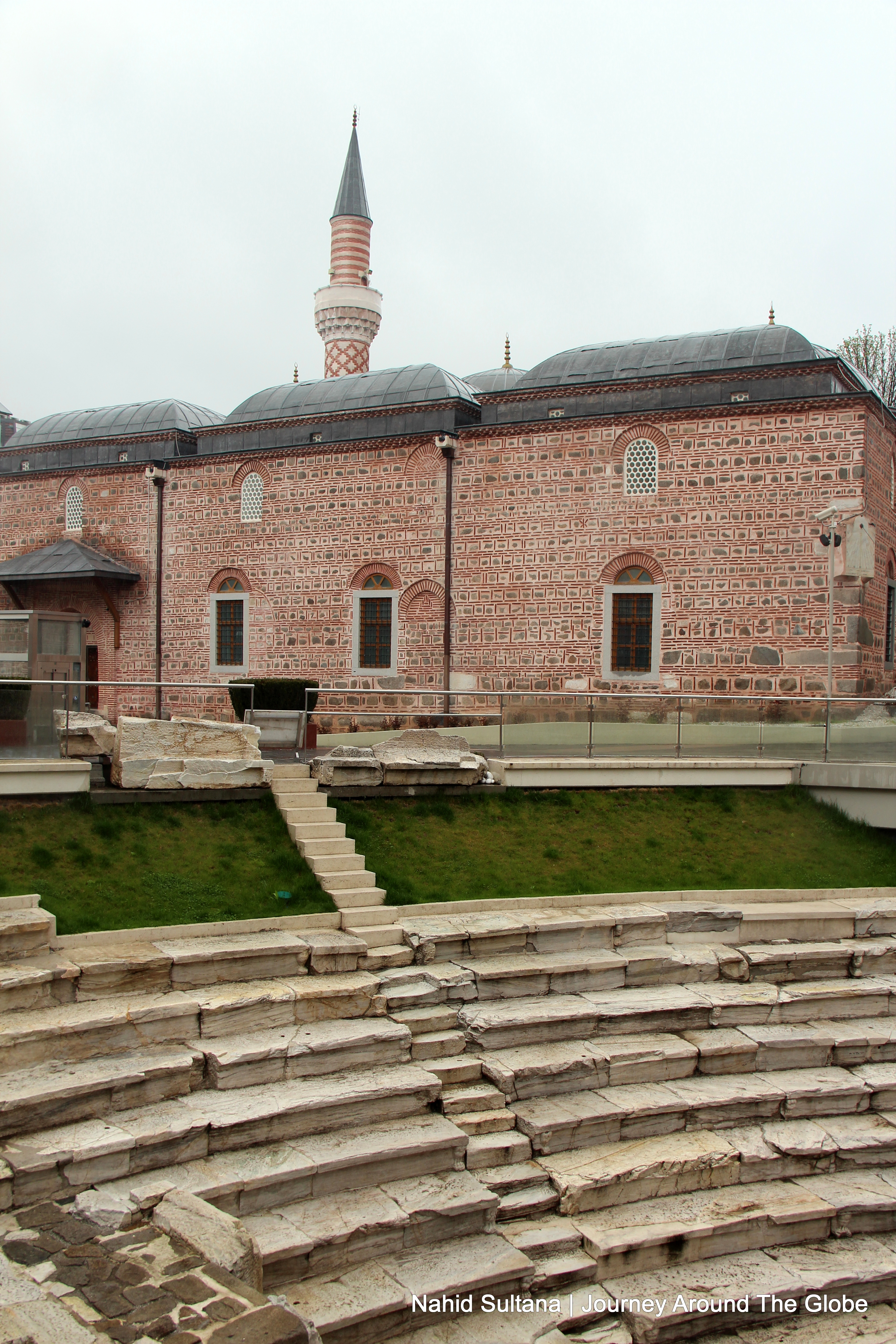
5) DJOUMAYA MOSQUE: This mosque was built in the second half of the 14th century but later it was burnt down to erect a church. But in 1435 the mosque was rebuilt. The building kept its appearance to from its 1784 reconstruction. This is the main place where Muslims of Plovdiv still pray. As an architectural and art monument of national significance, Djoumaya Mosque is under the protection of the Bulgarian State.
Opposite the main entrance is the lavishly decorated altar niche, the mihrab. The vaulted roof spaces are beautifully decorated with colorful ornaments interwoven with medallions with texts from the Koran. The minaret, adorned with ornaments of decorative bricks, rises high above the roof. The call for prayer is given from the top of the minaret.

- Djoumaya Mosque from the 14th century in Plovdiv, Bulgaria
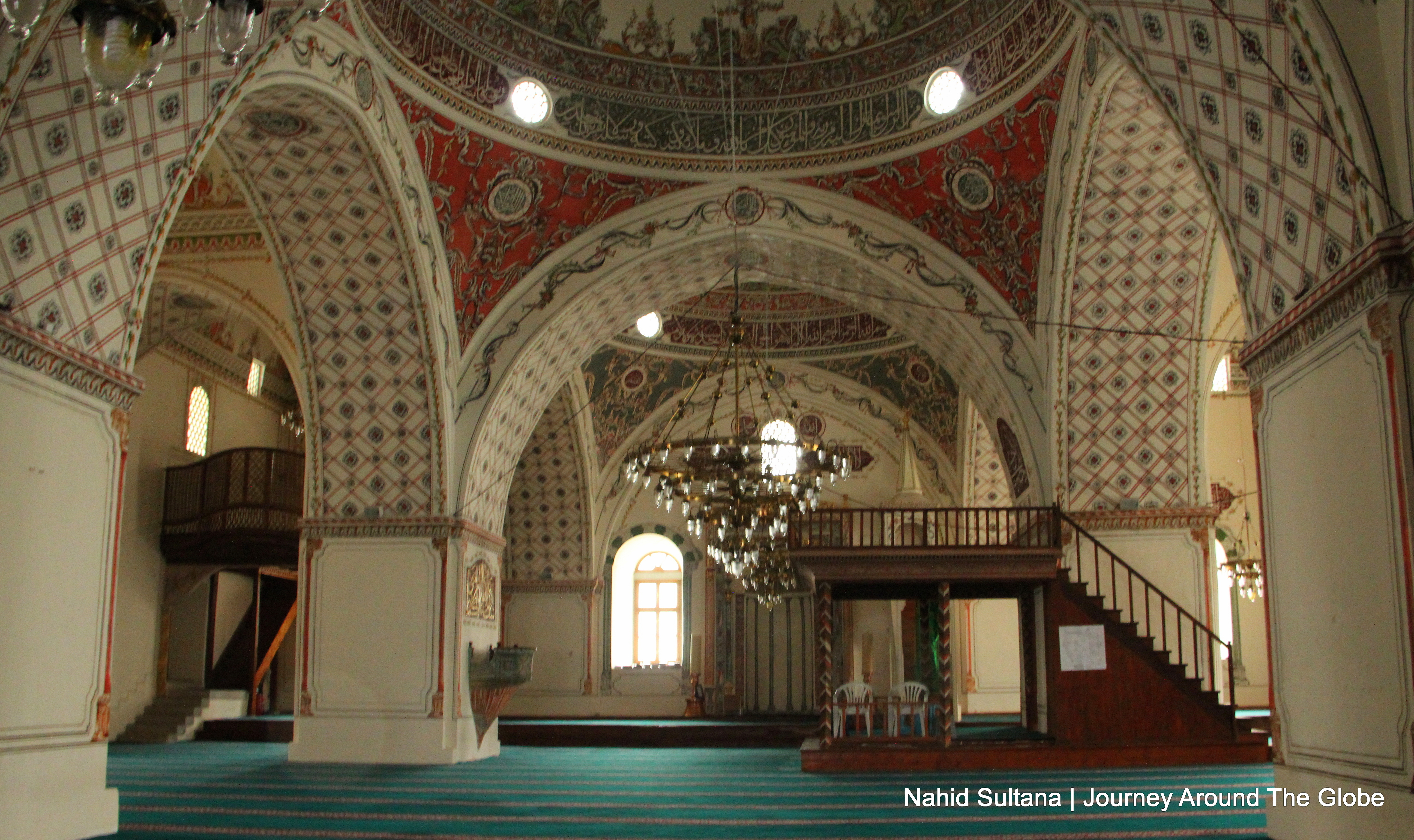
The mosque is located in the old town of Plovdiv. There is no entry fee but I don’t think they allow visitors during prayer, since it is still an active mosque. Don’t forget to take your shoes off before entering the place.
Related articles
- Easter Break 2013 – Trip to Sofia, Bulgaria (journeyaroundtheglobe.com)
- Plovdiv Inspires: Contemporary Art meets Ancient Architecture (pierreethier.wordpress.com)
- Plovdiv Inspires: Contemporary Art meets Ancient Architecture (bulgarianow.wordpress.com)
Share this:

Business Excellence Award 2020 from AI Global Media for The Most Entertaining Personal Travel Blog – Pacific Northwest USA

Top Posts & Pages


Authors
 Globe Runner
Business Excellence Award 2020 for The Most Entertaining Personal Travel Blog – Pacific Northwest USA

Business Excellence Award 2020 from AI Global Media

 Journey Around The Globe