Journey Around The Globe
ready for the next destination
Shakespeare’s home in Stratford-Upon-Avon, England
STRATFORD-UPON-AVON and GLOUCESTER CATHEDRAL, ENGLAND: One of the greatest poets and playwrights of all time William Shakespeare’s home, Stratford-Upon-Avon is a historic town on the River Avon. Rich in culture and heritage, history of Shakespeare can be found at every corner in this town. Many old half-timbered houses make this medieval town a cozy tourist destination. Come in summer to see beautiful blooms around here. Center of the town is very attractive and well-preserved.

- Old town of Stratford-Upon-Avon where the Birthplace of Shakespeare is located in England
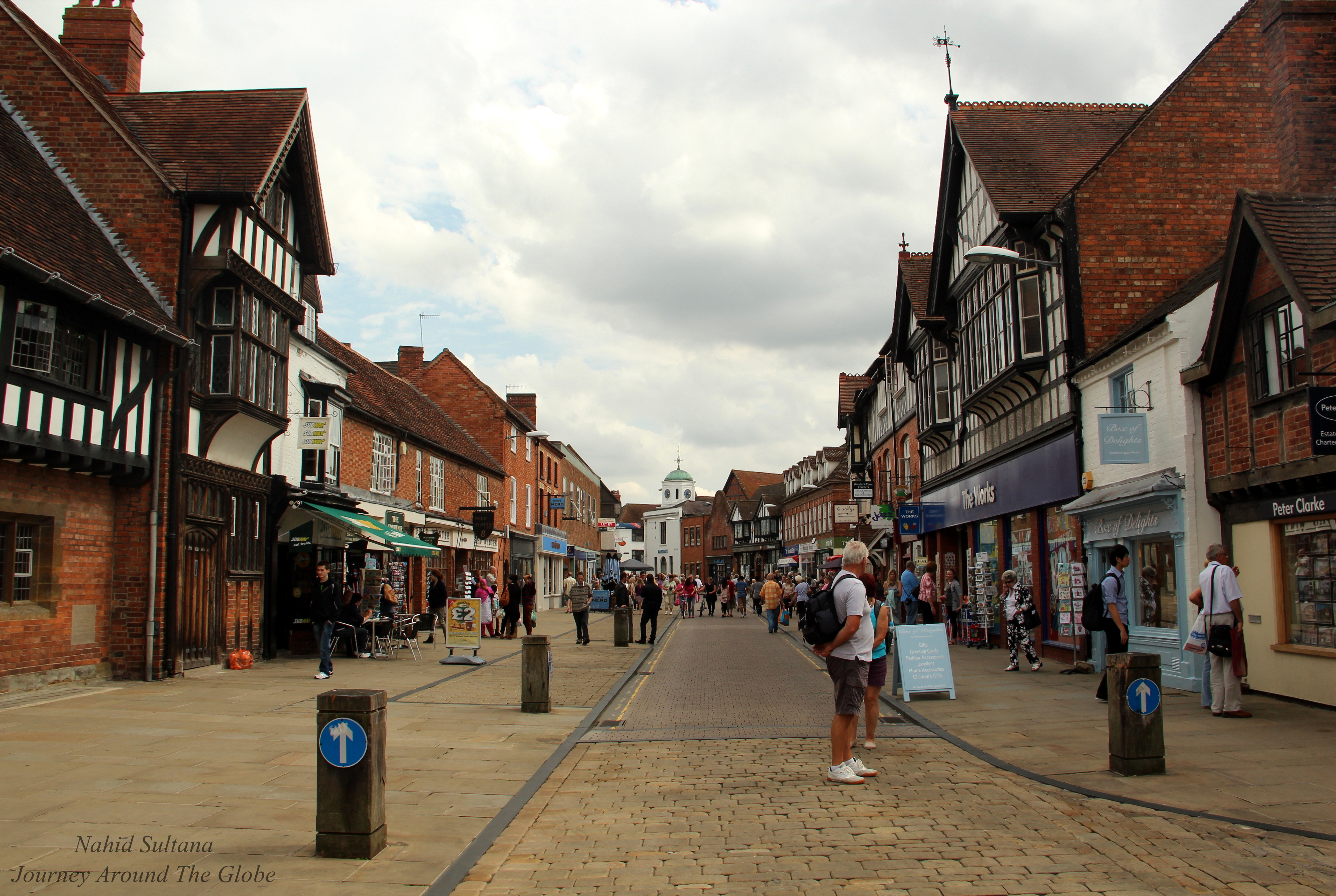
The city is very compact and easy to cover all the major sites on foot. Parking is easy here too. There is a big parking structure only 2-3 minutes of walk from Shakespeare’s Birthplace.
TIME of TRAVEL: We took a Baltic Sea cruise from Dover, England in August 2013. This gave us a nice opportunity to visit some of the outstanding places of this country. It was a nice day when we went to Stratford-Upon-Avon to walk around the old town and be charmed by Shakespeare’s legacy.
EATING and SHOPPING: Stratford-Upon-Avon has tons of shops in the old town. You will find many boutique and souvenir stores all lined up in the pedestrian zone close to Shakespeare’s Birthplace. Many cafes and restaurants are there from quick snacks or meal to some sit down nice places. For our lunch, we picked up some pastries and meat pasties from a local vendor while walking towards Hall’s Croft. I am not so much into fish ‘n chips, I would rather have an English meat pasty anytime of the day.
PLACES WE’VE VISITED: It was kind of a weird day for us the day we visited Stratford-Upon-Avon. We stayed at my husband’s old school friend in Cheltenham and both of our girls decided to not come with us and stayed back in their house (even my 3 years old baby). I was a bit worried, since I knew we will be gone for good few hours. But after many years, I finally remembered again how it was to travel without a stroller and little kids…it was nice not to constantly think about if the children are tired from long walk or that we have to sit down for even a small meal. I did miss my girls though, but nice to be just by ourselves and enjoying a worry free day. For this reason, we were actually done visiting the following places within just couple hours, which was fantastic.
If you can manage and have time make sure to enjoy a Shakespearean play in prestigious Royal Shakespeare Company or any other theater in the town. But be sure to buy the tickets ahead of time, they are in high demand.
1) STRATFORD-UPON-AVON: Explore the birthplace and family home of the world’s most famous writer William Shakespeare in this little lovely town and wander through beautiful Shakespearean gardens. Then take time out to enjoy a chapter from the remarkable stories of William Shakespeare, the greatest playwright of all time. Complete the trip with a visit to the childhood home of William’s mother at Mary Arden’s House and the neighboring Palmer’s Farm, to the first home of Williams’s wife at Anne Hathaway’s Cottage, to his daughter Susanna’s married residence at Hall’s Croft, and to the site of his final home at New Place and Nash’s House next door.
14.95 GBP pass includes Shakespeare’s Birthplace, Nash’s House and New Place, Hall’s Croft, and Shakespeare’s Grave. You can add Mary Arden’s Farm and Anne Hathaway’s Cottage and Garden in this list for 22.50 GBP. We took the first package which took us about few hours to visit everything leisurely. I heard the garden with Anne Hathaway’s Cottage is very romantic and serene. She lived here until she was married to the poet. I would recommend taking the whole package if you have a full day in your hand.
a) BIRTH PLACE of SHAKESPEARE: This is where the journey of Shakespeare – his Life, Love, and Legacy starts. After passing a statue of “Jester” we reached the entrance to his house. We saw 3 videos before entering his house, giving a brief story of him and his family. The design of the house where he grew up followed a traditional plan with ground floor being his father, John Shakespeare’s, service shop area and a central hall. You can see William’s father’s workshop here where he earned a living in making designer leather gloves and purses. Above were bedchambers and attic rooms. Kitchen and brew-house were separate from the house.

- The house where poet Shakespeare was born in Stratford-Upon-Avon, England

The birth-room window which was formerly in the birth-room of Shakespeare’s birthplace, became a place for the pilgrims to etch their names into the glass as a symbol of their visit. Princess Diana visited this place in 1992 along with many other royal pilgrims at different times like Queen Elizabeth II, King and Queen of Nepal, Princess from Japan.
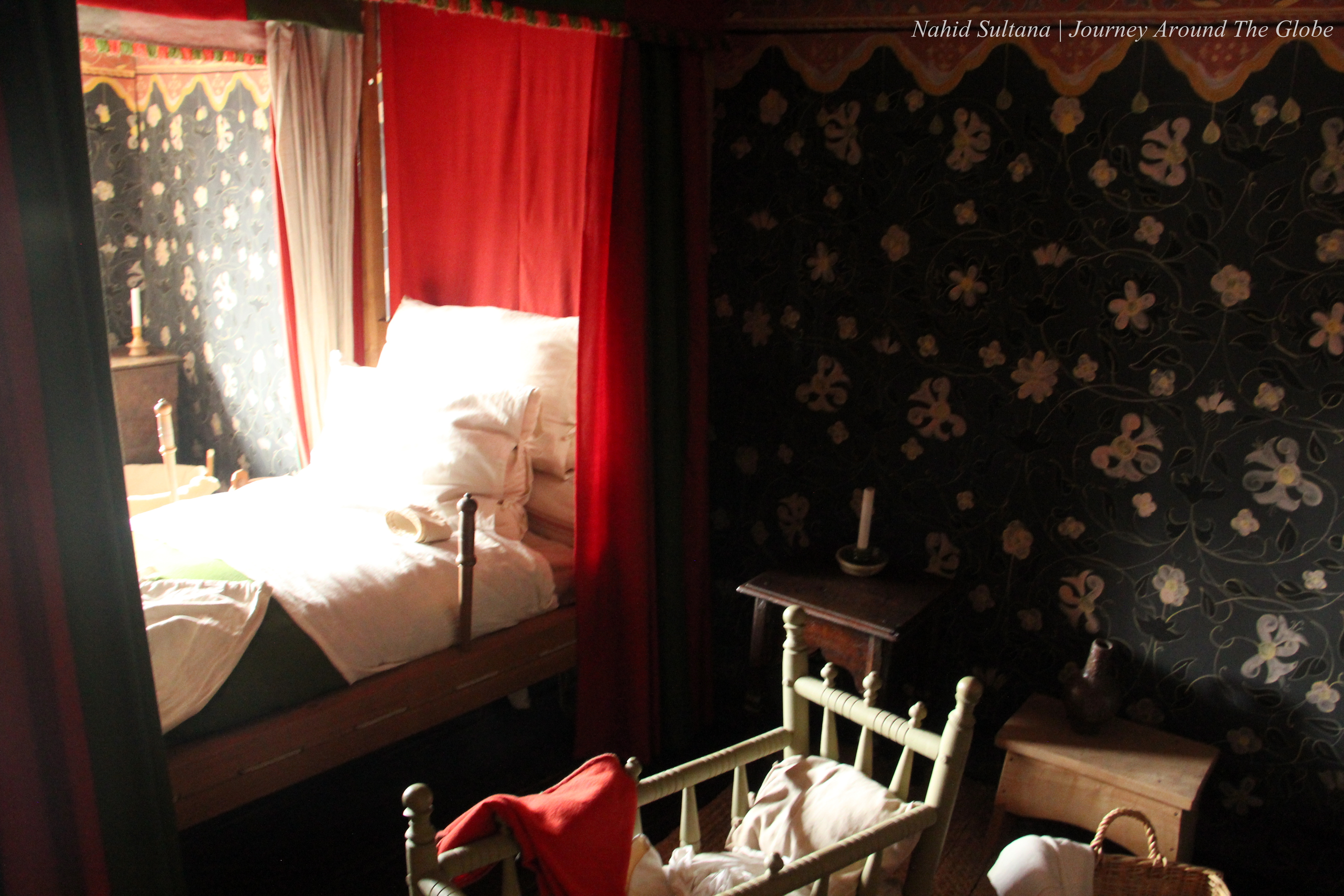
We discovered the bedchamber and birth room of William Shakespeare upstairs of this house. Thick clothe wallpapers cover all the walls of this house giving the whole house a rich look. His birth-room gives a nice view of the garden in front. This house later became a guesthouse.
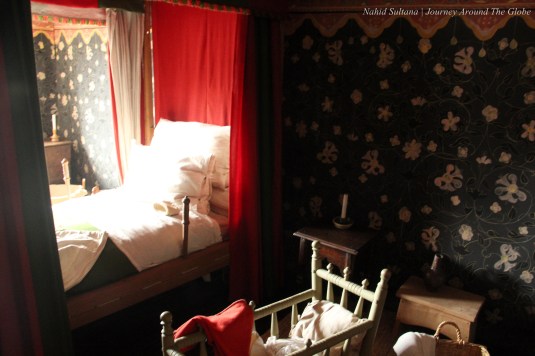
- Birth room of Shakespeare in his house in Stratford-Upon-Avon in England
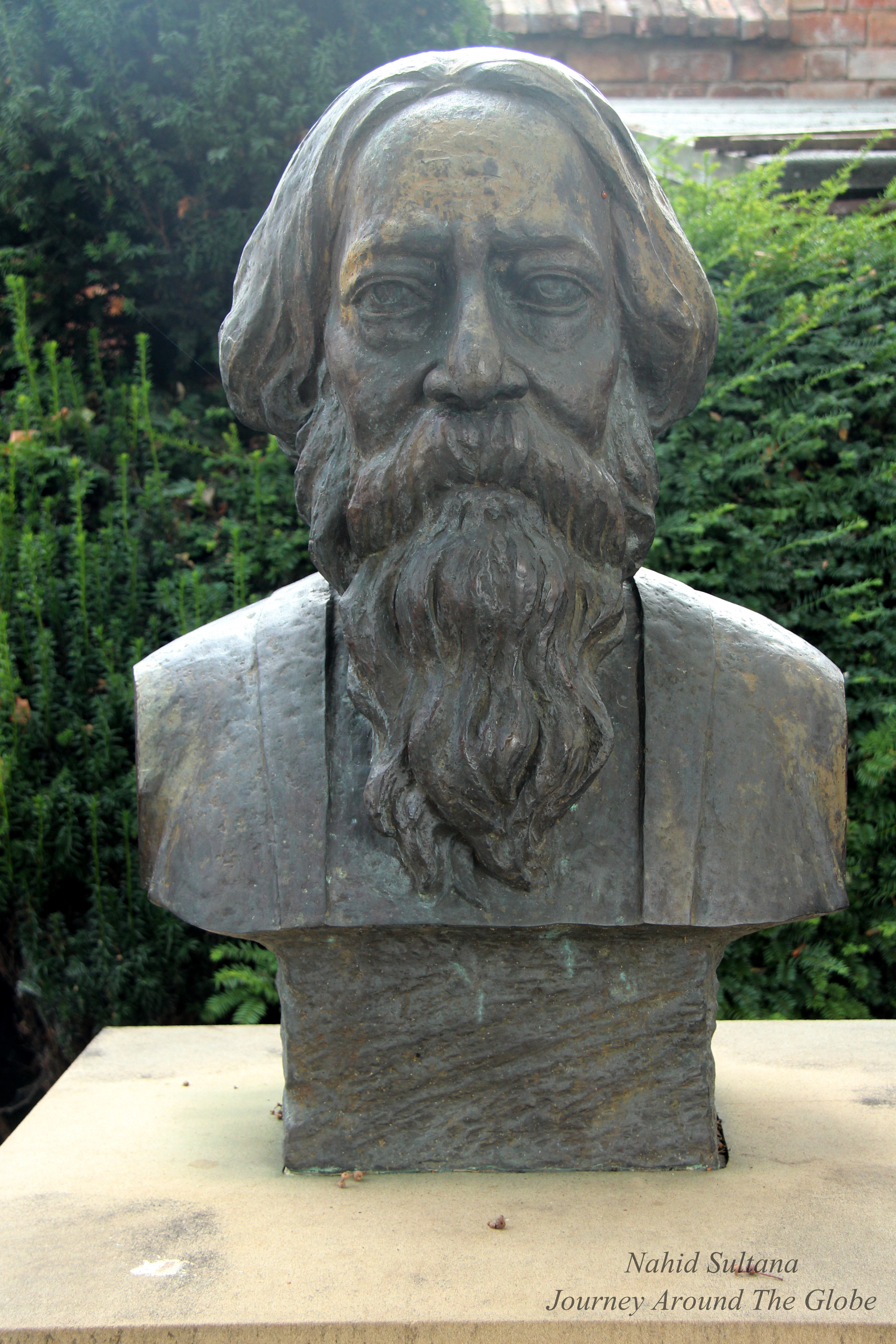
Go down the old stairs and get out to the garden. There was a play of Shakespeare going on with few audiences. If I am not wrong, I think you can request a play to the artists and they will do a specific chapter from Shakespeare’s book and perform it in front of you instantly. To my surprise, I found a bust of famous writer Rabindranath Tagore in the garden. Tagore was another world-renowned poet/writer and Noble-prize winner from Calcutta, India. He wrote most of his poems, novels, and songs in Bengali which were later translated in many different languages. Bengali being my mother tongue too, it made me feel pretty good seeing this familiar face in the garden where his bronze bust was the only one sitting boldly.

- Bronze bust of Nobel Prize winner Bengali poet/writer Rabindranath Tagore in the garden of Shakespeare’s house in Stratford-Upon-Avon, England
The house is open Wednesday to Friday from 10 – 4:30, Saturday from 9 – 12:30 and closed on Sundays and Tuesdays.
b) NASH’S HOUSE and NEW PLACE: This half-timbered house was owned by Thomas Nash from the early 17th century, who was married to Shakespeare’s only granddaughter and last direct descendant, Elizabeth. The house later was passed on to her on Thomas’ death. The big room in the lower level contains some fine pieces of furniture of the kind that would have been seen in Williams’ home next door. These include a richly carved dining table and the open shelved court cupboard with floral pattern displaying some early ceramic jars and jugs. This is a nice place to see some outstanding furniture and paintings, a fascinating exhibition of archeological finds from New Place.

- A chair inside Nash’s House which is originally from Shakespeare’s mother’s place. So, the poet probably sat on this chair in his lifetime
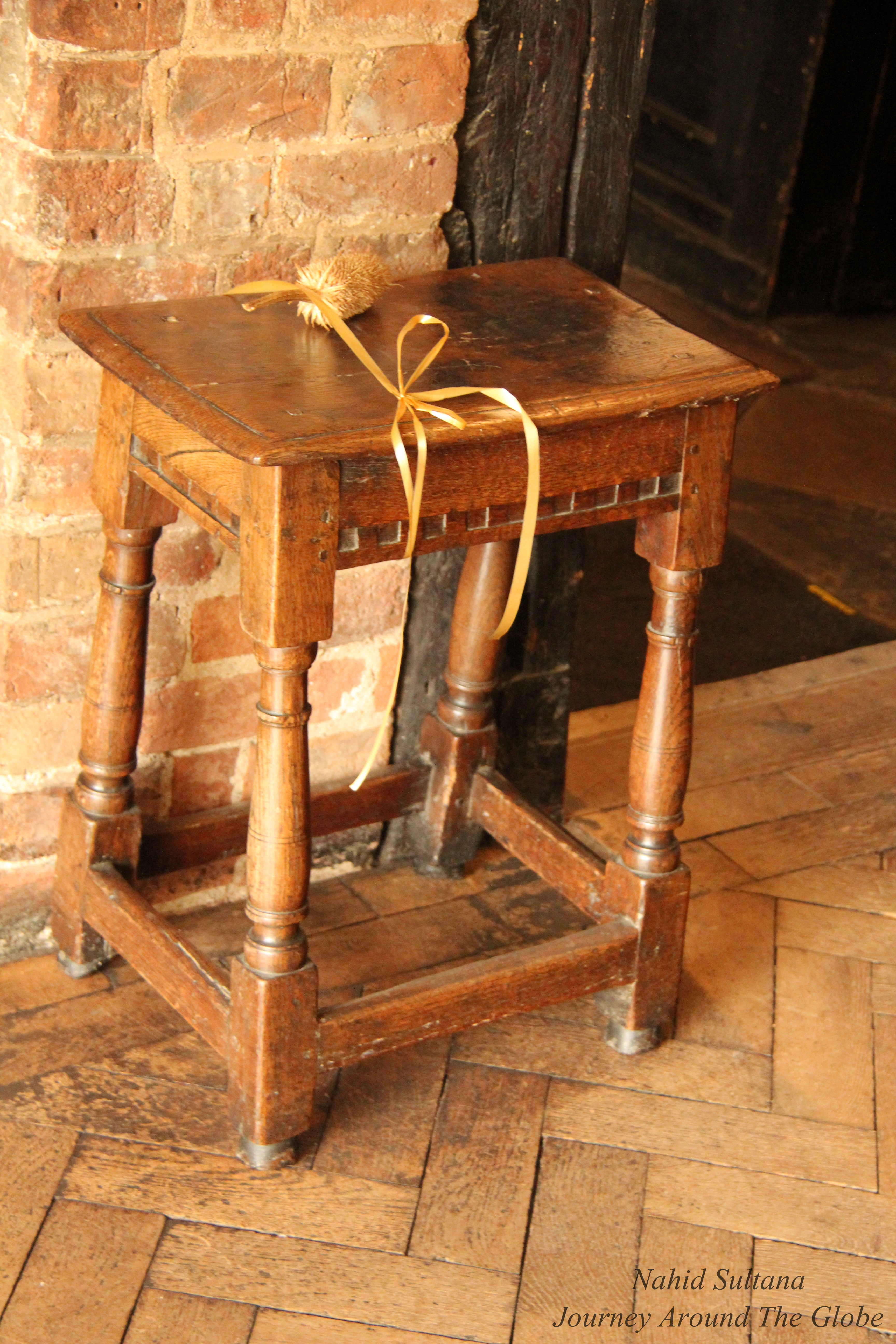
The house next to Nash’s House was the site of New Place which was bought by Shakespeare in 1597, before he was halfway through his theater career. This was one of the largest houses in town at that time. It was during this time that Shakespeare wrote some of his greatest works. Here he lived with his family and later died under this roof in 1616 in 52 years old. His daughter Susannah inherited this house after William’s death and later Elizabeth. When Elizabeth died in 1670, Shakespeare’s direct family line ended with her, leaving no one to inherit New Place.
We finished this visit by exploring the beautiful garden outside, called The Knott Garden. It truly is a beautiful place with many flower beds and bronze statues depicting different characters from the writer’s famous plays.

- A statue depicting Shakespeare’s “A Midsummer Night’s Dream” in the garden of Nash’s House and New Place in Stratford-Upon-Avon, England
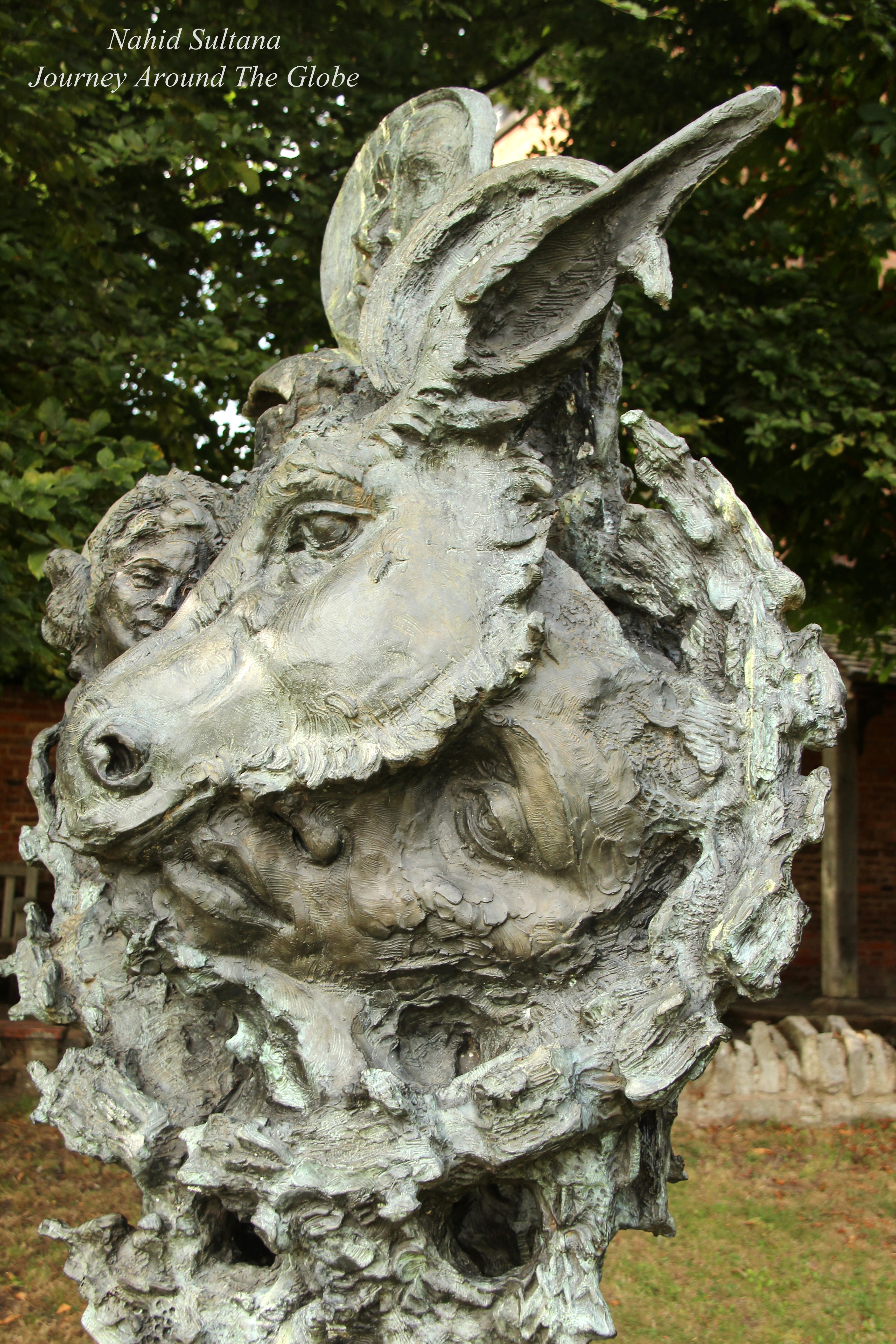
Nash’s House is about 5 minutes of walk from his Birthplace.
c) HALL’S CROFT: About 10 minutes of walk from Nash’s House and New Place, this is the house where Shakespeare’s daughter Susannah lived with her husband Physician John Hall. The house dates from 1613. It’s furnished to reflect the taste and affluence of someone of John Hall’s status in those days. A finely carved 17th century armchair and draw-leaf dining table, stone fireplace, a group family portrait are some of the outstanding displays of this house.
d) GUILD CHAPEL: The Guild Chapel, founded in 1269, is a chapel and school behind Nash’s House and New Place. This chapel has played an important part in the life of Shakespeare and was without doubt one of the buildings particularly familiar to him. It is believed that he studied in the grammar school of this chapel for a while at early childhood ages.
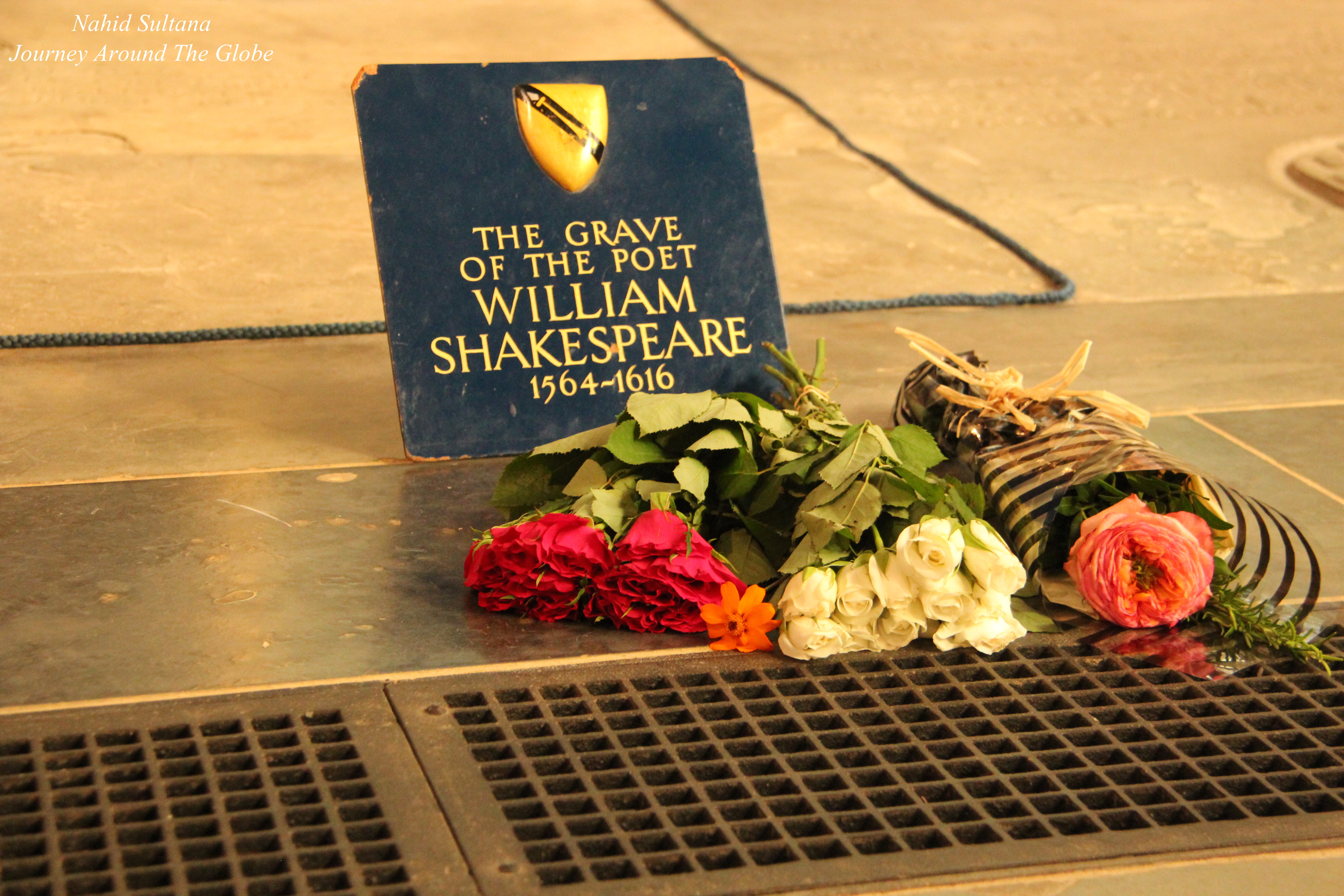
e) HOLY TRINITY: This is William Shakespeare’s burial site and also where he was baptized. It’s an ordinary small church but lots of admirers of the writer come here to see his final resting place. The poet died at 52 years of age in 1616. William and his family’s tombs can be found in front of the high altar of the church and you can see the stone bowl where he was baptized from along with the registration of his birth and death.
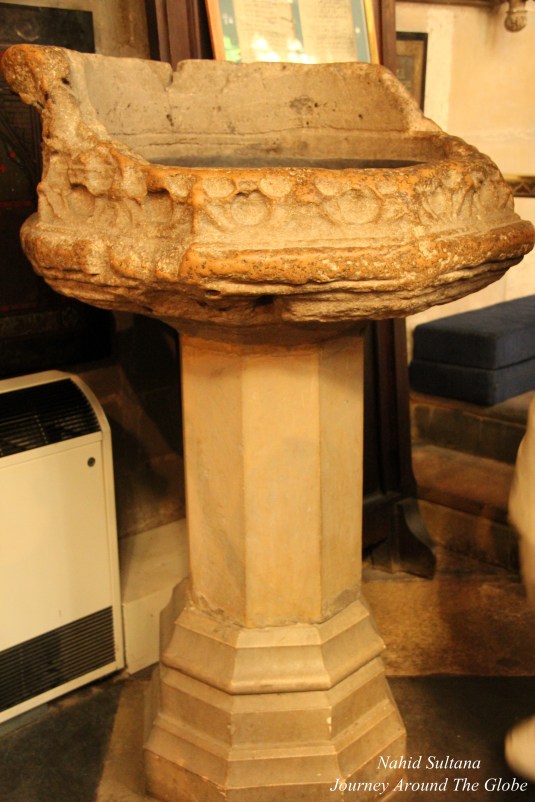
- The stone bowl which was used to baptize William Shakespeare in Holy Trinity Church in Stratford-Upon-Avon, England
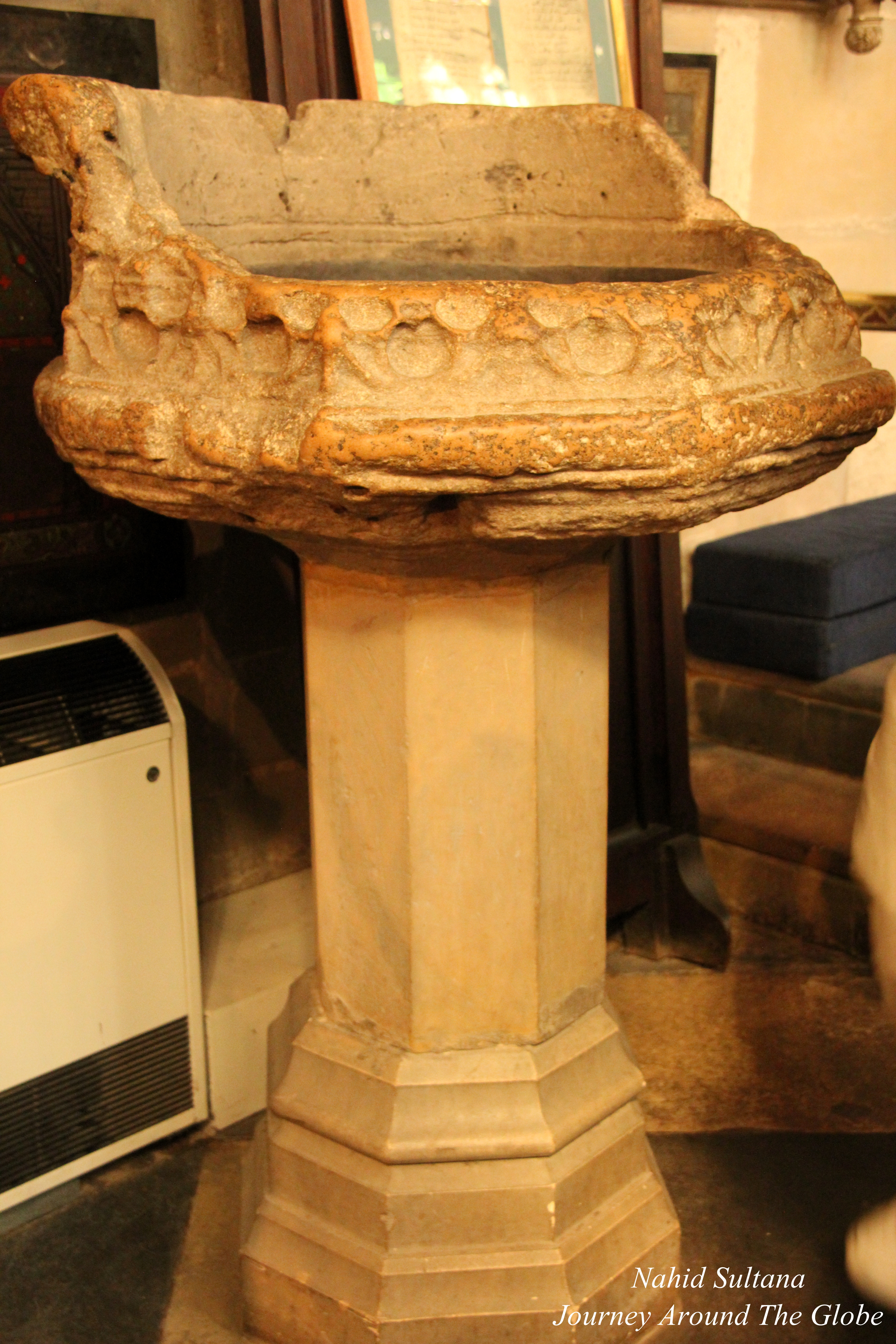
Historically, there has been a church on this site since the time of Saxon from 713 AD. The present building dates from 1210, with the oldest sections being the tower, transepts, and nave pillars.
There is a cemetery surrounding Holy Trinity Church. It’s a quiet place to relax and sit down. Another 10 minutes of walk from Hall’s Croft will take you to the entrance of this church. It is an active church where services still take place, so it is advisable to be respectful when any event is taking place. Entry is free here but donations are accepted.
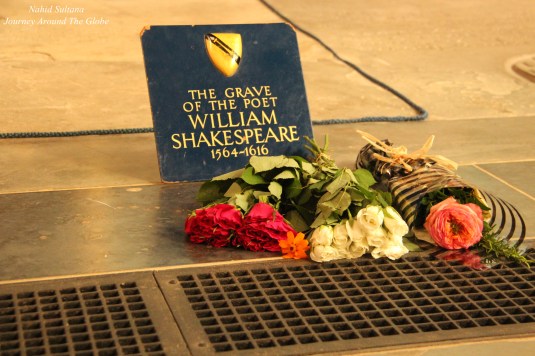
- Shakespeare’s tomb inside Holy Trinity Church in Stratford-Upon-Avon, England
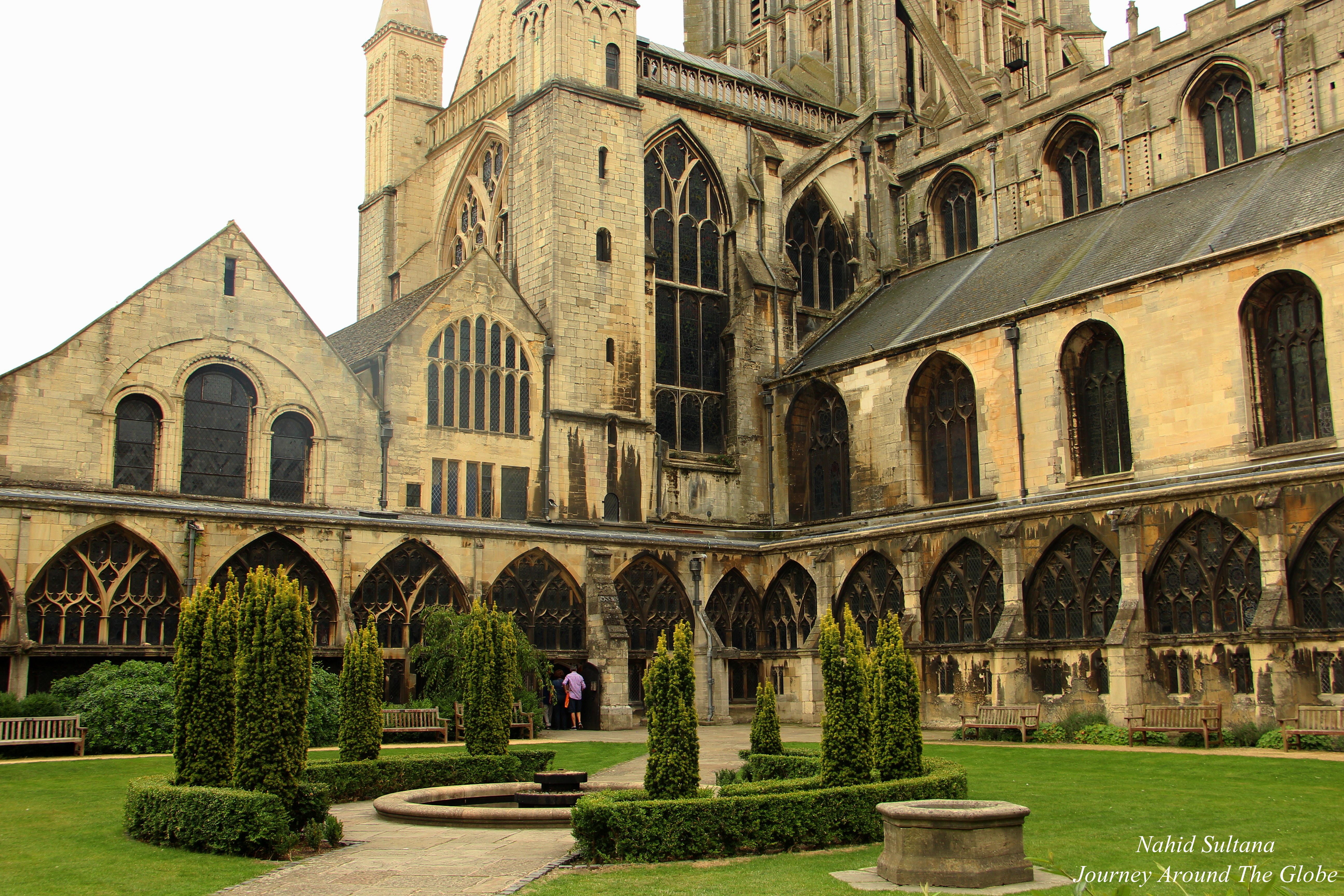
2) GLOUCESTER CATEHDRAL: This cathedral was suggested by my husband’s friend who lives in Cheltenham, U.K. The cathedral is in Gloucester County, mainly known as one of the locations where the movie Harry Potter was shot. Historically, this is a 1300 years old cathedral and an active place of worship. This used to be a monastery once where monks lived and prayed many centuries ago. Beautiful stained glass windows, pretty cloister, typical English style altar, grand organ, pattered ceiling, and floors with biblical pictures are all part it. East Window of it is as big as a tennis court and is about 700 years old. Among many others, King Edward II was buried here inside the cathedral.
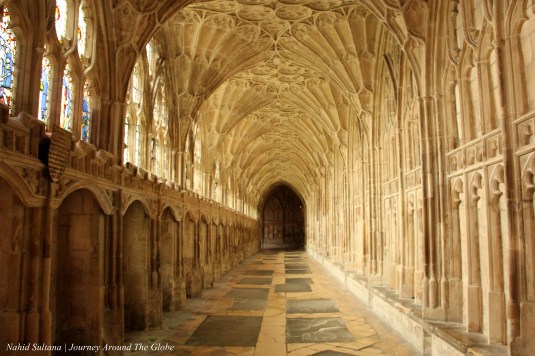
- The hallway near the cloister where few scenes of Harry Potter were shot inside Gloucester Cathedral in England
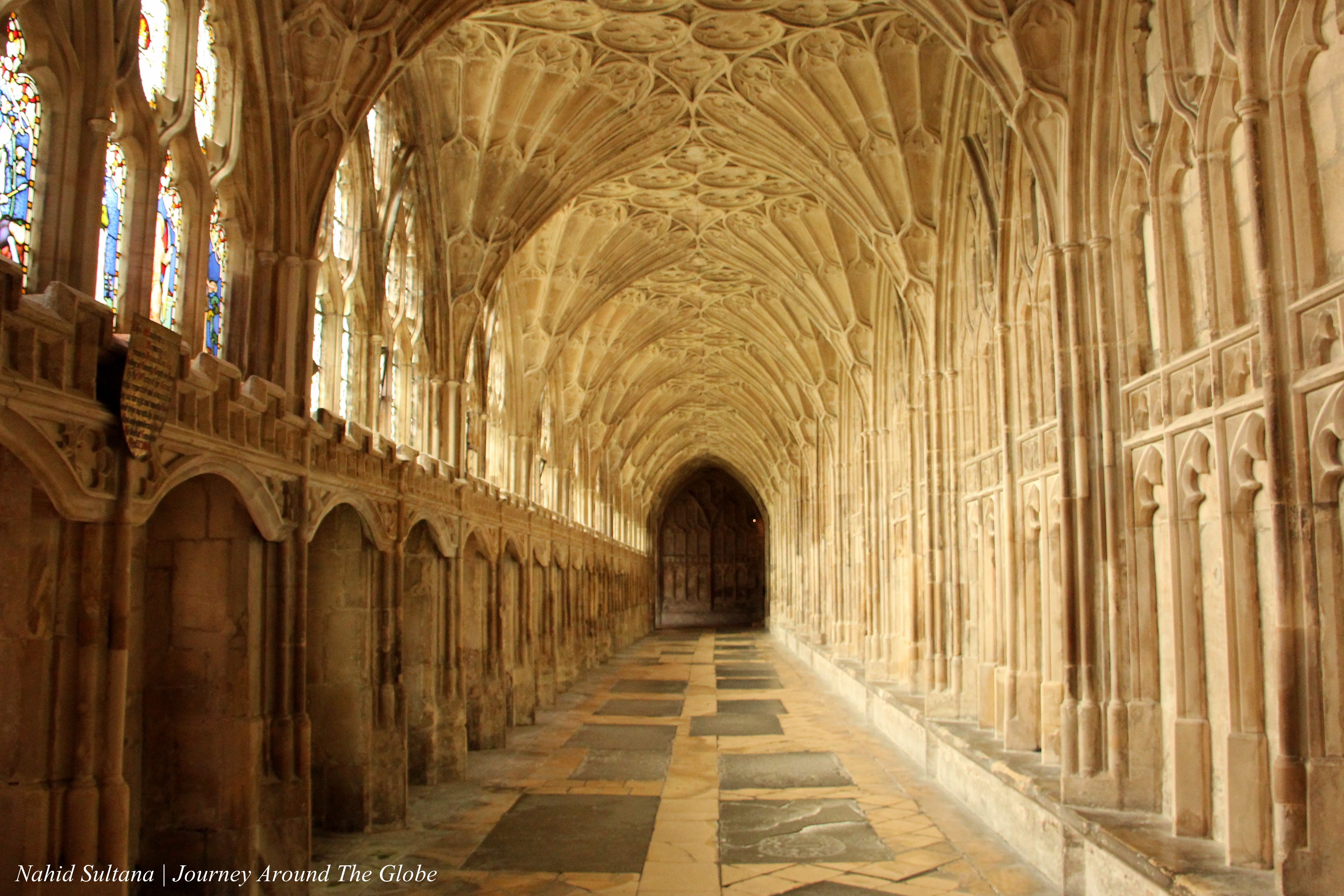
There are no information boards but the hallway/corridor near the cloister was the exact place where small scenes of Harry Potter were shot. We missed the “Harry Potter” tour in the morning that gives all the details on how the movie and this cathedral are related. It’s free to enter the cathedral but have to pay 3 GBP to take pictures inside. Visitors can climb the towers with a guide few times a week.
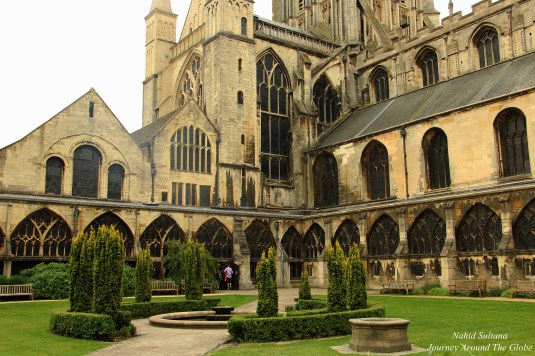
- Cloister of Gloucester Cathedral in England
Related articles
- Tudoring in Stratford-upon-Avon (uwstudyabroad.wordpress.com)
- Anne Hathaway’s Cottage- Stratford-upon-Avon (kaylatheis.wordpress.com)
- Tudoring in Stratford-upon-Avon (drwelchblog.wordpress.com)
- Shakespeare Country (wormingaway.wordpress.com)
Share this:

Mysterious Stonehenge and the ancient city of Bath in England
STONEHENGE and BATH, ENGLAND: Both of these places were on our to-see list for a long time. Last time we were in England in August of 2012, we couldn’t manage leaving London and visiting other places, because London itself is too much to handle at first visit. So this time we came to the great country of England and squeezed some awesome places to visit during our stay.
Stonehenge is an ancient miracle that has been standing on its current spot for the past 5000 years or so. It is indeed a place to visit in England and go “wow” how is it even possible. From Stonehenge our next spot was the ancient Roman city of Bath.
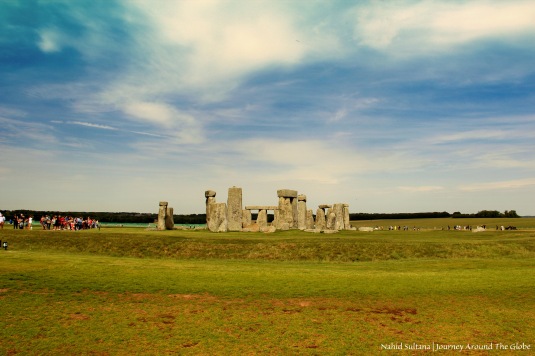
- Stonehenge and its surrounding plain in Salisbury, England
Located by River Avon, the Georgian City of Bath is a wonderful place to visit with many fine buildings, riverside walk, small squares, and of course the Roman Baths. Bath is the birthplace of famous writer from the 18th century Jane Austen (of Pride and Prejudice and many other). Situated 100 miles from London, it’s a gorgeous city mainly famous for its hot springs, medieval heritage, and Georgian architecture. It’s the oldest town in England that has been attracting tourist for many centuries. No wonder the whole city is listed as a UNESCO World Heritage Site.
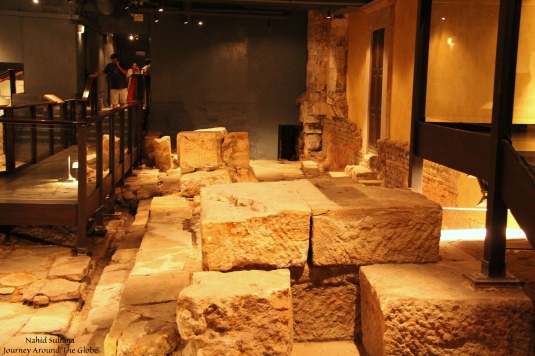
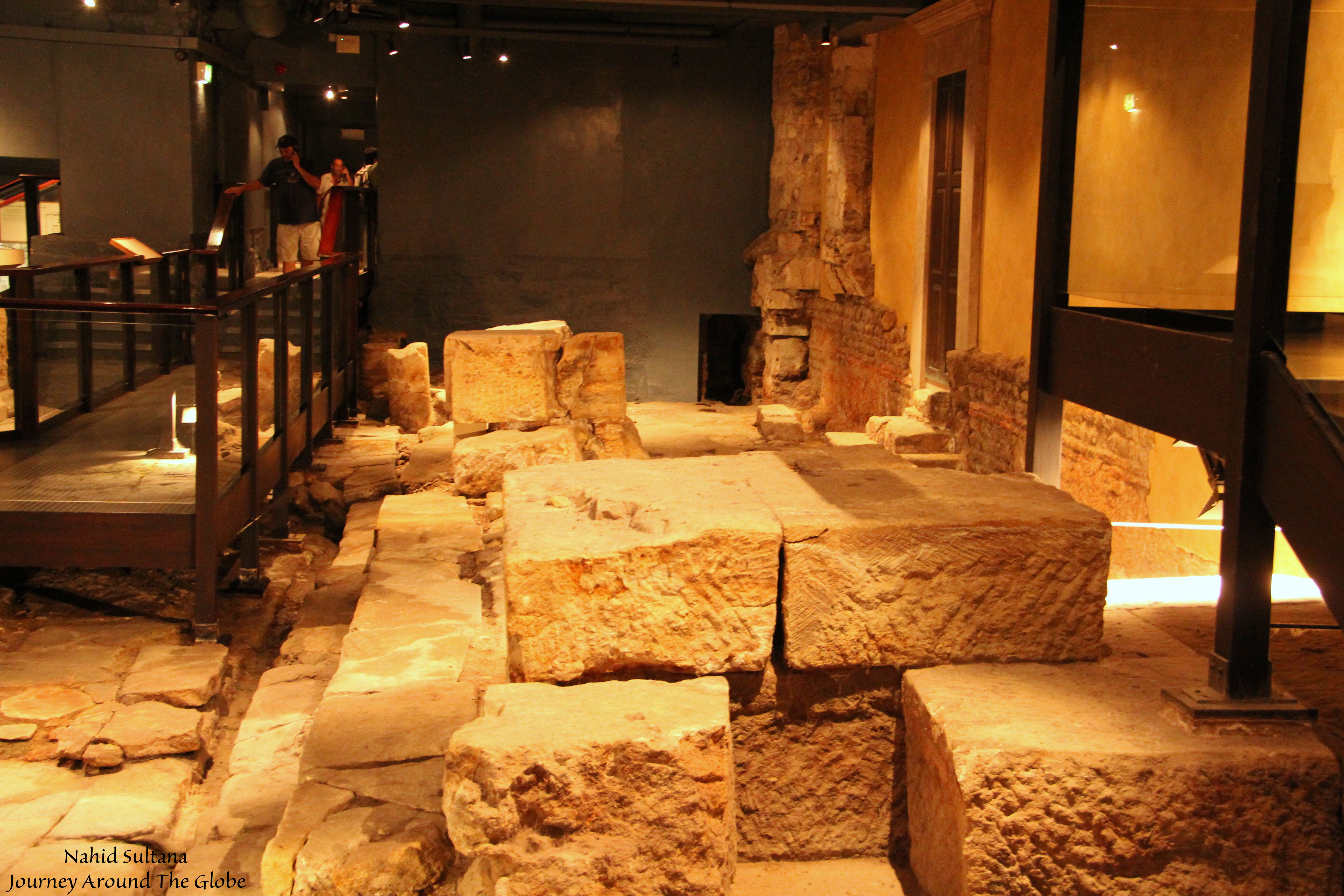
- 2000 years old ruins of Roman Baths in Bath, England
TIME of TRAVEL: We took a cruise to the Baltic Sea on the 1st week of August 2013. The cruise started from Dover and we were back in the port of Dover after 12 days. This gave us a wonderful opportunity to add some extra days to our vacation and roam around this part of England. We stayed in Cheltenham in a friend’s house. Good thing we had our car with us. We drove to Stonehenge and Bath the day after we docked at Dover port. It was a nice day overall, may be little rain while driving…otherwise, a good day for tourism.
EATING and SHOPPING: Stonehenge has no real restaurant once you are inside its perimeter. There are few snacks and sandwich places with a big souvenir shop. The place is trying to add some more facilities for its tourists, may be in the future people will have more options for meal and shopping. I saw many families bringing their own lunch from outside or home and enjoying them in the parking lot in the back of their cars.
Bath definitely has lot more options when it comes to eating and shopping. Of course it’s relatively a bigger city and more spread out. There are many cafes and shops in the same square where Roman Baths and Bath Abbey are located. Some of these stores sell products hand-made in Bath…may be some exclusive and expensive stuff.
PLACES WE’VE VISITED: We visited Stonehenge and Bath on same day. Started with Stonehenge first and reached Bath in late afternoon.
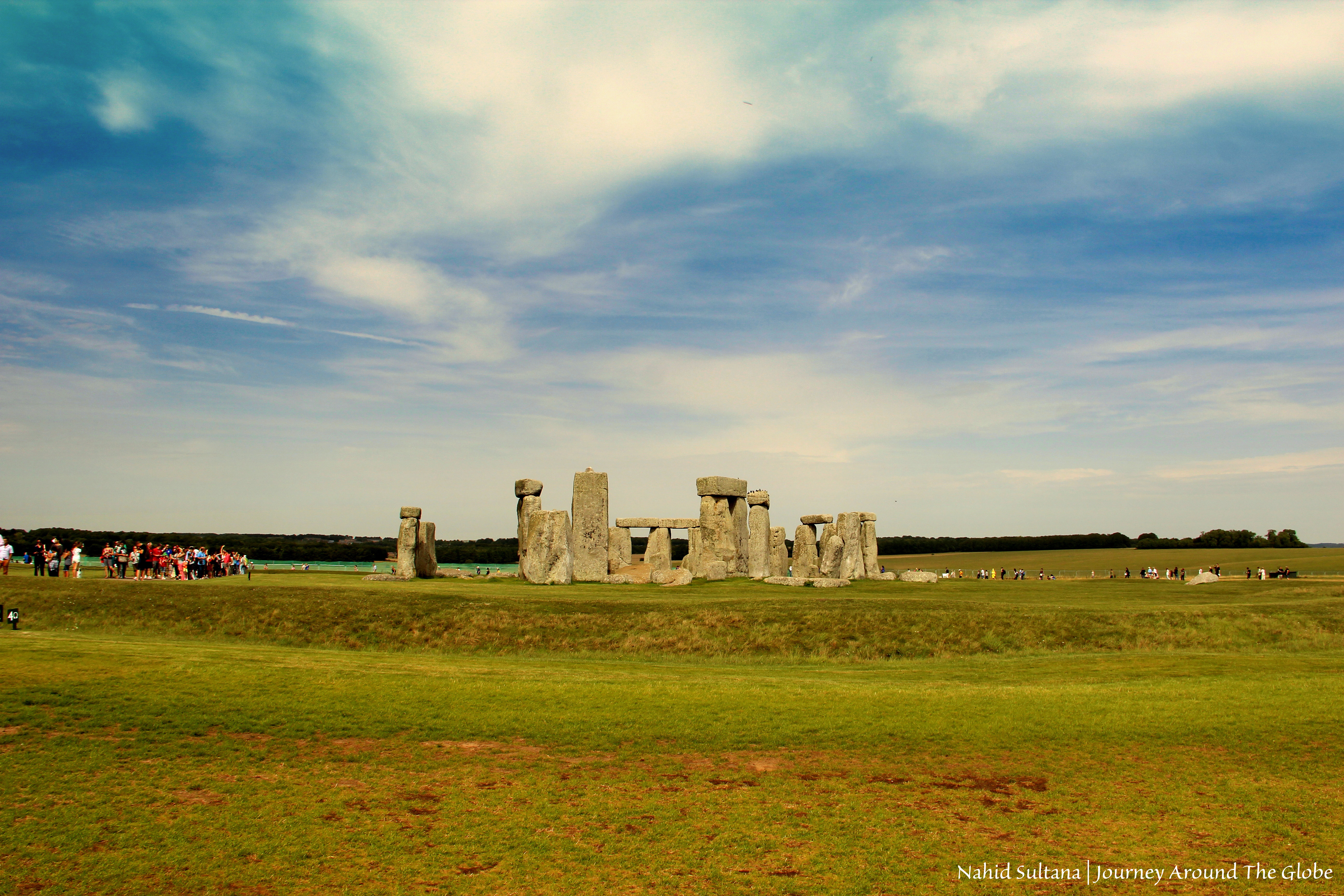
1) STONEHENGE: The ancient stone circle of Stonehenge, means “Hanging Stones”, is an exceptional survival from a prehistoric culture who lived here 5000 years ago, making it older than the pyramids in Egypt. We could actually see the standing stones from highway while making our way to get there.

- Aligned with the midsummer sunrise and midwinter sunset, the main purpose of Stonehenge still remains a mystery
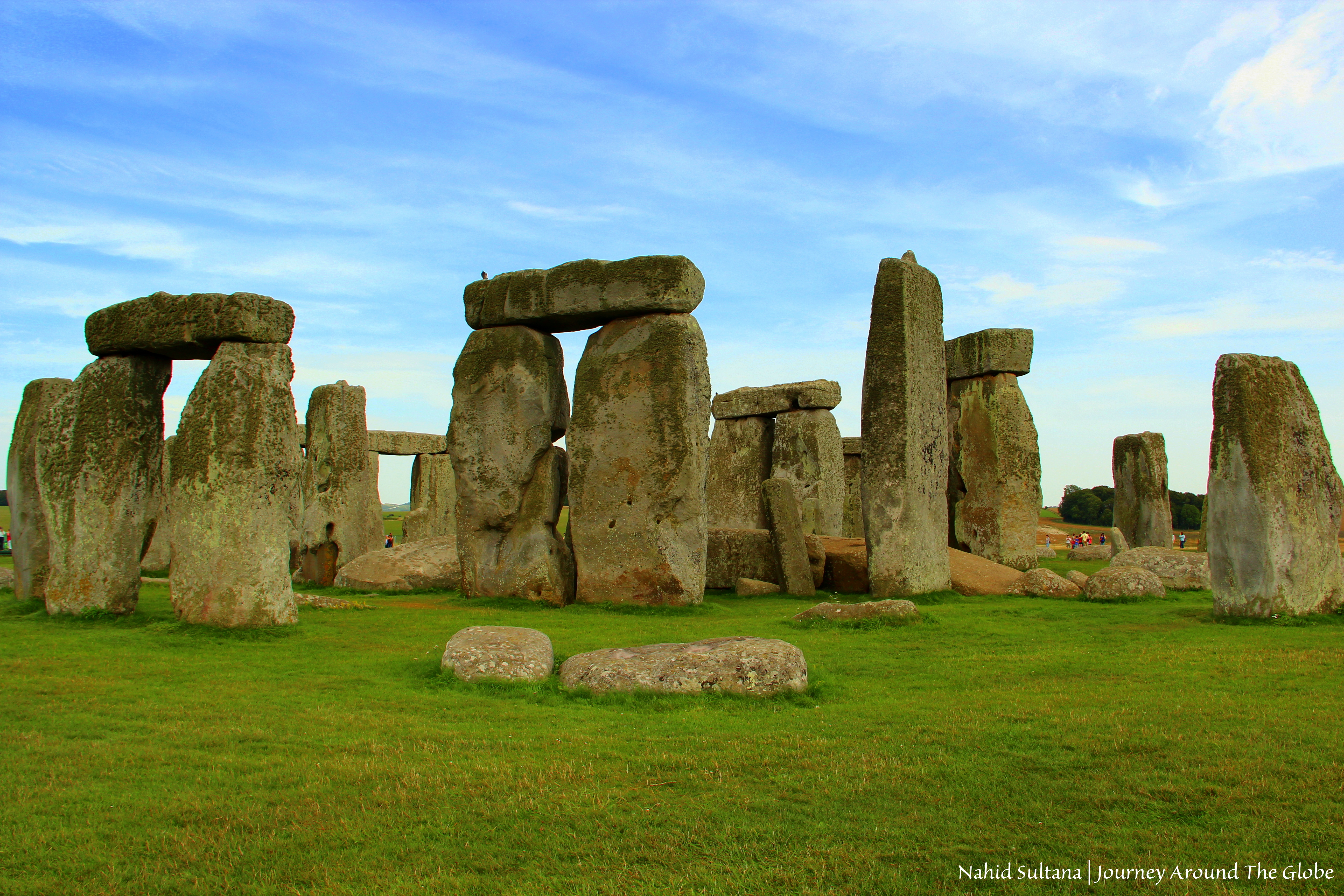
This Bronze Age monument wasn’t built all at once; it’s a creation by generation and generation of people. Built between 3000 B.C. and 1600 B.C., the exact purpose of this monument still remains a mystery. It is aligned with the midsummer sunrise and midwinter sunset. Some say it was a temple to worship, some say a place for celebration, while some say an ancient observatory, and in others opinion it was a burial site. The giant block of stones those are standing there are from Wales, about 250 km away. So, the question that archeologists still ask is that how they brought the stones all the way from Wales and how they made them stand up right.
The heaviest stone is about 45 tons. Half of the original ring of Stonehenge structure till remains for our and future generation to see. Some of the stone fell off, some were taken away as souvenirs, and some were just stolen for other purposes. A ditch surrounding the site, that we still can see, was dug by hands using bones.

- One of many stones of the ring of Stonehenge in England
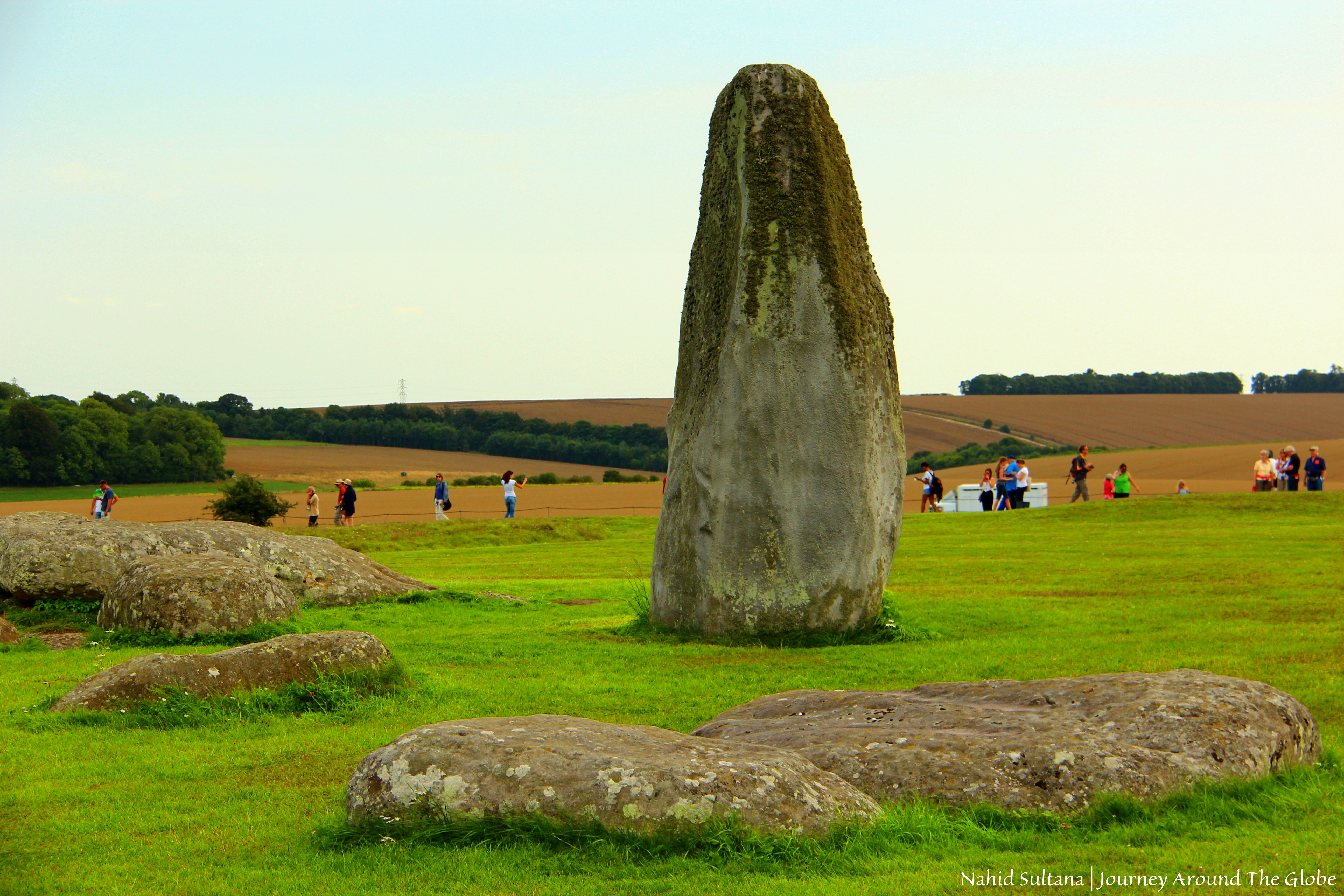
Stonehenge was abandoned after 1500 years of built. Now, this It is a UNESCO World Heritage Site and part of English Heritage. Other than Stonehenge there are few other scattered structures and stones in this place which are also enlisted in WHS. Other than this, there are few more outstanding ancient structures and monument that can be reached on foot from here.

- Another view of the grand Stonehenge
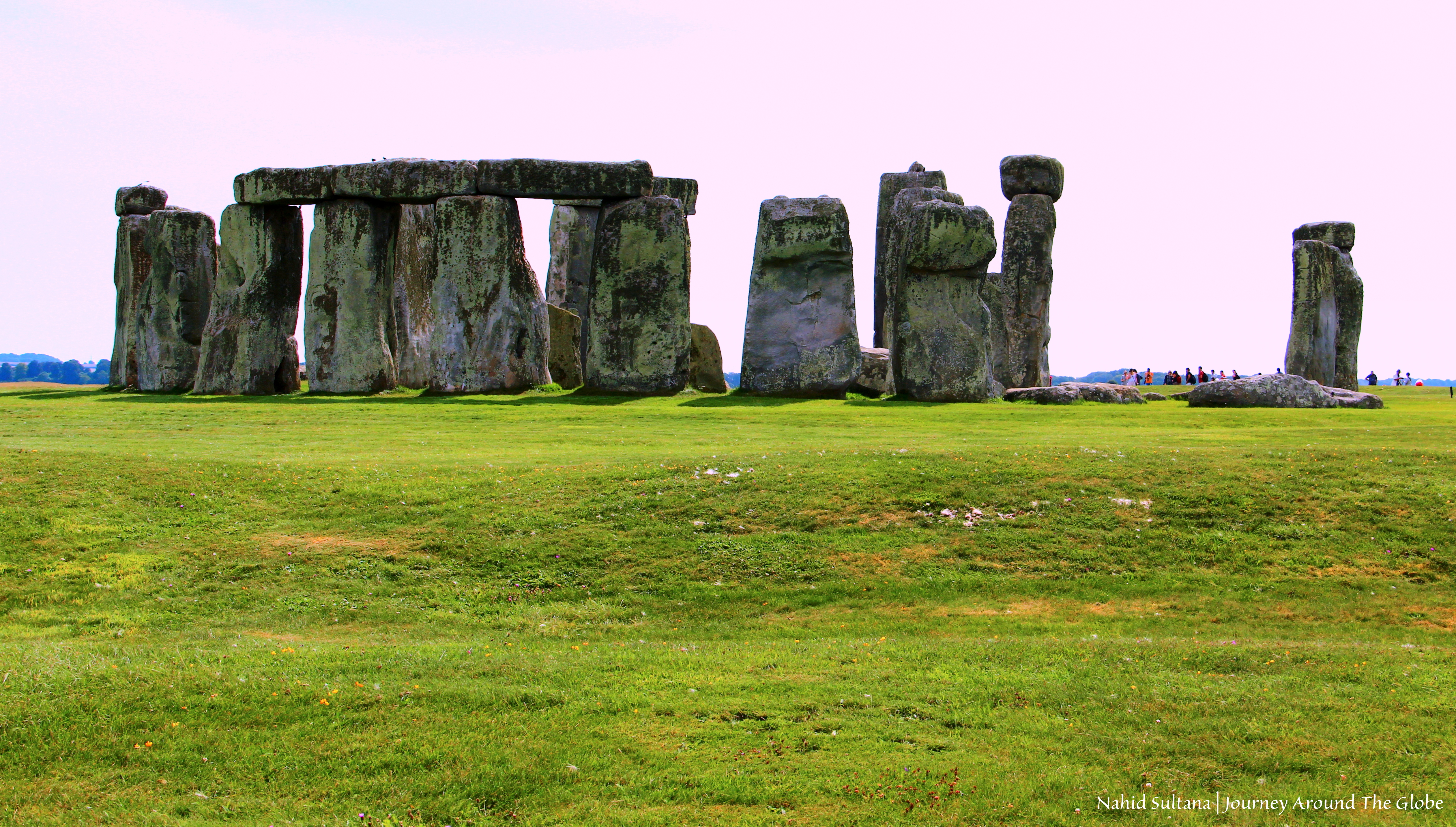
The main area of the site is fairly level and fenced. Tourist can enjoy the view from a distance and can’t get too close to the stones. Stonehenge ground is open daily except for Christmas Eve and Christmas Day. It’s 8 GBP per adult and 20.80 GBP per family with 2 adults and 3 kids. Ticket includes an excellent audio tour of this place. New facilities for visitors were under development during out visit.
2) BATH: We only had little more than 2 hours to spend in Bath after visiting Stonehenge. Drive between these two places were about 45 minutes to an hour. If you get a chance, try to get a view of Bath from up above….it’s absolutely beautiful with many old grand architectures on rolling grassy hills.
a) BATH ABBEY: This beautiful building has been standing on this spot since the time of the Saxons. The present façade was built on the ruins of a former Norman cathedral in 1499 and is a fine example of English Perpendicular architecture. This is the last Gothic church in England. It was somewhat destroyed in 1942 during WWII and was opened recently to the public in 2000.

- Saxon and Norman memorabilia stone-works inside Bath Abbey in Bath, England
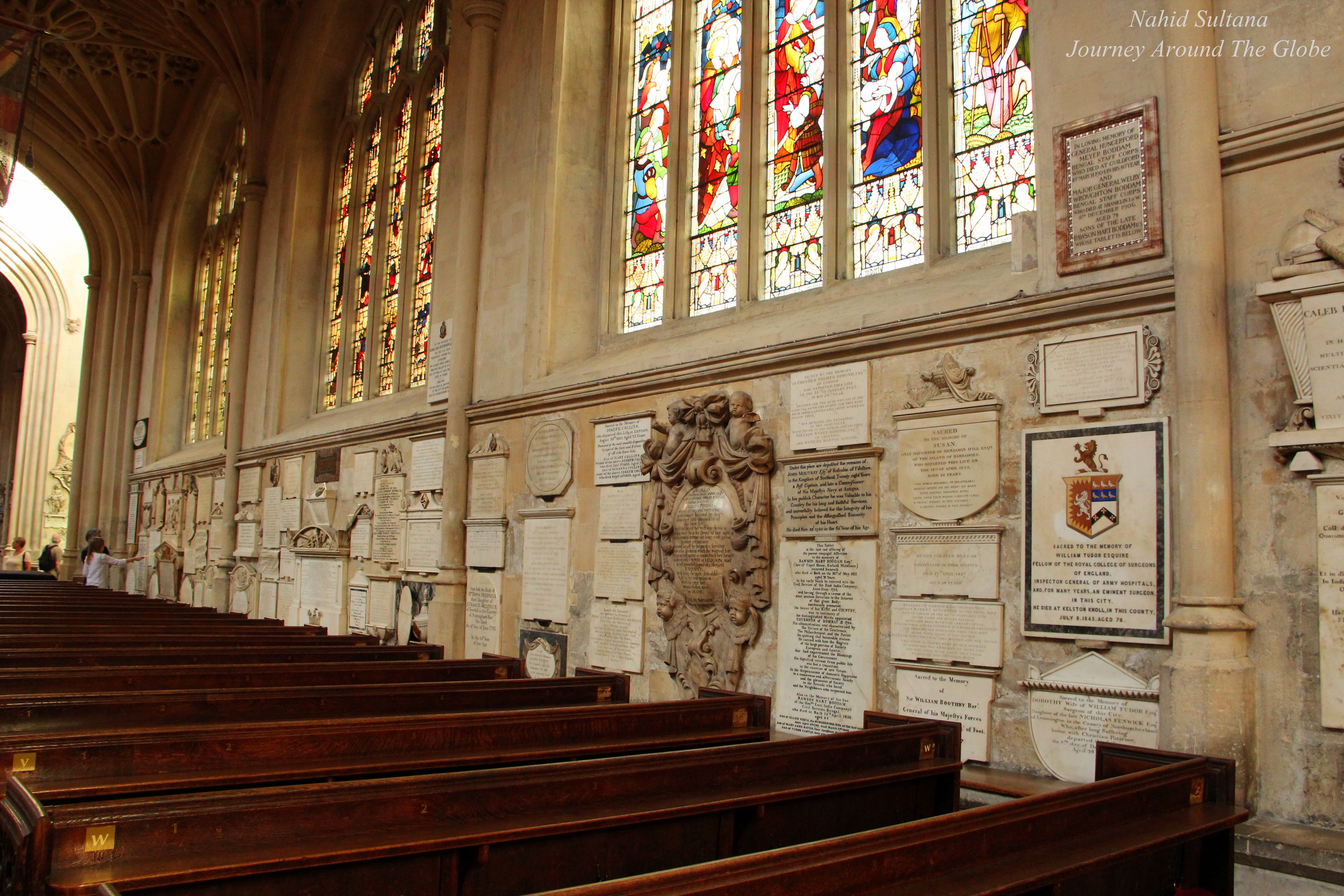
This parish church boasts a fine collection of Saxon and Norman stonework on its walls. Stained glass windows at the East End contains 56 scenes from the life of Jesus. Don’t miss the statue in one side of the abbey “The Lady With The Pitcher”.

- View of Bath Abbey from Roman Baths in Bath, England
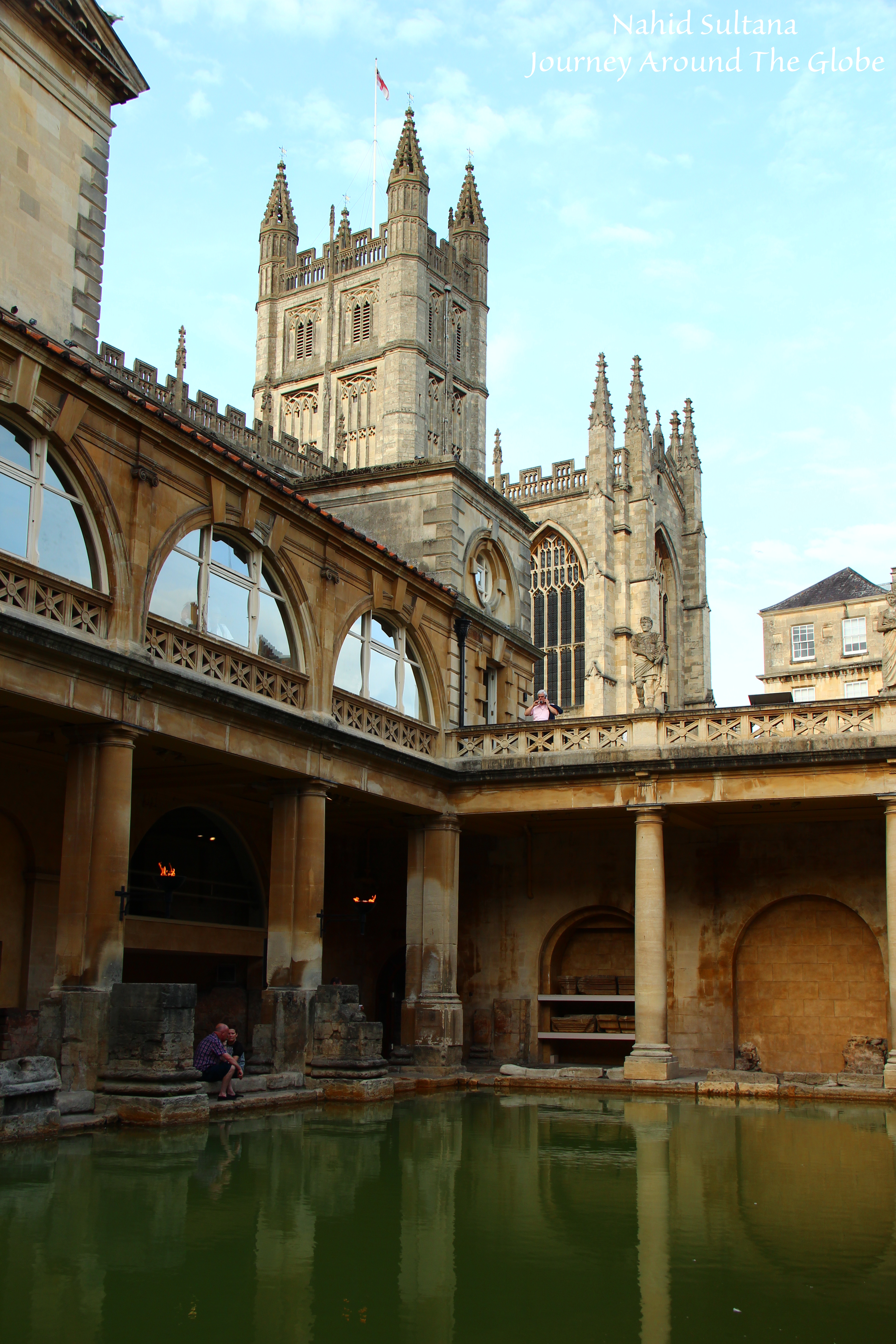
The abbey is located next to Roman Baths in the center of the city. It is open Monday – Saturday from 9 – 6 and there is no fee to enter.
b) ROMAN BATHS: This is the finest and best preserved ancient baths and temple complex in northern Europe that is still flowing natural hot water. It’s a UNESCO World Heritage Site and the main attraction of Bath. It’s the only hot springs in the UK.
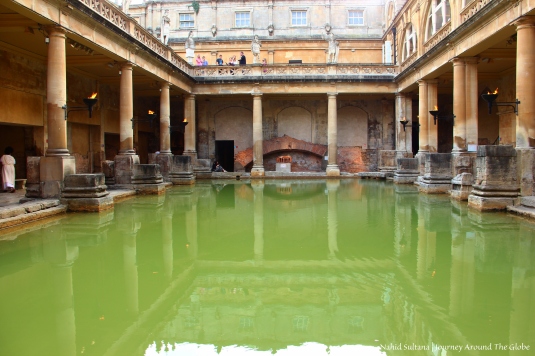
- Roman Baths – one of the best preserved baths in the world
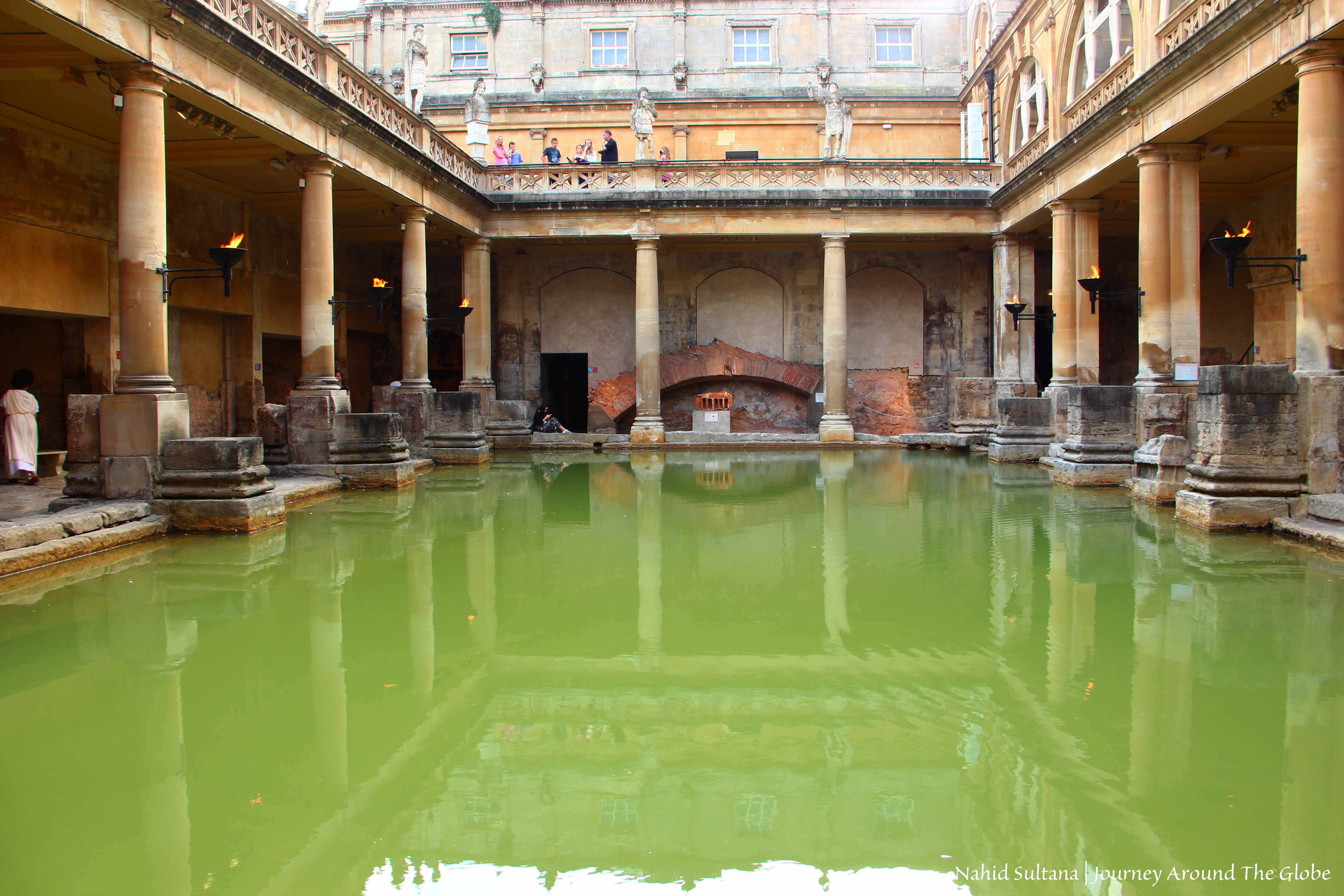
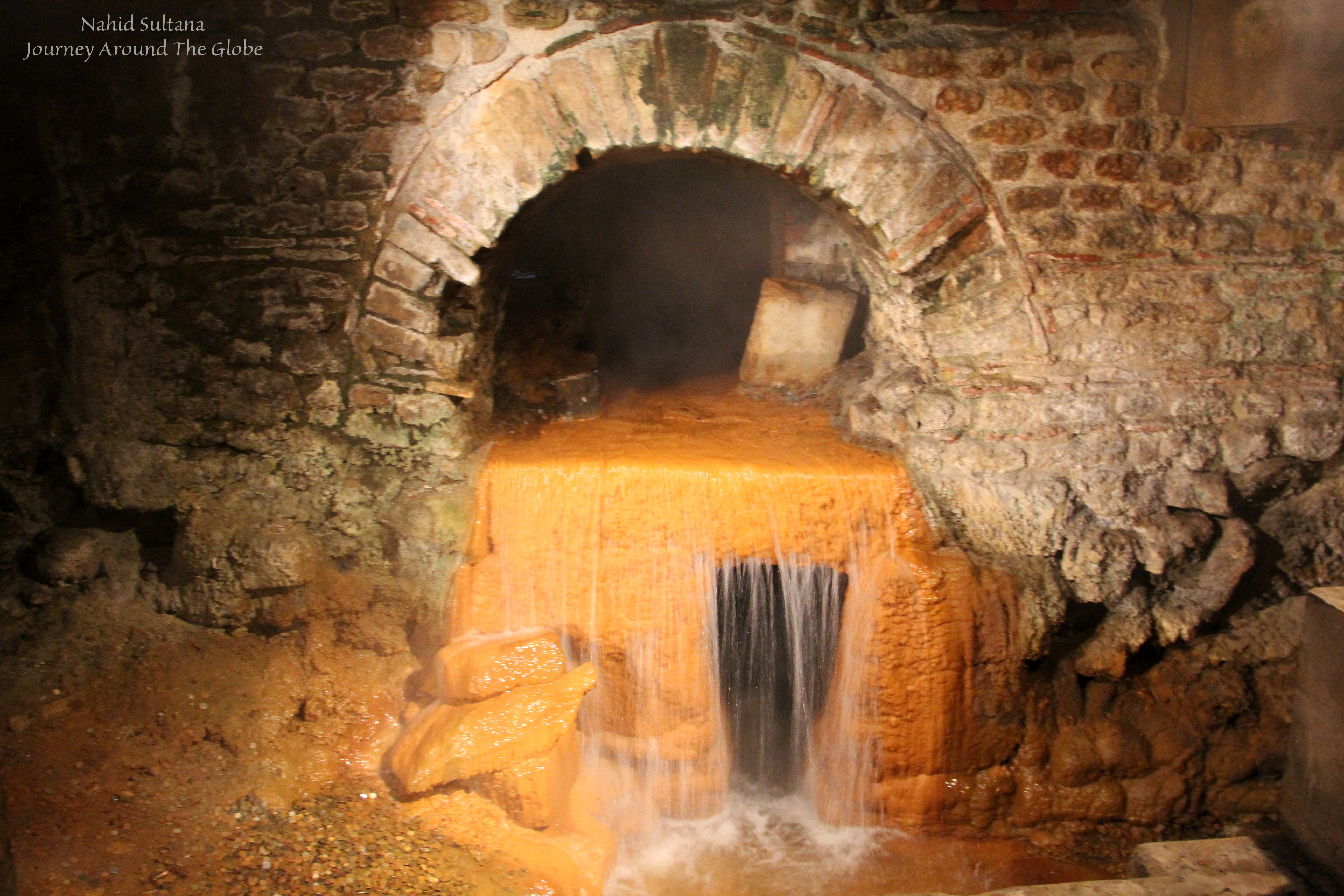
Though no longer in use, visitors can get a glimpse of past Roman life and people of Aquae Sulis (old Roman name of Bath) in the small museum in the lower level. Thanks for a good maintenance that we could walk where Romans once walked, on ancient stone pavements around the steaming pool. The hot water in the springs rises about 46 degree C each day and supplies 1.25 million liters of water a day. Roman engineers built a reservoir to supply this hot water to the baths. The first baths and temple buildings around the main spring were completed by 2000 years ago in 76 AD.
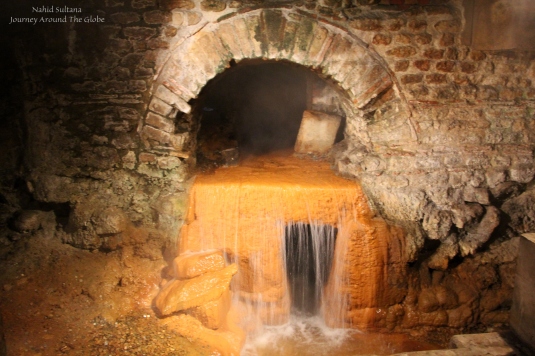
- The Sacred Spring of Roman Baths that still supplies natural hot water – Bath, England
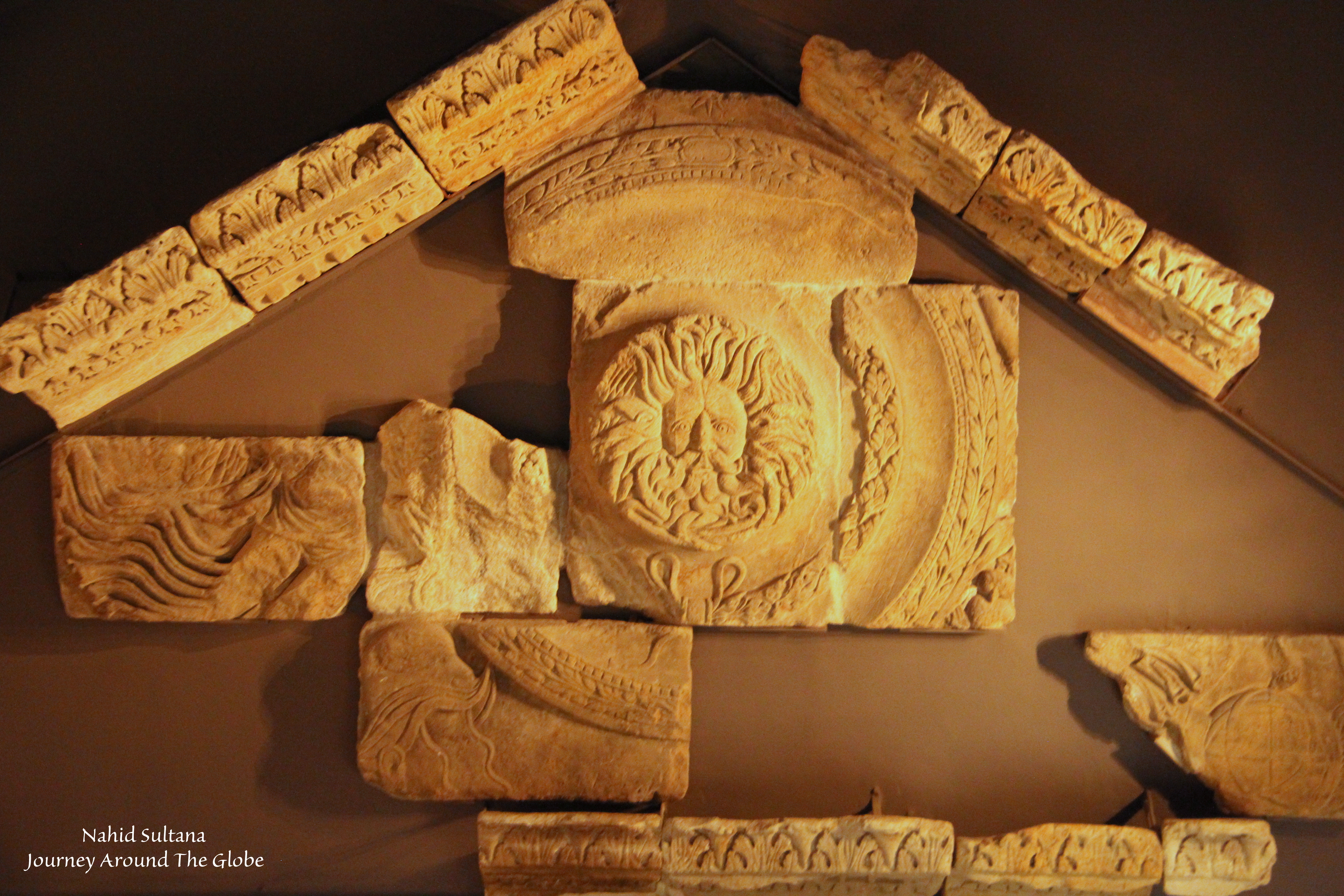
There are 2 levels to see here. Upper level has a terrace (from 1897) with a nice view of the Great Bath. Lower level is where we spent most of the time enjoying natural spring, Roman ruins, ancient temple courtyard, Gorgon’s head from the temple pediment, spring overflow and drain, Great Bath, couple smaller indoor Roman baths, and a museum with findings from the Roman town including carvings and inscriptions from the temple buildings. Romans built the extensive baths and a major temple complex around the hot spring. This was one of the tallest buildings in Roman Britain with roof 20 meters above the bath. At the end of the tour make sure to get a taste of natural “Bath” water from the restaurant for free with your ticket.

- Ruins from Roman temple pediment featuring the Gorgon in Roman Baths of Bath, England
It’s open daily from 9 am to 10 pm with last entry at 9 pm. Ticket is 13.25 GBP per visitor above 17 years and 36 GBP for a family of 2 adults and up to 4 kids. It’s located right beside Bath Abbey with a great view of its tower from the lower level.
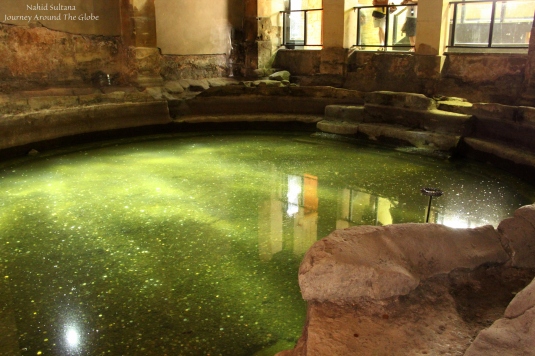
- One of the indoor natural pools of Roman Baths in Bath, England

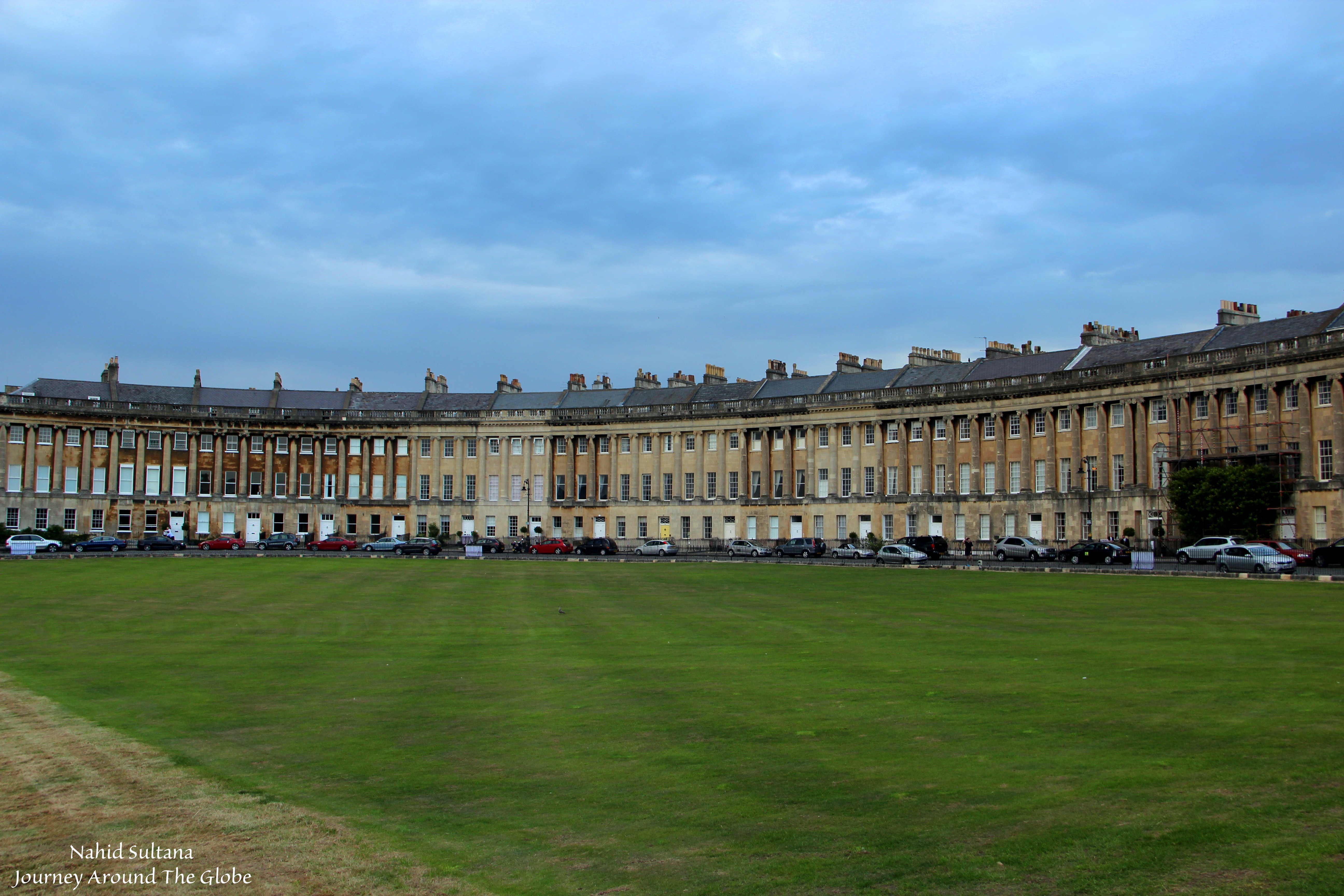
c) ROYAL CRESCENT: This magnificent semi-elliptical crescent of houses is supposed to be the most photographed building in Bath which was built in the second half of the 18th century. This is the first of the eighth original crescents of Bath. We didn’t have time to go inside but tourist can go inside its museum to see what it would have been like living in these houses at the end of 18th century.

- Royal Crescent of Bath, England
Related articles
- The Mysterious Stonehenge (tiffanymetzger.wordpress.com)
- Hedging Along Stonehenge to Roman Baths (studentaliens.wordpress.com)
- “I see London (and Stonehenge and Bath)……” (lmatarazzo.wordpress.com)
- ISCA Visit Bath and Stonehenge (iscaschools.wordpress.com)
- The Roman Baths – Version 2.013 (miamiswamp.wordpress.com)
- Cambridge Week 4, Bath and Stonehenge (elizabethstravels2013.wordpress.com)
Share this:

Van Gogh Museum in Amsterdam
We were lucky enough to get many chances of visiting Amsterdam from time to time. Different times we visited different sections of this city. Last time we were in Amsterdam was when we took Baltic Sea cruise in August of 2013. Our ship was docked near the city for few hours and we managed to visit only this museum which I’ve been longing for quite a while.
Van Gogh Museum is a must see when in Amsterdam, even if you are not into arts and paintings. It has the largest collections of world-famous Dutch artist Van Gogh’s many early works and iconic well-known paintings which he painted before his death. Unfortunately, we couldn’t see his famous “Starry Night” here (it’s in a museum in New York), but some of his other famous works, such as “Almond Blossom”, “The Potato Eaters“, “Sunflowers”, and many others are hanging in this museum walls of Amsterdam.

- Last self-portrait by Van Gogh painted in 1888 in the Van Gogh Museum, Amsterdam

To give you a little bio on this famous artist of all time, Van Gogh was born in 1853 and was only active as an artist for 10 years, from 1880 until his death in 1890. In those 10 years he produced about 800 paintings and more than 1000 drawings, as well as large number of watercolors, lithographs, and sketches in hundreds of letters that he wrote to his brother, Theo. He was a self-taught painter with few art lessons from Brussels and Antwerp in Belgium. His dramatic life story, unhappy romances, apparent lack of recognition, illness, and finally his attempt of suicide are some of the events that were great deal of interests after his death, as well as his exceptional use of colors and characteristic brushworks.

- “The Potato Eaters” by Van Gogh from 1885 in Van Gogh Museum, Amsterdam

It’s a very organized museum with information written both in Dutch and English. It’s a wonderful place to get to know Van Gogh up close and personal. His depressed life, incomplete education, what inspired him, love and relationships, and finally why he was dead at such an early age…all are portrayed here in a very nice sequential way.

- Another famous painting by Van Gogh “Almond Blossom” from 1890 in Van Gogh Museum, Amsterdam

The museum is located in Museumplein near the city center of Amsterdam where you will find many other different types of museums. Our taxi charged 20 euros for one way from Amsterdam cruise port to the museum. It’s open daily from 9 am – 6 pm. Be ready to stand in the ticket line for a LONG time. We were standing there about half and fifteen minutes, even those who bought tickets online were moving like sloths. Ticket is 15 euros per adult and kids visiting below 17 years are free.
Related articles
- Amsterdam – Things To Do – Van Gogh Museum (icameisawicooked.wordpress.com)
- Bedroom in Arles (ombaoexequiel.wordpress.com)
Share this:

Summer UK trip – Canterbury and Dover
CANTERBURY and DOVER, ENGLAND: Canterbury and Dover are both in the county of Kent, which is the hometown of father of evolution, Charles Darwin. Canterbury is a cathedral and university town. It doesn’t look like it now but it was bombed heavily during the WWII. The city still contains many ancient buildings, especially in the medieval town center. Dover is a port town with English Channel at one side. It’s a natural scenic city and very green too.
We took a cruise to the Baltic Sea on the 1st week of August 2013. The cruise was for 12 days and left from the port of Dover. We drove to Calais, France from Belgium to take ferry to Dover, England. Ferry tickets were booked online ahead of time and the ride was about hour and half one way. The day we arrived Dover, we managed to visit only Canterbury. Dover Castle needed to wait until we were back from cruise. We were dropped off at Dover port again early in the morning after the cruise was over. We headed towards Dover Castle first thing in the morning.
If you are going to in England for few days for visiting purposes, it’s better to buy an “English Heritage” membership. That way you can visit all of their properties free of charge and it includes some of the major touristic destinations like Stonehenge, Shakespeare’s birthplace, and so on.
TIME of TRAVEL: Both the days we visited Canterbury and Dover were lovely and without rain. We weren’t so sure about the typical English weather but luckily the days turned out to be great for exploring.
OUR HOTEL: We stayed at Holiday Inn in Ashford the night before boarding the ship. Ashford is a small town about 30 minutes’ drive from both Canterbury and Dover. Staying in Holiday Inn felt like I was in America…felt very homely. It’s a very nice hotel with free breakfast and free Wi-Fi (only in the lobby). England being the capital of curry or Indian cuisine (after India), we had to hit a local curry place. The restaurant was called “Spices of Bengal”, about less than 10 minute drive from Holiday Inn, with an excellent view of the valley down. Loved the typical English setting and their excellent taste of food.
EATING and SHOPPING: Old town Canterbury has many cafes, restaurants, and shopping areas and probably one of the nicest places for meal or tea time. When you are in England, of course, fish and chips are everywhere, but I prefer their yummy meat pasties when I am here. Dover Castle has a small cafeteria inside and a souvenir shop where you can get many Great Britain souvenirs. Also, look for their variety of jam/jelly selections in the shop.
PLACES WE’VE VISITED: We reached Dover by ferry from Calais, France about 1pm and from there we went straight to Canterbury to check its main spots. We had to catch our cruise boat by 2 pm the next day. If you have extra time, you can visit the Canterbury Castle which was built by the Normans in the 11th century which we missed this time.
1. CANTERBURY CATHEDRAL: This is a must see in Canterbury and a magnificent historical monument in England. In 597 AD when Pope Gregory sent an Italian monk, Augustine, to England as a missionary, he established a monastery here and then became England’s first archbishop. It became one of Europe’s most important pilgrimage centers after the murder of Archbishop Thomas Becket in 1170. It is still very much a working and living church and part of a UNESCO World Heritage Site.

- Main façade of Canterbury Cathedral in England
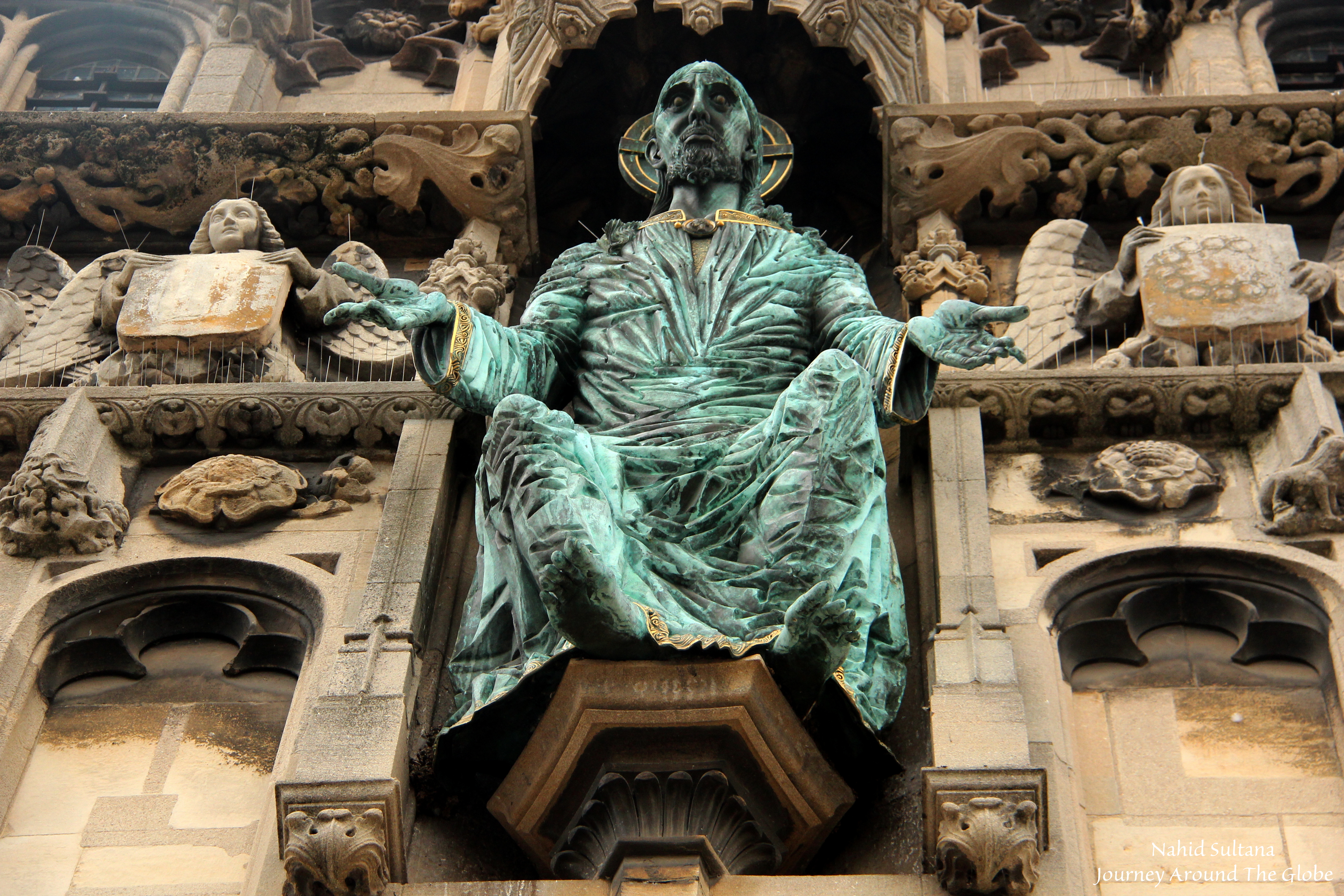
From outside, it’s a massive building with typical English style cathedral. Nave of Canterbury Cathedral is a 14th century Perpendicular Gothic architecture. Look up high and you can see the pillars soaring up to heaven. Visitors can see and pay respect to the exact place where Archbishop Thomas Becket was murdered in 12th century. Cloister of it has beautiful carvings of heraldic shields, fascinating faces, and animals. Don’t miss the crypt as it is the oldest part of the cathedral, dating back to 11th century. Note the round arches, decorated columns, and some of the oldest Christian wall paintings of England in the crypt. Trinity Chapel has some beautiful 12th century stained glass windows. But most importantly, it houses the royal tombs of King Henry IV and Edward, Prince of Wales, also known as “The Black Prince” along with many other archbishops from 13th and 14th century.

- Inside Canterbury Cathedral in England
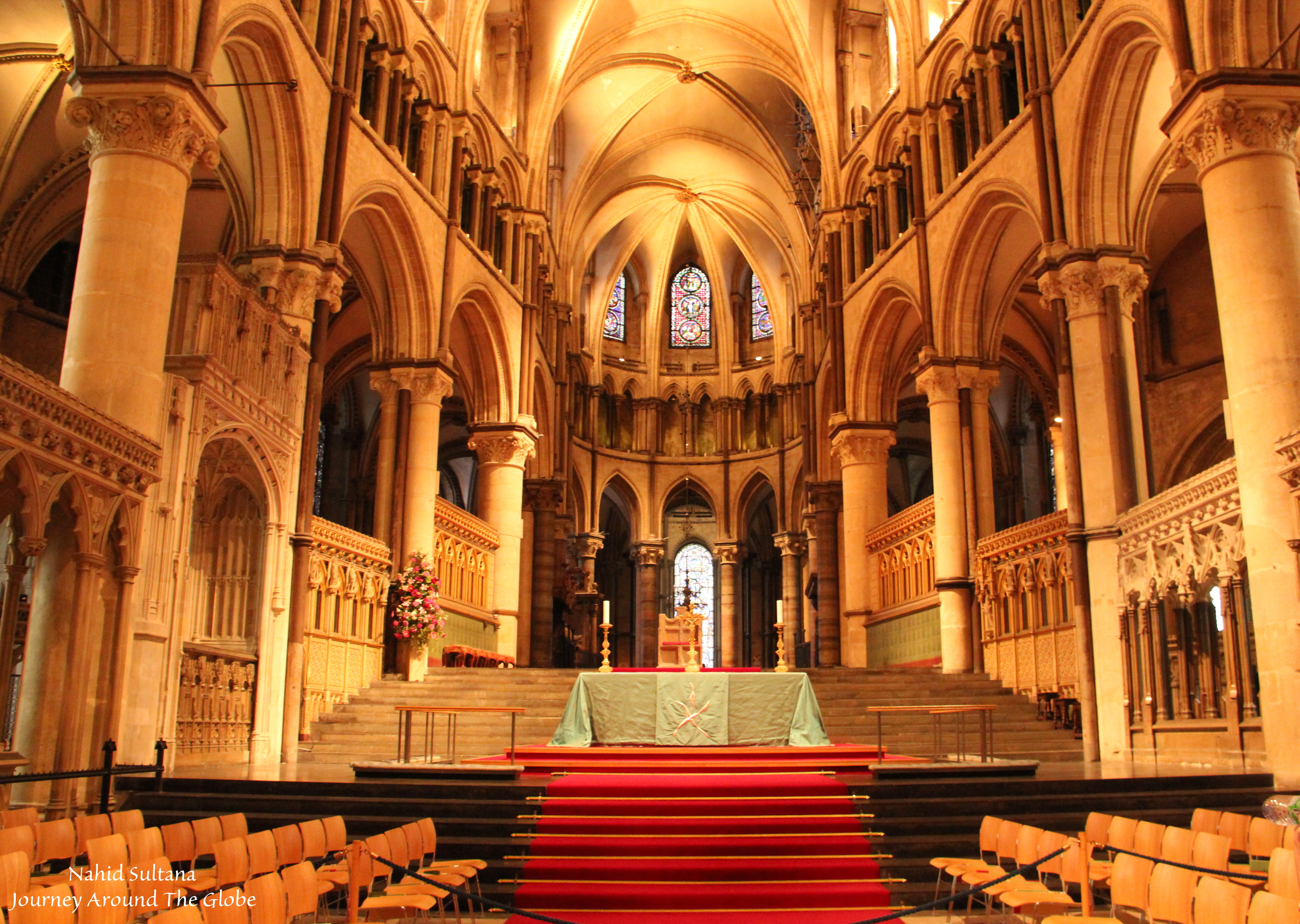
It is a big cathedral and we needed about an hour to visit all the corners. The cathedral is open to the public from 7 am to 5:30 pm in summer time, from 9 am to 5 pm in winter time, and Sundays from 12:30 pm to 2:30 pm. Last entry is half an hour prior to closing time. Entry fee is 9.50 GBP for adults and 6.50 GBP for kids above 5 years. It’s about half an hour drive from Dover Ferry Terminal and there is a paid parking close to the cathedral.
2. ST. AUGUSTINE’S ABBEY: This is one of the oldest and most important monasteries in the country. It was from here that the conversion of the English people to Christianity began. St. Augustine from Italy was sent here by the Pope in the 6th century. He began building the first church here soon after 597 AD. A thriving Anglo-Saxon monastery developed and its grounds became an important place of burial for several Anglo-Saxon kings, early archbishops, saints, and St. Augustine himself. Later, Normans built a great abbey here that flourished for four centuries until King Henry VIII pulled it down in 1538 and built a royal palace here.

- Ruins of St. Augustine’s Abbey in Canterbury, England
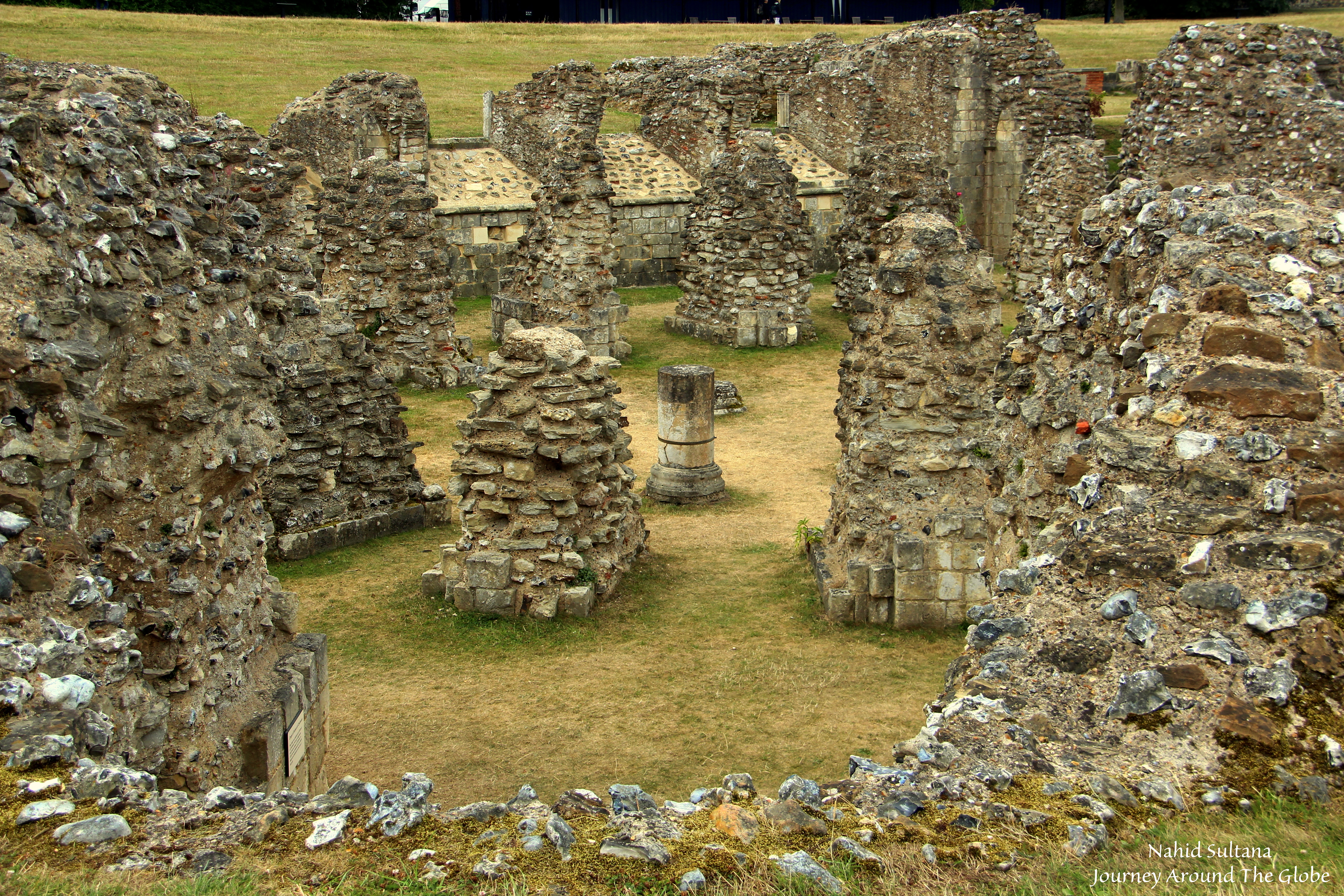
St. Augustine’s Abbey is also a UNESCO World Heritage Site. This big open space has lots and lots of ruins and grassy meadows. Take time, walk around and enjoy its elegant past. Then go inside the museum which holds a detail timeline of this place along with many things archeologists have found at the site.

- Walking and enjoying late afternoon in St. Augustine’s Abbey, can see Canterbury Cathedral in the back
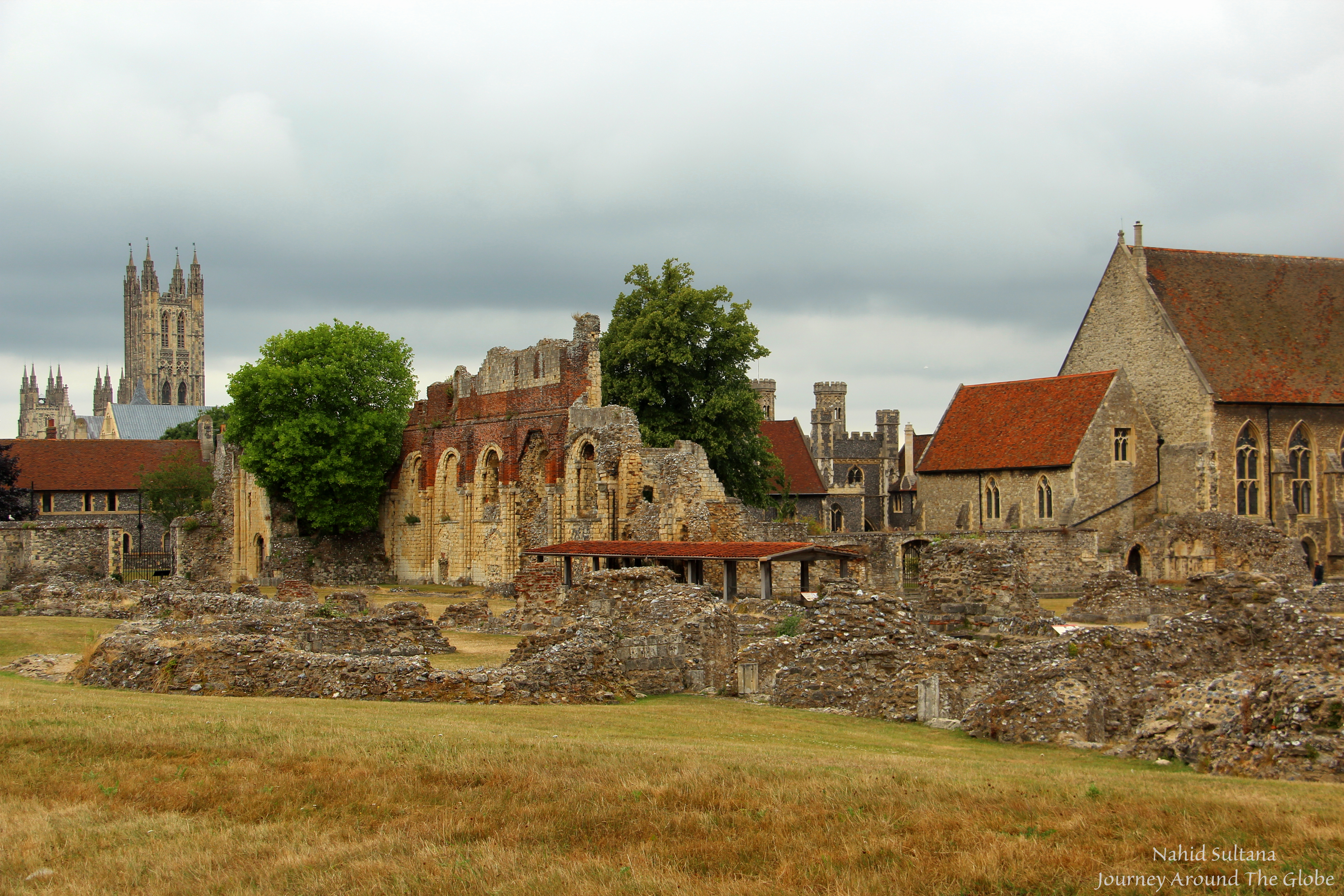
Ticket is 5 GBP per adult, 3 GBP for kids 5 – 15 years, and 13 GBP for family ticket. The ticket includes audio tour of the site and a small museum. Allow at least an hour for this forgotten abbey. It’s located within the walking distance from the cathedral and shouldn’t be missed.
3. ST. MARTIN’S CHURCH: This is the oldest English parish church in England dating back to 6th century. It is an active church and part of Canterbury World Heritage Site. Setting of this church is very peaceful with an old cemetery in its yard. We couldn’t go inside, because it’s only open on Tuesdays, Thursdays, and Saturdays from 11 – 4. It’s about 5-7 minutes of walk from St. Augustine’s Abbey.
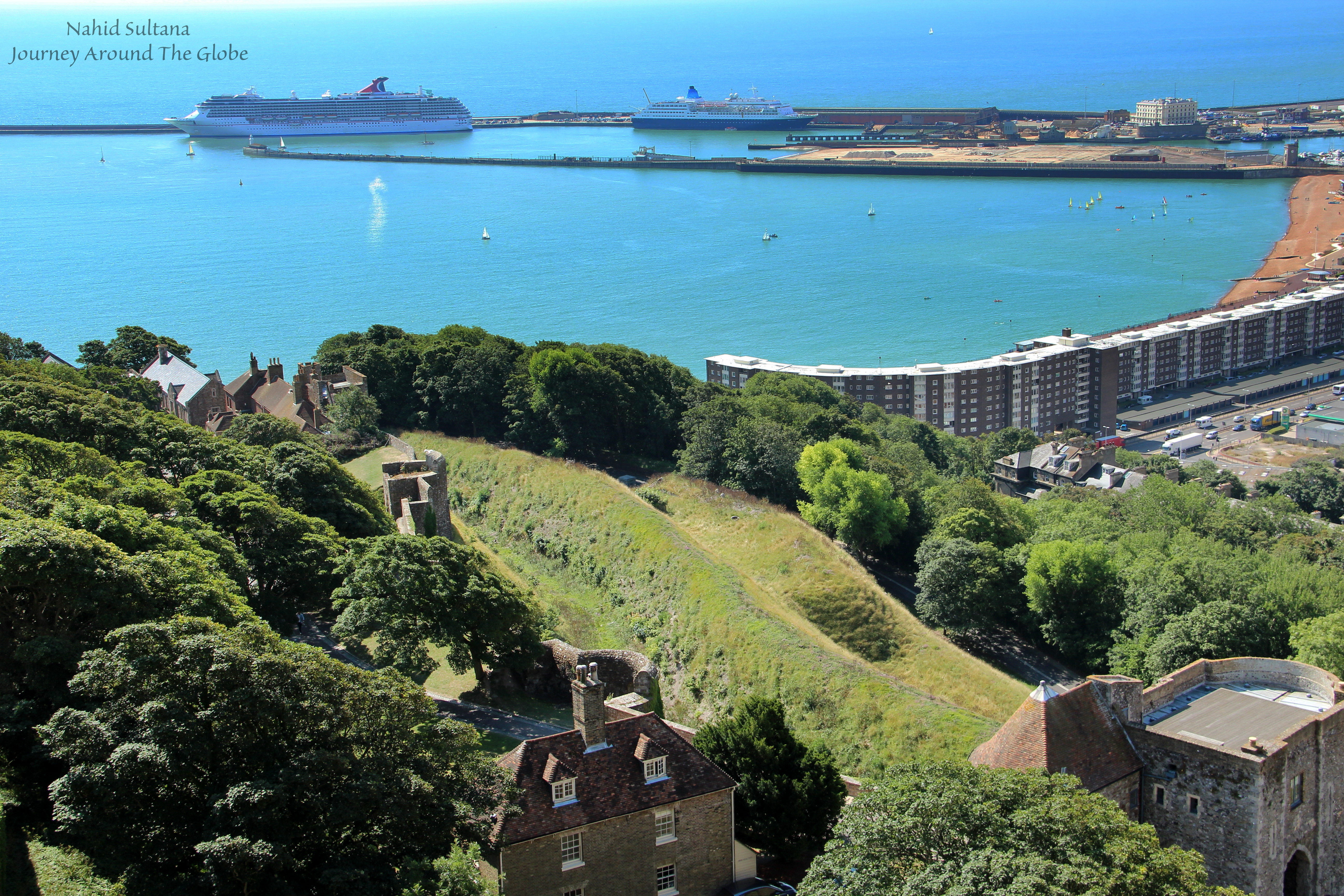
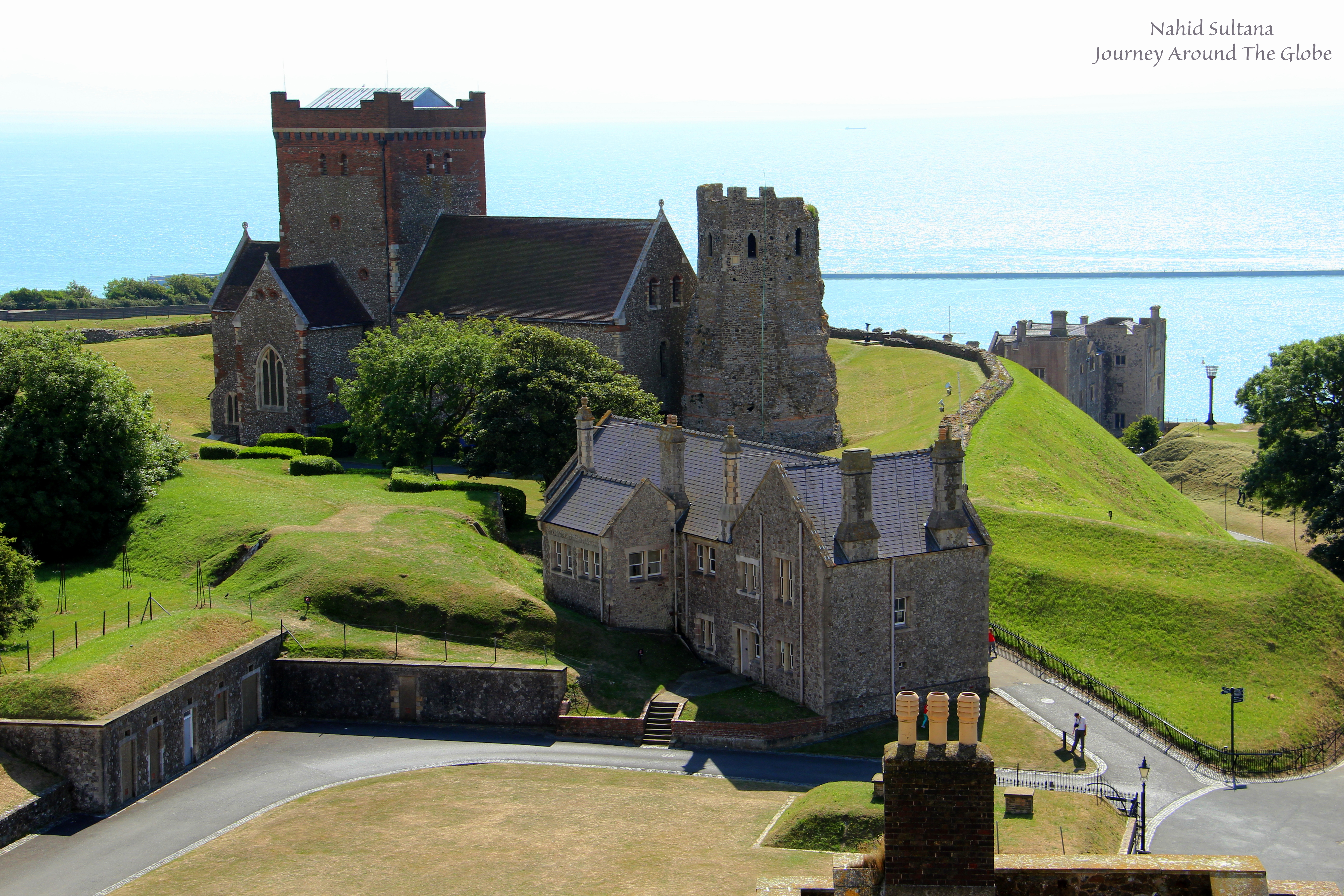
4. DOVER CASTLE: This is a 2000 years old fortification that have been protecting English coast since 1180. King Henry II built this present castle on the beautiful White Cliffs of Dover. Roman Lighthouse or Roman pharos is the oldest building in the castle standing right beside a Saxon church, called Church of St Mary-In-Castro. This Roman lighthouse is considered to be one of the oldest buildings in Britain which was built on the site of Dover Castle. At the heart of the castle lies the inner bailey and Great Tower. Great Tower, once the royal palace, is now recreated to its 1180s glory. Don’t be lazy to climb to its roof for some brilliant views. Many sections/barracks of this castle features different museums and settings from the old time. There are some underground tunnels, secret wartime tunnels, an underground hospital, and casemates here which are accessible to publics by guided tours. By the way, do go to Princess of Wales’ Royal Regiment Museum for some wartime memorabilia. Finally, the English Channel, Dover Port, and white chalk cliffs look amazing when you stand on hills or from any towers.
- View of English Channel and Dover Port from Dover Castle in England
Dover Castle is very kid and family friendly. We saw a small interactive play of King Henry II with his daughter, Mathilda and constable inside the Great Tower. There were also some archers dressed in medieval armory in front of cafeteria teaching kids’ archery. Pick up a map from the tourist office and enjoy the vast land of this fort. There is a free train ride to help you get around the site.

- Roman lighthouse (right) and Church of St Mary-in-Castro (left) in Dover Castle
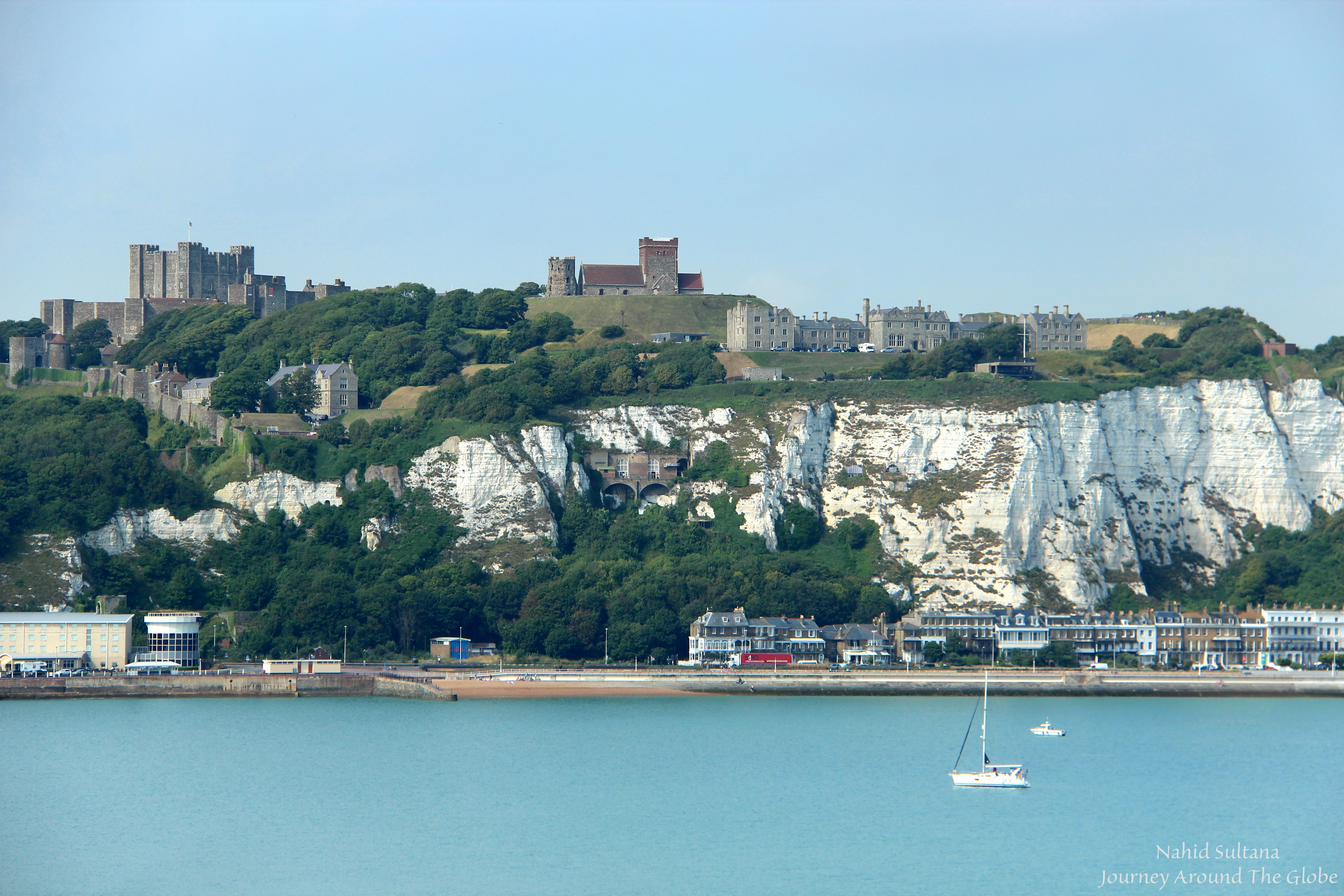
Dover port is the closest port to Continental Europe from mainland Britain. If you are coming from a ship or ferry you can see the towers of Dover Castle from far away with the white cliffs down below.

- Reaching Dover Port, saw chalk-white cliffs of Dover with Dover Castle in the backdrop in England
Related articles
- A day in Canterbury (williamtheconcretor.wordpress.com)
- A tale of two cathedrals (marlyb.wordpress.com)
- Welcome to the Countryside (kristofferkoper.wordpress.com)
- Reims – Part II (emilyhambi.wordpress.com)
- Canterbury Cathedral (bethanybrownled.wordpress.com)
- Canterbury and Dover (holidatewithkate.wordpress.com)
Share this:

Modern Dutch city Eindhoven, The Netherlands
EINDHOVEN, THE NETHERLANDS: Eindhoven is a thriving ultra-modern Dutch city with lots of bold and futuristic buildings. The actual city is very spread out and big but the city center is walkable to all the main spots. Unlike many other European cities, Eindhoven doesn’t have an “old town” per say; look of its city center is very up-to-date and stylish.
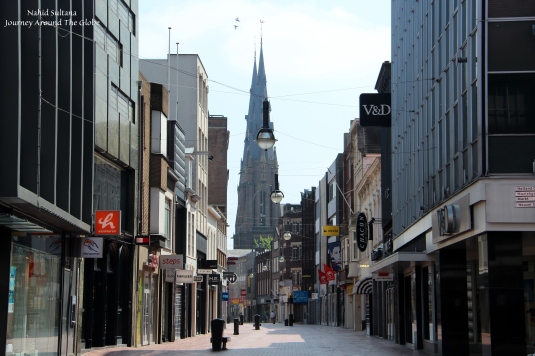
- Walking towards St. Catherine Church in Eindhoven, The Netherlands was very empty that Sunday

TIME of TRAVELING: We visited Eindhoven when my elder sister and her family came to visit us in Belgium. It was one Sunday in May of 2013. It was a very pleasant day but empty in the city center.
EATING and SHOPPING: We had lunch in an Egyptian place beside St. Catherine Church. It was some good food for good price.
Since we were there on a Sunday, everything was closed! There were lots of stores in the city center but too bad we could only do window shopping.
PLACES WE’VE VISITED: We spent only half a day in Eindhoven since everything was closed and crowdless, we decided to go to Antwerp in Belgium before heading back home. It seemed like there wasn’t anything to do except looking at some good-looking buildings and some squares. I think, the nightlife here can be very lively…but that didn’t suit us really. Some of the great buildings of this city are De Admirant (the highest building in Eindhoven), Evoluon – a mushroom/UFO shaped building from 1966, and more sexy architectures in “Around the Admirant” which are basically shopping area.
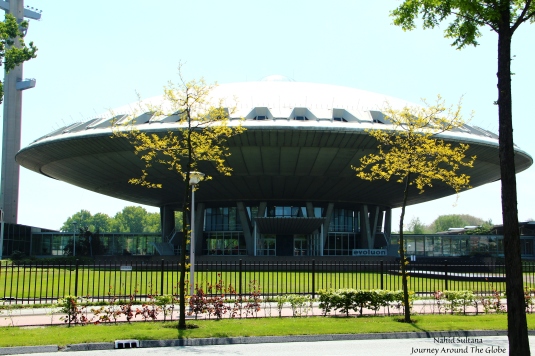
- Evoluon – a UFO shaped futuristic building in Eindhoven, The Netherlands

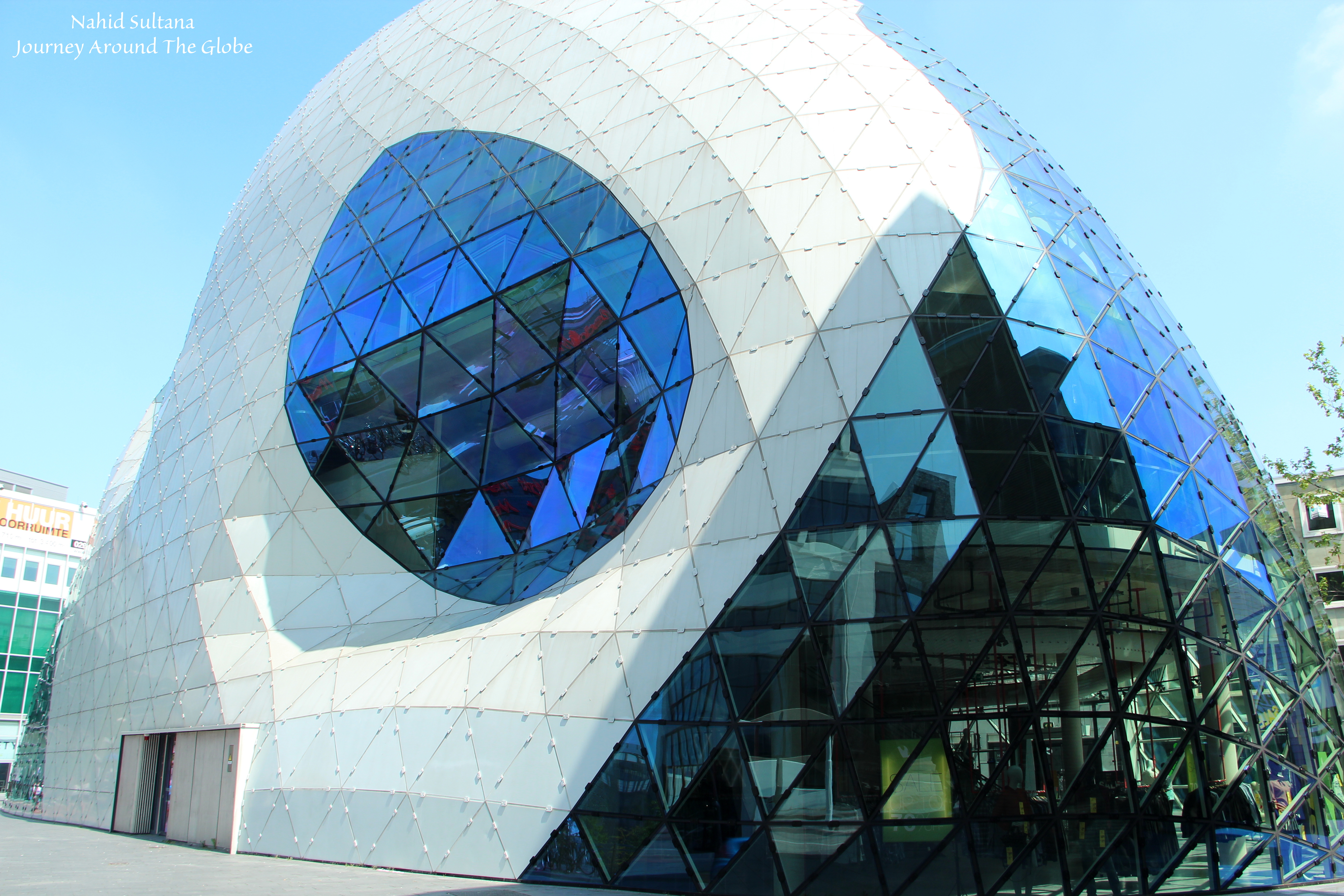
“Around Admirant” is one of the most stylish squares I’ve seen in whole of Europe with many creative looking buildings. Small streets from this square have many shops and some fast food places. I can’t imagine what it would be like on Saturdays when everything is open and people are gathering in to hangout in this cool place.
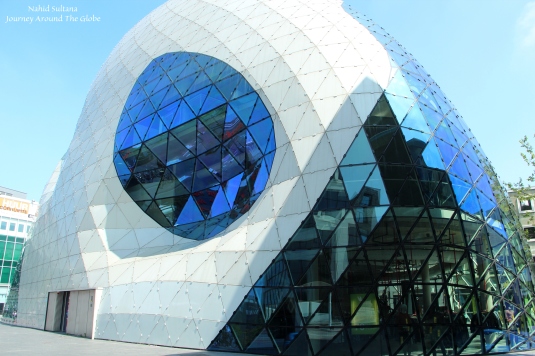
- Another cool architecture “The Blob” in “Around Admirant” in Eindhoven, The Netherlands
Sint-Catherinekerk located in Catharinaplein. Exterior of it looks fascinating but couldn’t go it (forgot that most of the churches in the Netherlands are closed on Sundays).
Markt looked the liveliest place while we were roaming around the city center. It is probably one of the best places for lunch with many options.
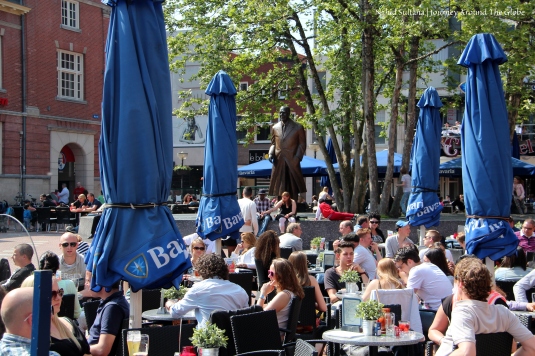
- Restaurants in the Markt in Eindhoven, The Netherlands

Share this:

Business Excellence Award 2020 from AI Global Media for The Most Entertaining Personal Travel Blog – Pacific Northwest USA

Top Posts & Pages


Authors
 Globe Runner
Business Excellence Award 2020 for The Most Entertaining Personal Travel Blog – Pacific Northwest USA

Business Excellence Award 2020 from AI Global Media

 Journey Around The Globe