Journey Around The Globe
ready for the next destination
Tea Capital of Bangladesh – Srimongol
Srimongol, Bangladesh: Srimongol is probably one of the star cities in Sylhet division of Bangladesh. I should first let my readers know that I was born in Bangladesh and spent 15 years of my life there before moving to the USA in the early 90s. And this was my second time visiting Sylhet.

Srimongol or Sreemangal is known for its natural beauty, greenery, vast tea gardens, small hills, forest, and luxurious resorts. This is a popular destination for both the locals and foreigners for its distance from Dhaka and for enjoying a quiet time outside the hustling and bustling of big cities.

Time of Travel: My 2 daughters and I were in Bangladesh for 3 weeks in July of 2023. We only got to spend 2 nights and 2 days in Srimongol due to time restrictions. But if you have more time, be sure to visit Sylhet and surrounding areas, like Jaflong. It’s best to leave Dhaka early in the morning to avoid long traffic. We left around 6:15am and were at our resort in Srimongol for lunch.

July in Srimongol can be very hot. But we got a little bit of rain here and there. During heavy rainy season, visiting these places below can be difficult and dangerous too.
Our Hotel: My cousin brother was very gracious to give us this treat to Srimongol and reserved Grand Sultan Tea Resort & Golf. It was an all inclusive package with stunning views from our rooms. I can’t praise enough on the food, service, location, and everything else in this resort. Every dish in every meal was cooked perfectly. They had traditional Bangladeshi snacks and main courses along with western dishes for breakfast, lunch, and dinner.

This was my first time staying at a resort in Bangladesh and it exceeded my expectations in every way possible. It is a very secured complex with a beautiful lake, playground, and other indoor amenities. The main check-in area, rooms, meal area, and the whole outdoor areas were sparkling clean. The location of this resort is what I loved the most. The 2 main places we wanted to visit (mentioned below) were both very close to the resort.

Eating and Shopping: You’ll find tons of souvenirs shops right outside the Grand Sultan Resort. Local tea and wooden trinkets are something famous that you’d want to bring back from Srimongol. “Monipuri” sharis (the wraps for ladies), tunics, kameez sets, and bedcovers are some items that are traditionally made locally only in Sylhet.

Other than the stores near the resort, we also went to the “Monipuri” market where a cluster of stores are located for a variety of fabrics mainly. Don’t forget to bargain when buying anything here, unless they are fixed price.

One of the must try in Srimongol is the 7-layered tea. Personally, I didn’t love it or hated it. But This is something I’ve never seen anywhere in the world. It is hard to know which cafe first invented this special tea. Nowadays, every store will claim that their tea is the original. Nevertheless, at least buy one cup just to take a picture and put it on Instagram.

One thing I wanted to mention, if you are traveling from Dhaka to Srimongol, be sure to stop at Ujanvati Restaurant for meals and to freshen up. It’s very clean and the service is very good. It’s almost halfway thru from Dhaka to Srimongol and makes a nice spot to take a break. While there, check out the Comilla Khadi store to buy famous Khadi fabrics from Comilla here. I got a bed cover set and some “khadi gamcha” – light cotton towels from this store.
Places We’ve Visited: As I’ve mentioned, we stayed there only for 2 nights. First day, we mainly explored inside the resort and walked over to the souvenir shops right outside. Second day, we left after breakfast to go to the two places below. But other than these, we did drive around some tea gardens and took some off the beaten paths to see the town. We were told that Noorjahan tea garden is the best estate for taking a drive through the rugged tea gardens and indeed it was.

- Lawachara National Park: This was definitely not what I expected initially and therefore, was not prepared for the walk. It was really hot and humid that day and I was wearing sandals. Nevertheless, Lawachara is an absolute must see in this town. This was announced as a national park in 1996. Be ready for some walks through narrow paths in the jungle. Don’t forget to carry bug repellent, hat, comfortable shoes, and water with you.

Buy the ticket from the front and ask for a guide (extra fee) if you want to learn more about its inhabitants, plants, and atmosphere. We stayed about a couple hours without going too deep into the jungle.

While we did hear and see only a group of howler monkeys right after entering the park, there are some 15 species of amphibians, 52 species of reptiles, 260 species of birds, and 50 species of mammals can be found in this park. Some of the notable ones include monkeys, langurs, Burmese pythons, and pit vipers. Of course it’s very rare that you’ll see any of these during your visit, especially if you take the small hike we took.

The rail track here is a famous place where Bangladesh’s famous writer Humayan Ahmed’s “Amar Ache Jol” was shot. Lawachara is also the place where a portion of the Oscar winning movie “Around The World in 80 Days” was shot.
- Madhabpur Lake: Madhabpur Lake was less than half an hour drive from Lawachara Park. The roads were through small villages and very scenic.
Madhabpur Lake is the only place where you can see purple lotus in Bangladesh. The lake is surrounded by small hills and tea gardens. We got a chance to walk through the tea gardens and climb some small hills.

Once we were on top of the hill, the view of the lake, tea gardens, and surrounding fields were stunning with lush greenery. We came to know, we were very close to the India border and Indian cities like Assam and Tripura were about 100km.

Fortunately, we got to see and interact with a few local women tea pickers and hear their stories. A few men also came to show us the difference between black and green tea. Talking to the locals and hearing their stories on life and hardship definitely makes you appreciate your own life. These people were super nice and helpful. You may feel overwhelmed by their forceful approach, but they can show and educate you about the area. Leave them with a generous tip…believe me, you’ll make their day.

We spent about a couple hours here before heading back to the resort. We were lucky to find a lemonade stand on the top of the hill for some fresh and cold drinks. We also saw a man selling the famous Bangladeshi snack “chanachur” with fresh tea leaves. If you dare, have some with habanero peppers.
Share this:

You Better “Belize” It
BELIZE CITY, BELIZE: Located in the Western Caribbean, Belize is the only English speaking country in Central America, which by itself makes Belize an attractive destination for many. But it’s not just that, this is a place where adventure, history, calmness, and natural beauty collide in a perfect harmony.
Belize is a relatively young country and got its independence only in 1981 from England. It is bordered by Mexico and Guatemala. Although the locals speak Creole mostly (broken English), some speak Mayans and Spanish too. And since Belize was under British rule until 1981, the official language here is English. The most convenient thing for the USA travelers about visiting Belize is that you can use US Dollars everywhere. Sometimes you may get changes back in USD or in Belize Dollars but their central bank always makes sure that the ratio stays 1 USD to 2 Belize Dollars all the time.

Belize City is the former capital of the country and the largest city here. After a big hurricane which caused flooding and other damages in 1961, the capital was relocated from Belize City to the more inland area of Belmopan. The population of Belize City is around 75K. Unlike other big cities in the Caribbean/Latin countries, Belize is on the quieter side. You won’t hear loud music everywhere you go. Life here is slow and laid back. One of the mornings, I even saw the Finance Minister walking his dog without any guard or any police. Someone at the hotel pointed out to me that he holds that he is a minister.

Belize City is divided into 2 main parts…the North and the South side. The North consists more of affluent people with nic houses and posh neighborhoods, whereas the South side is mostly a beaten down area where most of the shootings and crimes happen. Tourists aren’t recommended to go to that side by themselves, especially after dark.
Just FYI, starting from February 2022, Belize mandated that all out of country travelers get health insurance online, which costs me about $19. But no officials in the airport checked my insurance papers.
TIME of TRAVEL: I visited Belize on the 4th of July weekend in 2022, my 1st international trip after the pandemic started. This was a solo trip for me when I was looking to getaway for just a few days.
It was a very pleasant weather with soft breeze and temperature around the 80s in July. I did get tropical rain here and there but it lasted for a couple minutes. Only on the day I visited Lamanai, at one point it started pouring really hard and I got all soaked. July is the month when the rainy season starts slowly and sometimes trips can get canceled if the rivers overflow or certain areas get too slippery.
MY HOTEL: I stayed in Golden Bay hotel in Belize City. Most of the tourists here stay in one of the Cayes…San Pedro and Caye Caulker are very popular and have lots of accommodation options. But I decided to stay in the city and Golden Bay was one of the top ones with a serene view of the ocean from my room. The Caribbean Sea is just on the other side of the street and it was beautiful to walk there early in the morning. Breakfast was included and an airport shuttle is available for $25 each way. The best part of this hotel is their rooftop restaurant, Vino Tinto, with a city view on one side and the sea view on the other side. There is a small grocery/souvenir/department shop downstairs in the hotel building, which was convenient to grab snacks or even do some souvenir hunting.

Like most travelers, if you want to stay in Caye Caulker or San Pedro, you can either take a plane from Belize airport or a water taxi from the city terminal. There are many different water taxi companies who go out to those and other islands everyday.
EATING and SHOPPING: Belizean food is truly packed with flavors of freshness and a bit of heat…one of the best in that side of the world. Their seafood and chicken dishes are top notch and incomparable.
My first dinner in Belize City was in Celebrity which was recommended by the taxi driver who showed me around the city. It’s a beautiful restaurant inside and out. I had Caribbean style seafood curry with coconut rice and fried plantain. I was not going to go out at night too far from my hotel either way. So I ended up dining in Celebrity couple more times. For another lunch in Celebrity, I had the traditional Belizean chicken stew with rice, beans, and coleslaw. Everyone coming to Belize has to try their chicken stew at least once and then they will get hooked to it for good. I ended up buying “recardo rojo”, an essential ingredient to make Belizean chicken stew from the airport on my way back.

For the 2nd dinner, I tried the restaurant Vino Tinto on my hotel rooftop. Since a lot of their seafood options were unavailable, I went with shrimp ceviche with habanero sauce on the side (yum) and some chicken dumplings.

I did some shopping in Lamanai where you’ll find a few souvenir huts. I bought a couple t-shirts and a wooden napkin holder. Altun Ha also had lots of small shops near the exit. I bought a whole bunch of Belizean signature habanero hot sauce bottles and wooden coasters from here. From the shop in my hotel, I bought some Belize coffee, local fruit herbal tea, souvenir cups, and etc. Wooden items made from mahogany trees are everywhere here, like bowls, coasters, or wall decors.
PLACES I’VE VISITED: There are lots of water related activities in Belize, like scuba diving in the famous Blue Hole, snorkeling in the reefs, cave tubing/kayaking and iplining. Many hops from island to island (Cayes) for a relaxed atmosphere.
I had 3 and half days to spend in this amazing country and below are some of the places I’ve visited:
- Belize City Tour: The day I reached Belize City, I requested my hotel for a private city tour. And they arranged it with one of their trusted guides, Pascal. He charged me $25 for an hour tour of the city.

He took me to the port – where cruise ships come, then to governmental buildings, schools, universities, hospitals, some posh neighborhoods, South side – which is not a recommended place for the tourists, the old cemetery, and etc. We mainly drove around different parts of the city, including the small downtown. The colorful Belize sign and the Baron Bliss lighthouse are both close to each other by the harbor of Belize City.

Just to give you some quick facts, St. John’s Cathedral near downtown is an historic building and a prominent one too. The foundation stone for the structure was laid in 1812 and was consecrated in 1826. The Tourism Village is only open when cruise ships are here and it’s not open to the public. It is a hot post for the cruise passengers who pay a high price to buy local trinkets. There is a market right outside where you can get less expensive souvenirs and anyone can go there.

As I was driving along, the guide was sharing stories of gunshots and how/who were killed in different parts of the city. Passing through the South side was a bit uncomfortable but you can see the beaten down houses, underdeveloped neighborhoods, and poor road quality. I was able to see and feel Belize city and its vibe because of this tour. If I had stayed in one of the islands, I’d have missed it.
- Lamanai Temple and The New River Safari: Lamanai, meaning “submerged crocodile”, is a must see historic spot in Belize. It’s not just one of the largest Mayan sites in this country but also was a major city in the Maya civilization.

I was picked up at 7:15am from my hotel by the tour company. An hour later we were at the New River boating dock with a few others to get on a motor boat. This scenic 26 miles of boat ride up the New River to Lamanai was amazing, especially when you are zooming through some narrow waterways bordered with hundreds of different kinds of trees hanging from both sides of the river. Along the New River, we saw a variety of tropical trees, lotus flowers, and wildlife including a few exotic birds and bats. We were shocked to see some native people swimming and canoeing to catch fish in that river that apparently has lots of crocodiles. We also made a brief pause at the Mennonite village by the New River, who had settled in Belize back in the 1700s. Mennonites are the only group of people who don’t have to pay tax there and live with an almost technology-free life.

On our way to Lamanai, it rained a few times but going through the winding river with a speed boat was exciting and informational. When you get to Lamanai by the bank of the New River and walk the wooden path through the jungle, you come to a small museum at the entrance that tells the history of Lamanai and its surroundings. After spending a few minutes inside the museum, we started walking through the jungle to get to the first stop, the Jaguar Temple. The earliest known version of the Jaguar Temple was constructed around 500 A.D. with two jaguar face masks on both sides of the stairs. In the 13th century, the Jaguar Temple was refurbished with a new layer that covered the older one. But within a century, all were abandoned and the temple was allowed to fall into despair. Finally, by the 16th century, the whole complex was engulfed by the forest.

After passing by a few Mayan house ruins, uncovered mounds, and smaller ruins, we stopped at the High Temple. 33 meters in height from the ground, this is the tallest structure at the site of Lamanai and is also one of the largest pre-classic structures in the Maya area. The initial phase of construction of High Temple began in 100 B.C and was abandoned in the post-classic period. Be sure to climb The High Temple to get a spectacular 360 degree view from the top.

While it started raining really heavily in the jungle, we passed more ruins that are scattered everywhere and came to the 3rd Mayan temple in Lamanai, called Stela Temple.
The highlight of Lamanai was the last site, called Mask Temple, one of the most majestic Mayan sites I’ve visited in my travel experience. Approximately, from 200-100 B.C, the construction in Lamanai began, and the Mask Temple was one of the earliest establishments here. Originally, there were 4 large masks that adorned the stair sides. By the 7th century, there were only 2 masks left and by the 15th century all had fallen into ruins. People can climb most of these temples in Lamanai for spectacular views of the surroundings.

As you walk from temple to temple through the jungle and what’s left of this ancient village, plenty of ruins can be seen that are still unexcavated. We even saw and heard howler monkeys, wood-peckers, and toucans on a few trees as we were appreciating nature and Mayan intellect. In addition to that, the variety of rare and unusual trees are fascinating to look at.
Other than the temples, there are ruins of houses, plazas, ritual sites, sports arenas, and etc in Lamanai. Not all these structures were built in the same decades. They were done in phases and generations. Don’t be shy to climb these temples and get a better view of the jungle from the top.

Do take bug spray if you decide to go to Lamanai. Mosquitos are EVERYWHERE and these tiger mosquitos will attack you from every direction, especially in the summertime. Thanks to one of the people in the group who let me use his mosquito repellant. Wearing flip-flops wouldn’t be very comfortable here. Good hiking shoes or snickers are highly recommended. And if you are going there in July, like me, carrying a poncho would be a smart thing to do.
I booked the trip using the Viator app. It was $160 per person that included hotel pickup/drop off with all the admission fees, transportation, and lunch. The tour company’s owner’s wife cooked us some coconut rice with beans, potato salad, and chicken stew for lunch. That was one of the best chicken dishes I’ve ever tried in the whole Caribbean or anywhere really. The whole tour took about 7-8 hours and finally, I was back in the hotel by 3:30pm.
- Altun Ha Mayan Site: Altun Ha was not in my original itinerary. I was supposed to go to the Xunantunich Mayan site. But on the day of, the tour got canceled. Desperate to plan out the whole day at the last minute, I ended up hiring the same guide from my hotel who took me to the city tour on my first day there.

It was an hour drive from Belize City to Altun Ha, which literally means “Stone Water ” and unlike Lamanai, most of the excavated ruins here are displayed almost in one big plaza full of old structures. Altun Ha was a complex and a wealthy ceremonial center that formed an important link in ancient Maya coastal trade routes.

Temple of the Sun God, which rises some 54 feet above the plaza floor, is the focal point here. Make sure to climb those few steep steps to get on top to an imposing overview. On the top of Sun Temple, archeologists discovered 7 tombs along with many spectacular jade objects. Among those, including the Jade Head depicting Sun God, in one of the 7 tombs. The Jade Head is the largest carved jade treasure in the Maya world. The Jade Head of Altun Ha remains the single largest piece of carved jade within Mesoamerica and the western hemisphere. When it’s on any display, the insurance value for the Jade Head is somewhere from 5-10 million USD. Belize Central Bank currently holds this 9 lbs weight Jade Head in a secured vault after it became a National Treasure and an icon for Belize.

Other than the Jade Head, over 800 jade items and more than 50 major carved pendants were unearthed at Altun Ha. Jade is a very hard stone and this material was the most valued by the Maya.
The earliest evidence of settlement at Altun Ha dates back to 200 B.C and occupation continued until about 900 A.D. Altun Ha reached its peak around 500-600 A.D with about 10,000 residents. Excavations revealed an incredible and unexpected material wealth at this ancient Maya site. The whole plaza consists of many ruins of sports arenas, houses, and etc.

Altun Ha is about 65 mile from Belize City by car. Usually a group tour to Altun Ha is about somewhere around $65 but because of the last minute change, I ended up paying $125 for a private tour. We were able to walk around the ruins and climb the main Temple of Sun God in just an hour.
- The Museum of Belize: From Altun Ha, my guide, Pascal, dropped me to The Museum of Belize in Belize City. It’s a very simple but educational place to learn about this country. The museum is dedicated to promote and preserve Belize’s cultural life. It displays the history of Mayan civilizations, slavery in Belize, the development of Belizean independence, and a lot more.
The present museum building is a former prison and was built in 1857 as the Belize Prison. In February of 2001, after a complete renovation, it was converted to The Museum of Belize. You can see a small portion of that prison near the end of one side.

Entry fee to the museum is $7 per person and it closes at 4pm. And I only spent about half an hour going through the 1st level and 2nd level, which had an art exhibition by one of Belize’s most prolific artists Pen Cayetano.
- Caye Caulker Island and The Split: There are about 400 cayes in Belize and about 250 are habitable. Caye Caulker is one of the most popular ones among them and is only about 21 miles/30 minutes boat ride from Belize City. This is a popular island for cheap accommodations, fresh food, fun nightlife, and relaxation.

This tour to Caye Caulker was $45 for half a day trip and I was picked up from my hotel at 8:30am. From the marina, we were taken to Caye Caulker by a speed boat. This was an incredible ride and we passed by lots of smaller and private islands on our way, as our guide was telling us about their culture and history.
Once we reached Caye Caulker, some went to snorkel and a couple of us stayed back just to hang out by the beach and enjoy the island. We were given about 3 hours to explore the island anyway we wanted. I mostly hung out in and around The Split, which is a popular swimming area at one end of the island. This “beach” is basically a sunken area surrounded by cement seawalls on one side. The water here was relatively shallow and it has a diving board at one side too for some splashes. People sit on the walls lazily to catch some tan or read books or just look at the vast sea as far as the sight goes.

“Go Slow” is the motto of Caye Caulker and you’ll literally see signs of that in different places. The locals follow that unofficial rule wholeheartedly. This is a very laid back island with picturesque views at every corner. There are only a few cars here since most people use golf carts to get around. You can rent these carts or bicycles through different companies. I saw many tourists hiring a golf cart driver to get a tour of the island as well. There is only one main street in Caye Caulker near The Split and you can’t get lost here. Most of the streets are sandy or unpaved.
It can get really hot on these islands but the pleasant Caribbean breeze cooled me down while strolling. Wandering around the brightly colored buildings and shops was relaxing. Sit down by the water or in a cafe to enjoy the peaceful atmosphere of this island. Whatever you do, just don’t rush.

I was told that some of the restaurants here take a long time to prepare food (following the “Go Slow” slogan), therefore, it’s better to order your food early. I didn’t want to take a chance and exactly knew where I wanted to eat. For lunch, I had a fresh lobster in butter/lemon sauce with rice, beans, and grilled veggies in LandShark, right by The Split with a splendid ocean view in front of me. Caye Caulker had their annual lobster festival just the weekend before and they are known for their fresh and tasty lobsters. So, lobster was in my mind from the beginning.
Lazy Lizard is another famous restaurant in The Split. Try out fresh fruit smoothies from local shops or have some fresh coconut water. There are plenty of options for meals here, from ocean side restaurants to street side BBQ places. As I was strolling, I saw people grilling chicken, pork, and seafood by the streets. There were lots of shops selling souvenirs too and some by the streets selling seashells and jewelry made out of that.

On our way back, I had one of the unique experiences which was very educational too. Our guide got a whole bag full of raw sardines for us and she taught us how to feed those to a whole group of tarpons in the shallow side of the sea. Although I didn’t do it, some people fed sardines to those fishes. It’s fun to watch how those tarpons snatches the sardine from their hands.
Overall, Belize had more than what I expected. Initially, I was feeling a bit uncomfortable about staying in Belize City and not in one of the “Cayes”. I was also debating if I need to go on more than one Mayan tour. But I don’t regret any of my decisions. Every country has its bad neighborhood but as tourists, staying alert and smart are part of the plan. Belize is not like other Latin countries. It has a very attractive heritage, rich history, appealing tourist spots, mind-blowing scenic beauties, unforgettable food, and yet the ease of traveling everywhere. This is definitely one of the hidden gems of the Caribbean.
Share this:

Puerto Rico – The Island of Enchantment/Isla Del Encanto

San Juan, Puerto Rico: Since the pandemic started, I’ve waited for an extremely long time to get out of the US mainland, just to visit any new place…ANY NEW PLACE. I know many traveled during the pandemic. For me, traveling with uncertainties, like PCR tests and Covid related restrictions, didn’t really make me want to travel much.
I decided to fly to Puerto Rico solo at the end of last year and chose this place because it was a US territory and no test/quarantine was required. Plus, it was in the Caribbean…almost felt like visiting a new country and culture. First I asked my sister, then a few other friends, and then my cousin to join the trip. It ended up being 8 of us girls all together who went along on this trip (and 1 other friend who tested positive for Covid 2 days before we left and had to stay behind).

So, Puerto Rico…wow, what an enriched Caribbean island and…the birthplace of pina colada (eh, had to mention that somewhere). If I only knew that this place is packed with that much history, natural beauty, rich culture, laid back days, and crazy night life, I would have gone to Puerto Rico sooner. Nevertheless, I made it there and it was hard to leave this island behind.
Puerto Rico became part of the USA at the end of the 1800s and San Juan is the oldest city under the USA jurisdiction. With its centuries old architectural features and heritage, cobalt blue beaches, and rainforest, there is something for everyone in this Caribbean gem. This is a melting pot of Latin and Spanish cultures, mixed with African and Taino traditions, with a touch of American influence.

San Juan is the capital and the largest city of Puerto Rico. It is also the financial capital of this island. Unlike other capital cities, people here are very festive and laid back. I personally like to call it “The City of Cats” or “The City of Murals”…the number of cats you’ll see on the streets are insane (reminded me of Istanbul). Being a cat lover and a owner of 2 kitties, I loved those street cats. And you’ll see murals almost everywhere you go.
If you are on the East Coast, plane journeys are way shorter than the ones on the West Coast. Direct flights from D.C or NY are very common and take only a few hours, which would make a great weekend getaway.
Let’s get you some practical information on Puerto Rico now. Uber is super efficient and cheap here. Seriously, 8 of us stayed in San Juan for 4 days where we used Uber many times to visit all those places I’ve mentioned below and our combined Uber cost was about $407. Not bad at all. Keep in mind, you can rent a car in PR, but as one of the Uber drivers was saying, the parking fees for rental cars are huge everywhere you go. Not to mention finding a parking space in some places in San Juan is a big headache. Also, if your hotel/AirBnB doesn’t have a safe garage for your rental car, parking your car on the street can be dangerous as petty thefts and car break-ins are very common here.

Being a US territory, USD is the currency here and English is spoken and understood by most of the people. Knowing Spanish would definitely help since it’s the dominant language in Puerto Rico. Also, as a sign of respect to the locals and their culture, knowing a few basic Spanish words will go a long way.
Our AirBnB: Since it was our first time in Puerto Rico and we were not going to rent a car, we wanted to stay close to OSJ. Our AirBnB place, called “Guava House” on Las Palmas, was a great location because most of the places we wanted to see were close by and the airport was only a 7-8 minutes drive. Yes, the neighborhood was a bit sketchy but I’d go back to that house over any resorts any time in Puerto Rico.
Our AirBnB was not just a home, it was an experience with unique decorations and interesting layouts. Nothing was fancy or luxurious in this home, but we had 9 bedrooms, an open dining area, an enclosed kitchen, stairs to the rooftop, 4 bedrooms with attached baths and a general area with 3 more bathrooms and 3 showers. This was better than what I expected from the descriptions and pictures. Oh, and the sound of roosters every morning was terribly annoying but charming at the same time.
Time of Travel: We were in Puerto Rico the weekend before the Memorial Day holiday in 2022. The temperature during the day was somewhere from 90-95 degrees. We didn’t get much rain, except for the day we were leaving PR.
Sunscreen and bug spray are highly recommended here. All of us got mosquito bites and sun burns. Carry a hat and a comfortable pair of shoes for any outdoor activities, especially if you are planning to go to El Yunque Rainforest or just for walking in OSJ.
Eating and Shopping: Plantain is a very popular and staple food in Puerto Rico. But to be very honest, I have had better plantain dishes in South or Central America. Mofongo is a traditional Puerto Rican to try that’s made with plantains. I tried some shrimp mofongo from my friend’s plate, and man, it was good. Tostones are deep fried plantain chips that I’ve tried a few times…can be a bit dry and somewhere flavorless, if you are eating it just by itself. Seafood was something I felt was very underrated but so fresh and tasty. I had seafood for most of my meals and they couldn’t have been any better. Fresh red snappers and lobsters are very common here. Almost all the restaurants had options of ceviche and empanadas in their appetizers. And rice and beans will show up in many Puerto Rican entrees.
Flamenco show dinners are a somewhat popular activity among the tourists. Make sure to make reservations ahead of time in these restaurants that offer flamenco shows while you are having a meal.
For our first lunch, right after we arrived in San Juan, we went to a food-court-style place by the water, where multiple vendors were selling different cuisines. This was near Condado Beach and we just wanted to grab a quick bite. I just had a vege pizza but the location was fabulous.

Our second lunch was at a restaurant in Playa Luquillo, called Edelweiss, where I had freshly fried whole red snapper. Other girls tried lobsters, stuffed avocado, sampler platters, and etc. A fresh glass of pina colada was always something I ordered while in Puerto Rico. The restaurant was beautiful too, decorated with lots of umbrellas on the ceiling.
Our first dinner after the El Yunque trip in San Juan was at Casa Emilio. I was actually looking for a live flamenco show with dinner but only this place actually picked up the phone and took our reservation. We made a reservation for this place about a month ago, since they have live music only on Friday nights. It’s popular among the rich local Puerto Ricans who enjoy posh platters and live music by local artists. Though there was no actual flamenco performance by professionals, the ladies in the restaurant eventually got up at one point and started dancing to the songs the artist was singing. That was a lively environment and a fun experience. I had beef steaks with tostones. The food is really good but can be a bit pricey.

Next day, for lunch we sat down at Singular, near the cathedral. I had ceviche and some chicken empanada (not my favorite in that restaurant). This is another small but very cozy place for meals or drinks and located at the heart of OSJ.
That night for dinner, we came back to the above “Singular” restaurant vicinity where another restaurant called “Hotel El Convento” is located. It’s a restaurant inside the hotel I’m guessing. I had some tostones again, bite side mofongo, and some tuna pods (raw tuna cubes).
The next day, our lunch was in Santurce at a restaurant called “The Mangu Place”. They had some of the best yet cheap local food. I had some fried fish and curry style fish with simple white rice. It was really good. The restaurant is mainly for locals and workers barely spoke any English but it was a nice experience to try some places outside touristy areas (thanks to my cousin for suggesting it).
Our last dinner in Puerto Rico was a treat from one of our friends. It was at this trendy place in Carolina, called Corchea. They had a variety of seafood option. I had this fish called “wacko” or “whacko”…a white fish, also known as “queer fish”. Other people in the group tried fried red snapper, seafood paella, muscles, dumplings, and etc. This is a really good place to try if you are in the Carolina district.

Try some fresh coconut or pineapple juice in Condado beach or near El Morro. I also had some fresh hibiscus juice from a street vendor near El Morro. And Puerto Rico being the birthplace of pina colada, this is a must try while here.
If you are traveling with kids, many American chain fast-food places are almost everywhere in the city. For fancier or local eateries, La Placita is another place that was recommended by one of our Uber drivers where you’ll find dozens of restaurants and cafes, unfortunately we couldn’t make it there.
For shopping, Old San Juan (OSJ) is one of the best places to find some unique and authentic Puerto Rican souvenirs. Yes, they can be expensive depending on what you are buying and which store you are buying from. But while walking around OSJ, you’ll see lines of stores from generic souvenirs to more artsy type souvenirs.

I personally bought ground coffee, cigars, some jewelry for my kids, a couple wood curved baby Groots, and a hand painted glass vase to bring back home. Wooden gift items are very popular here, especially mortar and pestle. If you are an art/painting lover, OSJ has some exclusive art galleries where you can find paintings by local artists for some hefty money.
Places We’ve Visited: We stayed about 3 ½ days and 4 nights in Puerto Rico and focused mainly on San Juan this time. For next time, maybe exploring some nearby towns and districts would be the aim. San Juan and its surroundings have tons of stunning beaches, historic sites, museums, old ruins, and etc to fulfill everyone’s taste buds. Of course there are many water related activities for the adventurers.

Other than what we visited, a few things you can also check out in Old San Juan are Santa Maria Cemetery which we saw from Castillo San Felipe Del Morro…but didn’t really go there. Also, La Perla where the first part of the “Despacito” song by Luis Fonsi was filmed.
One thing that everyone recommends doing in Puerto Rico is the Bioluminescent kayak tour at night, which none of us did – you get to see the microscopic organisms glowing at night under water while kayaking in the mangrove forest. I’m not a big water activity type of girl and I preferred staying in the city looking at colorful buildings in OSJ. Fajardo Bay is where the kayak tour starts after dark. Many other outdoor and water adventures start in the Fajardo Bay area. We wanted to go there even though we weren’t going to take the kayak tour, but it was too far from San Juan, almost 40 minutes drive, so we ended up skipping it.

If you want to get out from the chaos of San Juan, an exciting day-trip is to take a ferry to Culebra island and spend some time on its sandy and much cleaner beaches. This is another trip we couldn’t do due to a shortage of timing.
Below are the places we saw during our stay in Puerto Rico:
- Condado Beach/El Condado: This was only 10 minutes from our AirBnB and the 1st place we visited in San Juan. The part of Condado Beach we visited was very small but beautiful for its rock formations in the distance. It’s a relaxing beach for families with kids too. This is a great location to stay in San Juan for its flashy beach resorts and upscale hotels, along with many casinos and restaurants. We were there for about less than an hour just to take some pictures and get our feet wet.

- El Yunque National Rainforest: This is definitely a must-see in Puerto Rico, especially if you are a nature lover or like outdoor hiking and exploring. This is the only rainforest in the U.S. national forest system and a natural treasure. Just an hour and half drive from San Juan city, El Yunque was an amazing experience and a great place to see and learn about native plants and animals. We only saw one side of the rainforest but you can book more intense hiking tours in En Yunque where you can get a glimpse of more elaborate part of this rainforest. Hike the hilly paths, ride on the natural water slides, swim in the freshwater with fish, or climb some rocks in El Yunque…overall, this is guaranteed to be a great place for family activities.

A proper dress up and an extra set of clothes for visiting the rainforest is highly recommended. It rains frequently here (although we got none). Being somewhat fit and able to do medium hiking/walking is suggested too. We didn’t want to go for the advance/longer hiking in the rainforest. Therefore, this was perfect for us to just enjoy and explore the rainforest with a little bit of exercise and water slide/swimming while not getting too tired from all the activities. El Yunque is covered with lots of tropical plants and trees. I wouldn’t recommend touching some of those trees, since some can give you real itchiness while others may have fire ants.

There are short and long hiking trails in the rainforest. Know how fit you are physically and go accordingly. We booked the Puerto Rico Instagram tour using Viator app and this was the focal point of the guided tour. Total cost of the tour was $100 per person, which included Old San Juan, El Yunque, and Playa Luquillo. The whole tour was from 6:30am to around 2pm.

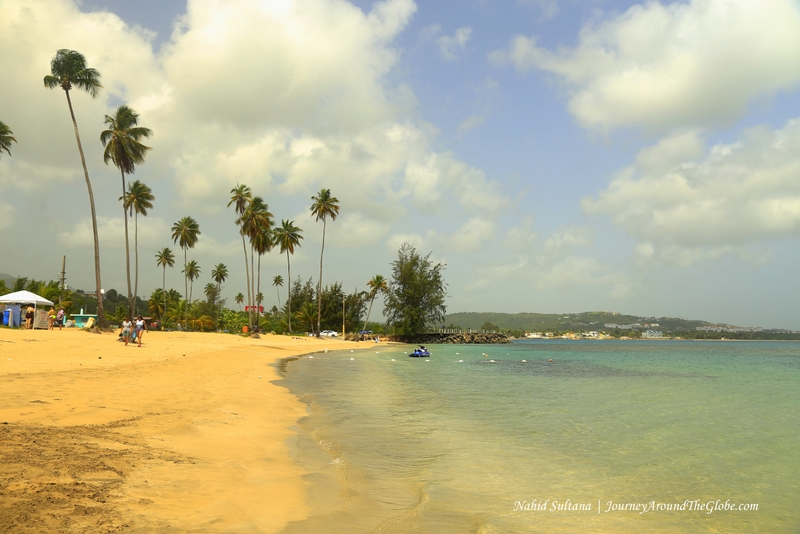
- Playa Luquillo: We got to visit this beach as part of our El Yunque Instagram tour. This is a beautiful sandy beach where locals come to enjoy with kids. Playa Luquillo is a great place for swimming or sunbathing. Grab some drinks from the nearby places, take a dip in the water, go shopping, and when done have some locally cooked meals in one of the restaurants.
- Old San Juan/Viejo San Juan: This is the core of San Juan tourism. If you have just a day to spare in San Juan, you need to come to Old San Juan which still remains a walled city from the old world.
The Island of Puerto Rico was founded in 1509 and by 1783, Old San Juan was fully encircled by masonry walls. These 42 feet walls are very imposing and were built mostly by the African slaves. But for many San Juan residents in the 1800s, the defensive walls made them feel like prisoners. Local officials finally convinced the military authorities to demolish a section of the city’s walls in 1897 to allow the overcrowded city to expand beyond the walls.

Most of the landmarks or tourist spots are within walking distance in OSJ. This is a place which you will enjoy early morning, mid-day, or at night when the city comes to live.

San Juan National Historic Site is a protected section of OSJ which includes Colonial era forts, some sections of old city wall, and few other landmarks. It is a UNESCO World Heritage Site and has some of the oldest and best preserved Spanish fortifications of the Americas. These sites offer stunning views of old architecture and are one of the top ranked in the whole Caribbean. This is also the home of art galleries, and museums.

La Perla is a small, ocean-side neighborhood in Old San Juan that we saw from El Morro where we were planning to go but eventually didn’t. If you are a big Latino music fan, this is where the song “Despacito” was filmed partially. This is a bit of a slum district where a lot of illegal activities take place since no police presence is there. While many seasoned tourists may not advise you to go there, some locals (including our El Yunque tour guide) will highly recommend you to check this place out during daytime.

Below are the places we saw/passed by in Old San Juan and would recommend to anyone traveling there.
- The Old Town: The narrow alleys of Old San Juan are appealing and charming. Walking on the original cobblestones and admiring the colonial buildings, plazas, fountains are just what you have to do to feel this old district. The vast number of lined up colorful buildings with their artistic windows and doors are not only picturesque, most of them are Spanish colonial architecture in its purest form, sometimes with a little Moorish touch.

We ended up coming to Old San Juan almost everyday during our stay in Puerto Rico. But the first time when we came was with our Instagram tour guide and it was in the early morning. That was probably one of the best times to check out its serenity…empty alleys, quiet locales, and best of all, no tourists to block those gorgeous views.

- Castillo San Felipe Del Morro: Also known as El Morro, (means the Headland – a high point of land that extends into a body of water), is a 16th century citadel that was built over a span of 250 years to guard the strategic and beautiful San Juan’s harbor. Located in the most northwestern point of San Juan El Morro was the key to defend San Juan and its harbor for almost 400 years. This massive fortification is now an iconic landmark of OSJ and a UNESCO World Heritage Site.

It offers a commanding view of San Juan harbor and the sea. The extensive hillside, once a battlefield, in front of the citadel is a popular place for kite flying. If you can’t fly a kite here…then, you just can’t fly a kite. You have the sea on one side and the city on the side and with green pasture in the front…even if you don’t go inside El Morro, just being there will give you some breathtaking scenery of the surroundings. It was a 10 minutes Uber ride from Condodo to El Morro. We spent a couple hours outside the fort in its big green field, since it was already closed for the day. Admission to the fort closes at 4:30pm. But even walking around outside of El Morro was very enjoyable in the late afternoon. The view of the city, water, the old part of the town, and the cemetery from every corner was breathtaking. This is also a great place to catch a memorable sunset.

San Cristobal, another landmark of OSJ is within walking distance and can be seen from El Morro. If you buy ticket to El Morro, that would cover San Cristobal as well.

- “I Love PR Sign”: As part of our tour, we were brought to the “I Love PR” sign by the harbor. This is a popular Instagram spot in the city…so, a photo is a must here.
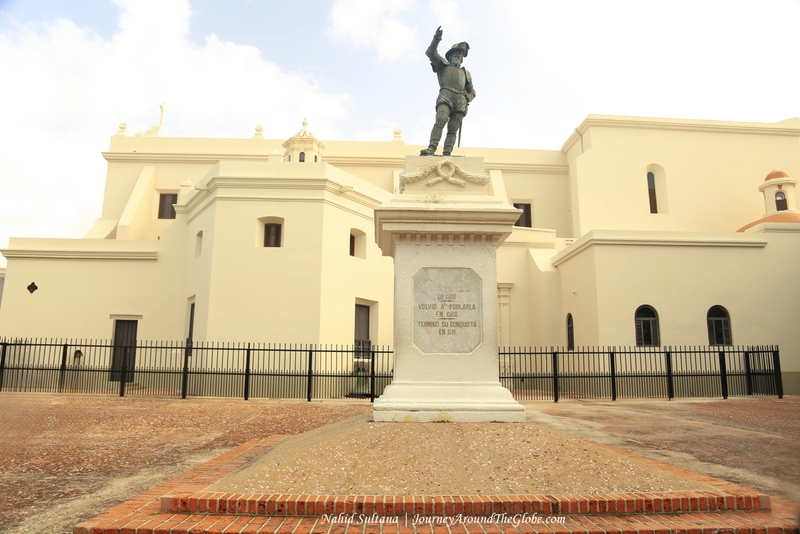
- San José Plaza/Iglesia De San José: This was our another stop during the IG Tour. We couldn’t go inside this church from the early 16th century but this is the second oldest church in continuous use in the New World. The small plaza in front of the church was quite peaceful in the morning which is surrounded by plenty of restaurants and bars on the other side of the street. When we went back there the next day during day time, this same place gets crowded with lots of cars and people.
- Museo De Las Américas: This is the Puerto Rican heritage museum of arts, history, and culture. The building itself is a historic army barrack from the 1800s with arches, long corridors and a big courtyard.

This was definitely worth a visit since I got to see some paintings and sculptures by the local artists. This place gave me a better understanding of their culture and tradition through different forms displays. The museum presents an impressive overview of cultural development in not only Puerto Rico but in the Americas.

The ticket was $6 per person and took about an hour and half to see all the exhibitions. There are three permanent collections and a few temporary exhibitions in Museo De Las Americas.

- San Juan Cathedral/El Catedral de San Juan Bautista: Located on Calle Cristo, San Juan Cathedral is also from the 16th century. We couldn’t really go inside as multiple weddings were taking place while we were there. But the outer white edifice of the cathedral tells me the inside must be as elegant as its outside.
- Calle de Fortaleza: The western end of Calle de Fortaleza used to be known as the umbrella street, but now is decorated with white butterflies above the street. La Fortaleza here is the oldest governor’s mansion in continuous use in the New World.

- Plaza de Armas: It’s a beautiful public square on San Jose Street where the City Hall is located and a round fountain in the middle, called “The Four Seasons”. The fountain has numerous historic statues and the plaza itself is lined with many trees and shops on all sides. We spent a couple hours at a corner coffee place, sipping drinks while chatting and laughing.

- Old San Juan Gate/Puerto de San Juan: This used to be the traditional entrance to San Juan back in the Spanish era in the 17th century. We saw it on our way to see Paseo De La Princesa from San Juan Cathedral. As you cross the gate coming from the cathedral, this gate opens up to the beautiful water-front and a pier. Walk the pedestrian promenade of Paseo de la Princesa to get to the grand square, Plaza De La Princesa. The walkway is lined with trees, sculptures, and trees.

- Plaza De La Princesa: Surrounded by the San Juan Bay on one side, Plaza De La Princesa is rather an elegant square in Old San Juan. Only 10 minutes walk from San Juan Cathedral, this is another spot where you want to be to watch a surreal sunset by the water. The square is decorated with an impressive fountain in the middle that features Puerto Rico’s city coats of arms.

The statue in the middle of the fountain at Plaza De La Princesa represents that Puerto Rican people are a blend of three different cultures. First, Taino Indians who populated the island for thousands of years before Columbus arrived. Second, the West Africans who were forced to labor as slaves for centuries on different plantations. And finally the Spanish, who ruled the island until it gained its independence. Three proud people in one.

- Plaza Colon: Christopher Columbus still has a monumental presence in Puerto Rico and Plaza Colon symbolizes that very significantly. This is less than 5 minutes walk from San Cristobal. It’s a big public square with a giant white statue of Columbus in the middle. When we were there, there were lots of vendors selling their hand-made trinkets. You’ll find many shops, restaurants, bars, and cafes in Plaza Colon.

- Casa Blanca: Located on the western end of Calle San Sebastián, Casa Blanca was the ancestral home of Puerto Rico’s first Governor Ponce de Leon family. The home was built somewhere in the early 1500s and is the oldest residence of San Juan. This is now a museum with 16th and 17th-century artifacts and some stunning views of the old city walls and the sea.

This is closed on Sunday and other days, it’s open until 4:30pm. Do make some time to go to this mansion and enjoy its different pockets of tranquil gardens with a variety of tropical trees and old fountains.

By the time we tried to find the entrance to Casa Blanca, we walked too far away from it. Eventually only 3 of us went back up and the gate was almost closing. One of our friends requested the guard to let us in for 5 minutes just to see the surroundings. Thankfully, he not only gave us some minutes to look around but also mentioned visiting the rectangular fountain in one of the gardens. If we only had some more time, we could have easily spent an hour or two looking around this historic “White House”

- La Factoria: This is Despacito’s lounge, where the song was partially recorded. If you are a big fan of Luis Fonsi or just that song, you must check out this place. By the way, nowhere in the entrance shows La Factoria, one of our friends asked and the owner confirmed that this is where the hit Latino song was filmed. It’s a small bar but very popular among the locals, even a few of our Uber drivers mentioned checking out that place.
- Castillo De San Cristobal: This was the largest fort ever built by the Spanish military in the New World to protect San Juan from any land based attacks. Construction of San Cristobal was completed in the late 1700s and a must-see spot in San Juan. This was also used during WWII as Fort Brooke to search for enemy submarines and warships. The 1950s marked the last time that San Juan’s historic fortifications were used for military purposes. Therefore “it represents the final chapter in San Juan’s saga of fortification and defense.”

You can see Plaza Colon and other parts of OSJ from different corners of San Cristobal. Enjoy the grand view of San Juan Harbor from this fort too.

You can easily spend a couple hours here going through all the underground tunnels, upper viewing areas, and climbing old stairs. The ticket is $10 to enter the castle which covers San Cristobal and El Morro. The fort closes at 4:30pm.

- Santurce Murals: On our 4th/last day in PR, we took a short ride to Santurce which is known to be an open museum with lots and lots of murals painted by the local artists. This is another historic part of Puerto Rico and a cultural capital, also known as “The Brooklyn of San Juan”. A lot of these murals here and other parts of Puerto Rico are very political and can be seen as a way to express many oppressions and corruptions.

- Playa Isla Verde: As many other travel blogs have said, this is a great place to watch the sunset. Unfortunately, we spent so much time taking pictures in Paseo De La Princess, that we totally missed the sunset here. Even when we reached there, a restaurant attendant came and asked me if I saw the sunset…nope we didn’t. But the beach is nice for swimming or tanning.
Isla Verde is in the district of Carolina. This is where a lot of the big brand name resorts and ocean view hotels are located. If you are trying to get away from OSJ scenes or just San Juan’s busy life, this is a great place to stay, especially if you are traveling with kids.
Overall, Puerto Rico is a place where I’d go back again with my kids one day or just make a solo trip to relax for a few days. Having my friends and sisters on this trip made it more memorable in many aspects. The ease of traveling there, Old San Juan’s sweet and savory energy, astonishing natural beauty, and vibrant city-life are all I need when I’m on a vacation and Puerto Rico has it all.
Share this:

Guatemala City – The largest city in Central America

GUATEMALA CITY, GUATEMALA: Guatemala City is the biggest city in whole Central America (by population) and the capital of Guatemala. After Antigua was destroyed by an earthquake in 1773, It became the capital of this country.
The name “Guatemala” means a place of many trees. This is one of the few countries in the world, interestingly, with the Atlantic one side and Pacific on another side. 3 of the most important volcanoes in Guatemala are Fire (Fuego) Volcano, Water (Agua) Volcano, and Pacaya Volcano. While Agua Volcano can be seen from the city, Pacaya is about an hour and half drive from the capital. Both of these volcanoes can be accessed and climbed by anyone.
Let me start by saying, Guatemala City is huge and very scattered, as far as the touristic places. To save myself some time, money, and energy, I booked a guided tour online before I reached Guatemala, called Guatemala City Tour. It was $29 per adult for a 3-hours tour. We were picked up by Gray Line Guatemala around 2:15pm and were dropped off a little after 5pm. It was a very rushed tour, especially because of the bad traffic conditions in the capital.

Some important facts: for US citizens, you don’t need a visa if you are going to be staying in Guatemala for 90 days. And 1 USD was about 7 quetzal during my visit in November 2019.
The capital is divided into 21 zones and Zone 1 is the historic center with old architectural touches. Getting in and out of Guatemala City overall is very time consuming because of traffic jams, especially during rush hours. “Chicken Bus” is a popular transportation system here for locals to carry goods from one market to another. But for tourists, I didn’t feel it to be that safe, especially if you don’t know the culture or language or if you are traveling alone or at night.
If you can spare a couple days in Guatemala, visiting Tikal would be an ideal getaway to see a very important Mayan site. It’s recommended that you take a plane to Tikal, driving can be long and exhausting. I personally could not make it to Tikal…something to check out next time I am here.
MY HOTEL: I stayed in “Oh Espana”…a bed and breakfast-style accommodation in Zone 13 in Guatemala City. The capital is divided into different zones; make sure to pick your hotel carefully, as some zones are not safe for the tourists. The owner lady and the cook were very friendly and helpful. Inside was very nice as well with a bed and breakfast feeling. Although a traditional breakfast was included, the location was not that great. It was in some kind of a military residential neighborhood…very safe and gated. But there were absolutely no restaurants or stores within walking distance. Thanks to my ramen cup noodles that I brought from home, which I had to eat for few of my dinners. It was only 3 minutes drive from the airport, and the hotel had free shuttle service…but again, I wouldn’t stay there again next time I go to Guatemala.

My recommendation, if anyone is going to Guatemala for a vacation, is to stay in Antigua. It’s about an hour away from the airport and costs about $20 per person for each way. You can book it online/Viator in advance for a better deal. But once you are there, it’s heaven. I know for sure, if I ever go back to Guatemala, I’ll stay in Antigua…especially Hotel Porta Antigua, which looked fantastic inside and out.
TIME of TRAVEL: I visited Guatemala during the long weekend of Thanksgiving, 2019. I had 3 full days to roam around different parts of the country. 2 more extra days here would have given me the flexibility to visit Tikal, the famous Mayan ruins site in Central America. It gets pretty chilly at night and early morning around this time of the year. During the day time, you can go out with a t-shirt and it’s very pleasant. But if you are traveling with kids in November to Guatemala, I would recommend carrying a sweater.
EATING and SHOPPING: The day I spent some time in Guatemala City was the only day I had breakfast at my hotel with eggs, fried plantains, beans, freshly squeezed juice, fresh fruits, and locally brewed Guatemalan coffee. I never miss having fried plantains at any meal…something you may want to try when you are in this part of the world.

One of the dinners that I had in Guatemala City was at famous Pollo Campero. It’s a local fast food chain for fried chicken and biscuits. There are plenty of street food options in Guatemala City, but I would be careful of their hygiene and the way they handle food.
Coffee, chocolate, vanilla, jade jewelries, textiles, pottery, hammocks, masks, and wooden trinkets are some of the popular gifts to buy from Guatemala. When in the capital, check out their underground market, Mercado Central, to go souvenir hunting or to buy fresh produce.

PLACES I’VE VISITED: As I mentioned before, I only spent a couple hours in the capital city with a tour company. To get around the town, tuk-tuk can be a nice ride but it does have the reputation that drivers sometimes rob the tourists or charge absurdly high prices if not bargained beforehand.
Museo Popol Vuh is supposedly one of the most famous museums with a nice collection of archaeological items from the pre-Spanish Mayan world. Also if you get time, Plaza de la Constitucion (Parque Central) and Plaza Berlin are couple other touristy destinations.
- AVENUE of the AMERICAS: This is a long boulevard which we just drove by slightly stopping at a couple places for only a few seconds. This is a long stretch of corridor honoring countries who kept good relationship with Guatemala. We passed many statues of different presidents, politicians, writers from American countries like Costa Rica, Dominican Republic, Chille, Argentina, Cuba, Nicaragua, Ecuador, and etc. A statue of the Pope, who came to visit Guatemala, can also be found here. This is one of the most important avenues in the city.
Avenue of the Americas is located near a very rich neighborhood with luxurious apartments and residential houses. The park is closed on Sundays.
2. AVENUE REFORMA: Like above, we didn’t stop anywhere on this long street of historic landmarks. Avenue Reforma was built in the late 1800s and throughout the 20th century, many more sculptures were added honoring notable people from the history of Guatemala. With about 2.26km length, it’s considered as one of the main thoroughfares of the capital. The boulevard has many statues of Guatemalan writers and past reformers. Two of the main statues that I remember our tour guide mentioned were Mother’s Day statue and a statue of the writer of 1st Guatemalan constitution.
From the Avenue Forma, we passed by Mayan Language Institute, USA Embassy, and Iglesia Jurita which was a red Baroque style building…looked stunning from outside.
3. ZONE 4: This is the civic center of the city with many of the important government and other buildings, like National Bank of Guatemala and Guatemala Tourism Building. Republic Plaza is a beautiful roundabout. We just drove by Zone 4 without stopping anywhere.
4. CENTRO HISTORICO – Historic Center of Guatemala is located in Zone 1. This is one of the busiest areas in the city with elegant colonial style buildings. Many important government buildings can also be found here. There are some free guided/walking tours to explore Zone 1 – the historic center of Guatemala City.

-
- NATIONAL PALACE – Situated in Plaza Mayor, the National Palace was built between 1939 -1943. This was the most important building in the country at one point and was the headquarter of the President of Guatemala. The elaborate and imposing exterior of the building was designed in Renaissance and Spanish Baroque styles. We didn’t have time to go inside but there are organized tours that you can take you to get a peek at the interior courtyards, official rooms, wall murals, and decorative art works.
- PASEO DE LA SEXTA/6TH AVENUE: This is a beautiful pedestrian zone in Guatemala City (a few minutes walk from the National Palace) with lots of stores and restaurants. Take a stroll on 6th Avenue to have a true cultural experience among Guatemalans. This is the heart of the historic zone in Guatemala City. There are few small parks around this area for locals mainly but a good atmosphere during day time to relax and do people watching.
- CATHEDRAL of GUATEMALA CITY or METROPOLITAN CATHEDRAL: Built by the Spaniards somewhere from 1778-1850, this was a beautiful cathedral to visit. It’s big and bold inside and out. The marbles here were brought from Italy.

5. MERCADO CENTRAL: This was our last stop of the tour. You can spend a good couple hours exploring this unique underground market in the heart of Guatemala City. There are plenty of fast food/street food restaurants here serving typical Guatemalan dishes for very cheap prices. Inexpensive clothings, shoes, and leather goods can be found here too. But what I loved here was that you can get all kinds of tropical fruits in Mercado Central for a very good price. We barely had less than half an hour to spend here and I was able to buy a jade pendant for my daughter for 75 quetzal.

Share this:

What to Consider When Buying Your First Snow Skis
Skiing in a snowy mountainside can be an exciting adventure for someone who is getting into the sport. Though before you slide down the snow-covered slopes, you need to get snow skis that fit your level of experience.
But buying a snow ski for someone who does not have any experience can be difficult. Considering that even a seasoned skier might find themselves falling into the pitfalls of getting the wrong accessories, which will not only make their skiing experience uncomfortable but risky as well.
The Most Important Consideration When Buying Skis
There are lots of skis available in the market, and more often, people fall prey to its attractive design. One important thing to remember before buying such equipment knows your skills level. There are different types of skis from those that carve turns with fast charges to the surfy and bouncy skis.
If you’re a beginner, understanding the different types, how a camber and rocker work, and the right ski length will help narrow down your selection. Here are some essential details you should check when buying a ski:
- Choose a ski based on terrain: Often omitted by beginning skiers, the ground should speak a lot about the type of equipment you should purchase. There are several skis available in the market based on the terrain where it is going to be used. This includes downhill skiing, free-riding, terrain park, and powder skiing.
- Have a general idea about the length of the ski: Skiing experts always advise selecting a ski that reaches your chin to possibly the top of your head. You can also use a size chart when buying, for a precise fit.
- Ski dimensions affect your skin quality: As a general rule, always look for snow skis based on your skiing style. For example, wider skis provide a bouncier and flotation effect in deep snow while angular skis are made for carving deep turns and groomed runs.
- Know how a ski’s camber and rocker will affect your ski experience: The rocker of a ski is the early rise of the ski profile, found between a full camber and a reverse camber. If you prefer skiing on groomed slopes, a snow ski with a traditional alpine camber or one with a tip rocker might be fitting. But if you’re more on the daring side of the adventure and prefer deeper snow, a tail and tip rocker or even a full rocker snow ski will be the ideal choice.
- Consider a separate or an integrated binding: A ski binding is a device connecting the ski to your ski boots. Built-in binding is more convenient and provides quality performance and suitable for beginners. For skiers with an intermediate to advanced skiing levels, a separate bind can be an optional choice.
Getting the best out of your skiing experience
Skiing is a beautiful sport that helps boost your mood, strengthen your lower body muscles, and improves your flexibility. But with all benefits, being prepared with the ideal equipment from gears to snow ski is a must.
Getting the right ski for your first adventure will not only help you gain a better skiing experience but provide a level of safety and comfort. Always understand that buying a ski takes into account specific criteria to match your level of expertise and the amount of experience you want to have.
Share this:

Business Excellence Award 2020 from AI Global Media for The Most Entertaining Personal Travel Blog – Pacific Northwest USA

Top Posts & Pages


Authors
 Globe Runner
Business Excellence Award 2020 for The Most Entertaining Personal Travel Blog – Pacific Northwest USA

Business Excellence Award 2020 from AI Global Media

 Journey Around The Globe