Journey Around The Globe
ready for the next destination
Havana
Havana, Cuba: Cuba has been in the backseat of my bucket list for a good few years. I wanted to go there but never took it seriously to go through the complicated process of visiting this Caribbean country. It was my little sister who gave me the idea of going there with her. And just like that we ended up doing our first sibling trip together to La Habana.
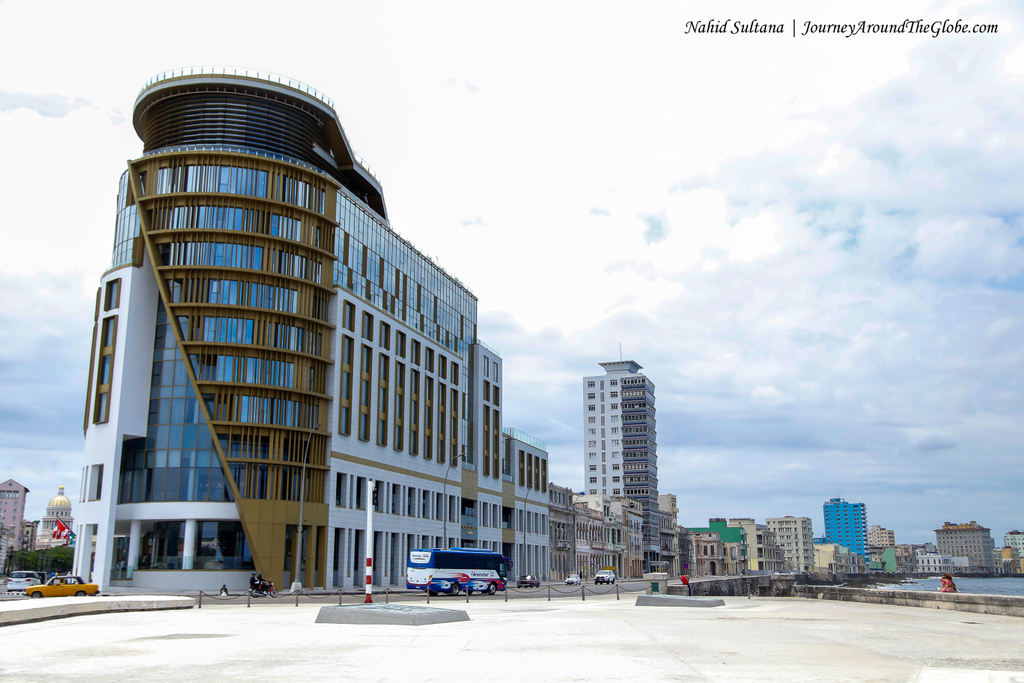
Havana is the capital and the largest city of Cuba. Havana is a melting pot of different architectural designs from the castles and fort to modern high rise buildings. People are helpful and friendly here and…romantic, if I may add. I don’t know if it’s the weather, the history, the struggle, or the culture…Cuban people were free-spirited and humble.

Fair warning, Cuba isn’t a typical Caribbean vacation destination. This is not a place where you go to a luxury all inclusive resort, sip margarita by the beach, and tan. I was there more for the experience and education rather than having a relaxing vacation. Cuba is a communist country. The moment I got out of the airport…poverty and underdeveloped surroundings in the capital city of Havana were an eye-opener, unlike any other Caribbean islands I’ve visited before.
We used both Cuban pesos – CUP and USD interchangeably during our trip. I brought plenty of $1 and $5 bills for tips/donations and lots of $10 and $20 bills for other expenses. While most of the places took USD, some small places prefer Cuban currency. Make sure to bring enough cash if you are traveling from the USA, because Cuba still doesn’t accept any credit cards from here. Converting USD to Cuban dollars has no standard rate either…do a little research before going. The best place to convert your USD to Cuban dollars is in your hotel…they will probably give you the best rate and it’s safe.
There are some rules and restrictions for the US citizens, please do your due diligence before visiting Cuba. One of the rules is, as a US citizen, you cannot buy or make any monetary transaction with the Cuban government. Also, US citizens need to apply for a visa online before going to Cuba. It was about $110 for a visa with Fedex shipping. I received my hardcopy in the mail within 3 days…very easy, efficient, and quick. But I also saw at my gate where we boarded for the Cuba flight, was selling Cuban visas. I didn’t want to wait until the last minute, therefore got my visa way ahead of the journey.
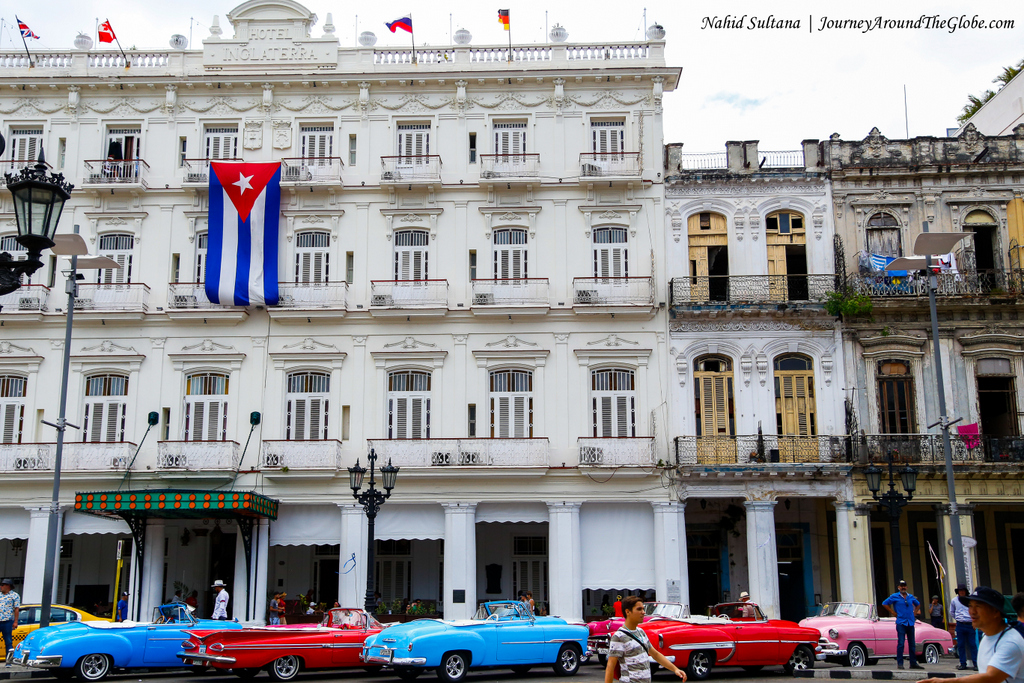
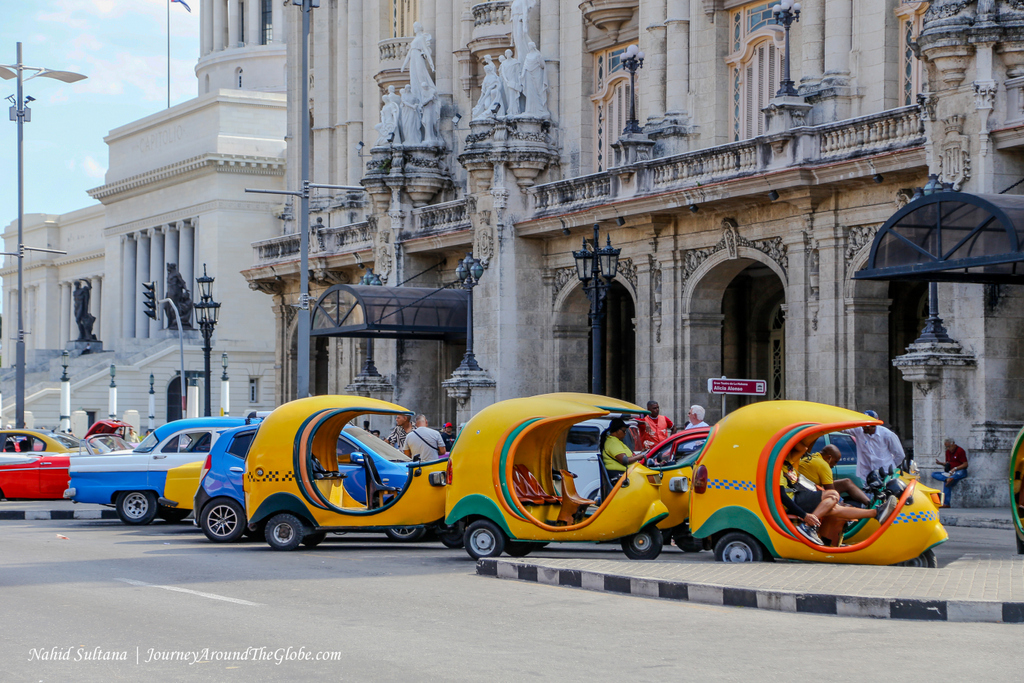
To get around the city, vintage car riding is a luxury option (see below). Havana also offers hop on/hop off buses for the tourists. Water taxis/ferries are common too to go to the other parts of the city. Tuktuks are yet another way to travel around the town.
Another big tip I can give to the future travelers to Cuba is that please bring lightly used clothes, toiletries, first-aid/over the counter medicines, school supplies, and etc for donation here. My sister brought a whole suitcase of different items and we gave those away in the streets and some to our AirBnB host to give those to her church. Most of the daily food items are rationed here and people are too poor to afford medicines, hygiene items, children toys, and many other things.
TIME OF TRAVEL: We visited Havana at the end of April, 2024. Since Cuba is a tropical country, heat and humidity are felt all year long. Additionally, being surrounded by the Atlantic Ocean, the Caribbean Sea, and the Gulf of Mexico, the water at the beaches are always warm too. The temperature was perfect during our stay, capri and tshirt kind of weather.
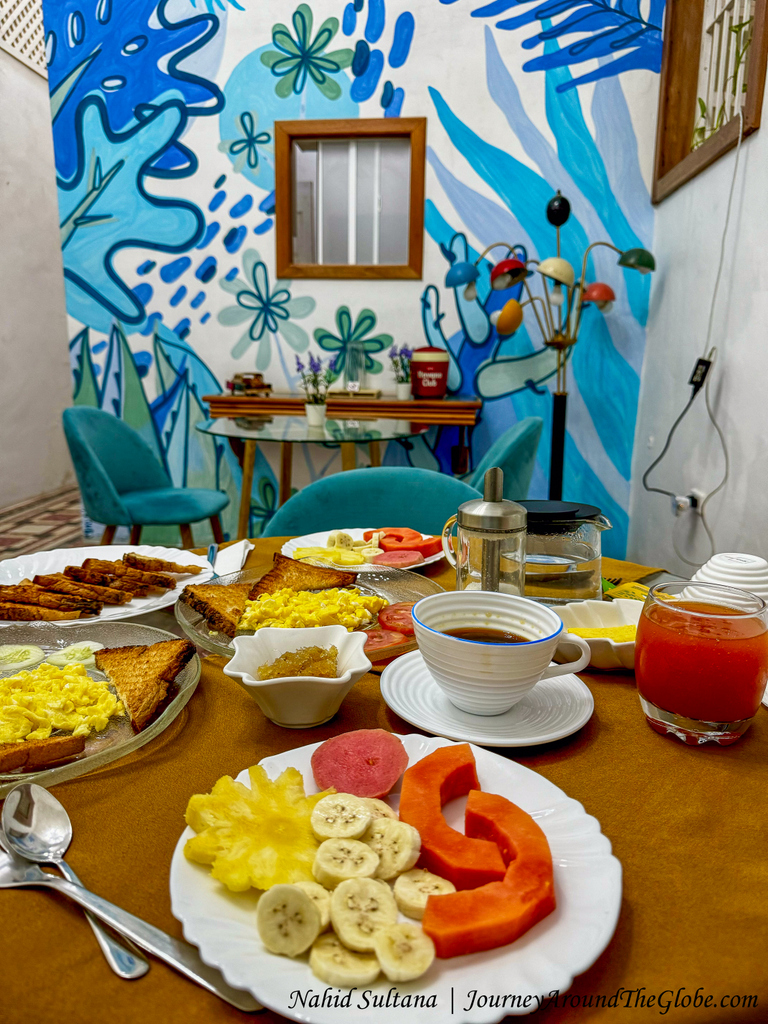
OUR HOTEL: Our hotel/bed and breakfast was in the heart of Old Havana, only 5 minutes walk from the main square of Old Havana, La Plaza Vieja. Al Sol Suite had only 3 or 4 rooms in the building. The host was amazingly helpful and friendly. We had breakfast included with our stay. Since eggs are rationed here, we had to pay extra for eggs. Other than that, our room was quite spacious and had a balcony. We also converted our USD to Cuban dollars from the host.
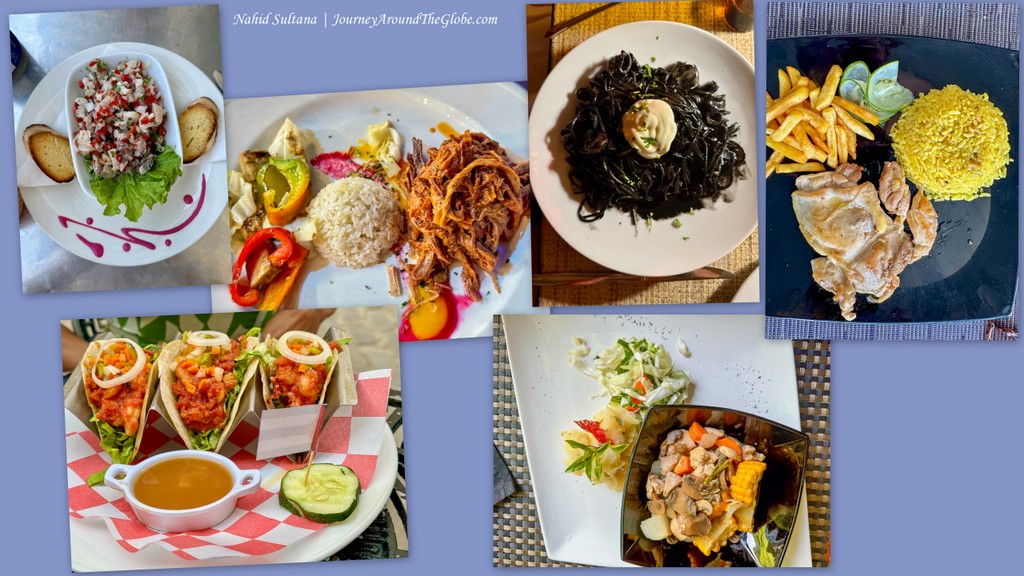
EATING and SHOPPING: Food here in any small or fancy restaurant is a hit or miss. We have had some tastiest lunch in a small restaurant yet some of the worst food while sitting in an upscale place. Street food like empanadas and churros are very popular. For lunch or dinner, chicken with rice, beans, and plantains are staple. Any seafood, Cuban sandwiches, and something called “Ropa Vieja” can be found in almost any restaurant. Ropa Vieja is the national dish here…it’s a slow cooked shredded beef dish served with rice and plantain. I tried it twice and wasn’t a big fan of this…a bit too dry for my taste.
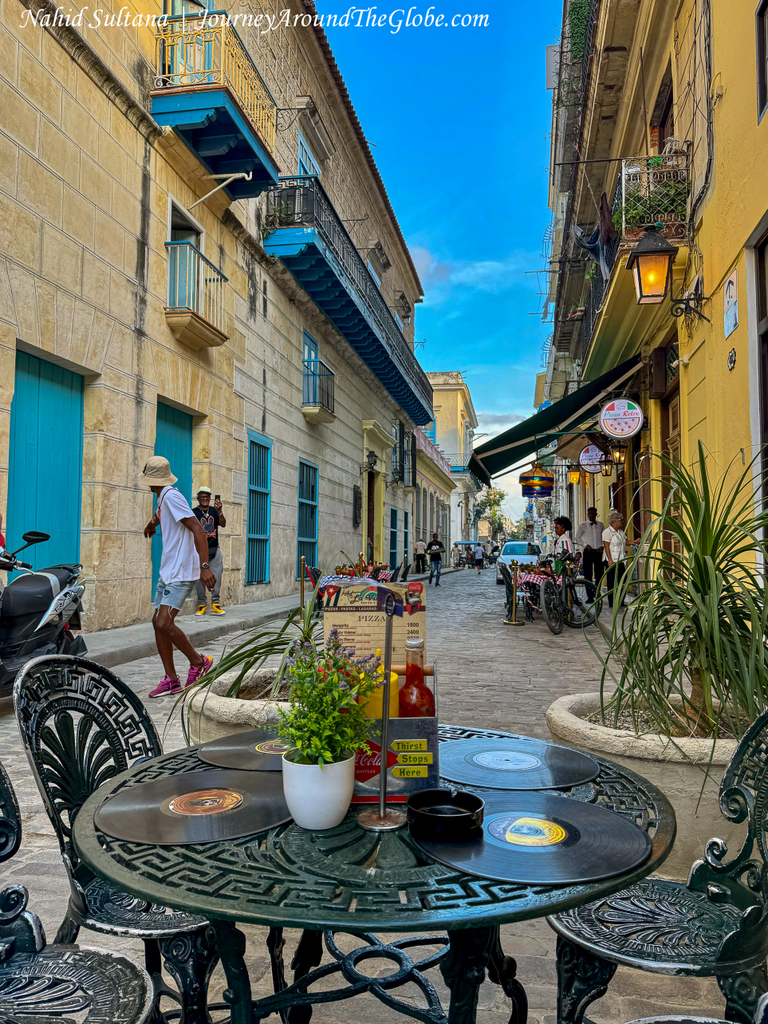
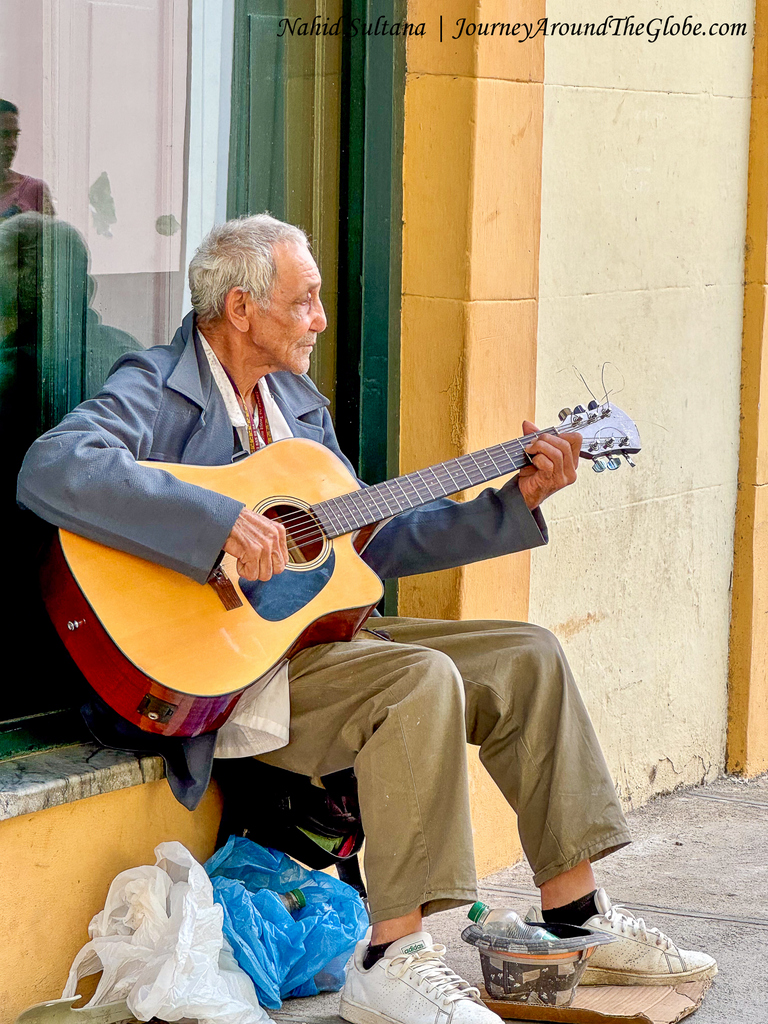
Music is an integral part of the old town of Havana. A lot of the restaurants have live DJs or vocal performers for their customers almost day and night. We saw people playing their instruments or dancing to a tune in the alleys too.
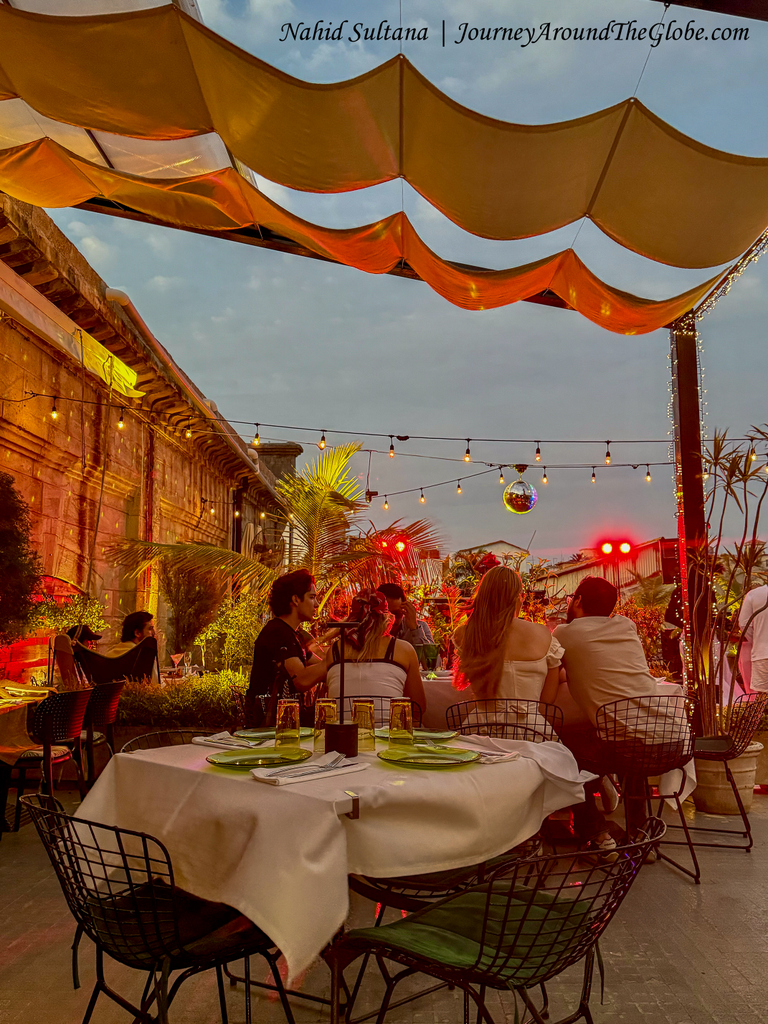
Our first dinner was at La Moneda Cubana. It was on the rooftop of a beautiful colonial style building and had a live band. While the food was not what we were expecting, the atmosphere during sunset was beautiful. My ropa vieja was actually pretty good while my sister could only finish her seafood plate half way because of the lack of flavors.
The next day our lunch after visiting a castle was at Mojito Mojito Cuba in the old town. My chicken stew with salad and yucca was above expectation. I loved the interior of this restaurant by the way…very cozy and colonial looking.
One of the good places where we had dinner on our last night was at El Cocinero. We were lucky to just get a table without any reservation. This was a rooftop restaurant with a live DJ and fantastic vibe. My ropa vieja was not edible after 2 bites but my sister’s black ink pasta and ceviche were extremely good…loved their bread also.
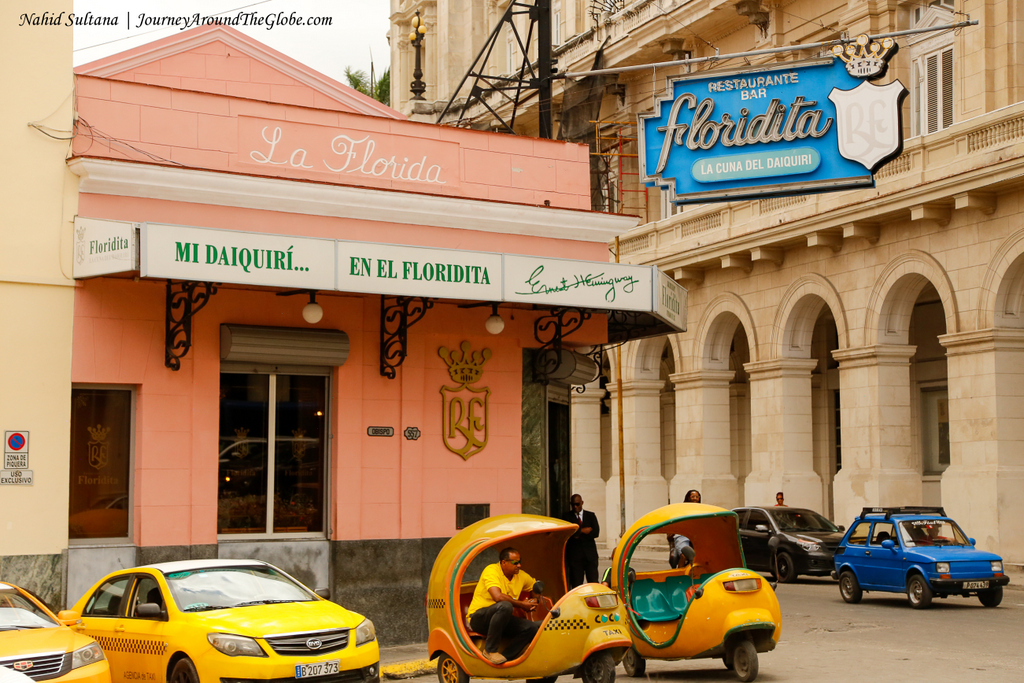
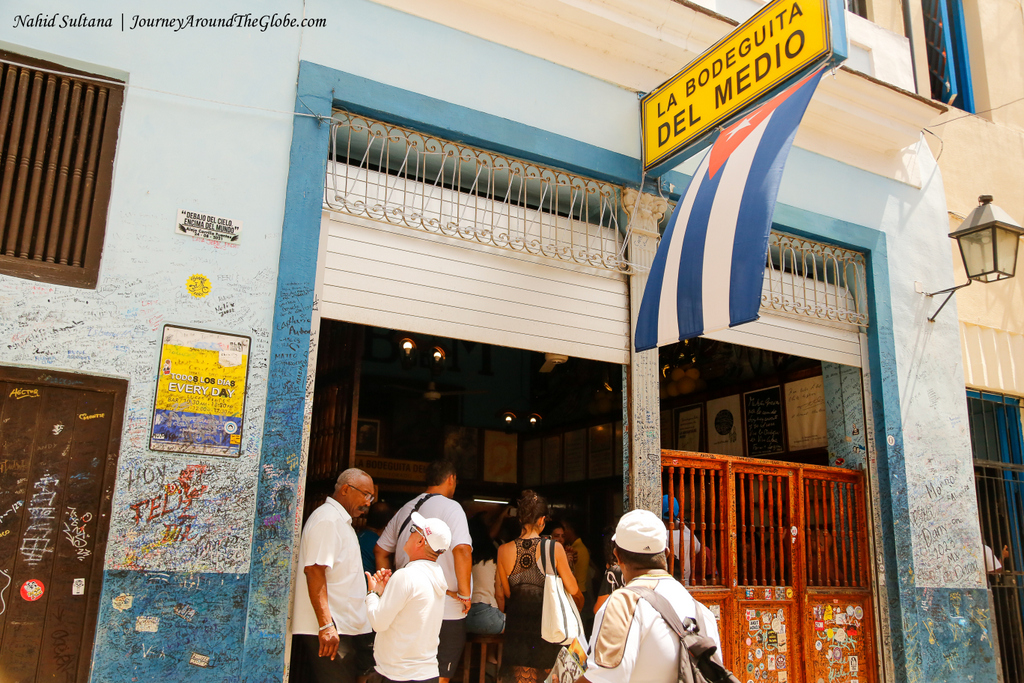
For drinks, mojitos and daiquiris were invented in Cuba. Cuba Libre was something I thought would be pretty available but apparently most of the places don’t sell that. La Bodeguita del Medio is a historical bar where mojito was invented and where the famous writer/journalist Ernest Hemmingway used to hang out a lot. It’s very small and looked crowded from outside. We just walked by it to go to the cathedral. Another famous bar is El Floridita which was Ernest Hemmingway’s favorite bar and where he spent a lot of time with the locals. This is where daiquiri was invented about 200 years ago. El Floridita was a fun and spacious place with live music and a fun atmosphere. This place was packed but even if you can’t sit for a drink, make sure to take a picture with Ernest Hemmingway’s bust at the corner.
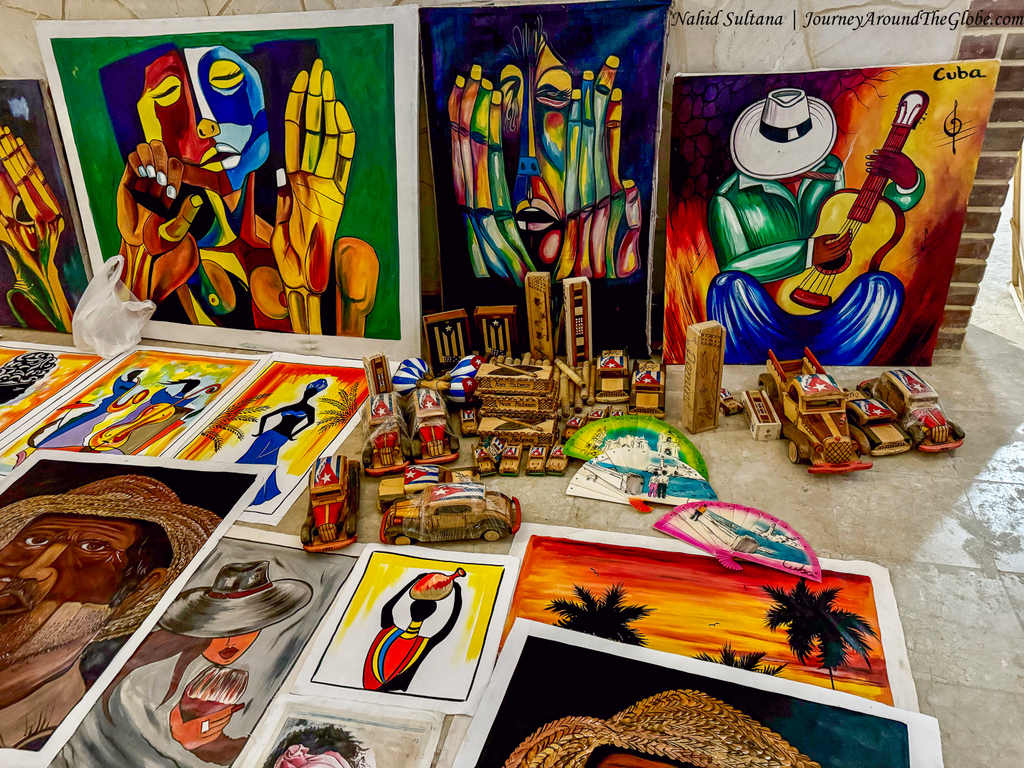
When in Cuba, you have to buy or try some Cuban cigars. On our last day, this gentleman from our lunch venue took us to a lady inside a small home who sells hand rolled Cuban cigars. I was looking for the thin cigars (not the traditional ones) and got a pack for $15. I also bought some clay mugs/cups, magnets, and small Cuban street paintings.
PLACES I’VE VISITED:
- Vinales Valley Trip: This full day trip was booked a few weeks before our trip online. It’s about $73 per person for about a 12-hour tour with hotel pick up/drop off and a meal. Unfortunately, I arrived in Havana a day later than my sister because I missed my early morning flight and had to rebook and catch the next available plane. This was our only guided tour out of Havana to go enjoy the country and to see an old Cuban cigar plantation. But what I heard from my sister was that it was a nice getaway. Visitors get to see how the cigars are made and they offer you to try them also. A river cave tour was included here too which was supposedly really exciting. Bummer, I missed this whole thing for no good reason.
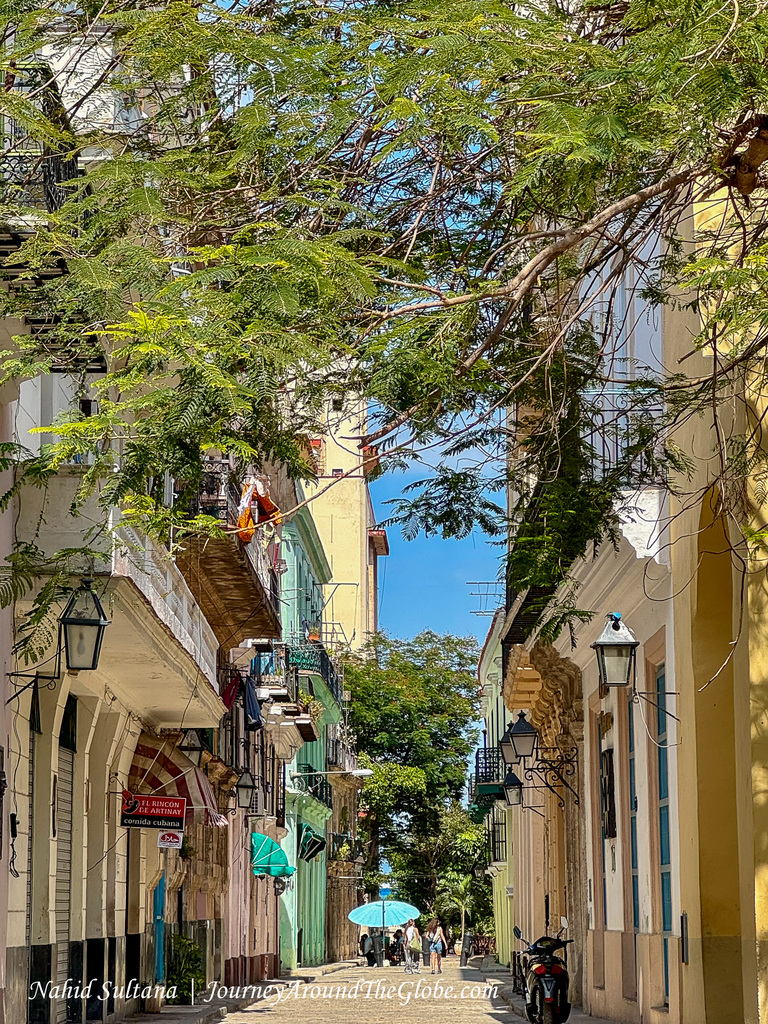
- Old Havana: The day I arrived in Havana, my sister and I mainly walked around the old part for a couple hours. This is the core of the original Havana which was declared a UNESCO World Heritage Site in 1982. Old Havana consists of many absolutely stunning streets and narrow alleys like a big maze. Just getting lost here and enjoying the colorful architects were definitely something I enjoyed. Some prominent streets that I absolutely loved are Plazuela de Santo Domingo and Calle De Los Mercaderes.
Old Havana does have another side other than glamorous colorful buildings and well maintained squares. As we walked around some of the inner parts of the city, we saw crumbling buildings, stores with empty shelves, and dirty pathways. To see the real Havana, get off the well kept touristy alleys and get lost in the core of this old town.
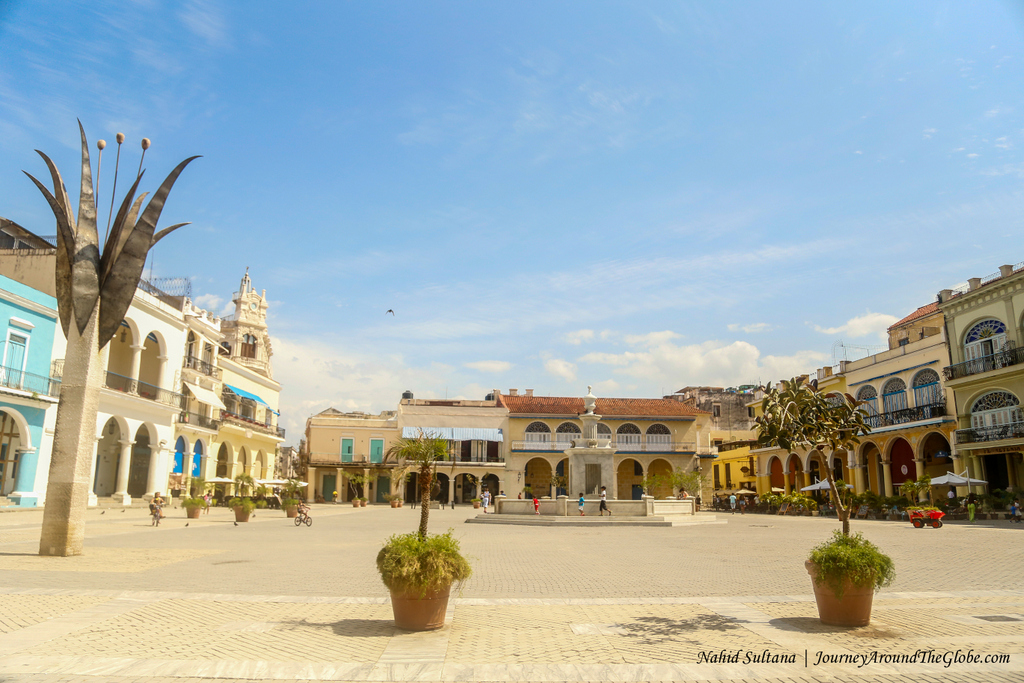
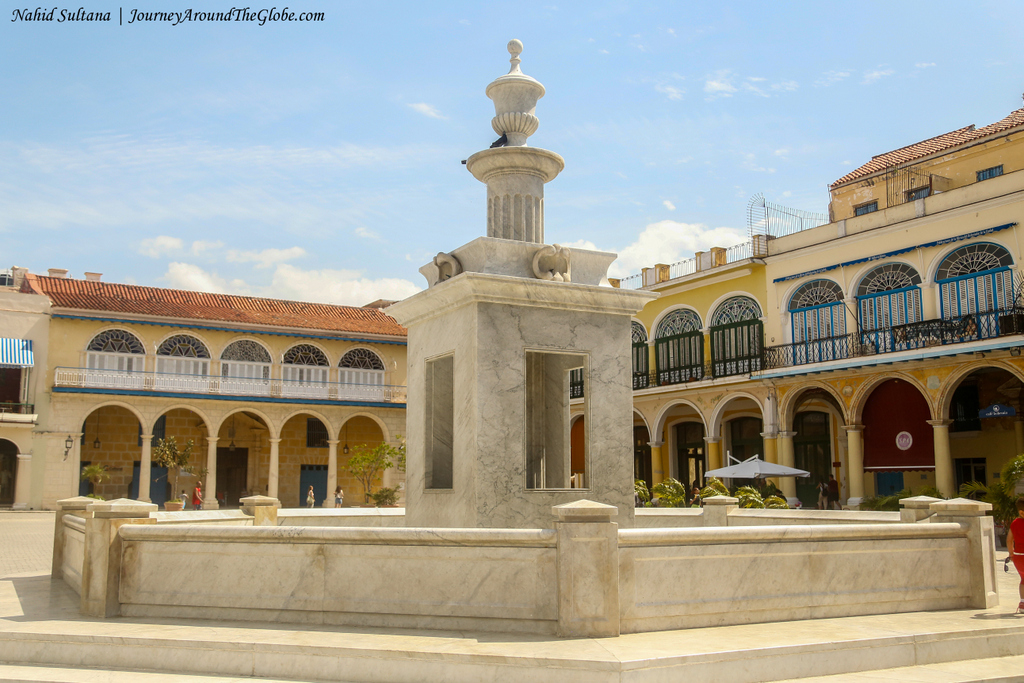
a. La Plaza Vieja: This is the main public square surrounded by plenty of restaurants and old colonial buildings. It was not as crowded as I thought a main square should be…just some boys playing soccer leisurely and locals hanging out near the fountain. There are some simple statues and sculptures in this plaza. Many old colonial style buildings are bordering the plaza…a lot of them are galleries and museums. There are a few restaurants surrounding the square where we had our last lunch on a balcony.
We took one of the alleys off of the square and started walking towards San Francisco de Asis while enjoying colorful and old premises.
b. Plaza de San Francisco de Asis: The Church of San Francisco de Asis is located in this plaza. While we were trying to open the big gate to go inside, a young gentleman in uniform opened the gate and asked if we’d like a tour of the place. We immediately agreed. He took us around the church and spent about 15-20 minutes touring this old architecture. It was only us inside this big empty church. There was no entry fee but we gave some tips to the guard.
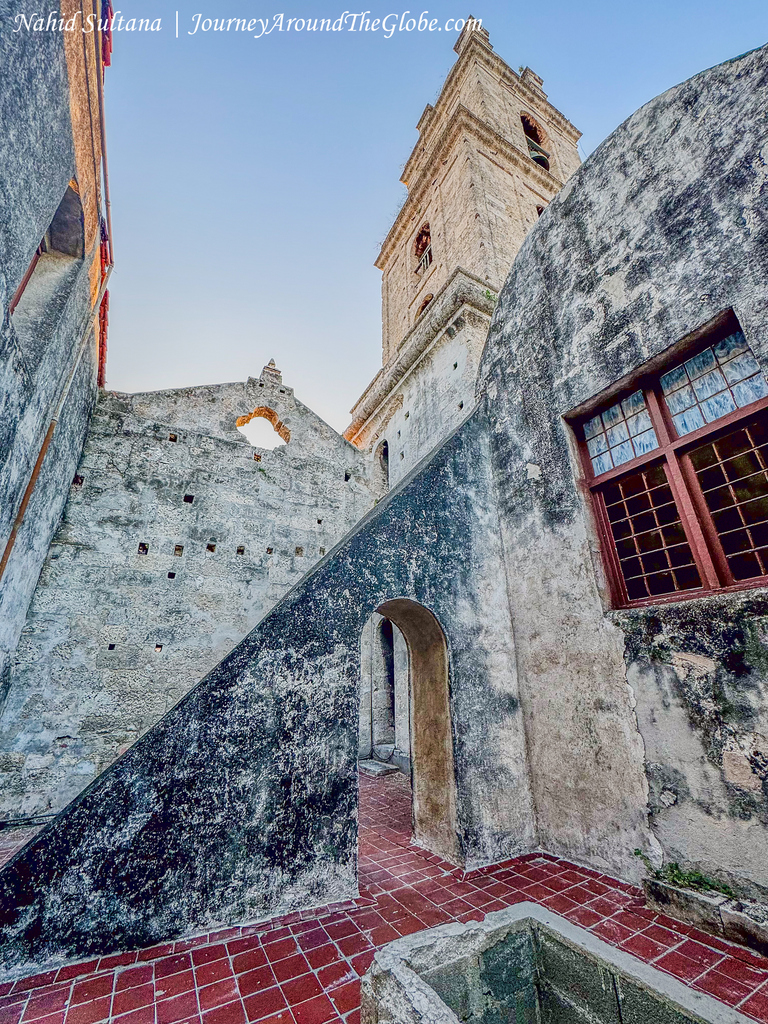
The building is in a good shape but could have used some love and better maintenance. The big arches, old interior, and a beautiful courtyard are worth a visit here.
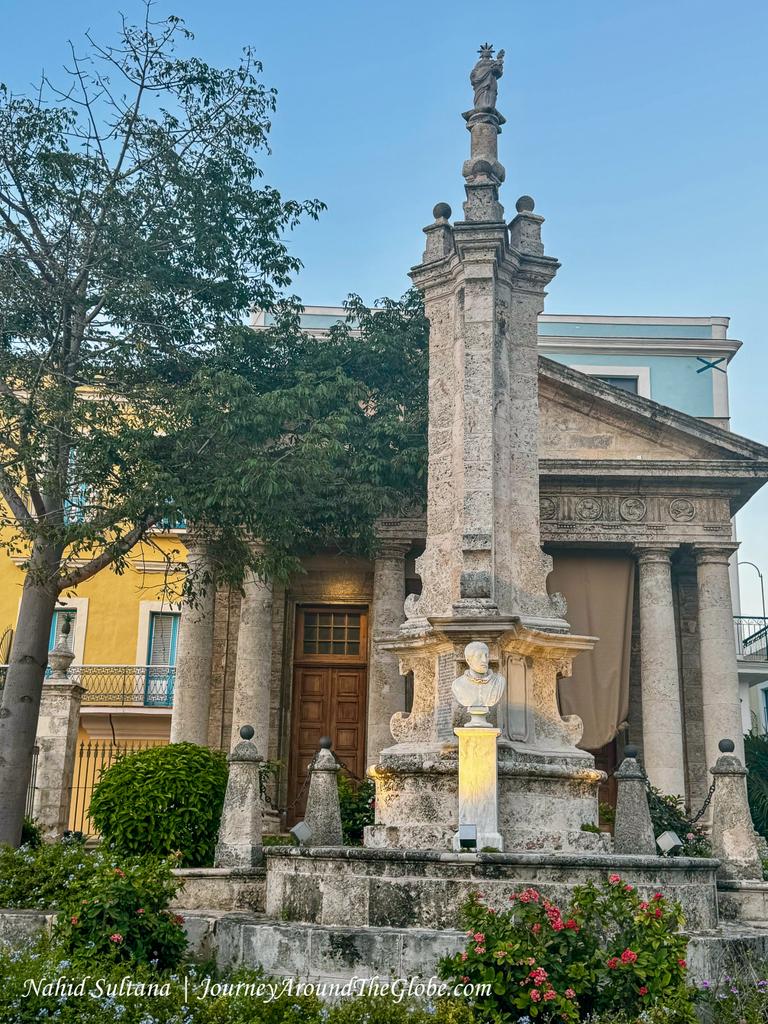
c. La Plaza de Armas: From the church, we started walking towards the water and somehow ended up in the Plaza de Armas, the oldest and most historical plaza in Cuba. Since everything was closed, we only got to see the monuments and gated buildings here. The landmarks are well maintained with signs and information boards. This is a pretty big complex for locals and tourists to hang out. Some of the monuments and sculptures, and of course the old buildings date back to the 16th century and are what make this square a relaxing place to take a stroll.
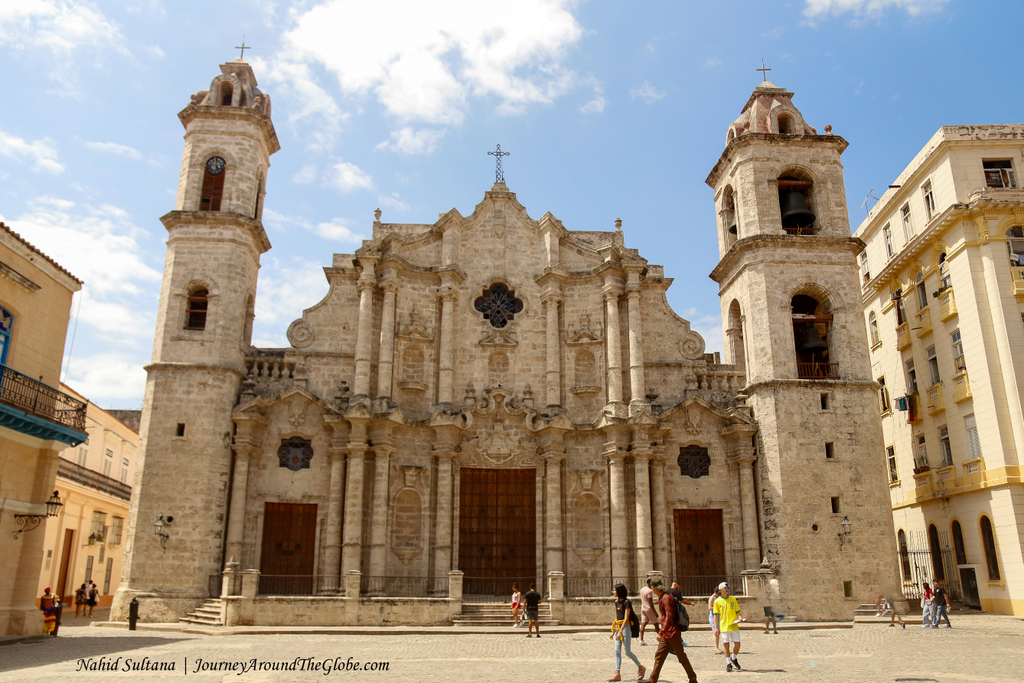
d. Havana Cathedral or Catedral de San Cristobal: On our 3rd day in Havana, we walked around a lot. Old Havana Cathedral is a beautiful edifice with intricate designs outside. We couldn’t go inside the cathedral but enjoyed sitting in this open square “La Plaza de la Catedral” and looking around the surrounding old constructions. It’s a minute walk from the famous La Bodeguita del Medio bar that I mentioned above.
- El Cristo de La Habana: On the second morning in Cuba, we took a ferry from the main ferry terminal to visit this castle. We could buy the ticket at the terminal and waited only about 15-20 minutes for the next one. It does get pretty crowded on the ferry but it only took us less than 15 minutes to get dropped off on the other side.
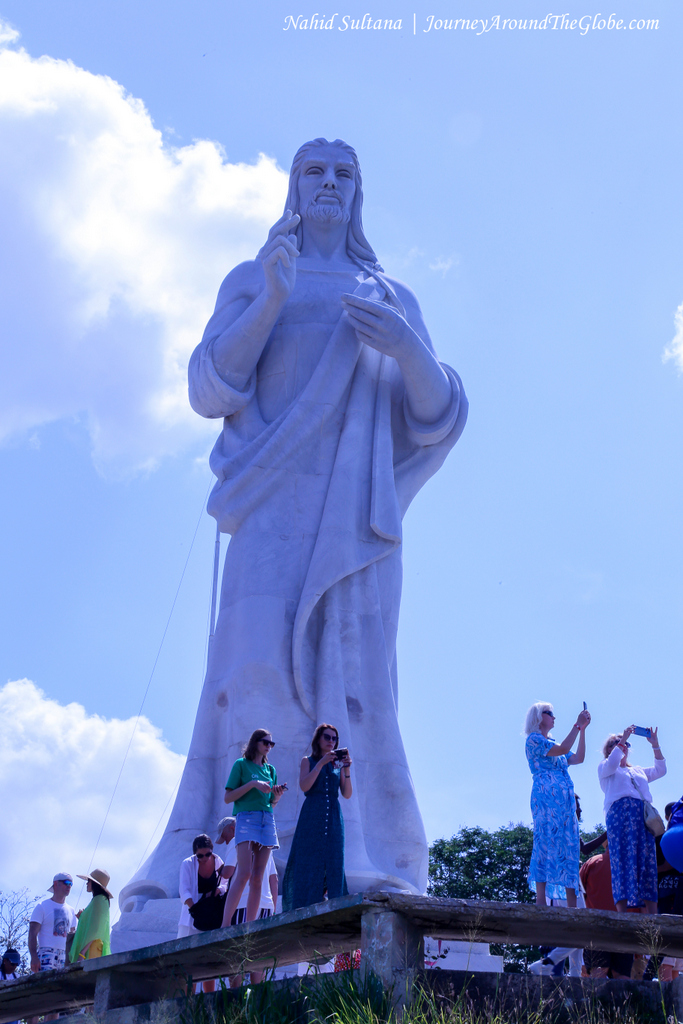
There is a little bit of hiking once you reach the other side of the water to go to the monumental statue of Jesus on the hill, called “El Cristo de La Habana”. This overlooks the water and Old Havana on one side. This was made by the great Cuban sculptor Lilian Jilma Madera. El Cristo de La Habana is located 51 meters above sea level and 20 meters in height. It was formed by 77 pieces of marble weighing about 320 tons. Each piece of this statue was sculpted in Rome and was blessed by the XII Pope. Then finally in December of 1958, the art piece was inaugurated.
From there, we walked about another half an hour under the sun and passed by the open air museum. Here you can see some of the fighter jets, small planes, and artillery from the Cuban war.
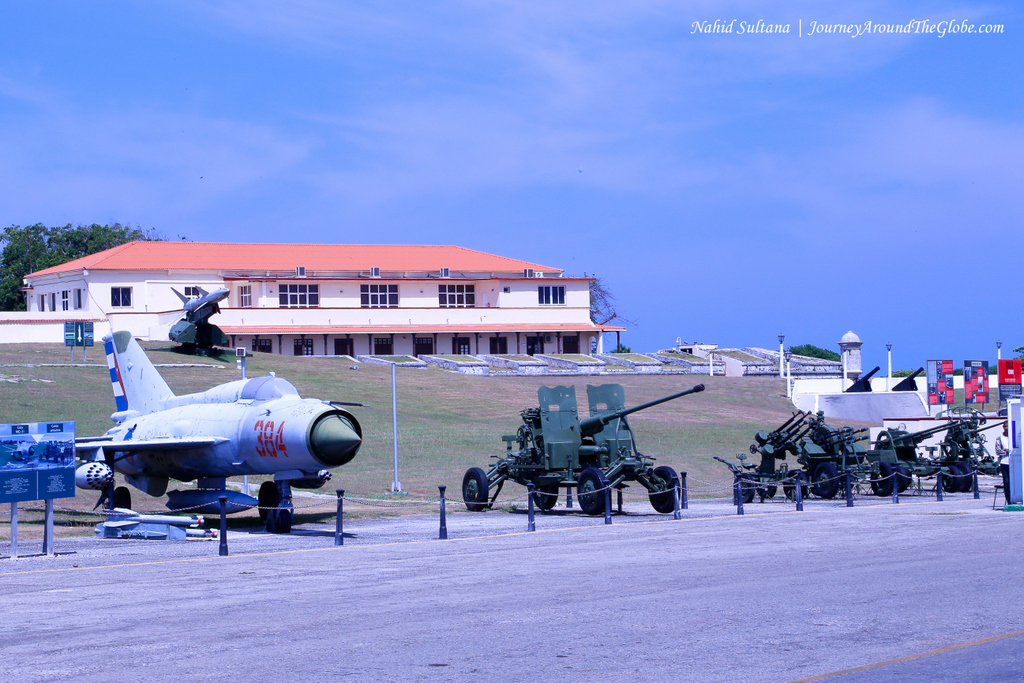
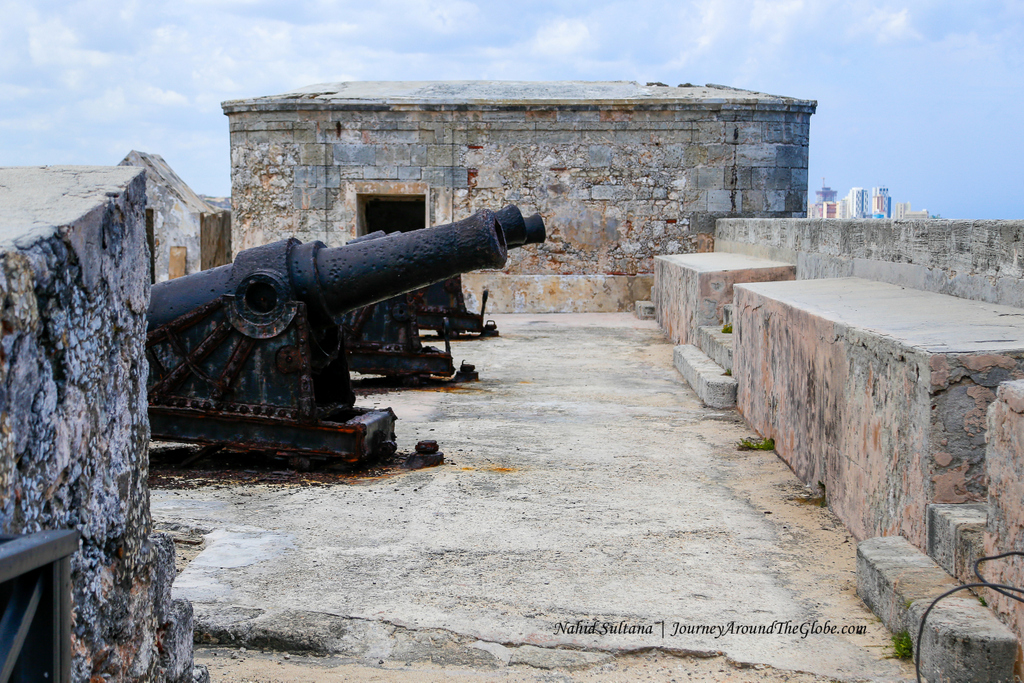
- Castillo de los Tres Reyes del Morro: Castillo de los Tres Reyes del Morro and Fort of San Carlos of the Cabin were close to each other. We chose to only visit Tres Reyes del Morro. It was built between 1589 and 1640 to protect the city from the pirates and foreign invaders. The ground of this European style castle is vast and the views from every corner are incredible. There are a few old tunnels that visitors can walk through. We took a quick tour of the museum that displayed a lot of history from the beginning of Cuba and its early civilization. For its architectural features, it is currently considered as one of the best examples of military architecture built in the 17th century in New Spain.
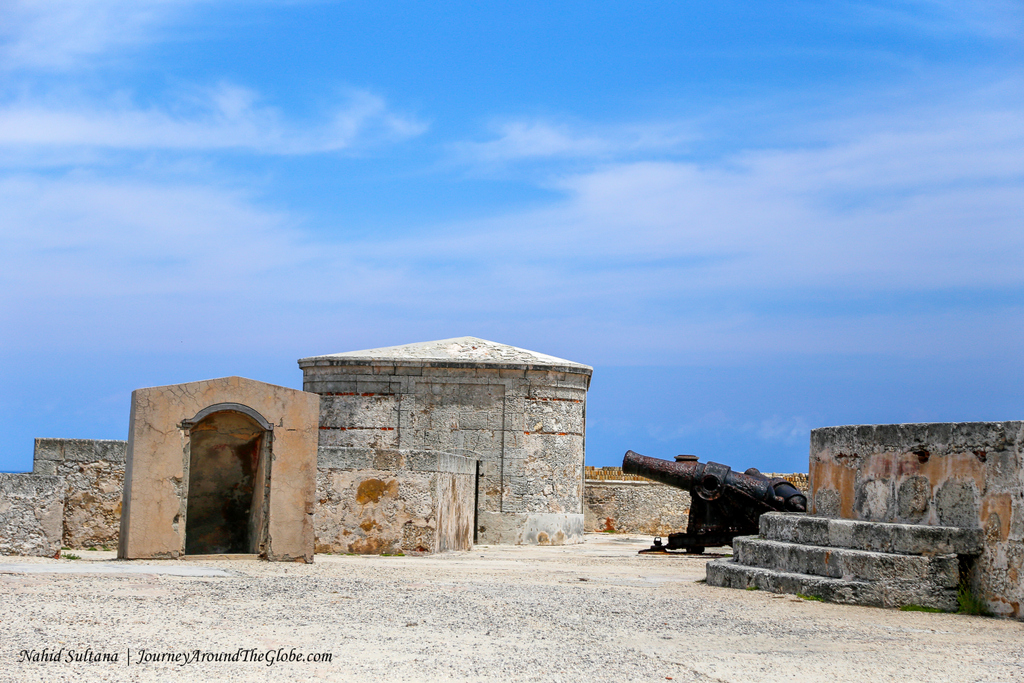
It’s only 200 CUP to enter the Casa Blanca. Make sure to wear comfortable shoes and be ready to walk a lot here. Go through the old tunnels and enjoy the 360 view from this elevated place. There are taxis outside of the castle and we took one to Plaza Vieja to come back for lunch.
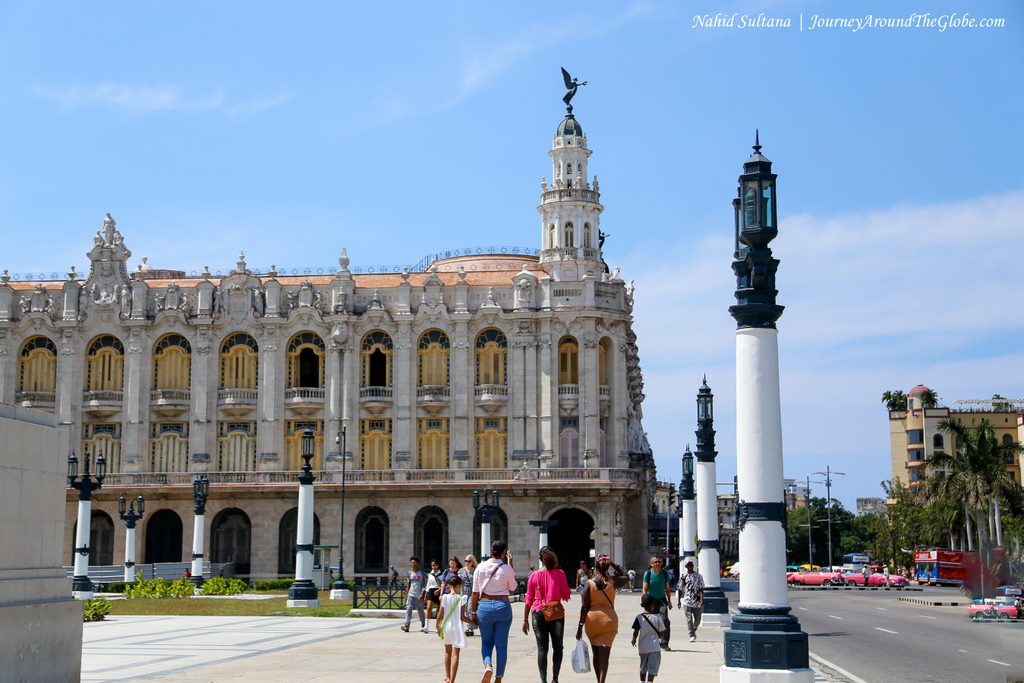
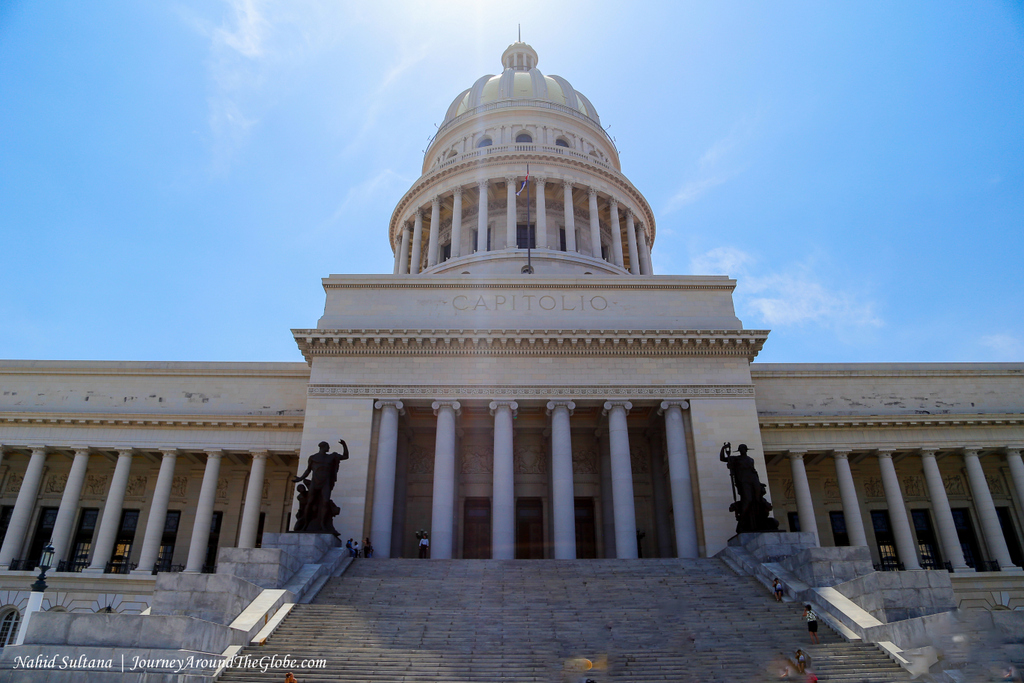
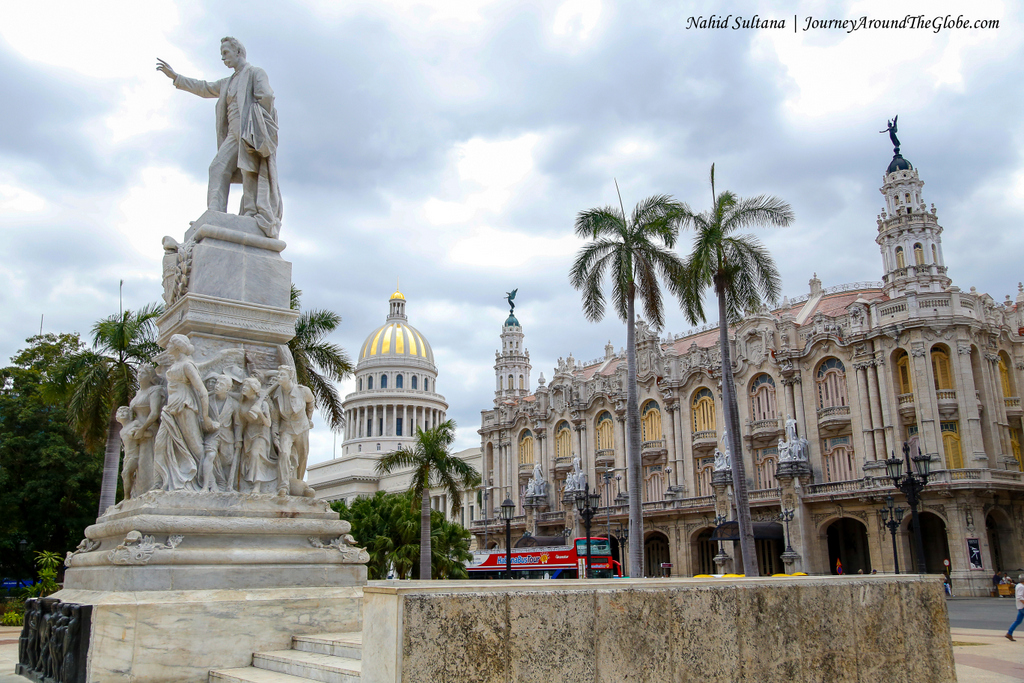
- Capitolo: After lunch we walked for another 15-20 minutes towards Centro Havana. The state capitol, Capitolo, is located here and you can’t miss it. This is a gigantic white parliament building with a golden dome. This iconic building once used to be the headquarters of Cuban Congress but is now known as the Academy of Science and Technology. Right beside the Capitolo, the grandeur building is the Grand Theater of Havana from 1914, currently home of the Cuban National Ballet.
- Vintage Car Ride: Right after we passed the parliament, we saw a whole street full of vintage cars for tourists to rent. We specifically came to Centro Havana, near the Capitol, to rent a classic vintage car. The prices for the ride vary, depending mainly on the year, the model of the car, color of the car, length of the ride, and etc. We picked a bright pink classic Chevrolet 1953 convertible for an hour for $25…which was on the cheaper side.
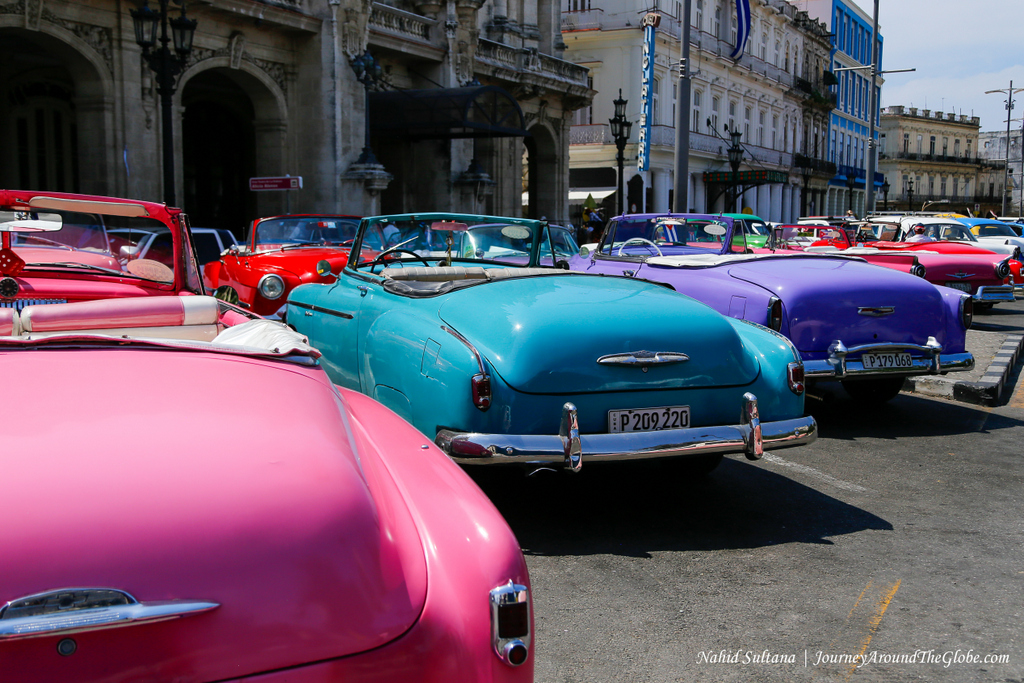
This is a great way to get out of the chaotic Old Havana and get a broader vibe of this town and people. The ride took us through Centro Havana, famous Hotel Nacional de Cuba, and other off-touristy parts of Havana.
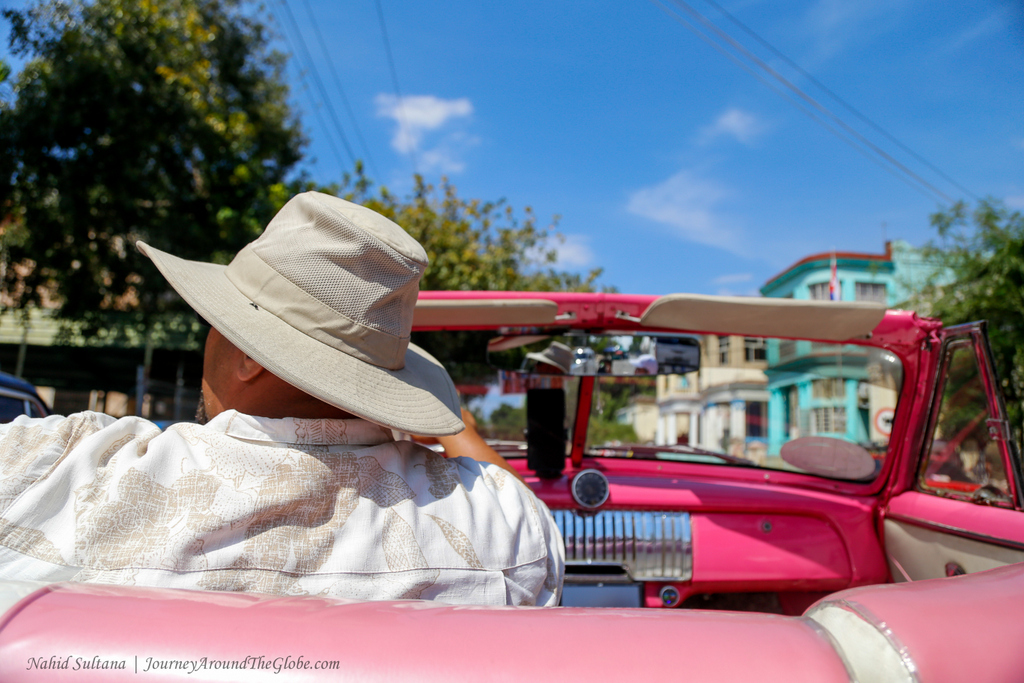
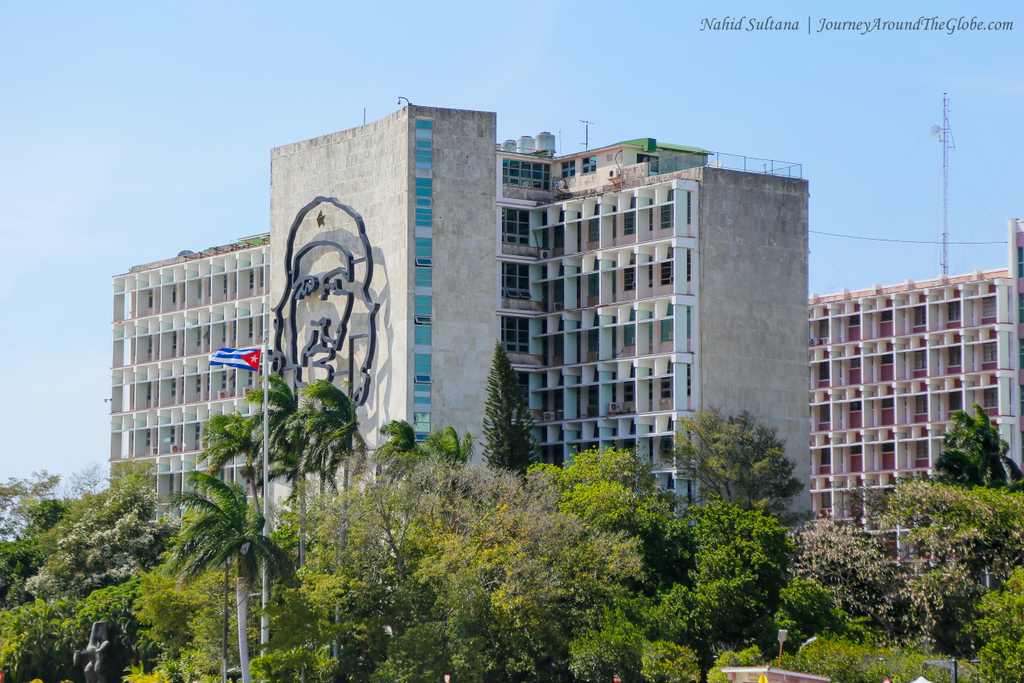
The only stop we made during our ride was at Revolution Square. It was about a 15-20 minutes drive from the old town. Revolution Square is supposedly one of the largest public squares in the world which played an important role during the Cuban Revolution. This public square, with a tall monument and museum on one side and Che’s sculpture on a wall across the street, is another popular site in Havana.
- Central Park: This is slightly opposite of the parliament and the Grand Theater, across the street. It was an open square/hangout area. This is a nice place with shades to relax and watch people passing by. The big white monument in the middle is of Jose Marti. El Floridita is in this vicinity if you want to sit down for a drink. This is also a great place to get a vintage car ride from. Walk around and enjoy the locals here…the atmosphere in the late afternoon was very energetic and lively.
- Cabaret Tropicana Show: We bought this online a couple weeks before our trip. It’s $75 per adult for the show (no kids are allowed) with a complimentary beverage and some peanuts. There are different packages for this show and a couple of them included dinner. The show started at around 10pm and lasted for a couple hours. They do recommend formal outfits for the show. It was about $40 one way from Old Havana and taxis are available at the gate after the show is over.
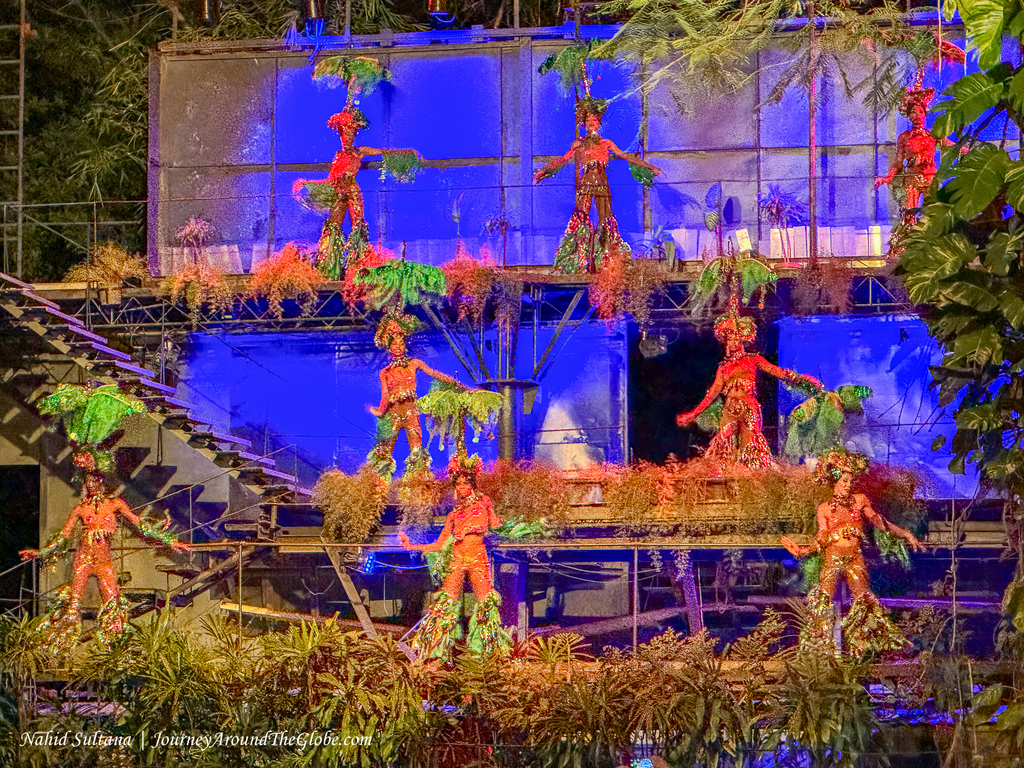
The show was full of music, dance, excitement, and enthusiasm. With a grand stage and stunning lighting, all the singers and dancers gave us a night to remember. I never went to a cabaret performance before and this truly was beyond what I expected.
- Fusterlandia: This is a must-see museum in Havana. Only about a half an hour ride from Old Havana, this is a mesmerizing place to spend a couple hours enjoying the stunning mosaic arts by the local artist Jose Fuster. He initially started this project in 1975 in his house inspired by Gaudi from Barcelona and then started decorating his neighbors’ houses. Eventually the whole neighborhood became a giant art piece and an open museum. It’s a magical land inside this open building with a psychedelic set of sculptures and artwork. Enjoy the whimsical street mosaics before entering the park and shop at the local vendors.
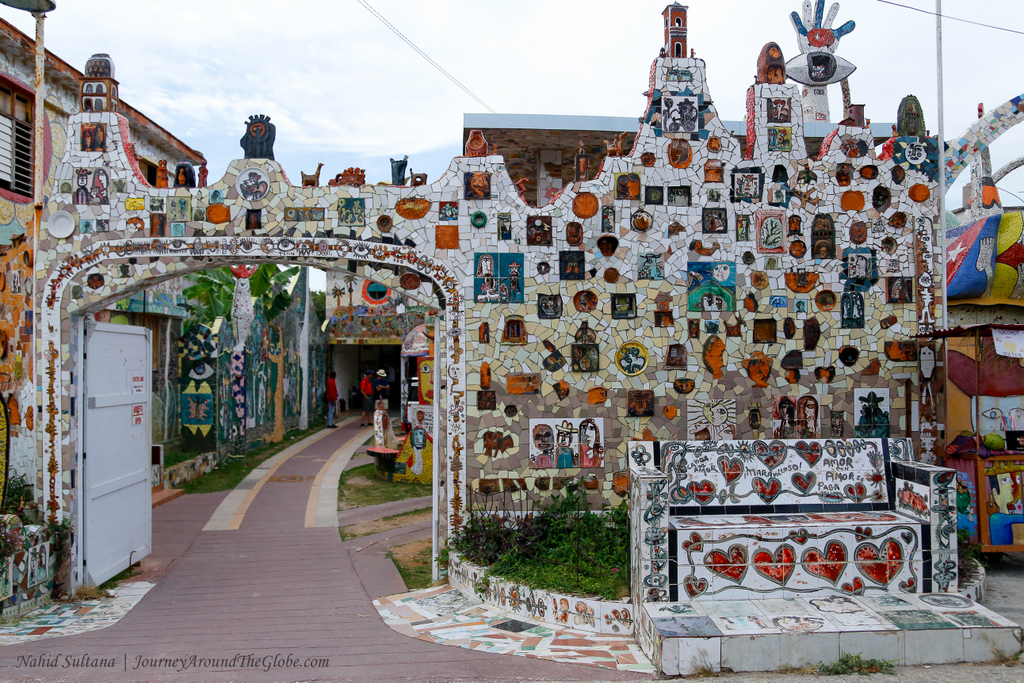
The park is open from 9:30am-4pm everyday. Tickets are only 100 CUP or $1 USD per person. There are some local souvenir shops right outside the museum.
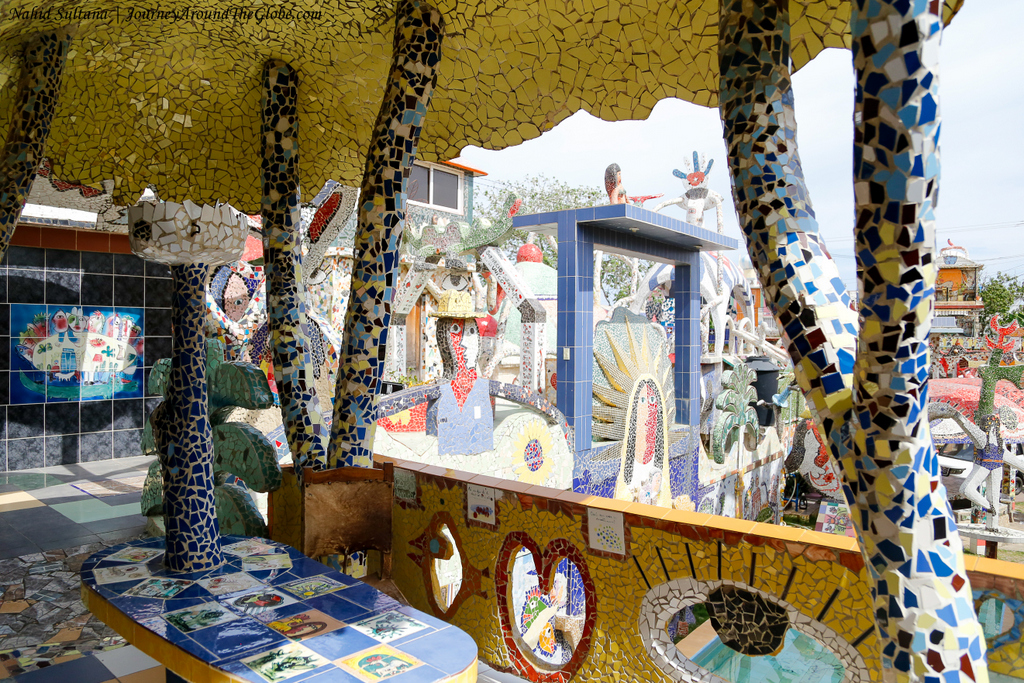
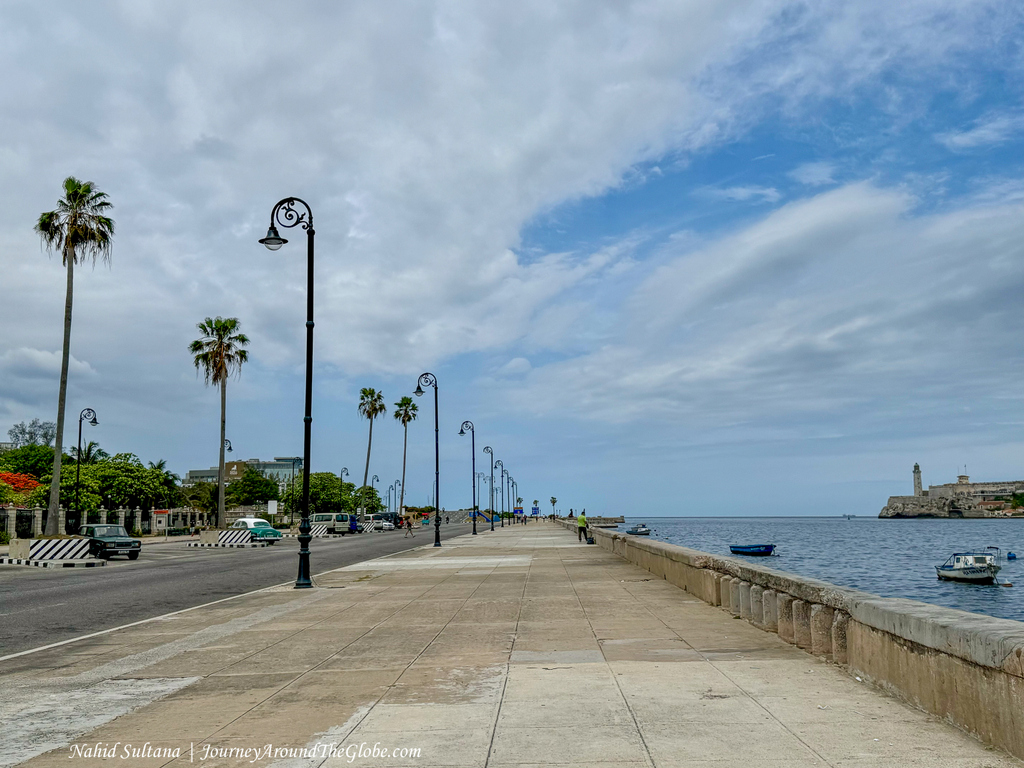
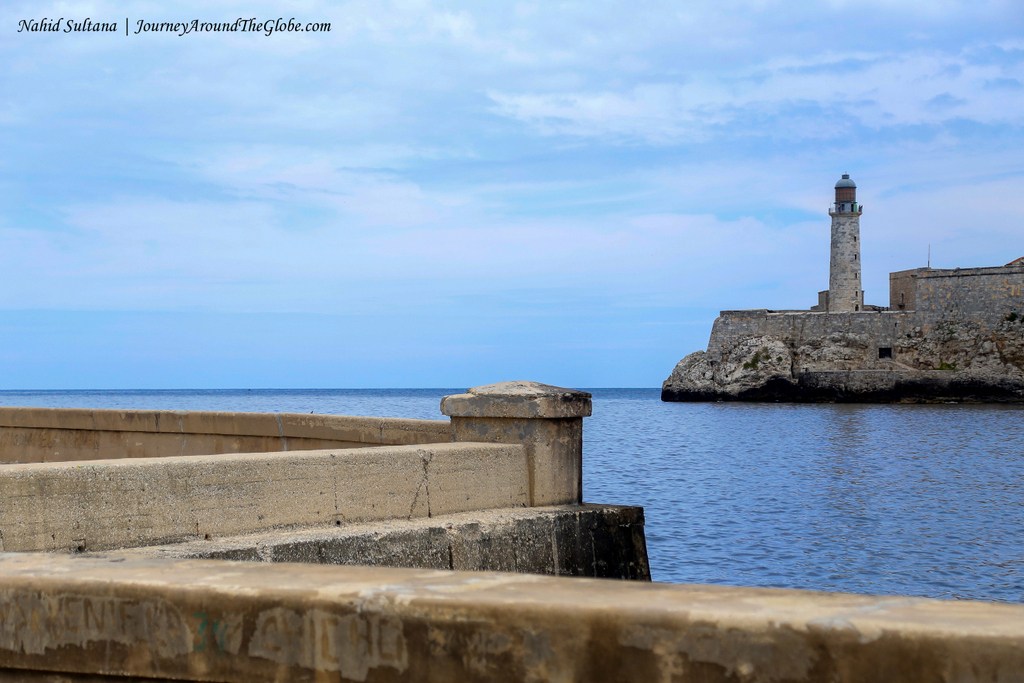
- El Malecon: After Fusterlandia, we were dropped off near Havana Harbor. The legendary El Malecon is about a 5-mile stretch of long and wide promenade with Havana Bay on one side and Old Havana on the other. Castillo de San Salvador de la Punta can be the starting point for this stroll. Without going to this castle, we started our walk on Malecon and strolled about an hour along the coast. We got to enjoy some arts and architecture, some conversation with the locals, and a peaceful walk with my sister. This is considered the hang-out spot for the locals, a romantic place for the lover, and a great place to catch a memorable sunset.
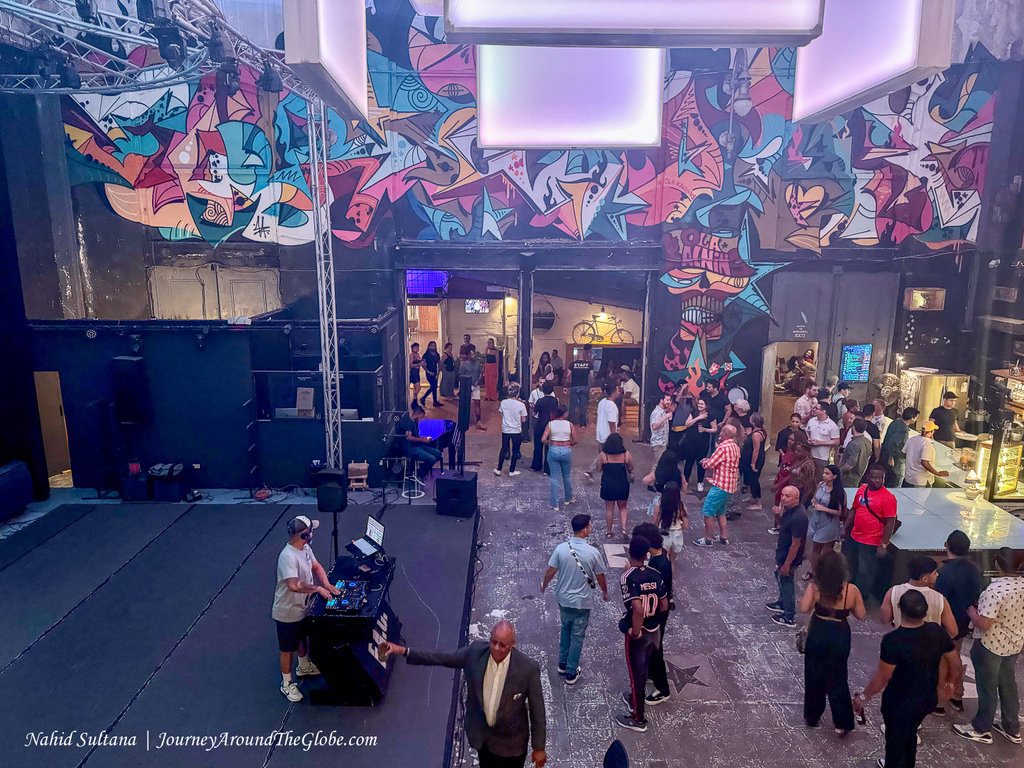
- Fabrica de Arte Cubano (Cuban Art Factory): This was one of the coolest art museums I’ve ever visited. We went there on our last night in Havana. We had dinner right beside the Art Factory and walked here as soon as they opened.
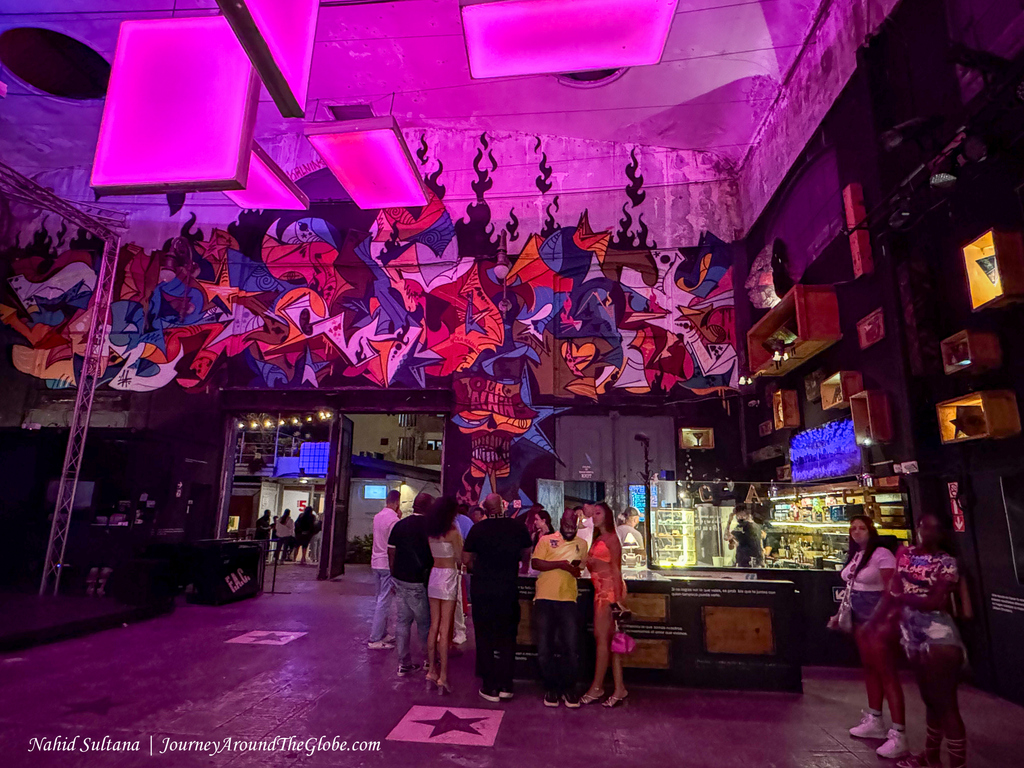
This is not only an art gallery, this gave us one of the best night experiences in Havana. It’s an art museum/club/bar/etc. This is a cultural visit no one should skip. There were photography exhibitions, artsy jewelries on displays, paintings, sculptures, and lots more. Creativity was everywhere in every room.
It’s an old oil factory which was repurposed and was made into this art galas/club. It was less than a half an hour taxi ride from Old Havana and the ticket was about $4 per adult.
Other than the above spots, these are some places where we couldn’t make it but if you have time, be sure to stop for extended experience in Cuba. Playas del Este and Playa Marazul are beaches where you can go to spend half a day. We drove by Hotel Nacional de Cuba a few times but didn’t get a chance to go inside. But this is a very well known building where many historic events took place in the 1900s.
Now knowing how easy it was to visit Cuba, I’ve had 2 other adventurous travelers committed to check out this country. This would be somewhere I’d go again in the future. The city gave me some kind of calmness and serenity. The relaxing vibe of Old Havana is what stuck with me the most. I’m thankful to my sister for sparking up this conversation one day which we actually made it happen.
Share this:

Business Excellence Award 2020 from AI Global Media for The Most Entertaining Personal Travel Blog – Pacific Northwest USA

Top Posts & Pages


Authors
 Globe Runner
Business Excellence Award 2020 for The Most Entertaining Personal Travel Blog – Pacific Northwest USA

Business Excellence Award 2020 from AI Global Media

 Journey Around The Globe