Journey Around The Globe
ready for the next destination
Top 6 things I miss about being away from home
It has been about little more than 10 months since we’ve moved to Belgium from Portland, Oregon in August of 2011. I absolutely fell in love with Belgium, or to say, Europe from the day we moved here. We’ve been to many new cities and countries in the past several months; we had the chance to experience breathtaking nature, ancient history, marvelous structures, religious artifacts, variety of people, mind-boggling cultures, and tried some of the best dishes in our trips. We plan to undertake a lot more places before heading back to The States in summer of 2013 or may be 2014…let’s see how much we can manage. Apart from enjoying almost everything that Belgium or Europe has to offer us, I must confess, there are times when I miss my home really bad. They don’t get to me as much as they used to a few months ago. I am trying to enjoy everything to the fullest, since I know that we eventually will have to go back to The States sometimes in a year or two. So, here we go, these are the things I miss the most about Portland or U.S.A.
6) GREAT CUSTOMER SERVICE: This is not to say that customer service in Europe sucks everywhere, but I am totally spoiled by the great customer service we get back in the USA. I have seen some grumpy faces from several sales persons back home too, but the degree of attitude or the lack of professionalism that I receive here sometimes surprises me. I once had a lady in our local bank in Belgium who was pissed because I had to close my account with them and then this lady in a supermarket said to us once something like “you Americans…” (in French) followed by some stereotype phrases. It doesn’t bother me as much now; I figured may be it is in their culture…so I should just learn to live like that.
5) CALLING MY FRIENDS & FAMILIES ANYTIME I WANT: We brought Vonage VOIP service with a local USA number along with us in Belgium, so that we can talk to friends and family for a much cheaper price than using calling card. That’s great news but the problem is that my families in the east coast are 6 hours behind us and the friends in Portland are 9 hours behind us. They are sleeping when I have free time to talk during daytime and when their day start or get off from work at 5 or 6 in the evening I am almost ready to go to bed. This really drives me nuts sometimes when I am very upset or too excited about something and I can’t talk to my sisters or my dad or my friends and relatives about it.
4) KNOWING WHAT I AM BUYING IN THE MARKET: I am not really a big fan of smoked salmon. Few weeks after we moved to Belgium, I bought a pack of salmon, not knowing that they were smoked salmon. After cooking it, I didn’t know what was wrong with the dish and why it smelled weird. Then I realized it was smoked salmon. Oh man, how would I understand those Dutch or French writings on the package? That’s a big problem not knowing the local language and therefore, not knowing what I am actually buying sometimes. Thanks to my iPad language translators that made life little bit easier. But I don’t carry it every time I am in a market. Sometimes some choices of food here look so good from outside, but since I can’t read the package properly, I was fooled couple times. I am trying hard to pick up the local languages, French & Dutch, and it is getting better day by day… I hope.
3) TACO BELL & OLIVE GARDEN: These are two of my most favorite restaurants in America. I can compensate Olive Garden with some of the Italian dishes we tried during our few trips to Italy but Taco Bell… no way. There is no other place in this world like Taco Bell. My heart sometimes cries for their Mexican Pizza (or Chalupa) with “fire” sauce on top…so good, so delicious. I wish to make a trip back to USA soon just to get some bites off of these little pieces of heaven…blahhh, I can’t fantasize anymore.
2) WEEKEND GET TOGETHER WITH FRIENDS: We had a great friend circle where we lived in Portland. Our kids were of similar ages and the friends were with about similar mentality and background. We used to do camping together every year, arrange surprises for each other’s birthday and other special events, eat out, watch movies, have potluck parties, make day trips to nearby places, rent big houses for everyone every now and then to just chill, relax, and cook together. The most that I miss about the friends in Portland is that when we had no actual plans we used to just get together at someone’s house, bring a dish, and just chat till we all were sleepy and tired. We know very few people here in Belgium, but don’t really share that kind of casual friendship with anyone. I very much miss those great moments.
1) MY JOB: I was a science/math teacher in a small private school back in Portland. Although I have worked there only one school-year, this was the most rewarding job in my little career life. I miss every bit of that school… the environment, the staff, to be able to share my thoughts on improving the education level, and most of all… the students.
I guess grass is always greener on the other side. We always envy what we don’t have at the present. May be, when I go back home, I will write a post on “Top 10 things I miss about living in Belgium”. I miss my home in Portland everyday that we bought just about a year before we moved here. But thanks to the almighty who gave us this opportunity to live and experience this wonderful life in Europe…no complaints whatsoever 🙂
Share this:

A cheesy city – Gouda, The Netherlands
GOUDA, THE NETHERLANDS: The name itself makes my mouth watery instantly. The city is world-wide famous for its Gouda CHEESE. Other than that, Gouda is a typical yet a pleasant Dutch village and a very popular destination for a day trip. Its old buildings, calm canals, big market place were truly entertaining.

- The old town of Gouda is adorned with big and yellow cheese-shaped decorations
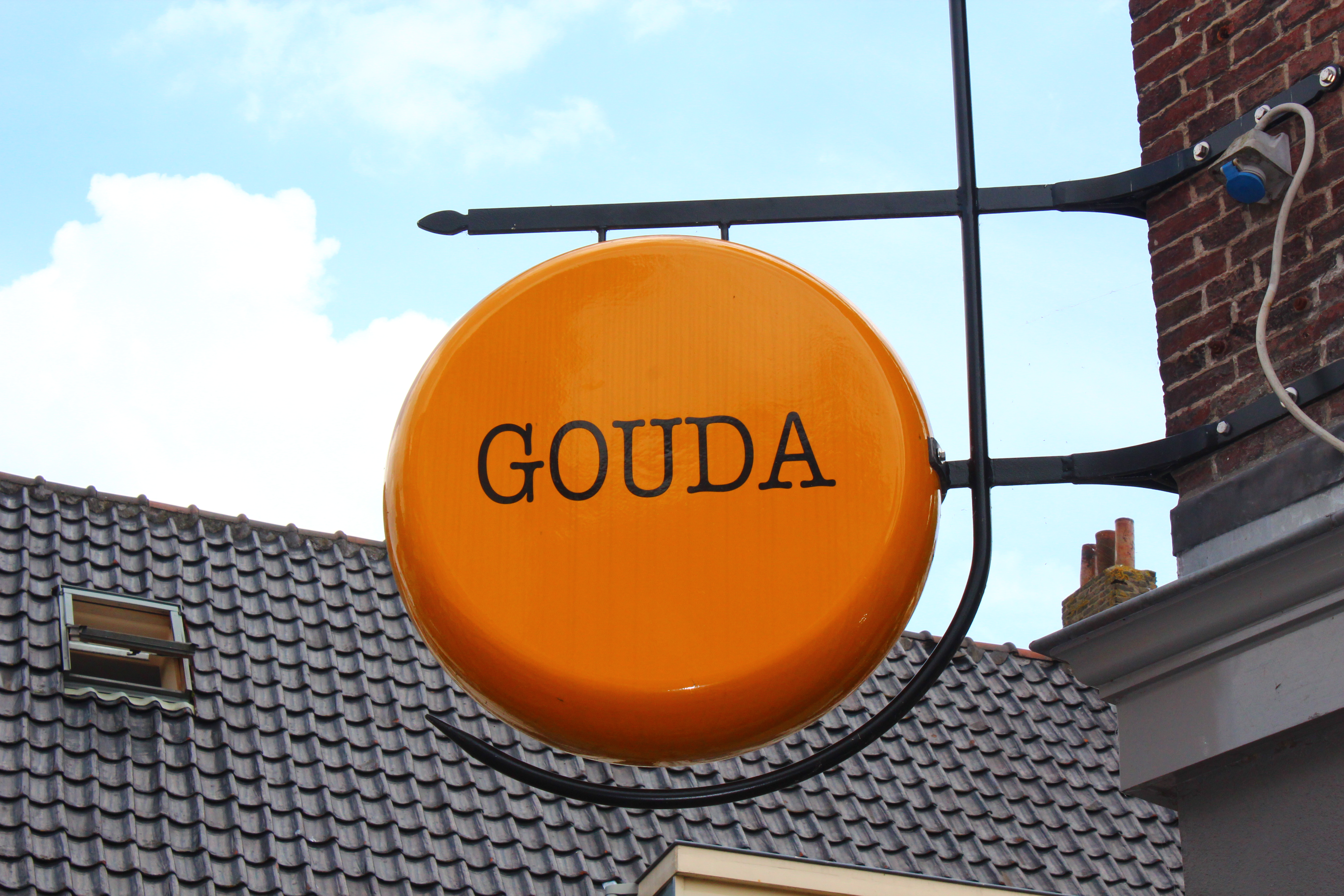
TIME OF TRAVELLING: My parents came to visit us in Belgium in May 2012. The Netherlands was our first destination and Gouda was our first city to give them some Dutch experiences. Not to mention my dad loves cheese, so he absolutely fell in love with Gouda. Luckily, the weather was incredibly nice that day, I enjoyed every moment of being in the market place in the old town of Gouda.

- Beautiful canal of Gouda, The Netherlands
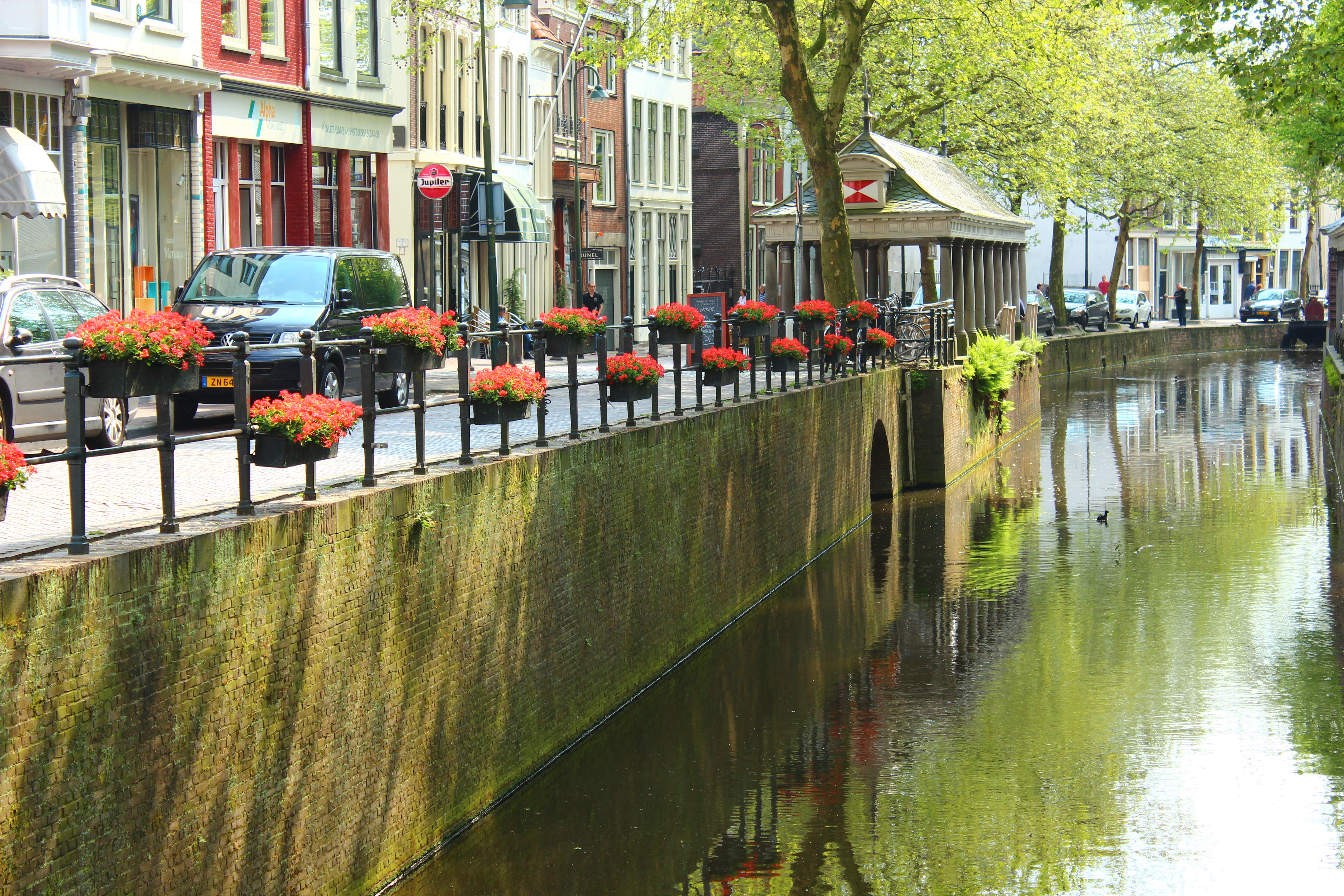
OUR HOTEL: We stayed in Holiday Inn in Leiden, which was about half an hour drive from Gouda. It was a very big and spacious place to accommodate you with free parking and huge play areas for children. The location was great, because Leiden is less than half an hour drive from other Dutch cities like Rotterdam, Gouda, The Hague, Utrecht, and Delft. All of these places are perfect to experience real Dutch culture and people.
WHAT TO EAT AND BUY IN GOUDA: What else would you want to eat and buy in Gouda other than eating and buying more and more of Gouda cheese? If you are there on a Saturday, you can buy cheese from the market place for great prices. They can vacuum seal the cheese, so it doesn’t go bad even if it’s outside for a day or two. Also try out their battered fried fishes and raw herring sandwich…they are so yummy.

- Cheese, cheese, and more cheese
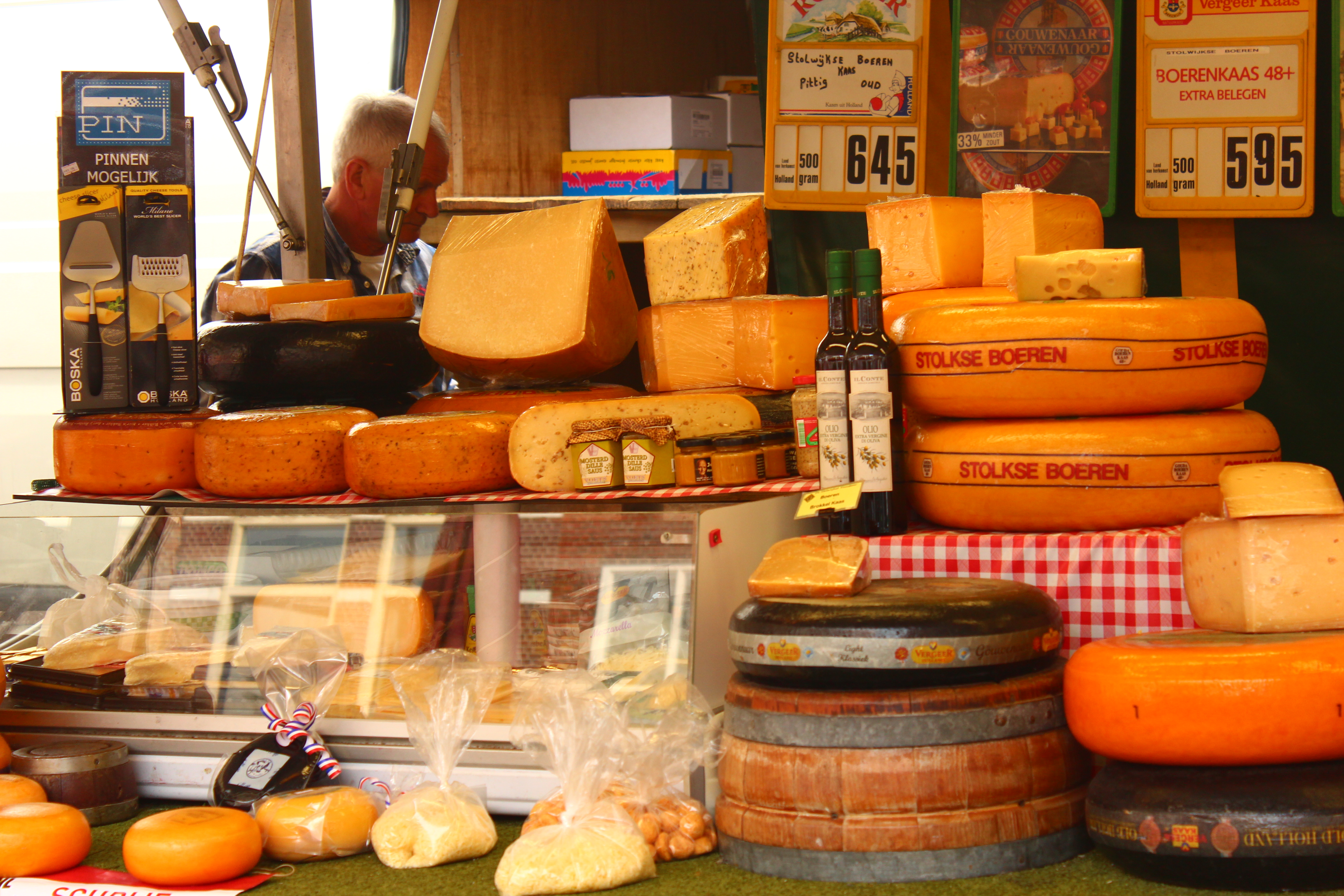
PLACES WE VISITED:We spent about half a day in Gouda. Sampling and buying Gouda cheese was our number one priority in this trip, and we did it as much as we could (sampling free cheese that is) 🙂

- A puppet show on one side of Stadhuis that takes place every hour in Gouda, The Netherlands

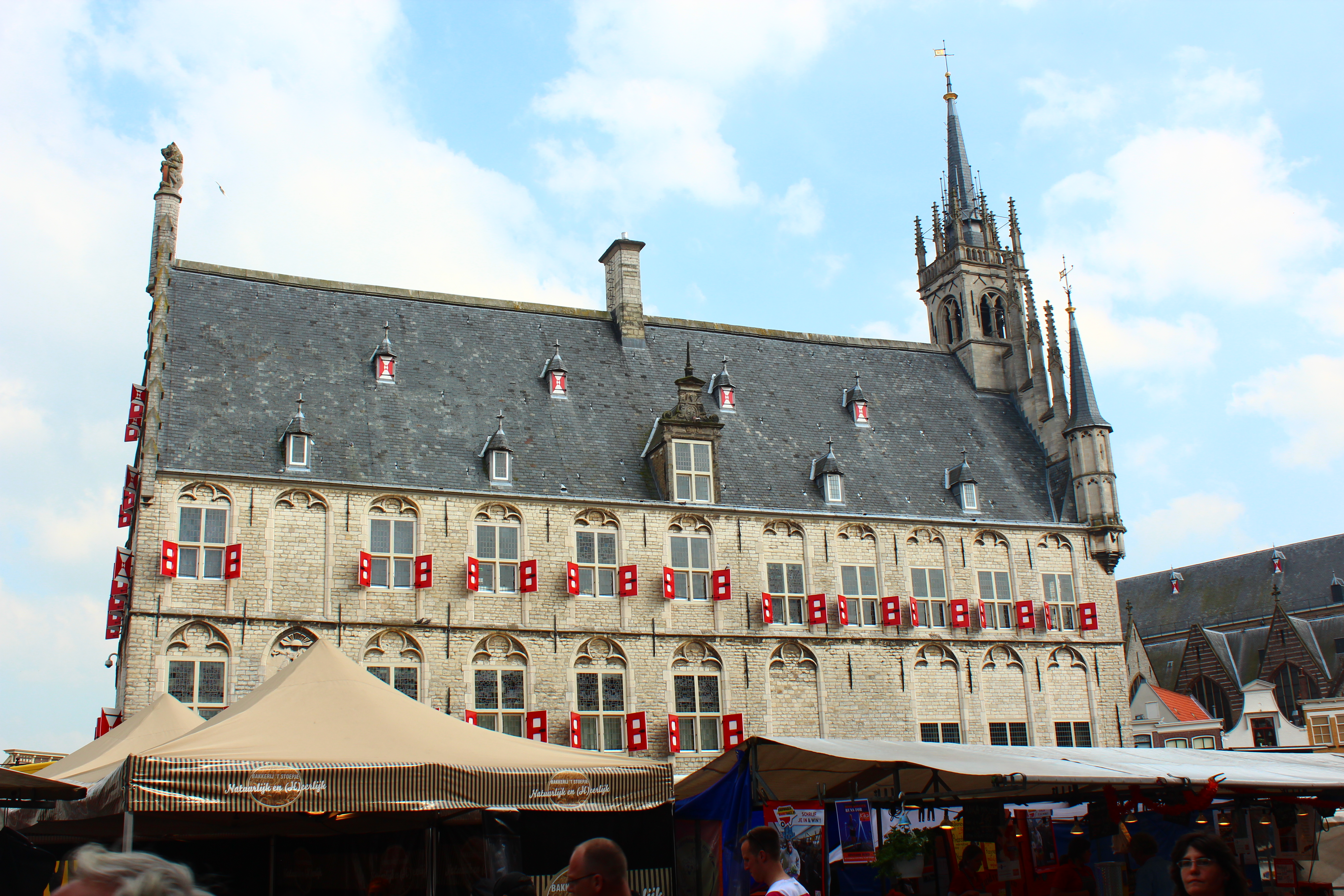
1) STADHUIS (OLD TOWN HALL): This is located in the market square and is the oldest Gothic town hall in the Netherlands. It dates back to 1448. Presently it is a museum. Don’t miss the little puppet show on one side of this building that takes place every hour.

- The old town hall of Gouda (Stadhuis)
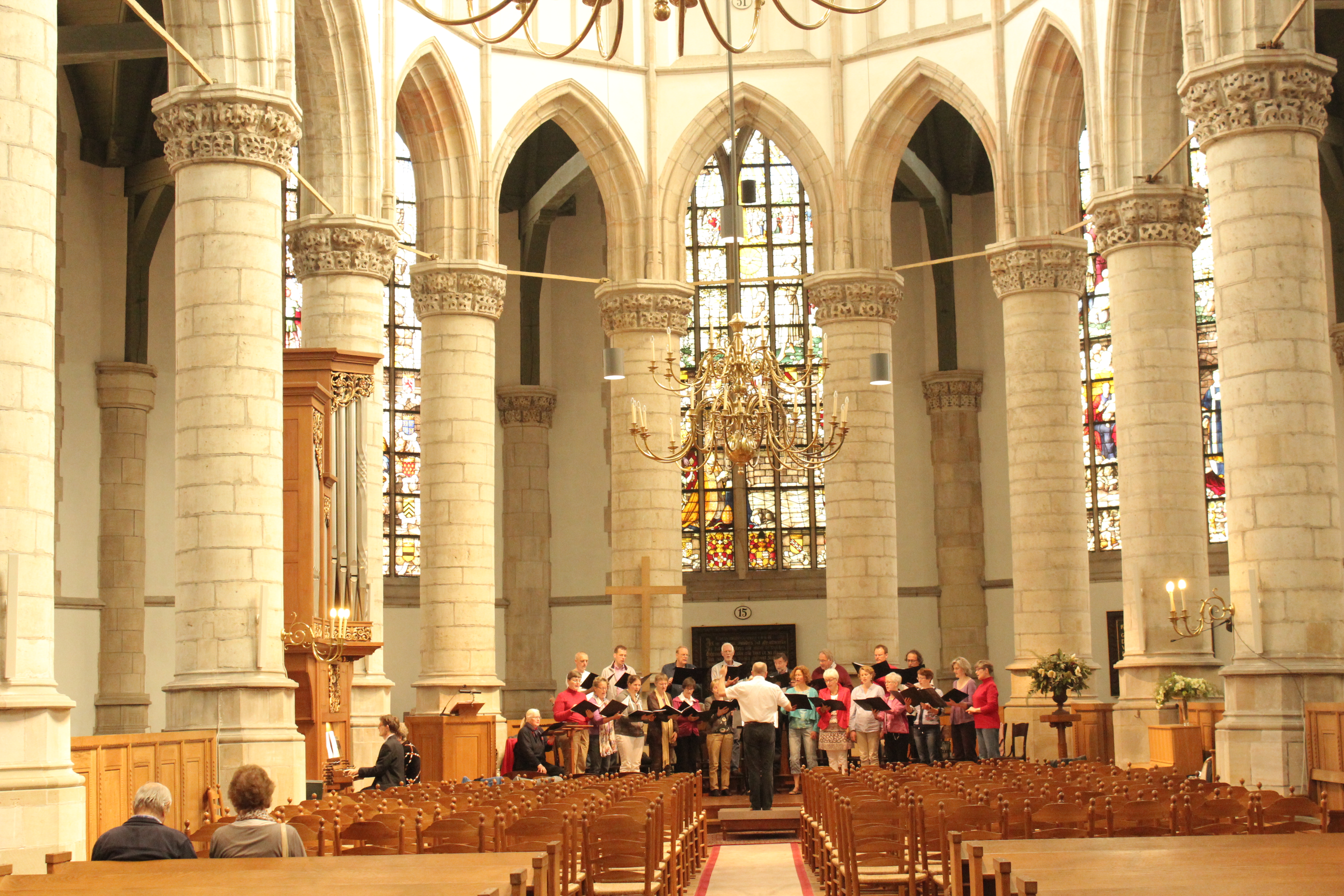
2) ST. JANSKERK (ST. JOHN’S CHURCH): This Gothic church is standing there from the 16th century. It’s the longest church in the Netherlands and is a UNESCO World Heritage site for its famous stained glass windows from the 16th century, also known as “Gouda Windows”. These windows depict scenes from the bible and the city itself. The church is pretty big and very beautifully decorated with big chandeliers and lots of paintings. It also houses many graves of Gouda’s well-off citizens, just look at the floor for their tombstones.
The church is open from 10-5 everyday and closed on Sunday. The entry fee is 4.50 euros per person and 10 euros for whole family.

- Inside St. Janskerk, Gouda
3) MARKET SQUARE: The market square is the main spot for tourists and a lively place for locals to hang out and shop. There is a big farmer’s market that takes place here every Saturday and is open until 5 pm. You will find fresh produces, clothes, purses, food stalls, and ofcourse cheeses. We saw some Dutch girls in their traditional outfit giving away free samples of cheese (they don’t mind if you go take pictures with them). Old Town Hall adds beauty to this square with its Gothic look and bright red colored windows.

- Girls in traditional Dutch outfit offering free cheese to sample in Gouda, The Netherlands

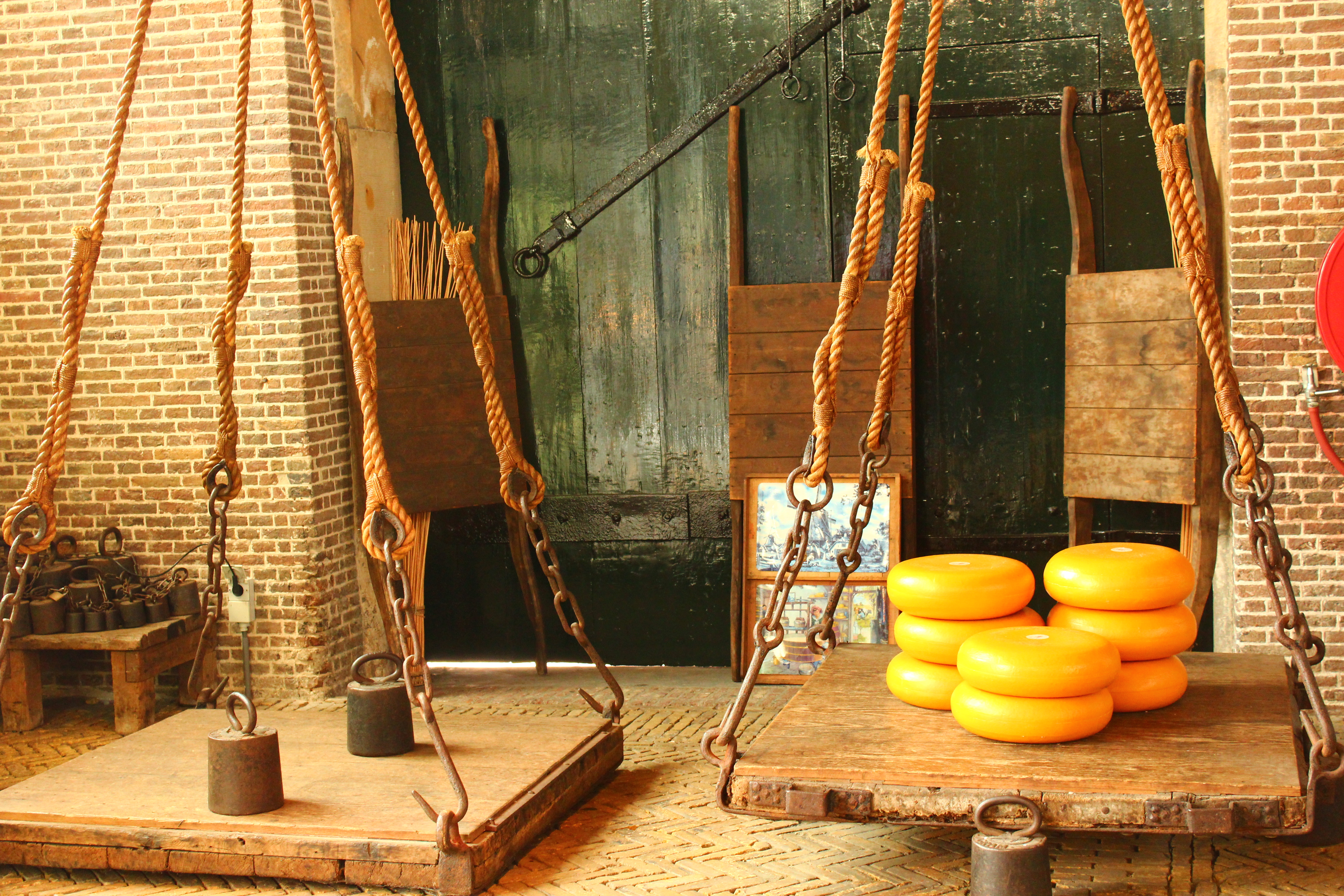
4) DE WAAG (CHEESE WEIGHING HOUSE): This is also located in the market square on the rear side of Stadhuis. This was built in 1668 and has mainly served as a place for weighing cheeses. Presently, it is a museum of…well, CHEESE!!! It also has a big cheese store inside selling variety of Dutch cheeses.

- A traditional scale to weigh cheese inside De Waag, Gouda
Related articles
- Leiden, the Netherlands (journeyaroundtheglobe.com)
- City of blue and white – Delft, the Netherlands (journeyaroundtheglobe.com)
- Surprise Canapes with Gouda (cheeseandbutter.wordpress.com)
- Mini Turkey Pepperioni Pizzas (beatcancer2010.wordpress.com)
- Finding Comfort in Sin: Shiitake, Shallot and Sage Macaroni & Cheese with Smoked Gouda (hossofsauce.wordpress.com)
Share this:

A city on water – Venice, Italy
VENICE, ITALY: Venice…Venice… Venice…by your soft touch, I was truly swiped off my feet. Where should I start? What should I say about this charming city? Every corner, every aspect, every little thing of Venice is magical. This is one of the most interesting and lovely cities in the whole world. The city didn’t lose its charm and magic even with its heavy tourist traffics. It is wonderful to see how a whole city adopted its life-style having water all around, living here must be like living in a fantasy world. Small inner lagoons are definitely nicer than the big ones.

- Ciao Venice
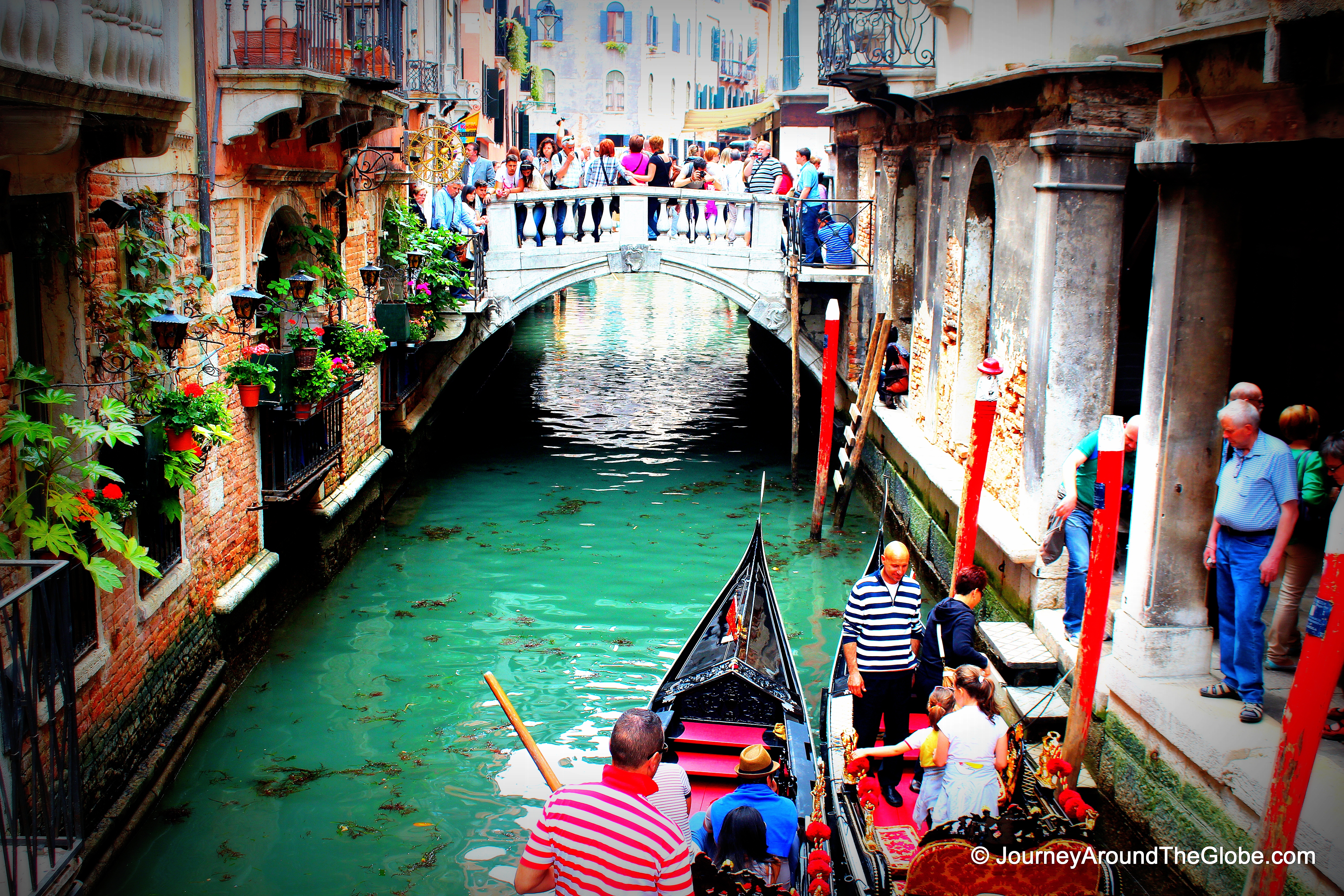
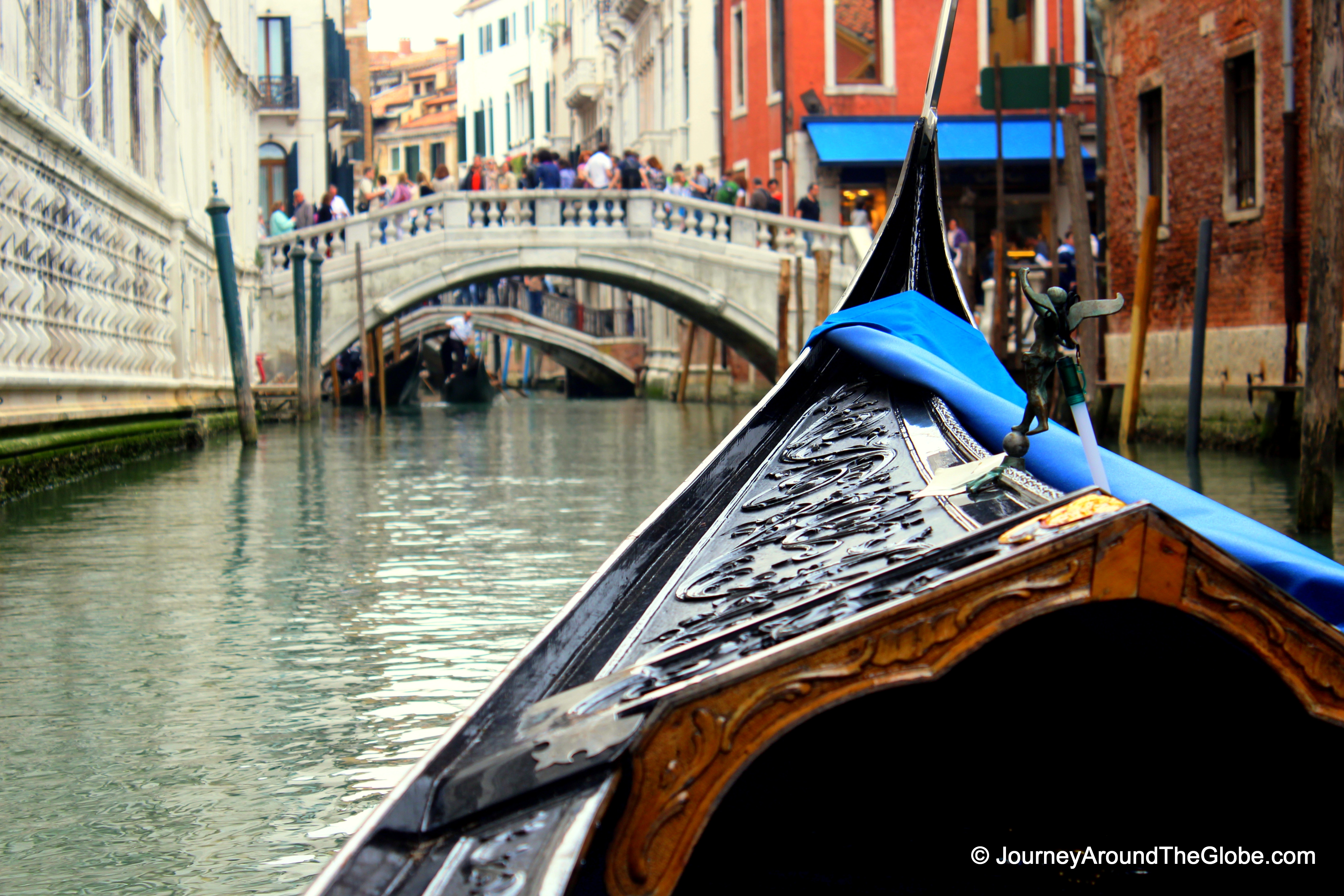
The sad part of Venice is that the city is slowly sinking under water. Each year, water is rising about 2/3 cm. The houses by the water are slowly going under water. Our gondolier was saying that people cannot live in the bottom floor of these houses anymore because water rises really high in the rainy season and other times they are just damped and in an unlivable condition.

- One of the inner canals of Venice, look at those beautiful decorated windows
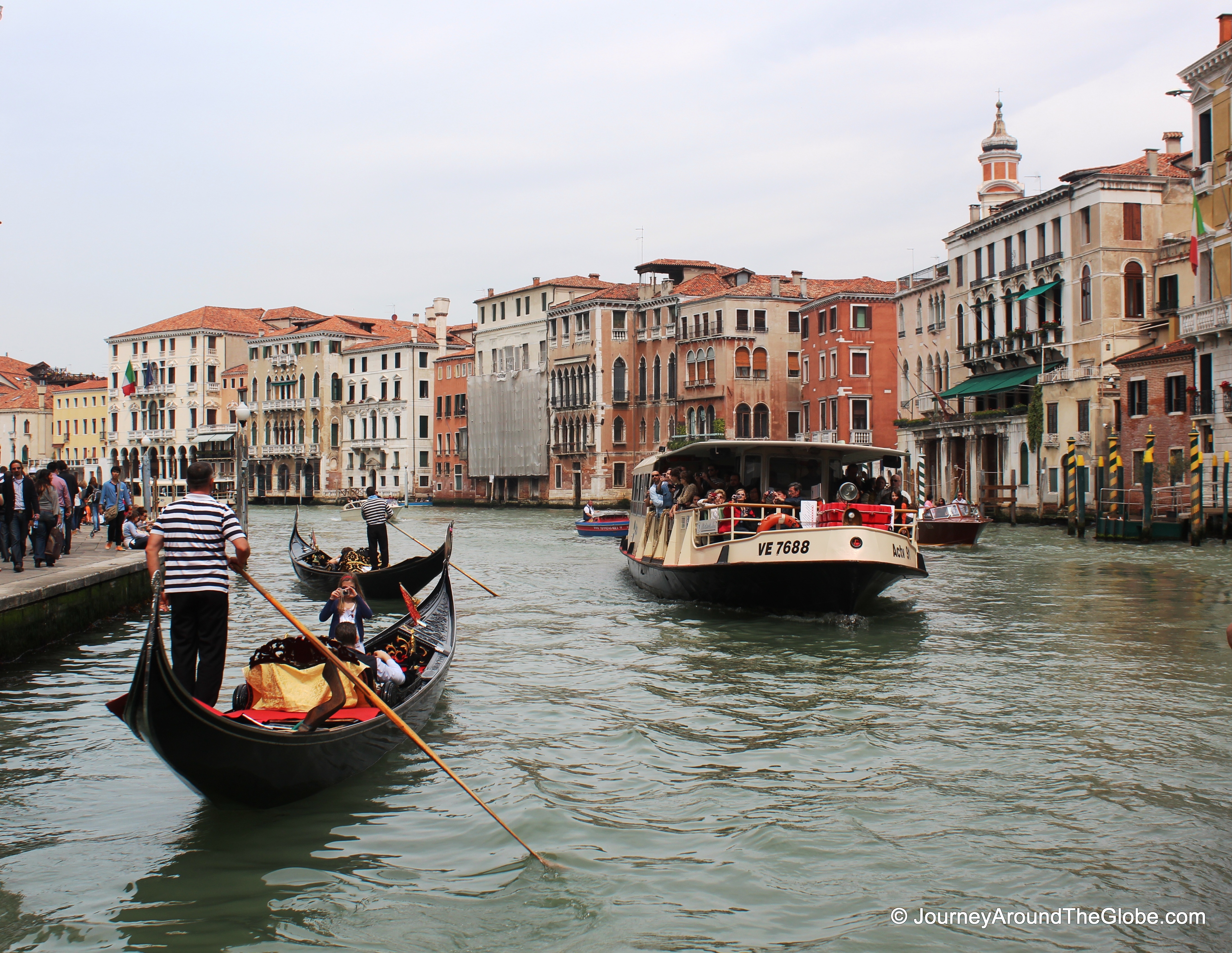
Venice is an expensive city. Public buses charge a lot for each ride. I think we paid about 6 euros per person from our hotel to go to Piazzale Roma which is the main bus station. From there we took water bus (public transportation), called vaporetti, to go to main island of Venice. Water bus is much cheaper than water taxi, which is a private service. Riding on these water taxi/water bus is half the fun in Venice.

- Bridges, gondolas, crowds, and canals of Venice

TIME OF TRAVELLING: We flew to Venice end of April, 2012. The weather was great that time. I’ve heard that it gets really hot and sticky in summer. The water starts to smell and many mosquitos and infectious flies also come out during summer.

- Lost in beauty
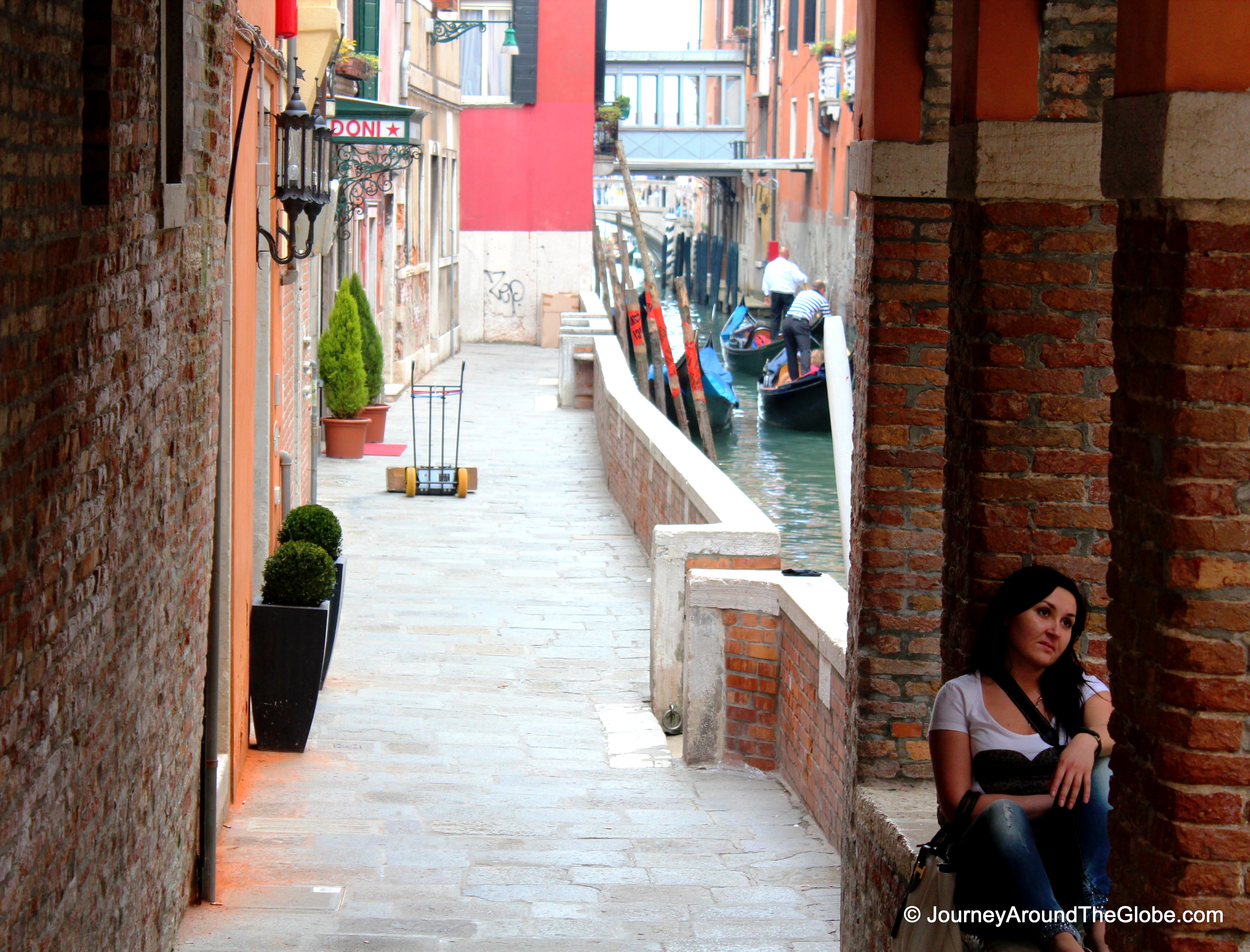
OUR HOTEL: We stayed in Park Hotel Annia near Marco Polo Airport, which had free shuttle pick up from the airport. It was a bit far from the main island of Venice, but hotel’s shuttle bus dropped us off each morning to the nearest bus station and we took a 30 minutes ride on bus to go to Piazzale Roma Bus Terminal from where we used to take water bus to reach Ponte di Rialto.
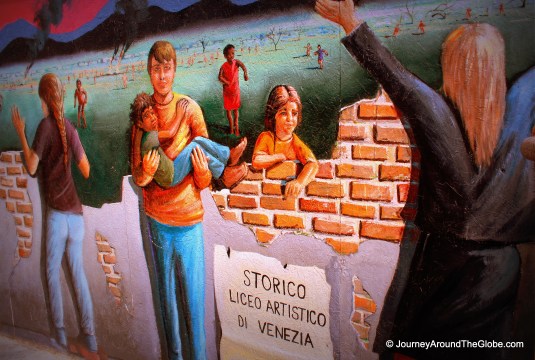
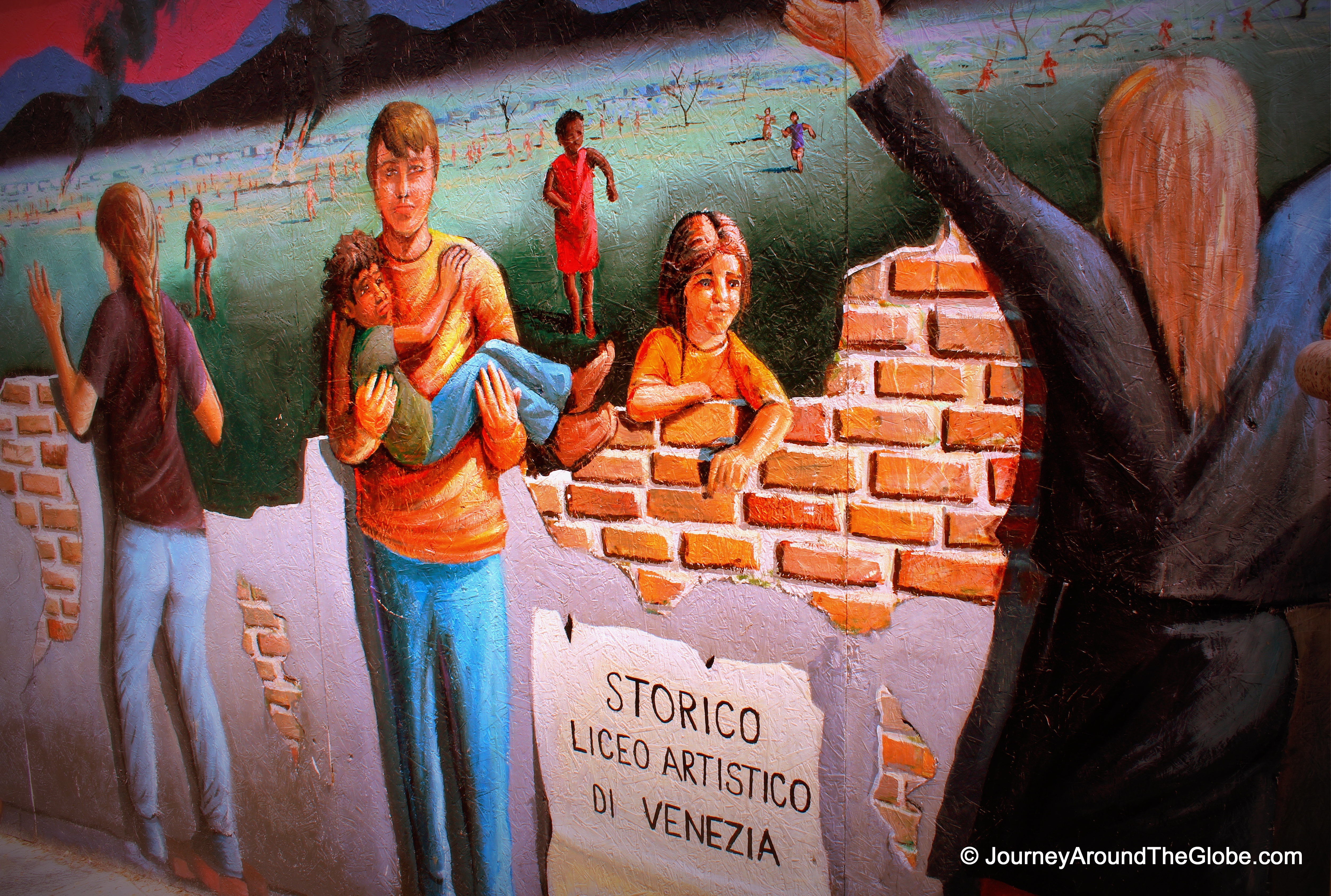
- A small part of a big mural in Piazzale Roma Bus Terminal
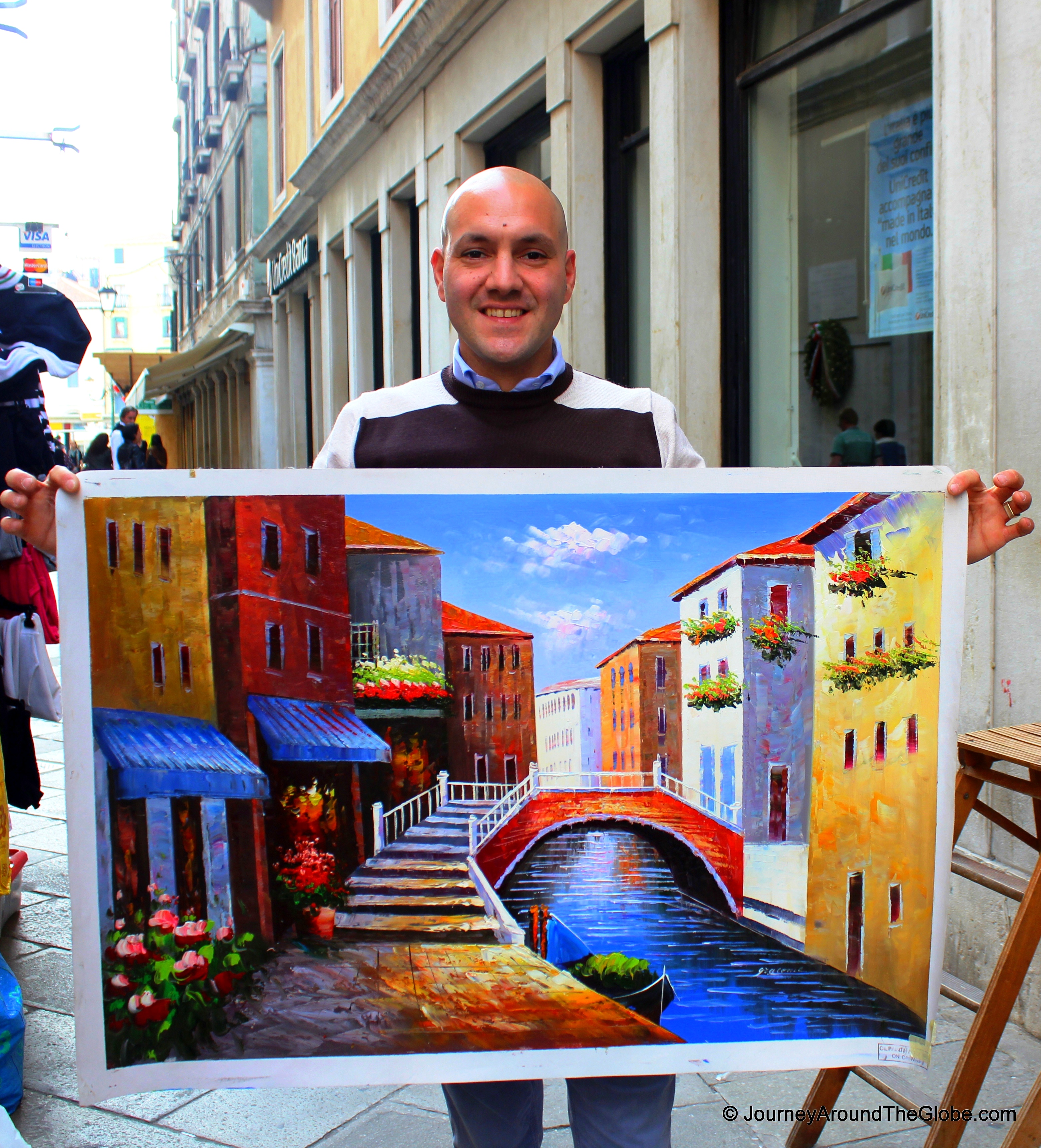
WHAT TO EAT AND BUY IN VENICE: Like any other cities in Italy, pasta and pizza are the most common. Gelato bars are everywhere too. Venetian masks are something expensive that you can bring back home. They can range from 80/90 euros to few hundreds or even thousand euros per mask. For the painting lovers, you can get reasonably priced oil on canvas (cheaper than Rome) near Ponte di Rialto. Another popular souvenir in Venice is Murano glass items, like beads, vase, jewelries, home decors, and etc. I compared the price of these glass items with the ones in Murano; they are almost the same, of course Murano has more variety to choose from. For any souvenirs, try to buy them away from Grand Canal, you will be surprised how prices come down as you get more inside the small alleys.

- A painting we bought near Ponte di Rialto
PLACES WE VISITED: We had 2 full days to soak up Venice’s atmosphere and 1 day to go to Murano Island. The 2 days we spent in Venice, we were mostly in or around Piazza San Marco. These are some information on the places we’ve visited which may help you planning your trip to Venice one day 🙂

- Our gondola ride through the inner canals of Venice
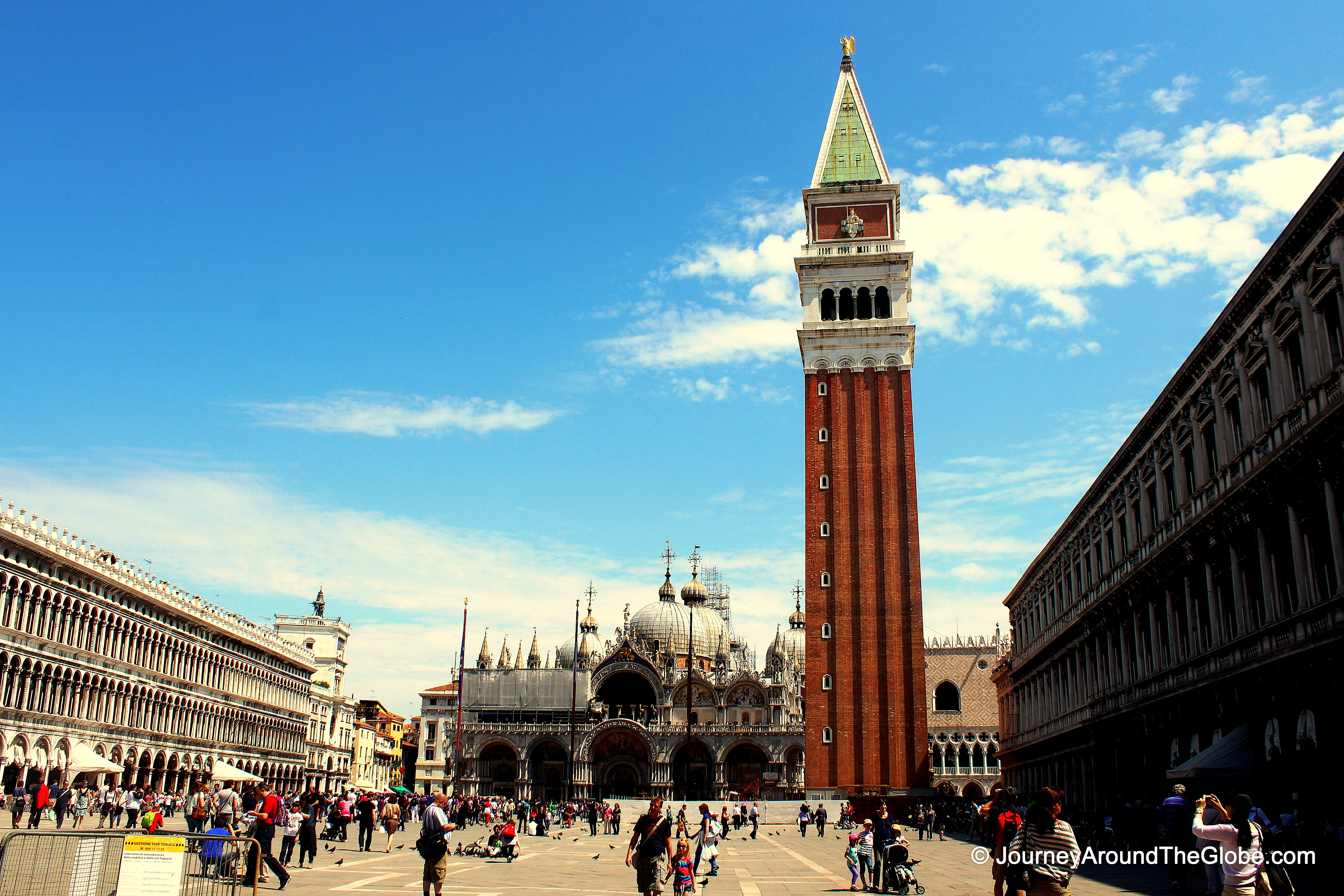
1) PIAZZA SAN MARCO: Piazza San Marco is a UNESCO World Heritage site and the main square in Venice, you literally can spend whole day or may be 2 or 3 to explore different sides of this square. The place is packed with lots and lots of people, so be careful with your belongings. The square is dominated with Saint Mark’s Basilica. The piazza is loaded with many other important buildings, museums, and architectures. Palazzo Ducale is situated right beside the basilica. Clock Tower (Torre dell ‘Orologio) is on the other side of basilica which has an astronomical clock on top. Facing Palazzo Ducale is Bell Tower of St. Mark.
- Bell Tower and Basilica di San Marco in Piazza San Marco, Venice
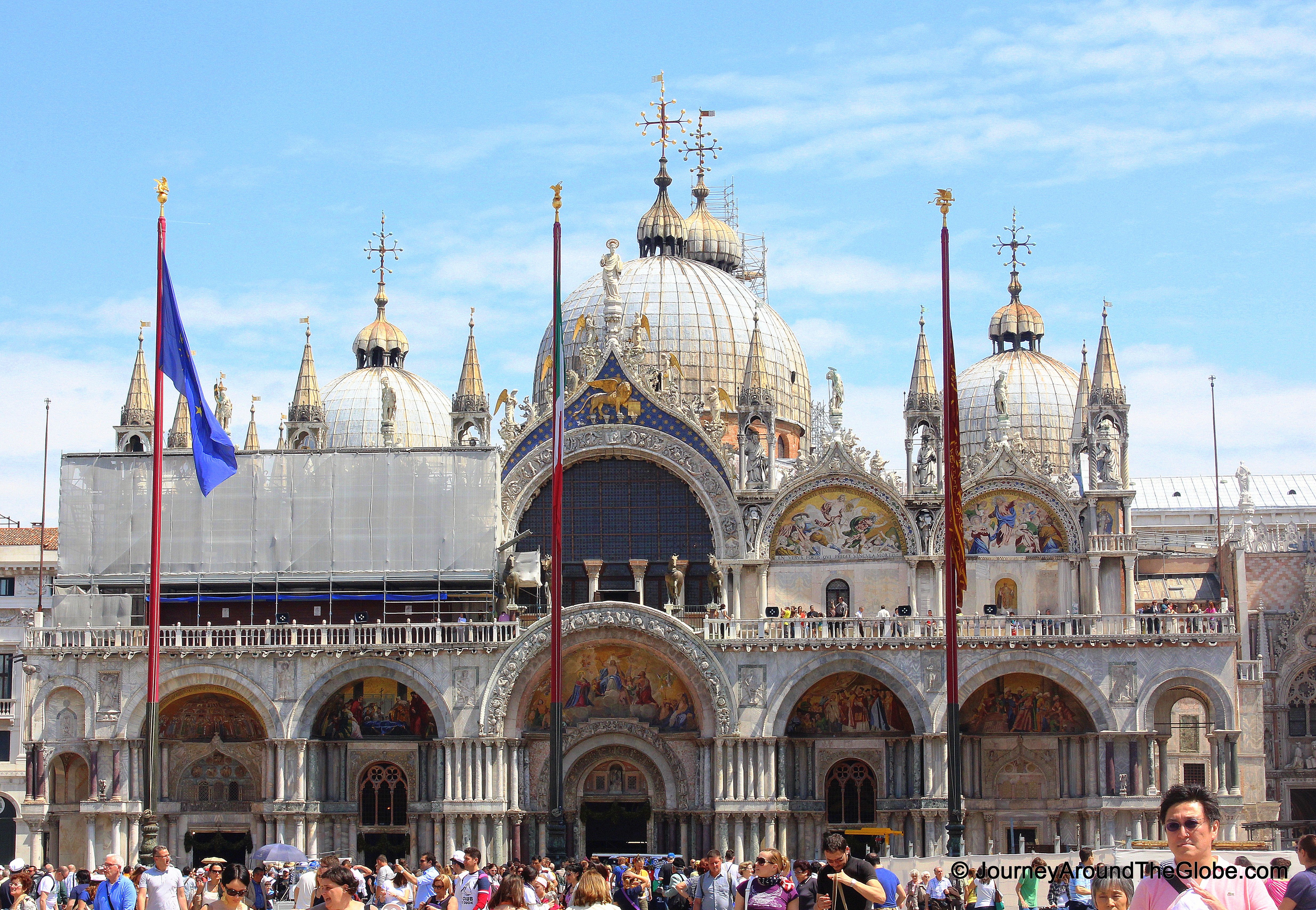
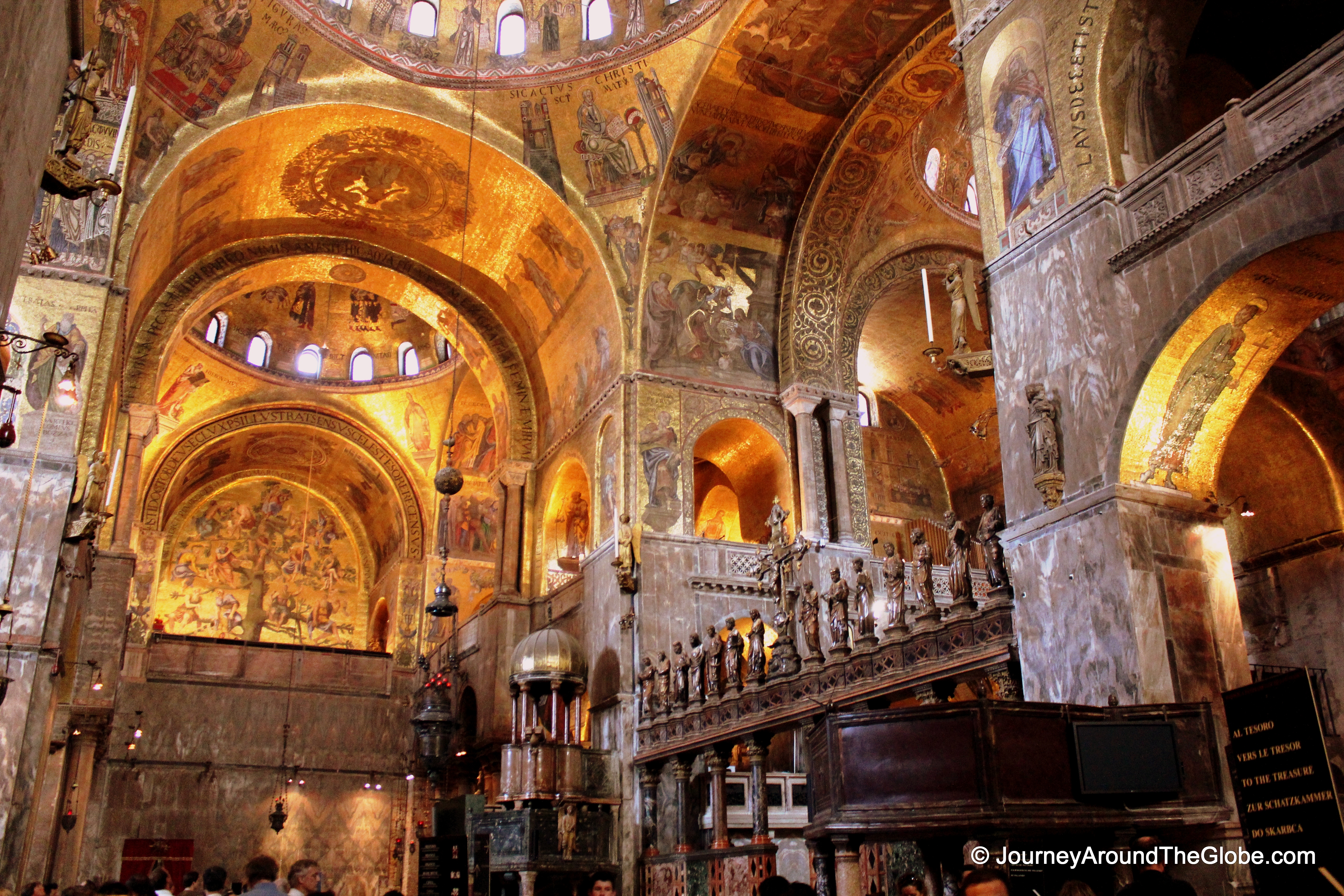
2) SAINT MARK’S BASILICA (BASILICA di SAN MARCO): This is one of the highlights and the most famous church in Venice. Located just off the Grand Canal, this glaring basilica overlooks Piazza San Marco. The present basilica was completed around 1071. Its fascinating details of exterior are truly enjoyable. I loved the beautiful golden ceiling with many fresco type artworks. The whole church is decorated with big candle holders hanging from the ceiling. The intricately-patterned floor is a 12th century mixture mosaic and marble in geometric patterns and animal designs.

- Basilica di San Marco in Piazza San Marco, Venice
There is a big line to go inside the basilica, but the good part is that it’s free to enter unlike many other churches in Venice. Visitors can’t carry any baggage with them inside the church but there is no place to put them either. Taking pictures is also forbidden here, but I saw everyone clicking their cameras here and there.
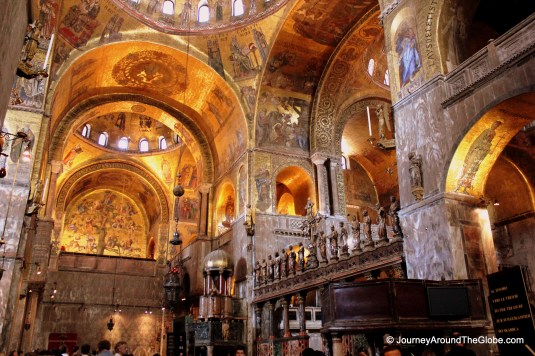
- Inside Basilica di San Marco
3) BELL TOWER of ST. MARK (CAMPANILE di SAN MARCO): Going on top of this bell tower is a must do in Venice. The current tower dates from 1912. The tower offers 360° view of Venice and the lagoon from the top. Take enough time to enjoy views of every side of Venice from here.
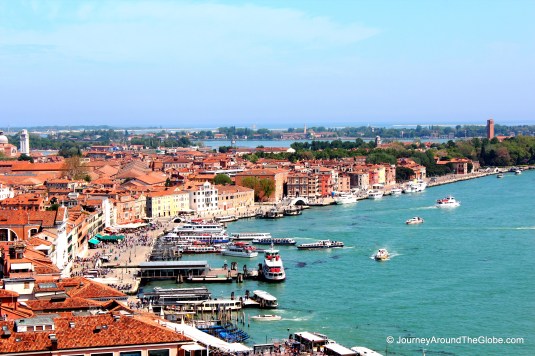
- View of Grand Canal from the Bell Tower
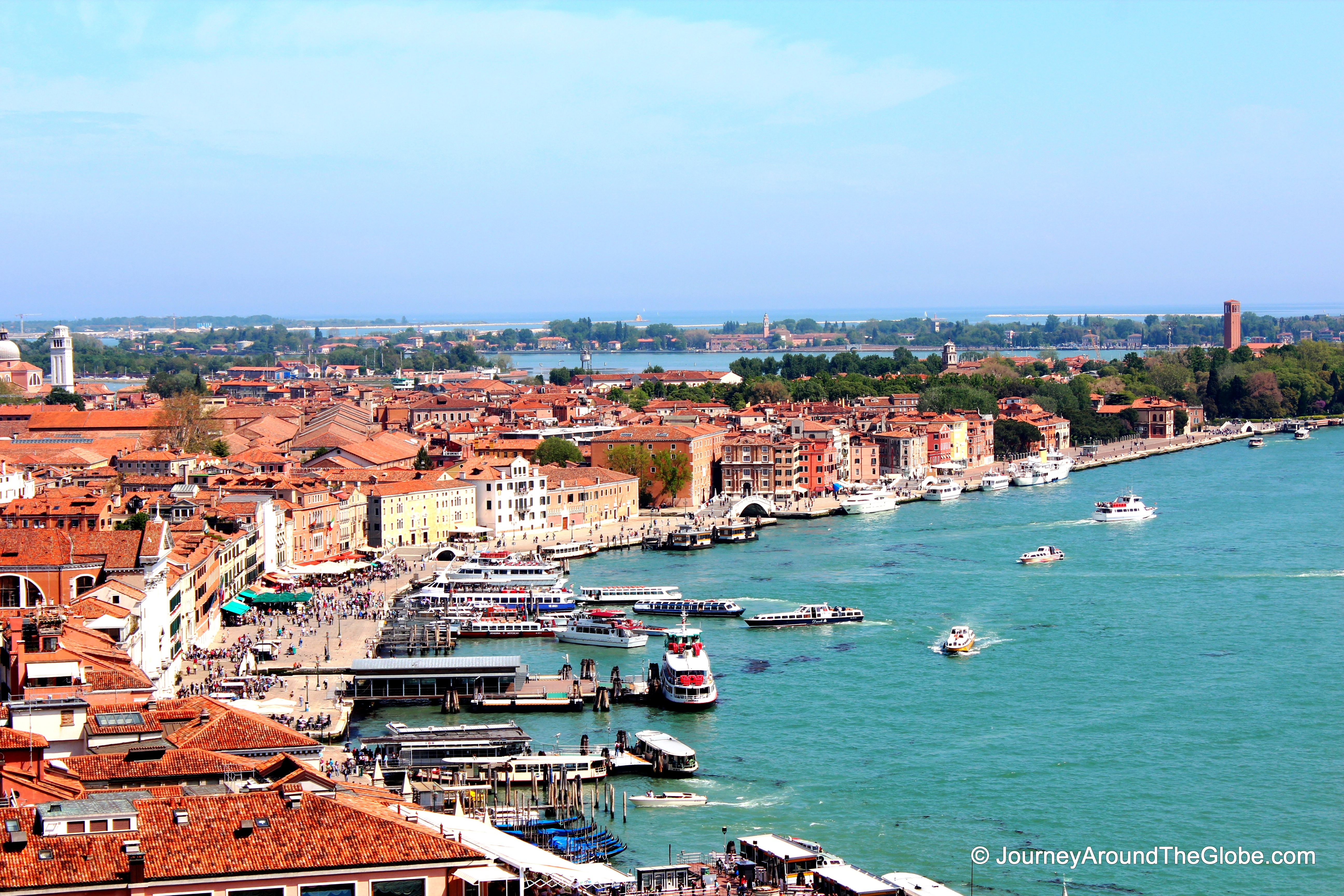
The tower is 100 meter tall and the lift takes you up to 60 meters high deck. There is a big line to go on the top. It is 8 euros to take the elevator which doesn’t include audio guide.
4) RIALTO MARKET & RIALTO BRIDGE (PONTE di RIALTO): The original wooden Rialto Bridge collapsed in 1524 and the present one was completed in 1591. This is city’s one of the most recognizable icons. We used to get off here from water bus then walk through narrow winding alleys to go to Piazza San Marco. There are hundreds of shops by Rialto Bridge in Rialto Market. You will find almost anything here with much cheaper price than Piazza San Marco. Keep your eyes open, you may see artists painting Venetian masks inside their stores.
5) GRAND CANAL & BOARDWALK: This huge and stretchy boardwalk by Grand Canal (near Piazza San Marco) is an energetic and lively place for tourists and locals to hang out, buy souvenirs/trinkets, enjoy view of the surrounding islands, and do people watching. You can see an island S. Giorgio Maggiore in the front and Chiesa della Salute (a big church) on one side.

- View of S. Giorgio Maggiore from Grand Canal boardwalk
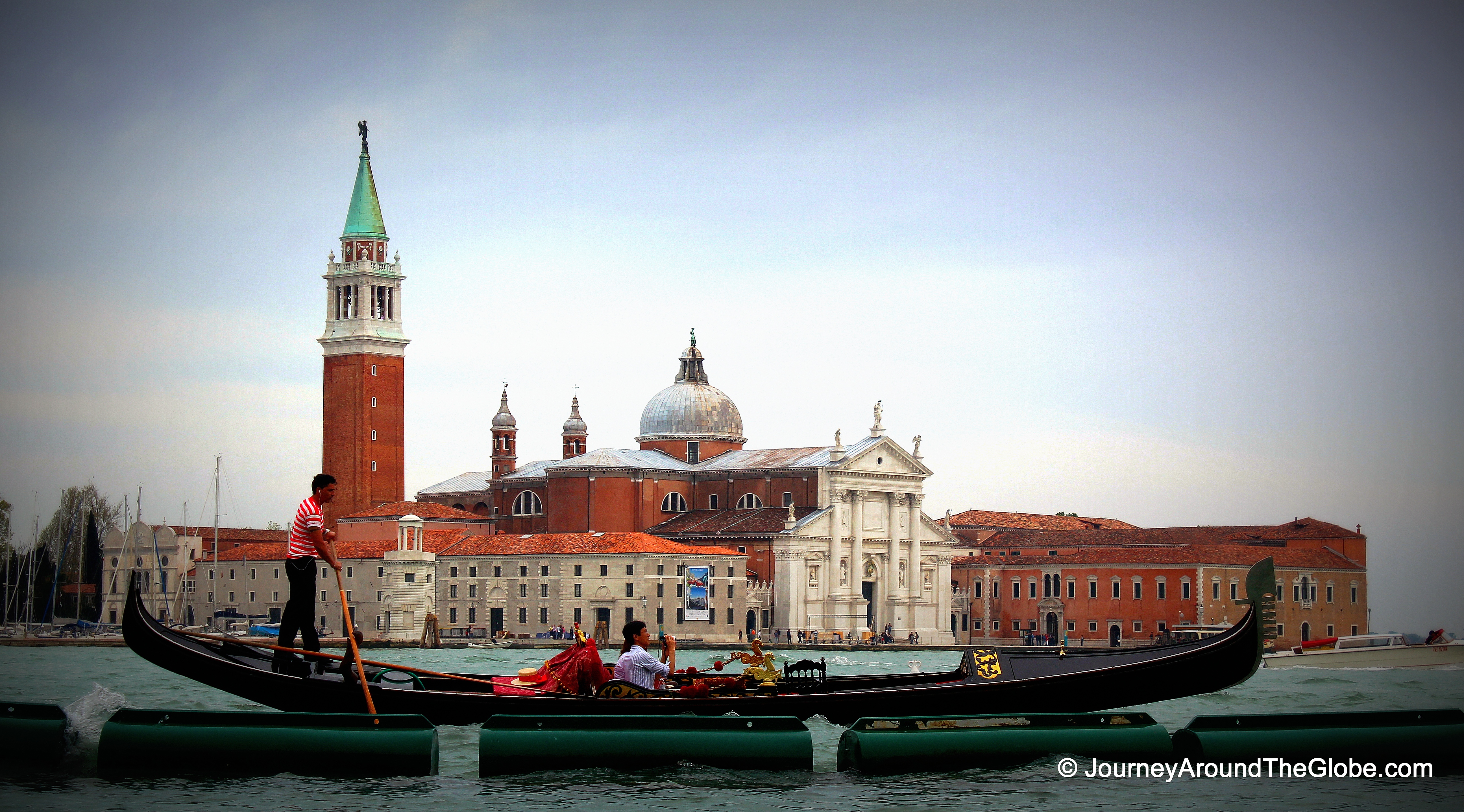
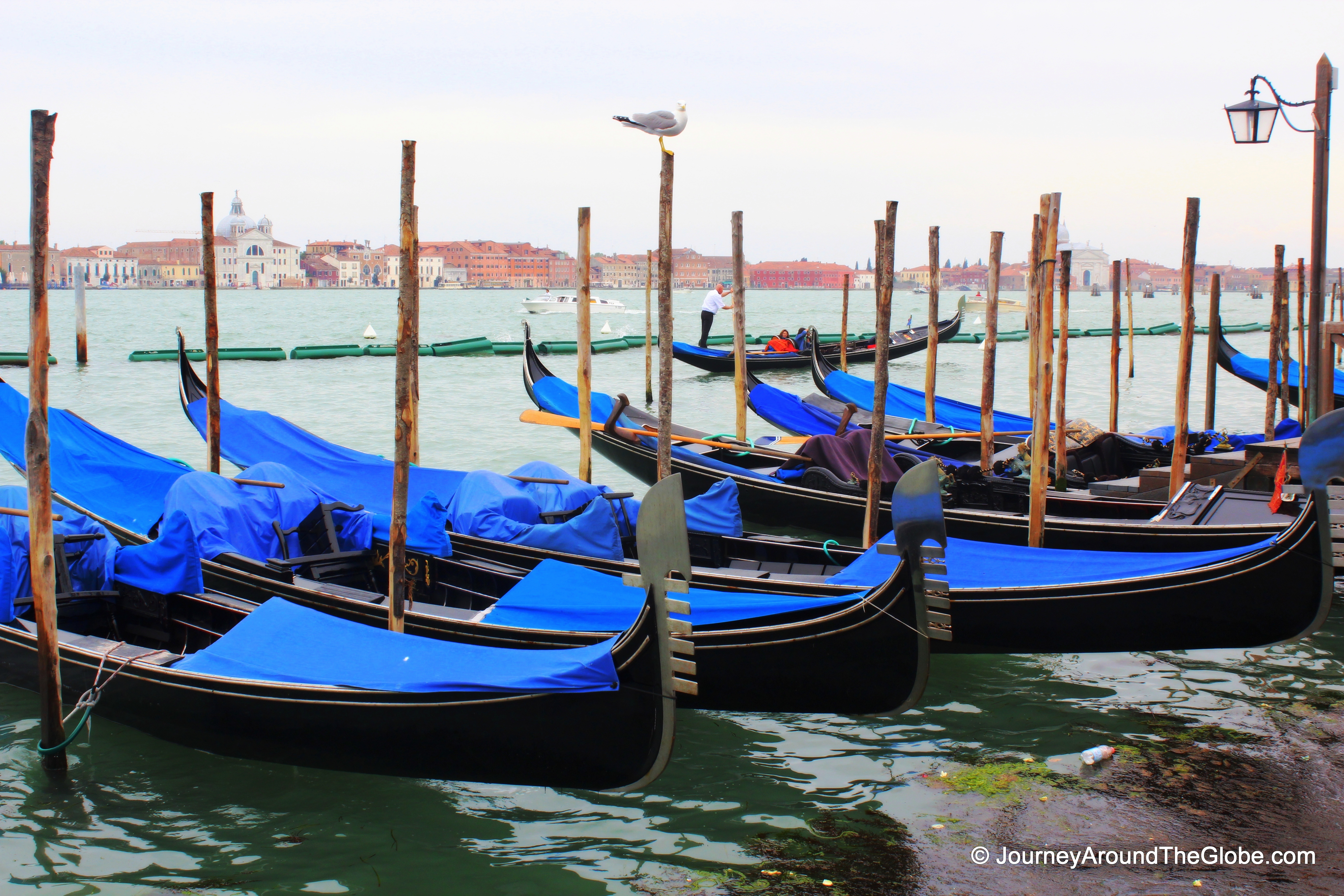
Grand Canal is the main hub to rent gondola from. We paid 100 euros for about 30 minutes of ride on gondola for up to 6 people (though you will pay about 20 euros less if rented from small inner canals). Some interesting facts about these gondoliers are that they have to be male and born in Venice. They take pride in their job and usually this is their family profession for centuries.

- Empty gondolas on Grand Canal
6) MURANO: This can be a really pleasant day trip from Venice, just get on a water bus or vaporetti for a short ride to this small island. Like Venice, Murano is a series of islands linked by bridges in the Venetian Lagoon. But unlike Venice, you won’t see either any hustling-bustling or the heavy crowd. Murano is mainly famous for its massive glass production. Historically, these glass makers used to have their production in Venice, but around 12th or 13th century they were moved to Murano because of fire hazard. Murano is absolutely an admirable city with small old bridges, bright colored buildings by the water, glass sculptures in every square, and not to mention the small and big canals. Walking around by foot is part of the pleasure of Murano and since the island is only about 1 mile across it is very easily doable.
- Colors of Murao
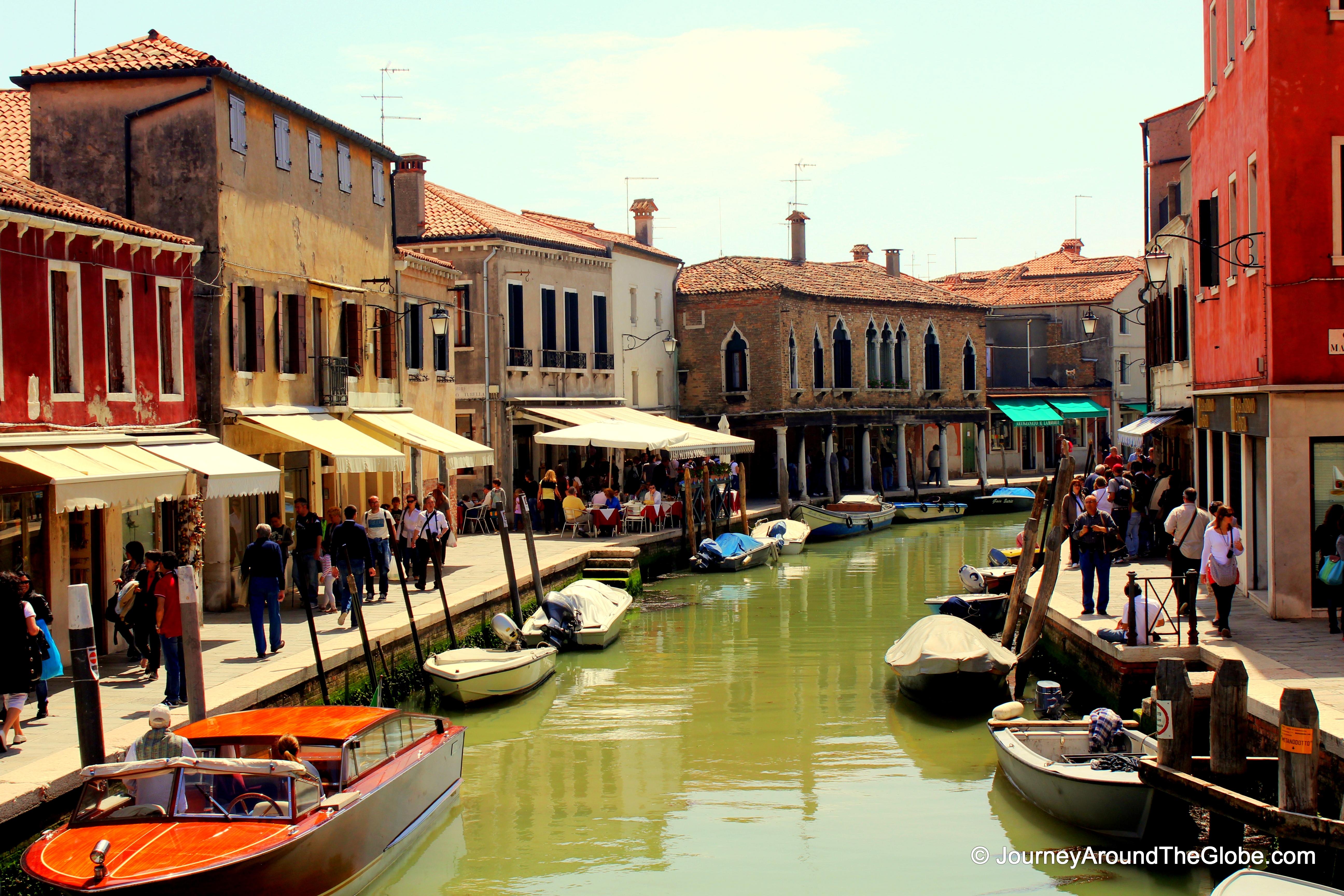
The most memorable souvenir you can buy from Murano is their world famous glass items. There are lots and lots and lots of Murano glass stores all around the island from small boutique shop to huge and gorgeous showrooms. Some of them demonstrate glass making techniques for free while some charge (may be 5 euros or something) and will give you the money back if you buy something from them. When shopping for Murano glass items, be sure to get the real stuff, some places sell non-Murano (made in China) glasses for little bit of lesser price.

- Canals and boats of Murano
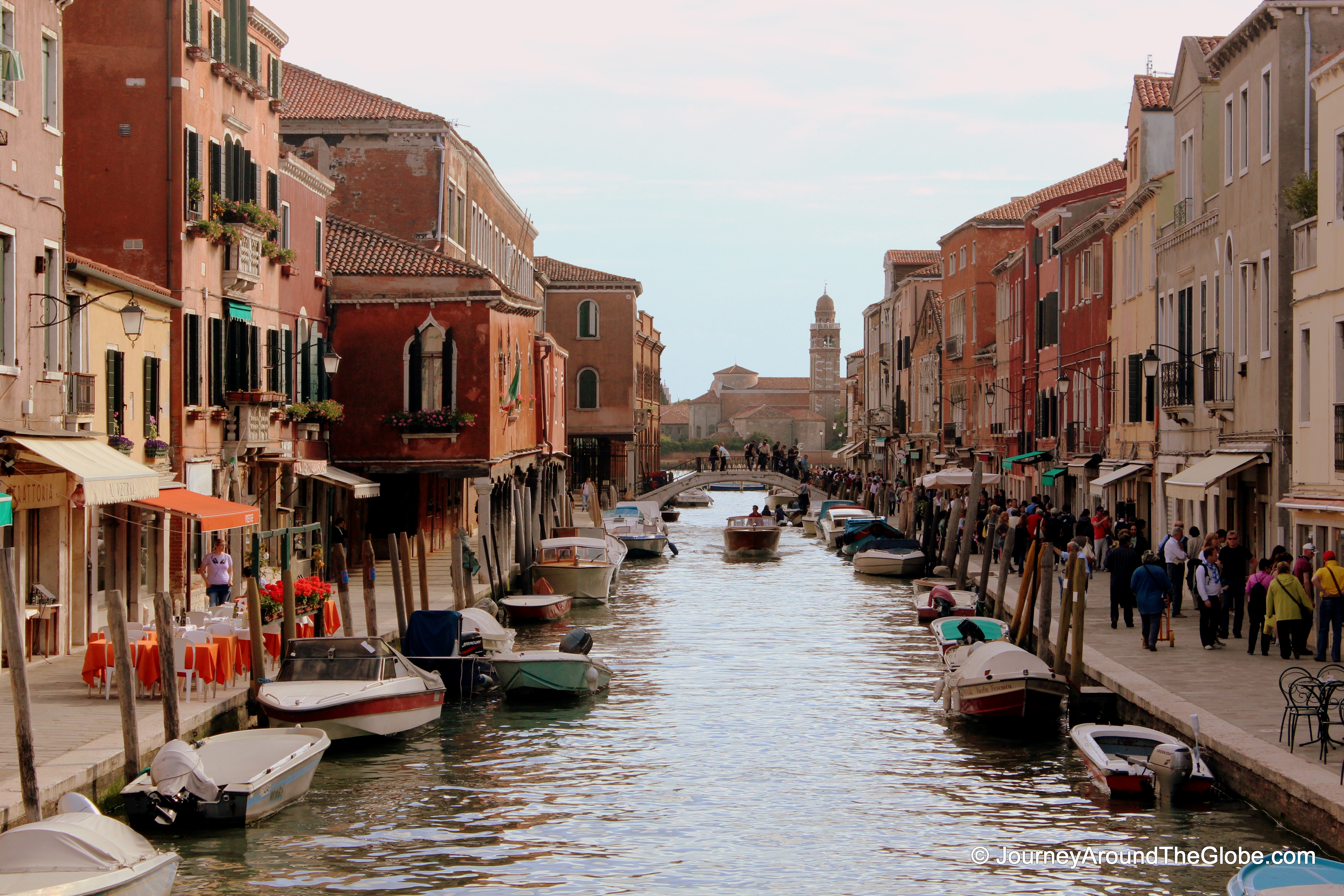
Here are some of the places we visited in Murano:
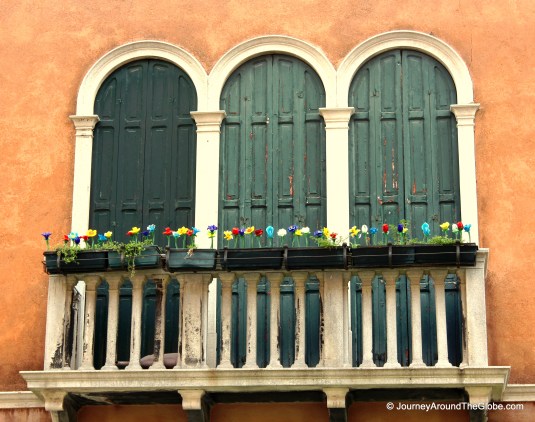
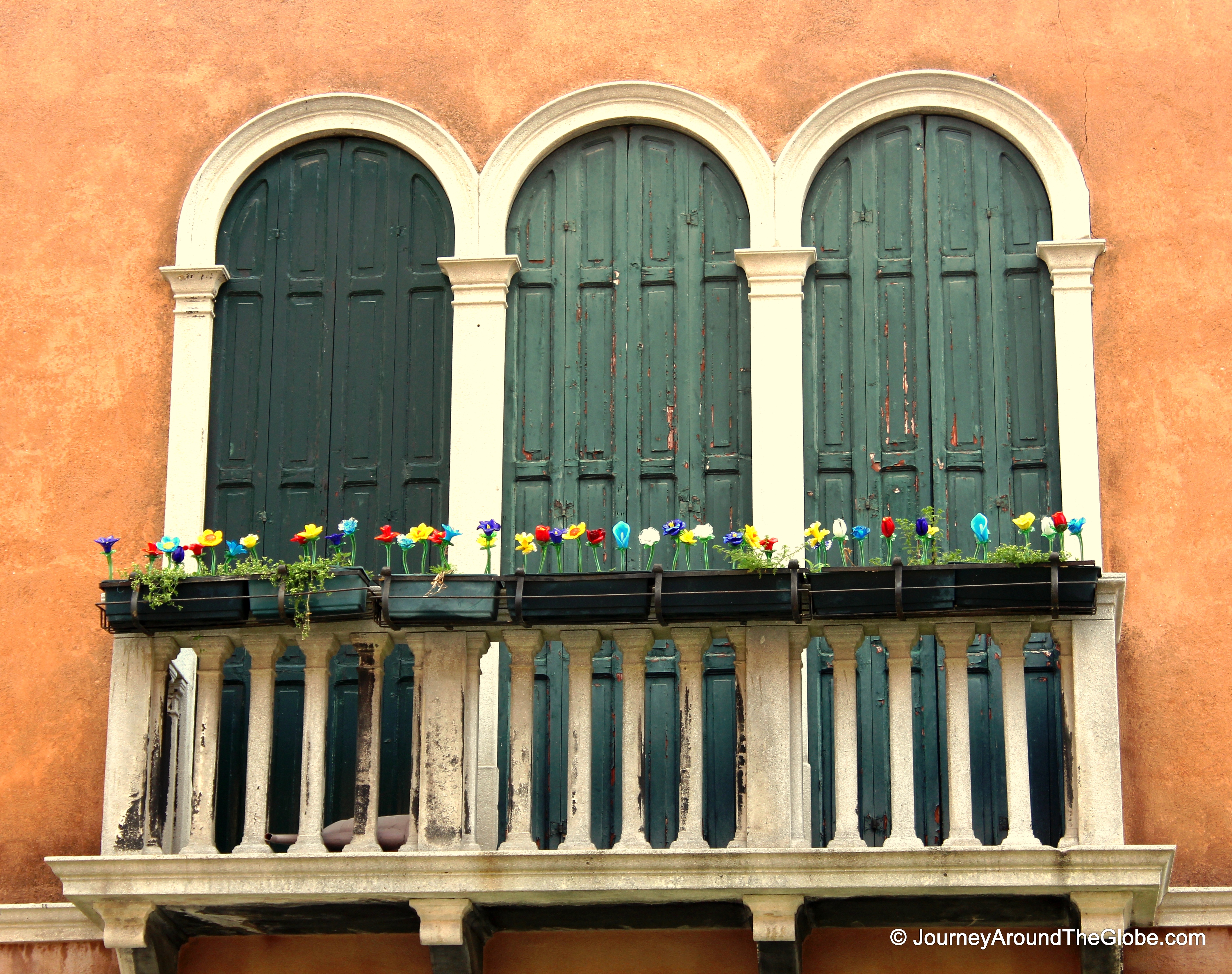
- A beautiful window decorated with Murano glass flowers, Murano
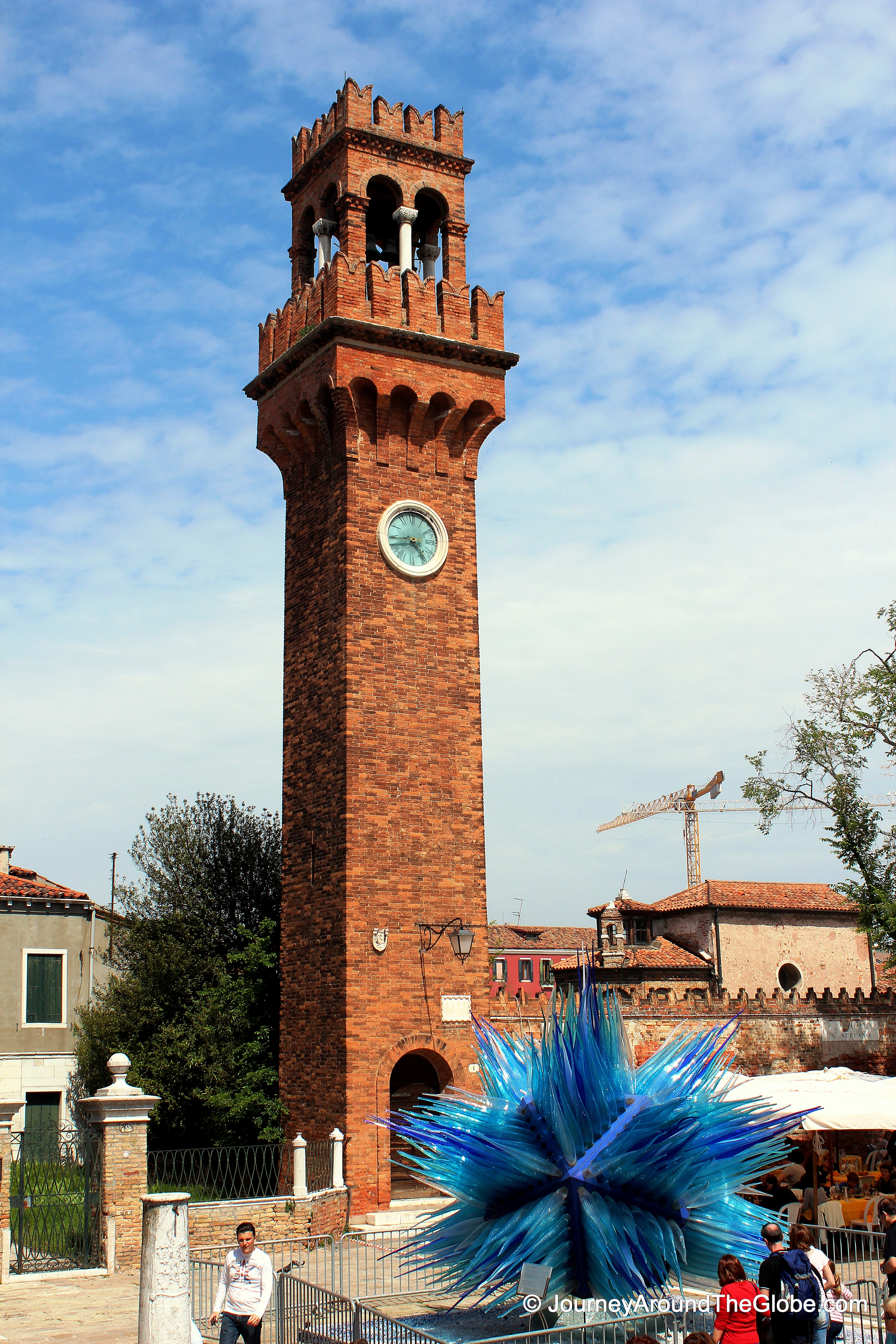
a) CAMPO SANTO STEFANO: This is one of the most visited sites in Murano which features a 19th century clock tower. There is a blue glass sculpture at the base of this clock tower. This is not a big square but definitely a popular meeting place for the locals.
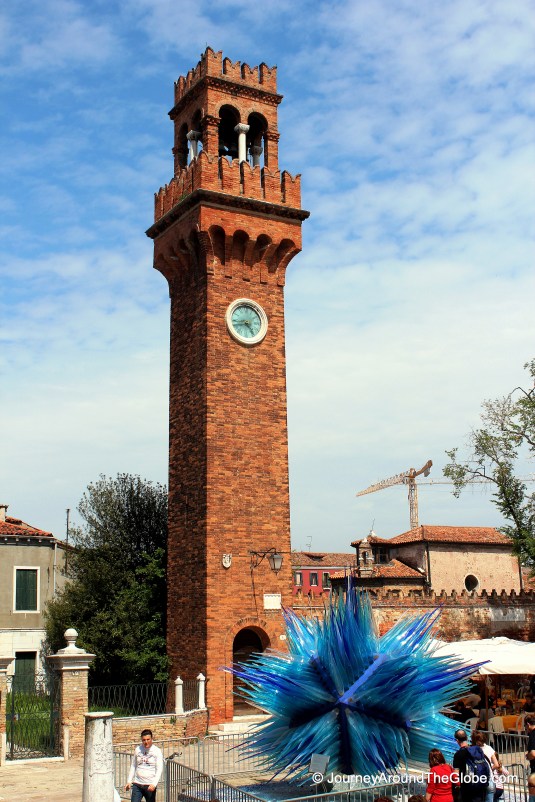
- CAMPO SANTO STEFANO
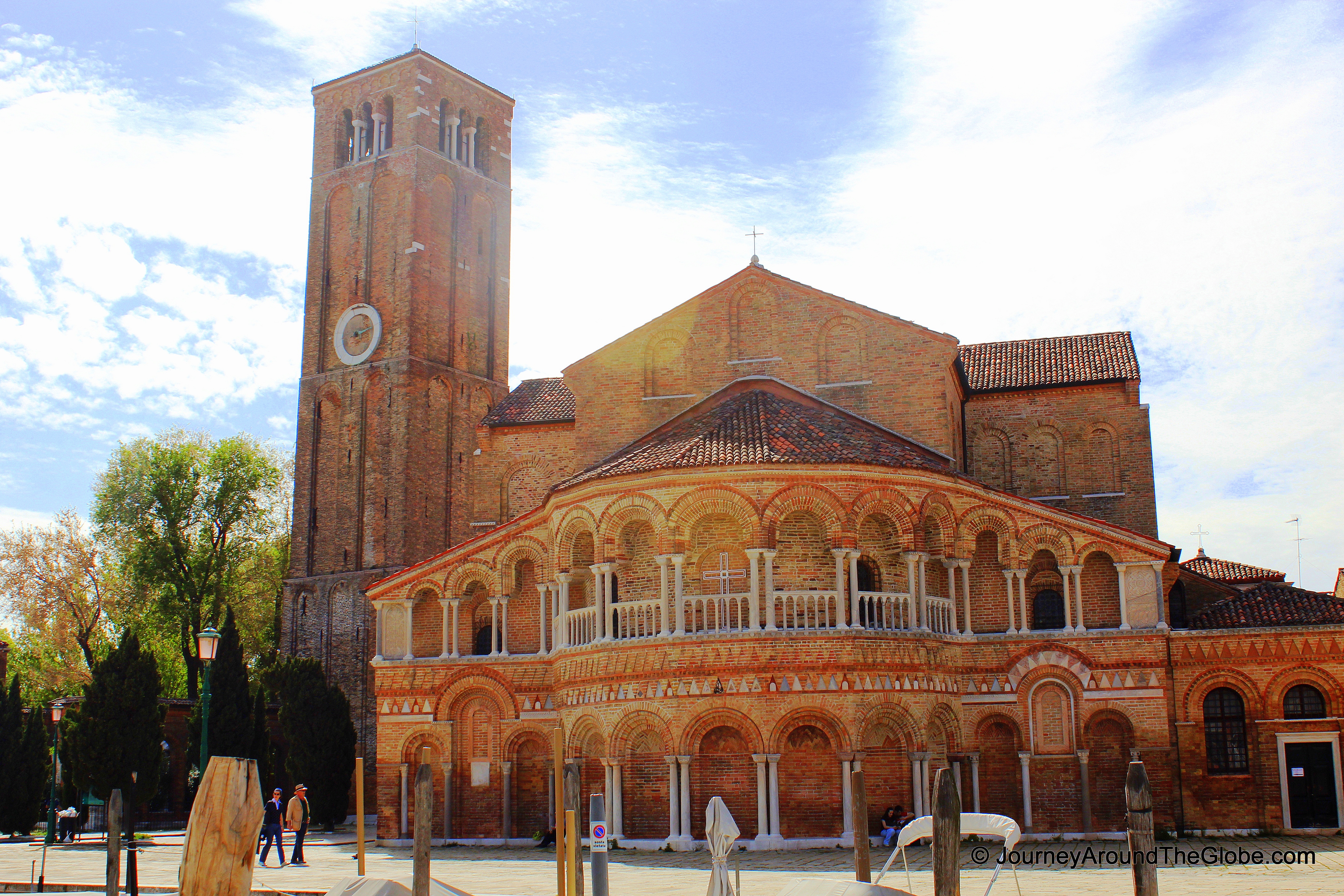
b) BASILICA dei SANTA MARIA e SAN DONATO: This is another highlight of the island. The basilica is rather a small one, but well known for its 12th century Byzantine mosaic floor. We weren’t allowed to take pictures inside, but as usual everyone took out their cameras for some snaps, so did I.

- BASILICA dei SANTA MARIA e SAN DONATO, Murano
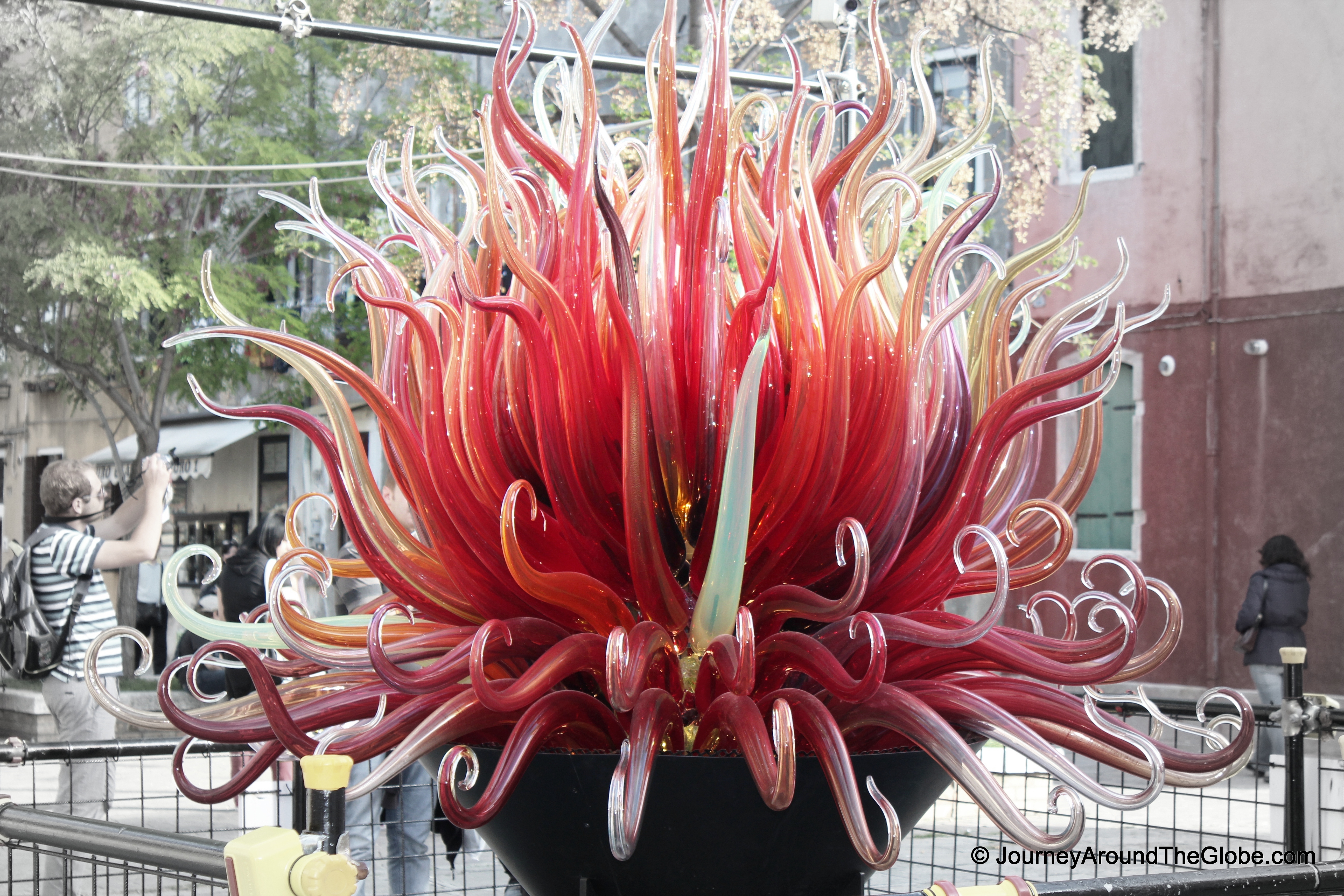
c) BRESSAGIO: This is a small square which stretches into a big canal on the other end. There is also a beautiful red Murano glass sculpture in the beginning of the pedestrian zone surrounded by some old colorful buildings. Little bit further, you will see another glass sculpture, called Giardino Italia, when walking toward the lighthouse.
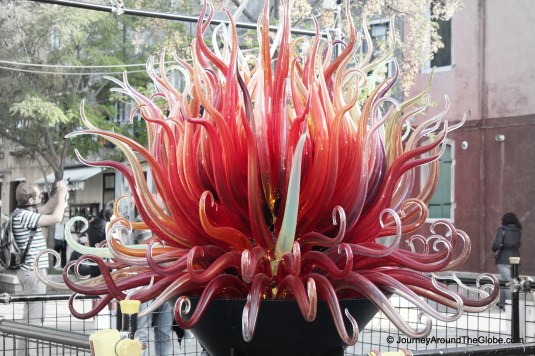
- A Murano glass sculpture in Bressagio, Murano
Share this:

M for Milan…
MILAN, ITALY: I love going to Italy again and again, no matter which city or village or region. My idea of Milan didn’t really match with the actual city. Whenever I think of an Italian city, I imagine something very down to earth with lots and lots of history here and there. To my surprise, Milan is actually a very thriving cosmopolitan city with big financial districts, large urban and metropolitan areas, big brand names, and a true shopping paradise. Of course, Milan has its history too (may be not as visible as Rome) but the city strives to give you more of earthy pleasure like shopping, night-life, music, and entertainment than taking you back to ancient times.
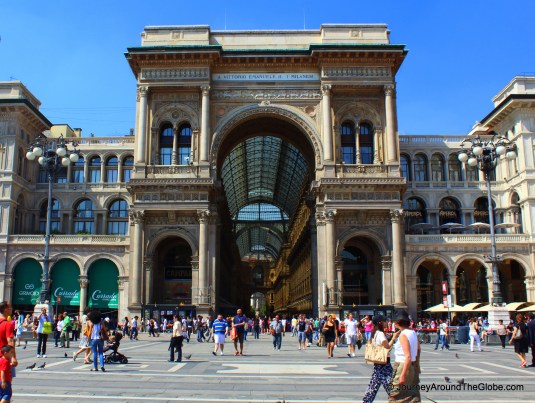
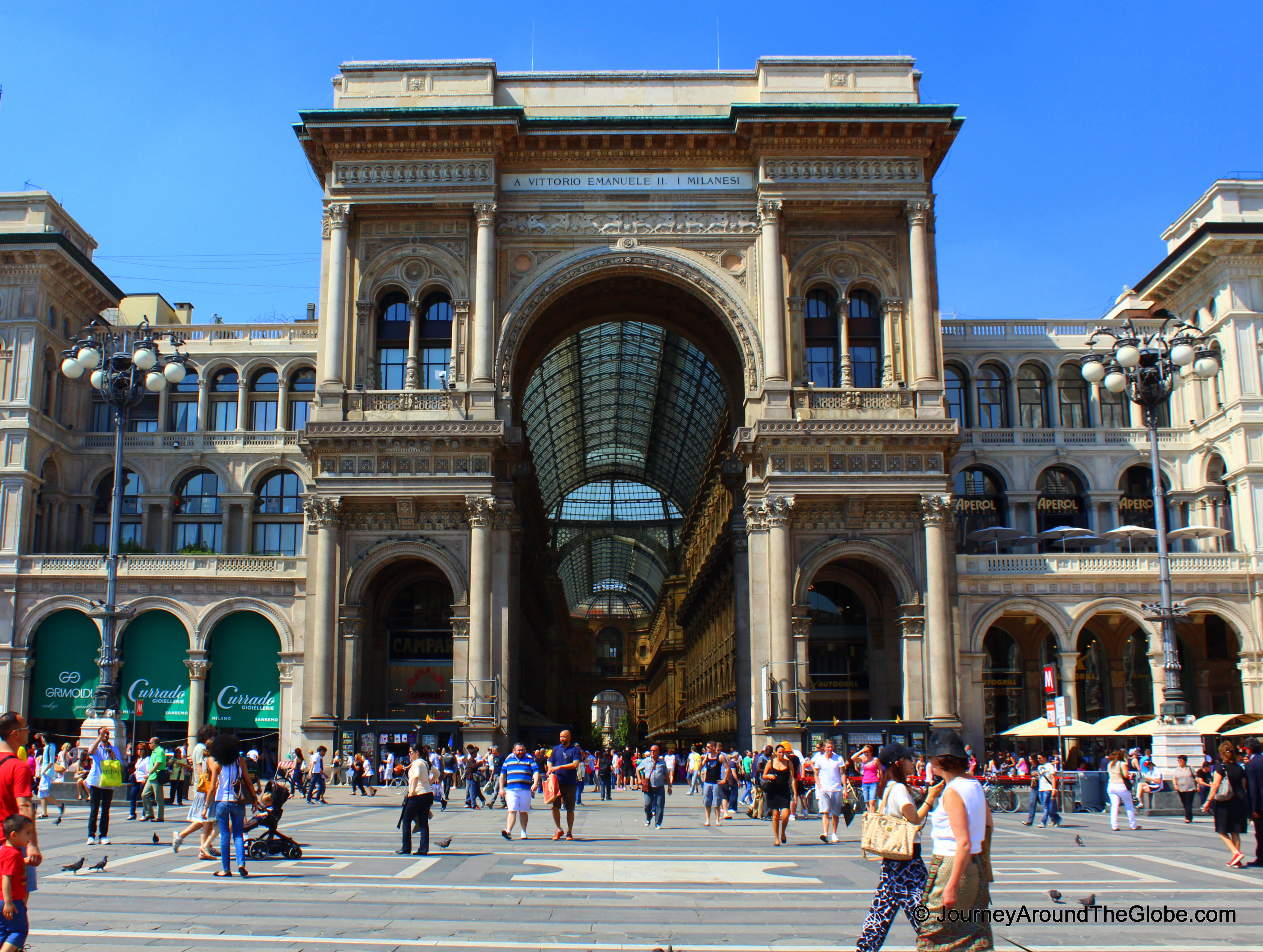
- Galleria Emanuele Vittorio II in Piazza del Duomo, Milan
TIME OF TRAVELLING: We flew to Milan around mid-June of 2012 from Brussels. The flight was only little more than an hour. Although it was 85 degrees outside and we were sweating like anything, it felt awesome just to be there with my family. My 6 years old daughter was complaining left and right about the heat, so we had to keep her happy by giving lots and lots of gelatos, popsicles, and cold juices.
OUR HOTEL: We stayed in Idea Hotel Milano Lorenteggio in Milan. It didn’t have free Wi-Fi but had free breakfast with great customer service, just don’t eat in their restaurant…all the dishes were way too salty. The location of the hotel was not that great, kinda far from the main attractions. The good part was that we used to take Bus 50 from other side of the street and that would take us right to the Castello Sforzesco in about 25 minutes.
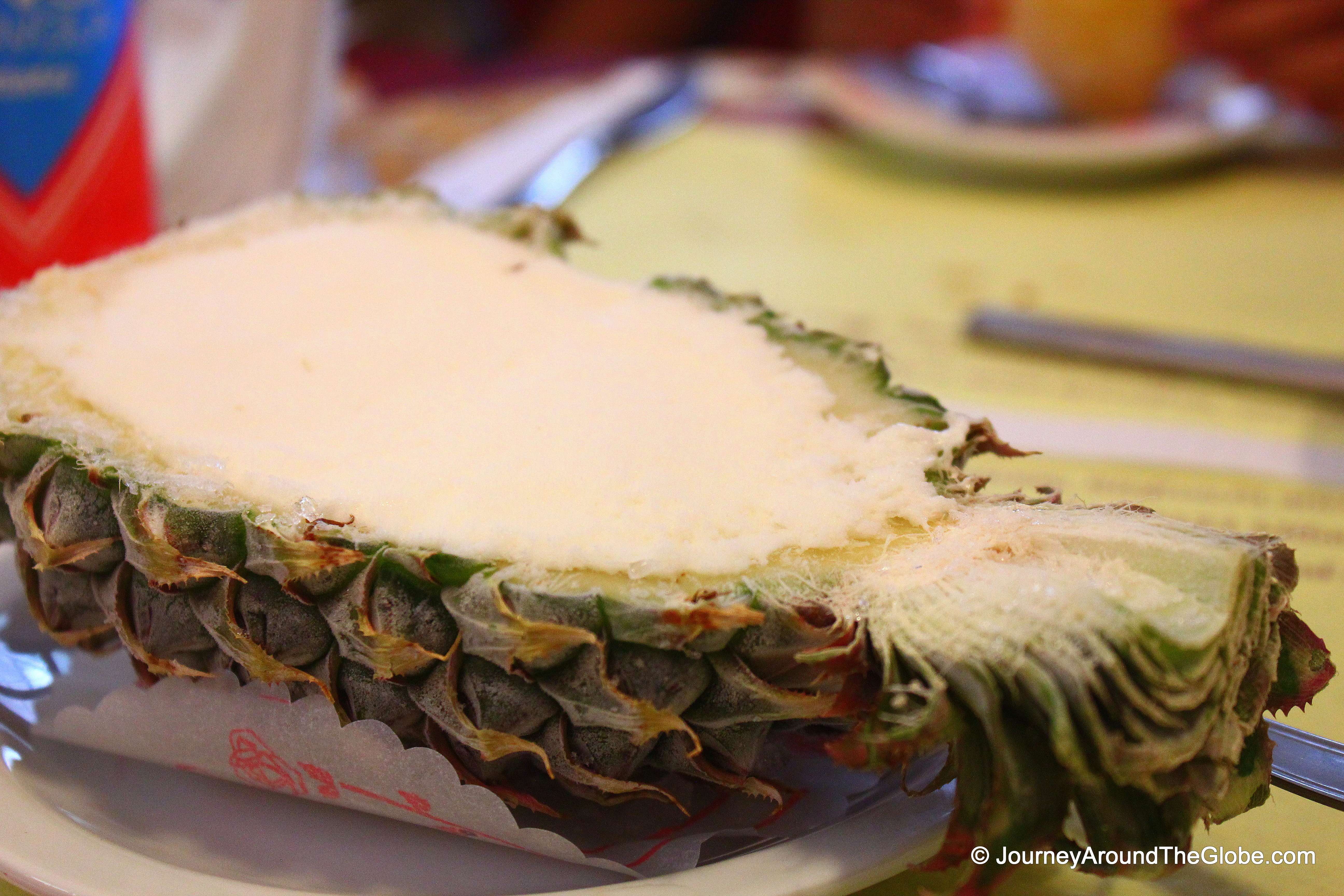
WHAT TO EAT AND BUY IN MILAN: Other than Italian pizzeria and pasta, gelato bars are everywhere and in every corner in Milan. My husband and I had something called “Pizzarella”, which is a deep-fried pizza with tomato sauce and cheese inside a huge shell of dough. Last day in Milan, I tried a pineapple flavored gelato in a real pineapple shell and my daughter tried a lemon gelato inside a lemon for 6 euros each. They tasted like regular yummy gelato but just had a prettier face 🙂

- Pineapple gelato in a shell of real pineapple
PLACES WE VISITED: We had 2 full days to explore Milan. I shouldn’t say it is enough if you want to visit every museum of the city. Milan is like Rome in a sense that most of the tourist attractions are very spread out and you have to walk a lot in order to cover most of the popular spots. If you a big fan of Inter Milan or AC Milan soccer team, then taking a trip to their home ground San Siro may not be a bad idea. Followings are the places we visited during our stay.

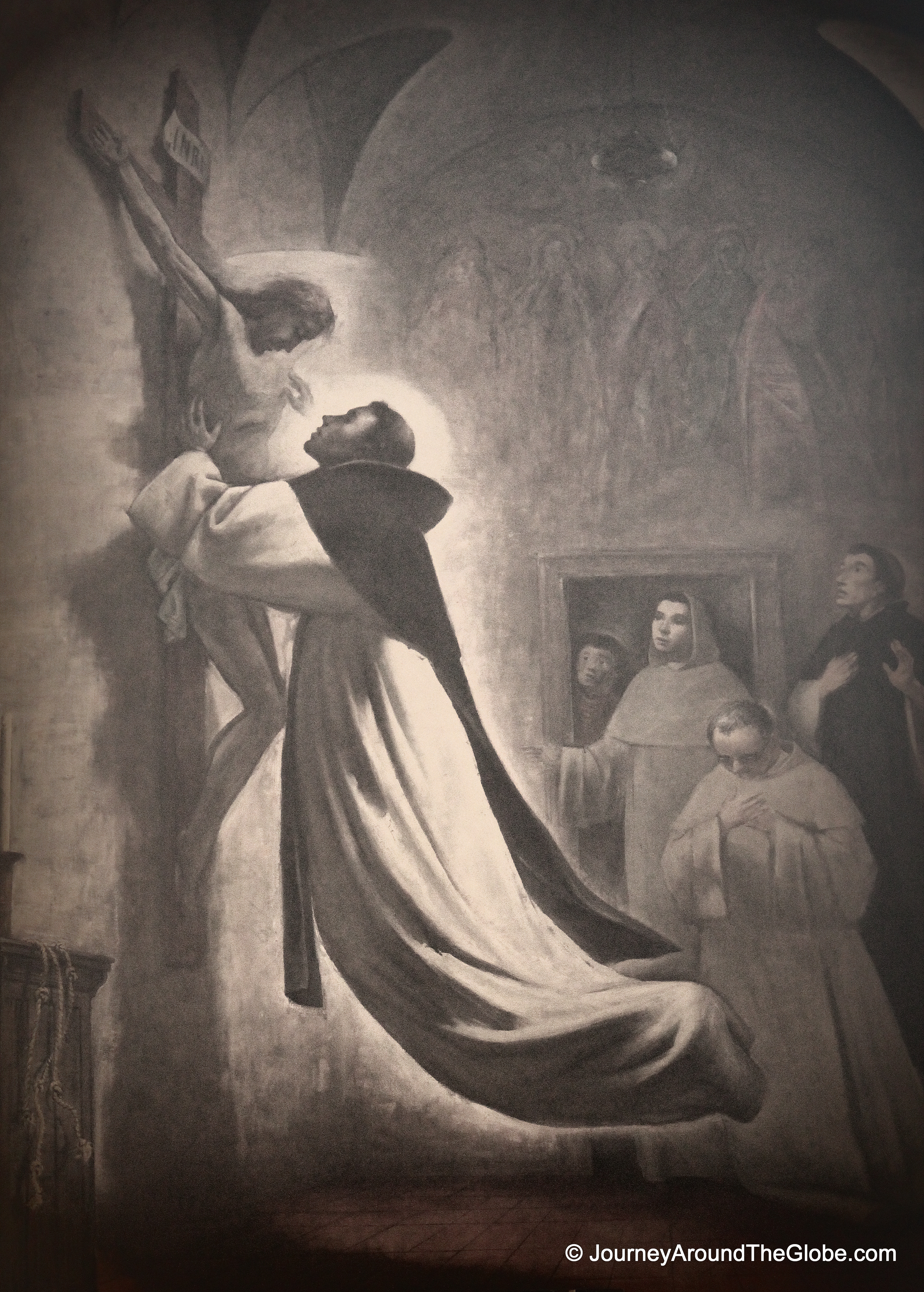
- A 16th century painting inside ‘Santa Maria delle Grazie
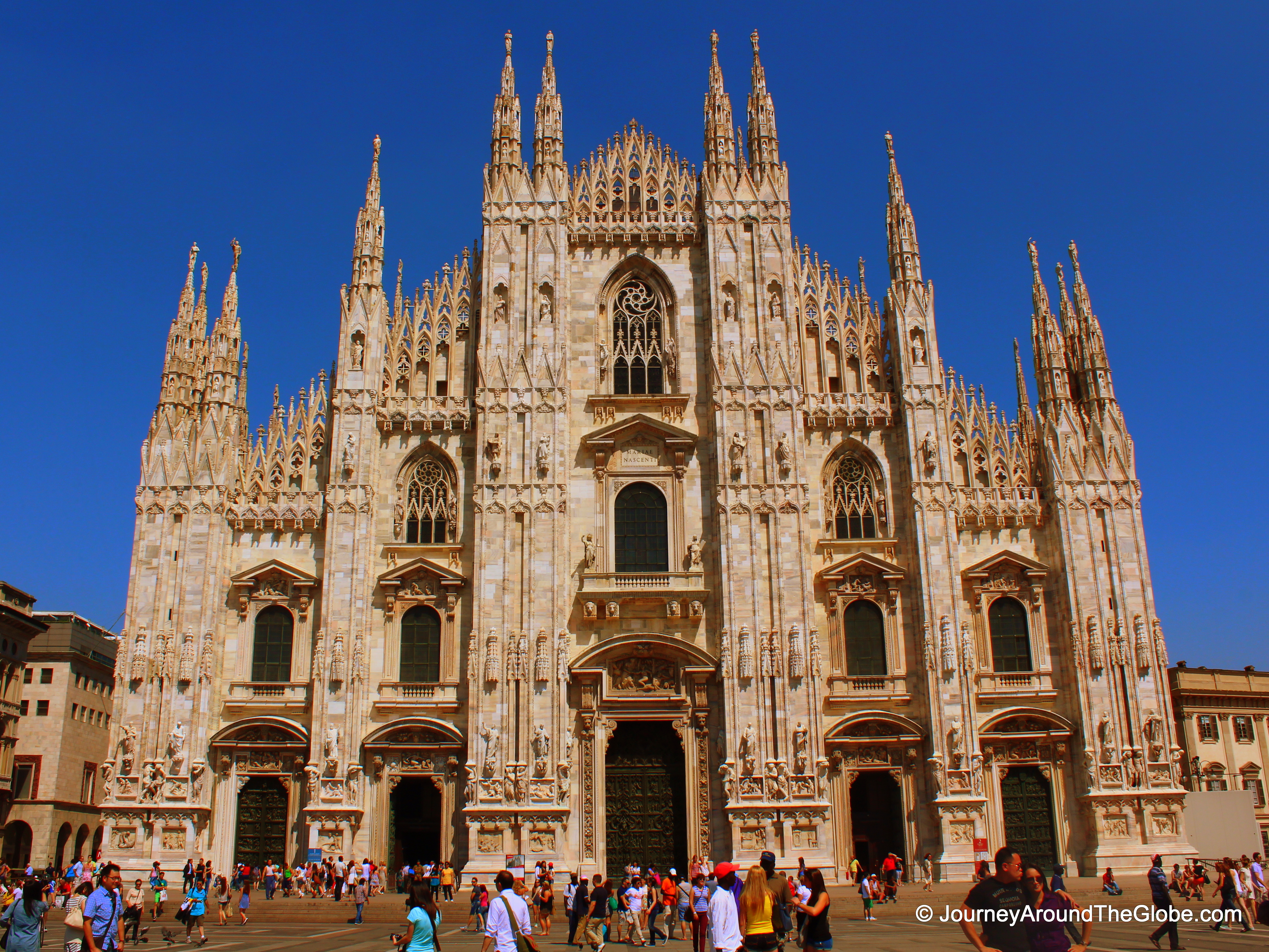
1) THE DUOMO (DUOMO di MILANO) & PIAZZA del DUOMO: This has to be the spot to hit if you have only half a day or a day to spend in Milan. This overly majestic cathedral with many spires stands facing Piazza del Duomo with Galleria Vittorio Emanuele in one side and the old Royal Palace (which now is a museum) on the other. Construction of this breathtaking edifice started in late 14th century and took nearly 6 centuries to finish. The main spire, built in 1769, is 109 meters high and has on top a golden laminated statue of Madonna. This is the 4th largest cathedral in the world and the largest one in Italy. Its eye-catching façade and gothic exterior with thousands of statues makes it the symbol of Milan.

- The main facade of Duomo di Milano
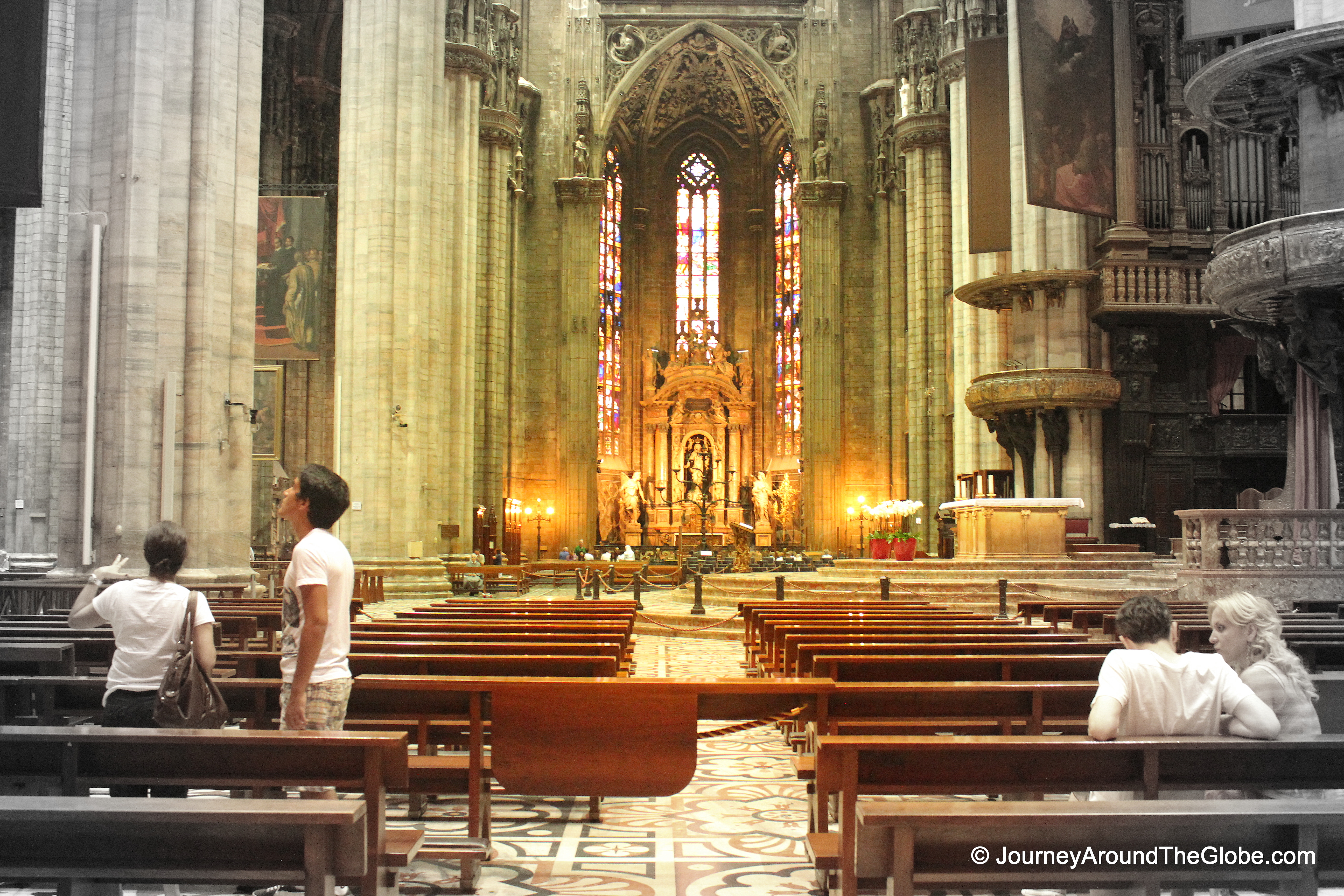
Interior of Duomo is remarkably beautiful and it will make your jaw drop with its gigantic size pillars, thousands of statues, old mosaic floor, beautiful paintings, and fine-detailed stained-glass windows. After I entered the cathedral, it totally made sense why it took 6 centuries to build this magnificently ornate structure.

- Inside Duomo di Milano
There is no fee to enter the cathedral. It is forbidden to take pictures inside, but everyone was taking pictures and no one really stopped them from doing so. Don’t forget to go downstairs to see an old chapel and tomb of a saint whose name I can’t remember now. And the best part of it is that you can go on top of the roof for a marvelous panoramic view of Milan between those gothic spires. You can either walk 250 steps for 7 euros person or take an elevator for 12 euros and free for 15 years or under. It will be a crime if you miss this chance.

- Spires on the roof of Duomo di Milano

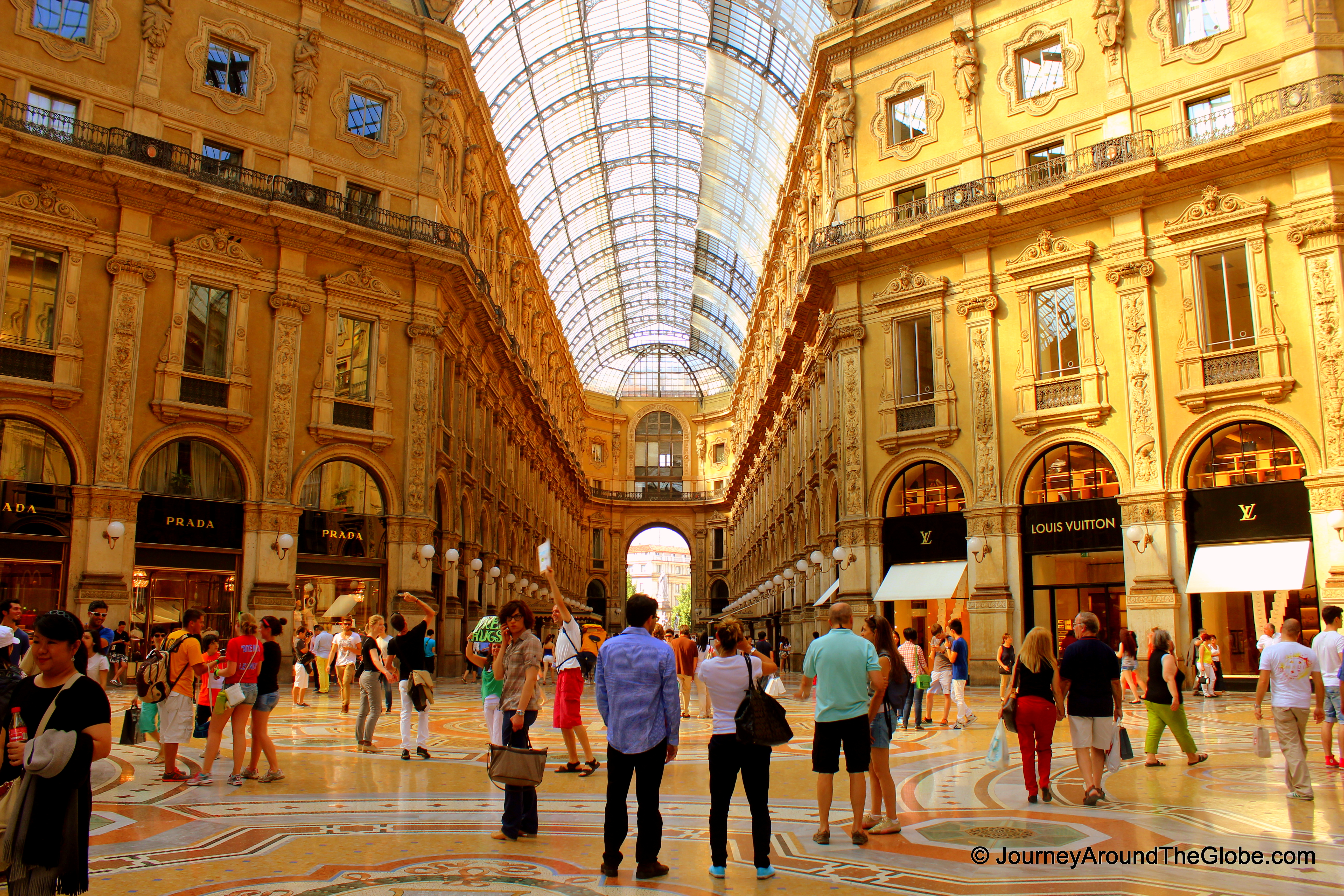
2) GALLERIA VITTORIO EMANUELE II: This is located right beside the Duomo in Piazza del Duomo that has Piazza della Scala on the other end. The two main entrances are marked by imposing triumphal arches. This is considered as one of the most representative architectural accomplishments of the city. Even if you don’t buy anything from this EXPENSSIVE shopping arcade, be sure to visit it anyway to experience this splendid 19th century mall. The arcade is decorated with stunning mosaic floor, arching glass and glazed cast iron roof (very similar to St. Hubert Gallery in Brussels, just a bigger version), and of course with big fashion names like Prada and Louis Vuitton.
- Inside the mother of all shopping mall Galleria Emanuale Vittorio II in Milan, Italy
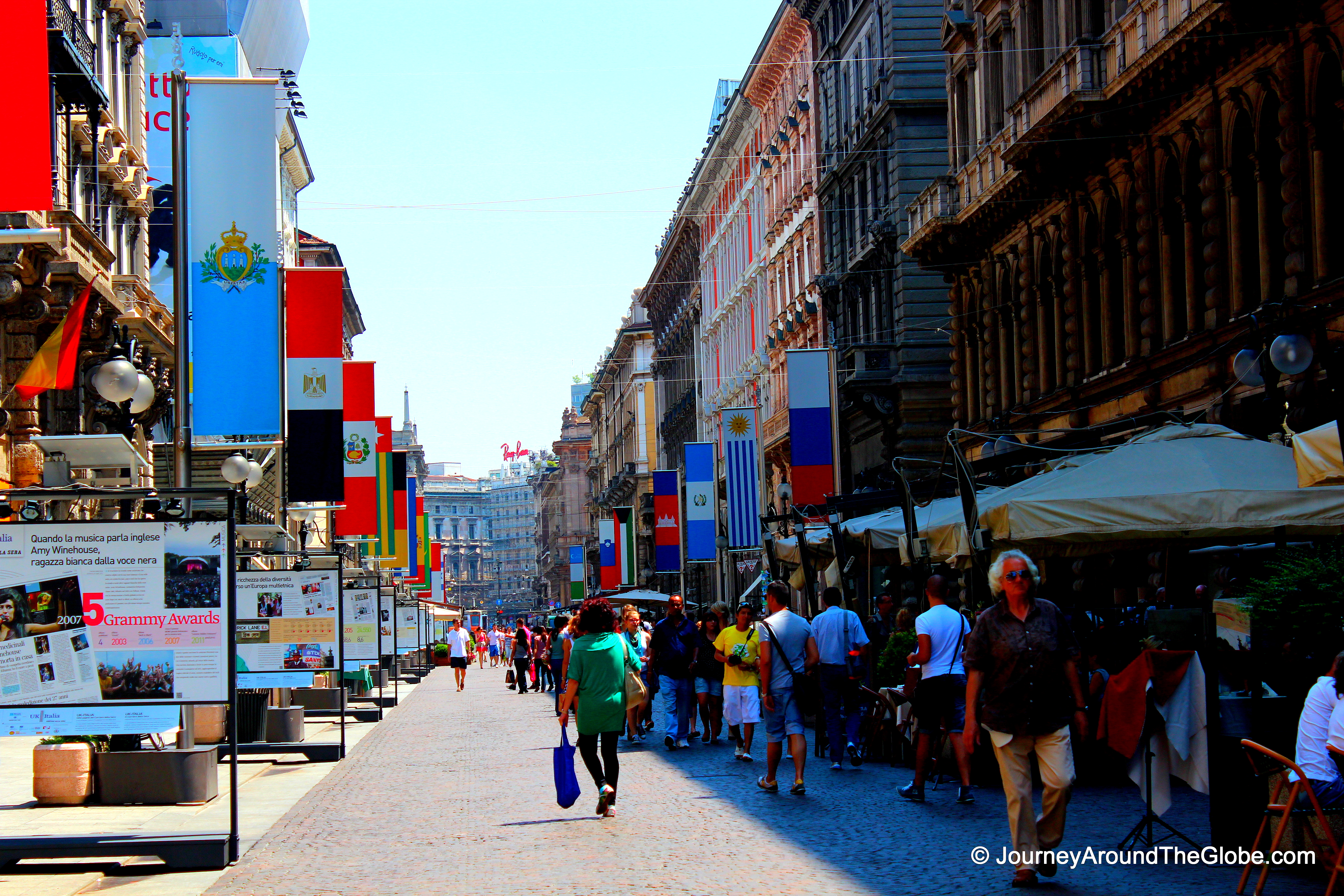
3) VIA DANTE: This is a famous and grand shopping street of Milan. This is a long and lively pedestrian avenue with many high-class brand-name stores along and local boutique shops along with many cafes and restaurants. When we went the street was decorated with flags of different countries for upcoming Milan Expo. Via Dante stretches from Piazza del Duomo to a big round-about near Castella Sforzesca. If you are planning to have meal here, make sure to check the price before ordering something. We had our lunch all the way at the end of Via Dante that’s facing the Duomo. We ended up paying 10 euros for 1 glass of coke and 26 euros for 2 glasses of apple juice that were ordered for our daughters.

- Milan’s fashion street Via Dante
4) PIAZZA della SCALA: This is rather a small yet impressive square on the other side of Galleria Vittorio Emanuel. A statue of Leonardo da Vinci was erected in this square in 1872 to honor this multi-talented man who was not only a painter, but also was master in sculpting, engineering, and architecture. Behind this statue is Palazzo Marino, which has been Milan’s City Hall (Citta Di Milano) since 1861. Facing the city hall is the most famous building in this square is Teatro alla Scala. Not sure how it looks inside this opera house, but outside didn’t really impress me much. But this is one of the most renowned opera houses in the world that dates back to 1778.
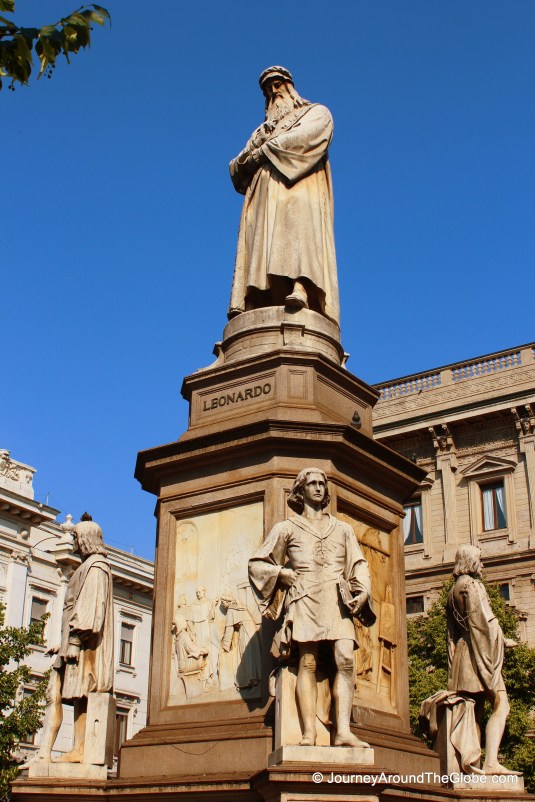
- Statue of Leonardo da Vinci and his 4 favorite students in 4 corners in Piazza della Scala, Milan

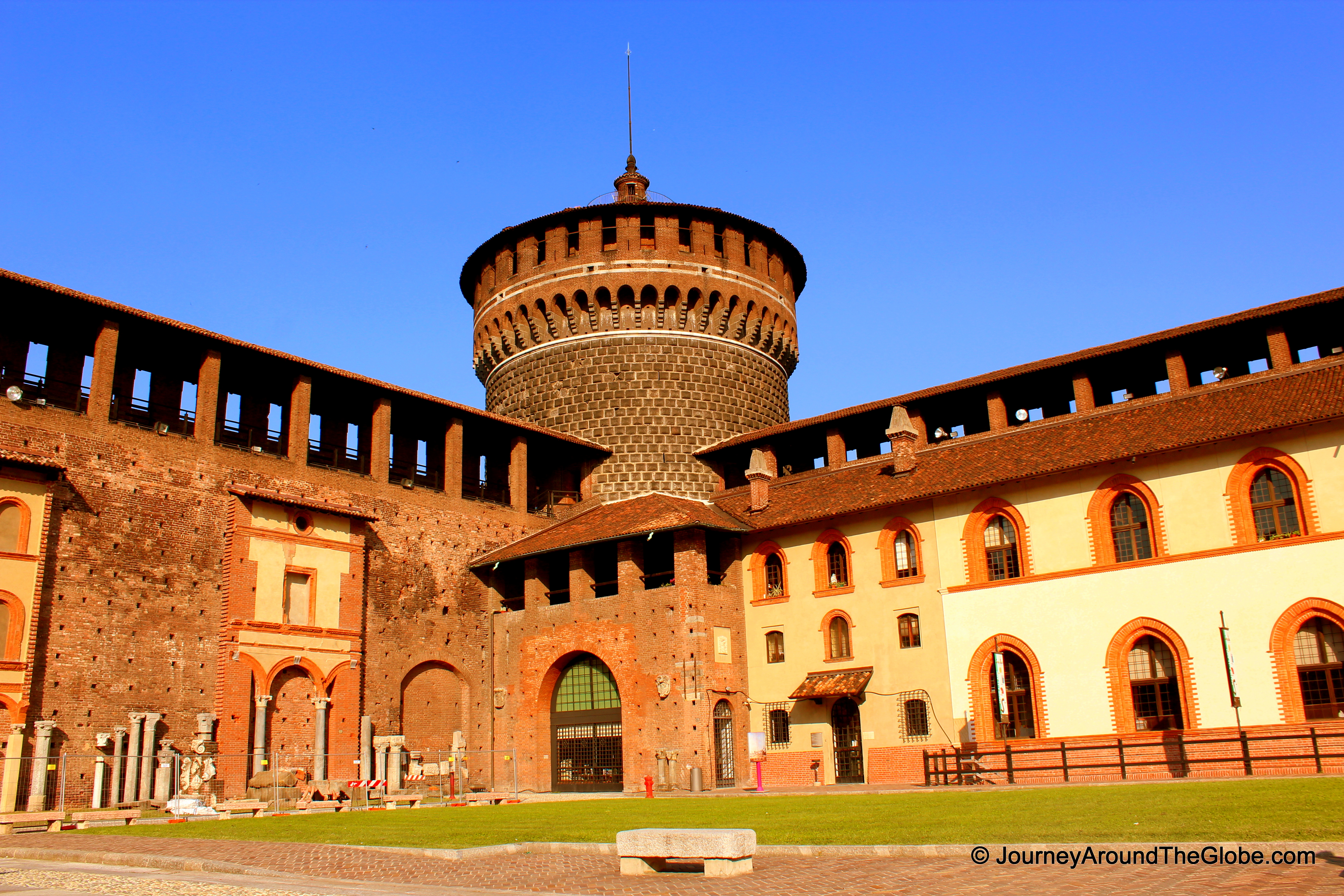
5) THE SFORZESCO CASTLE (CASTELLO SFORZESCO): This is a 14th century castle that once used to be the seat and residence of the Duchy of Milan. The castle was heavily damaged in 1943 during WWII and was later reconstructed by the city. There is no fee to enter its huge courtyard, where Ducal Court (Corte Ducale) and The Tower of Bona of Savoy stand. Presently, the castle houses several different types of museums and art collections, like Egyptian art, fine arts, applied arts, ancient art, and many more. Museums are open from 7-6pm everyday and closed on Monday. This is located very close to the last station of Bus # 50 (Cairoli) and situated in between Sempione Park and Via Dante.
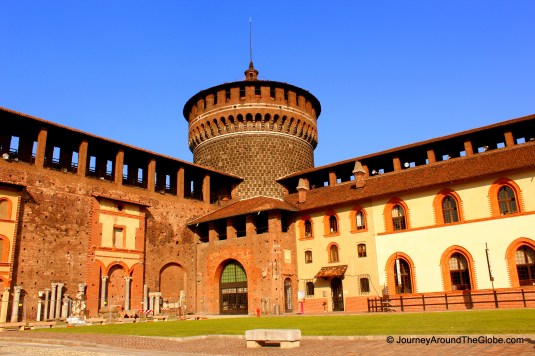
- Courtyard of Castello Sforzesco in Milan
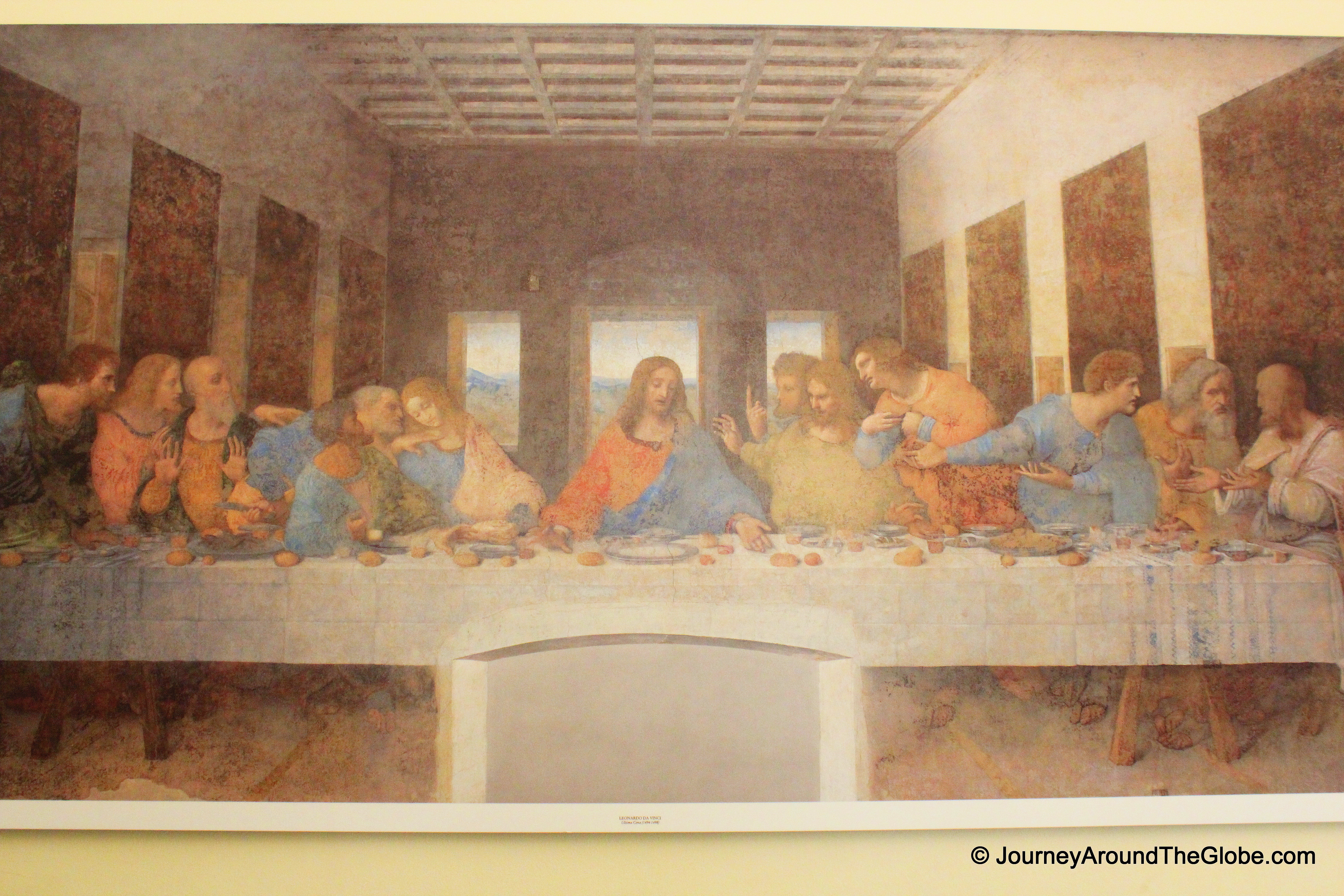
6) SAINT MARY of the GRACES (‘SANTA MARIA delle GRAZIE’): This is another must-see in Milan. The church is well-known for housing Leonardo da Vinci’s undoubtedly one of the most famous paintings “Last Supper” (1494-1498). It is a UNESCO World Heritage site as it represents a unique masterpiece of man’s creative genius. It’s best to reserve the ticket (about 8 euros per person) couple months in advance to experience this truly marvelous piece of work, which can be done by phone or online. This mural (which came to me as a shock, since I always thought it was done on a canvas) is located in a temperature and humidity controlled room along with another famous painting, The Crucifixion, from 1495 by a Milanese painter Giovanni Donato da Montarfano. The painting was done with the city of Jerusalem in the background. According to tradition, the initial and final episodes of the Passion of Christ are represented in the Refectory of Santa Maria delle Grazie with Last Supper on the north wall and The Crucifixion on the south. Another interesting fact about Last Supper is that Leonardo da Vinci tried to capture the shock and emotion (body posture, hand movements, and facial expressions) of the apostles after Jesus pronounced “Truly I tell you, one of you will betray me.” During WWII this whole building was badly bombed, fortunately, keeping both the wall of Last Supper (thanks to the protection put in place at the beginning of the war and prompt reconstruction work) and The Crucifixion intact with some light damage. Then from 1978-1999 the painting went through a heavy restoration process that took about 20 years to finish. Too bad we weren’t allowed to take picture inside the Refectory, but it will surely stay in mind forever.

- A replica of Last Supper by Leonardo da Vinci outside the Refectory, which houses the original version in Milan
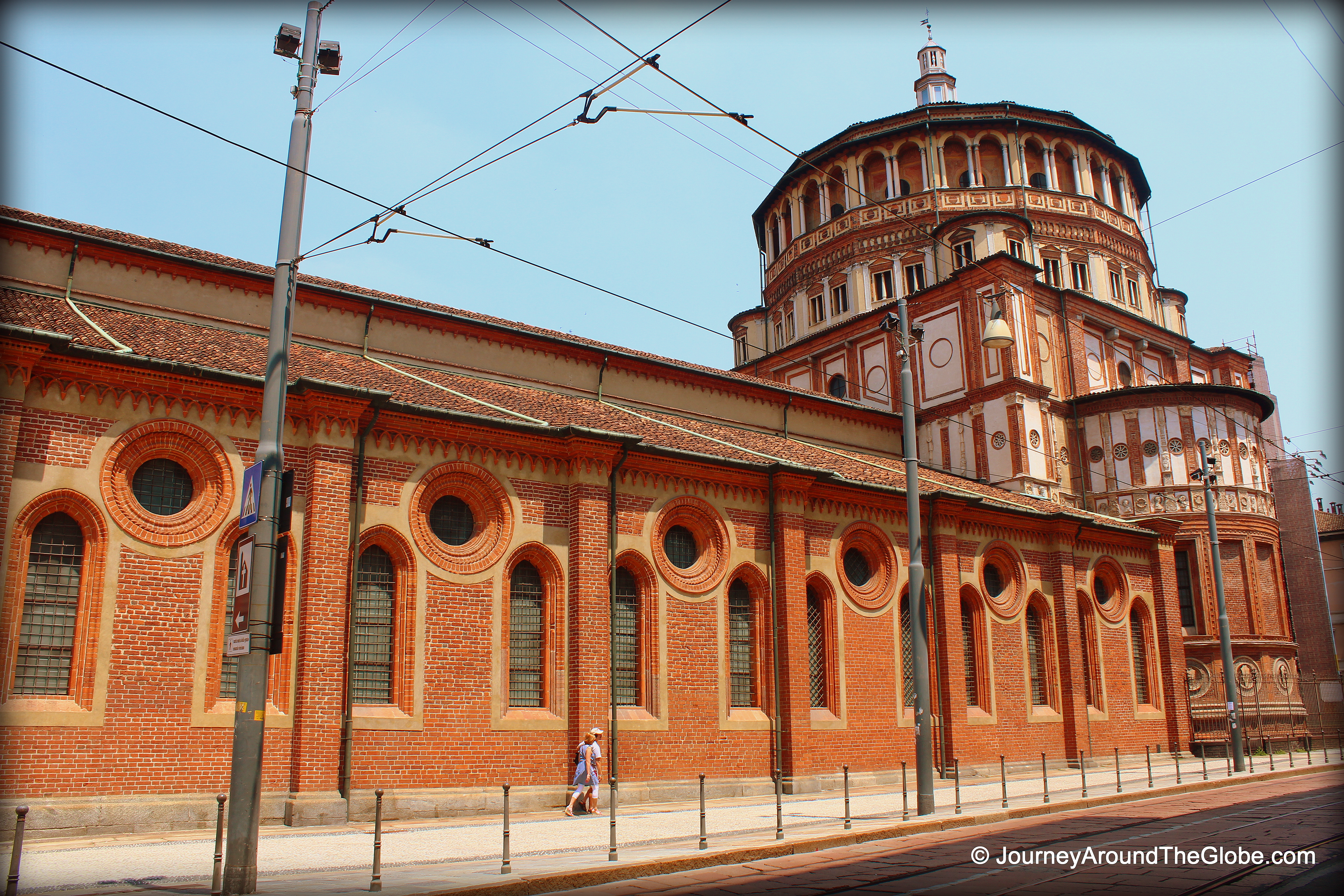
The church of Santa Maria delle Grazie is a historical site itself. It was built in Lombard gothic style between the years of 1463-1482. The scars of bombardment from 1943 are still visible in the church. Its marble floor, beautifully designed ceiling are very nice. Even though the interior is rather simple, but it has some great collections of paintings from the 16th century. The good part is that the fascinating history of each painting is written in English for your knowledge. There is no entrance fee for the church, but it opens and closes few times a day…you just have to check out the time outside the church and see which one suits you the best.
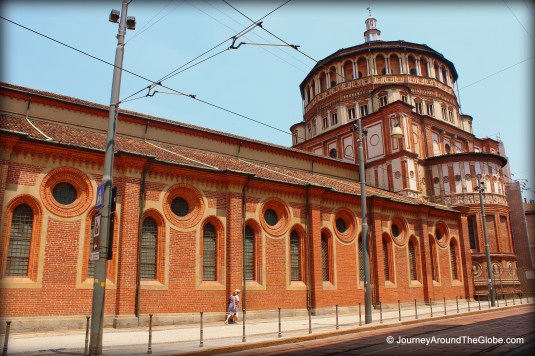
- ‘Santa Maria delle Grazi in Milan, Italy
7) SAINT AMBROSE (BASILICA di SANT’ AMBROGIO): This is an old, beautiful, and big Byzantic/Romanic church in the older part of Milan. This was founded by the Bishop Ambrose between 379 and 386 A.D. His body is laid on the small chapel under the high alter. The basilica houses some unusual and precious art objects. The outer courtyard is very clam and quiet which is decorated with many original tablets and wall pieces. History of this basilica is also displayed here in English.
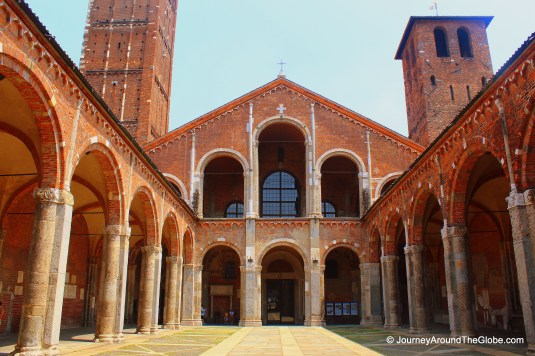
- Courtyard of Basilica di Sant’ Ambrogio in Milan, Italy

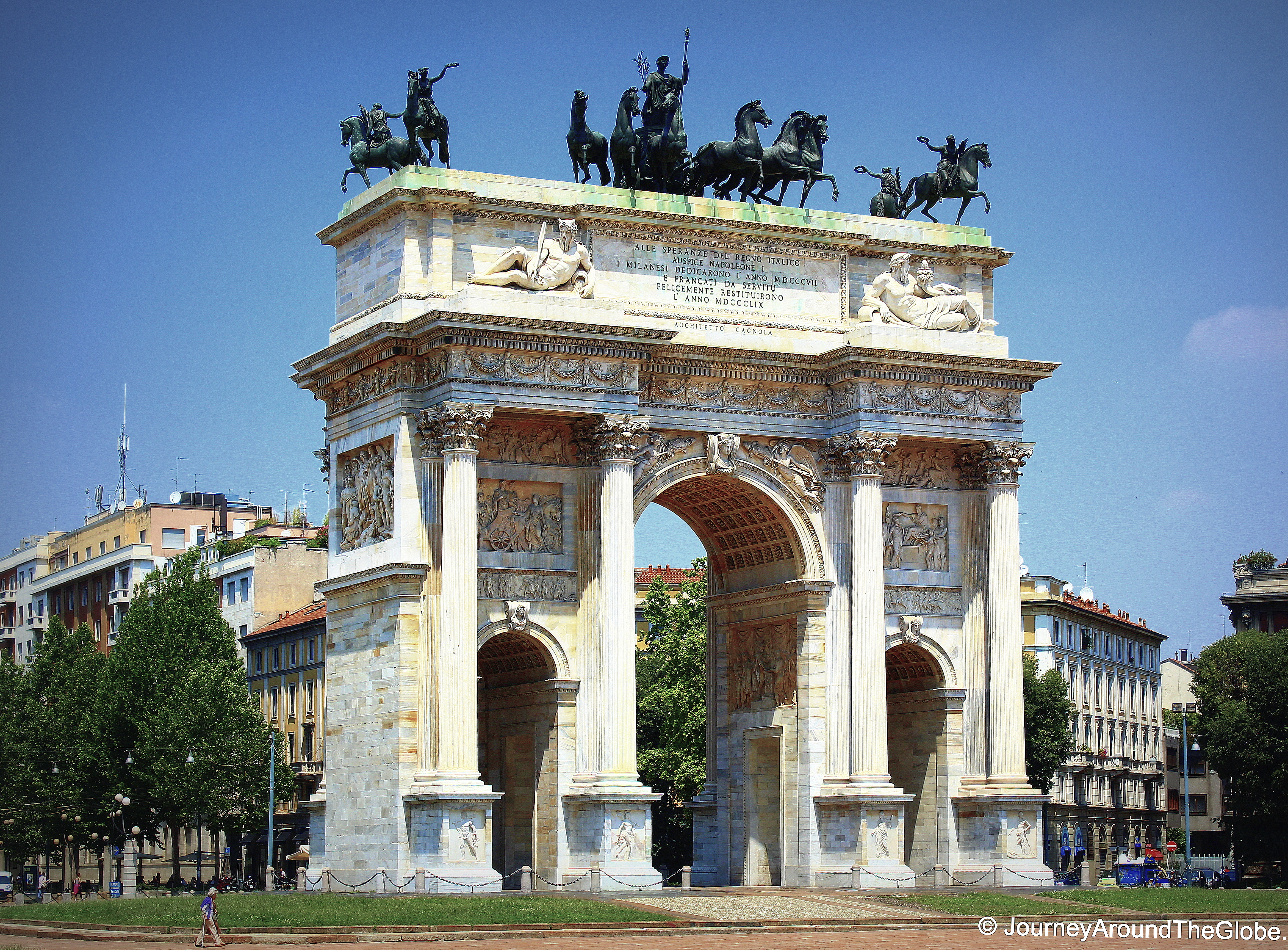
8) SEMPIONE PARK and ARCH OF PEACE (ARCO della PACE):Sempione Park is a big open space of green land right behind Sforzesco Castle. It is very popular among the locals for hanging out or having picnics. At one end of this park, in Piazza Sempione, stands a neo-Classical monument called Arco della Pace or Arch of Peace. What was originally to have been a “Victory Arch” celebrating Napoleon’s imperial accomplishments was later restyled “Arch of Peace” to mark the end of a period of blood wars in Europe. The arch is only 10 minutes of walk from the castle, great if you want to take a stroll through the park and visit this historical arch on the other side. There is a memorial behind the basilica called Tempio della Vittoria that comemorates Milan’s war dead.
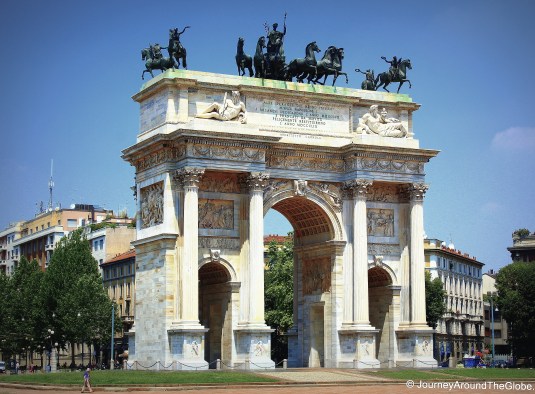
- Arco della Pace (Arch of Peace) in Sempione Park, Milan
Share this:

Leiden, the Netherlands
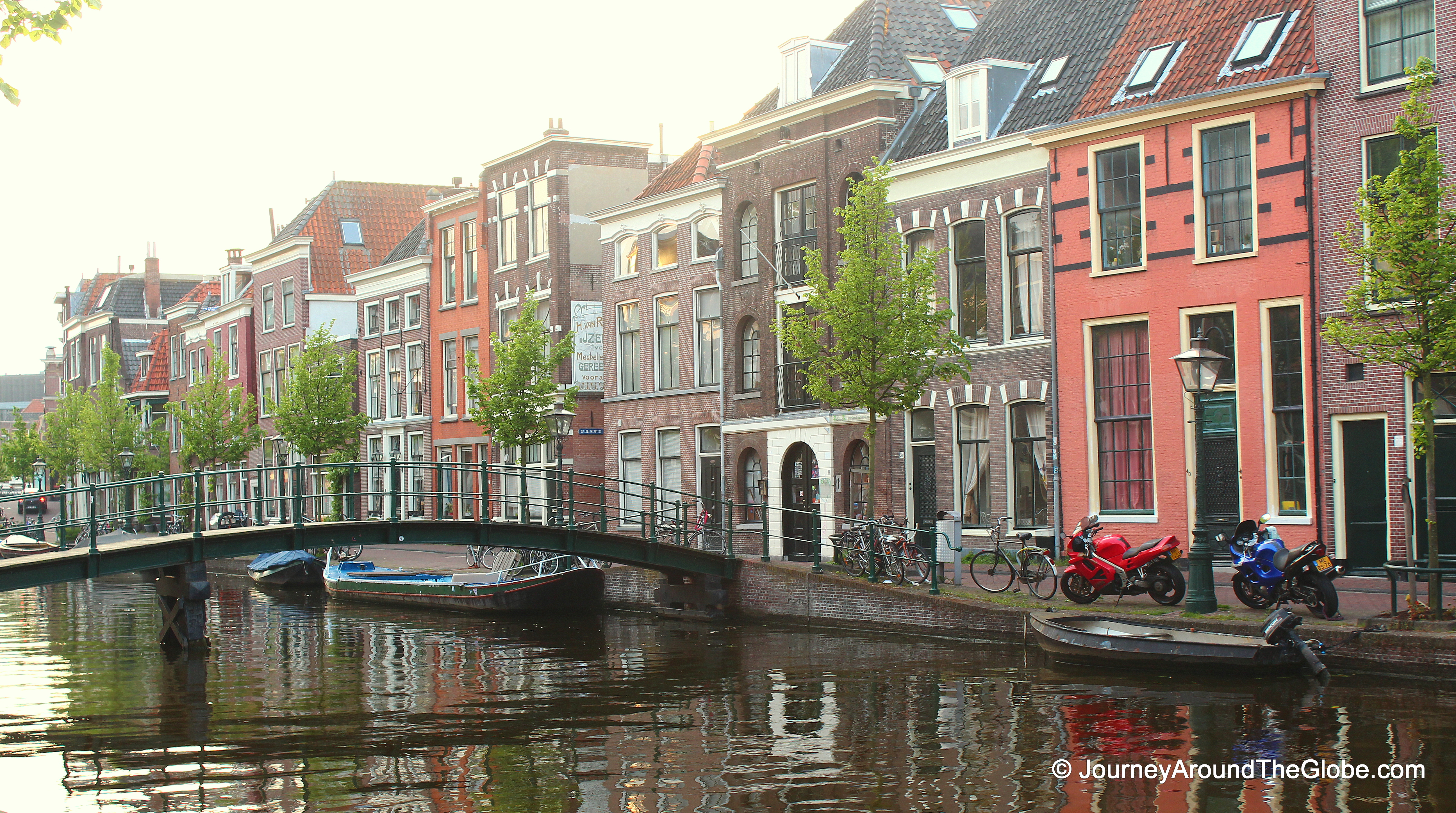
LEIDEN, THE NETHERLANDS: Leiden is a small yet beautifully decorated city, which is not too far from Amsterdam. The city is known for its oldest university in the country, therefore you will see a large population of students and international faces all around the city.
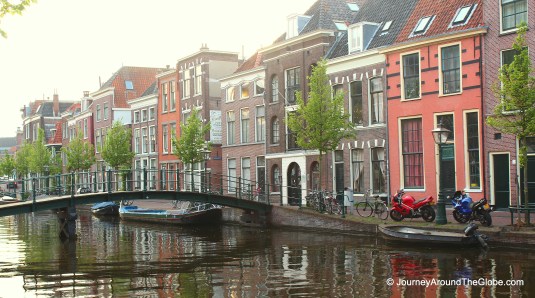
- Canal of Leiden, the Netherlands
TIME OF TRAVELLING: My parents came to visit us in Belgium in May 2012. This was their first time coming to Europe and we wanted to give them little taste of all the countries that are bordered with Belgium (the Netherlands, Germany, Luxembourg, and France). The Netherlands was our first destination. My dad is not so much into big cities, like me. So we took them to Gouda and Rotterdam to show a Dutch village and an ultra-modern city. Leiden was the city where we booked our hotel, which is very close to both Gouda and Rotterdam. Having some extra time after checking-in at our hotel, we didn’t let go of the opportunity to explore Leiden, whatever we could see was ok with us.
OUR HOTEL: We stayed in Holiday Inn in Leiden, a very nice, big, spacious place to accommodate you with free parking and play areas for children. This was not in the walking distance of old town. The location is great because Leiden is less than half an hour drive from small Dutch cities like Rotterdam, Gouda, The Hague, Utrecht, and Delft. All of these places are perfect to experience real Dutch culture and people.
PLACES WE VISITED: Leiden was not on our itinerary when we came to the Netherlands with my parents to visit Gouda and Rotterdam. Our hotel was here, so we figured why not check out the town before the sunset. So we set off our feet to explore Leiden.

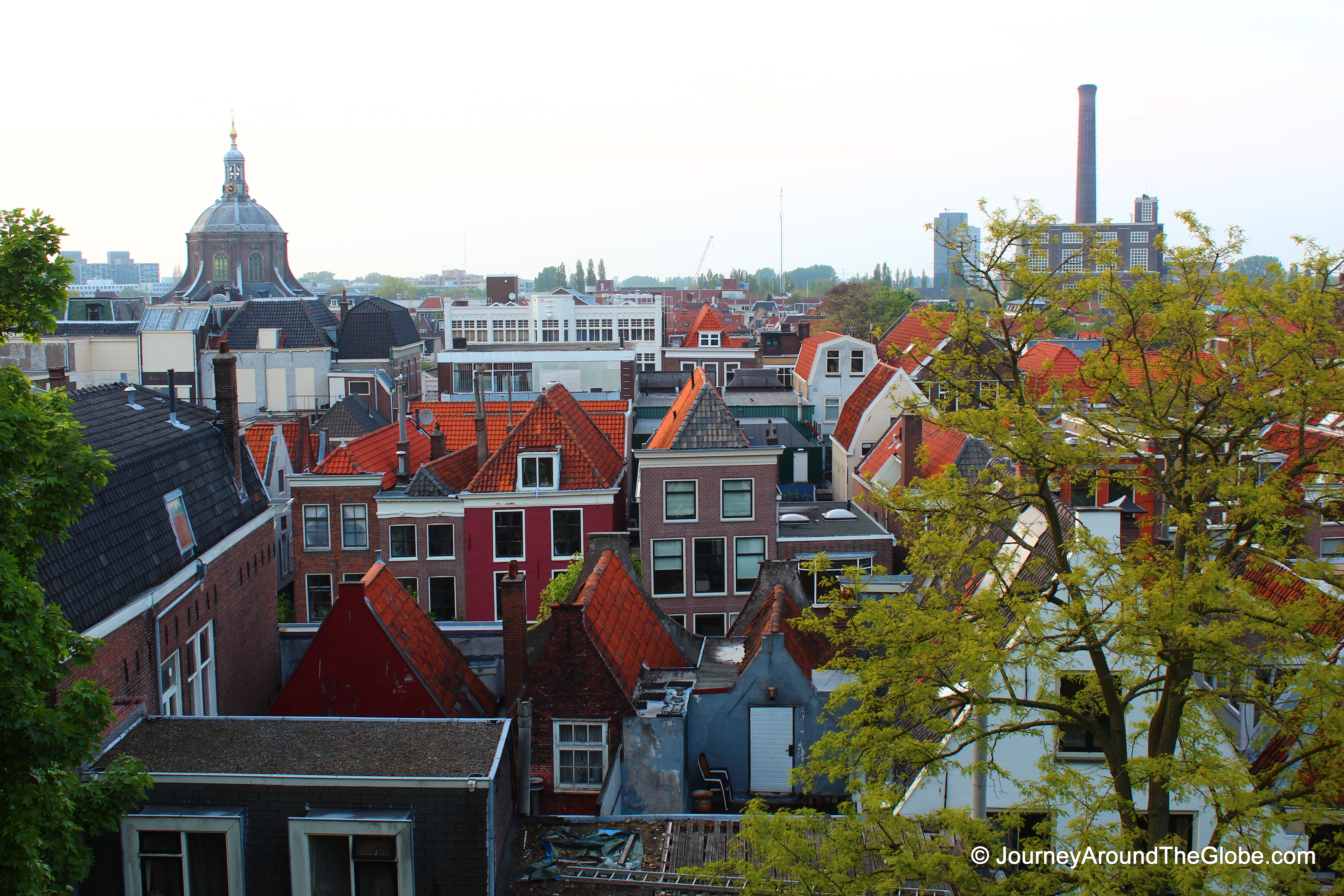
- Overview of old town Leiden from Burcht
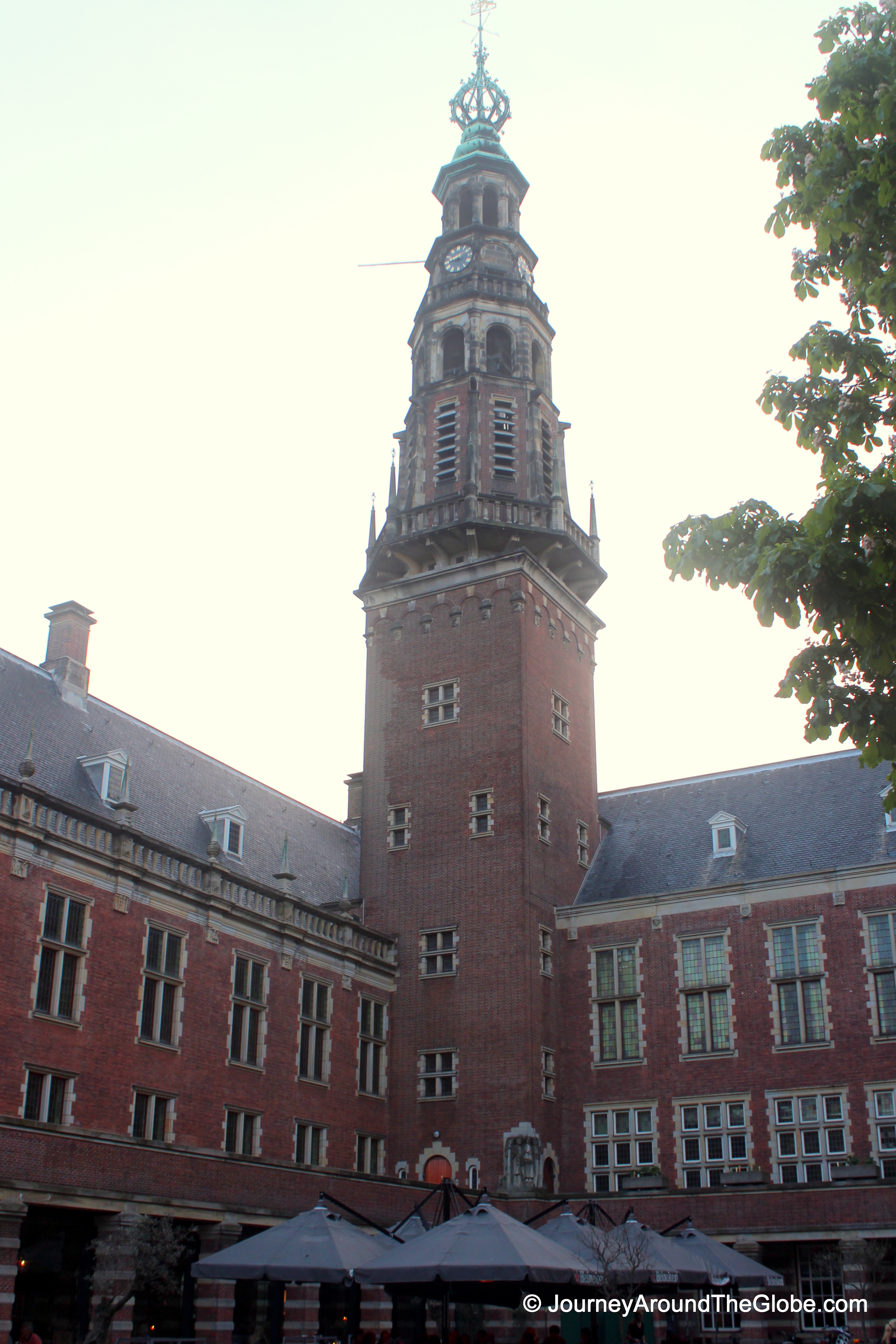
1) LEIDEN TOWN HALL (STADHUIS): Although we couldn’t go inside this town hall, it looked pretty nice from outside with its old renaissance façade. It’s an old building that dates back to 1597. The town hall is located in the old part of the town surrounded by few cafes and restaurants.

- Leiden Stadhuis (Town Hall)
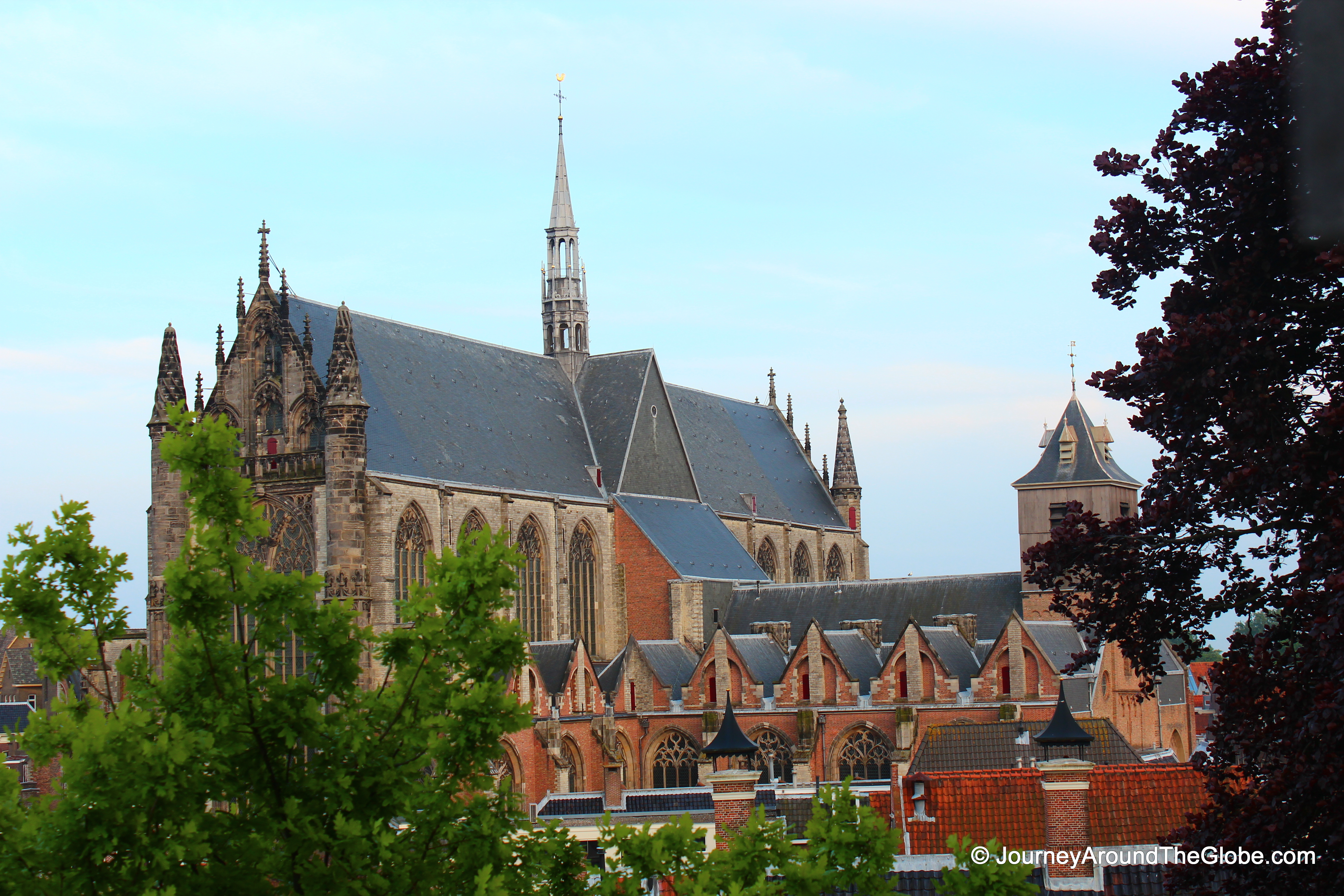
2) BURCHT: This is a medieval citadel located on an elevated borough. This was once a castle/fortress, and also used as a defense in high water season to rescue people against water of Rhine river. Burcht gives you a magnificent panoramic view of Leiden from above. You will adore looking at Hooglandse Kerk, Peterskerk, City Hall, and other historical buildings from here. There are few information stands which direct to important sites of Leiden and give brief history behind it. This is a pretty nice place to get some history of this city.

- Entrance and the stairs of Burcht
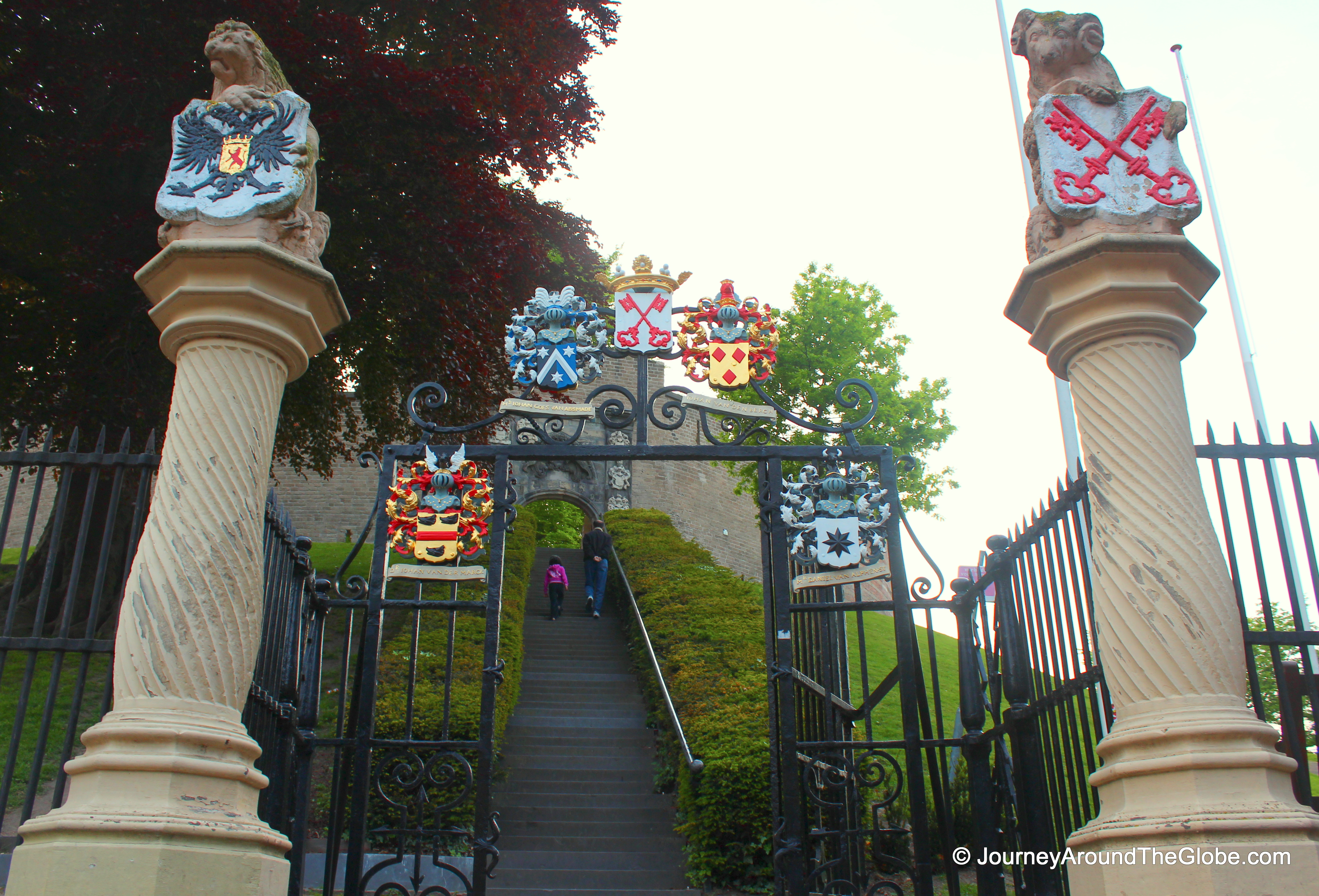
Burcht is located right in the heart of Leiden. There is no entrance fee and is open, I think, until the sunset. There are few steps that you have to climb to get on top, but it’s all worth it.
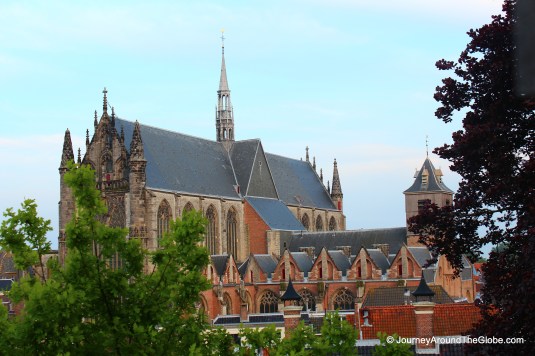
- View of Hooglandse Kerk, a 14th century church, from Burcht
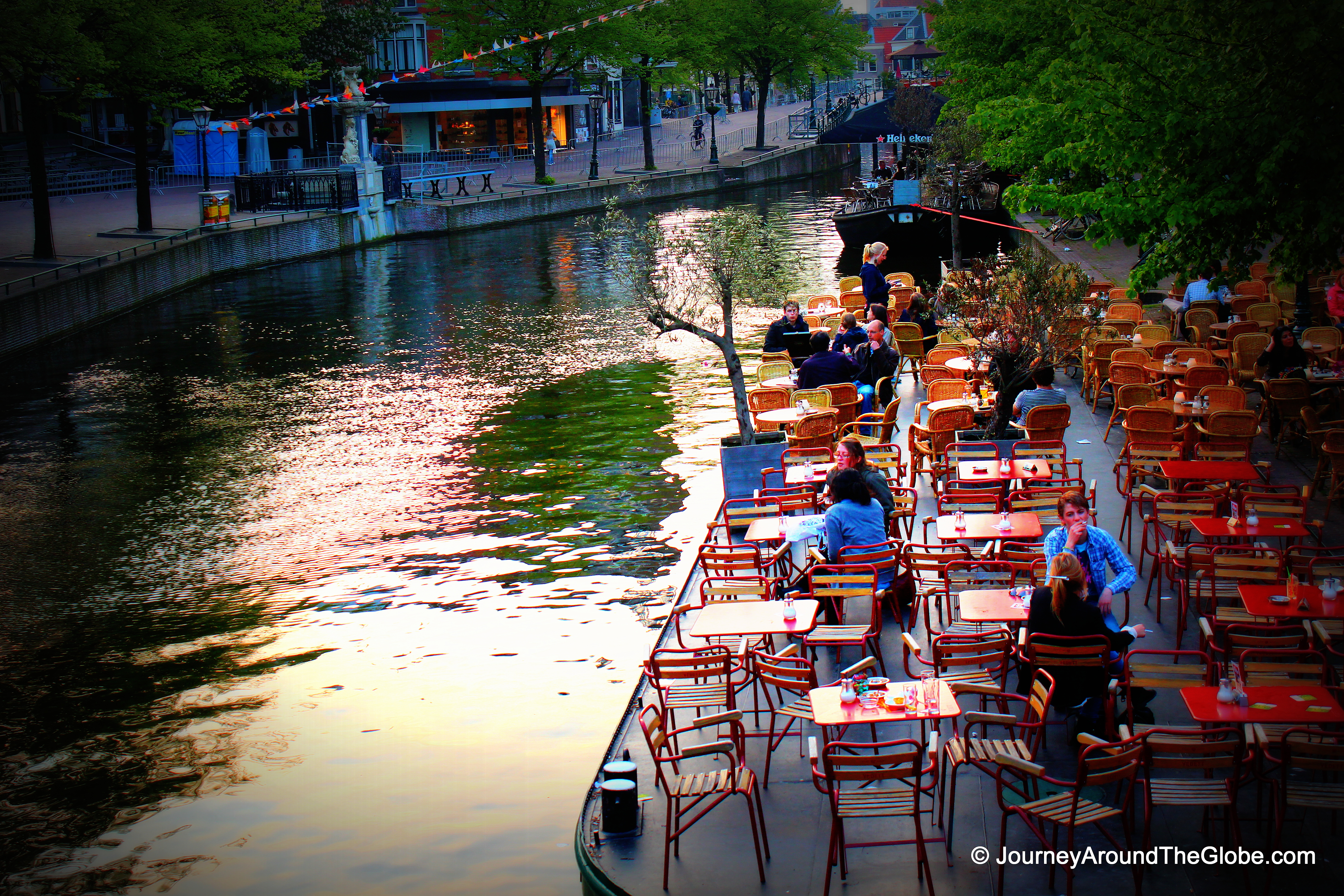
3) Canals: Enjoy the oldest branch of Rhine River running through Leiden here and there. Colorful houses and boats by the canals are the added beauty of the city. Don’t forget to have you meal or a drink in any restaurant by the canals. It absolutely looks gorgeous during the sunset.

- Restaurant by a canal in the old town of Leiden, the Netherlands
Share this:

Business Excellence Award 2020 from AI Global Media for The Most Entertaining Personal Travel Blog – Pacific Northwest USA

Top Posts & Pages


Authors
 Globe Runner
Business Excellence Award 2020 for The Most Entertaining Personal Travel Blog – Pacific Northwest USA

Business Excellence Award 2020 from AI Global Media

 Journey Around The Globe