Journey Around The Globe
ready for the next destination
Malmo, Sweden
MALMO, SWEDEN: Of course when we think about visiting Sweden, first thing comes to our mind is Stockholm. But the small Swedish towns that we’ve visited in our trip this time were truly unforgettable. They may not have hundreds of people going in one direction to visit something extra-ordinary or world-famous, but that’s what makes these small towns so appealing. There are no lines to wait on, no pushing or bumping to each other, no hustling and bustling; just enjoying the local history and culture is the main purpose of visiting these types of places. Malmo is just like that, a wonderful little town at the southern tip of the country, bordering with Copenhagen. The city is rich in history, culture, nature, and modern architecture…what else would you demand when visiting a new place?

- Old town of Malmo, Sweden

The locals here speak very good English as well as Finnish and little bit of German. Most of the places are within walking distance, but taxis are very cheap too. Talking about money and price, things are not as ridiculously expensive as in Denmark. Scandinavian countries are on the pricey side to begin with, but food, souvenirs, tickets or fees are very reasonable here in Malmo.
TIME OF OUR TRAVEL: Malmo was our 4th stop in our road trip during July 2012. Weather is usually pretty nice around this time of the year; sun sets down really late around 9:30 or 10 pm, so you get a lot done during this long time of the day. Summer is pleasant here, except for few days when it gets really hot, and that’s why you won’t see any AC in any hotels here.

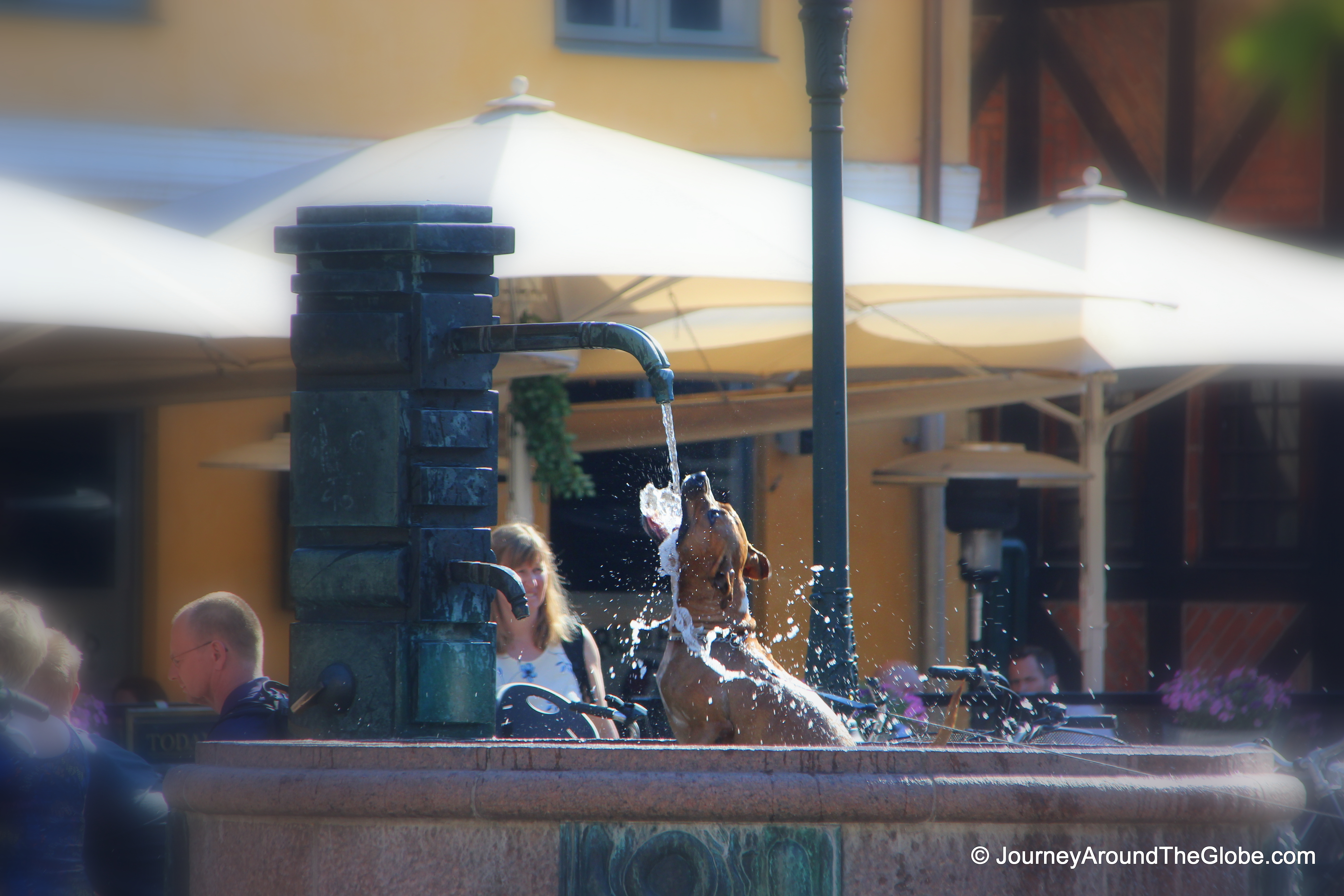
- A dog playing with water in that hot weather in Lilla Torg, Malmo, Sweden
OUR HOTEL: We stayed in The More Hotel in Malmo. This is a pretty nice place close to Malmo Castle and all the main squares. City’s largest church, St. Johannes, can be seen from our windows. The hotel has free breakfast as well as free Wi-Fi. I think the only negative part of this hotel is that they don’t have room service if your stay is less than 5 days and never cleaned our room during our 3 day stay there. We didn’t know what to do with the trash that was piling up L
WHAT TO EAT AND BUY IN MALMO: We really haven’t tried any Swedish food yet. First two nights we ate in an Indian restaurant and had Chinese fast food for lunch. I am sure seafood cooked in Swedish style will taste great here, since it’s so close to the water.
PLACES WE HAVE VISITED: We spent a whole day in Malmo and little bit of the next evening by the beach. This is a walkable city and most of the attractions are very close to each other or within short walk. The 3 main squares of Malmo are located at the heart of the city and are connected with pedestrians only shopping streets.

- Unique result of a creative mind
1) MALMO CASTLE (MALMÖHUS CASTLE): This is Scandinavia’s oldest surviving Renaissance castle. The castle was built in 1434 by Eric of Pomerania, king of Denmark, Norway, and Sweden (at that time a unified kingdom). The castle is one of the best places to unfold the history of Sweden and little bit of Denmark and Norway too. It also briefly tells you how Sweden broke away from Denmark centuries ago. The castle features some old rooms, decorated in very simple ways with very old and delicate furniture. We saw some boxes/chests dating from the early 17th century. Denmark’s coins were minted here in the middle Ages and prisoners were beheaded in the courtyard in the 19th century. Presently, it houses a history museum, temporary exhibitions, aquarium, and other kids-related activities.
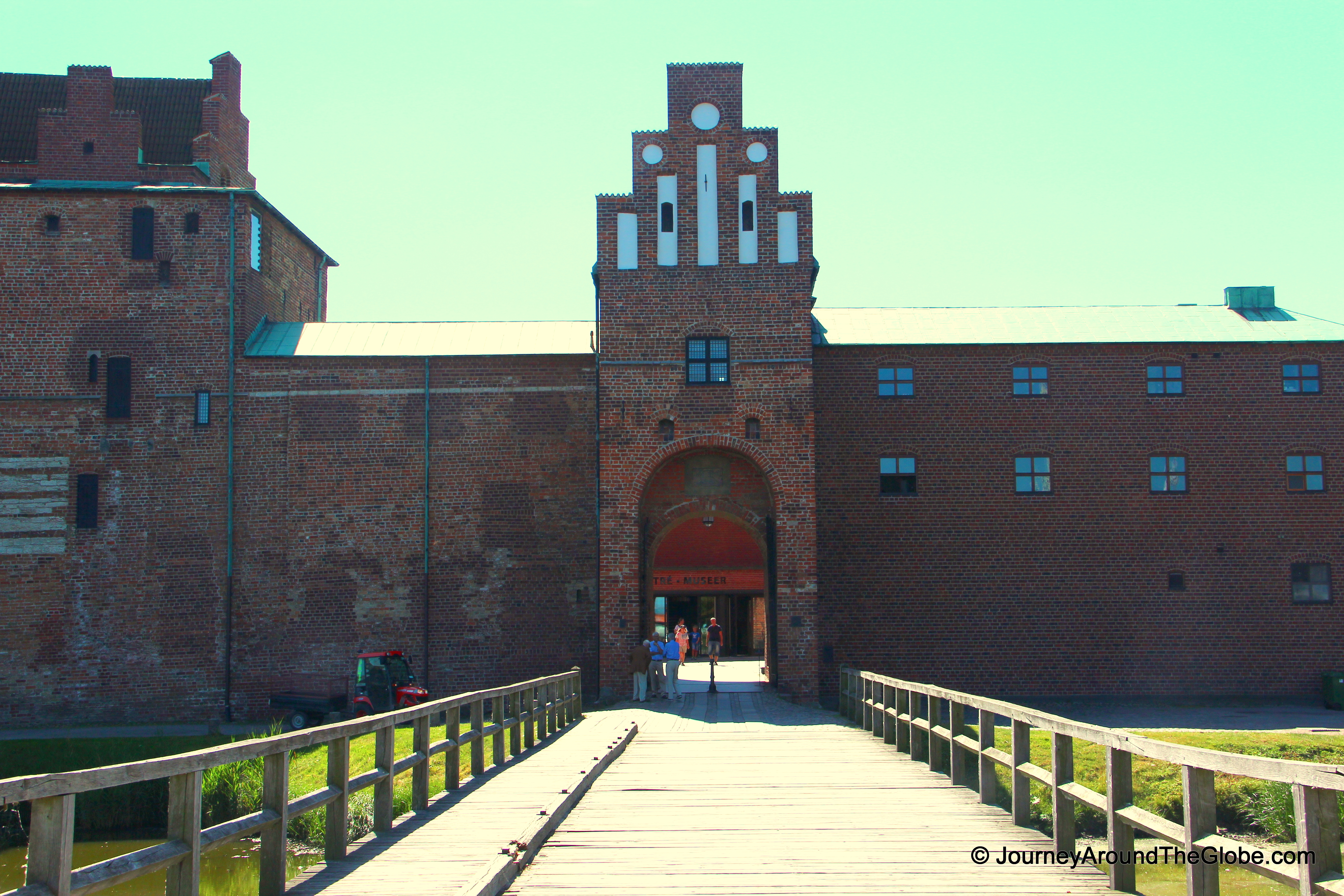
- Entrance to Malmo Castle, Malmo, Sweden
Malmo Castle is located in the older part of the city. This is not a stroller-friendly place, especially when you are in the old part of the castle. The entrance fee for the castle is 80 SEK per adult and kids are free. The ticket includes castle, art gallery, history, nature, aquarium, Governor’s House (across the street), and Technical Museum for kids (within walking distance). It is a self-guided tour and takes couple hours to cover all the sections.

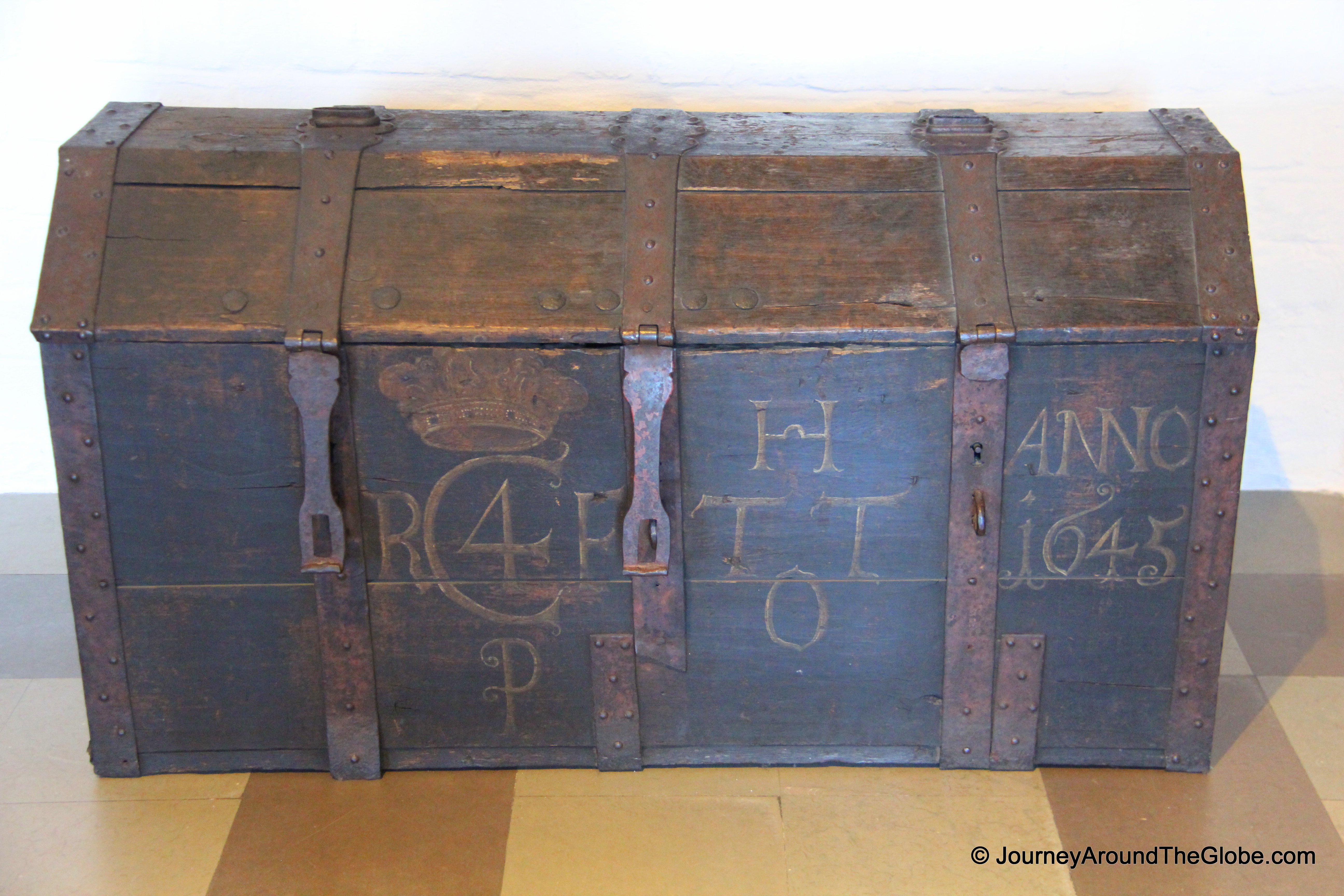
- An old chest from 1645 inside Malmo Castle
2) ST. PETER’S CHURCH (SANKT PETRI KYRKA): This is the city’s oldest church, dating back to 14th century. Inside is pretty nice with all white inside, very few stained-glass windows, ornate altar, and a huge organ. This Gothic style church has 344 feet (105 meters) tall tower. It’s located near the Big Square (Stortorget) and open from 10am – 6pm.
3) ST. JOHANNES CHURCH: This is probably the largest church of Malmo. There was a Baptist ceremony going on when we entered the church, so couldn’t really walk around during the event.
4) BIG SQUARE (STORTORGET) & MALMÖ CITY HALL: This is a huge place with statue of King Karl X Gustav on his horse, who took the city from Danish dominion, in the middle of the square. The square is not overwhelmed with hundreds of cafes and stores. There is a Burger King and Subway in addition to couple restaurants here and there. The spire of St. Peter’s Church can be seen be seen behind the town hall. This is about 10 minutes’ walk from Malmo Castle.
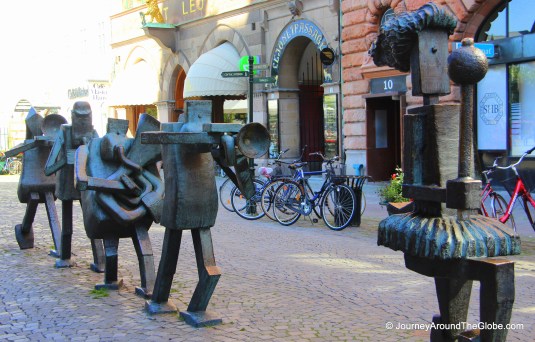
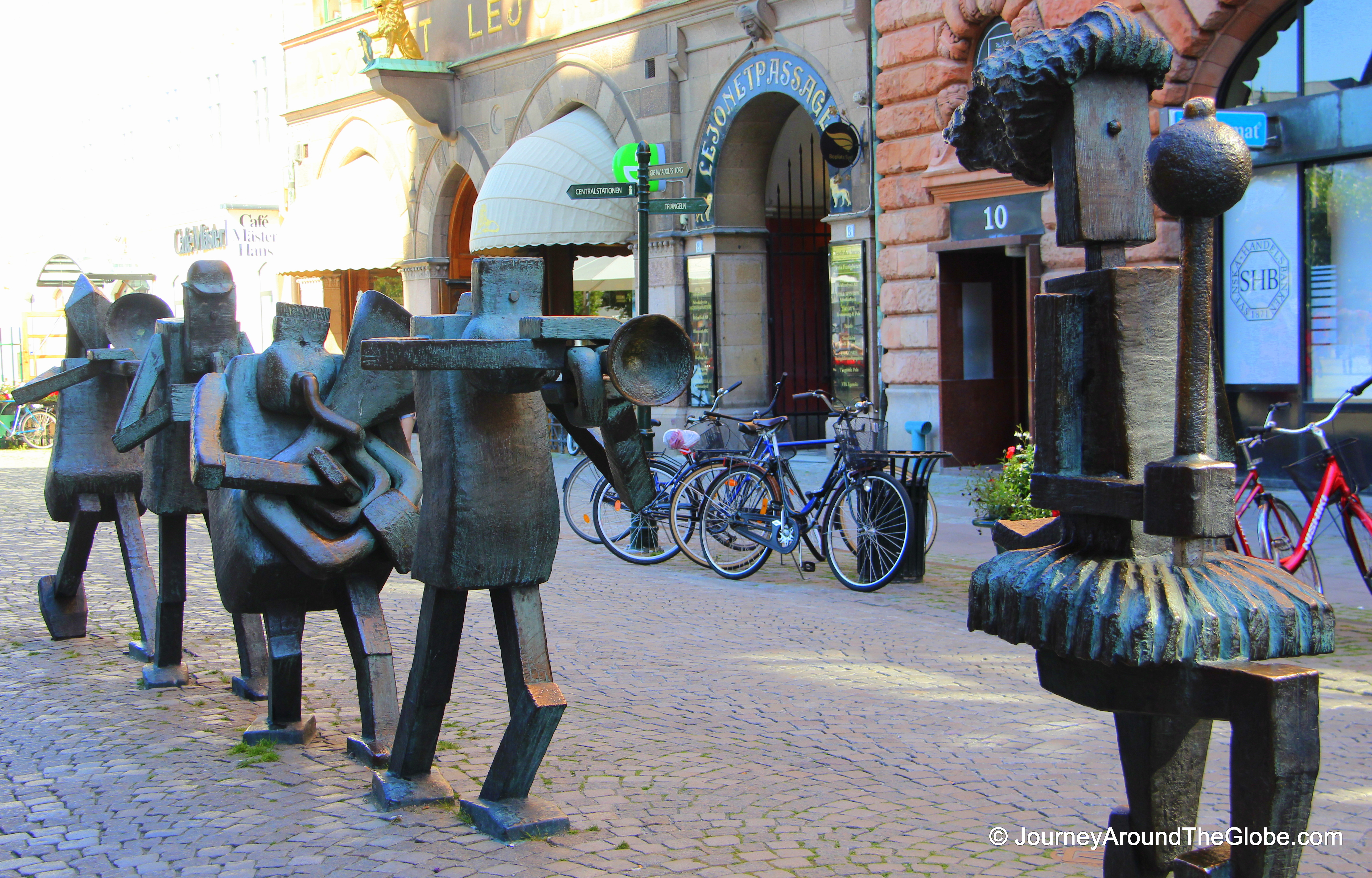
- Sculptures of a group of musicians near Big Square in Malmo, Sweden
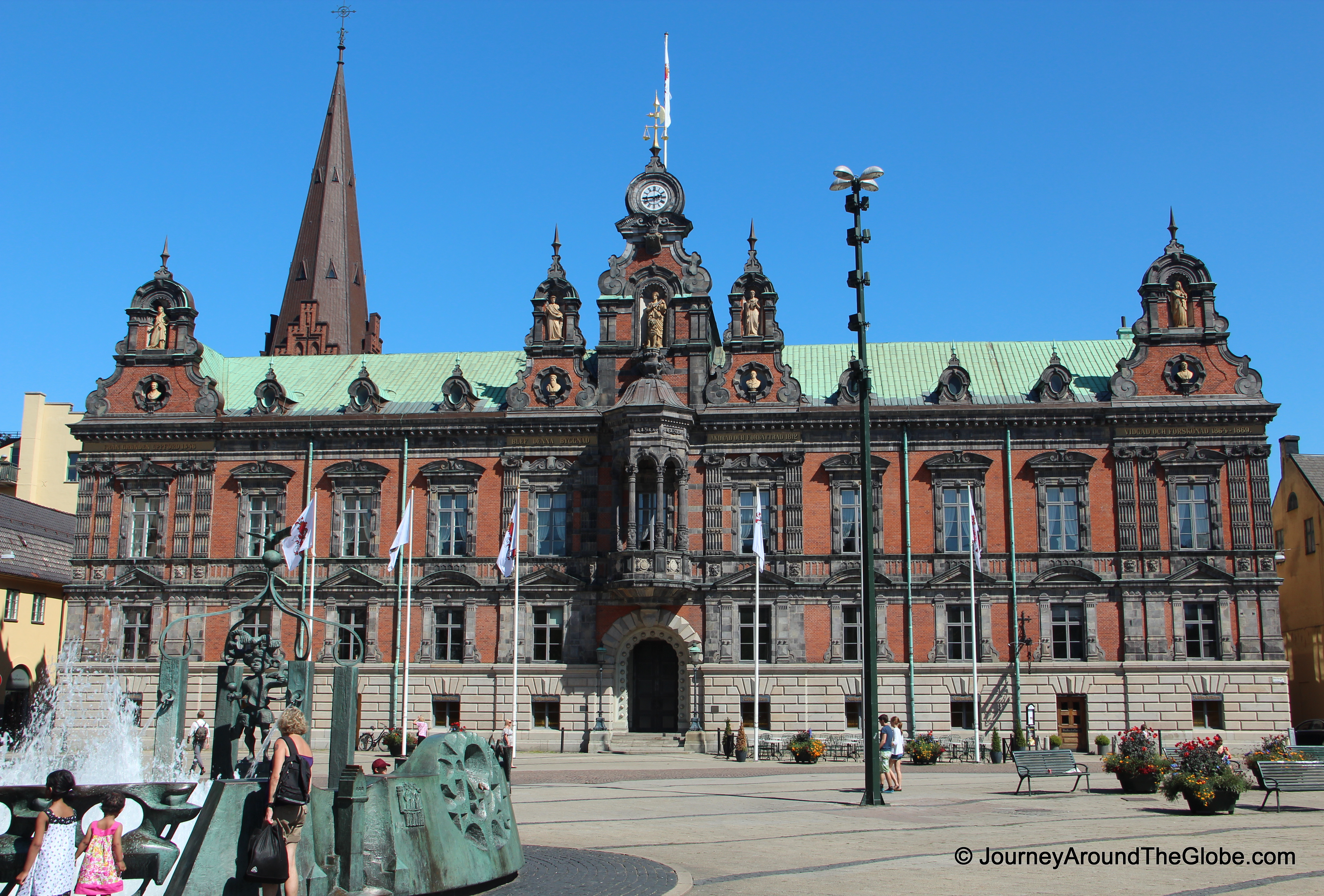
An elaborated structure, Malmo City Hall, is located in one side of the square. The building was built in 1536 and was the largest city hall in Scandinavia around that time. We didn’t go inside it, but the town hall is very decorative from outside.

- Malmo Town Hall, Malmo, Sweden
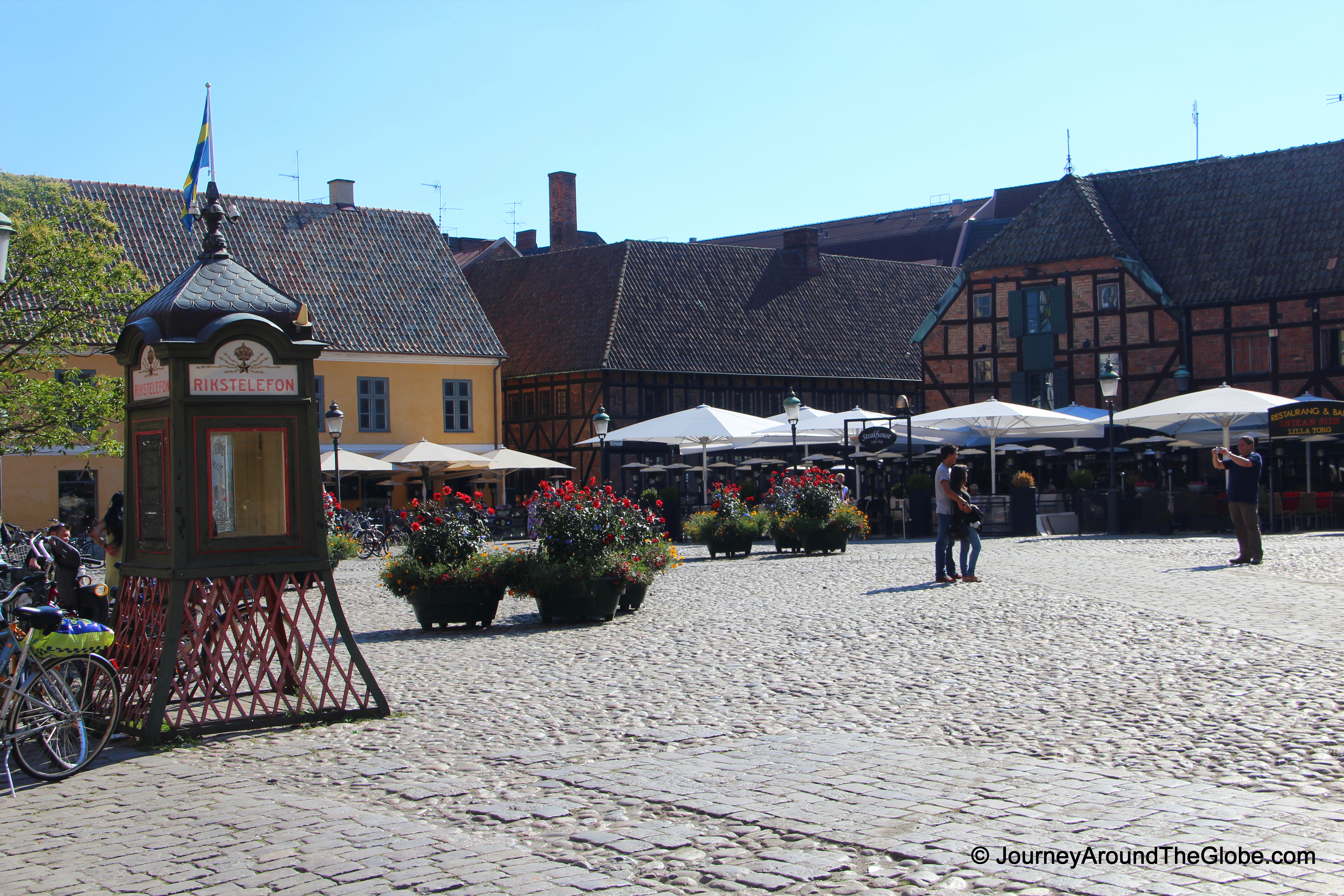
5) LITTLE SQUARE (LILLA TORG): Lilla Torg is right beside Stortorget. This is cozier and prettier than Big Square with uniquely designed colorful buildings at the edges of the square. The square has tons of cafes with outdoor sitting arrangements and interesting stores. Surrounding small streets are fun to hang around too. This is definitely the place to have meal or some drinks and just chill.
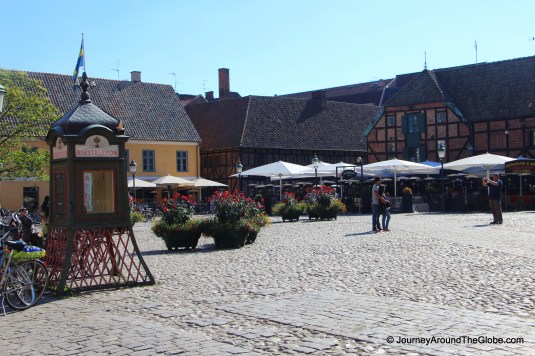
- Lilla Torg (Little Square) in Malmo, Sweden
6) GUSTAV ADOLF’S SQUARE (GUSTAV ADOLFS TORG): The square has lots of shops and fast foods like McDonalds, Burger King by the sides. The annual Malmofestivalen was going on during our visit in Malmo, which takes place in Gustav Adolf’s Square. Visitors get to try food from every nation here. It seemed like a party place there, everyone was enjoying the diverse atmosphere with good food and ethnic music.
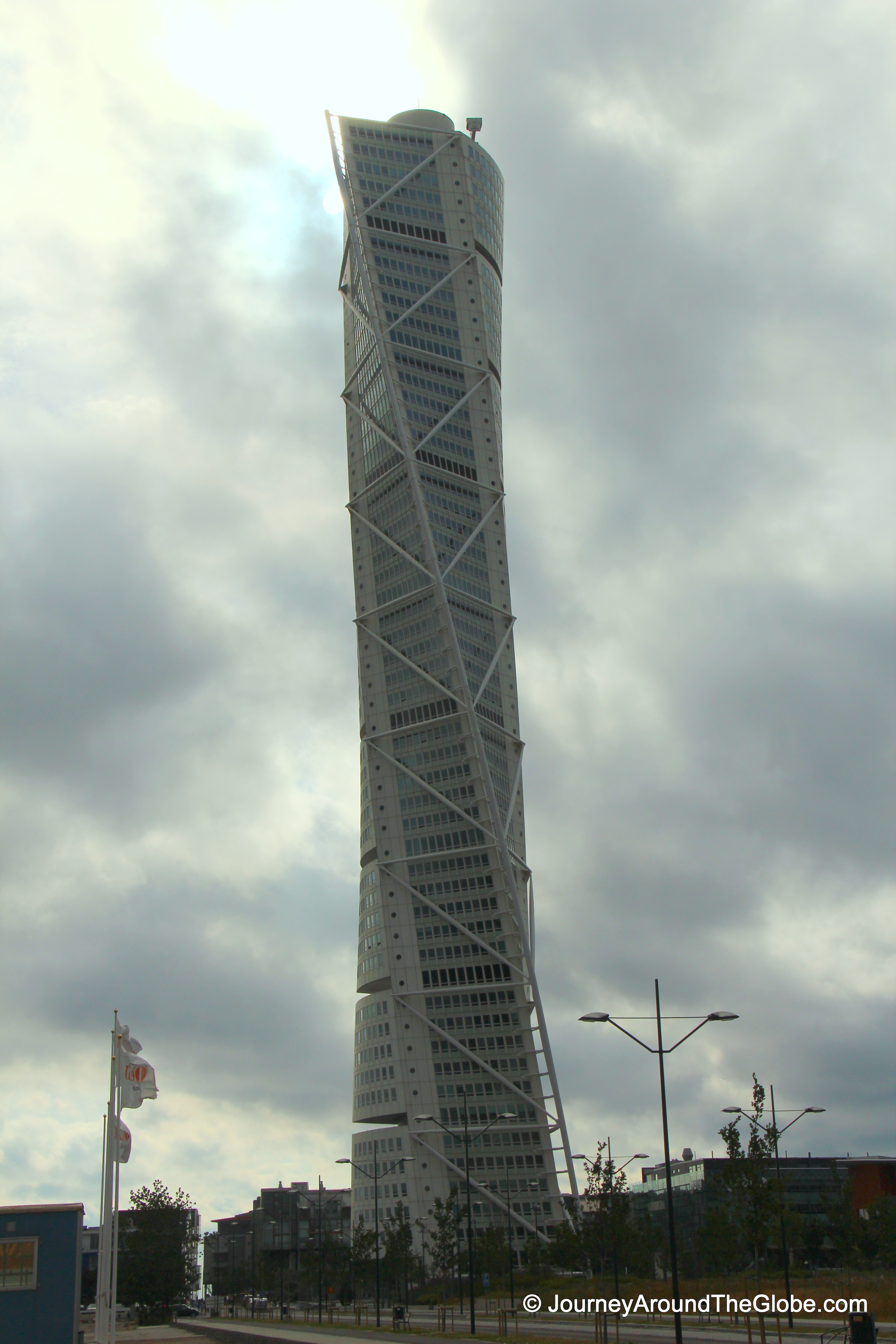
7) TURNING TORSO & SCANIA PARK (MALMO BEACH ARENA): Turning Torso, the tallest building in Scandinavia, is one of the examples of modern architecture of the town and of Scandinavia. This 54 storied building (623 feet tall) was open in 2005. This spectacular apartment building is situated near Malmo Beach Arena and can be seen from almost anywhere in the town. I am not sure if you can actually go on top of the tower or not, so it’s probably best to appreciate this art of technology from afar.
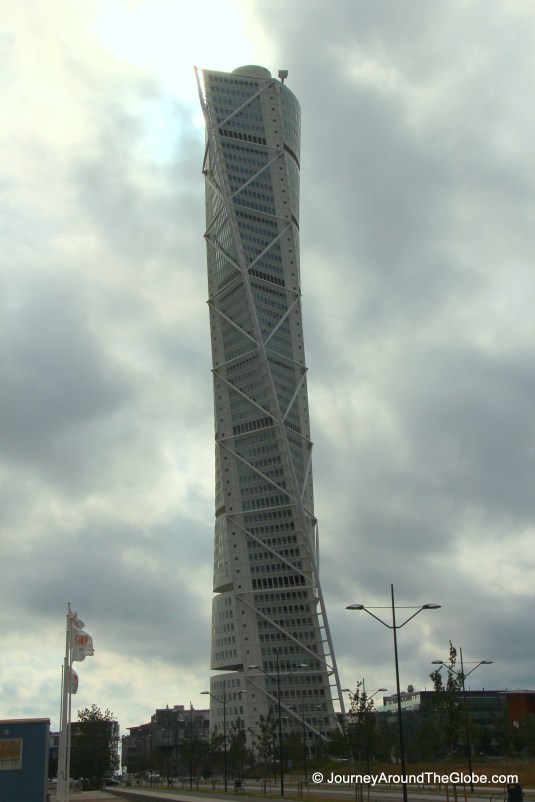
- Turning Torso, a fabulous work of art in Malmo, Sweden
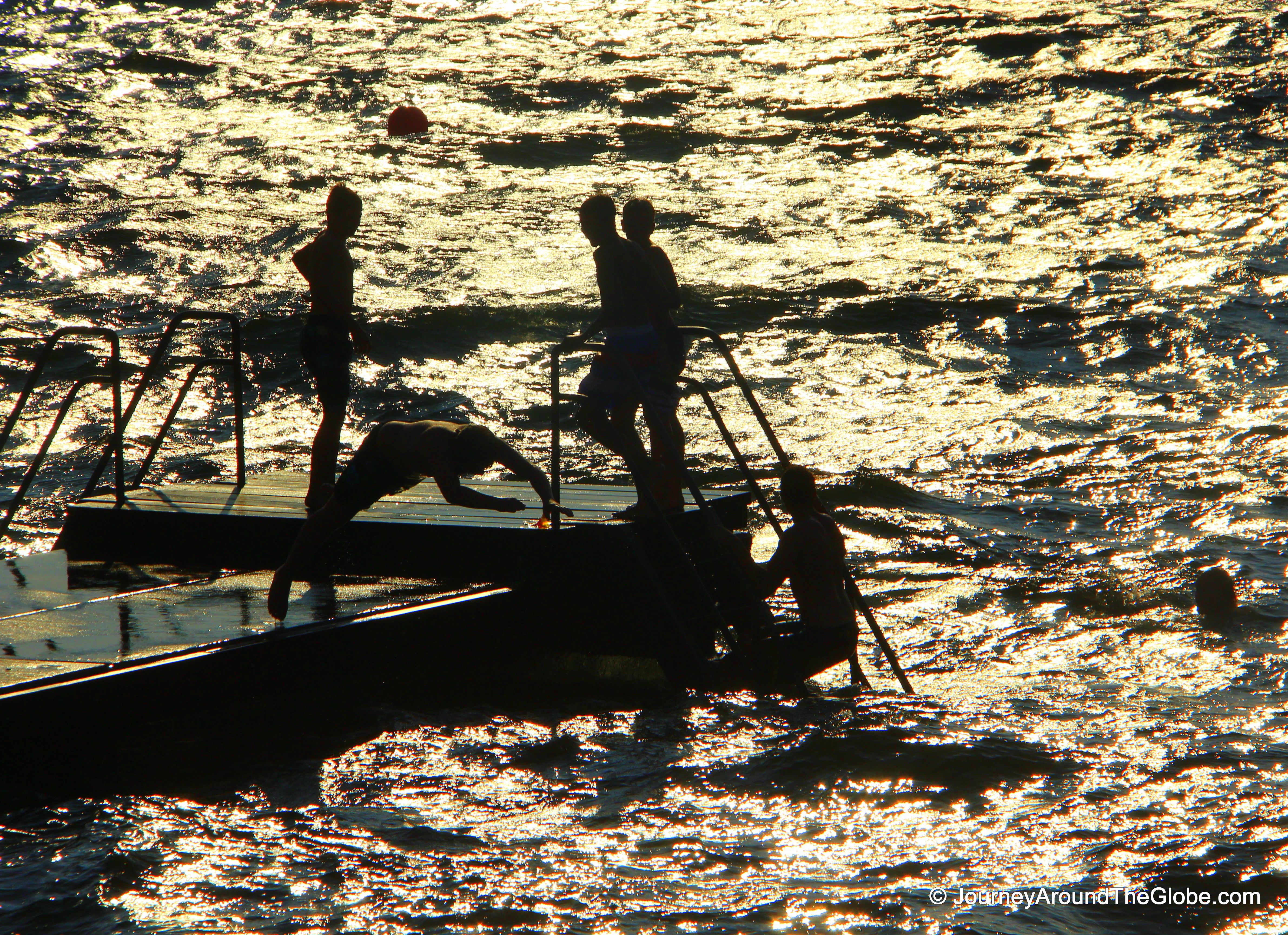
Malmo Beach Arena is a nice place by the beach away from city life. This is not a typical beach where you can go swimming and do sun bath. There is a specific place to go diving, which is about 4.5 meters deep. But it is a nice place to go for a stroll or jog alone or with loved ones.
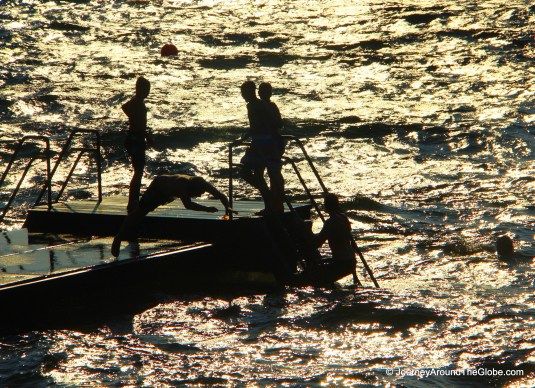
- Kids having fun in Scaning Park in Malmo, Sweden
8) TRIP TO LUND: Lund is another small Swedish town, only 20 – 25 minutes’ drive from Malmo. This is a typical university town and out of all the chaos of its nearby city Malmo. There are not too many things to see or do here, other than just enjoying the beautiful city. This is a great getaway while in Malmo.

- One of a kind Library Building of Lund University in Lund, Sweden

9) TRIP TO COPENHAGEN: If you are in Malmo, going to Copenhagen is a must. The drive is less than an hour by car and you get to enjoy the beautiful, long Oresund Bridge on your way. Only thing is that cars have to pay $50 or 310 DKK one way to cross the bridge. But once you are in Copenhagen, it’s all worth it. The city has many castles, famous churches, historical landmarks, beautiful canals, and many other things to offer to its guests. Just keep in mind that things in Copenhagen cost more compared to Malmo.

- Little Mermaid, a world-famous statue and the most photographed landmark in Copenhagen

Related articles
- A small Swedish town – Lund (journeyaroundtheglobe.com)
- Eurovision 2013: It’s Malmö! (eurovisiontimes.wordpress.com)
- Copenhagen, Denmark (lafamilleroy.wordpress.com)
- Turning Swedish (judefensor.wordpress.com)
- Eurovision 2013: SVT Explains Malmö Choice: ‘Size Isn’t Everything’ (eurovisiontimes.wordpress.com)
Share this:

A small Swedish town – Lund
LUND, SWEDEN: Lund is a beautiful and peaceful university town with no world-famous landmarks or attractions other than Lund Cathedral. That’s why, this is a great place just to relax and enjoy its lovely atmosphere. The city was founded at the end of 10th century. Although the town is not that lively during summer when all the students are in break, this old town has its own charm to make its tourists keep coming back to it.
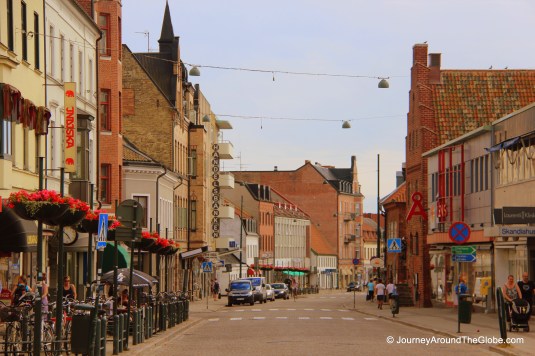
- Nearby street of Lund Cathedral in Lund, Sweden

There are some small squares here and there scattered thru out older part of the city and most of them have some cafes, surrounded by old buildings, and are good places for the locals and tourists to hang around. All the main spots in Lund are within walking distance and can be done in a day in a very relaxed way.
TIME OF TRAVEL: We visited Lund during our stay in Malmo in July 2012. This was part of our road trip and I am glad that Lund was in our list. Summer is usually very pleasant here. We saw some forecast of rain for the day we drove there, but luckily the weather turned out great with some black clouds at the end of the day.
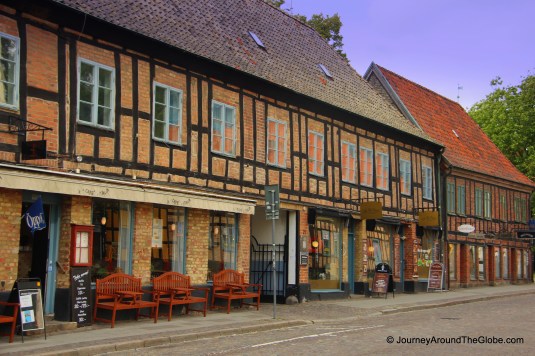
- Old buildings near Lund University campus – very empty during summer

OUR HOTEL: We stayed in The More Hotel in Malmo, a nearby town. This is a pretty nice place close to Malmo Castle and all the main squares of Malmo. City’s largest church, St. Johannes, can be seen from our windows. The hotel has free breakfast as well as free Wi-Fi. I think the only negative part of this hotel is that they don’t have room service and never cleaned our room during our 3 day stay there. We didn’t know what to do with the trash that was piling up 😦
WHAT TO EAT AND BUY IN LUND: You can get lots of Swedish souvenirs here in store but the problem is to find a souvenir store where you can buy some stuff. We finally found one near Radhus and Stortorget. Swedish soccer jersey/t-shirts, Viking ships, and dolls are memorable things to buy from here.
Lund has lots and lots of kebab stores everywhere and that’s what we had for lunch there. Most of the kebab places sell pizzas and burgers.
PLACES WE’VE VISITED IN LUND: We only spent a day in Lund. Although there aren’t too many things to do in Lund, it’s a cozy little town with lots to absorb in. There is a tourist information office in Stortorget right beside Radhus, where you can pick up city’s map and start your journey from there.
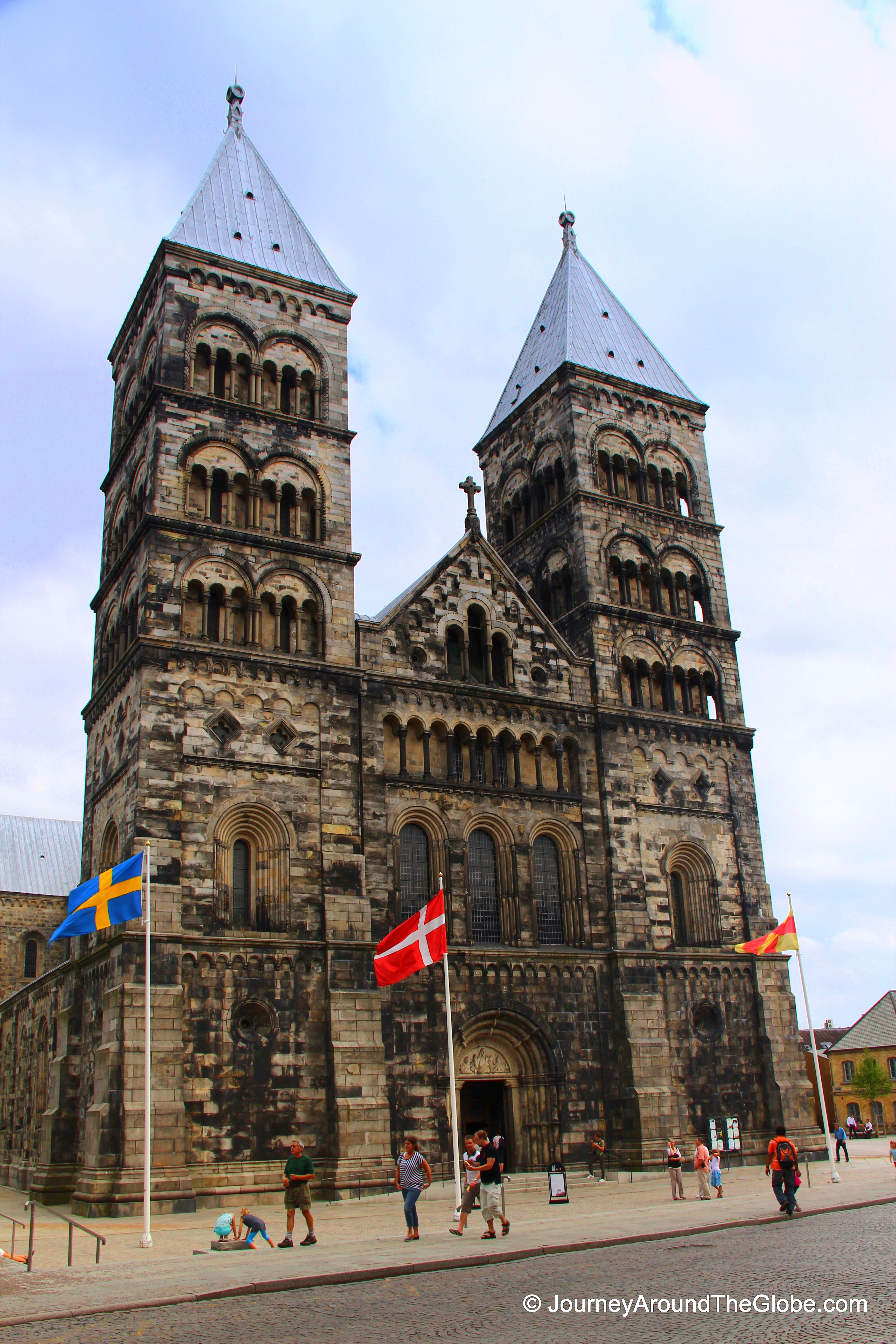
1) LUND CATHEDRAL & ASTRONOMICAL CLOCK SHOW: The church was completed in 1145 and is the 2nd largest cathedral of the Nordic countries. Crypt is the oldest part of the cathedral which is in the basement. There are some really old tombstones and graves of various saints.

- Imposing Lund Cathedral in Lund, Sweden
The astronomical clock is located on the left side when you enter the cathedral. This amazing clock has calendar from 1923 – 2123 at the bottom and moves its disc at mid-night. This is very similar to the ones in Munich Rathus or old town hall of Prague. The astronomical clock show puts on a show twice everyday: Mon – Sat at 12 pm and 3 pm and Sundays at 1 pm and 3 pm and lasts for about a minute. There is an English & Swedish guided tour for the astronomical clock show 15 minutes before it starts and continues after it ends.
The church is located right beside Stortorget. There is no fee to go inside.
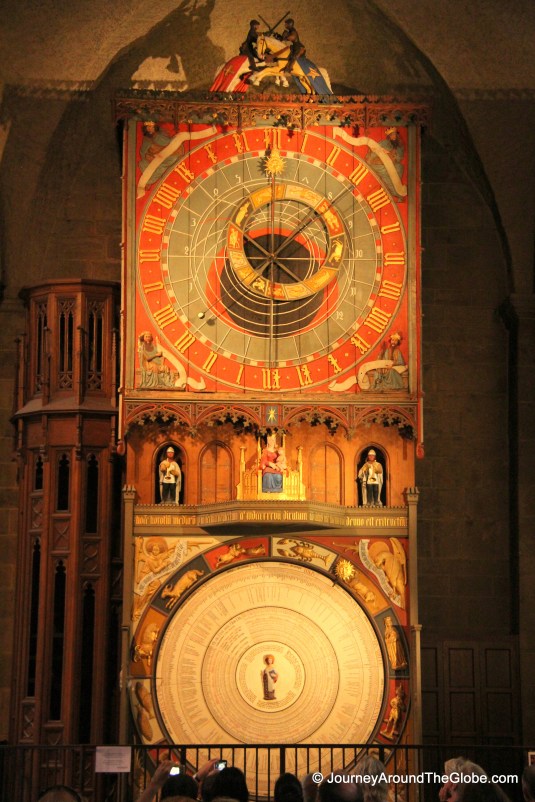
- Astronomical clock inside Lund Cathedral in Lund, Sweden

2) STORTORGET & RADHUS: Stortorget is the biggest square of Lund which houses Radhus or City Hall. This is a rather simple square with only one or two restaurants. The town hall is not that impressive either but it felt good to sit down there with our take away kebab from a nearby kebab fast food place and eat there while watching the locals pass by.

- Stortorget in Lund, Sweden
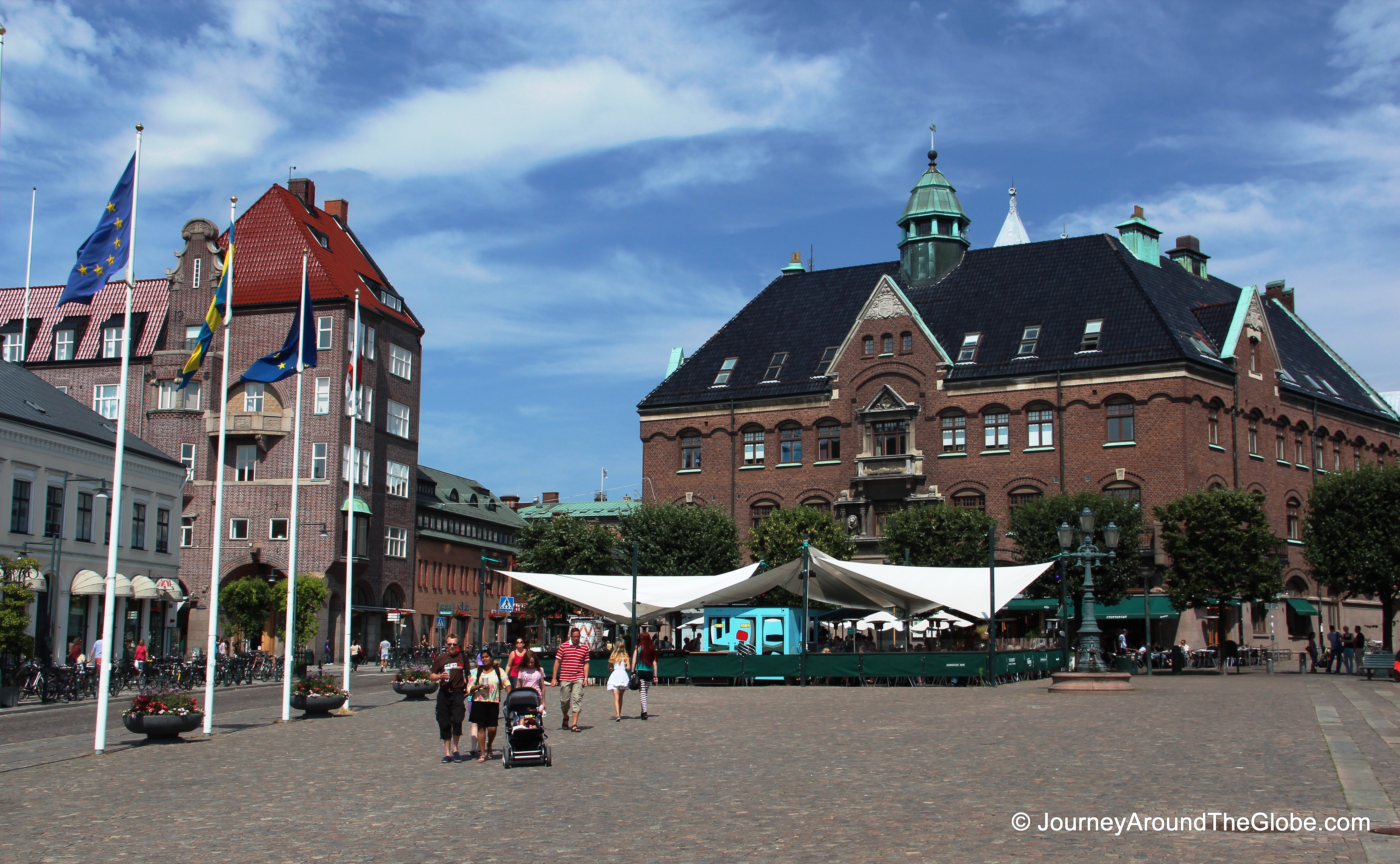
3) LUND UNIVERSITY & LIBRARY BUILDING: The main building of Lund University is located very close to Lund Cathedral. It’s an imposing white building with a big fountain in the front. There is another brown building, Lundagård, on one side of the fountain which dates back to the 16th century was Lund’s only university building at that time. The surrounding is very clam and quiet with many varieties of trees shading the areas. This must be a popular hang-out place when the university is open.

- Main building of Lund University in Lund, Sweden

The Library building of Lund University is located in another serene and peaceful area of the campus. The front façade of this building is covered with green creepers; only the windows and the main doors could escape from the branches of these plants. We didn’t go inside the library, but the whole building looks fascinating from outside. I can imagine this place when classes start and hundreds of students walking, relaxing, studying, chatting, eating, or Facebooking in that area…such a lovely place to refresh your mind.
- One of a kind Library Building of Lund University in Lund, Sweden
4) ALLHELGONAKYRKAN (ALLHELGONA CHURCH):This is a beautiful, modern church (built in 1891) very close to the university library building. I absolutely fell in love the moment I walked into this church. Exterior is made with simple red brick but inside the church is gorgeous with red bricks walls and colorful ceiling and floor. There are some stained-glass windows on the 1st level as well as on the 2nd level. The altar is also very decorative with blue ceiling on top. This is a must see in Lund. It’s open Mon – Fri: 9:30 – 4:30 pm.

- The nave and high altar inside Allhelgona Church

5) TRIP TO COPENHAGEN: Do I need to introduce Copenhagen to anyone? This is the capital of the oldest kingdom in the world, Denmark. There are tons of things to do and see here. Nope, one day or two days aren’t enough for this historical town. The city has 6/7 castles, many old churches, world-famous statue, mind-blowing harbor, and not to mention, energetic locals and Danish food. Whatever time you have, Copenhagen is an awesome city to capture the blend of both past and present. Just one thing to keep in mind is that you have to pay about $50 or 310 DKK to cross Oresund Bridge to get to the other side of the river, if you are driving.
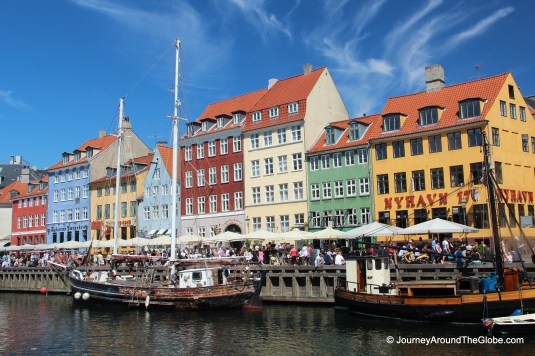
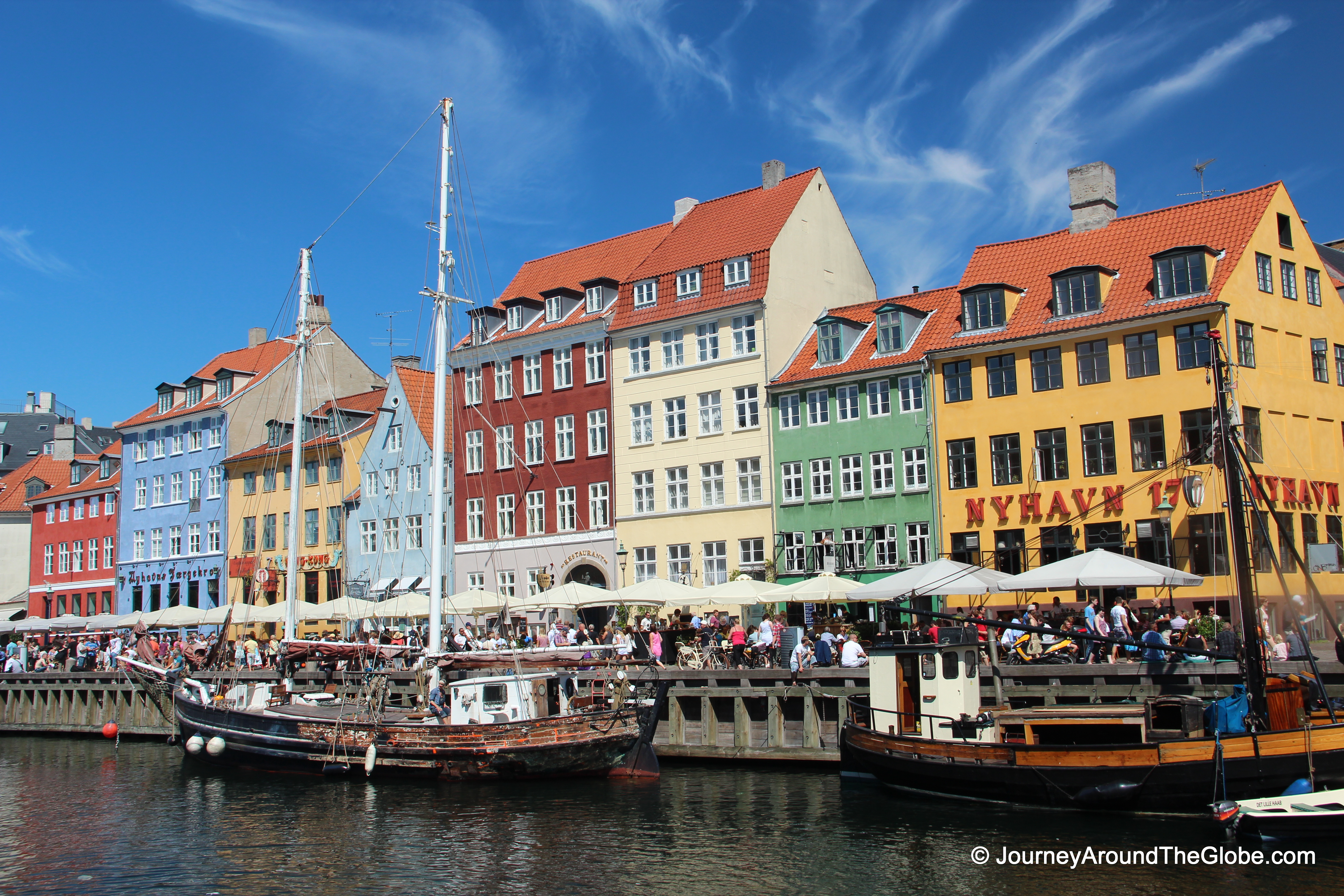
- Bright and beautiful buildings of Nyhavn (New Harbor) in Copenhagen
6) TRIP TO MALMO: This is a Swedish city, bordering Copenhagen Denmark on the other side of Oresund sound, less than half an hour of drive from Lund. This makes a good day-trip if you are into castles, old cobbled stone pedestrian streets, roaming around in homely squares, and finally, some beach time. Malmo is bigger, busier, and more diverse than Lund; therefore, it’s a great spot for shopping and eating while doing some sightseeing.
- Old town of Malmo, Sweden
Related articles
- Lund, Sweden (thepainsofbeingme.wordpress.com)
- Nokia completes acquisition of Scalado (allaboutwindowsphone.com)
- Malmö 2013: Israel Threatens to Withdraw (eurovisiontimes.wordpress.com)
Share this:

Hamburg, Germany
HAMBURG, GERMANY: If you did a little bit of reading on the destruction of this town during WWII, you will be surprised to see how quickly this town achieved its ultra-modern look of present-time. This town was heavily bombarded under operation “Gomorrha” and was destroyed to the ground over the course of 3 nights and days in July 1943. Allied air planes attack killed more than 35,000 people and made 900,000 people homeless by destroying over 250,000 houses. The town was left with miles after miles of broken bricks and skeletons of buildings.
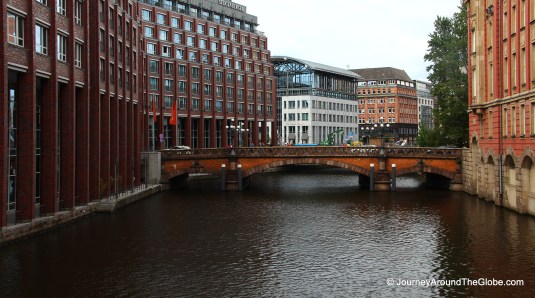
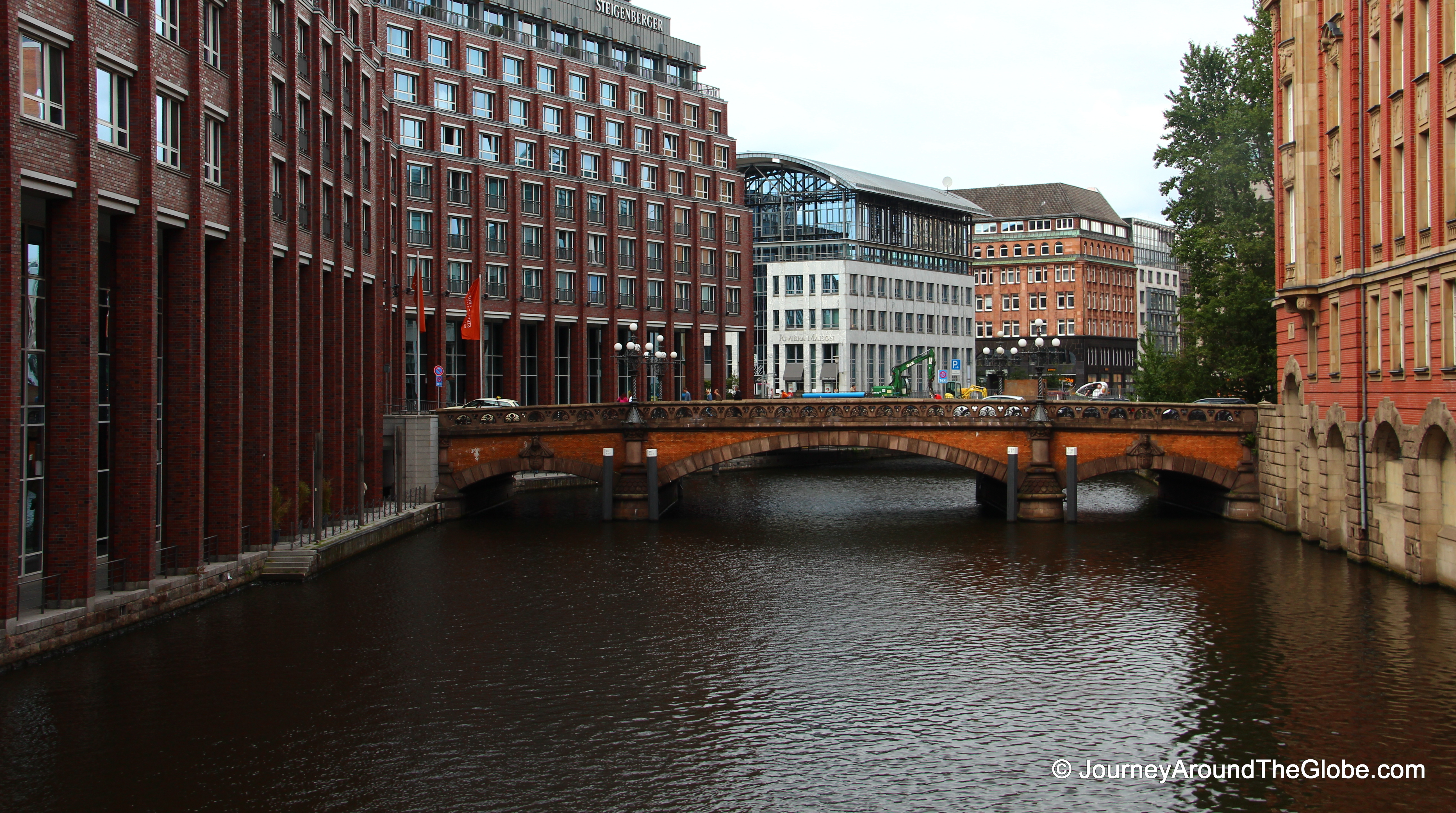
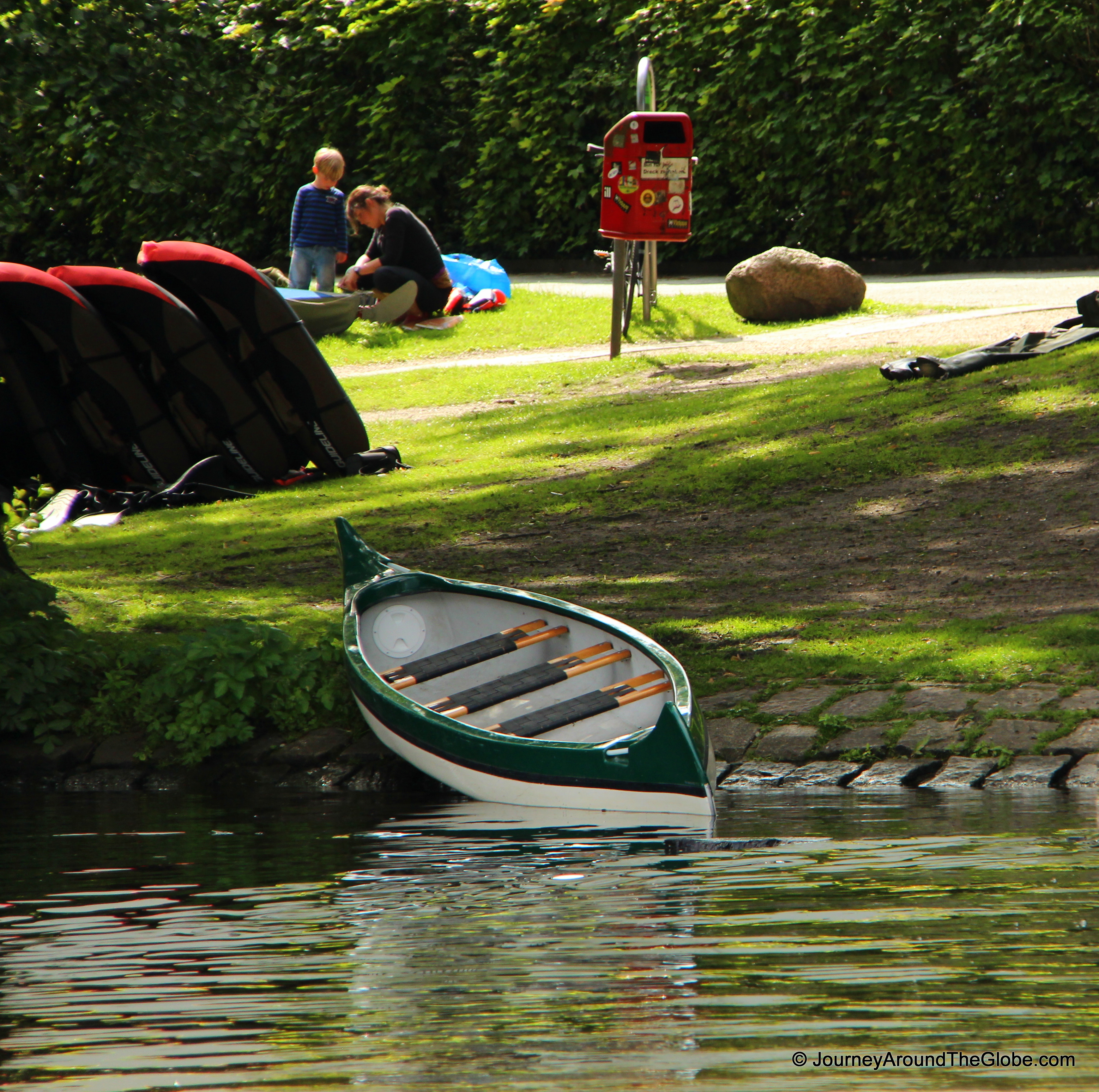
- Canals of Hamburg, Germany
Despite its recent horrified history, the city didn’t take much time to stand on its feet and be one of very well reputed German cities. This is the 2nd largest city of Germany, Hamburg has country’s biggest port and the second busiest in Europe. Interestingly, the beef patties on a bun originally were invented here, but unfortunately, you won’t find any traditional hamburger in Hamburg.

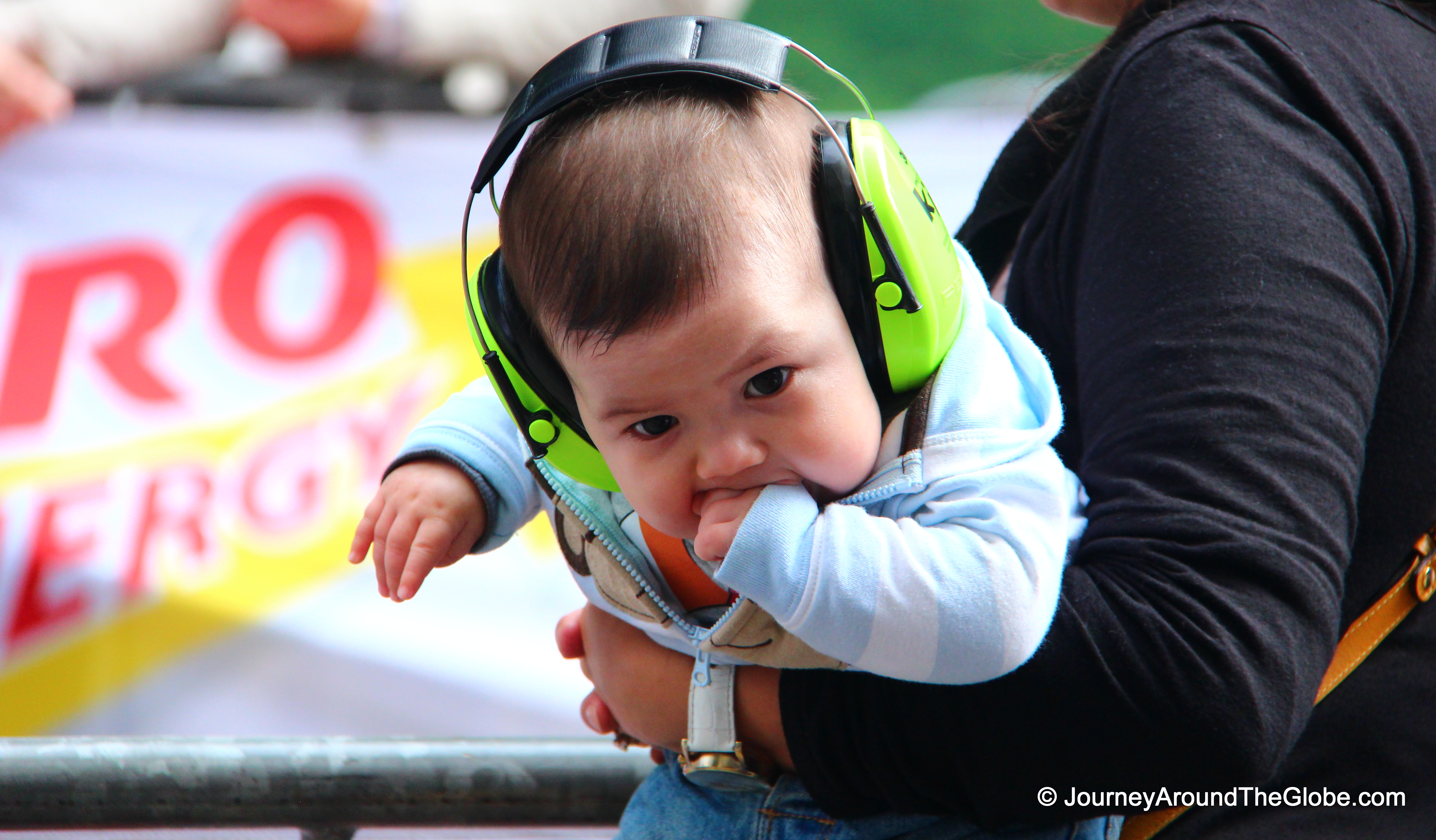
- A cool baby Hamburger (People of Hamburg are called Hamburgers 😉 )
Hamburg has been an independent city of Germany for few centuries, which means Hamburg has its own Parliament and senate. The Parliament is headed by its own President and the Senate is headed by the Mayor of the city.

- Relaxed city Hamburg, Germany
TIME OF TRAVELING: Hamburg was our first destination when we were on our road trip to Legoland in Billund, Denmark in the 3rd week of July, 2012. It was about little more than 5 hours drive from our home in Tervuren, Belgium. Although, it was almost end of July, it felt chilly like March or April. We were well prepared, but I was really wishing for some nice hot summer days.

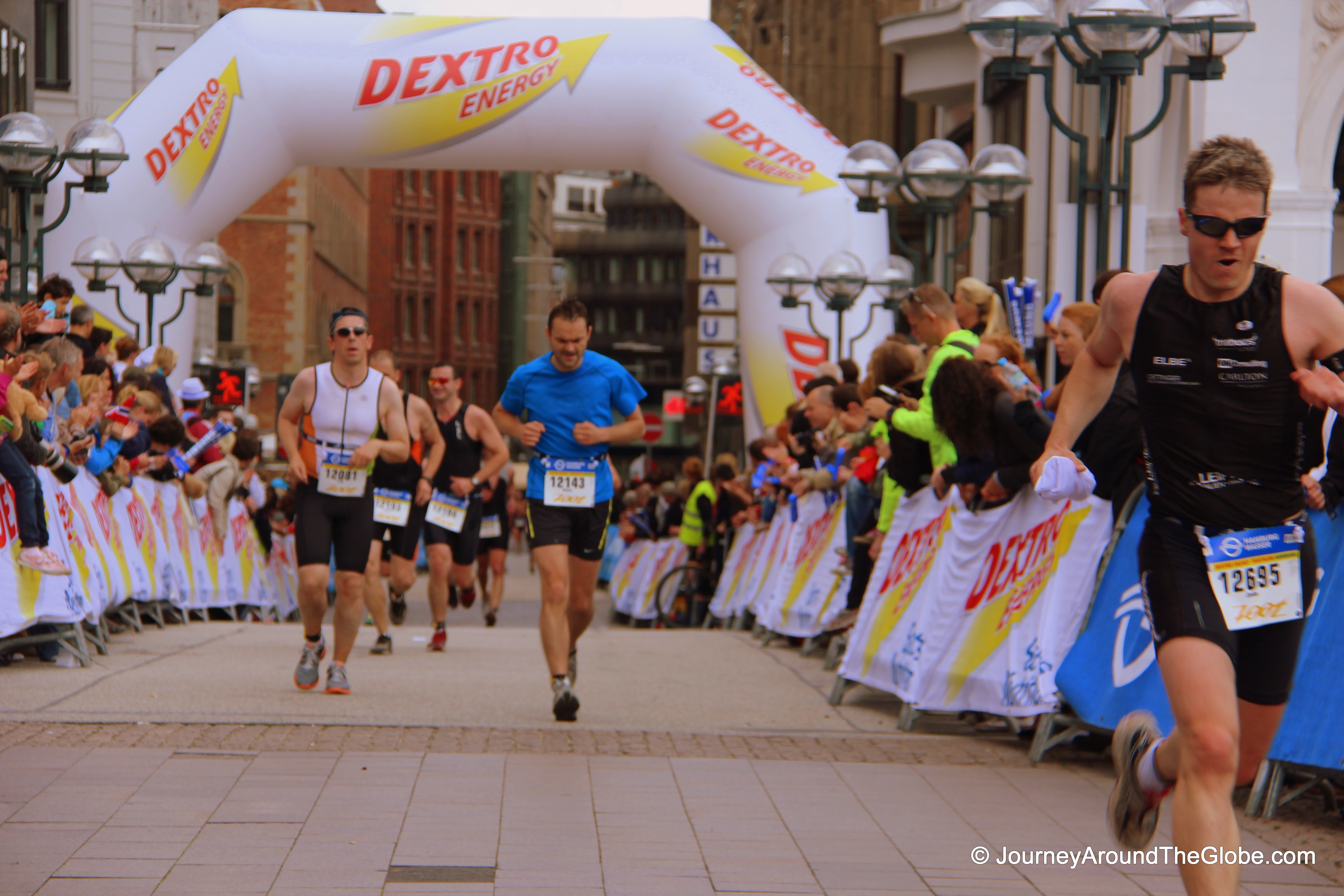
- Hamburg Triathlon 2012, competitors running thru Rathausmarkt
OUR HOTEL: We stayed in Marriott Hamburg here. I loved the location of this hotel. Not only it’s about 10 minutes walk from the Rathaus (Town Hall) and city center, but also it is a premier location to do some high-end shopping. The hotel doesn’t have any free breakfast and free Wi-Fi but did have a parking garage (additional charge), which many European hotels don’t have.
WHAT TO EAT & BUY IN HAMBURG:Our first dinner in Hamburg was at an Italian chain restaurant, Vapiano (it was late and that was the only option we had). They have stores all over the world, like New York. It’s a decent place with great food and very reasonable price. We really didn’t have any typical German food here. We mostly ate whatever we had in front when we were hungry.
PLACES WE HAVE VISITED: We spent about a day and half in Hamburg and saw all the things we wanted to see in a very relaxed way. Here are all those places:

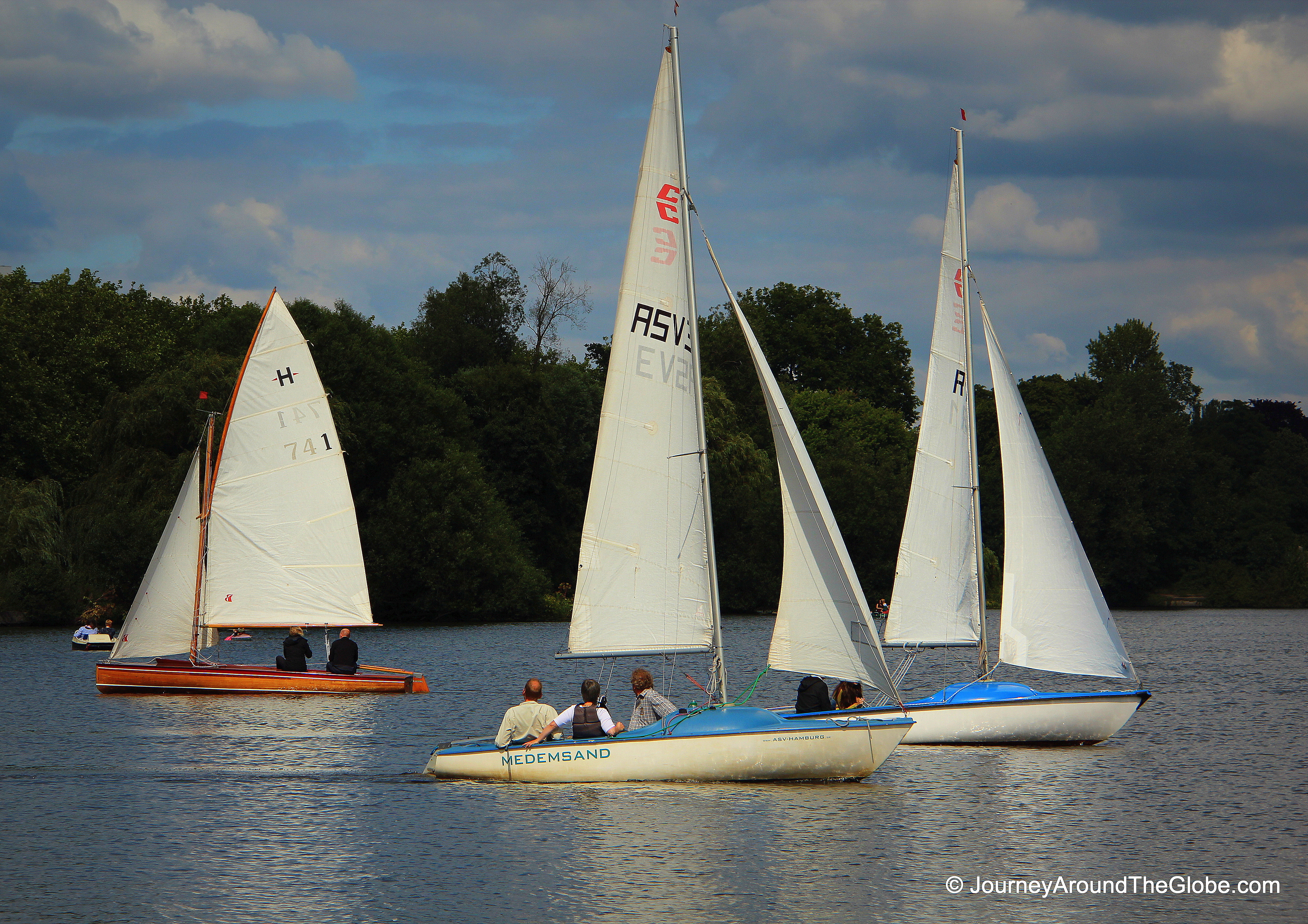
- Sailboats on Binnenalster in Hamburg, Germany
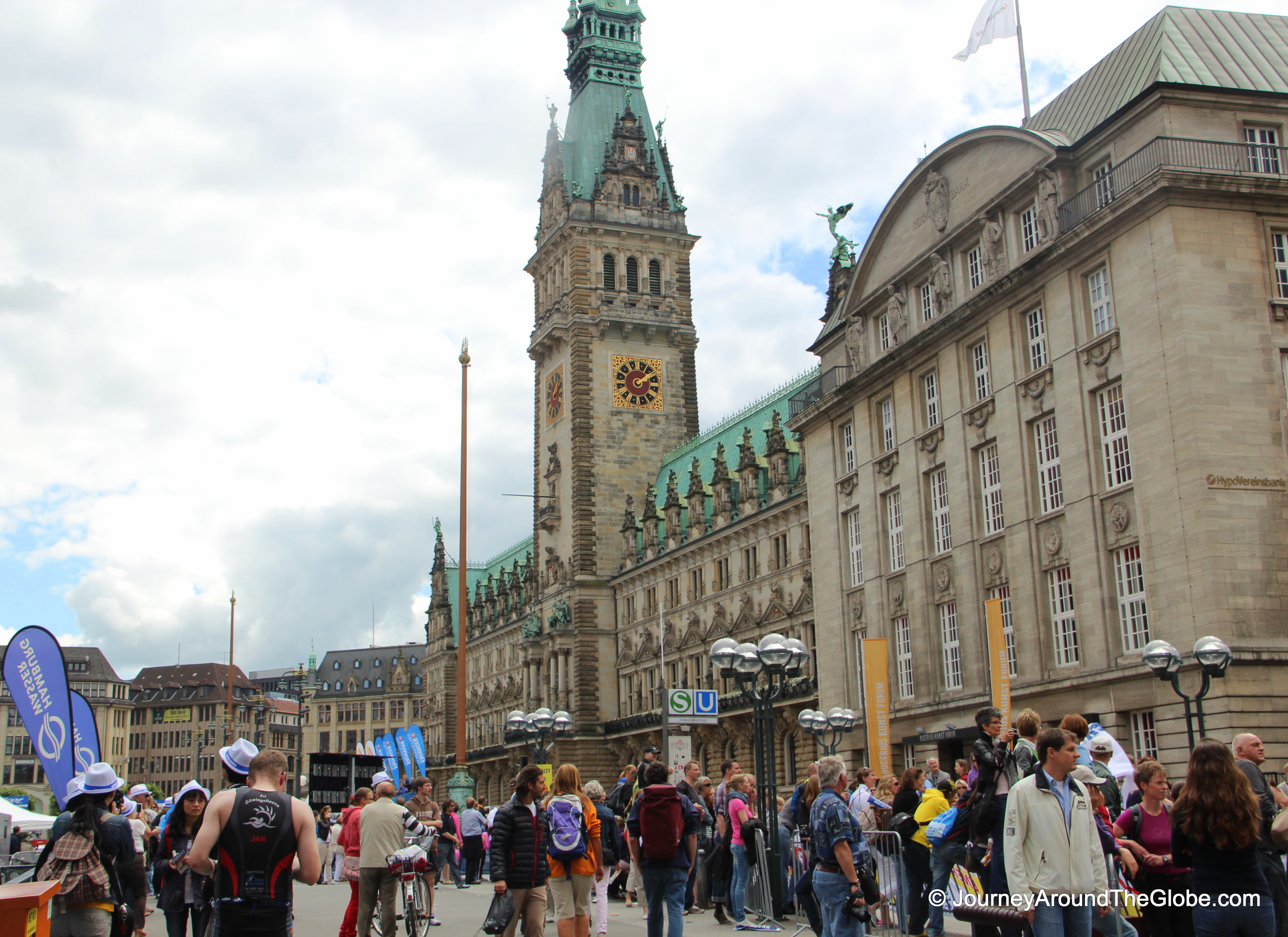
1) RATHAUS (TOWN HALL) & RATHAUSMARKT: Rathausmarkt is a big, I mean huge square in the heart of Hamburg by a canal. The square has old and new buildings lined up in one side and Rathaus on another side. The building behind the city hall is Hamburg’s House of Commerce (Börse), which was also severely damaged in WWII.
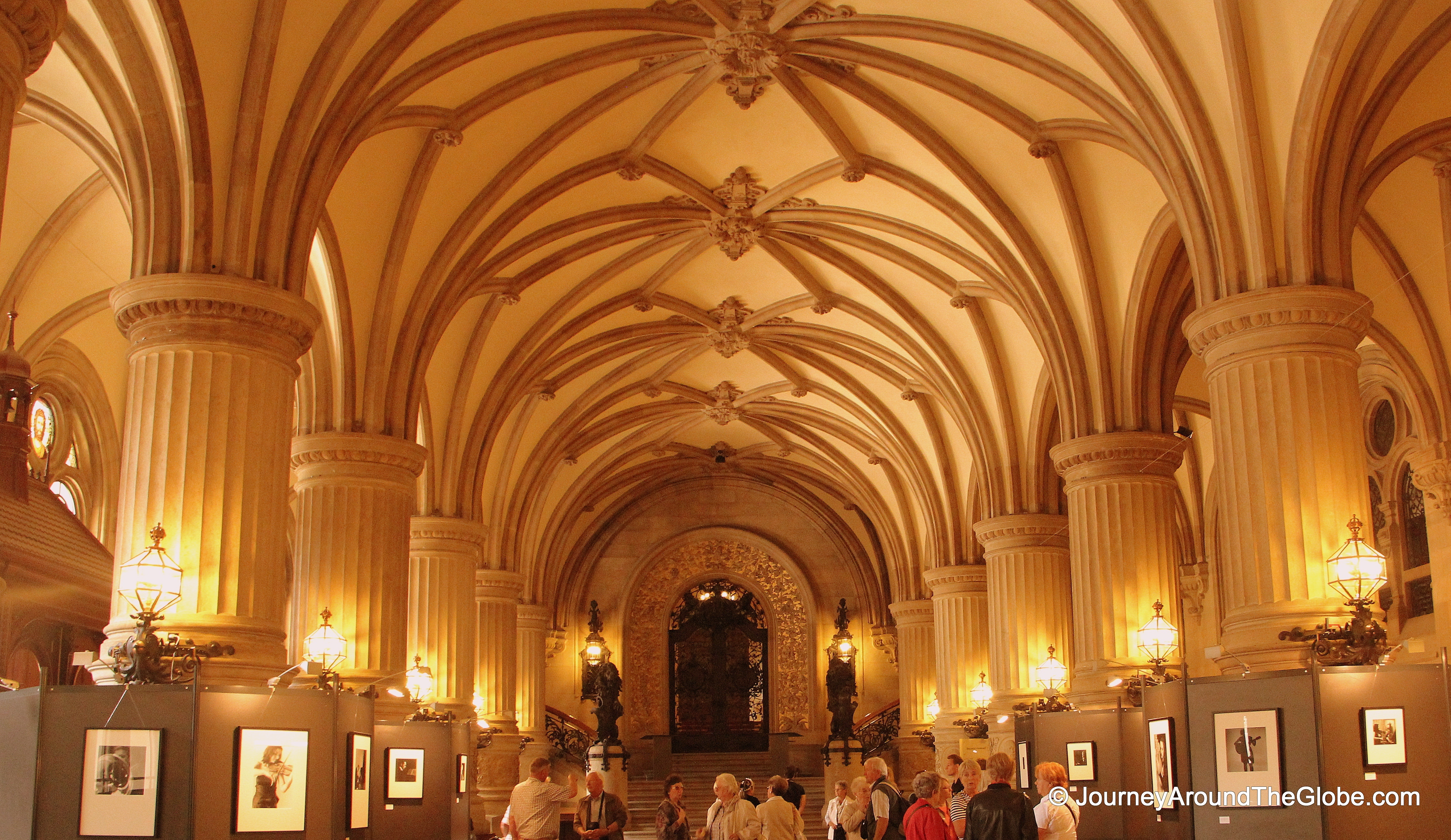
You can easily identify the town hall in Rathausmarkt with its 112 meter tall turquoise green tower and sandstone building in Northern Renaissance style. Luckily, the building escaped bombardments of WWII. It is free to go to the main lobby of Rathaus, which is decorated with pretty lamps, decorative doors, and tall columns. There were some temporary exhibitions going on when we went. 2nd floor of the town hall can only be accessed by a guided tour. The tour gives you a chance to see the luxuriously decorated representative halls and chambers on the upper level. You get to visit the Parliament, Senate, Civil Chamber, Great hall, and few other rooms gorgeously emblazed with giant fire-place, exquisite leather wall-paper, more than 100 years old expensive furniture, paintings, and chandeliers. All these adornments were used to show off the wealth and power of Hamburg. It felt more like being in a palace than a town hall.
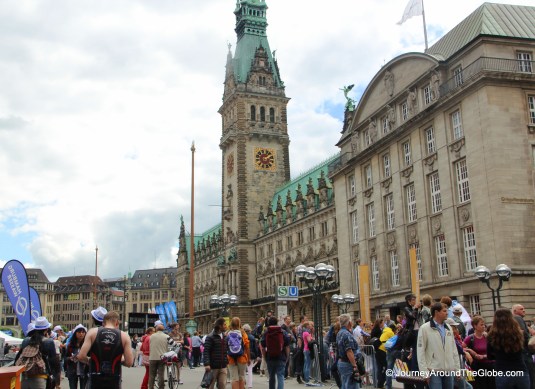
- Hamburg Rathaus (Town Hall) in Rathausmarkt
Guided tour fee is 3 euros per adult and 14 years or below is 0.50 cents. Below are the hours of the tours, English tours are available every 2 hours within this time:
Mon – Fri: 10:15 – 3:15
Sat: 10:15 – 5:15
Sun: 10:15 – 4:15
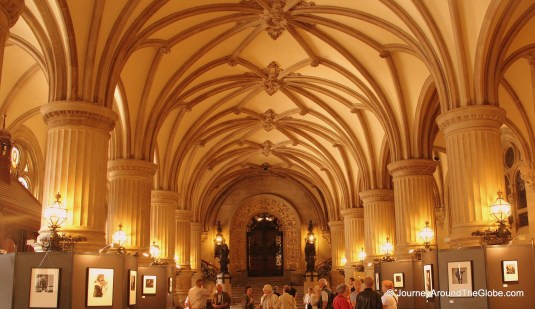
- Main lobby of Hamburg Rathaus
2) CHURCHES: There are 5 major churches in Hamburg that were totally damaged in WWII during air-raids. All of them were rebuilt on their original foundations except St. Nikolai Church, which only has remaining from the bombings.
a) ST. NIKOLAI: Founded in 1195, St. Nicholas Church is one of the oldest churches in Hamburg. Over the centuries, it develops from a little chapel to a huge hall church. Which once used to be a church before the air-raids of 1943, St. Nikolai, is now a memorial against war and dedicated to all the victims of war and persecution from 1933 – 1945. The steeple, some rubbles, and part of the walls in front of it give a tiny bit of visual feeling of what the city went thru during WWII.

- Steeple of St. Nikolai in Hamburg, Germany
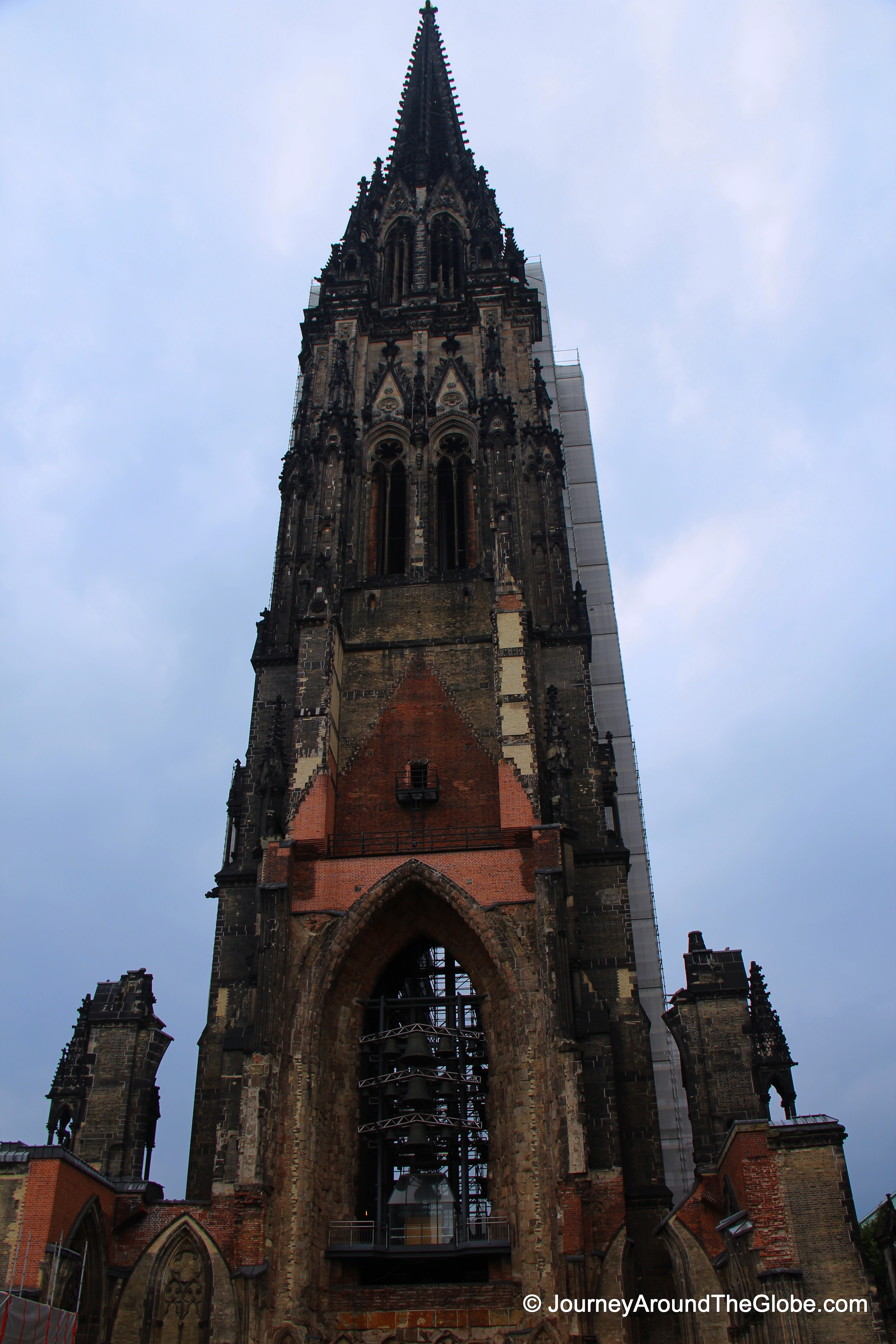
The steeple of this neo-Gothic church St. Nikolai is 483 feet (147.3 meters) tall and was the highest in the world when built in 1874. Since 2005, it can be accessed by a lift to get one of the best striking views over contemporary Hamburg from 76 meters height platform. Ticket is 3.70 euros per person and 2 euros for children from 6-16 years. The service is open from May – September: 10 – 8 and from October – April: 10 – 5.

- Statue in front of St. Nikolai War Memorial
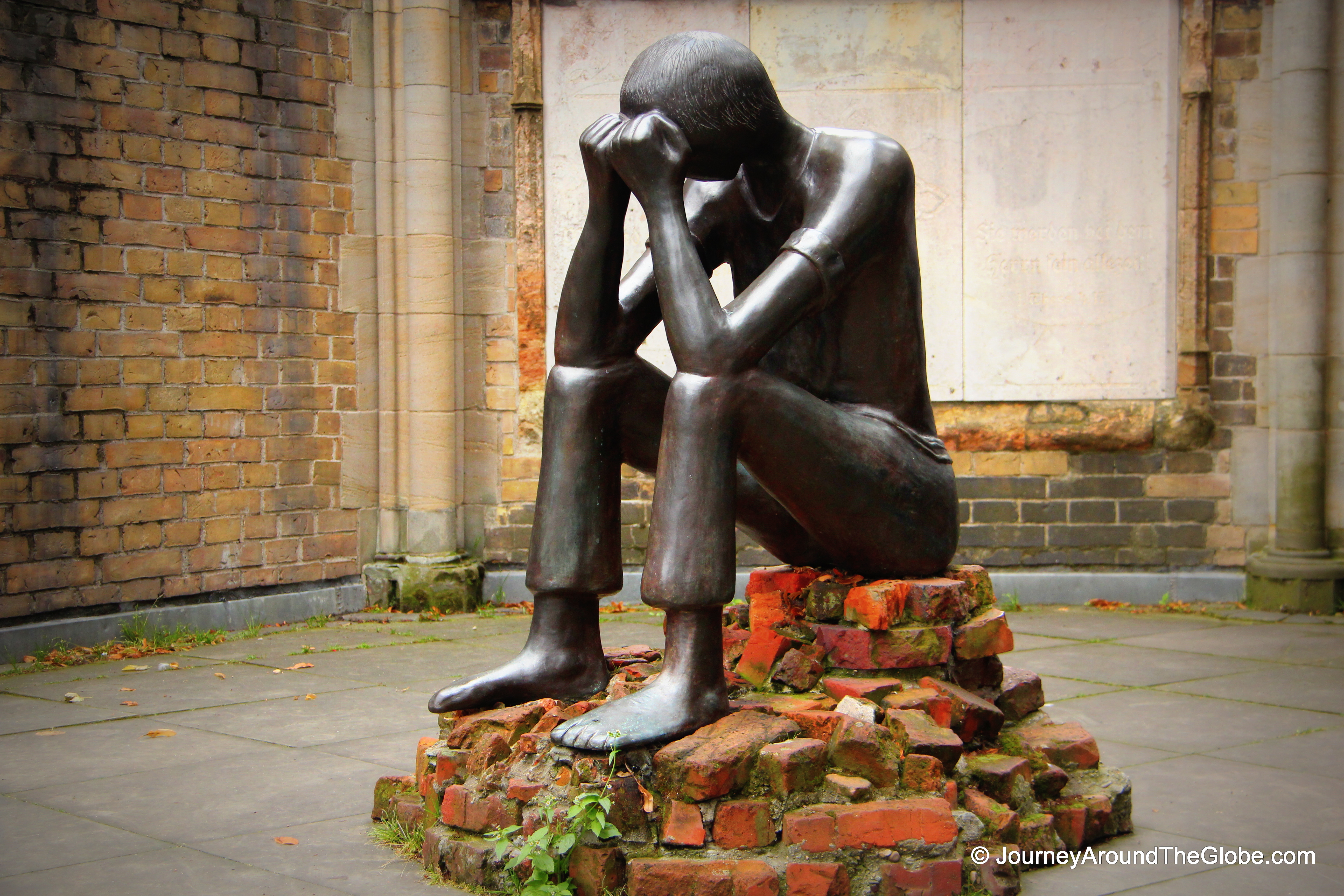
The same ticket can be used for Documentation Center too. This is a museum under the glass dome, which was the crypt, in between the church spire and the other side of the ruins. The permanent exhibition features the history of St. Nicholas as well as history of the air war and its consequences exemplified by the city of Hamburg, Warsaw, and Coventry.
b) ST. MICHEL’S CHURCH: This is city’s landmark and the most beautiful and most crowded church we’ve seen in Hamburg. Interior of it is very elegantly decorated with white and golden walls, pillars, and ceiling. The altar has a huge painting with few maroon marble columns with Jesus on cross on the top. Don’t forget to check out the beautiful organ in the back too. This is a must-see even if you don’t visit any other churches in Hamburg.
You can go on top of St. Michel’s Church by paying 4 euros per person to get a panoramic view of the city. We didn’t go on top since we already went on the steeple of St. Nikolai Church.

- Altar and main prayer hall of St. Michael in Hamburg, Germany
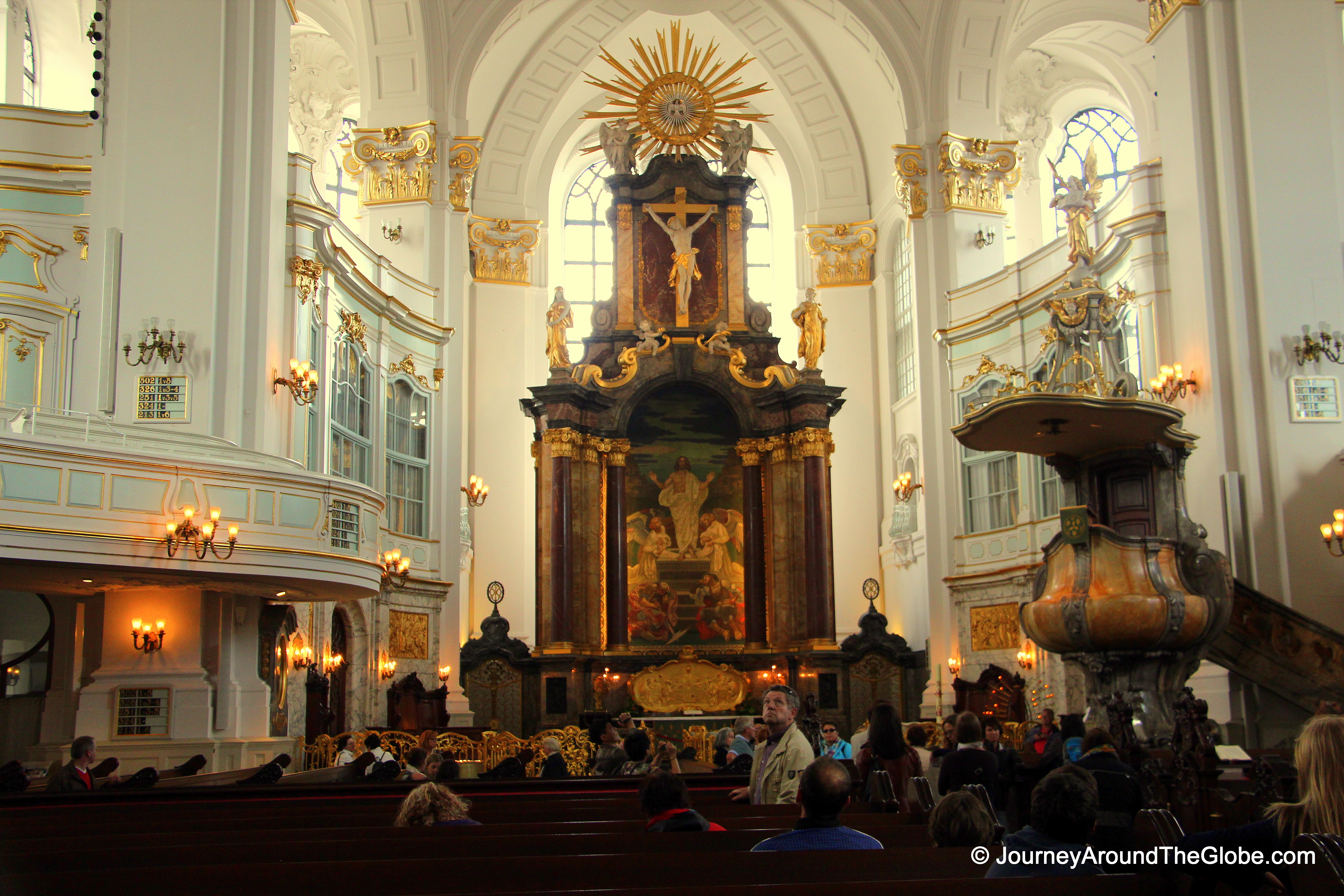
c) ST. PETER’S CHURCH (HAUPTKIRCHE ST. PETRI): This is the city’s oldest parish church, with records going back to 1195. The church is very simple inside. But the old paintings from 15th/16th century are something to appreciate, as well as the giant church organ in the back. Visitors weren’t allowed to take pictures inside.
d) ST. JACOBI CHURCH (HAUPTKIRCHE ST. JACOBI): Construction of this church started from 1340. Three altars of this church date back to 1500, the pulpit is from 1609, and the organ is from 1693. The church was destroyed in WWII and was rebuilt from 1951 – 1963. This is not as dull as St. Peter’s Church. The altar is simple but the organ is very impressive and big.
e) ST. KATHARINA CHURCH: This is one of the five main churches of Hamburg. Unfortunately, we couldn’t go inside the church because there was some work going on inside it.
3) SIEVENKING PLATZ: This is a pretty square/park for the locals to chill and the tourists to explore different corners. The square houses some important judiciary buildings, such as Constitutional Court, Civil Court, and Criminal Court. We couldn’t go inside any of these buildings (closed on Saturdays), but it is nice to walk past these nice architecture even from outside.

- Sievenking Platz in Hamburg, Germany
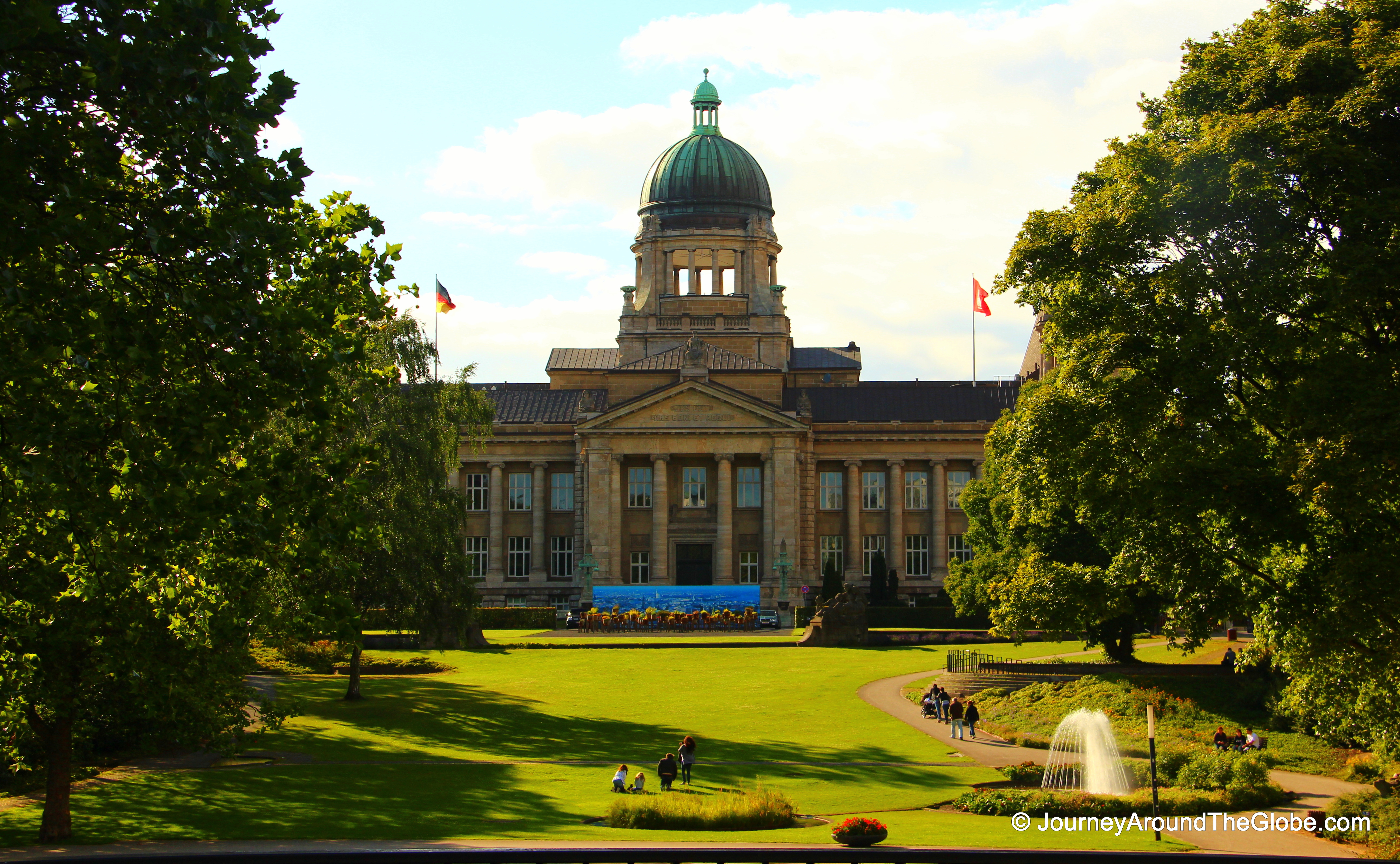
4) CANALS & BRIDGES: Hamburg has many canals flowing through almost every corner of the city. With more than 2400 bridges, Hamburg actually surpasses cities like Venice or Amsterdam. Here are the noticeable bridges and canals we saw in Hamburg:
a) TROSTBRUCKE: We passed this bridge on our way to St. Nikolai. This is for both vehicles and pedestrians. The 2 statues on both sides of this bridge are of Graf Adolf III (holding a sword) and Bishop Ansgar (holding a church).
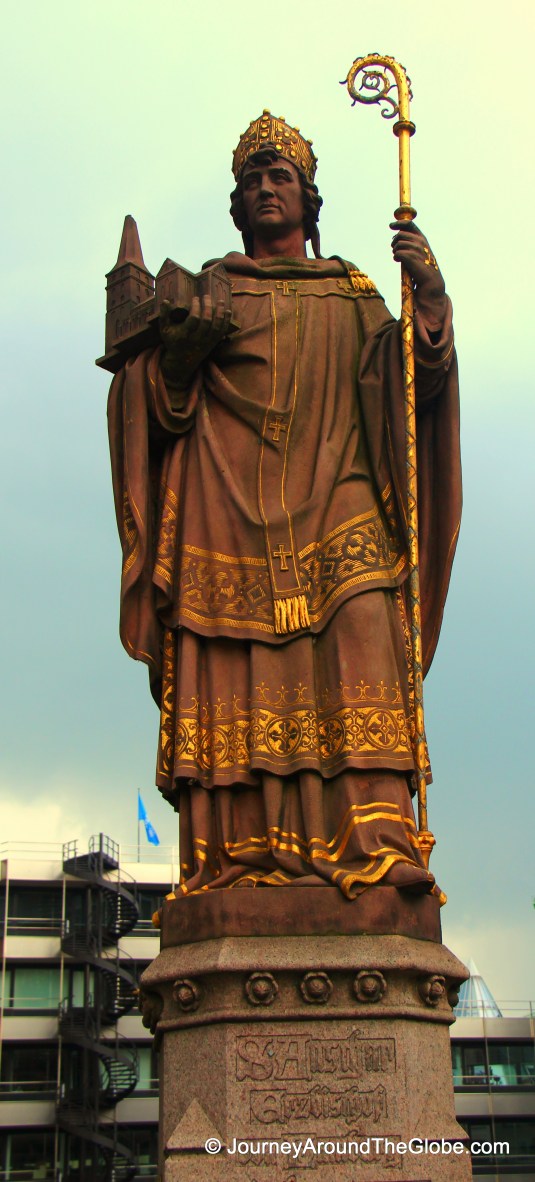
- Statue of Bishop Ansgar on one side of Trostbrucke in Hamburg, Germany
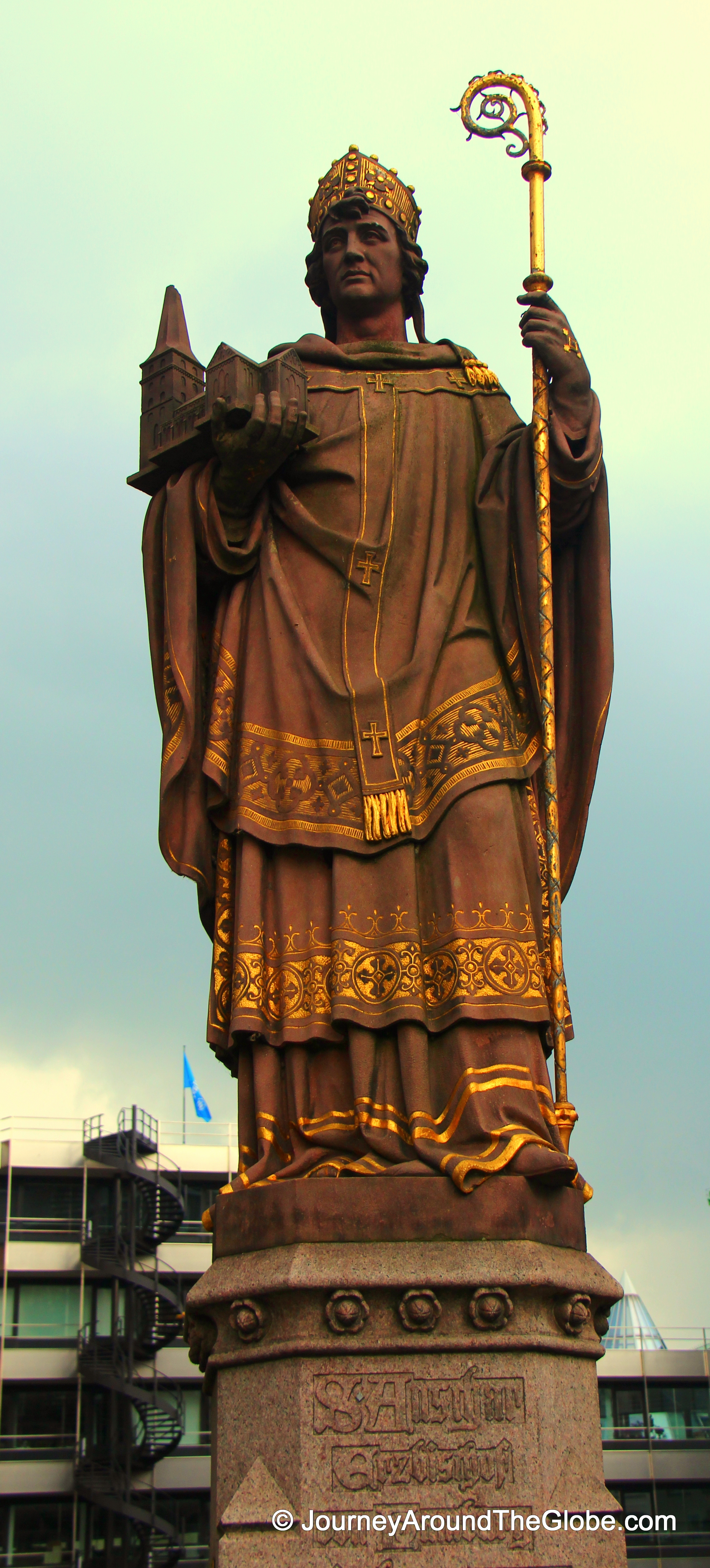
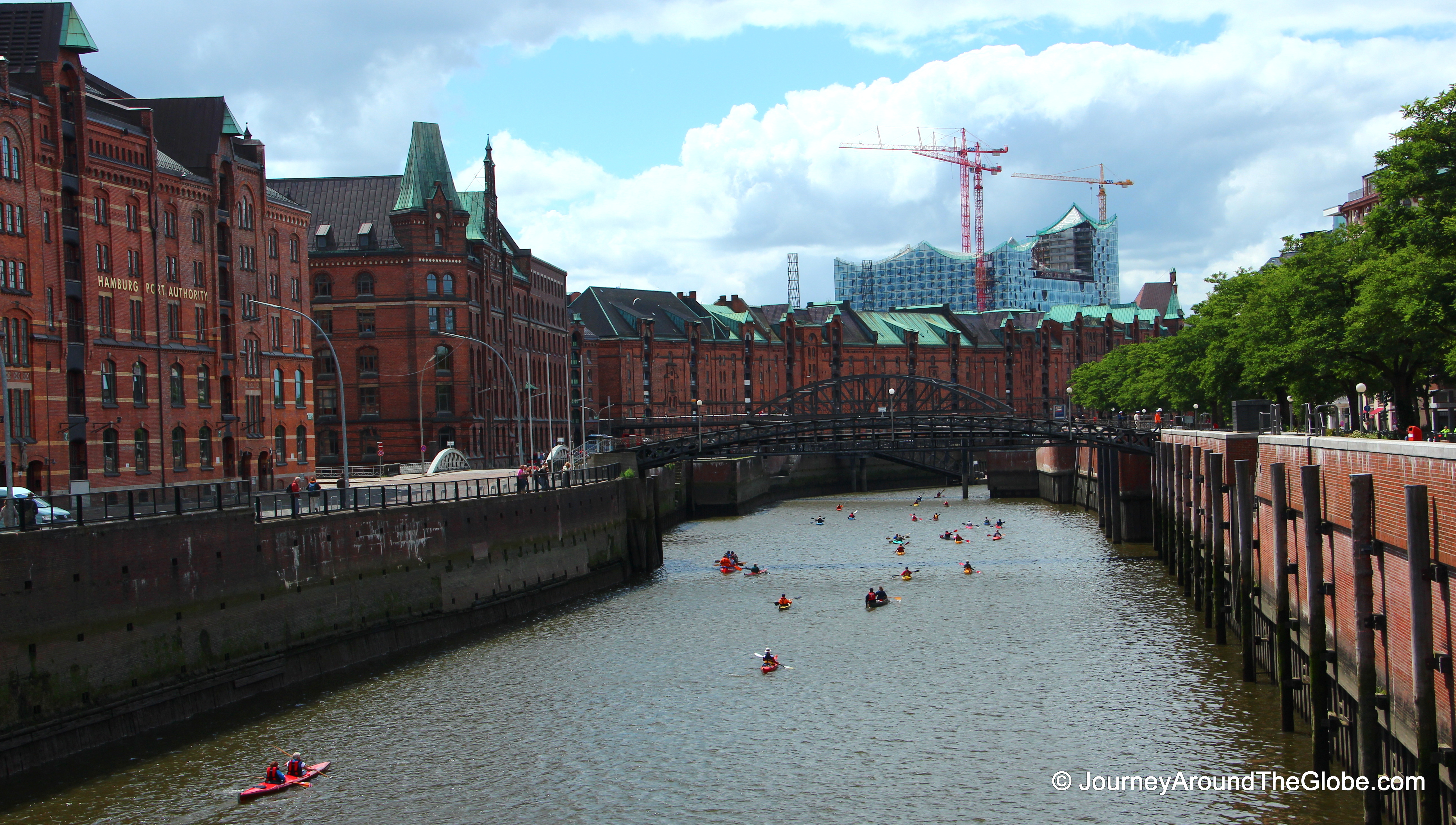
b) KORNHAUSBRUCKE & ZOLL CANAL: The bridge is only few minutes walk from St. Katharina Church. This is also for both vehicles and pedestrians. This bridge gives a wonderful view of the surroundings and Zoll Canal. On the south side of the bridge is Speicherstadt, where you will see old red buildings lined up the water side, one of them is “Hamburg Port Authority” building. At one end of the bridge, there are statues of 2 famous explorers, Columbus and Vasco da Gama.

- Row boats on Zoll Canal and old buildings on the sides, Hamburg, Germany
5) ALSTER BOAT TOUR: Taking a boat tour on Alster, also known as “Pearl of the City”, is almost a must-do here. It gives a view of Hamburg from the water or from the white Alster steamers to the city’s beauty. From here, city’s different faces can be truly appreciated. The boat takes you to the Binnenalster (Inner Alster), passing 2 bridges – Lombards Bridge and Kennedy Bridge. Then to Aussen Alster (Outer Alster) with view of soaring towers of all 5 main churches along with the tower of Hamburg Town Hall. In Aussen Alster, residential areas for wealthy Hamburgers and the city’s grandest villas can be seen. It is also a popular water sports location among sailors, rowers, and canoeists.

- Jungfernstieg – The bank of Alster in Hamburg, Germany
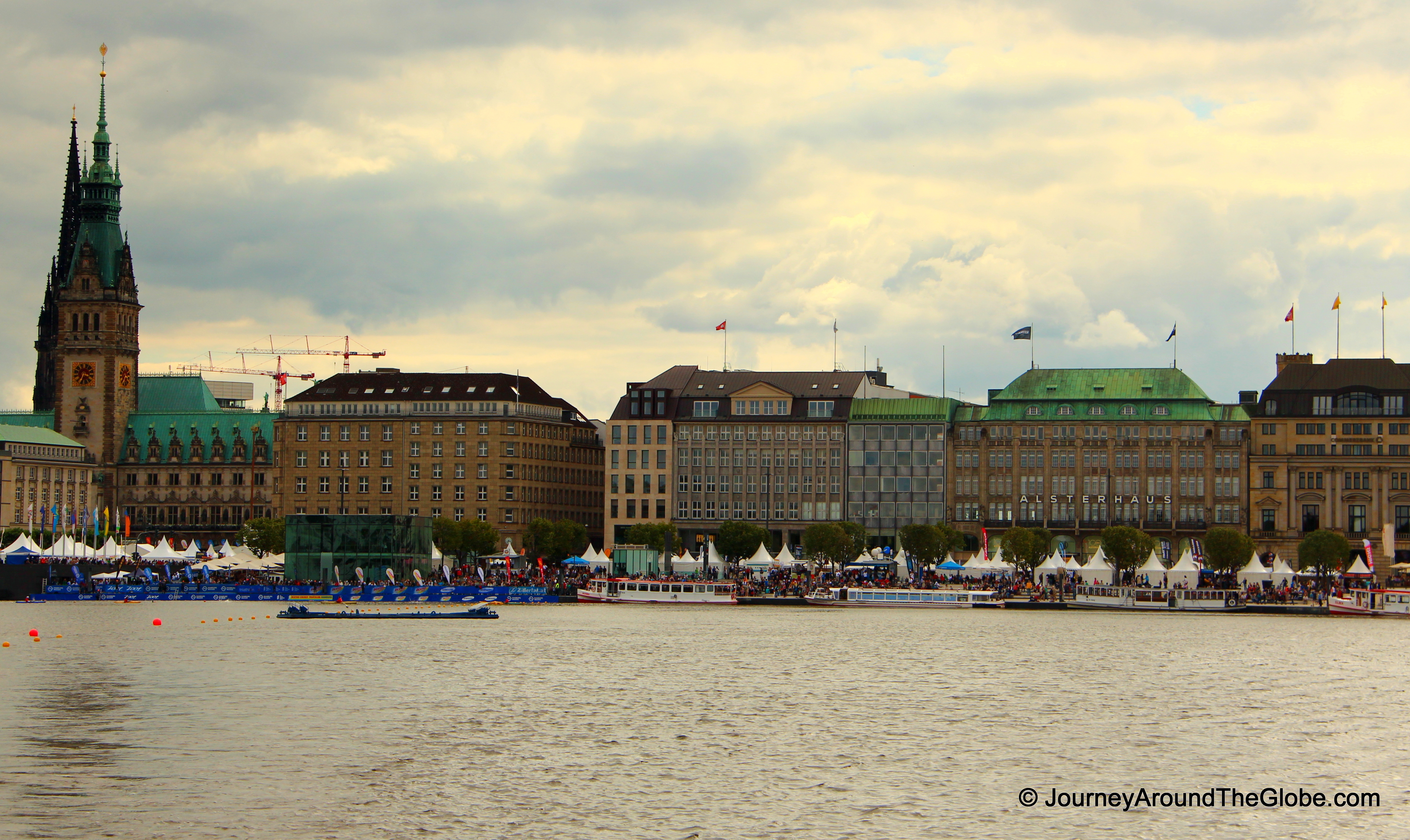
The boats can be accessed from Jungfernstieg – Alster boat tour deck, which is about 5 minutes walk from Town Hall. The tickets can be bought right there on boats. There are couple options when choosing the tour; you can take either 1 hour tour or 2 hours tour. We took 1 hour boat ride and it was 13.50 euros per person, kids under 6 years of age are free.
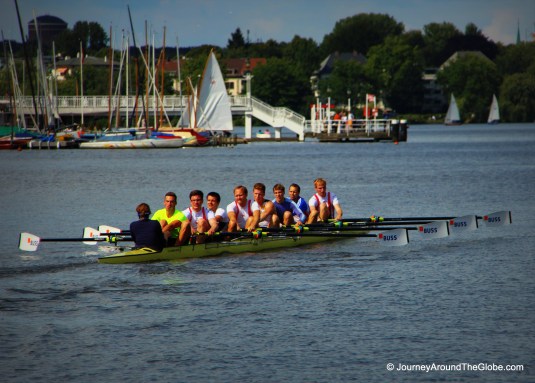
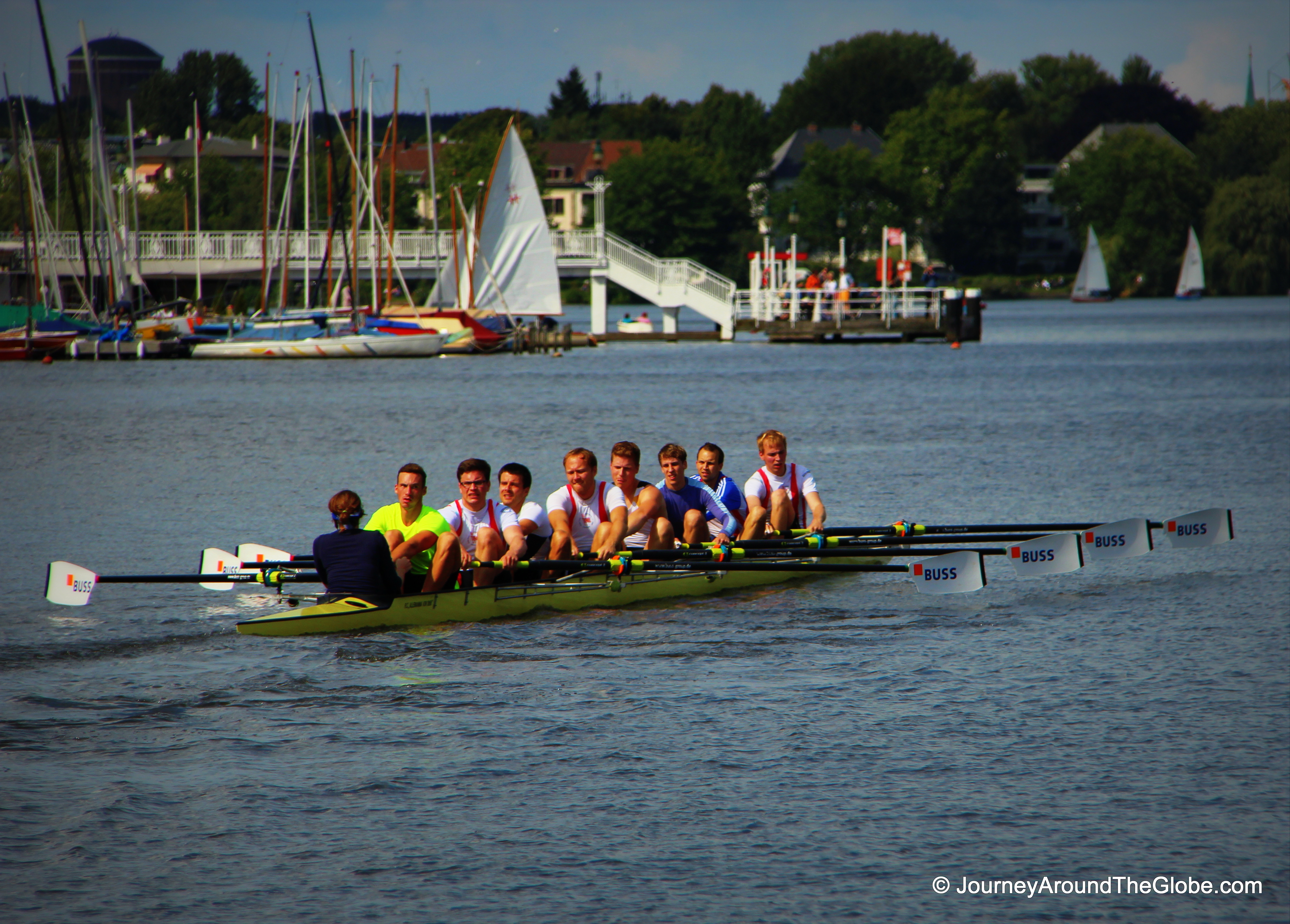
- Aussen Alster in Hamburg, a popular water sports location among sailors, rowers, and canoeists
6) TRIP TO BREMEN, GERMANY: You can’t leave Hamburg without making a day trip to Bremen. It’s less than an hour drive by car. Bremen’s city hall and its surrounding is on the list of UNESCO World Heritage site. The twisted, narrow alleys of the old town are magical and fun to get lost in, where you also get to see “probably” the smallest hotel in the world.

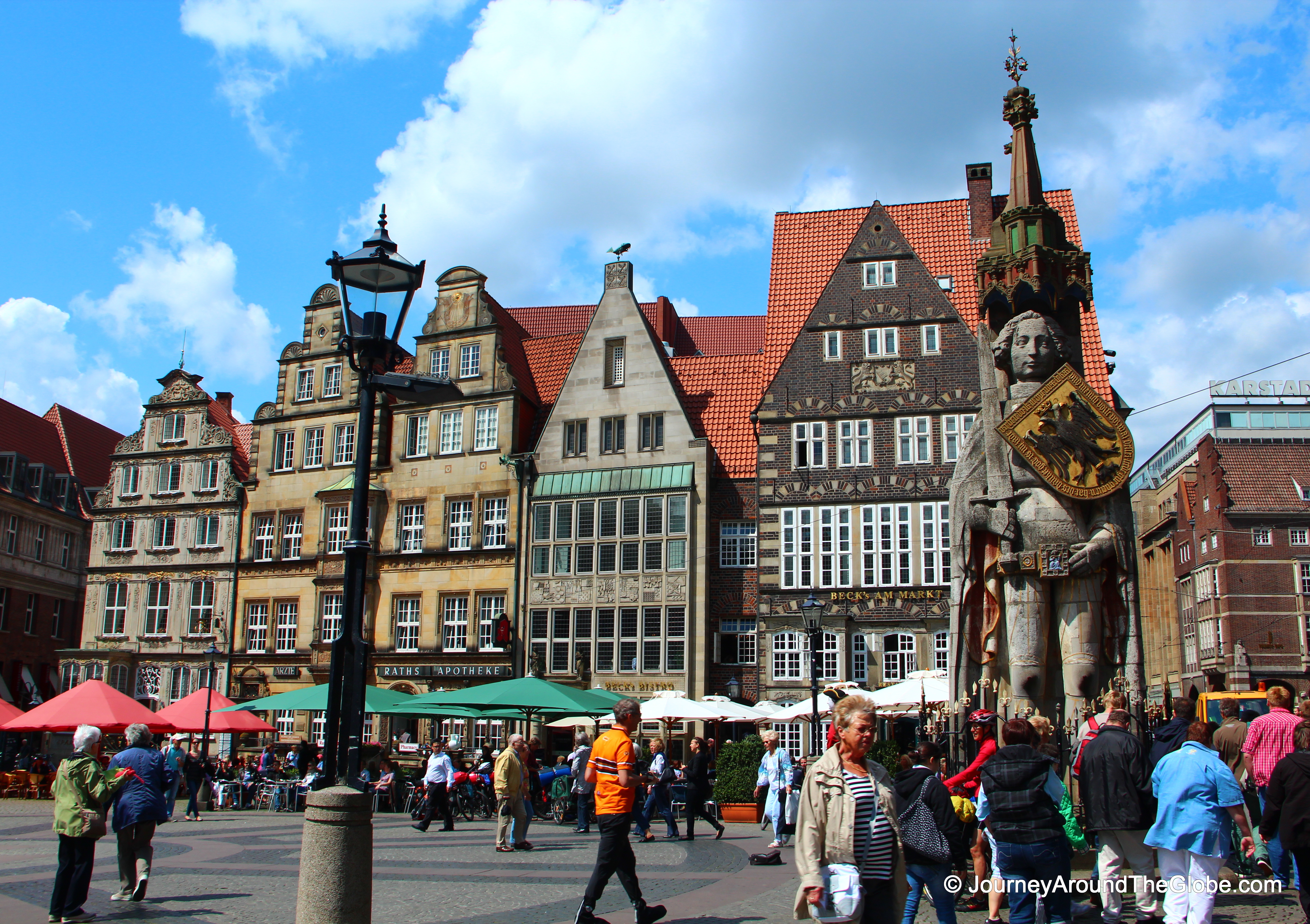
- Statue of Roland in Marktplatz in Bremen, Germany
Related articles
- Hamburg in Germany (avicenna2020.wordpress.com)
- Roal D. Smeets – Cheap Hotels in Hamburg (roalroalroal.wordpress.com)
- Hotels in Hamburg by Roal D. Smeets (roalroalroal.wordpress.com)
Share this:

Beautiful Basel, Switzerland
BASEL, SWITZERLAND: Basel is a perfect gateway spot if you have few days to spare in Switzerland. The city itself has many things to explore which includes contemporary architectures, museums, arts, and its famous zoo. In addition to that, the location is great to visit other nearby Swiss cities like Zurich, Bern, Lucerne, Interlaken and regions, like French Alsace, German Black Forest, and finally, the mighty Alps. Its medieval old town is a colorful and vibrant place to relax and watch people go by.

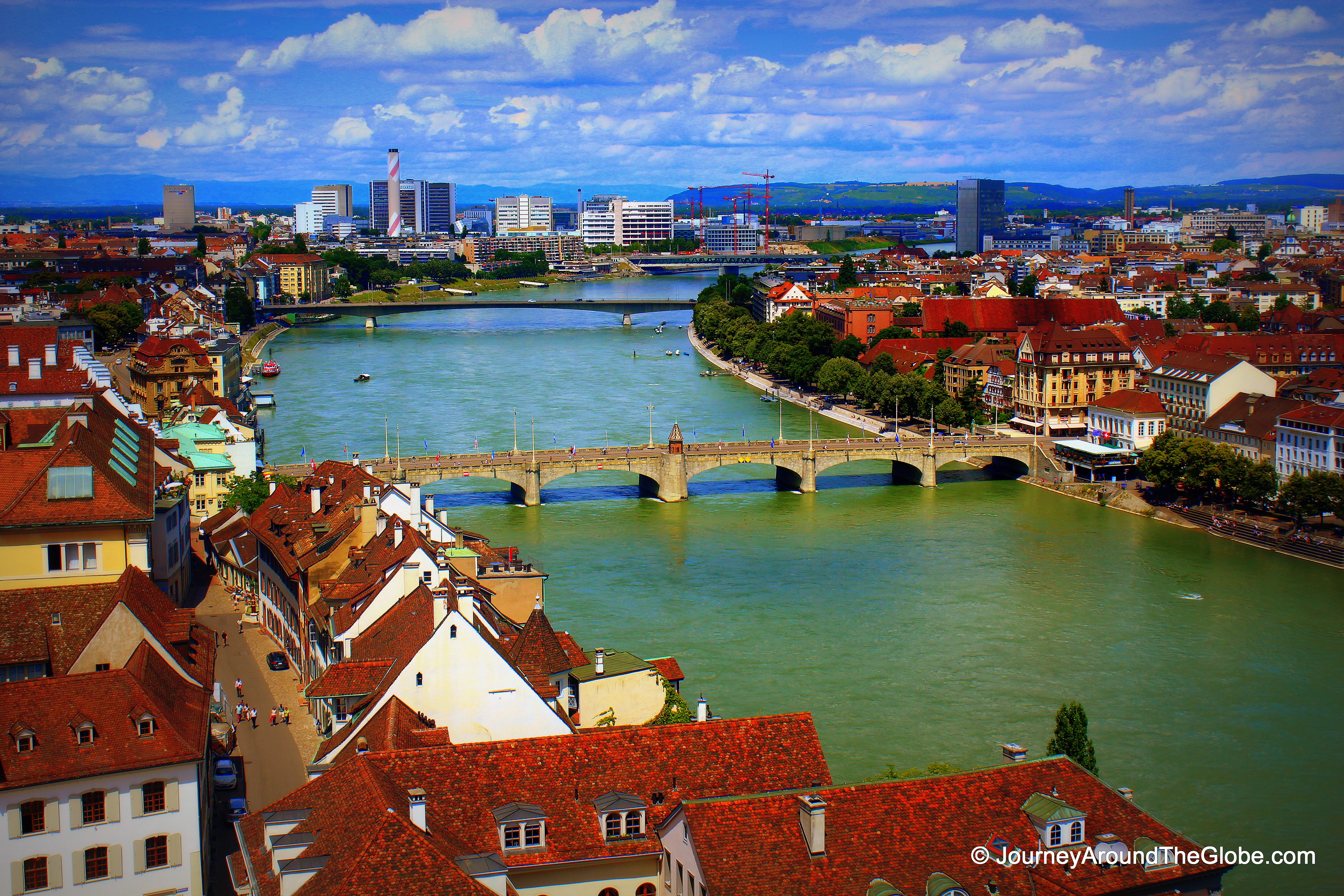
- View of River Rhine and the city from the top of Basel Munster tower
The main attractions of the city are within walking distance, but trams are very efficient and well-served here. Unlike many other cities, the tickets can be bought right in the bus/tram stops. The official language of the city is German, but I’ve heard people speaking French and most of the locals are very fluent in English as well. One thing to remember when driving on autobahn and entering Basel (or Switzerland) is that you have to pay 40 CHF to get a toll ticket. The ticket is valid for one calendar year indicating on the sticker.

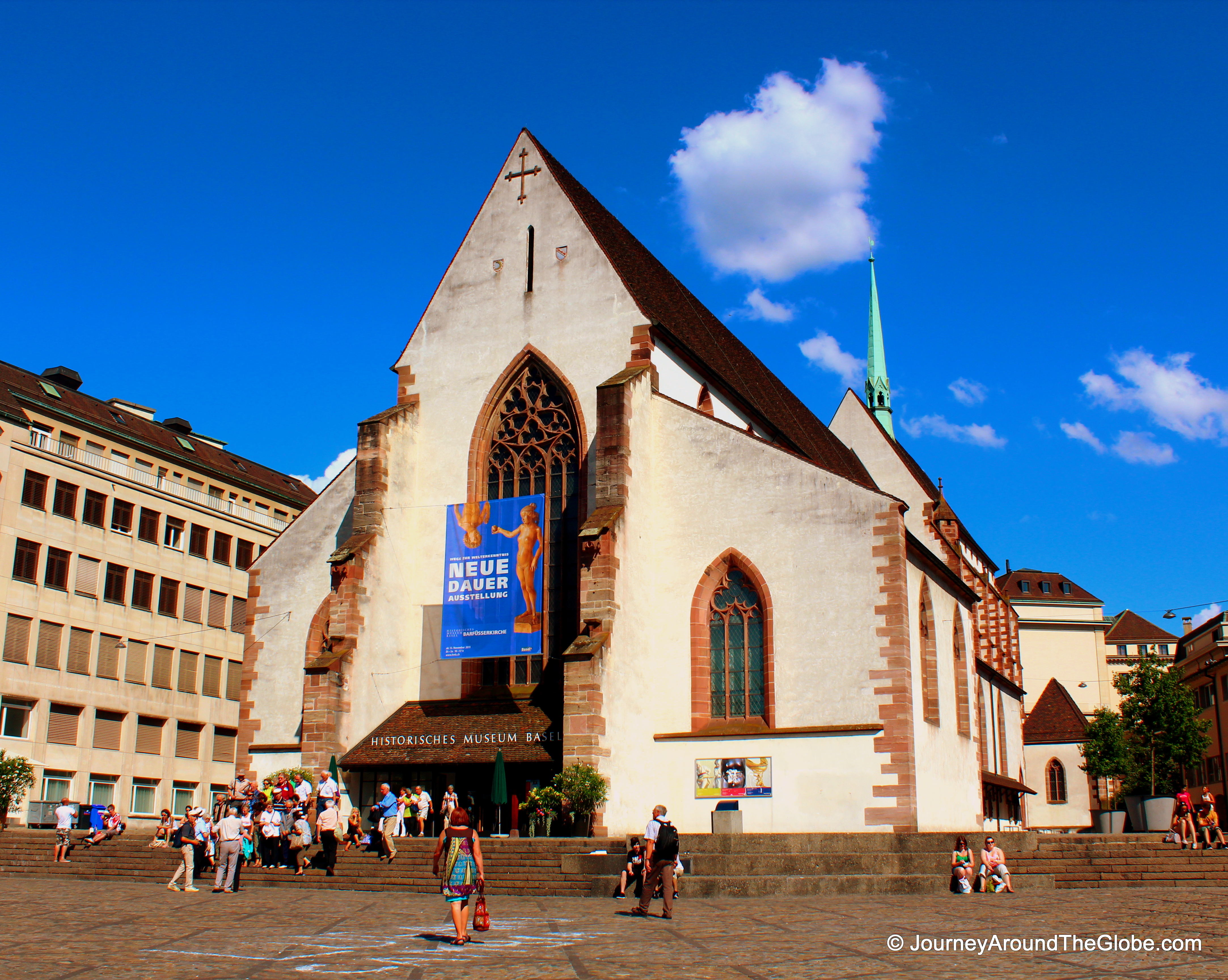
- Barfusserplatz in Basel, Switzerland
TIME OF TRAVELING: We drove to Basel during first week July, 2012. It was a nice and scenic 5 hours of drive from Tervuren, Belgium. The weather was extremely cooperative, not too hot, not too cold, and luckily, no rain.
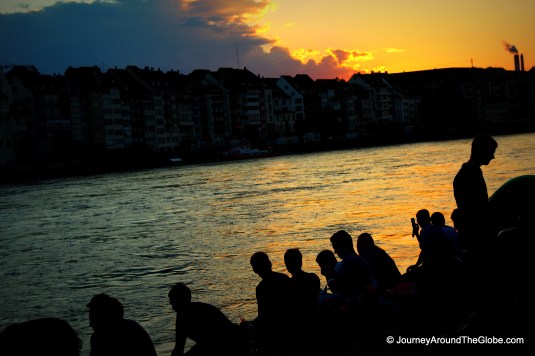
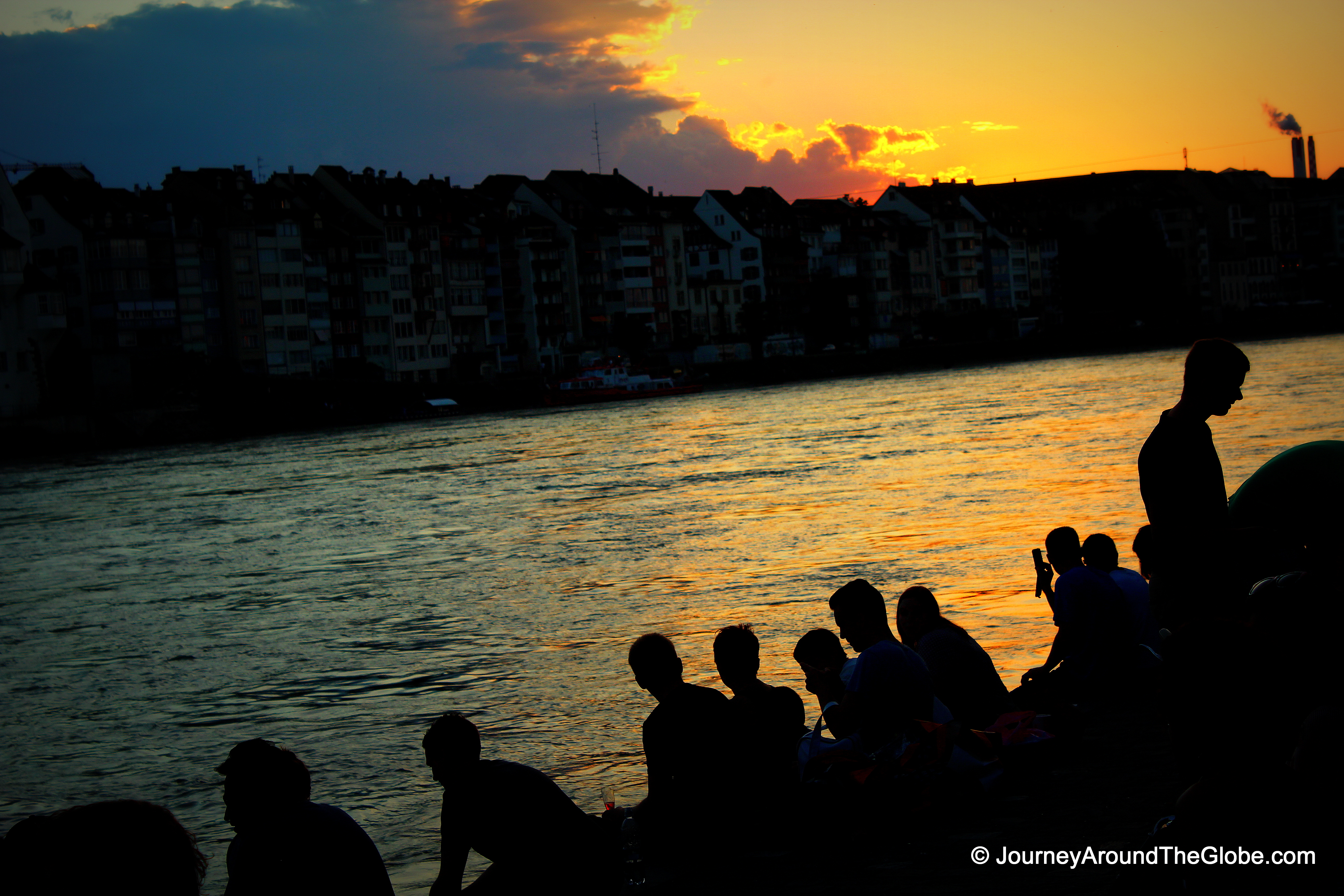
- Sunset near Mittlere Rheinbruck (Middle Rhine Bridge)
OUR HOTEL: We stayed in Dorin Hotels & Resorts in Basel. We took tram # 14, which dropped us right in front of Rathaus in Marktplatz in about 7 minutes. The hotel didn’t have free breakfast but free Wi-Fi and paid car garage were perfect for us. The best part of the hotel was that they gave us free tram pass for 4 of us for the duration of our stay.
WHAT TO EAT AND BUY IN BASEL: Of course, Swiss chocolates are something to eat and buy in Switzerland. Other than Lindt, “Villars” is a good brand of Swiss chocolates and if you want something original of Basel, then try “Läckerli Huus”. Additionally, Swiss knives, watches (if you have some extra cash to spare), and cowbells are some of the popular souvenirs to take back home. Buying Swiss watches from Switzerland doesn’t mean that you will get them cheaper here, they cost about the same anywhere else in the world.
PLACES WE HAVE VISITED: We spent a whole day in Basel and saw all the things we wanted to see in our list. Here are all the places we could hit in a day:
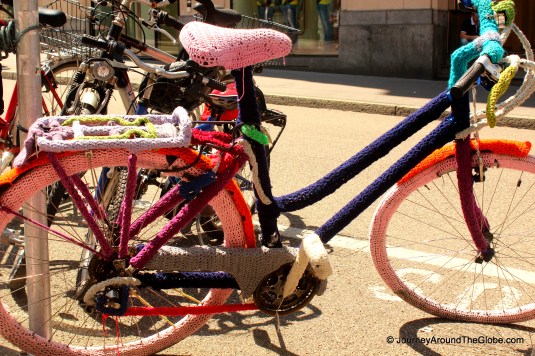
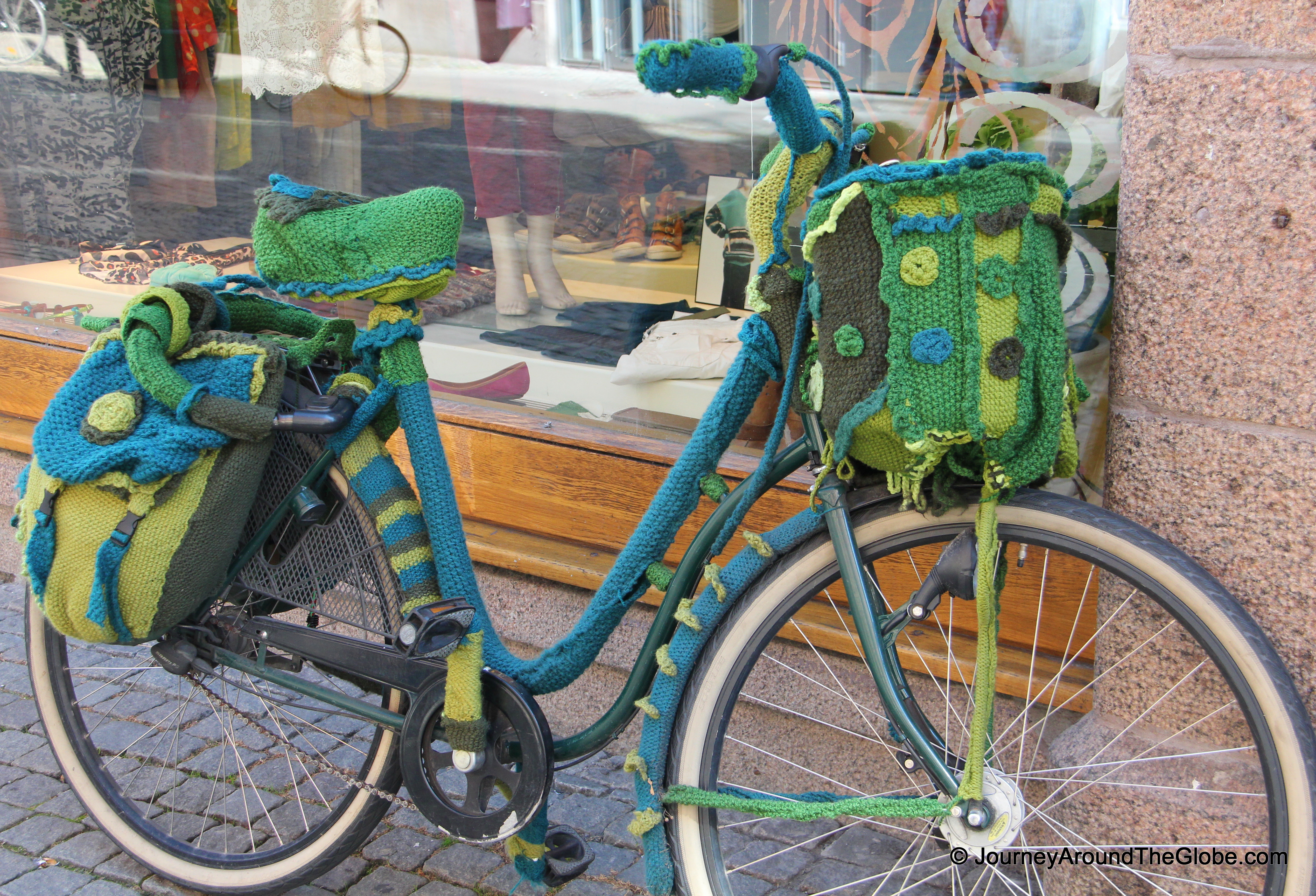
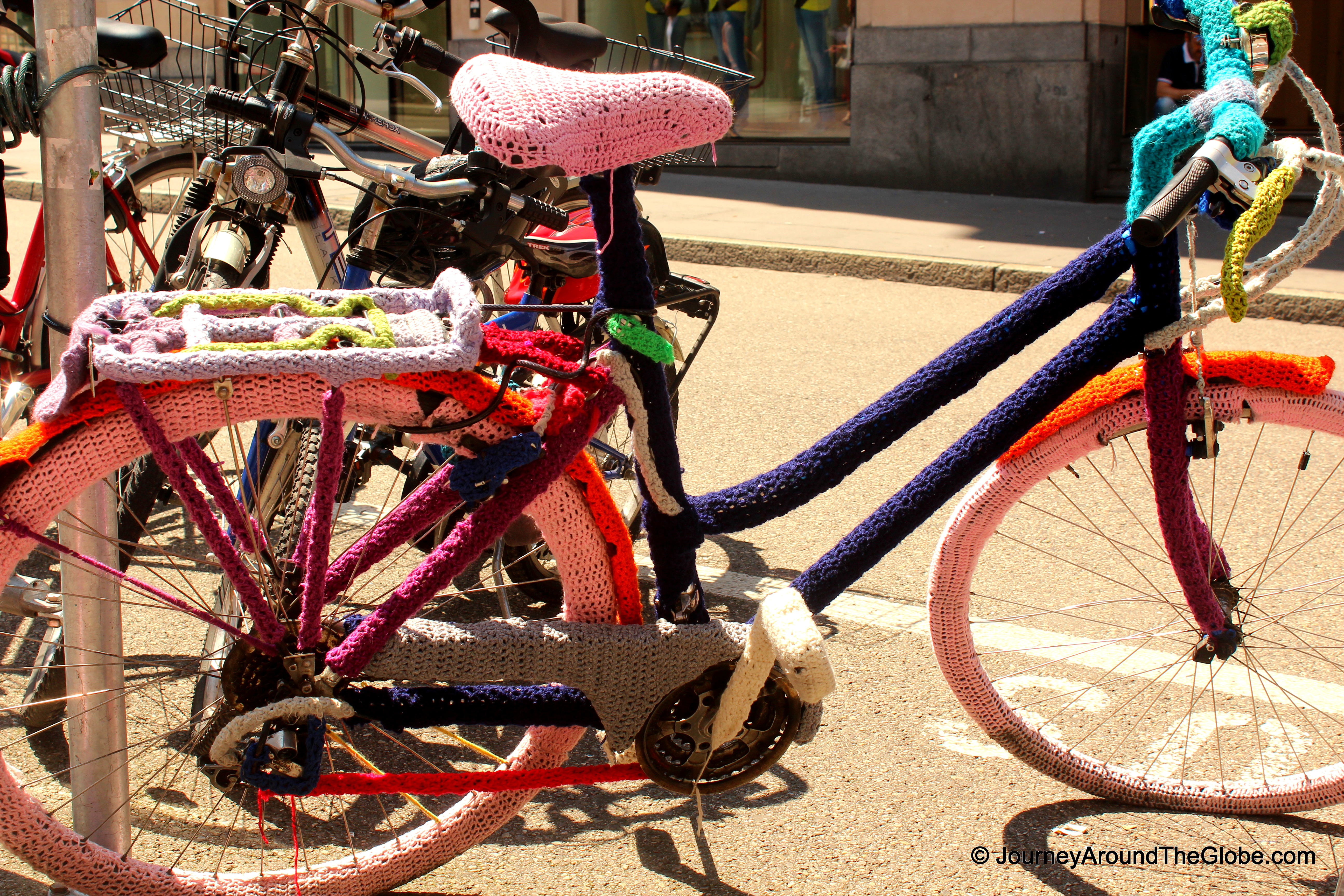
- A bi-cycle wrapped in coloreful woolen outfit on Freie Strasse near Marktplatz, Basel
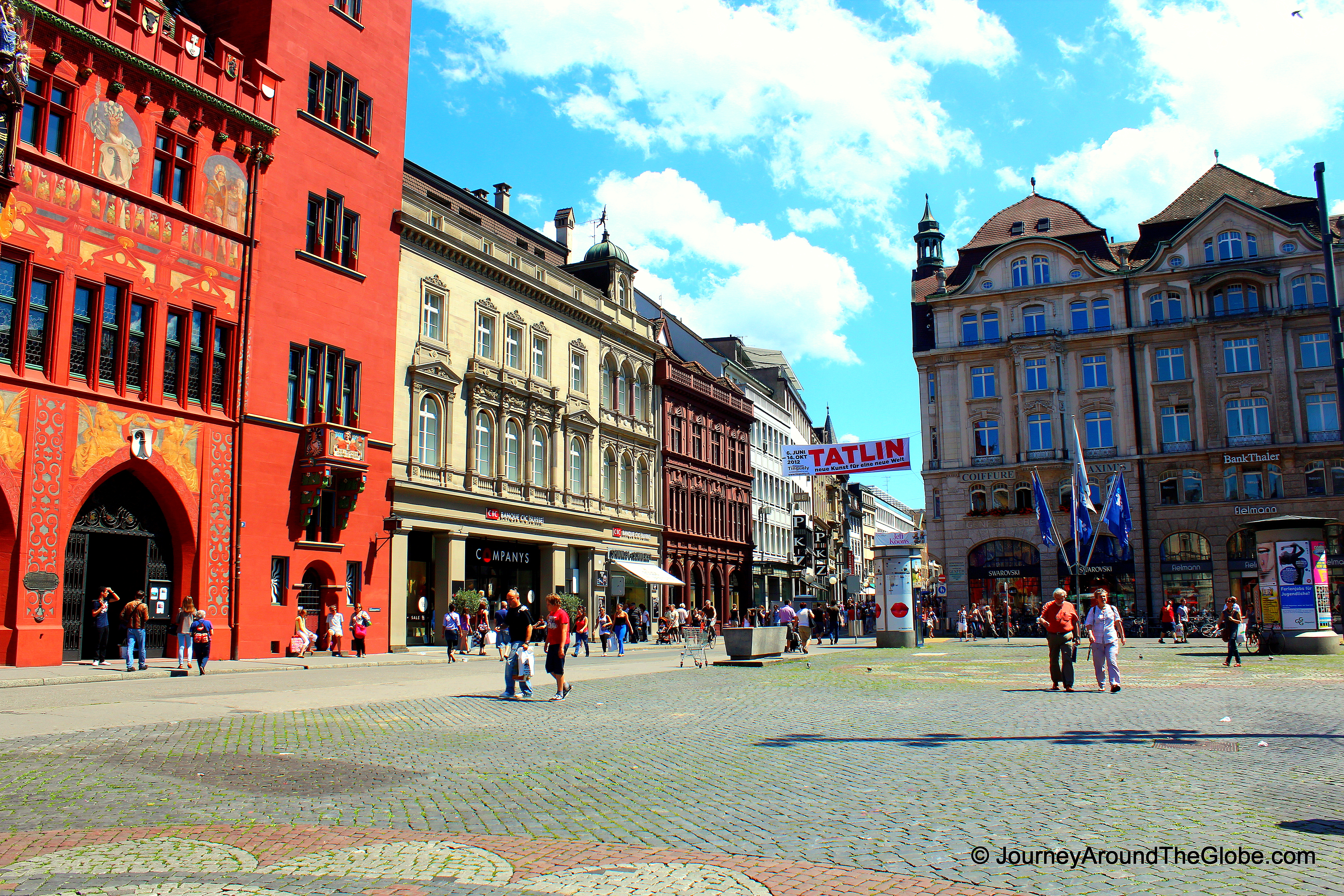
1) MARKTPLATZ & RATHAUS (TOWN HALL): This is the heart of Basel and the center point of everything. Marktplatz is usually very energetic and crowded during the day time with shops full of customers and restaurants packed with hungry or thirsty people. Fresh fruits & vegetables, bakery, cheese, flowers are always available every morning with more vendors on Saturday mornings. Freie Strasse is a lively small street on the right side of Rathaus (when you stand facing it), which has most of the stores and cafes.
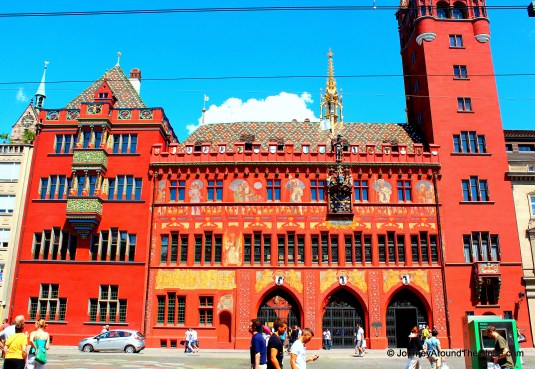
- Basel Rathaus (Town Hall)
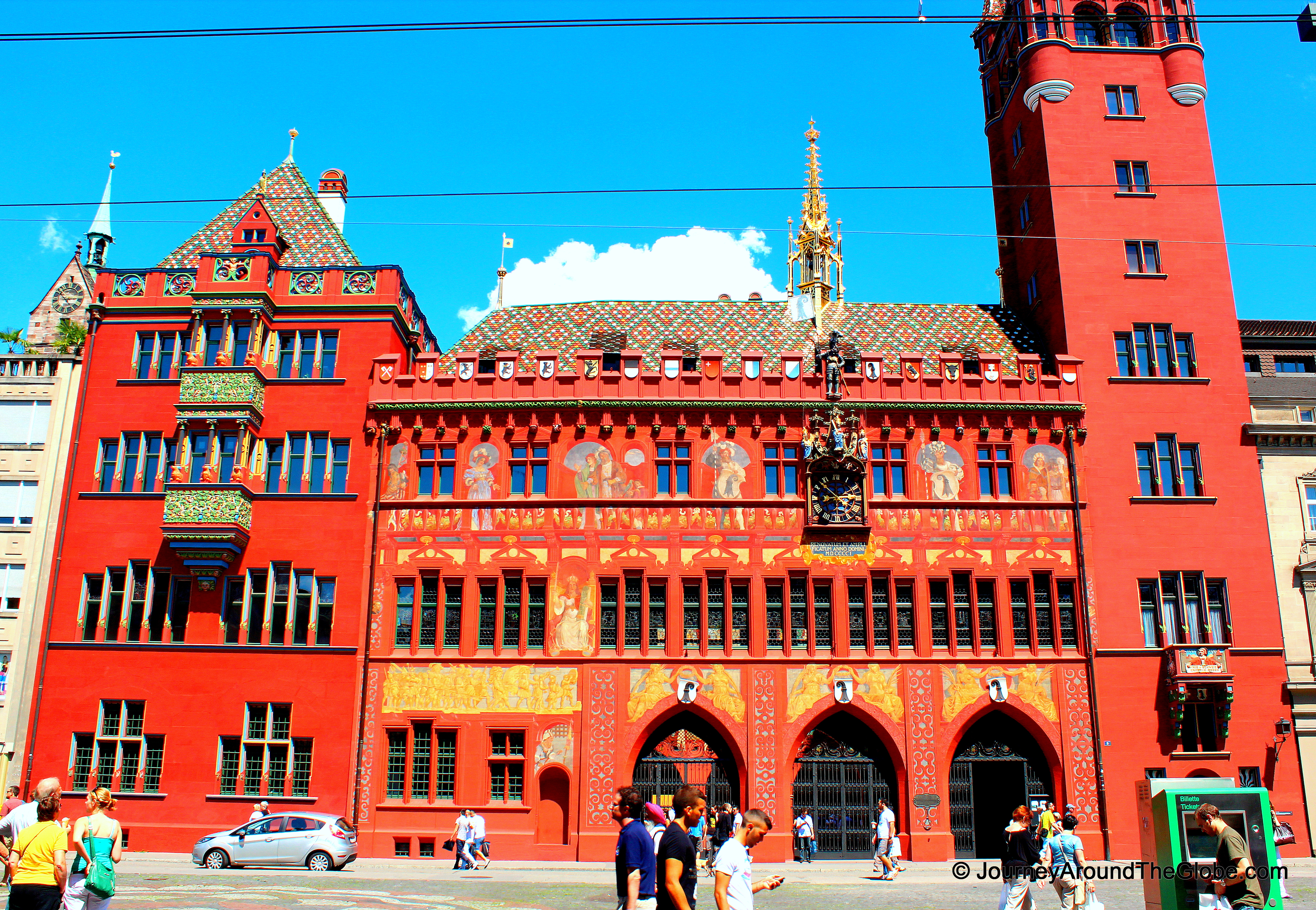
The beautiful red building with Renaissance façade at one side of Marktplatz is the Town Hall (Rathaus) of Basel which catches your eyes the moment you walk into the square. Check out the frescos on the outer wall and detailed design of this building. It’s free to enter the inner courtyard. It is small but the rich colors and designs on the walls are definitely unique and something I have never seen before. The town hall is still in official use; therefore you cannot go in without a guided tour, which is only doable on Thursdays. We didn’t go inside, but really enjoyed the small courtyard and going up the stairs to get an overview of the whole architecture.

- Marktplatz in Basel, Rathaus on the left
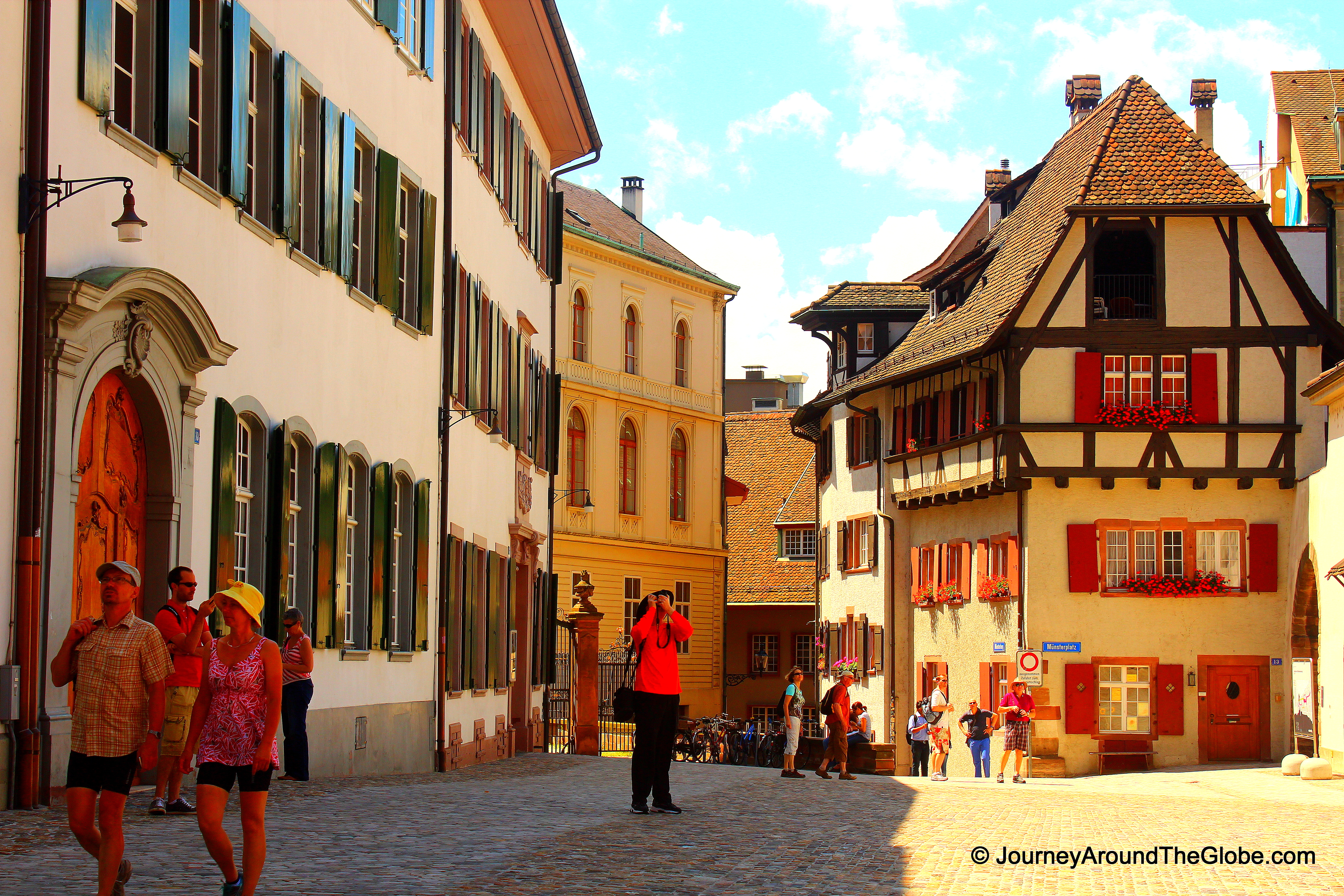
2) MÜNSTERPLATZ & BASEL MÜNSTER (CATHEDRAL): This also a part of old town. This is a rather calm and quiet square with a line of several medieval buildings on one side, opposite of the cathedral. We saw only one restaurant in that big square and no shops or anything. It’s less than 5 minutes’ walk from Marktplatz, just walk up the cobbled street (Münsterberg) to Münsterplatz after taking a left from Freie Strasse. River Rhine and a view of Black Forest on the side of the river can be seen by going around the church to its backside.
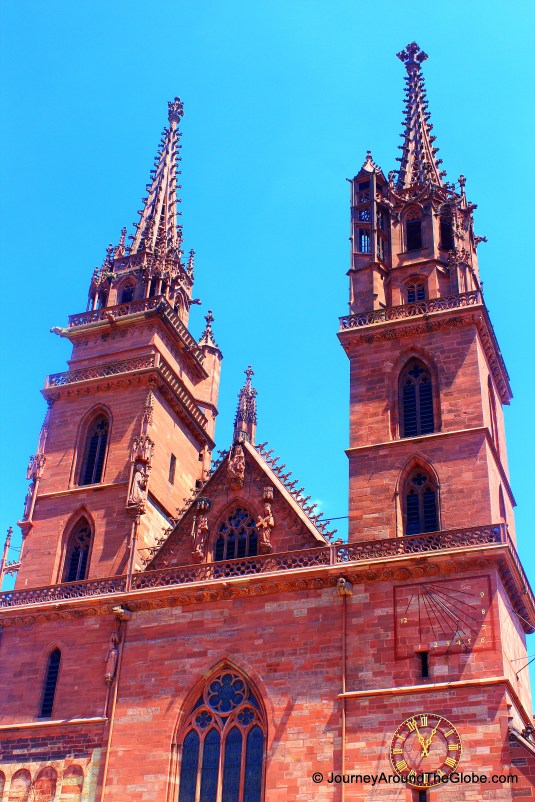
- Basel Munster
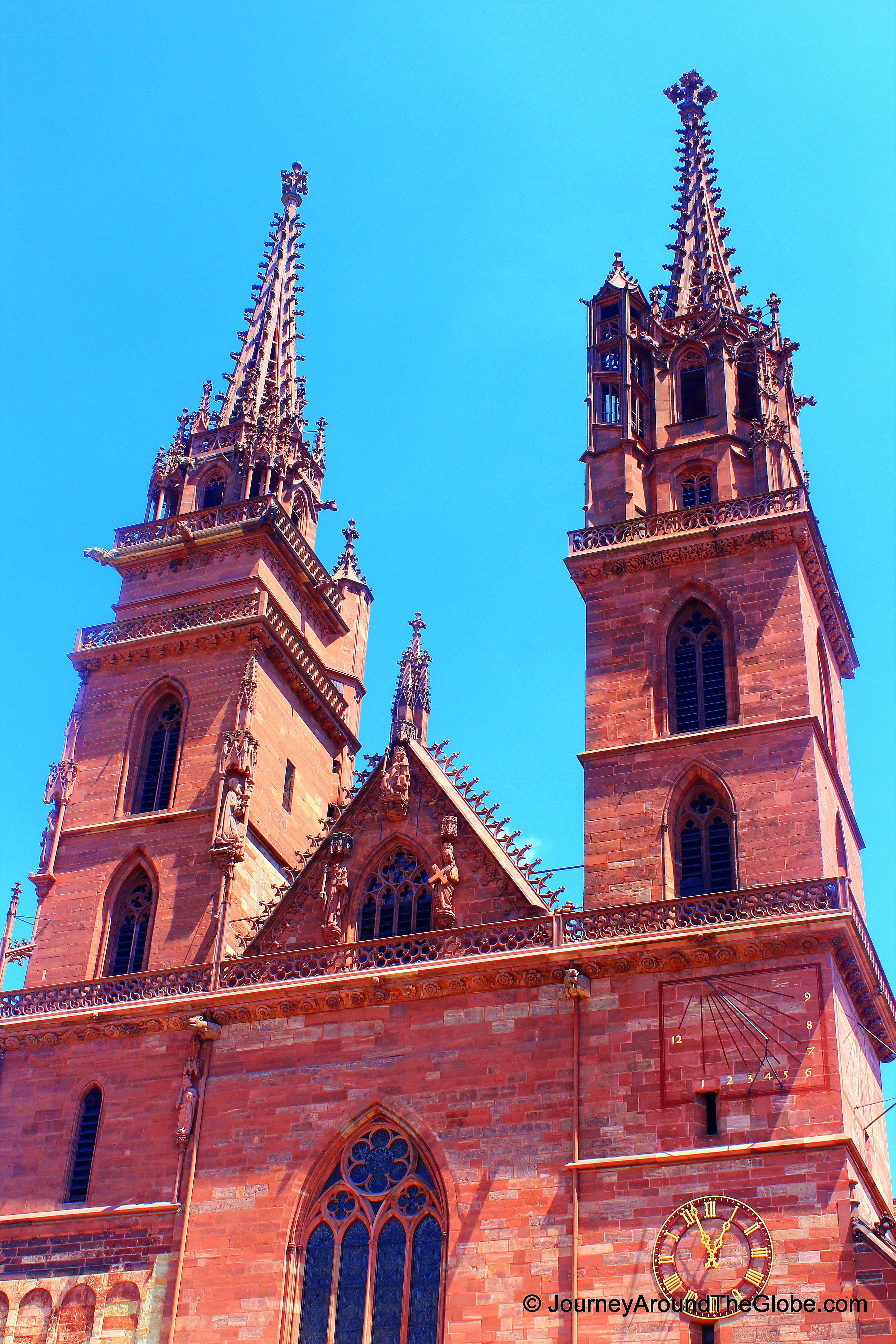
Basel Münster is definitely an important landmark of the city. The cathedral is easily recognizable with its red sandstone architecture and colored roof tiles. The cathedral was built between 1019 and 1500 in Romanesque and Gothic style. Both the towers of the cathedral can be climbed up by paying only 4 CHF per person and free for kids under 14. There are 237 very narrow and steep steps to go on top, but once you are there you get a stunning view of the whole city, Black Forest region on the other side of River Rhine, then Mittlere Brücke and Wettstenbrücke (the 2 major bridges on Rhine).
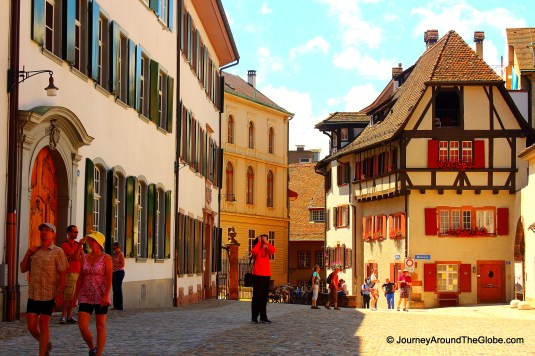
- Munsterplatz in Basel, Switzerland
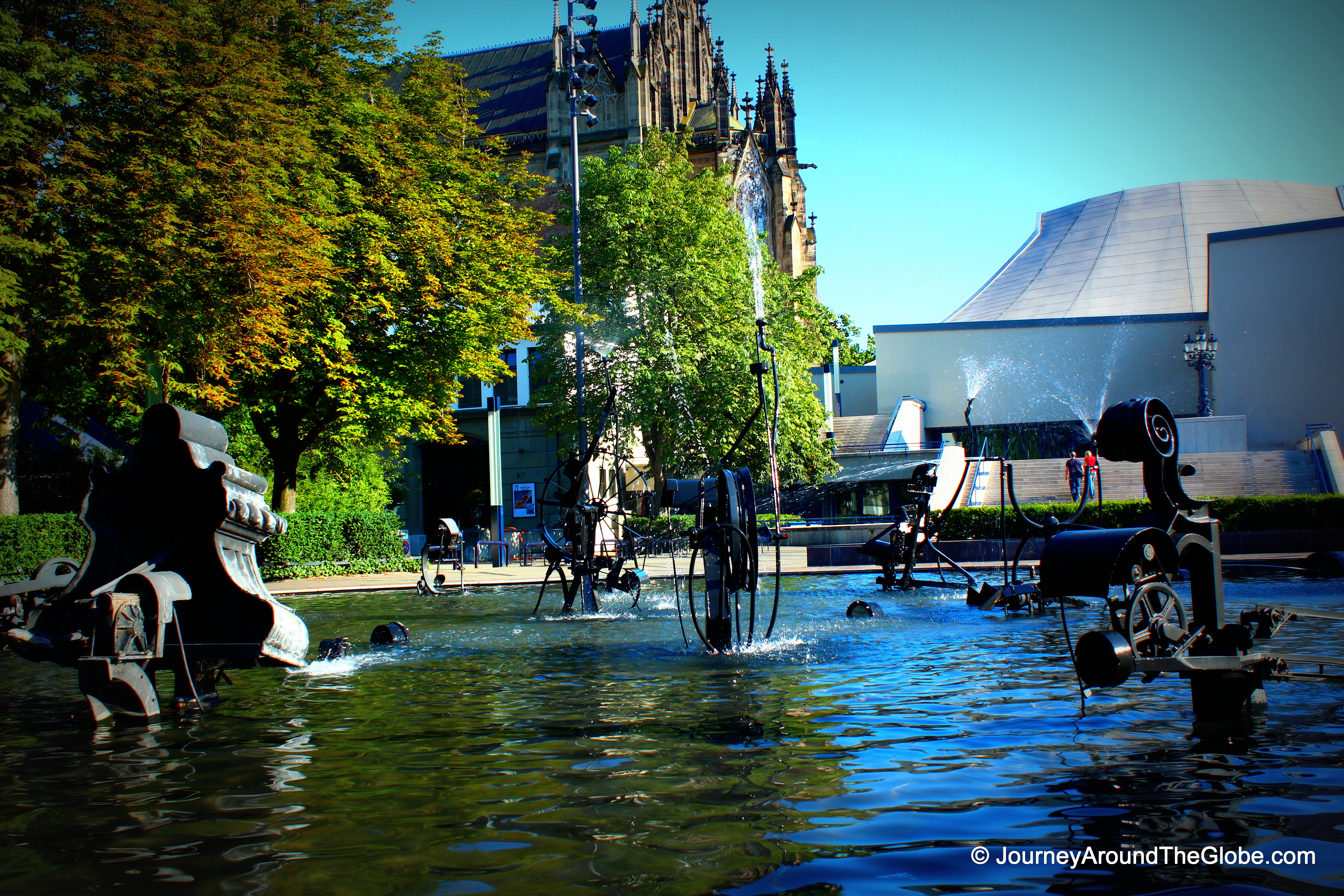
3) THEATREPLATZ & ELISABETHKIRCHEN (CHURCH of ST. ELIZABETH): Theatreplatz is another peaceful square of Basel old town featuring a beautiful, one of a kind fountain, Basel Theatre and Elisabethkirchen. It’s only few minutes’ walk from Marktplatz and Münsterplatz.
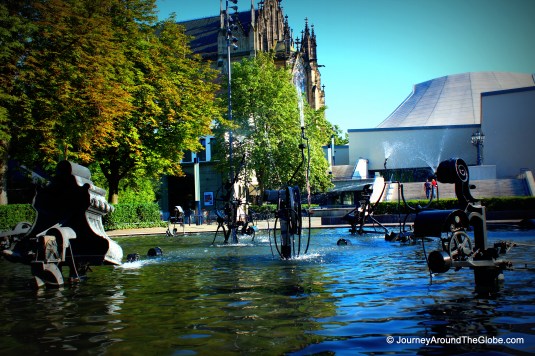
- Fountain in Theatreplatz Basel, Switzerland
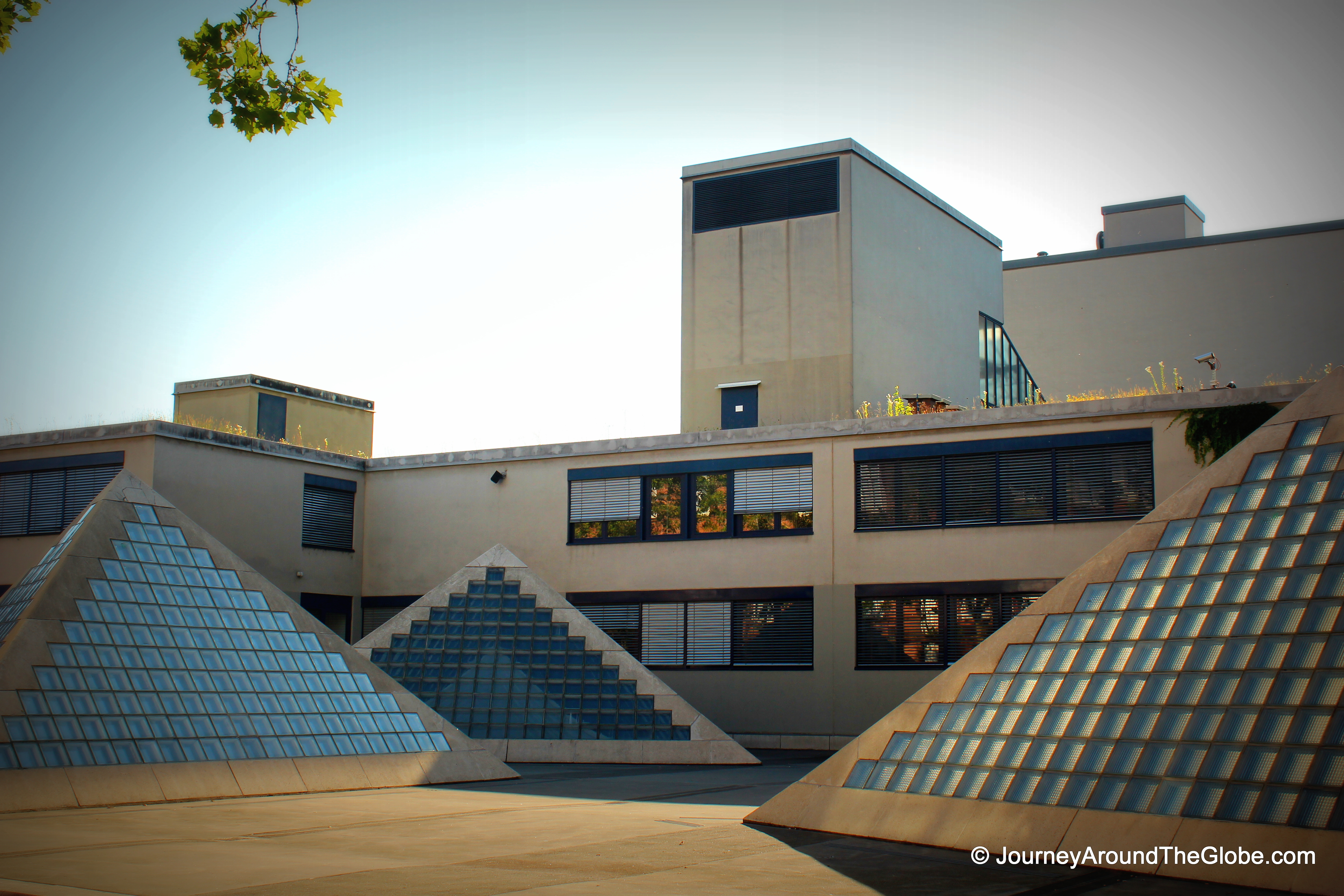
Elisabethkirchen is a neo-Gothic church, which was built between 1857-1865. By the time we got there, it was closed and therefore, couldn’t go inside. But it definitely looked very impressive from outside. Basel Theatre is situated right beside the church. The theatre is a contemporary architecture with four glass pyramids in front…a nice and calm place to hang out.

- Basel Theater, Switzerland
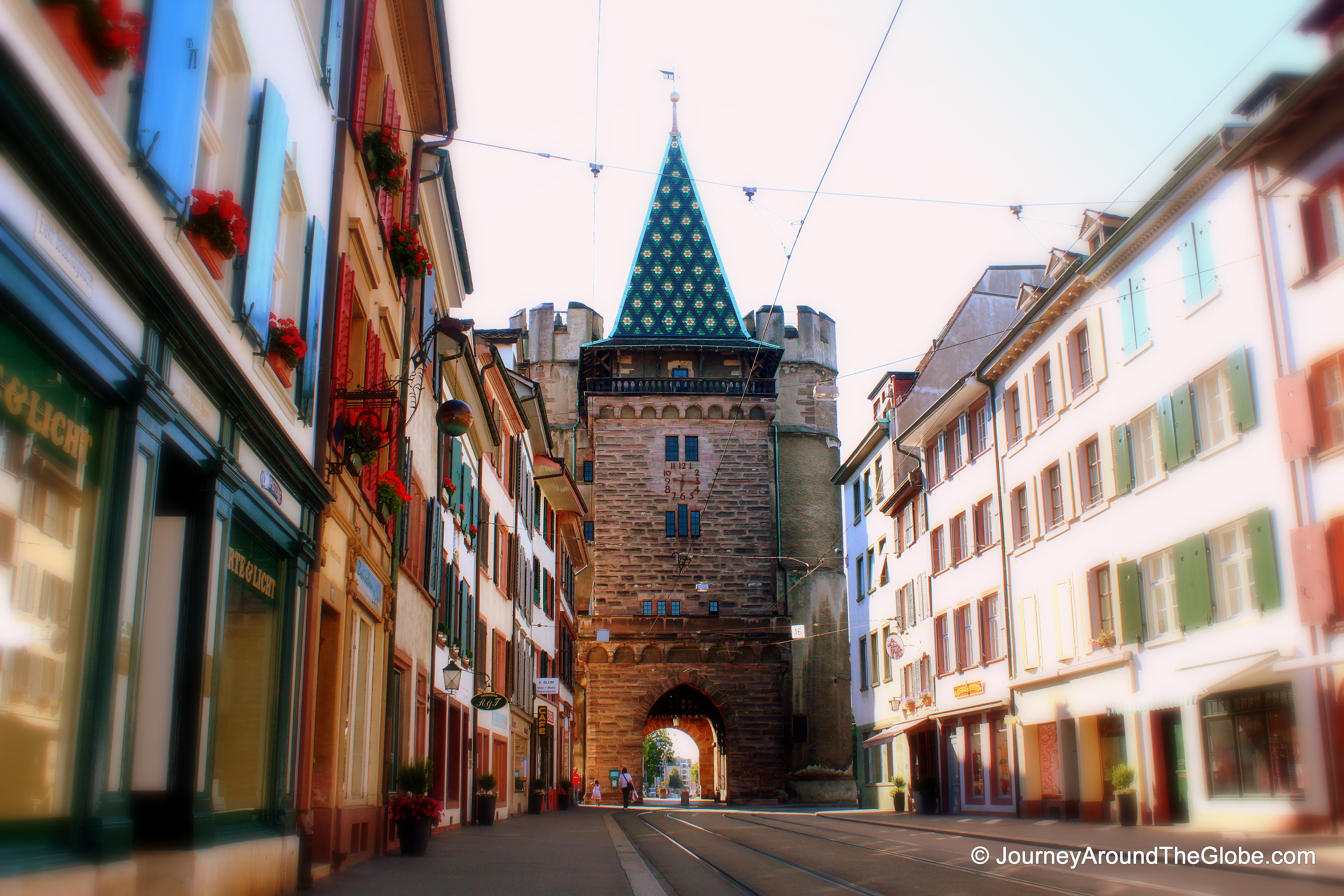
4) SPALENTOR: This is an old city gate and a part of former part of Basel’s city walls. This was built after the great earthquake of 1356. Couple of these gates still exist within which once used to be a medieval city. Tram# 3 from Barfusserplatz takes you right in front of this in just few minutes. There is nothing much to do other than appreciating this beautifully decorated gate with colored roof tile, a small portion of cobbled street, and an old wooden door.
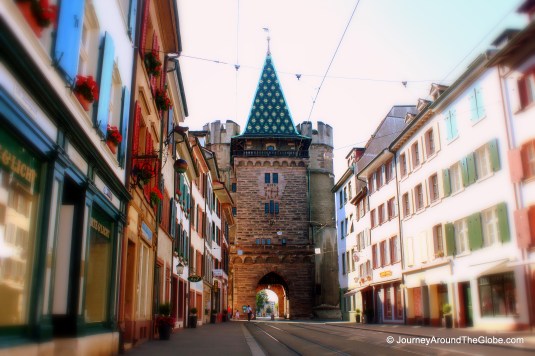
- Old gate of Basel, called Spalentor
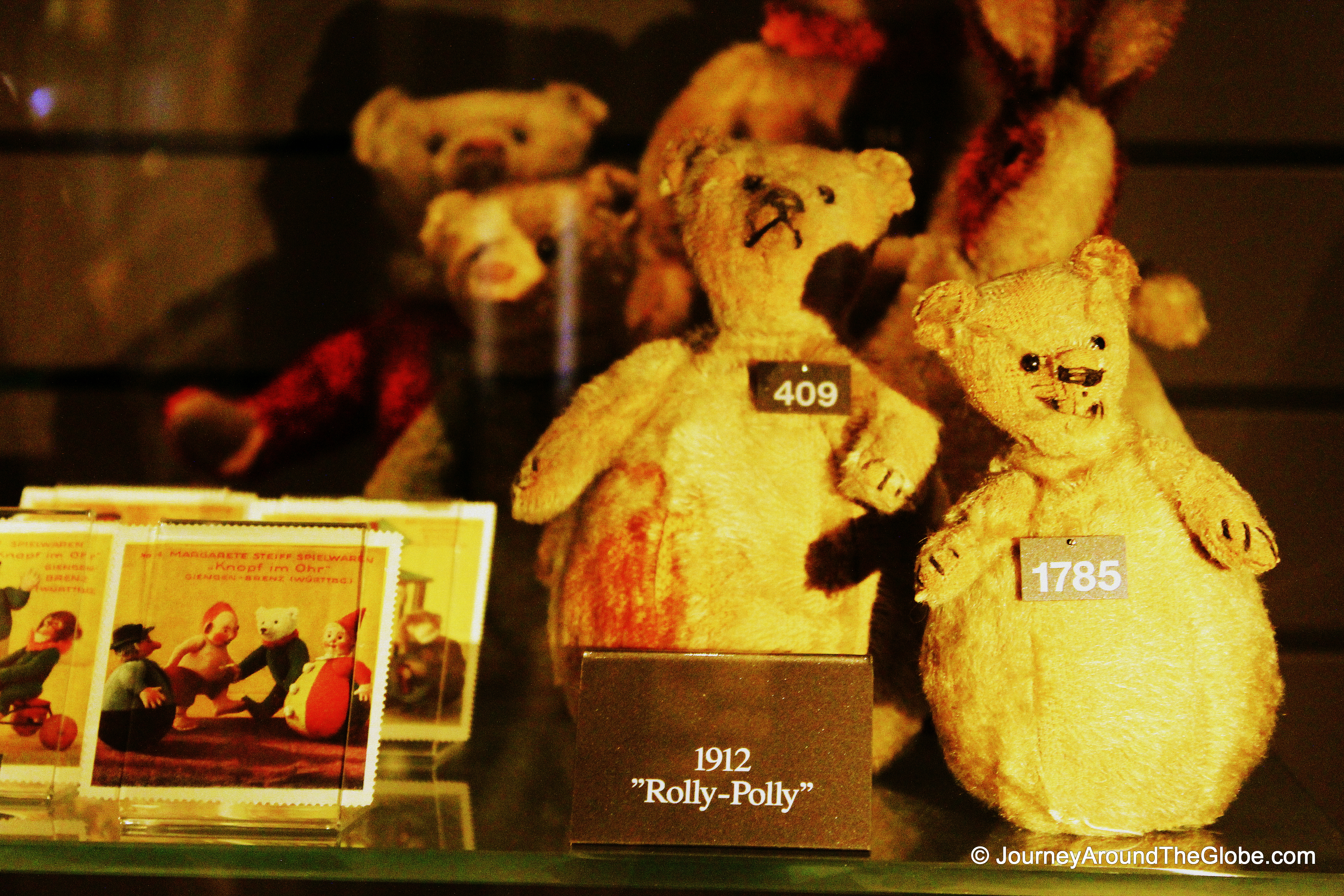
5) PUPPENHAUSMUSEUM BASEL or SPIELZEUG WELTEN MUSEUM (TOY WORLD MUSEUM BASEL): This is an awesome and only one of its kind museum in Europe. This 4 leveled museum boasts having the world’s greatest collection of teddy bears housing more than 2500 in their display. This interactive museum will give you a richly varied journey thru the world of teddy bears, impressive doll’s houses with detailed home décor of by-gone times, exclusive collection of dolls from all over the world from as early as the 19th century, perfect miniatures, and various carousels faithfully recreated models of the originals. I was as excited and amazed as my 6 years old daughter to check out each and every doll’s house/villa with fascinating details. My favorite part was the miniature world, which represent the old way of life-style for different earning levels in the society by recreating variety of shops (bakery, meat/fish market, fresh produce, and fashion), salon, church, carnivals, and many more. This is a fun as well as educational place for kids or adult, boys or girls.
The museum is located in Barfüsserplatz, within walking distance of Marktplatz. The fee is 7 CHF per person and children under 16 are free only when accompanied by an adult. They are open from 10am – 6pm every day.

- 100 years old teddy bears in Puppenhausmuseum, Basel
6) MITTLERE RHEINBRÜCK (MIDDLE RHINE BRIDGE): Also known as the Central Bridge, this is the oldest existing bridge on River Rhine. Replacing its original bridge (partially wooden and partially stone) from 1225, a new stone bridge was completed around 1905. This is for cars as well as for pedestrians. It gives a very charming view of the city on both sides of the river. We went there around the sunset time to a nearby Chinese restaurant for dinner at one end of the bridge. The atmosphere was simply appealing and romantic. Also, the view of the bridge, curves of River Rhine, and river banks were marvelous as the sun was setting down.

- Mittlere Rheinbruck (Middle Rhine Bridge)

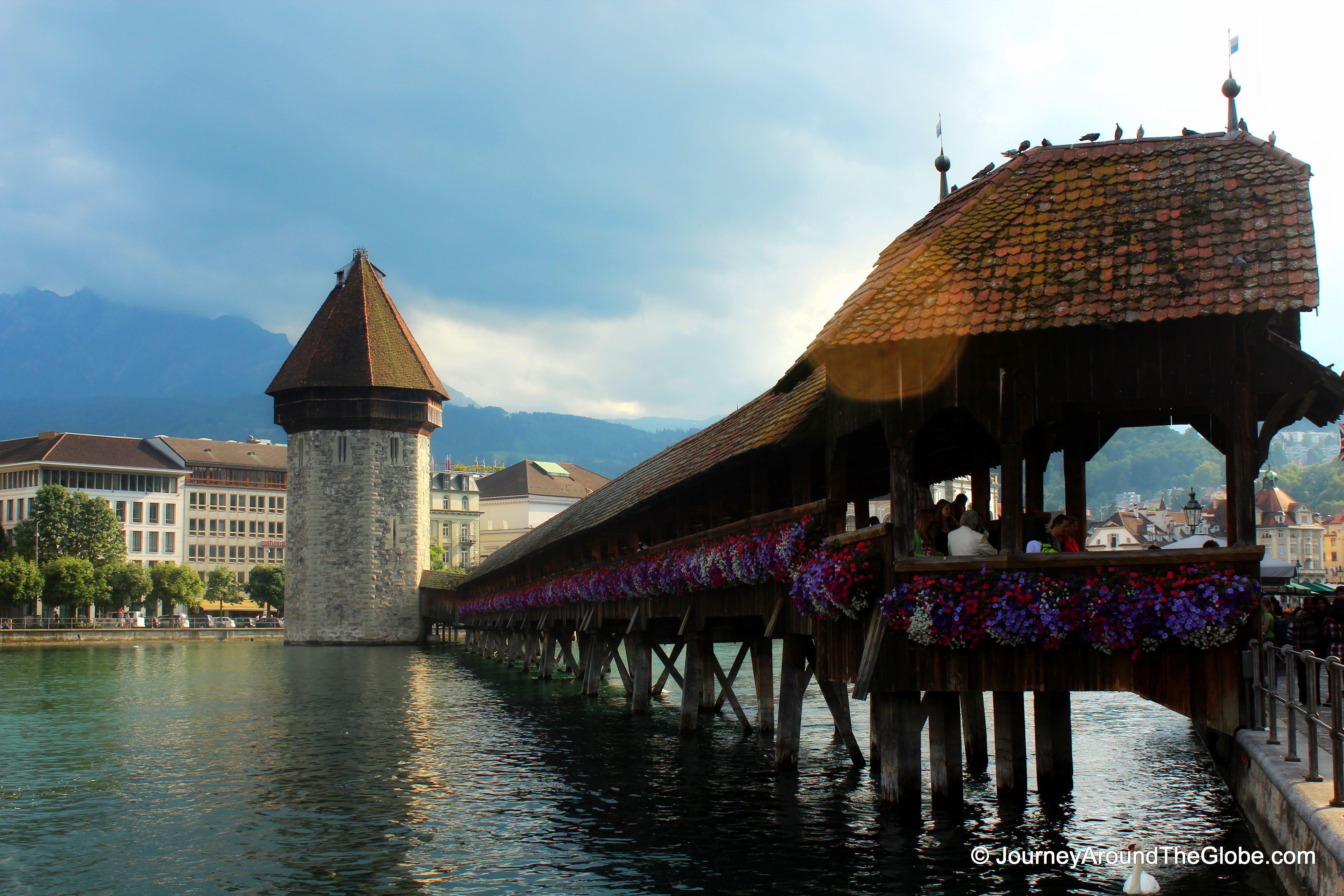
7) LUCERNE: If you have a spare day in Basel and want to enjoy the Alps up close and personal, then Lucerne is a great choice for that. It is a picture perfect town with Lake Lucerne and the Alps. The drive was about an hour from Basel and made a perfect day trip for us, since we wanted to get some fresh Alpine air. Check out the things you can do and see in Lucerne here.

- Chapel Bridge (the oldest wooden bridge in the world) and Water Tower in Lucerne, Switzerland
Share this:

Another Dutch city Maastricht, The Netherlands
MAASTRICHT, THE NETHERLANDS: Unlike some of the other Dutch cities we’ve visited recently, i.e., Gouda, Leiden, and Delft, Maastricht is more like a modern city with some old touches. Ofcourse it has old churches, a prominent town hall, and a big market place, but somehow it didn’t feel like I am in The Netherlands. Either way you look at it, this is a great place for a day trip if you are nearby.

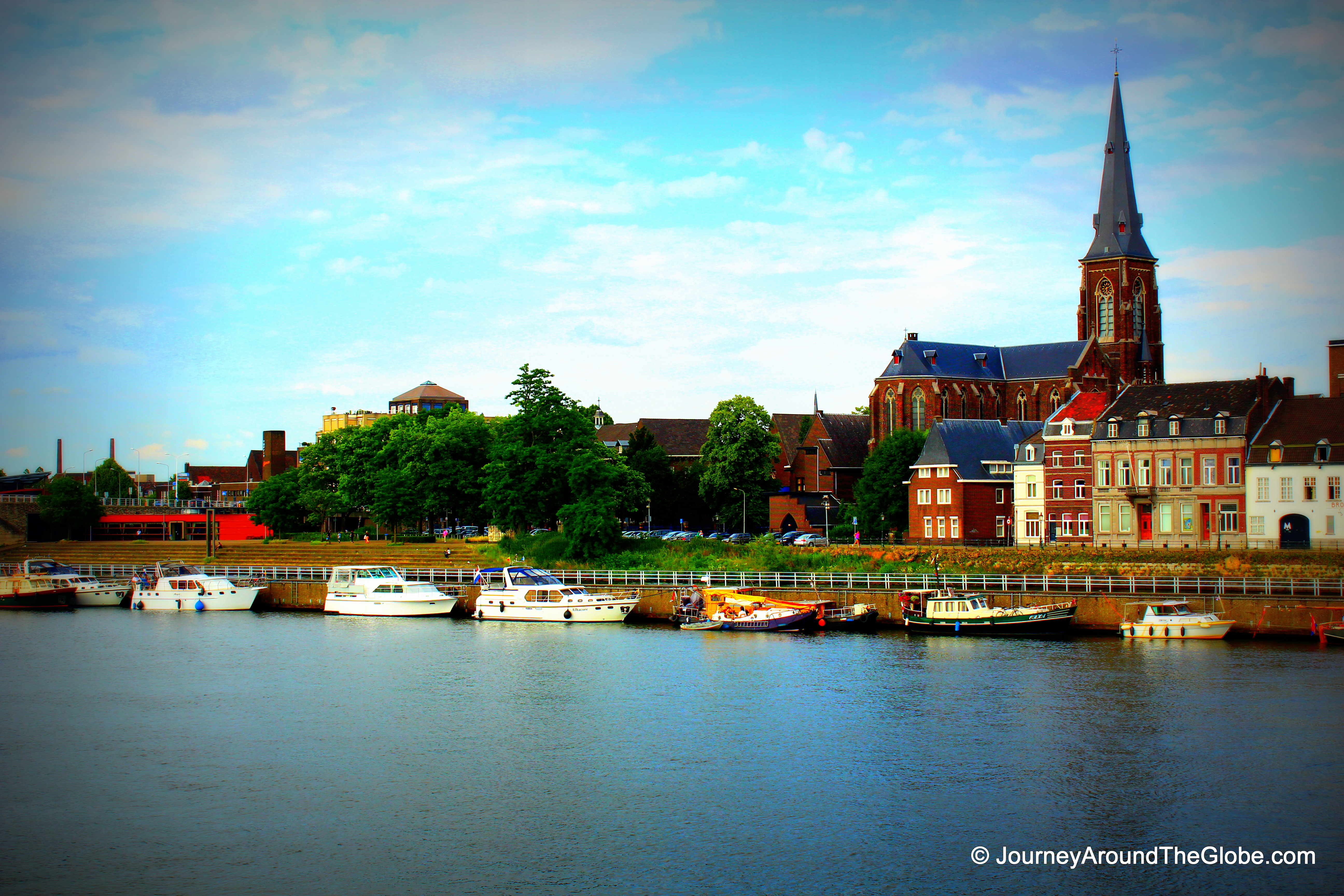
- Maastricht by the River Maas, The Netherlands
TIME OF TRAVELING: We drove to Maastricht in end of June, 2012 on a Saturday. It’s about little more than an hour drive from Tervuren, Belgium. The weather forecast said it was going to rain, but luckily it didn’t and it actually turned out to be bright and sunny day.
WHAT TO EAT AND BUY IN MAASTRICHT: We really didn’t try any Dutch food this time. We saw KFC in the Markt and we were missing some American good food…so, there we were eating some fried chicken with fries (they don’t sell biscuits here) while enjoying Dutch environment.
Maastricht is a great place for shopping. The small alleys from Vrijthof to the Markt and towards the river Maas have many brand name stores, local boutiques, and sweet treat places which are hard to pass by.
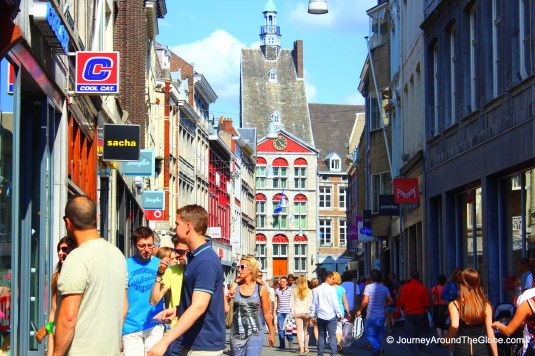
- Fashion streets in Maastricht near The Markt, The Netherlands
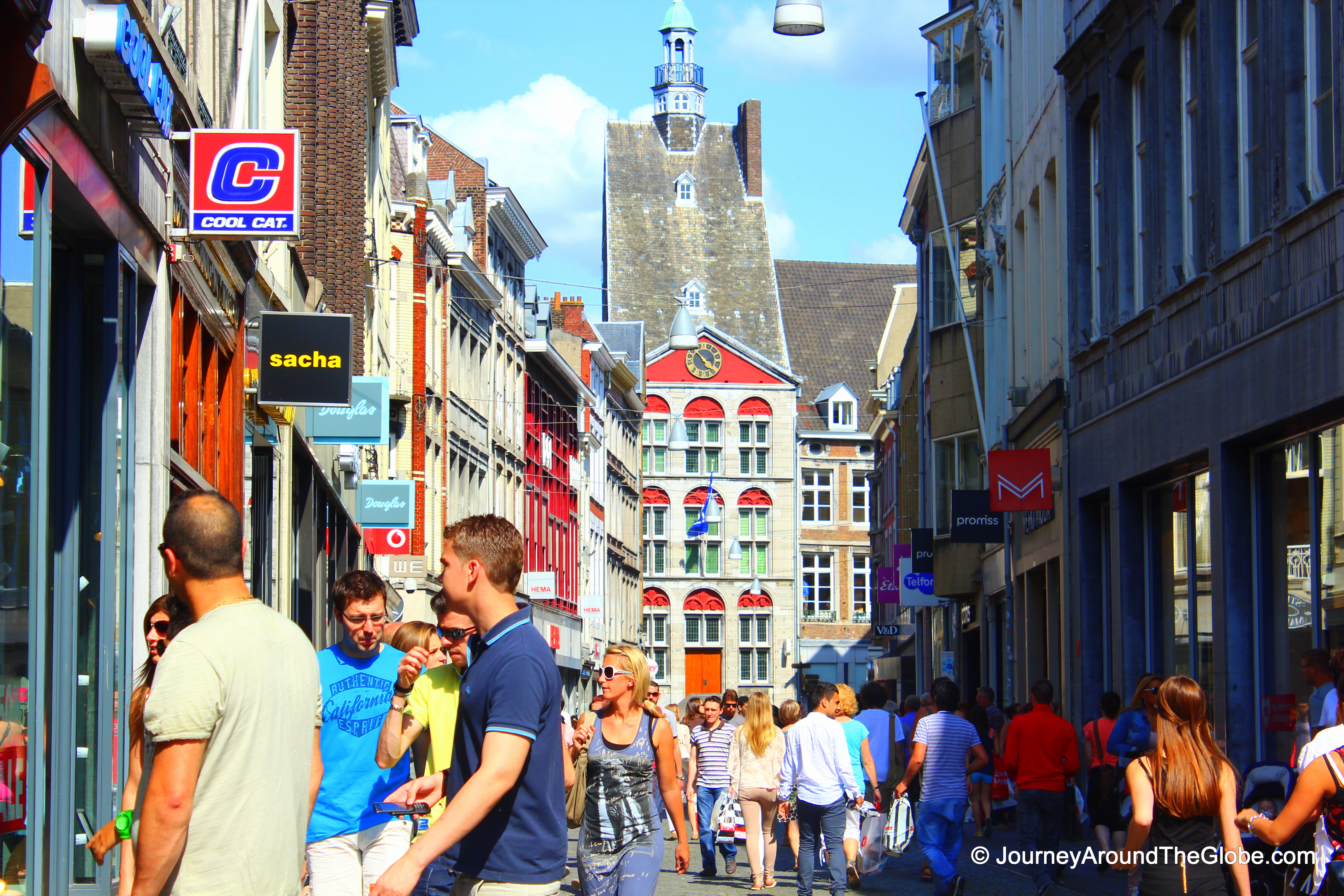
PLACES WE HAVE VISITED: We reached Maastricht little bit later than we intended to around 1 pm. By the time we had lunch and visited all the churches and other sites, we figured that we didn’t have enough time to explore the museums, which I really wanted to do in this trip.
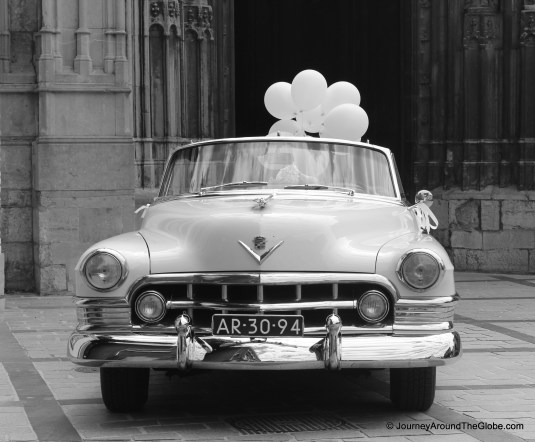
- A white Cadillac waiting for the newly weds outside Basilica of St. Servatius, Maastricht
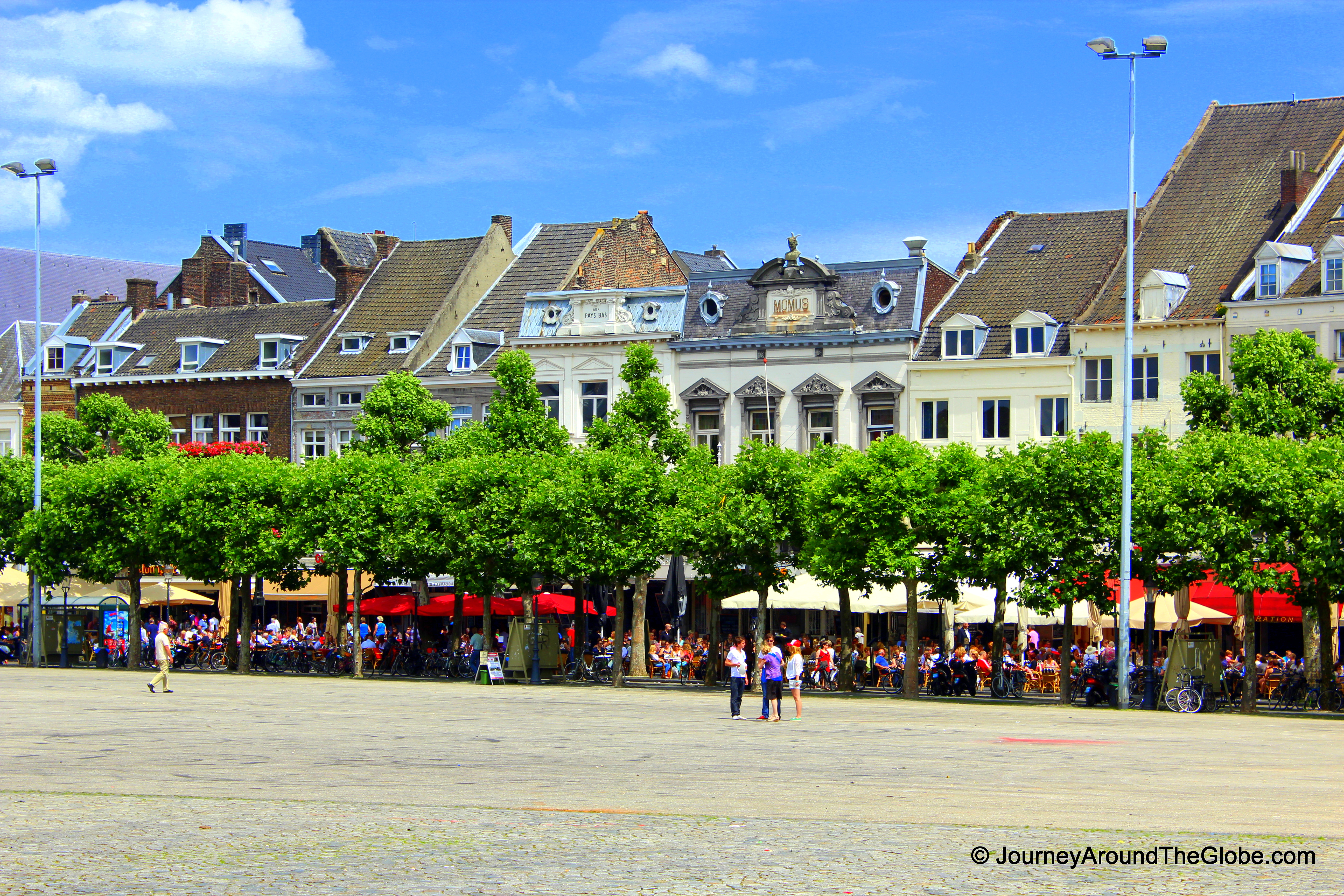
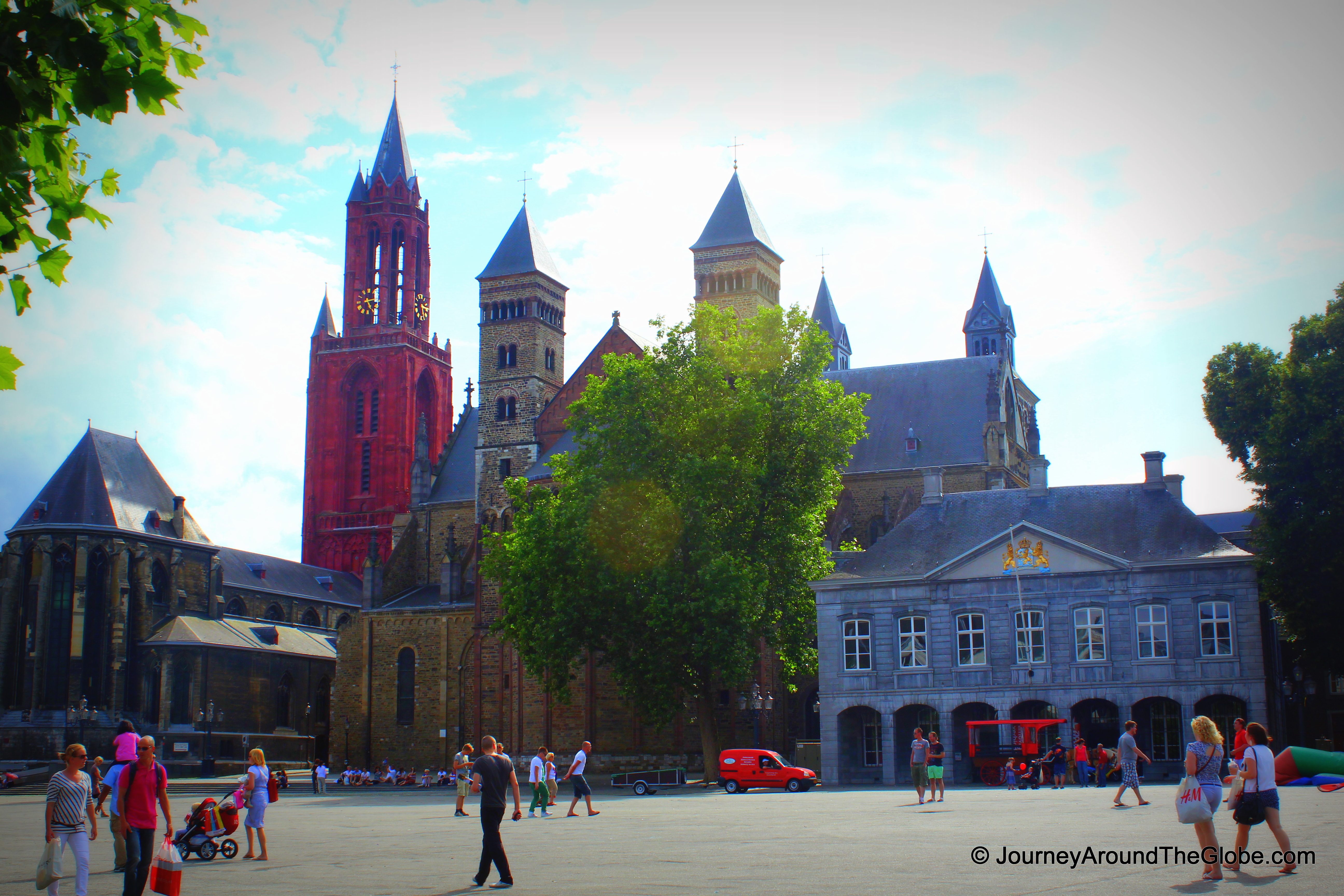
1) VRIJTHOF SQUARE: This is a huge square featuring 2 of the main churches of Maastricht, St. Jan’s Cathedral and St. Servaas Church. The square has couple museums which we didn’t cover this time. It’s a perfect place for to have drinks or meals or just simply admire the atmosphere. When we went there, this square was a playground for the kids with some bouncy castles, music, and other play areas. The surrounding is beautiful with the churches and long red tower of St. Jan’s in one side and all the cafes and restaurants on the other side.
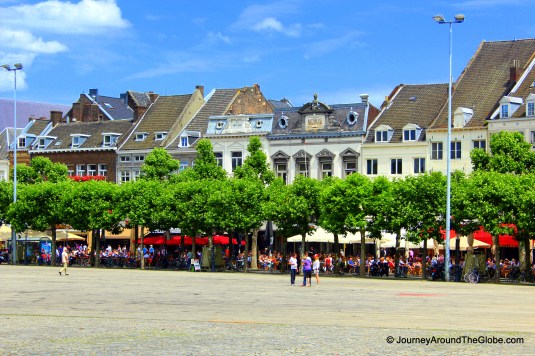
- Cafes and restaurants in Vrijthof, Maastricht, The Netherlands
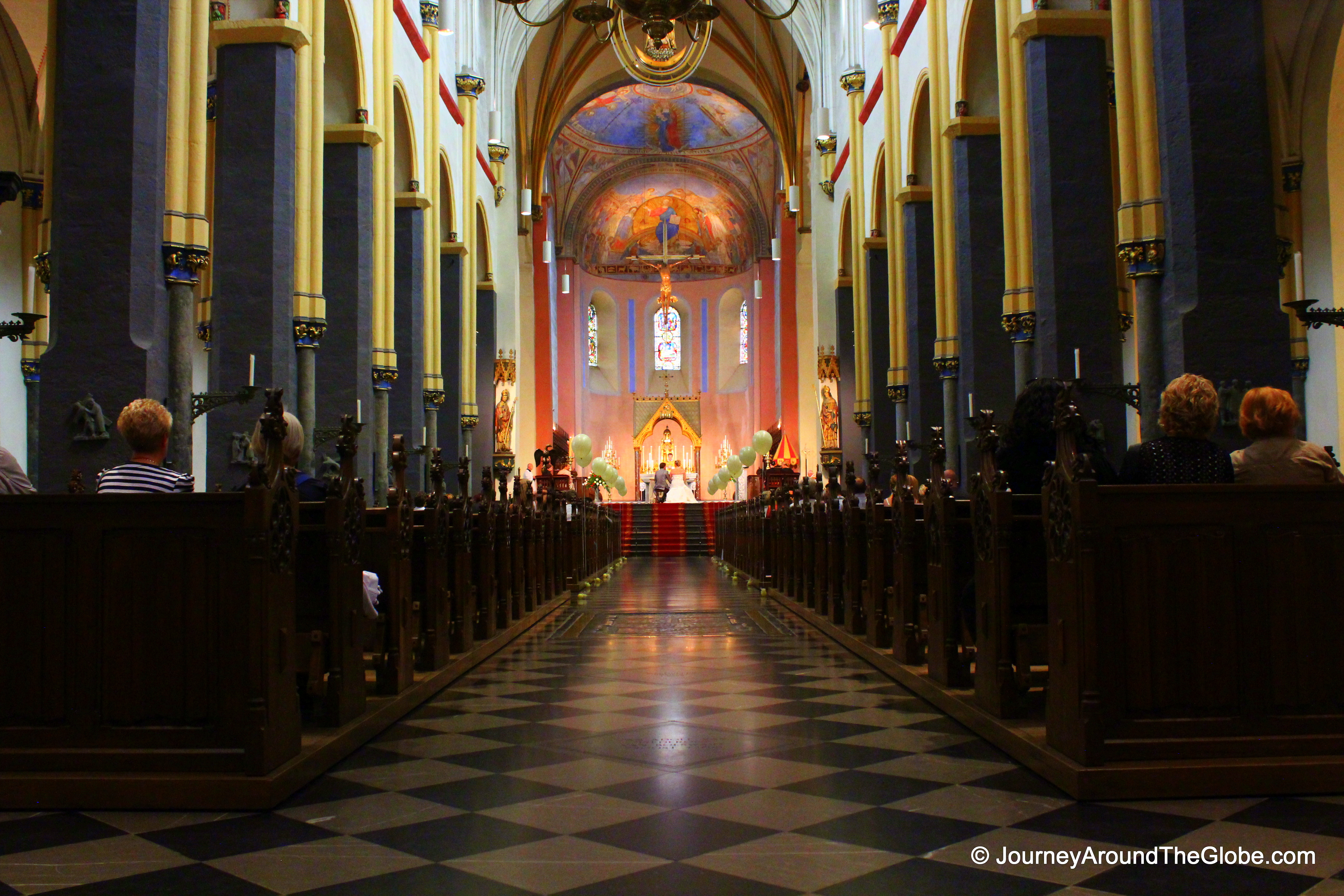
a) BASILICA of SAINT SERVATIUS: This church was built on the site of the grave of St. Servatius. This Romanesque style church is beautiful both inside and out. It’s a huge church when you go inside with many doors and small chapels. We didn’t go to the courtyard of the church (costs about 4 euros). There was a wedding going on when we went there, so couldn’t get near the altar or walk around the church freely, but it is absolutely gorgeous inside with its blue and white high-ceiling. The altar looked sophisticated with pretty lights and shiny decors.
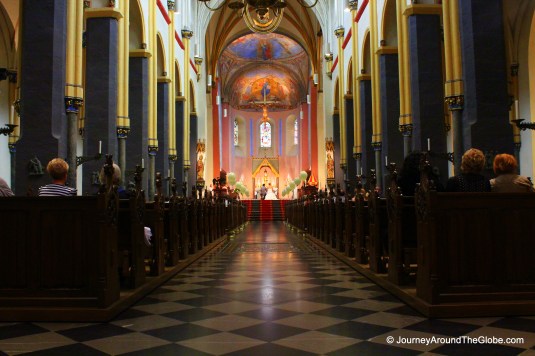
- Inside Basilica of St. Servatius
b) ST. JAN’S CHURCH: This Gothic church can easily be recognized by its unique 70 meter high red tower looking over Vrijthof. The church, built in the 12th/13th century, is rather simply inside with stone pillars, memorial stones on the walls, and a few murals. There are 115 tombstones dating from 1378 to 1771. The new organ, built in 1992, replaced the original one which was built in 1780.
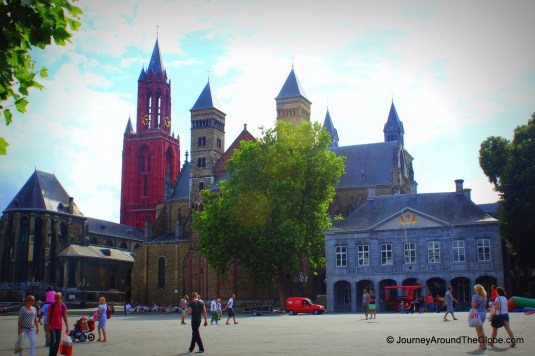
- St. Jan’s Church on the left with red tower and Basilica of St. Severatius on the right, Maastricht, The Netherlands
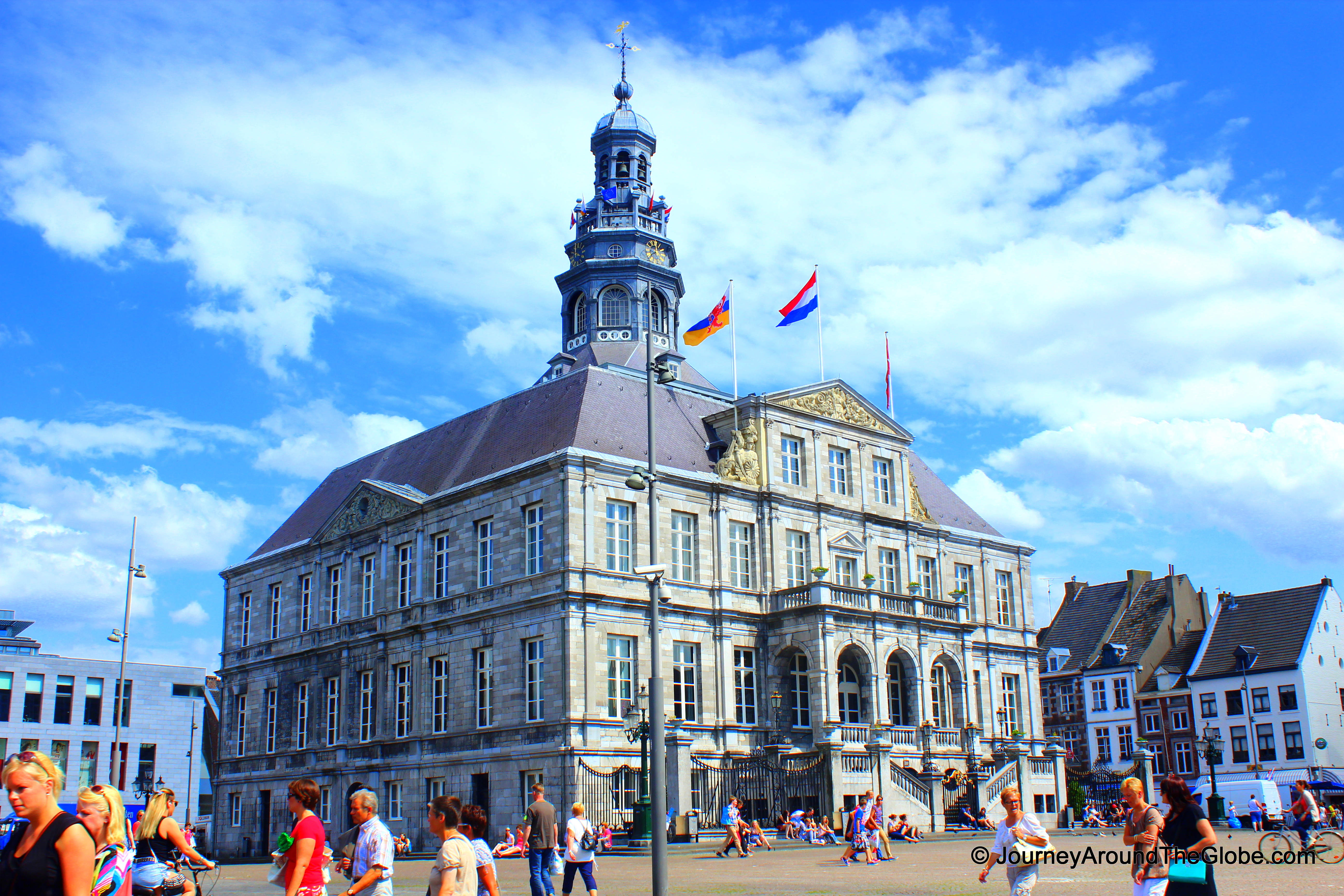
2) STADHUIS & MARKT (TOWN HALL & MARKET PLACE): Another great place to hang out in Maastricht is the Markt, not too far from Vrijthof…just follow the signs. The Stadhuis is standing right in the middle of this big square, surrounded by many shops and cafes. Every Saturday there is a farmer’s market in the market place selling fresh produces, flowers, fish, and bakeries. The only souvenir store we found in Maastricht was here near McDonald’s. You will find some American fast food here like Subway, Burger King, KFC, and McDonald’s along with many local restaurants. On one side of the square, there is a statue of Johannes Petrus Minckelers holding a torch with eternal fire.
- Stadhuis (Town Hall) of Maastricht, The Netherlands
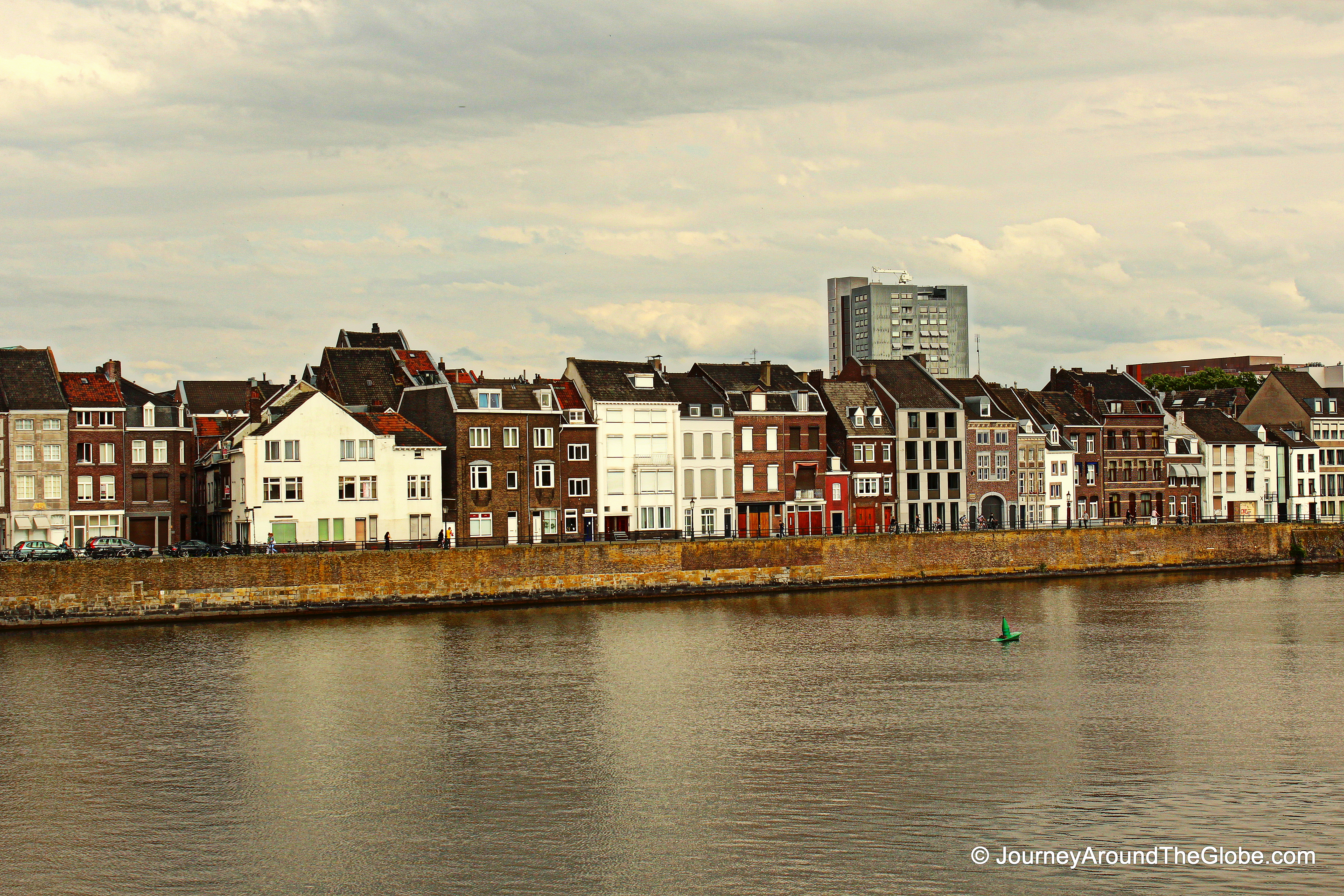
3) RIVER MAAS: You don’t see small canals making their ways to the different parts of the city in Maastricht like many other Dutch cities. Here River Maas is the heart of the city. It is only 5 minutes’ walk from the Markt. It is amazing to stand on the pedestrian bridge that continues from the street Maastrichter and enjoy some great moments by the river.

- City of Maastricht by River Maas in The Netherlands
Related articles
- Layover in Limburg (judefensor.wordpress.com)
- Belgium Through the Eyes of a Beer Monger Gone Mad: Part 9 – We Found Ourselves in Maastricht (landlimages.wordpress.com)
- Pensive (billanders.wordpress.com)
Share this:

Business Excellence Award 2020 from AI Global Media for The Most Entertaining Personal Travel Blog – Pacific Northwest USA

Top Posts & Pages


Authors
 Globe Runner
Business Excellence Award 2020 for The Most Entertaining Personal Travel Blog – Pacific Northwest USA

Business Excellence Award 2020 from AI Global Media

 Journey Around The Globe