Journey Around The Globe
ready for the next destination
Spell of Santorini
SANTORINI, GREECE: Santorini, official name Thira, was in my bucket list for a long…long time. It’s one of the most beautiful and photogenic islands in the world and a real romantic place for honeymooners. If its stunning geography doesn’t attract you, then many of its naturally fantastic beaches will, or its frightening history of volcanic lava and earthquake will, or its blue and white villages will, or may be its unique sunset will, or the way white-washed buildings look like they are stacked on top of each other on the cliffs will. I can name lots of things about this island that will attract everyone with different interests…but you have to visit to feel.

- Santorini – one of the most beautiful islands in Greece

As for me, I loved hopping from one village to the other and be amazed with history. Santorini is a crescent-shaped skinny island. The villages are very spread out depending on where you are going. But do get out of the tourist sections to enjoy true beauty. You will see fun-loving young Greeks, villagers, and fishermen…that’s what I cherish the most from this trip.
What makes Santorini different from other islands of the Cyclades is that it was built on thick lava of volcano which rose from the molten core of the earth. But the contrast of the deep blue sea with red, brown, and black colors of the land, the depth and clarity of the horizon sweeps away the nightmarish birth of this island. Overall, it’s wild and imposing natural beauty cannot be found anywhere else.
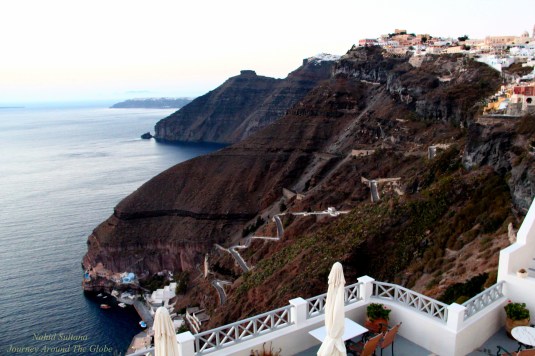
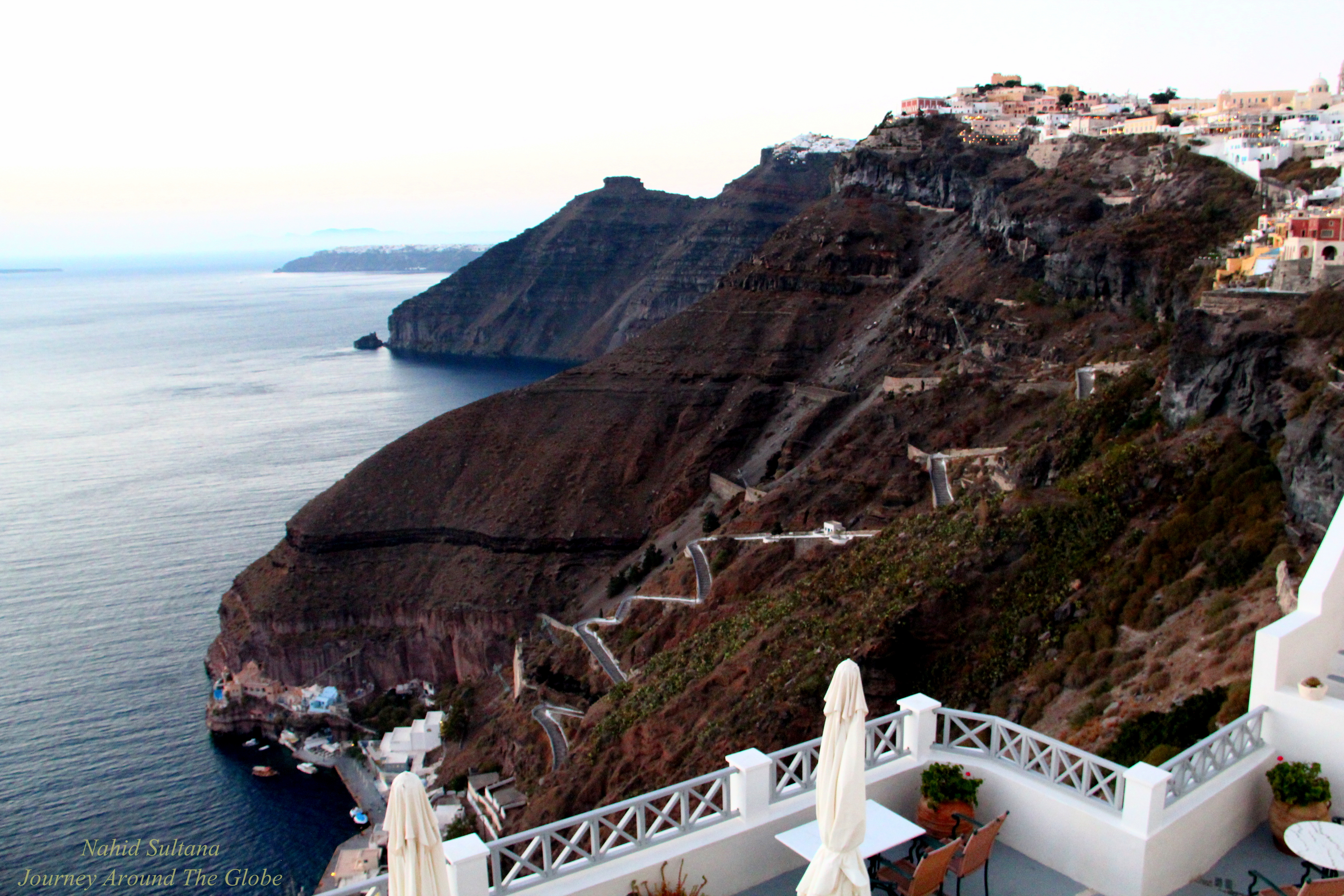
- The rugged terrain of Santorini
To get around the island, ATV is probably the best way, although I saw many people riding on rented cars. But be careful of crazy drivers and parking can be a problem if you rent cars, especially in Fira or Oia. I mainly rode on public buses to all my sites. But be careful, they look like tourist coach buses and don’t have a STOP button and sometimes don’t stop at all if no people are getting on. I told the ticket master on my 2nd morning that I wanted to get off at Firostefani but he forgot to tell the driver and I ended up in Fira along with another British lady who also wanted to get off at Firostefani. Also it’s a bit inconvenient but every public bus stops at Fira whenever you go to. It costs from 1.60 euros to 2.20 euros depending on where you are going to. From Oia to Fira there is a hiking trail that you can take to go parallel to the cliffs and the sea. I didn’t dare to take this trip since I knew I am not fit enough for this and I didn’t want to waste time just walking. I wanted to explore different traditional settlements. But to enjoy the island to the fullest, be ready to climb up and down lots of narrow stairs…otherwise you won’t feel the vibe.

- ATV – the best way to get around the island

I booked a boat excursion (see below) 2 days before the trip. It was 30 euros for a 5.30 hours of guided tour (lunch not included) and started at 10am. I was picked up from my hotel around 9:20 and was taken to Ammoudi Bay in a mini-bus. From Ammoudi Bay we were taken to Fira Old Port to pick up more people. Our first destination was to Nea Kameni, then to Palea Kameni, and then Thirassia before dropping us back to Ammoudi Bay. I am glad I took this trip to see the volcanic islands up-close and smell its sulfuric air. This is one trip that shouldn’t be missed to get a different perspective of the island.
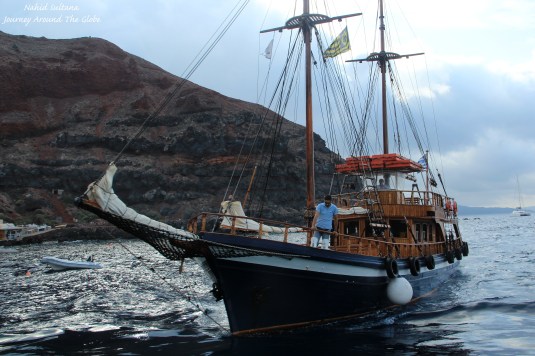
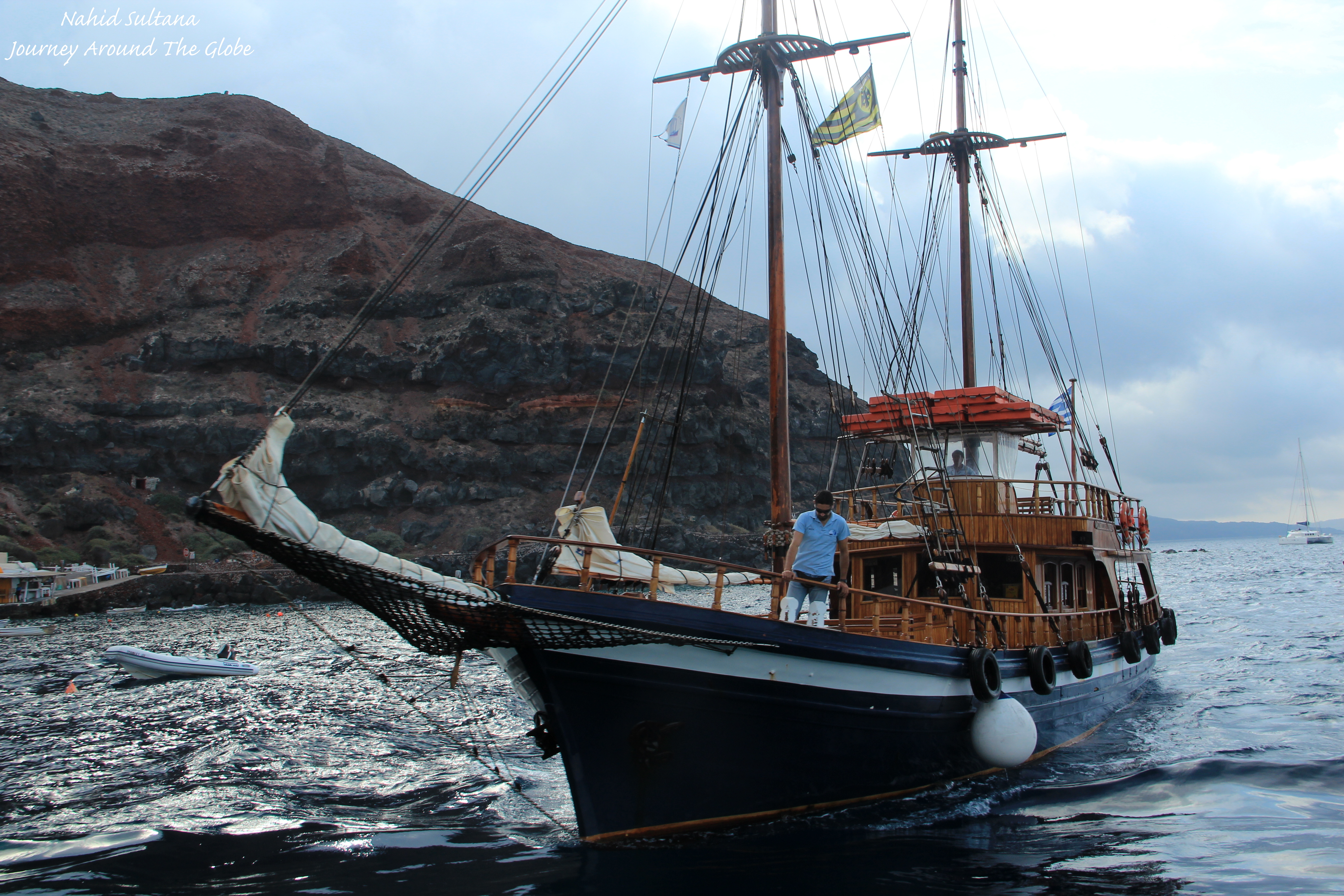
- Our boat that took us to the other islands
TIME of TRAVEL: It was in mid-October 2013 when I flew to Santorini. The island definitely slows down after October. You won’t see crazy amount of tourists like during summer months. Water was still warm for those who are interested in going to beach and enjoy water. Unfortunately, I got rain on my last evening there, hence, missed a chance of watching sunset over dinner. Other than that the temperature was around early 80s during daytime. But I wouldn’t recommend to go there after October because then many shops and hotels close down for winter and the buses are not that frequent either.
MY HOTEL: I stayed at Laokasti Villas and Restaurant in Oia, Santorini. Although Fira is closer to the airport, it is touristier than Oia. I wanted to stay in Oia, not only because I can see the best sunset only from steps away from my hotel, but also it’s quieter and cozier than Fira.
This hotel had free breakfast, although I didn’t wake up a single morning to eat. I decided to catch up on my sleep after spending a whole sleepless night in Athens airport before catching a 5:30am flight to Santorini. It also had free Wi-Fi which was lousy but worked once in a while. The best part was that I had a partial ocean-view room with a little porch. The swimming pool was fantastic also and some of the rooms had the pool view. Also, you can order an in-room massage service here…very cool I thought. I booked my boat tour thru the hotel and also my airport pick-up/drop-off…they were very helpful and efficient every time.

- Swimming pool in my hotel, Laokasti Villas, in Oia, Santorini

I had a small kitchenette in my room with nice clean linens and a small red bathroom. The location was very nice for me because bus stand and Oia pedestrian zone were both right across the street. There were also couple small restaurants and supermarkets near this place…overall, I loved it and I would recommend it to anyone going to Santorini.
EATING and SHOPPING: Santorini has plenty of options when it comes to satisfying your taste and hunger. For any meals, snacks, or drinks Fira and Oia probably have more options, but not necessarily the best ones. Most of the villages and all the beaches have restaurants that will offer you view of the caldera, blue sea, and the islands nearby. Do expect higher prices from restaurants with sunset or caldera view…but it’s all worth it. If you are looking for the best sea-food restaurants, go down to Ammoudi Bay from Oia and there you will see many fish taverns. Beaches like Perissa or Kamari also has some great fish places. Tomato balls or croquettes are something unique of Santorini and should be tried even if you don’t like deep-fried stuff. I used to have them almost for all my meal as side…try it with taztziki sauce…yummy. Other than that most of the traditional Greek places have Greek salad, Greek style spaghetti (with capers and feta cheese), pizza, gyros, kebabs, moussaka, souvlaki, Greek omelet with feta cheese, olives, and kataifi…a sweet dessert with honey and nuts. Oh, and don’t forget to try local tomatoes…they are full with flavors, best ones I’ve tried so far.
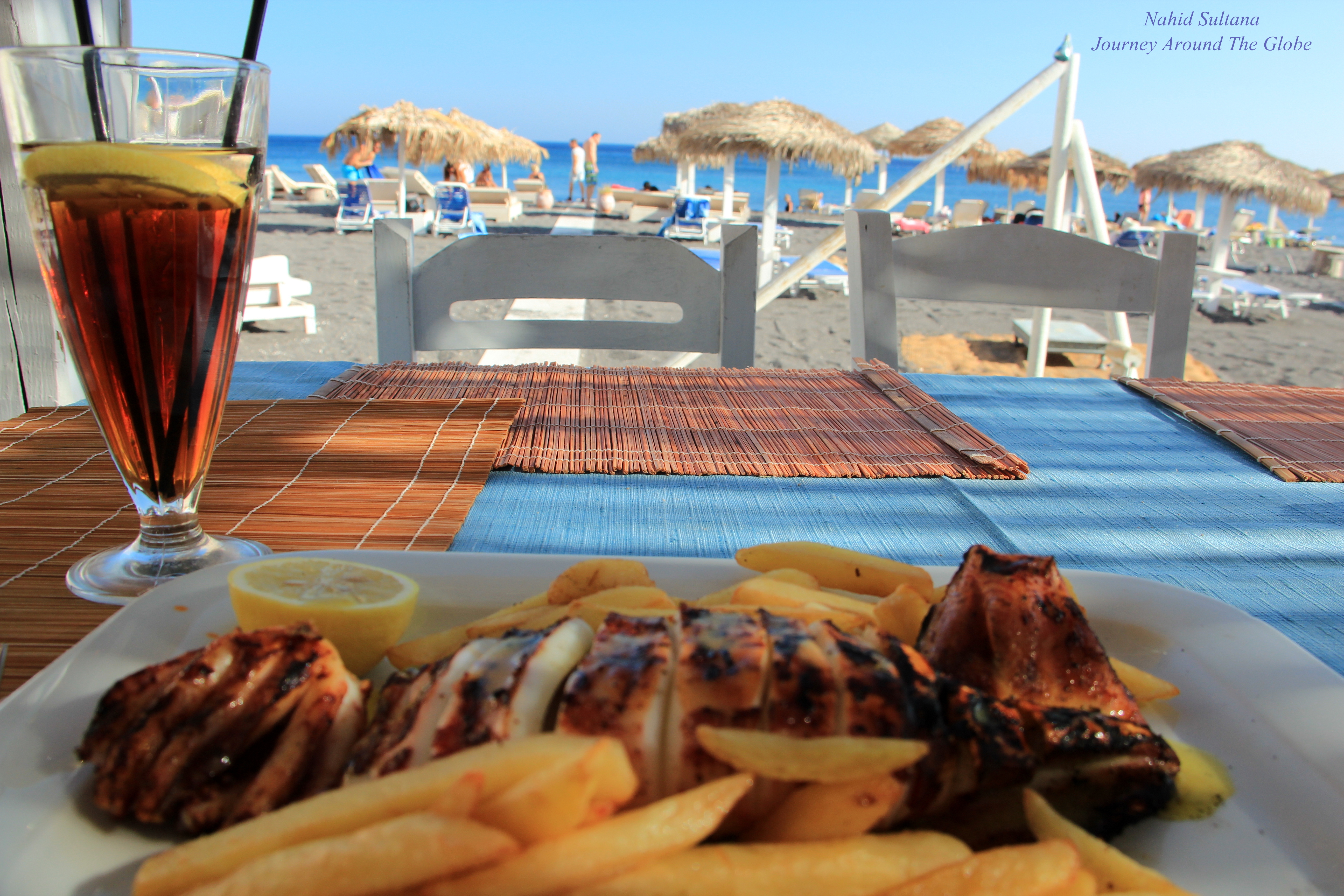
My first lunch was at Demilmar in Perissa Beach. I must say I loved my relaxed meal with a memorable ocean view and its sweet sound. They had traditional Greek dishes like moussaka, souvlaki, fresh seafood, as well as burgers, pizza, and pasta. I had grilled calamari…fantabulous. 2nd day I had my lunch in Fira in a restaurant on the shopping district, can’t really remember the name. Really enjoyed my Greek spaghetti with capers and feta cheese while enjoying the fresh ocean breeze and looking at the volcanic island in front of me.

- My lunch, grilled calamari in Perissa Beach
When I went for boat tour, we had lunch in Thirassia. Tomato croquettes with taztziki sauce and bread was awesome while looking at water glimmering as the sun was shining on it.

- Lunch in Thirassia – fried tomato balls

Last dinner I did was in Oia, called Floga, a restaurant that was recommended by my hotel (another recommendation was “Thalami”). They are both located on the main shopping district of Oia. It was raining badly on my last night of Santorini. Floga usually has a nice view of volcano and offers beautiful sunset view too, but for the rain we were inside the plastic shade and couldn’t see much of the surroundings. I was in the mood for some seafood that night, wish I could go down to Ammoudi Bay for that but the rain didn’t let me. Either way, Floga has some very good dishes along with some traditional Greek cuisine with some pricey tags.
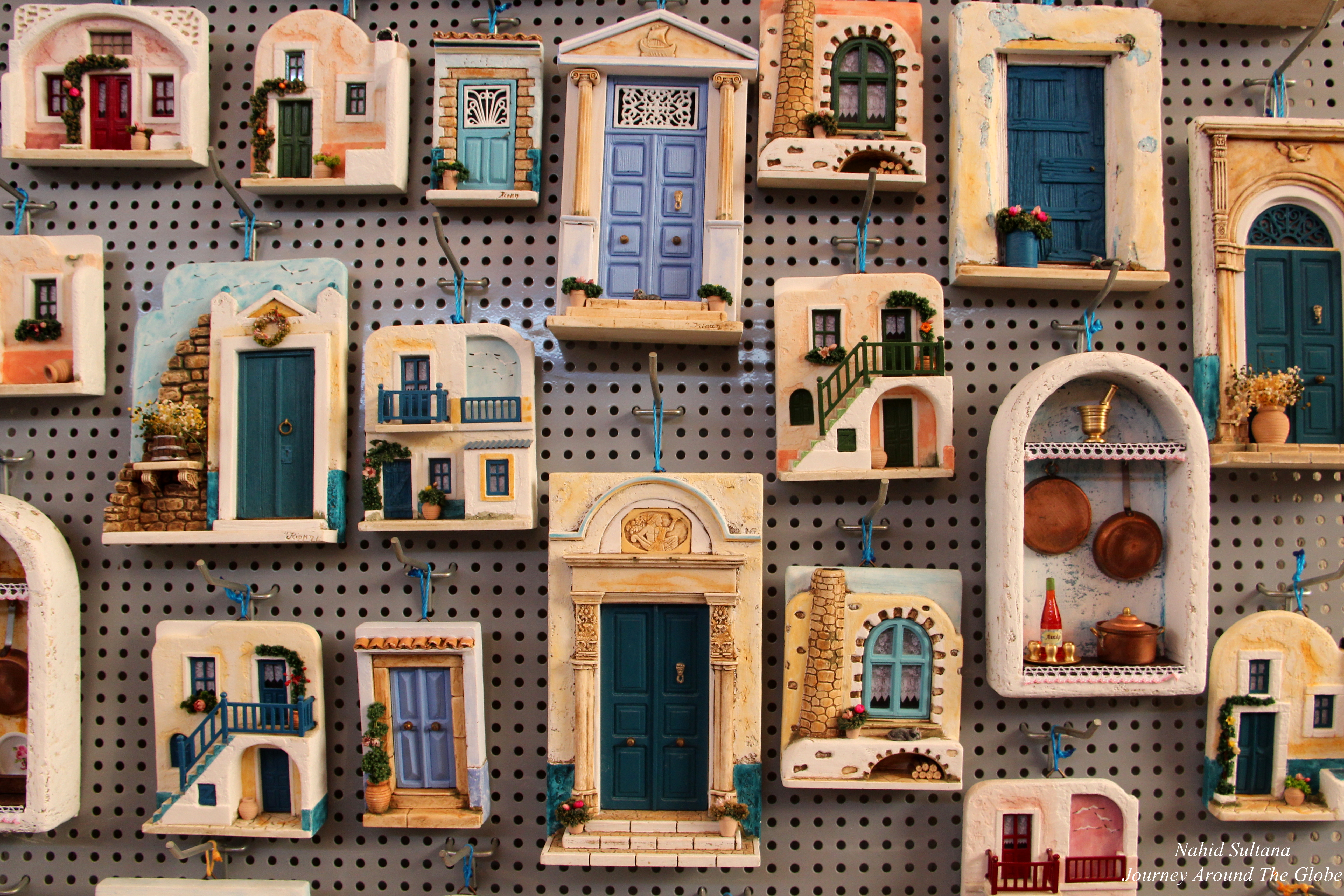
Greek olives (especially Kalamata olives), stuffed donkeys, Greek pottery, olive oil, Greek delights, embroidered laces, decors or jewelry made from lava rocks, miniature Cyclades houses, and Santorini paintings just some of many things the island can offer you to take back from here as gifts or memoirs. If your pocket is really heavy then buying Greek gold can make sense. I got myself a lava rock man for 12 euros, a miniature house, and some jewelries. If I had some room in my luggage I would have put some packaged olives there too.
- Beautiful Santorini doors in a souvenir shop in Fira
Most of the villages have many shops and unique stores. Fira and Oia have the most interesting places for shopping. Even if you don’t want to go for those expensive stuff, it’s nice to just walk pass these shops and entertain your eyes. Ohhhh, another thing I wanted to try for a long time and finally did was fish-pedicure. It was in Fira (there was also one in Oia). For 10 euros, you can soak your feet in a tank with 200 fishies. It was ticklish at first but those hungry fishes loved the dead skins from my toes 😉

- Shopping district of Oia, Santorini

PLACES I’VE VISITED: You don’t really need a walking-map in Santorini. Although the island is not marked very well, half the fun is getting lost in white-washed alleys and climbing up and down the stairs near the cliffs.
If I had one or two more days, maybe I would have gone to Akrotiri and Ancient Thira– where you can see a stunning collection of ruins from ancient settlements of Santorini, Kamari Beach, Red Beach, Village of Finikia, and Village of Emporio. Finikia and Emporio are, I think, more like Megalochori with traditional buildings and small settlements.
- Oia at night

1) MEGALOCHORI: This is the first village I explored on this island and I instantly fell in love with it. About 20 minutes of bus ride from Fira, Megalochori (pronounced as Megalo-hori) is a small but stunning village of Santorini. Walking through the white-washed walls, gazing at Cycladic domed churches, peeking through those traditional blue and white houses, and the listening to the quietness of this typical Greek village made me feel really lucky that I decided to come here first. If you want to have some romantic time on this island, Megalochori has some nice cafes, restaurants, boutique stores, and picture perfect village neighborhoods that will stay in your heart forever.
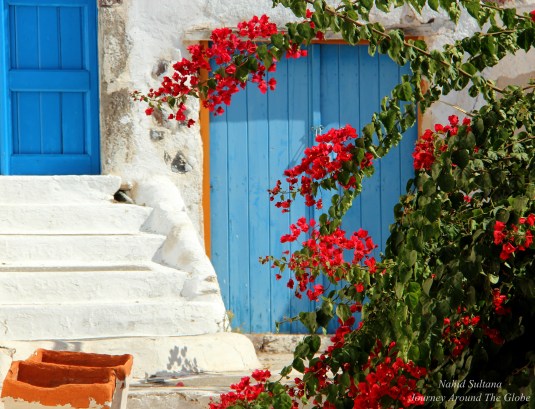
- A typical blue-white house in Megalochori, Santorini

I spent about 45 minutes here just strolling thru the small streets. Just follow the sign “Traditional Settlement” to start your tour after you get off the bus and you will be glad that you visited this place during your stay in Santorini.
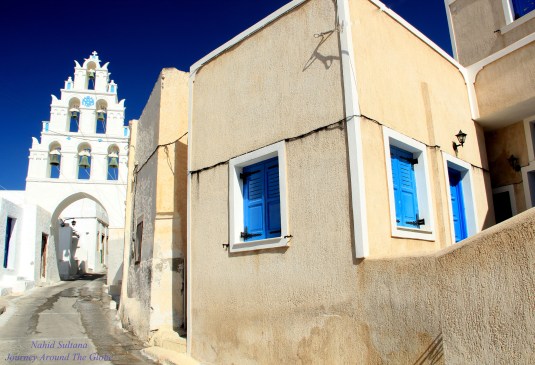
- Bell Tower of Church of Virgin Mary in Megalochori, Santorini

2) PERISSA BEACH (BLACK SAND BEACH): From Megalochori, I took a bus to go to Perissa Beach which took about 45 minutes of driving thru barren lands and stretchy zigzag mountains. Look out the windows…you will get a different feeling of the island.
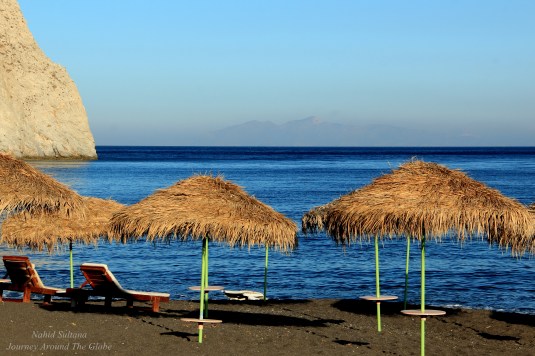
- Perissa Beach – the best one in Santorini

I was starving as soon as I got off the bus and had to satisfy my hunger first. After lunch, I spent plenty of time just walking by the beach and going to some nearby shops. As they say, Perissa is the most scenic and best beach in Santorini, that’s why I picked only this one among many others to spend my late afternoon time. This is the black sandy beach. Few people were swimming and sun-bathing in the perfect weather of October. Good thing it wasn’t that crowded. While you are enjoying the weather and the sea, don’t forget to look back at tall, dark, and handsome mountain, Mesa Vuono…the tallest one of Santorini. Overall, this was my ultimate place to relax under the sun and experience a nice islandic scene.

- Perissa Beach, Santorini

Perissa Beach is about an hour on bus if you are coming from Fira. During off-season, like in October, the bus runs only once an hour…so plan accordingly.
3) FIRA: Fira was my last stop of day 1 in Santorini and I ended up coming back to this town few times more in the next 2 days. It’s the capital of Santorini and the touristiest town of it. It is probably livelier than Oia but definitely louder and overcrowded too. If you are into night life, than Fira has more clubs and bars than any other places in the island.

- Fira after dark

The tourist part of Fira is smaller than you can think. There isn’t a lot to do here other than visiting some museums, churches, and of course enjoying some best cliff-perched town views. Strolling through its shopping district and gazing at overpriced jewelries, clothing, and art studios were fun for me. Walk on small streets, sit down in cafes with view of caldera and volcano islands or just go crazy in those unique shops. One of the best things to do here is watch sunset from any street or over a nice dinner. On the first day I kind of hurried to go near Hotel Atlantis from where you can experience sun going down behind the volcano islands…simply incredible.

- Sunset in Fira, Santorini
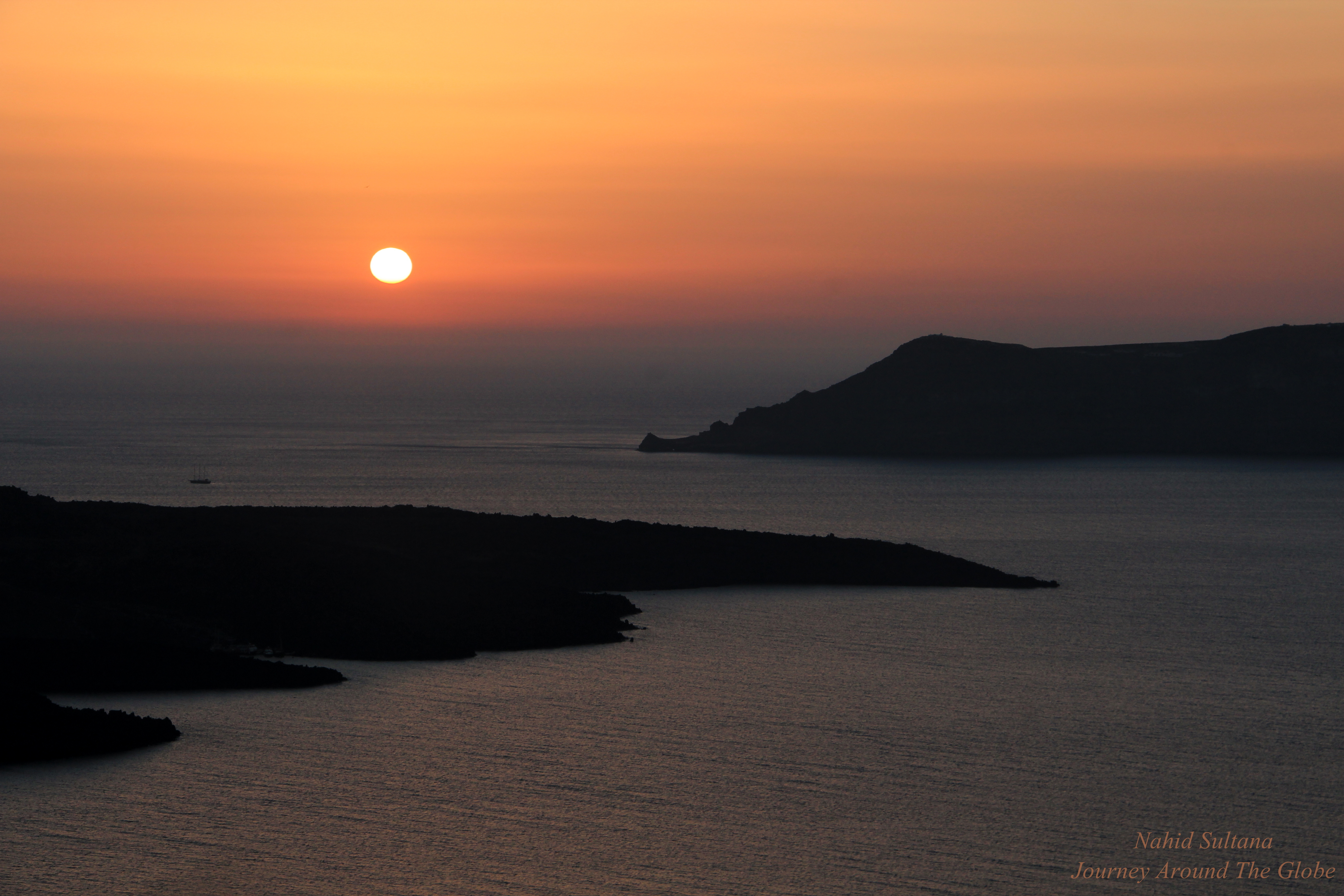
I took a small street near Hotel Atlantis down the cliff and started walking without really knowing where I will end up at. But this was the best way to get some views of the caldera itself. Here you can walk along the cliff and parallel to the sea to see some colorful stunning hotels and resorts with blue serene swimming pools looking over their big brother – the Aegean Sea.

- Fira with Cathedral Church of Candlemas of the Lord on the right side
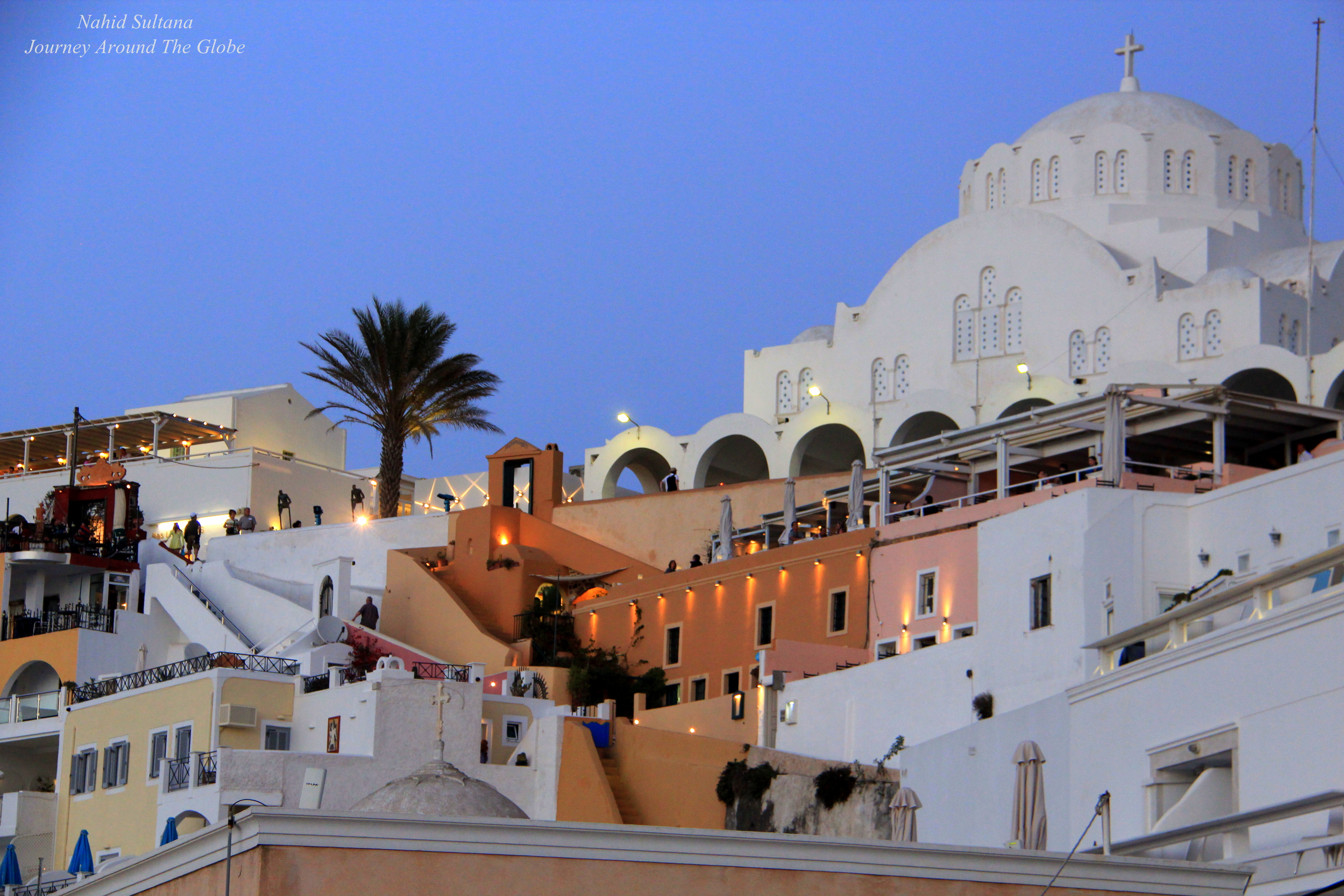
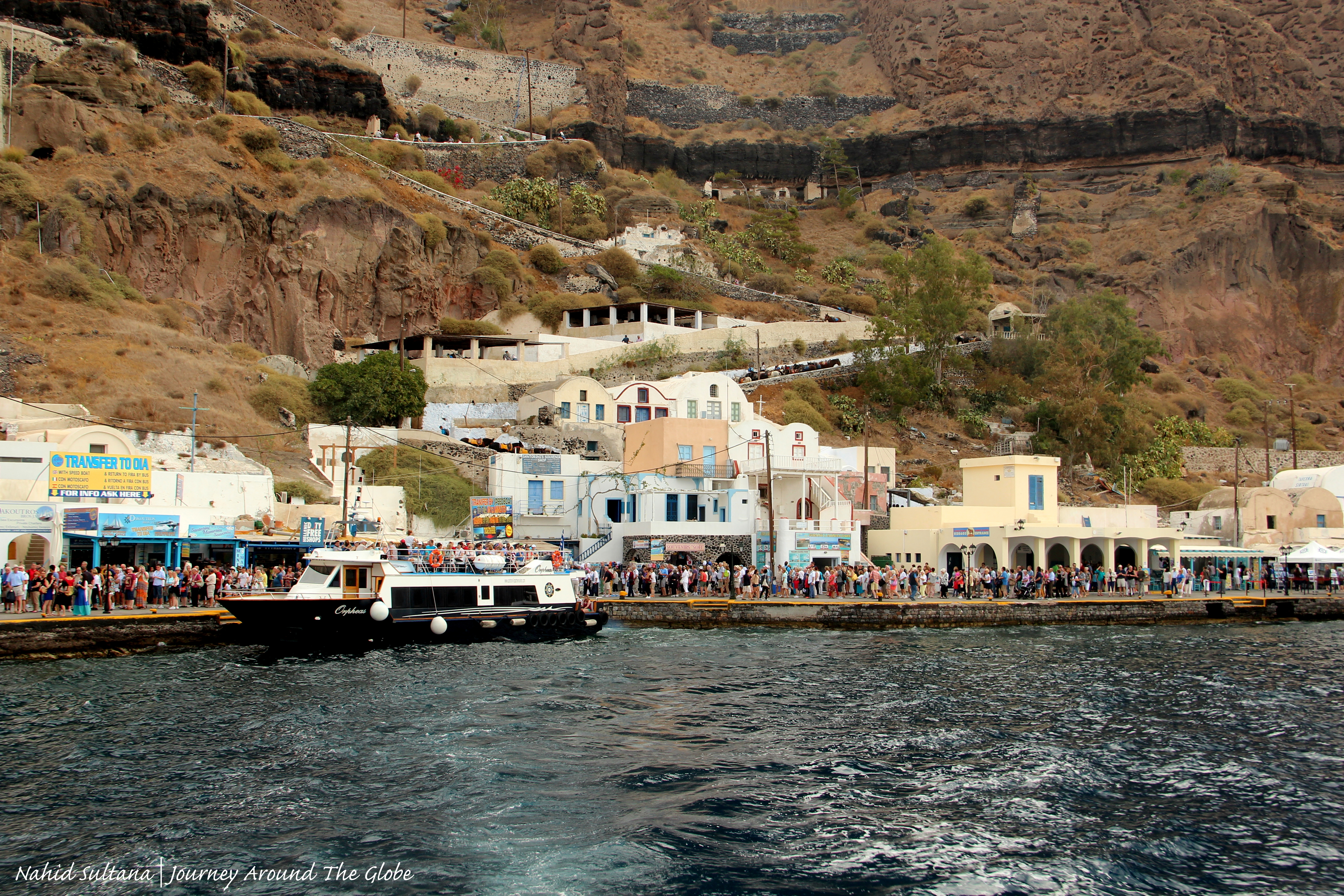
Although I didn’t do it, I saw many people lining up to catch a cable car to go down to Fira Old Port. If you have energy, maybe it’s best to walk some 600 steps or just take an unforgettable donkey ride either way. Walking to Old Port should be half the fun but have to be careful of donkey poo and its smell. There’s nothing much to do there unless enjoying the harbor and taking some pictures from sea-level. It does get really busy when passengers from cruise liners disembark from ships.

- Fira Old Port and the stairs that goes up to Fira main town
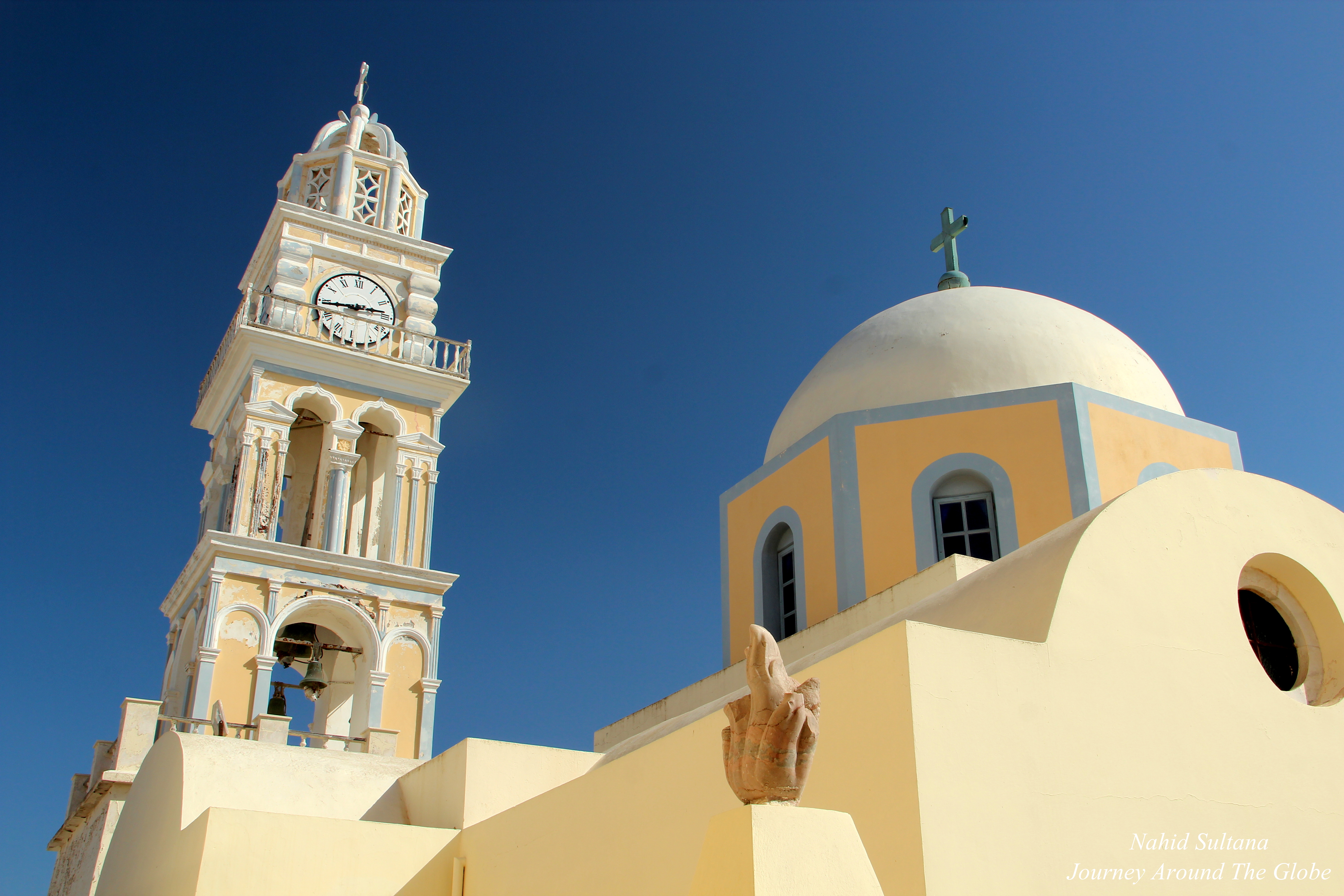
Cathedral Church of Candlemas of the Lord is a small but beautiful church in Fira, right beside Hotel Atlantis. Most of the churches I saw in Santorini were closed, but luckily this was open and I could get a taste of what a Greek church looks like. It has lots of frescoes on the wall, high ceiling, and a decorative altar. It was free to enter but we weren’t allowed to take any photos inside. Another cathedral I visited was Catholic Cathedral of Saint John the Baptist. It was built in 1823 but was damaged by the 1956 earthquake. Then finally, it was open again for worship in 1975. Loved its gorgeous ceiling and alter. It’s small but worth climbing the stairs. Dominican Monastery is only few steps away from this church, but it was closed. It’s free to enter.

- Catholic Cathedral of Saint John the Baptist in Fira, Santorini
Fira has the main bus stand and wherever you go you have to go thru Fira. That’s why it may take some extra time when you are planning to go to far away villages and beaches.
4) OIA: Oia is definitely the most beautiful and vibrant village of Santorini. It’s famous for its reputed world-famous sunset. After it was hit by a hard earthquake in 1956, the village was left barren for many decades. Then slowly started to get back its face, I think, around 1990s. Now Oia is the newest part of the island overlooking the Aegean and attracts more tourists than any other villages here. It has the most beautiful cliff dwellings and luxurious hotels and resorts. The main pedestrian lane is paved with marble and has lines of art studios, Greek gold jewelry shops, bars, taverns, and souvenir shops.

- Oia – the most beautiful village of Santorini

I didn’t go to Oia Castle which is an old Byzantine castle at one end of the village. The best and famous sunset is to be enjoyed from there and you can see every tourist walking that direction right before the sunset to reserve the best spot in the ruins of this castle. During summer/peak season it’s better to be there at least one hour before the sunset so that you don’t have strangers’ heads blocking your view and your viewfinder. I stood at the beginning of pedestrian zone near the church (and right opposite of my hotel) and it was awesome watching the fiery sun slowly hiding under the water.

- Sunset Oia – a HDR version

5) PYRGOS: Located on a hill, Pyrgos is the highest point on the island. This is one of the oldest villages here and once was the capital. Cycladic houses, prominent Byzantine churches (all were closed), and homes with blue doors and cute porches made my journey here really unforgettable.

- Walking thru the white-washed walls of Pyrgos

I directly went towards the castle after getting off the bus. I hiked quite a bit here, climbed many stairs, and passed many small windy alleys to get to the castle (just follow the hand-written signs on floors and on walls). But once you are up on the castle, you’ll have an outstanding panoramic view of the whole island, mountains, and the deep blue water. The castle in itself has nothing really to offer other than its old bones and skeletons. Also there is no entrance fee or any information board for tourists.

- Stunning view of caldera and Aegean from Pyrgos Castle
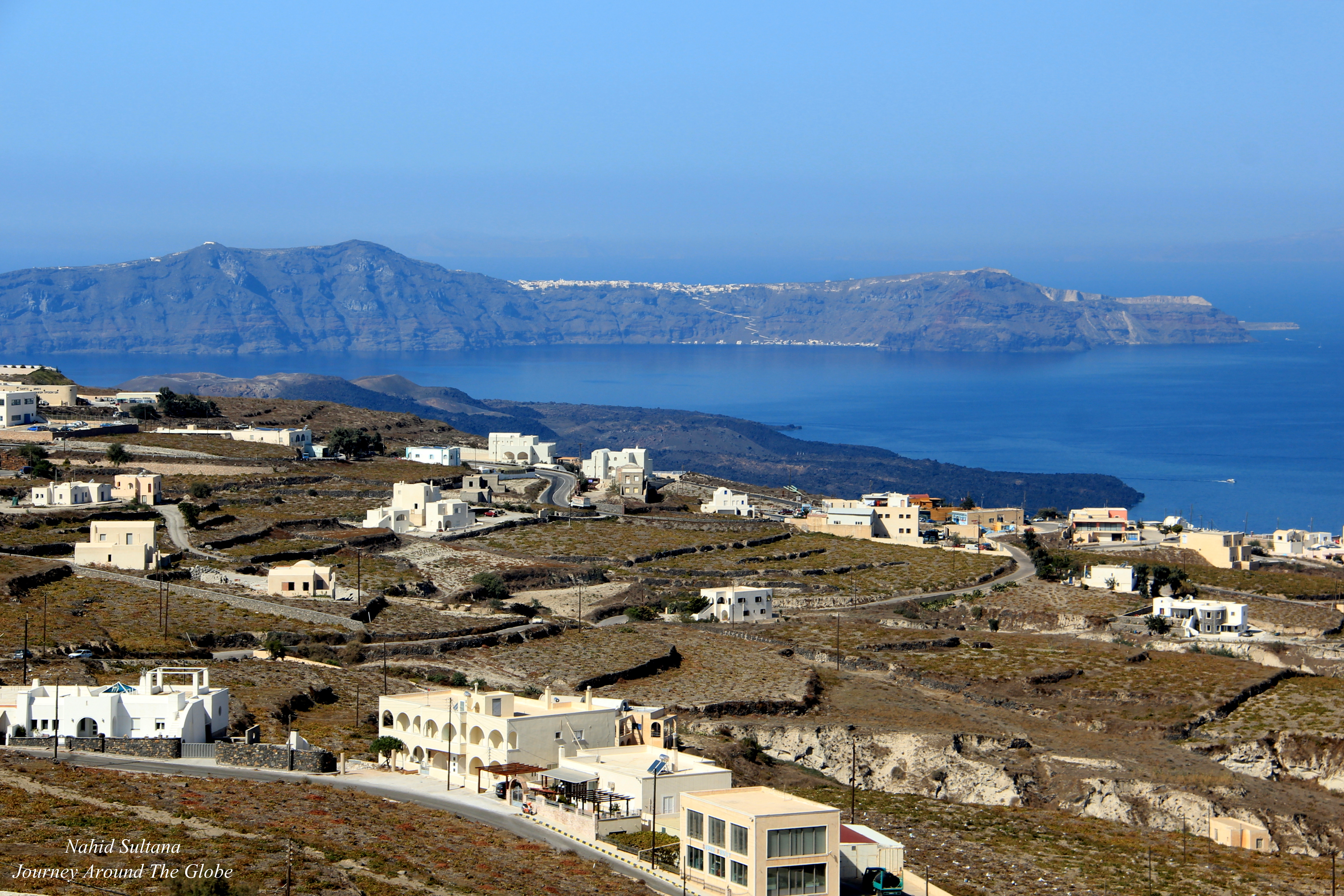
It took me about 15 minutes to come to Pyrgos from Fira by bus. Pyrgos is relatively bigger than Megalochori and I spent about hour and half here.
6) FIRESTEFANI: Firestefani is another cliff-perched village where you can get the best panoramic view of the volcano. It’s smaller than Oia or Fira but definitely has the same view and charm. Many luxurious hotels and resorts are on the cliffs of Firestefani. Apart from those, the village maintained its traditional looks where you can see dominating blue and white colors everywhere and few Cyclades churches.
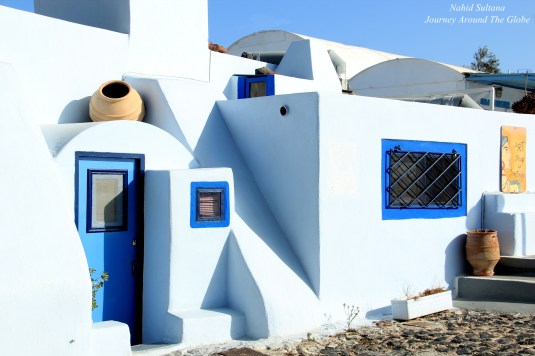
- Beautiful village of Firestefani
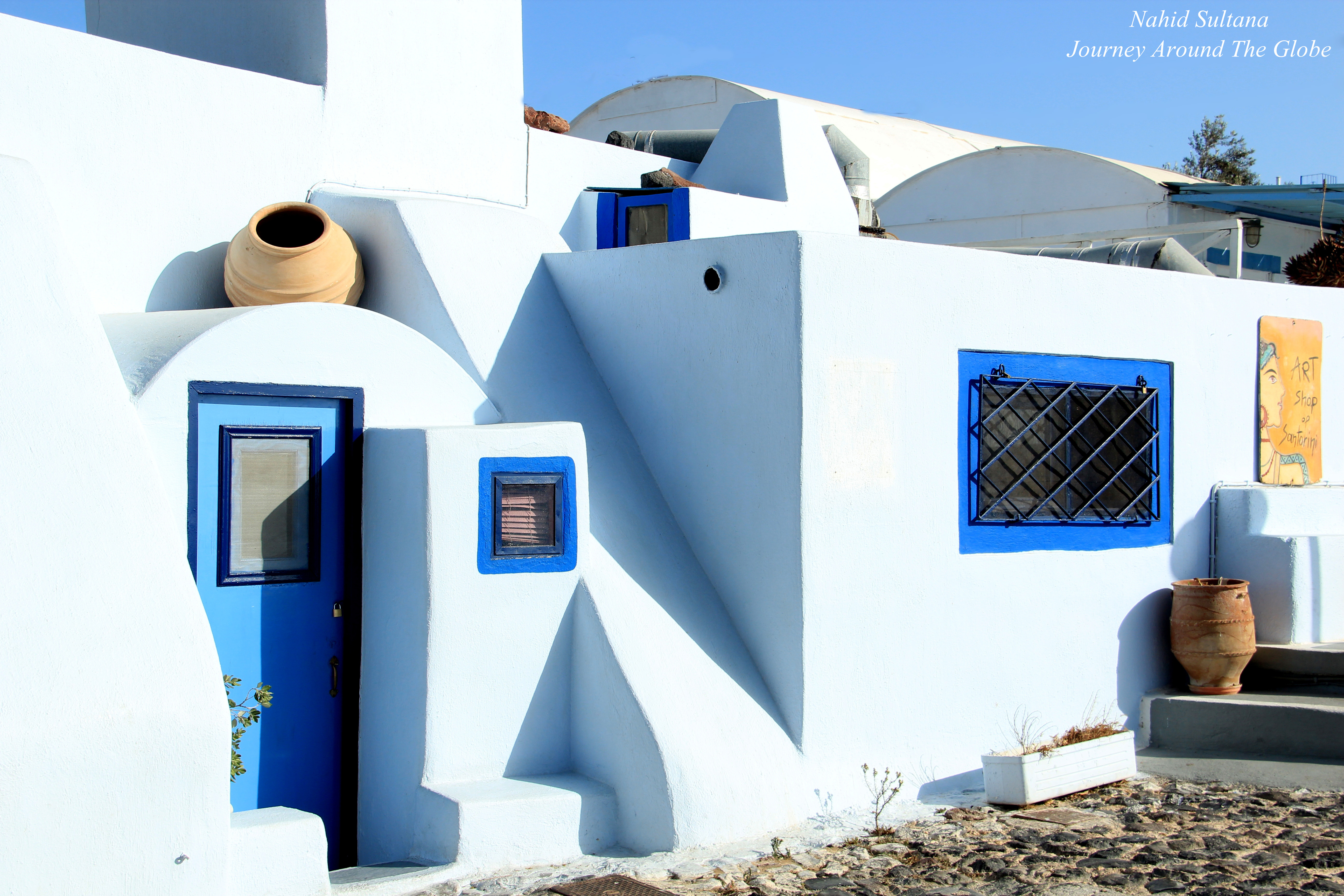
I didn’t go down the stairs here, just spent about an hour walking parallel to the Aegean. Then last few minutes I was just sitting on a bench on the cliff enjoying that great moment right before the sun set down, but didn’t really see the sunset. This was another place from where I wanted to experience a sunset but didn’t. You can avoid the sunset crowd of Oia and come to Firestefani for a serene atmosphere when the sun vanishes in the horizon.

- Looking at Aegean from Firestefani, Santorini

7) IMEROVIGLI: Not too far from Firestefani, Imerovigli is another smaller resort village hanging from the cliff. It’s a short bus ride from either Fira or Oia and offers rewarding views of the caldera and volcanos.
I reached here late afternoon and loved its calm and peaceful life. I went down few steps on the cliff and decided to come back to a café for some ice-cream. As usual, view was marvelous. My original plan was to stay here until sunset but I really couldn’t find a nice spot to sit down or even just stand (like Firestefani had). So after spending about an hour here, I took the next bus to Oia and enjoyed the most famous Santorini sunset from Oia cliffs.

- Looking at Island of Nea Kamini from Imerovigli

8) AMMOUDI BAY: My original plan was to go down to Ammoudi Bay in early morning to see fisherman getting ready to start their days and go out to the sea. But of course I couldn’t do it and went there a bit later around 9:30am on the day I took boat trip to see other islands.
Ammoudi Bay is a petit fishing village at the foothill of Oia where you can find some best fish taverns near the bay. It doesn’t have a beach but has a nice swimming area for public. It’s a small but a must visit place in Santorini to get a different feeling of this island. Look up the red cliffs of Ammoudi Bay and you can see the whole village of Oia in one glimpse. If you are taking a boat trip, don’t forget to look back at Ammoudi Bay and Oia…it’s a fabulous view and shouldn’t be missed. The pebble beach here is nice for swimming and sun-bathing.
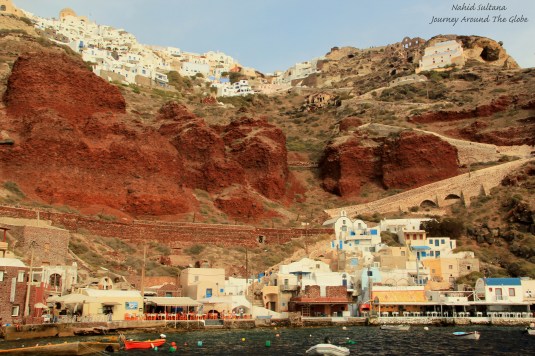
- Ammoudi Bay at the foothill of Oia in Santorini, Greece

There are 3 ways to go down to Ammoudi Bay. The easiest way is to take taxi from Oia which costs about 10 euros. Second option is to take some 250 steps which starts at one end of the pedestrian zone of Oia and ends at the foothill of the cliff close to the bay. The final and adventurous option would be taking a donkey ride either way only for 5 euros per adult. Be careful when walking down the steps to go to the bay, there are lots of donkey poops all around the stairs. It can get even worse and slippery if it rains. Make sure to have good shoes if you are planning to climb the stairs.
I actually climbed 250 steps from Ammoudi Bay up to Oia center. It can be hard but this is the best way to enjoy the view all around and take some great shots. To be honest, I had to stop and catch breathes every few minutes.

- Climbing some 250 steps from Ammoudi Bay to Oia

9) BOAT EXCURSION to NEA KAMENI, PALIA KAMENI, and THIRASSIA: A shuttle bus picked all the passengers for this boat excursion from our individual hotels and took us to Ammoudi Bay around 9:30 am where we started our tour from. From here we went to Fira, picked up more people, and headed towards our first stop Nea Kameni.

- From our boat, leaving Oia behind
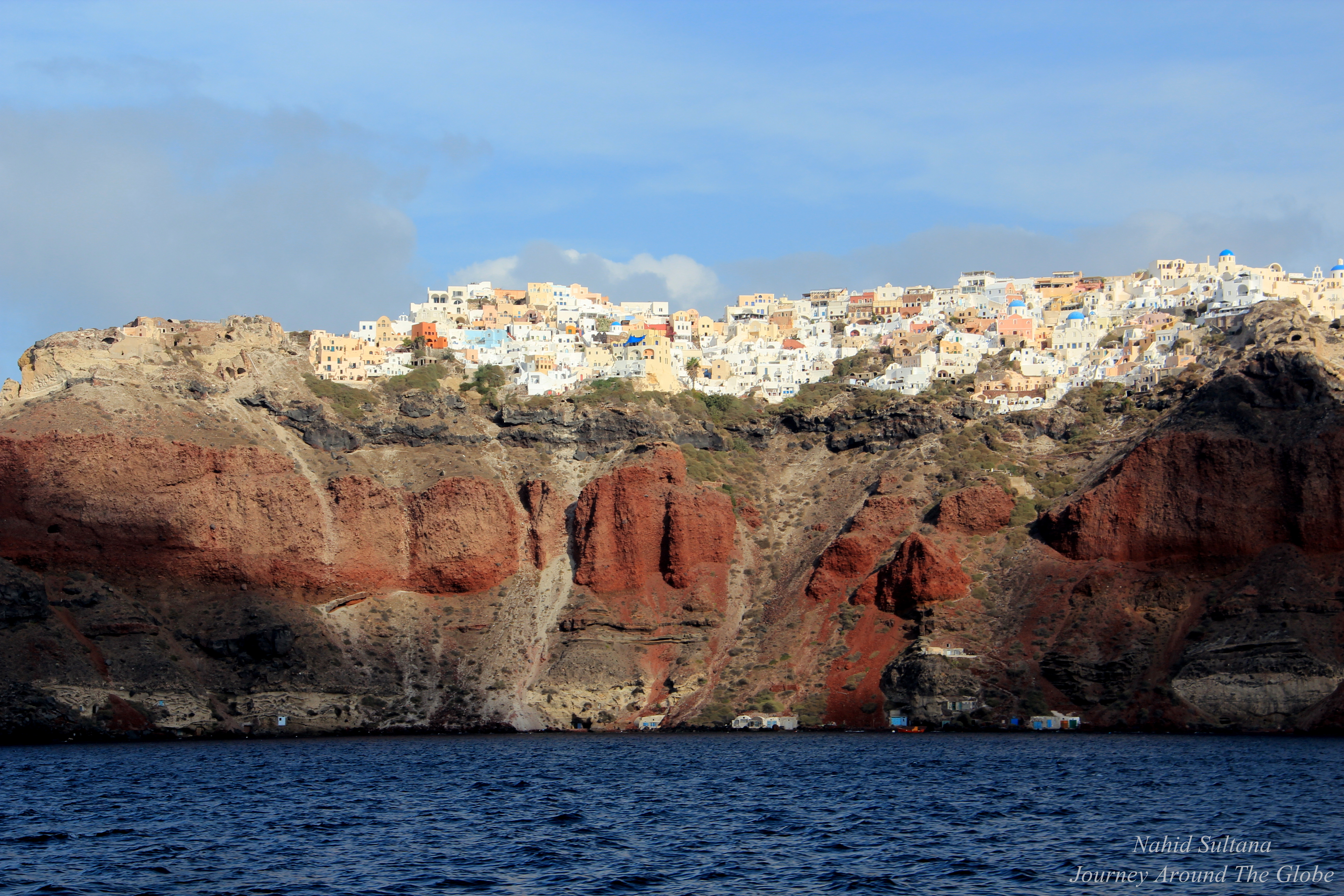
This boat trip is a must-see when in Santorini, you get to walk on lava rocks and experience an active volcano land from up close. The tantalizing dark islands in the middle of caldera are Palea Kameni (Old Burnt Island) and Nea Kameni (New Brunt Island). Both are major scientific interests and protected national monuments of Greece. The sites offer an exceptional natural beauty in and all around the island. Its oldest rock formations date back 430 years and its most recent a mere 50 years. The islet was born and gradually formed through volcanic eruptions spanning since 1575, in six different volcanic events. Sluggish magma at regular intervals added layer upon layer to form Nea and Palia Kameni. Both islands are the youngest landforms in the eastern Mediterranean. Authorities do keep their eyes open for seismic activity and other matters in these areas where they can predict in a period of a few months to a year prior to the eruption. While no one actually lives in Nea Kameni, Palia Kameni has only 1 residence, and Thirassia has about 200 inhabitants.

- Volcanic rocks of Nea Kamini and … of course the gorgeous view from here
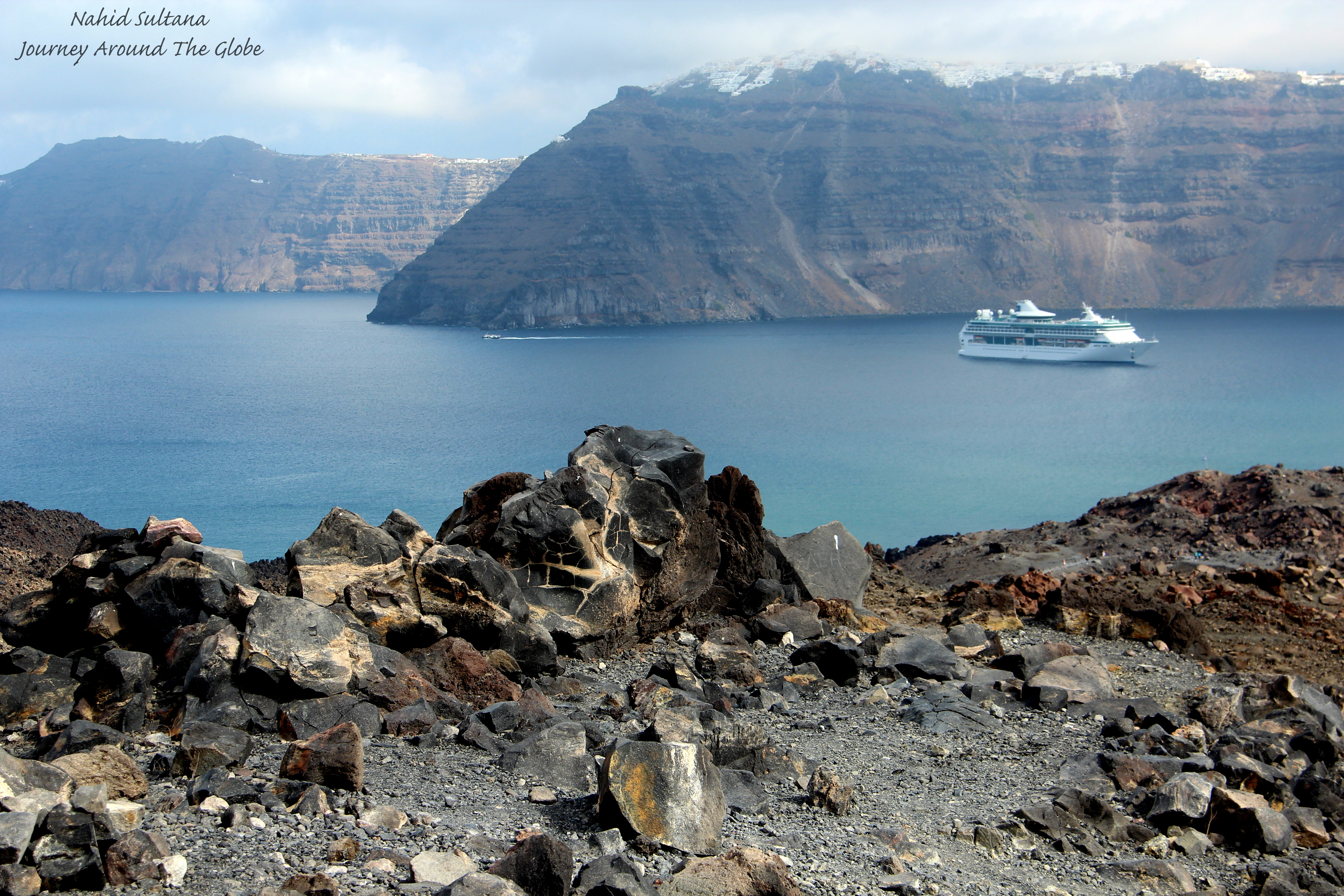
After the last eruption of Nea Kameni in 1950, the Santorini volcano remains dormant till today. We hiked about 1.5 km one way (total little more than 3km) to get all the way up to go near the big craters where you can still see hot fumes at some points and smell sulfuric gas with it. While hiking on this rugged with various colored rock terrain, look around and you will see Fira on the roof of caldera in distance. It can get a little windy at the top but the view from there worth the long hike and heavy sweat. There is a 2 euros fee to enter the preserved landscape.
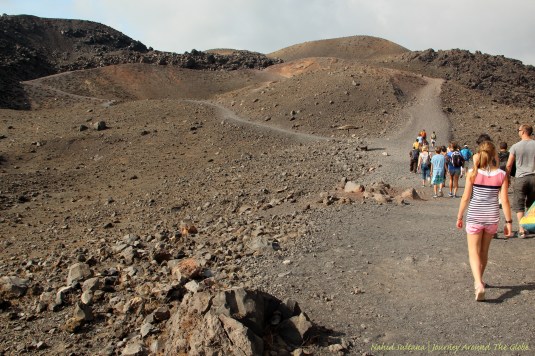
- Hiking on active volcanic island, Nea Kamini…beautifully barren and rugged landscape

Next we headed towards the hot springs of Palia Kameni. This is smaller than Nea Kameni and looked much greener. First eruption on Palia Kameni was in 197 B.C and the last one was in 725 A.D. but right now this is an inactive volcanic island. The boats really don’t dock here, it stood in the water close to land while people just dived in the sea, swam for half an hour in the hot springs underneath the sea, and got back on the vessel. We spent about half an hour here. Remember that the sulfur rich water here may not be suitable for many people. If you are like me, who doesn’t know how to swim L, enjoy the massive rock walls of the island, greenish water, and Church of St. Nicolas on the edge of water.
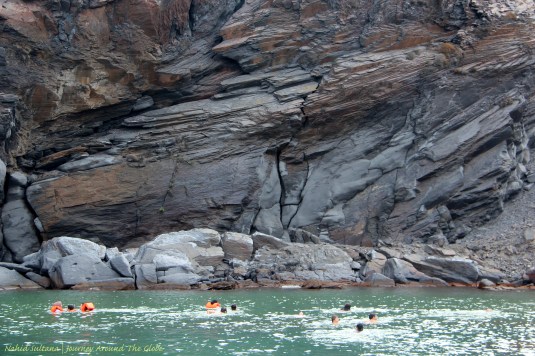
- People swimming in the hot springs of Palea Kamini in Santorini

Thirassia was our last stop on the boat tour before heading back to Oia. This is a small island and a nice place to spend couple hours. There are few ferries that come here from other islands if you don’t want to take any guided tour. We had about 2 hours to spend here out of which I spent an hour enjoying my lunch and the view. Rest of the time I just walked by the water taking photos and enjoying every corner of it. But I didn’t go to the main village up on the cliff.
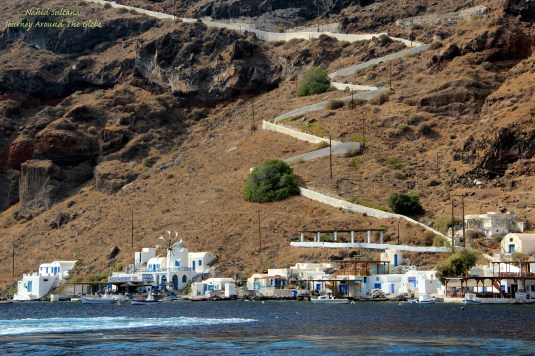
- Harbor of Thirassia, you can see the white stairs going up the cliff
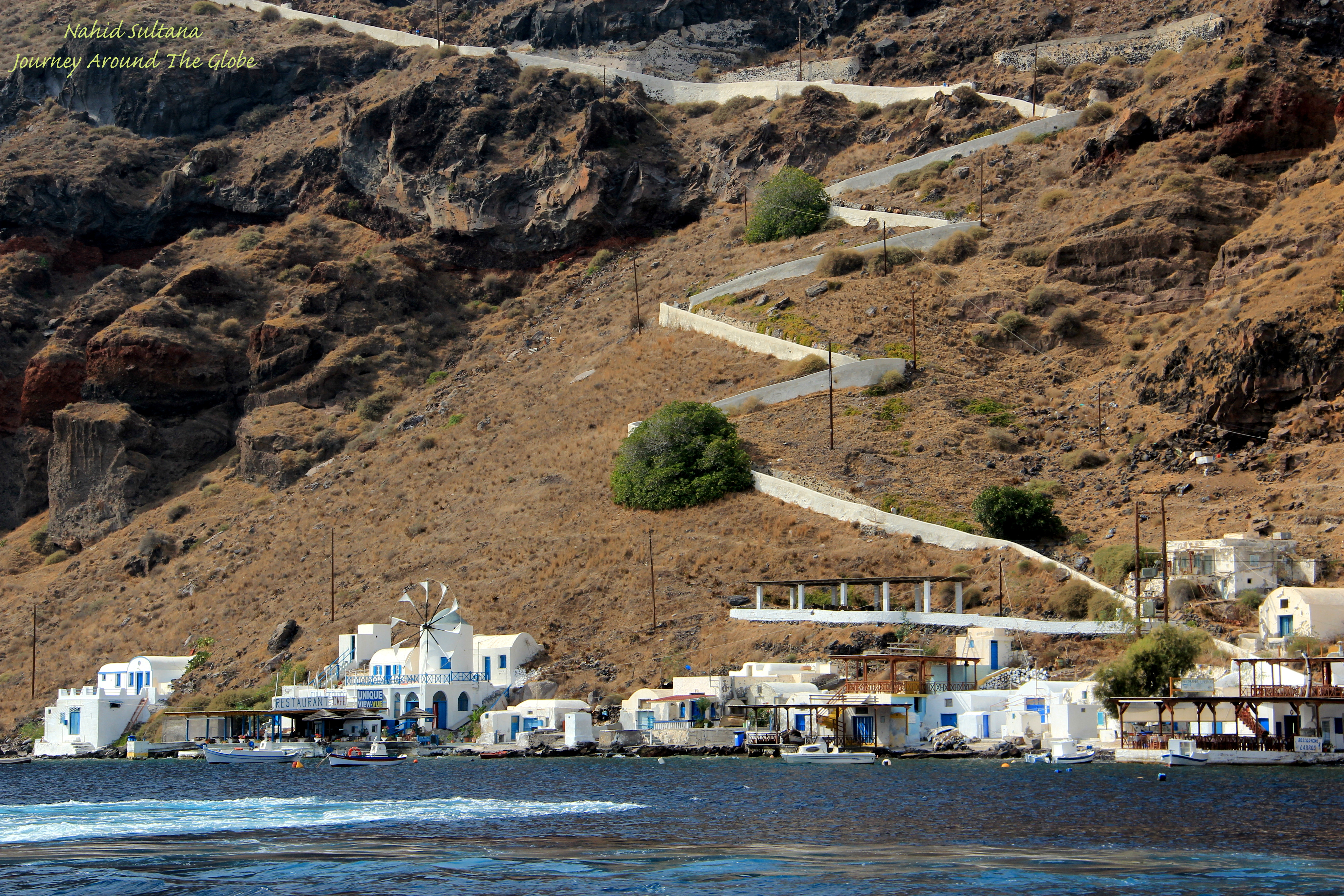
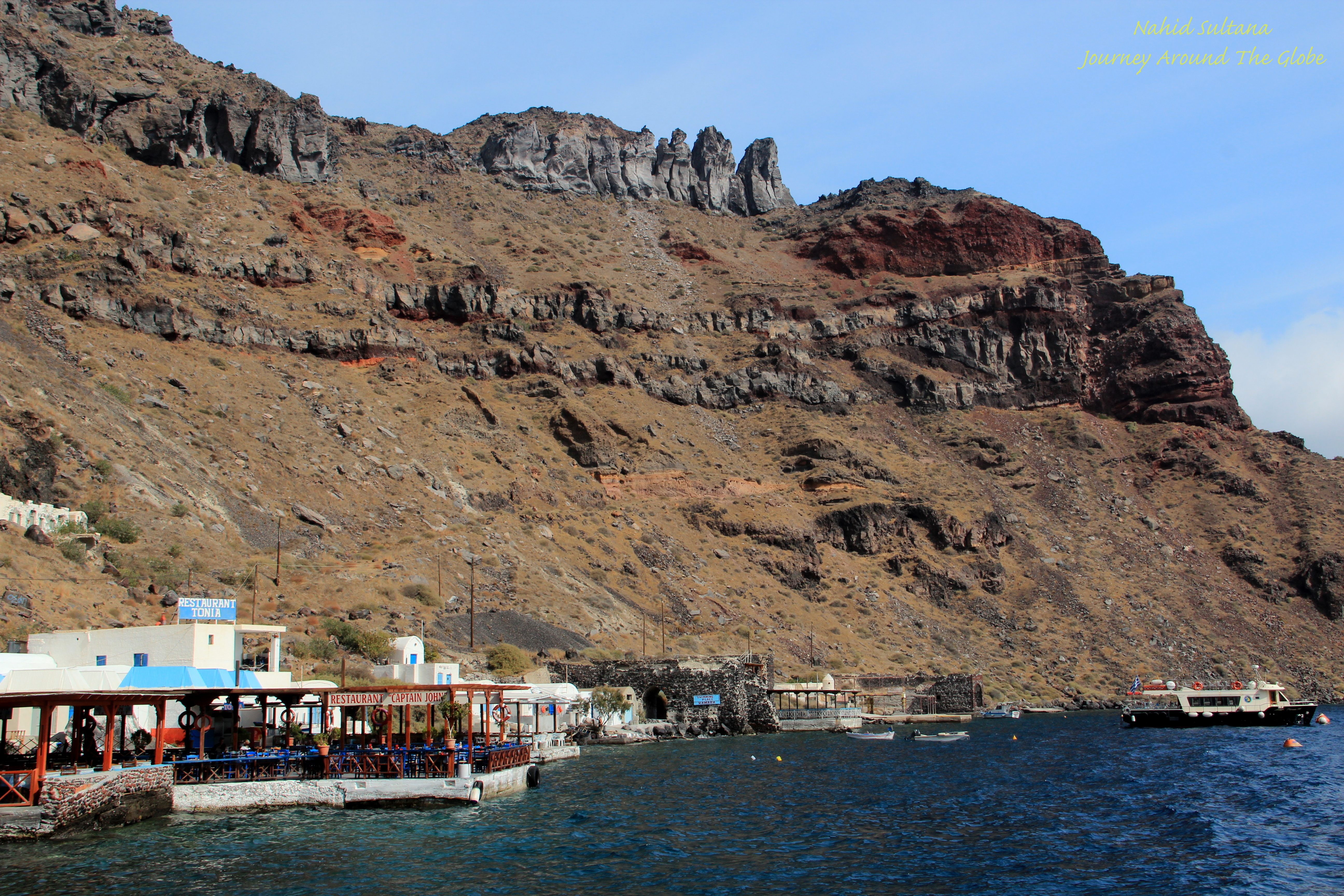
There are couple villages on the cliff top which can be reached by climbing 270 steps or taking a donkey ride for 5 euros. Those villages are supposed to be some typical Grecian villages that kept its old look and feel. The port of Thirassia is a great choice for walking, swimming, and eating. There are plenty restaurant here as well. Our guide recommended Captain John, but many of us on the group had lunch in the restaurant right beside it thinking it was Captain John, but good food either way. Enjoy the cliffs, view, and sound of the sea while here.
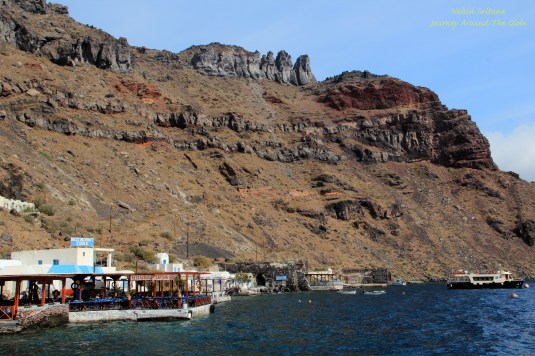
- Island of Thirassia in Santorini, Greece
Overall, Santorini was a great experience for me. I do get excited when going to a new place where I can learn some history (not only by visiting churches and castles), enjoy natural beauty, do nice shopping, taste local cuisines, and where I don’t have to walk with a map or with an itinerary. Santorini was that perfect place for me that fully satisfied all my wishes. Love you Santorini, hope we see each other again.
Related articles
- Watching the Sunset in Oia, Santorini (kulturekitten.wordpress.com)
- Im in Santorini, now what should I do? (lukehymann.wordpress.com)
- Travel theme: Brown (journeyaroundtheglobe.com)
- Chasing Santorini Sunsets (globetrotcat.wordpress.com)
- Day 27 – Santorini (joeredoctober.wordpress.com)
Share this:

Travel theme: Brown
Just came back from Santorini, Greece yesterday. Enjoy this “Brown” photo that I took while hiking 1.5km on volcanic rock of Nea Kameni Island. This was about a 15-20 minutes boat ride on Aegean Sea from Fira, Santorini which is an active volcanic island. This is was by far one of the best trips of my life (if not the best) so far. The post on Santorini coming up shortly…
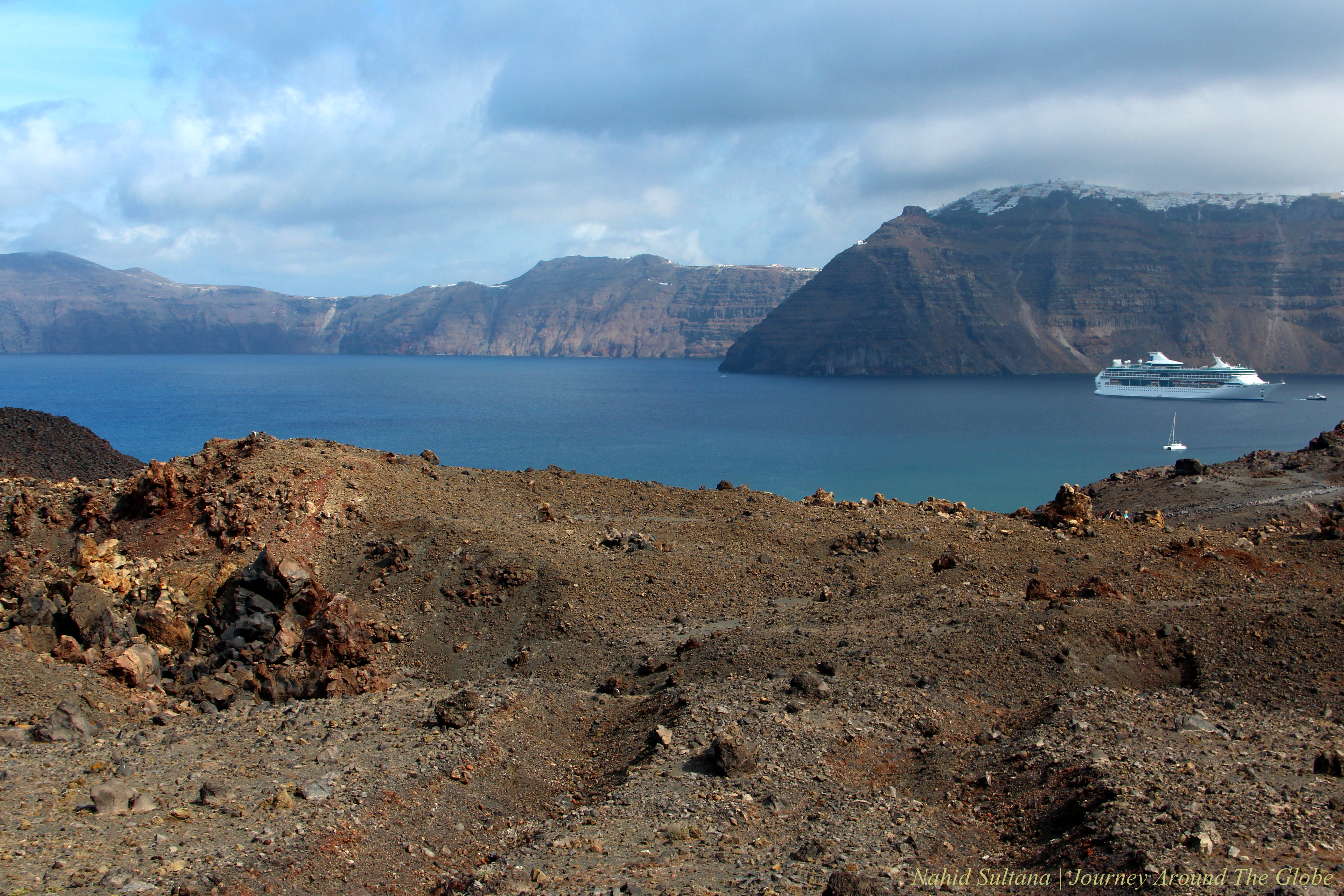
Thanks to http://wheresmybackpack.com/2013/10/18/travel-theme-brown/ for this wonderful theme…missing that brown island and its roughness.
Related articles
- The Prettiest Volcano (globetrotcat.wordpress.com)
- Santorini, Greece (pigeonposto.wordpress.com)
- Santorini – Beyond the Caldera (globetrotcat.wordpress.com)
- Five “5 Star” Santorini Hotels (thetravelerschant.wordpress.com)
- Chasing Santorini Sunsets (globetrotcat.wordpress.com)
Share this:

Nature walk in La Hulpe, Belgium
LA HULPE, BELGIUM: Belgium continues to surprise us with its history and natural beauties. La Hulpe is one of those places where both nature and history come together in one splendid landscape.

- La Hulpe Castle in Belgium
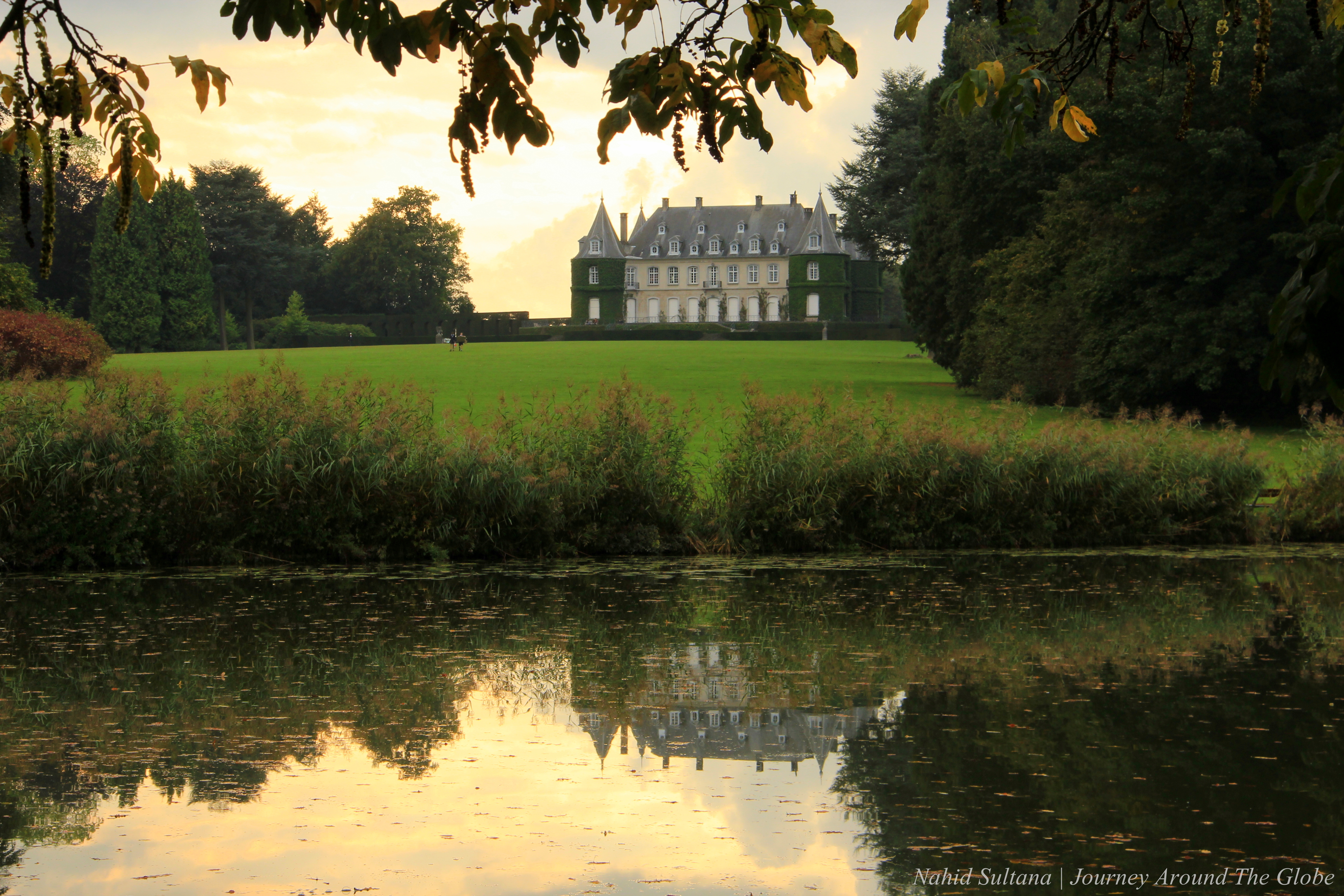
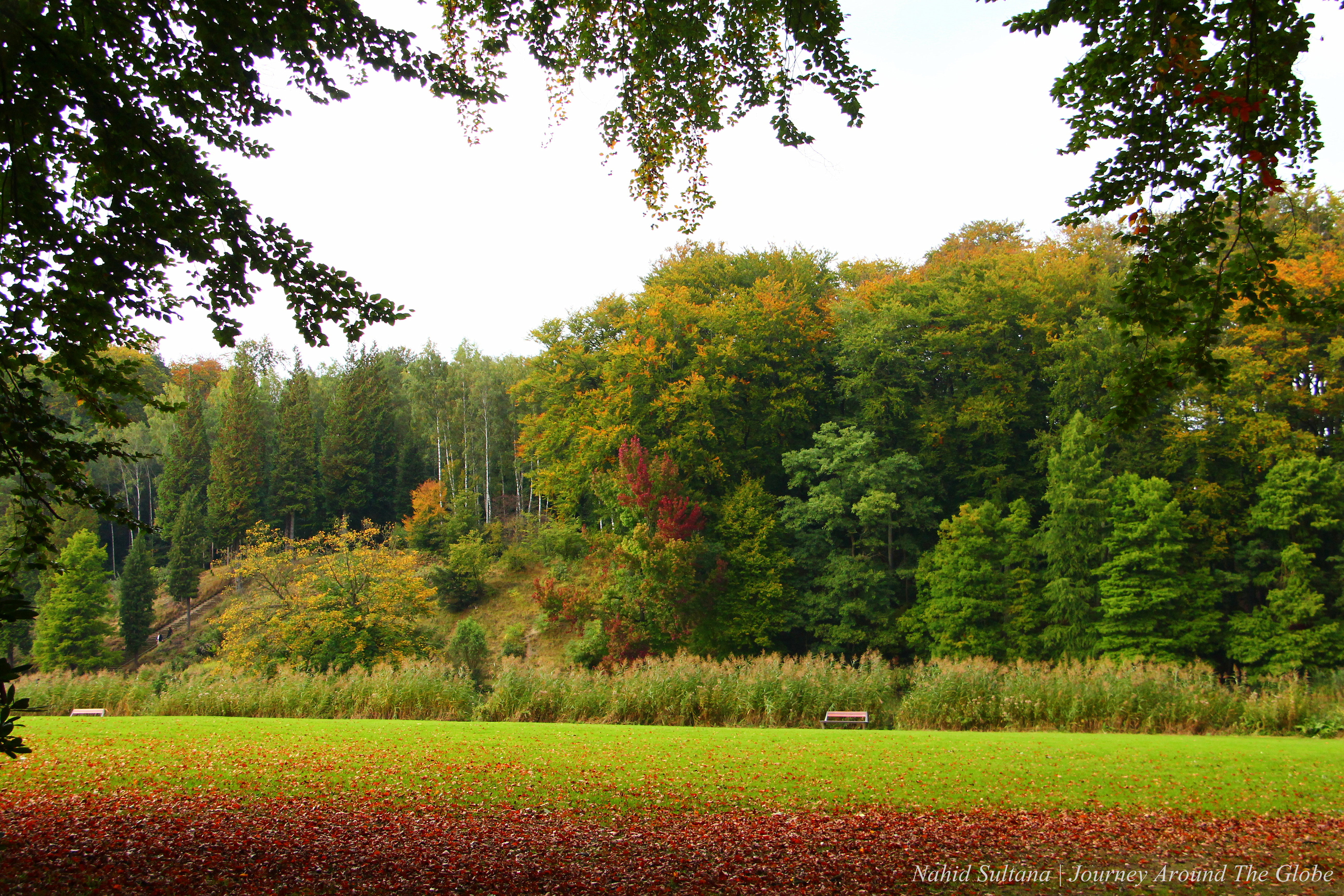
Since fall is almost here in Belgium, I wanted to get out of the house with my camera to shoot some fall colors in any nearby site. La Hulpe, a Walloon town (French territory of Belgium), is only 10 miles from Tervuren. Park and trails of La Hulpe is part of Soignes Forest which is the biggest preserved forest in Belgium.

- Fall colors in Soignes Forest in Belgium
I reached there around 5:30 pm, by then, the sunny harsh light was gone. Many children, especially scout teams, were there to do some nature walks and exploration activities. The park is huge, I mean it’s very big and will need few trips to cover at least the main natural sites. I didn’t really go into deep trails or forest on my first trip, just followed a paved path that led me to the Castle of La Hulpe.
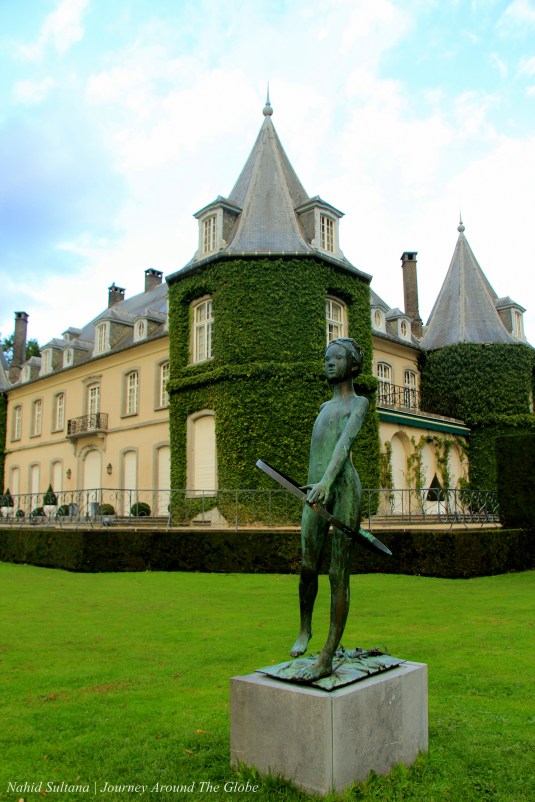
- Close-up La Hulpe Castle in Wallonia of Belgium
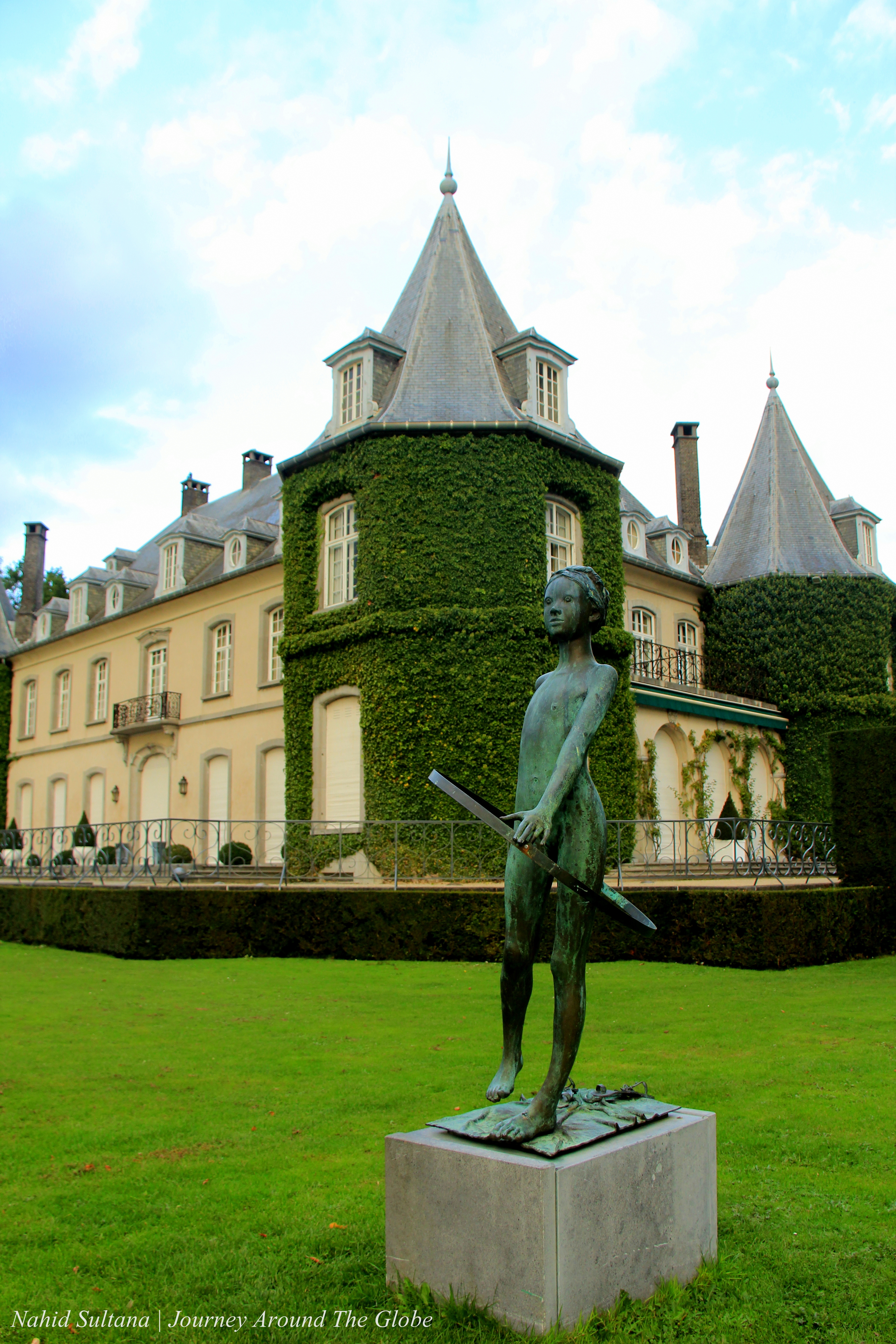
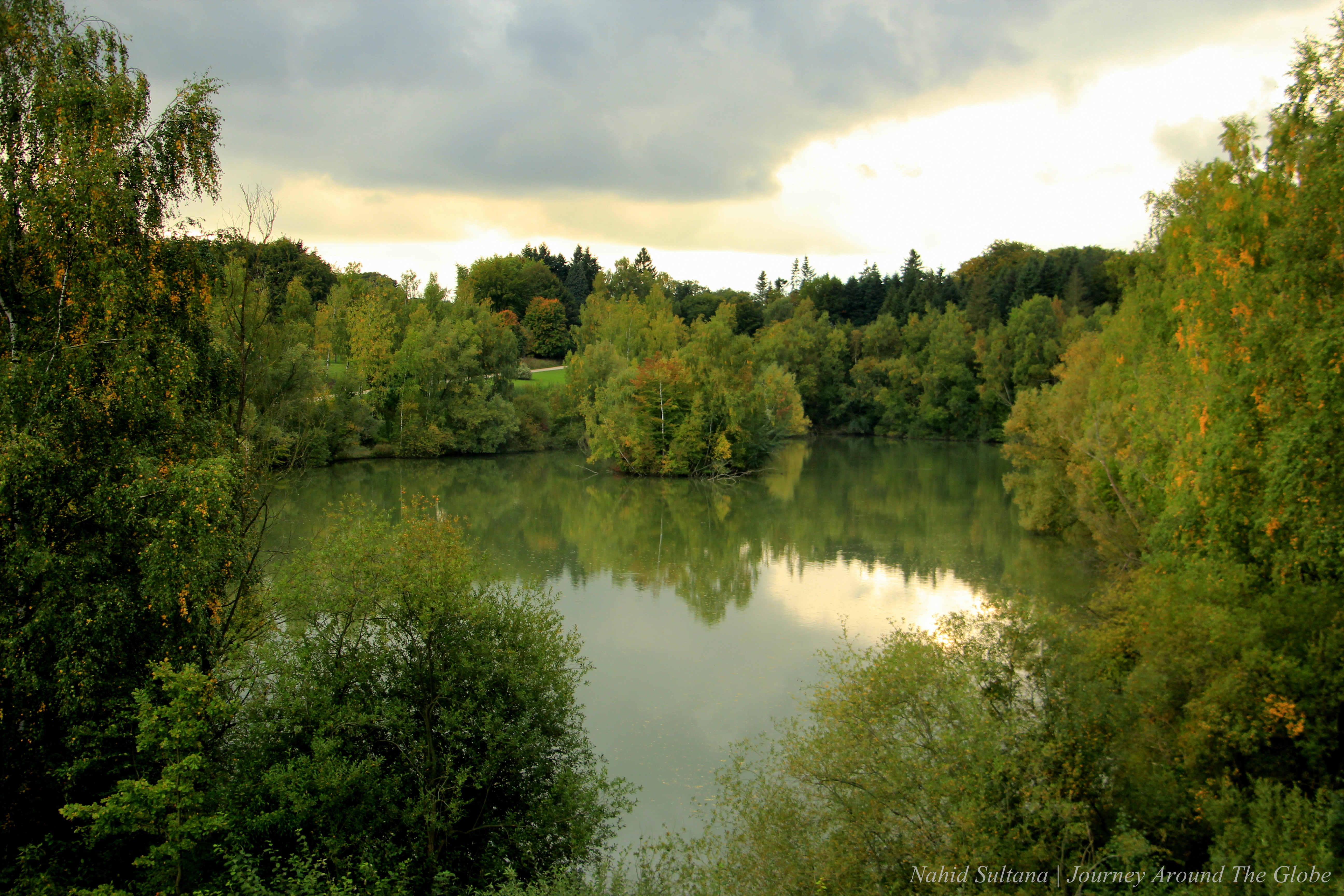
I am not sure if you can actually go inside the castle. But my daughter was saying they went inside during their trip here with school French instructor two years ago. But anyways, it was closed by the time I went there. There is a small but beautiful garden in one side of the castle and front of it is a big meadow. A lake awaits after you cross the neat green field of grass. It was just beautiful. I promised myself that I would come back here once again during the peak of fall and get some nice photos of patches of colors from the trees surrounding the lake.
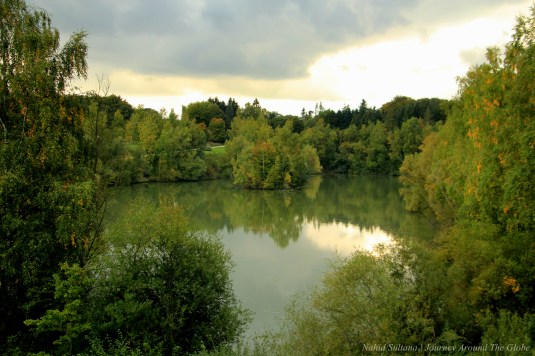
- A small lake in front of the castle in Soignes Forest, Belgium
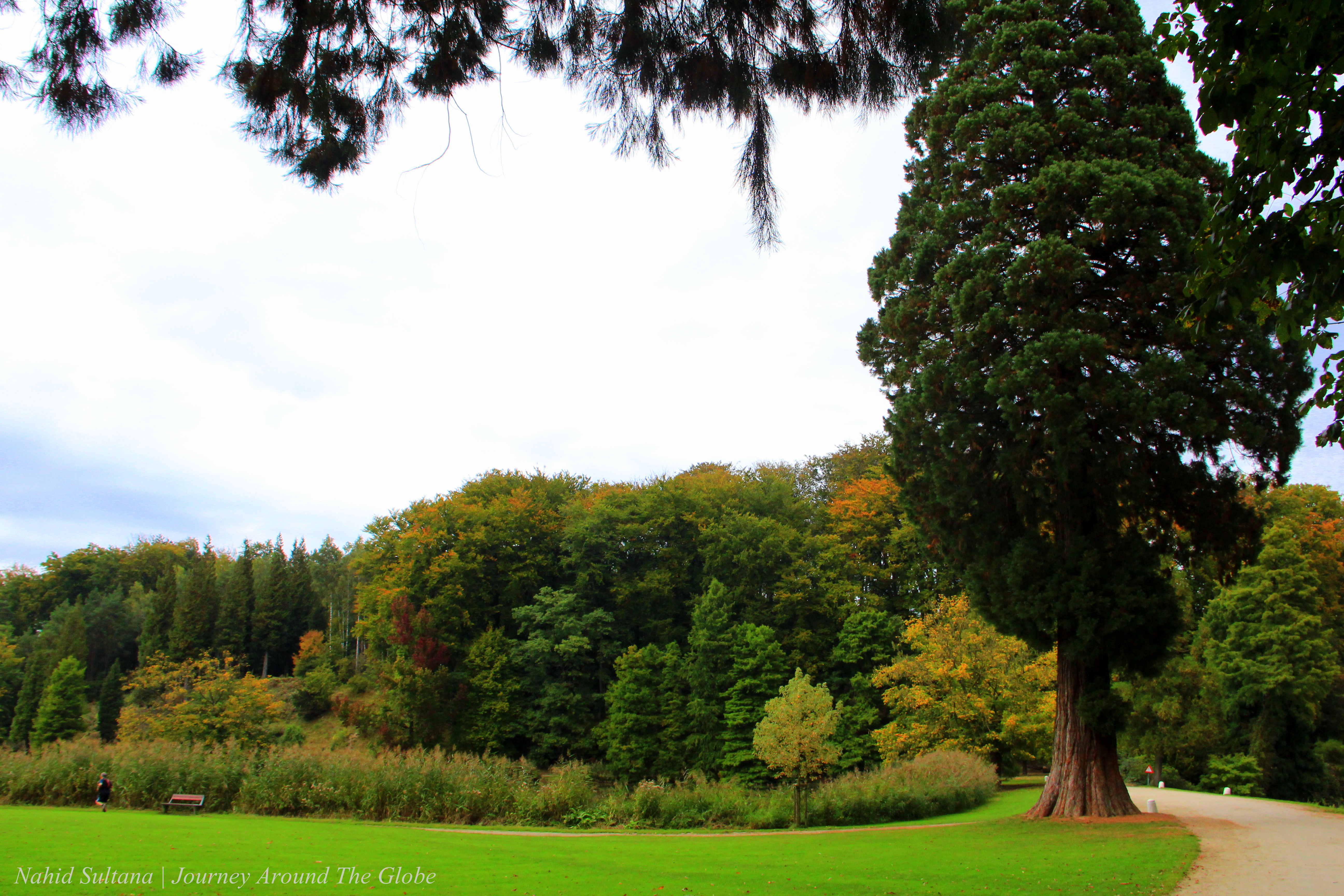
La Hulpe Park is a perfect place for joggers, runners, photographers, explorers, and people who just love nature. There was a little history board giving some info on the castle as well as Soignes Forest, but everything was in French…so really couldn’t figure out anything. But overall it was worth spending 2 ½ hours here with my camera last Saturday…gotta come back again though.
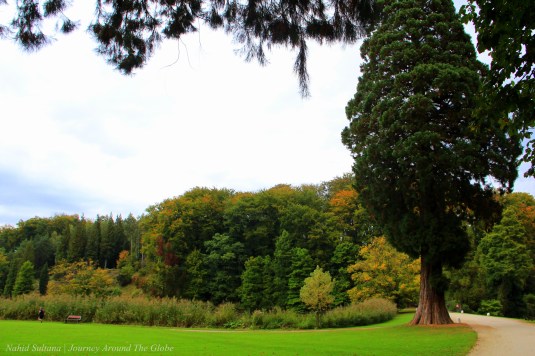
- A perfect place to mingle with the nature in La Hulpe, Belgium
Related articles
- Revisiting Gent (journeyaroundtheglobe.com)
- Les Jeunes et La Jeunesse (chrisnicastro12.wordpress.com)
- Demographics and Psycho-graphics in Wallonia (chrisnicastro12.wordpress.com)
Share this:

City of Amber – Riga, Latvia
RIGA, LATVIA: Riga, capital of Latvia, is the largest city in the Baltic States. This is one of the attractive cities of Europe which is still not spoiled by heavy tourists. The city was founded in 1201 as a base for the Northern Crusaders. It was once part of Swedish and later Russian Empires. In 1990, Riga became the capital when Latvia broke away from Soviet Union. Unfortunately, during WWII the city was heavily bombed and left to decay until its independence. That’s when the government started reconstructions and restorations of the old part of Riga. This is a thriving capital city with futuristic buildings and structures and an old town with pleasant medieval look.

- Looking at old part of Riga from River Daugava

Latvian people are very friendly and helpful. They speak very good English as well as Russian. The native language is Latvian but most people speak both Latvian and Russian.
Old central part of Riga is not that big and can be covered on foot. If you rush little bit and are not into museums you can probably manage to visit the main landmarks in a day. We saw many homeless and beggars here. While some of them are just asking for money some others try to give you small service in exchange of small amount of money, like sketch your face or something.

- A street sign in Riga, to keep the city nice and clean

TIME of TRAVEL: We flew to Riga beginning of October, 2013. While it started to get gloomy and rainy here in Belgium, the weather in Riga was actually very nice…at least the days we were there. It was a bit empty in the old town on Saturday morning; many stores were closed, not too many people on the streets or in cafes. But eventually we started seeing people in the afternoon. Everything was ok here except our luggage was lost and didn’t arrive on time. But luckily we got it the next day…phew. I thought we would have to wear the same clothes for our 3-days stay in Riga.
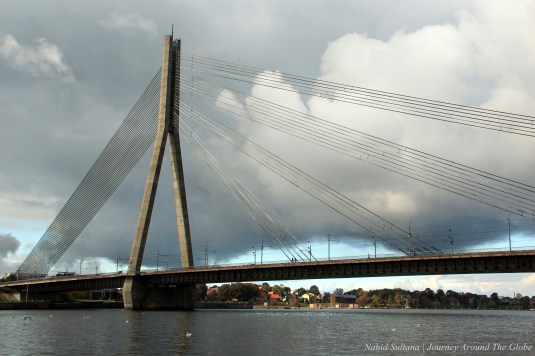
- Stone Bridge on River Daugava, we could actually see it from our hotel window in Riga
OUR HOTEL: We stayed in Hotel Radisson Blu Daugava in Riga with a fantastic view of the old town on the other side of River Daugava. Good thing about this hotel was they had free shuttle to and from old town. Of course a free grand breakfast and Wi-Fi were included in the package too. I never had problem staying in Radisson Blu…simply a great hotel. Their dinner was awesome too. Every night we used to sit by the window with the river in front of us. This is about 20 minutes of drive from the airport.
EATING and SHOPPING: All of the dinners here we had in our hotel. But for lunch we tried Rockabilly’s House in Livu Square. They had live Rock ‘N Roll music with a local band, I think, which was quite enjoying. It’s a good American restaurant with few selections of Latvian dishes.
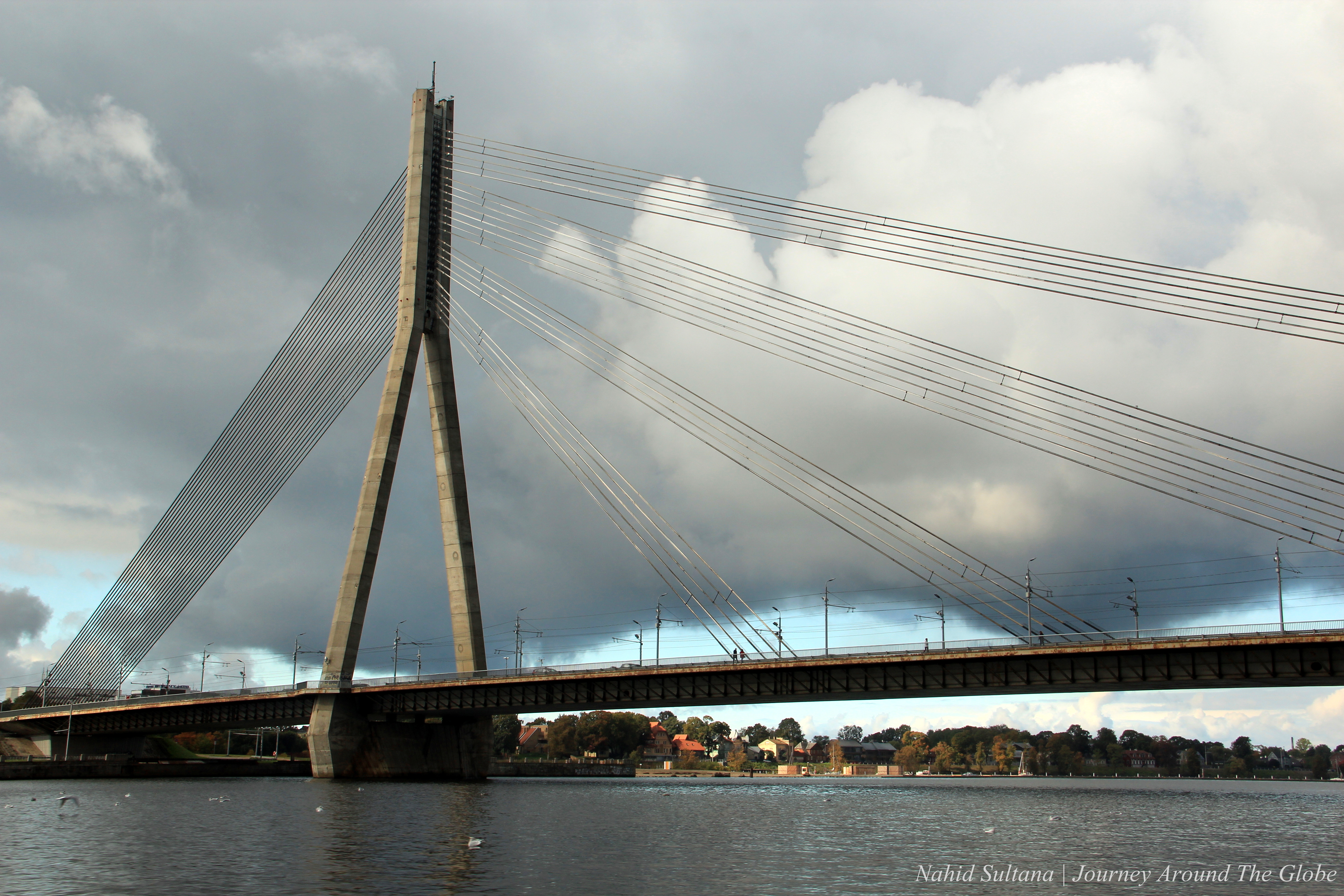
Riga is THE place to buy amber. Not only amber jewelries but also home decors and arts made from amber. You can find both natural and synthetic ones here. There are cluster of decent amber stores in the old town. Don’t buy cheap stuff, better to pay a bit more and get real natural amber from showrooms. Winter hats, gloves, and scarves are popular souvenirs here too. There was a big farmer’s market in front of Riga Dome on one Saturday that we were there. They sell fruits, veges, small souvenirs, gourmet food items, ceramics, and many other cool stuff.
- A street vendor selling amber jewelries in old town of Riga

Laima is a popular chocolate manufacture in Riga. There is even a spot near Freedom Monument called “Laima Clock” (from 1924) which is a popular rendezvous’ point for young sweethearts.
PLACES WE’VE VISITED: I spent only a day in Riga while my husband took the girls on the 2nd day for some more sightseeing. One place that I really wish I could see was Art Nouveau style buildings from the 19th century which is part of UNESCO World Heritage Site.
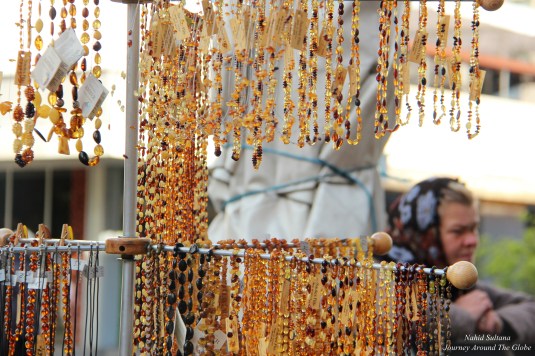
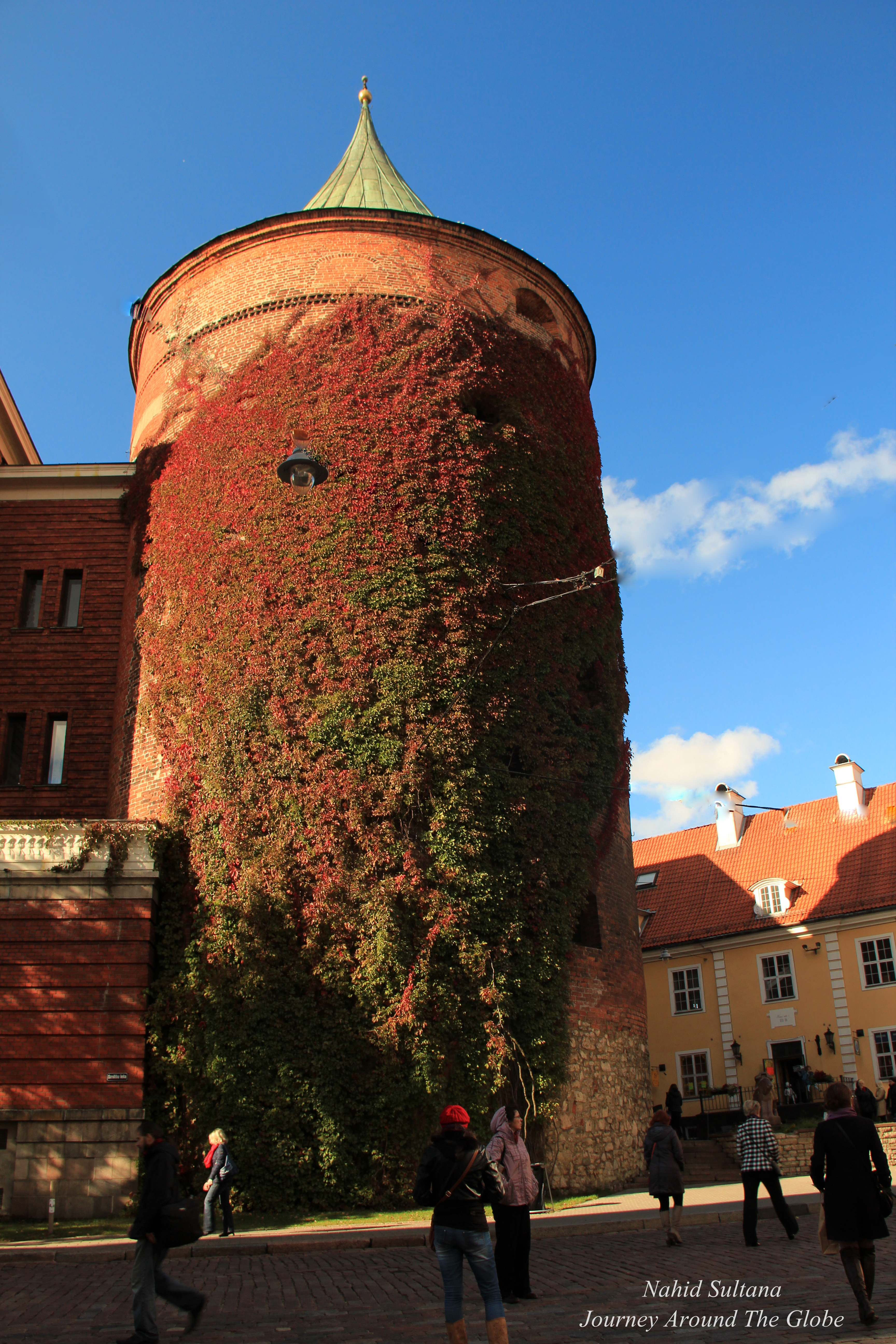
If it interests you, go to round cylindrical-shaped Powder Tower to visit Military museum which is the only tower of the old fortification system that is still standing. St. John’s Courtyard is a surviving example of a medieval courtyard. Bastion Hill and St. Jacob’s Barrack are both Riga’s historic points and contain some of the old walls and defense system.
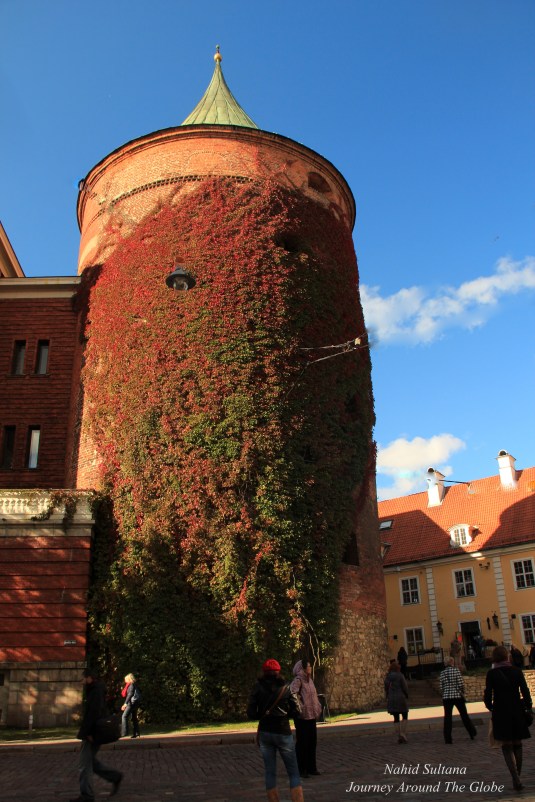
- Powder Tower – is the only tower of the old fortification system that is still standing in Riga
Don’t waste time going to Three Brothers…which is supposed to be oldest dwelling houses in Riga…but they are nothing but some dull old architectures sitting in one corner where there is nothing really to do.
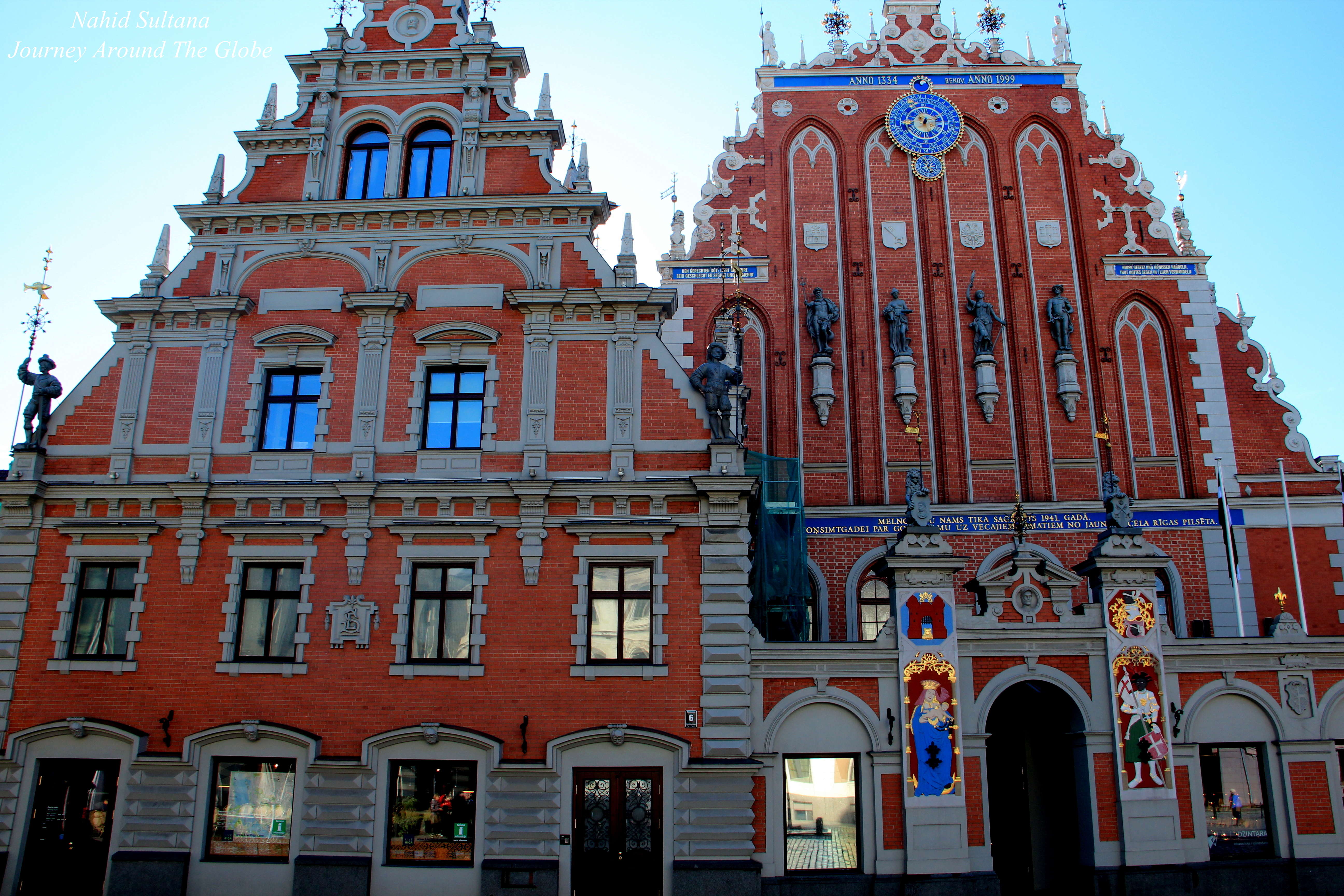
1) TOWNHALL SQUARE and HOUSE of BLACKHEADS: Town Hall Square was and still is one of the main squares of Riga. This is where we were left off by our hotel shuttle. The square has little bit of contemporary look. Statue of Ronald in the center represents that Riga was once part of the Hanseatic League. City Hall is at one side and adjacent to it is the House of Blackheads. House of Blackheads was once used to be a guild house, now it’s a museum, concert hall, and part of it is tourist office. This is one of the most vibrant and decorative buildings in this neighborhood. Original one, from 1334, was completely destroyed during WWII and was later rebuilt in 1999.
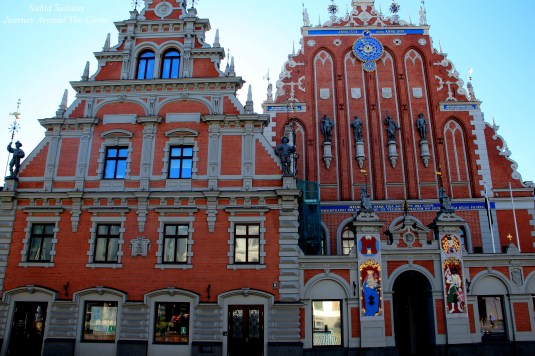
- House of Blackheads in Town hall Square in Riga, Latvia
2) ST. PETER’S CHURCH and BREMEN MUSICIANS: Located beside Town Hall Square, St. Peter’s Church is one of the oldest and most valuable monumental architectures from the Middle Ages in the Baltic States and the oldest in Riga. First record of St. Peter’s Church goes back to 1209. It suffered heavy fire damage during WWII. 123 meter tower of this church was reconstructed after the war. It was included in UNESCO World Heritage list in 1997. Inside of it didn’t really look very interesting with simple altar and ceiling. There was an art exhibition going on when we were there.
It’s 1 LS to enter the church. You can climb the observation tower from the height of 73 meter for a magnificent panoramic view of Riga. It costs 5 LS for that. The church is open for visitors from Tuesday – Saturdays from 10 – 7 and Sundays 12 – 7.
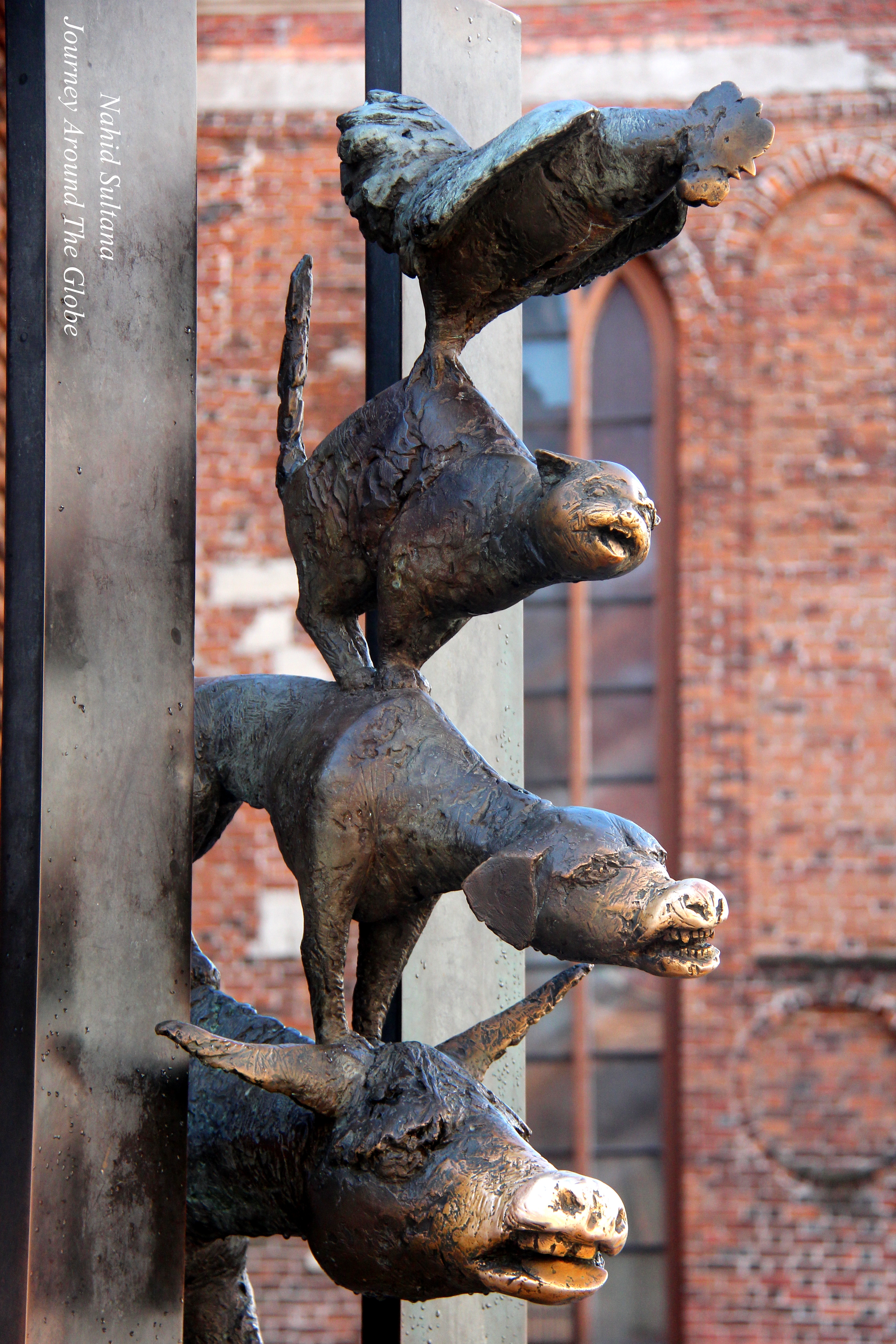
When you are done, get out of the church and go around to the back of the church where you can see a copy of Bremen Musicians (original one is in Bremen, Germany). Rub their noses and make a wish…IT WILL COME TRUE!!
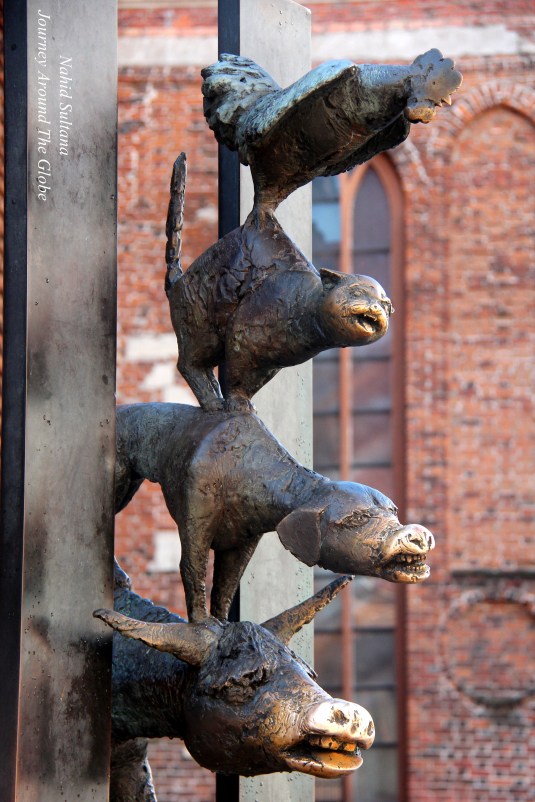
- Bremen Musicians at the back of St. Peter’s Church of Riga
3) LIVU SQUARE, CAT HOUSE, and STONE HEAD: The Cat House situated in Livu Square is one of the symbols of the city. You can see a big black cat standing on top of an old building. Stone Head near the Cat House is a stone idol of ancient Livu tribes. The square is a nice hangout place with many outdoor and indoor restaurants. Don’t miss the beautiful guild houses here.
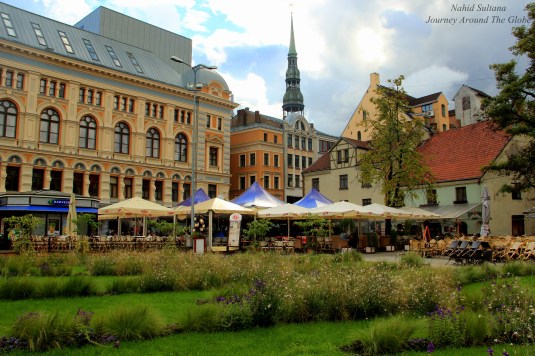
- Livu Square in Riga old town

4) RIGA DOME or DOME CATHEDRAL: This is the Archbishop’s Cathedral of the Latvian Evangelical Lutheran Church and a parish church. The construction begun in early 13th century in the Romanesque style. One of the ancient parts of the church is the choir. In 18th century, the east pediment and the dome of the church was rebuilt in Baroque style. The cathedral houses one of the largest organs in the world with 6768 organ pipes. But interior is very simple with old floor, some big stained-glass windows, and a simple altar. There is a small museum near the cloister with cathedrals old ruins and old decors.
We were there on a Saturday and the square in front of the cathedral was very lively with tons of local vendors and their customers. You can find fresh produce, small trinkets, hand-woven winter accessories, and many other unique items for a reasonable price here. It is 2 LS to enter.
5) ORTHODOX CATHEDRAL: Only a few steps away from the old town, this typical Russian style orthodox cathedral is a beautiful place to get a taste of architecture from the Russian era. It was erected during the rule of Soviets. Inside and outside are both eye-catching. Onion-domes adorns the exterior while many colorful fresco make the interior very gorgeous. Like other Russian churches we’ve seen so far, this also doesn’t have any sitting arrangements or a nave but does have a dazzling altar. It is an active worship place. There is no entrance fee but we weren’t allowed to take any picture inside.
6) MONUMENT of FREEDOM: Built in 1935, this symbolizes Latvia’s freedom and independence. There are two guards at the base of this 42 meter monument and some laying flowers showing respects to the heroes who lost their lives during the Latvian War of Independence from 1918 – 1920. Although we didn’t attend it, there is a small change of guard ceremony couple times a day.
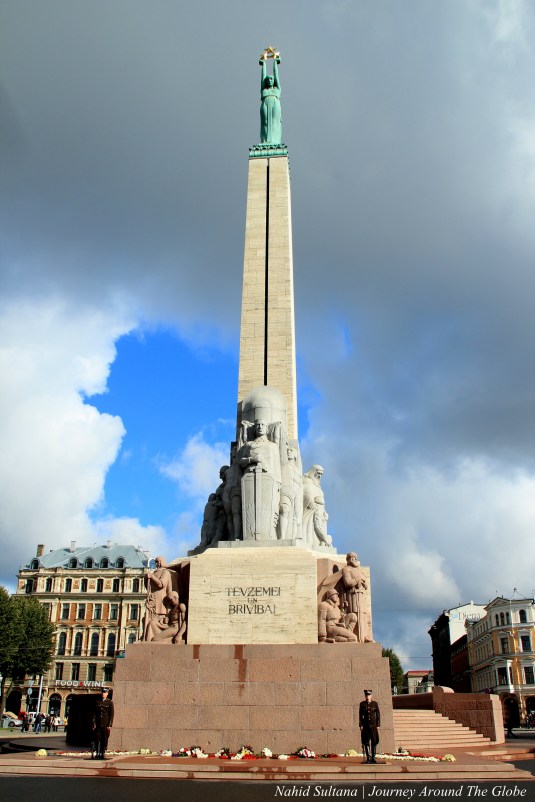
- Monument of Freedom, a symbol of independence

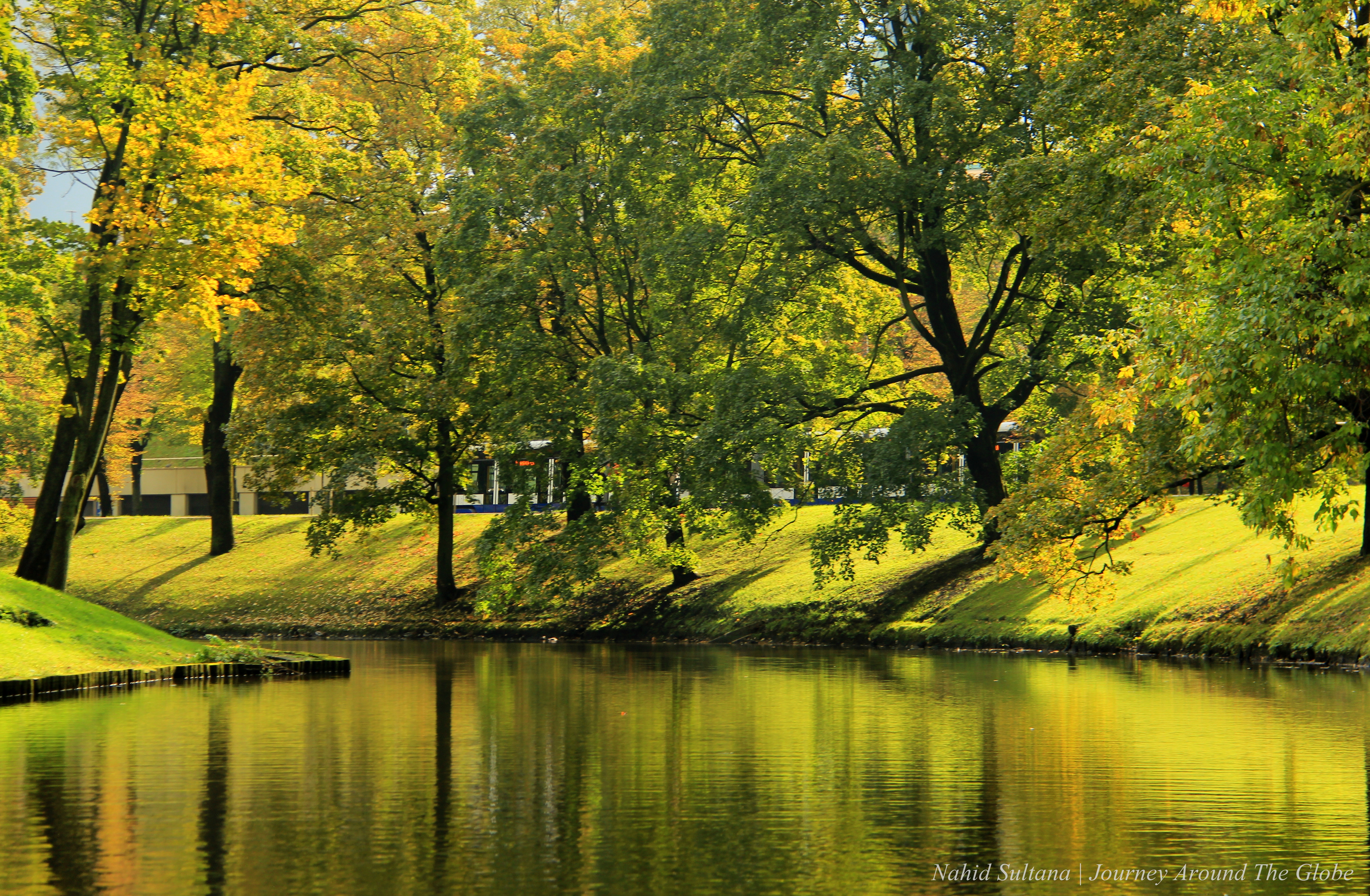
7) BOAT TOUR from ESPLANADE PARK: Only a block away from Monument of Freedom is the lush green Esplanade Park. It was almost fall in Riga during our visit and the trees just started to change colors. Patches of yellow, orange, and green looked simply spectacular. This is the best place to find yourself surrounded by nature in the heart of Riga. Don’t miss the Bridge of Love where hundreds of love-locks are hanging, symbolizing immortal love of young couples and newly weds.
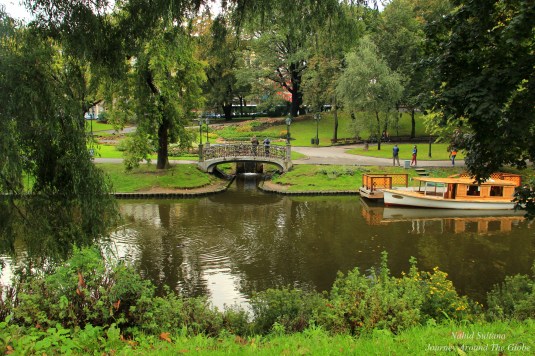
- Bridge of Love in Esplanade Park of Riga
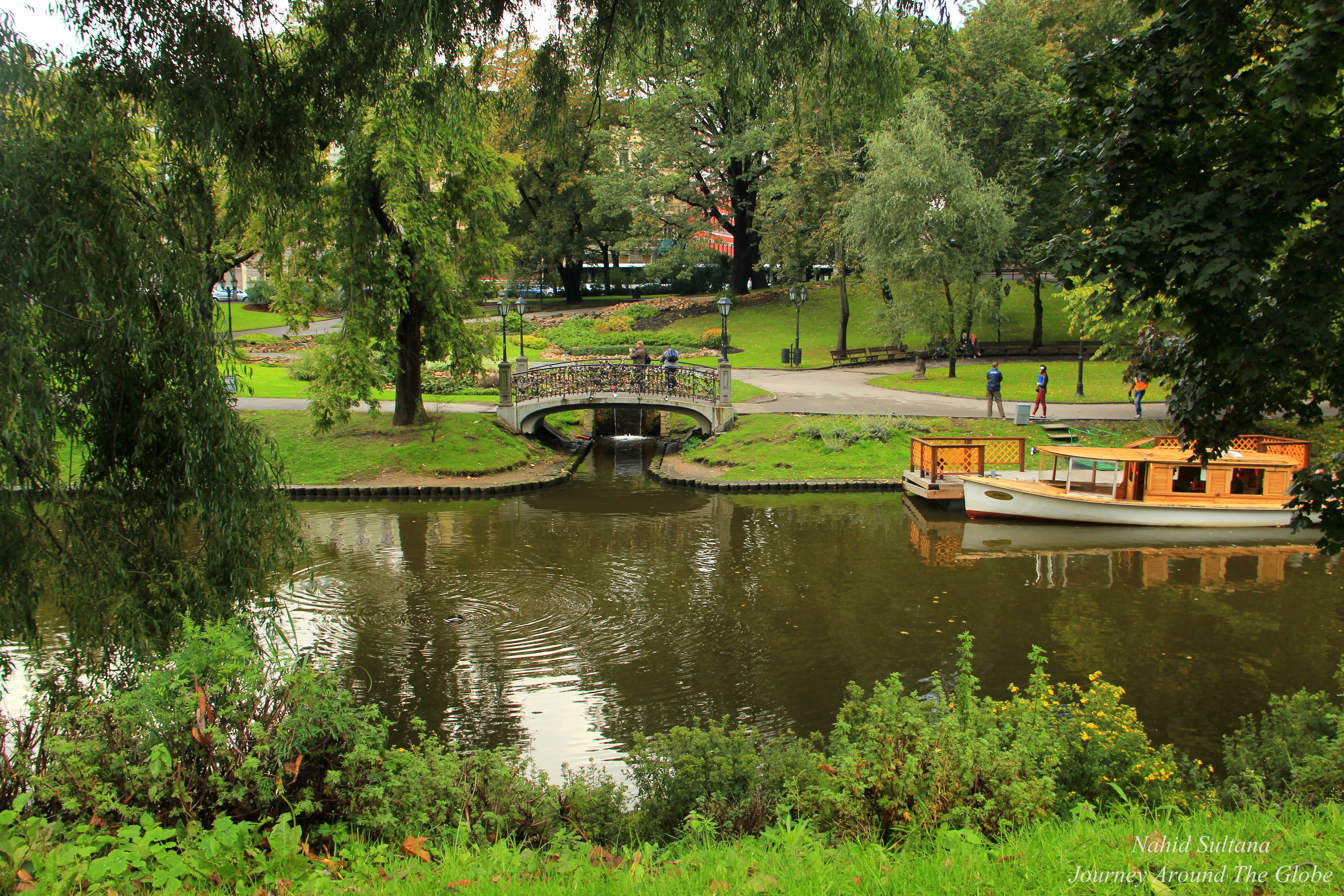
From here we took a boat tour to get out from the city life for a short time. We started from a small natural canal, rode under many small bridges and tall trees, and ended up in Daugava River. You can get a nice view of city’s skyline with churches tall spires, some stylish bridges (like Stone Bridge), and cool buildings. It was 5 LS per person for an hour tour. It’s available from 9am – 8pm in every 25 minutes.
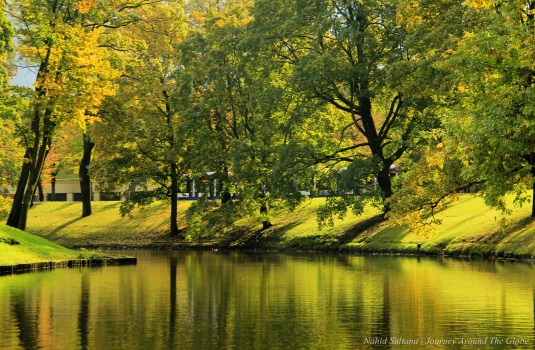
- Almost fall in Riga, Latvia
8) SWEDISH GATE and CITY WALL: Swedish Gate is the only medieval town gate that has been preserved in its original form. The long stretch of remaining city wall is directly opposite of St. Jacob’s Barrack.
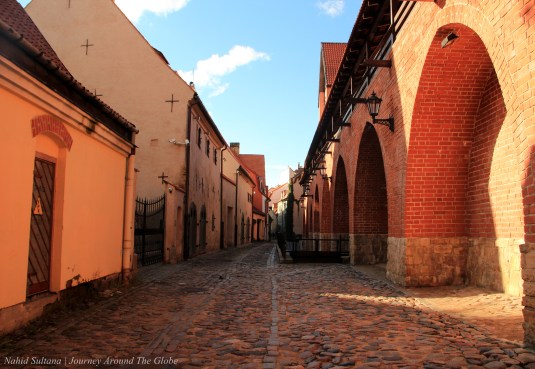
- Old city wall of Riga

9) BIG CHRISTOPHER: His name is connected with one of the legends about the beginnings of the town. The original wooden statue from 1683 is located in Museum of History of Riga and Navigation. This one is a copy which was made in 1997. The legend goes something like this (copied from the info board).

- The legendary Big Christopher in Riga

“Once upon a time, long ago, before the city of Riga was founded, a tall strong man named Lielais Kristaps (Big Christopher) carried people across the River Daugava. Kristaps lived in a cabin on right bank of the river.
While sleeping one night, Kristaps heard a small child crying on the other side of the river. He immediately rose to fetch the child, and began to carry it across the river. Half way across, the child became so heavy that Kristaps barely managed to get to the other bank. Exhausted, he laid the child down to sleep in his shack, and fell asleep himself.
The following morning Kristaps awoke to find a large chest of gold coins where the child had been, upon his death, the money was used to find the city of Riga, the first building was built on the spot where Kristaps cabin had once stood.”
10) RIGA CASTLE: Located at the edge of old town right by river Daugava, Riga Castle in Castle Square is the residence of the President of Latvia.
Related articles
- Enjoy Sunny Beach Holidays in Riga! (beijinggallery.wordpress.com)
- VERDI’S 200th ANNIVERSARY CELEBRATION: “Nabucco” at the Latvian National Opera (Riga) (operamylove.wordpress.com)
- The India connection (therealriga.wordpress.com)
- Padlocks for eternal love in Riga’s parks! (seraina202.wordpress.com)
- Riga – Rising from a dark past (eagirl.wordpress.com)
- Nature, Nature, and More Nature (lemonlover796.wordpress.com)
- A snap shot of Riga, part 2 (wanderingteamug.wordpress.com)
Share this:

Bits and Pieces on Tallinn, Estonia
TALLINN, ESTONIA: Tallinn is the capital of Estonia which was formerly part of Soviets before 1991. Development of this city started since 13th century. This was one of the most important business trading place of Northern Europe in the 16th century. Unfortunately, fate of Estonia changed hands many times in the history from Danish to Swedish to Russian Empire to Nazi Germany, and back to Soviets until 1991, when it declared its independence without any bloodshed. Since Russian Empire ruled this country for 250 years and Soviet ruled it for 50 years, there are lots of Russian influence here and there. But this is the most successful country among the former Soviet countries.

- Looking over Tallinn from our port
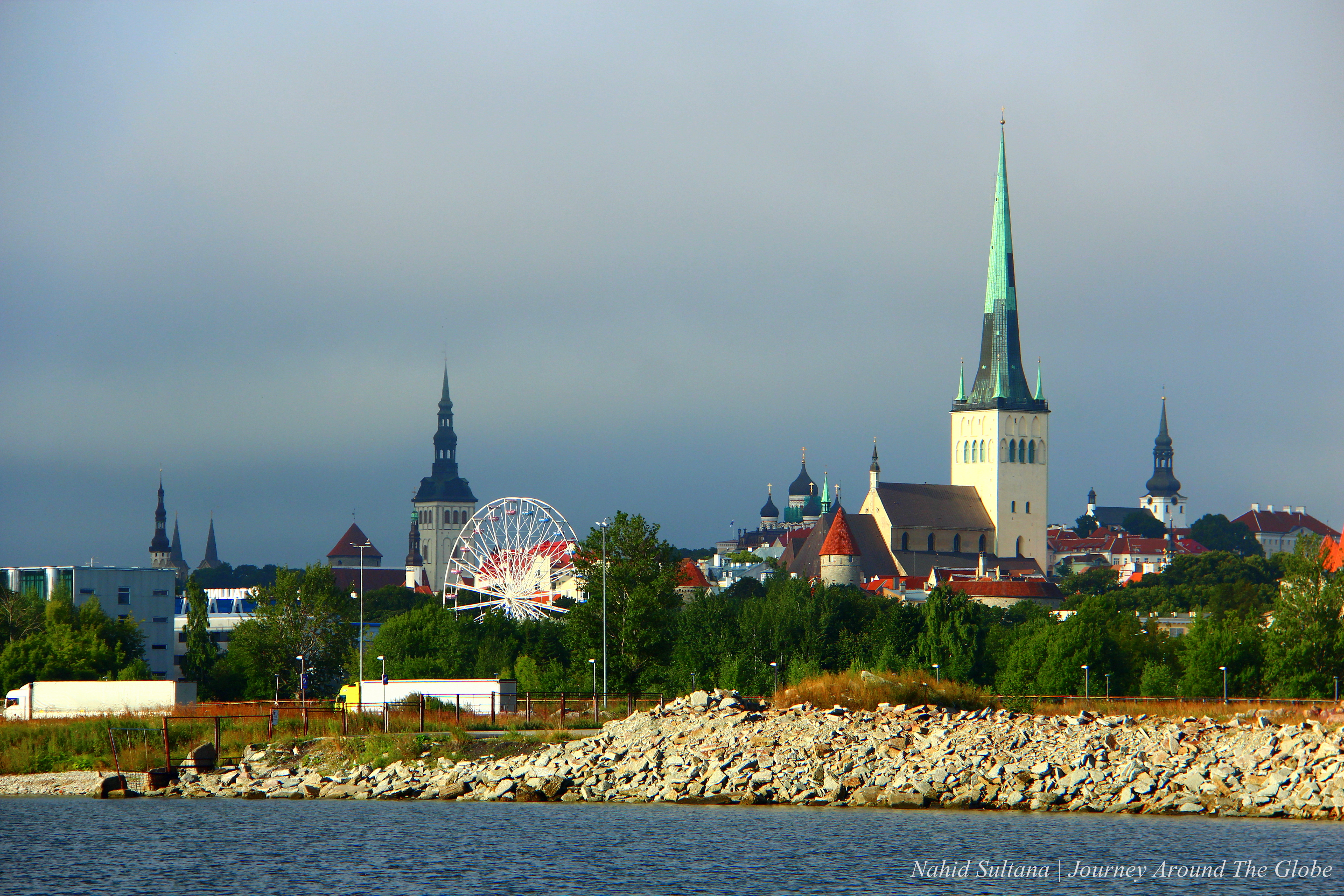
Just briefly on the city, Tallinn has over 400,000 inhabitants. Official language of Estonia is Estonian which is very similar to Finnish. Our guide was saying Estonia is the least religious country in the world according to BBC. And Helsinki being so close to the city, less than 50 miles away, many Finnish people come here as day trippers.
Our guide here mentioned few times how their economy, culture, and modernization boomed after they broke away from USSR. We went to Tallinn after visiting St. Petersburg in Russia. The picture here is completely different from what we saw in St. Petersburg. Tall glassy and shiny cube buildings and corporate offices are part of this bustling metropolitan city. Companies like Skype and Hotmail originated from Estonia. People are very hi-tech here with modern perception. FYI, almost the whole city of Tallinn has free Wi-Fi! The locals will tell you that it was a blessing for them that they are no longer part of Soviet.
Saying above, Tallinn still kept its Middle Age alluring and pleasing atmosphere in the old part of it. This section developed somewhere in the 15th century. It is astonishingly very well-preserved and very energetic. It is enlisted in UNESCO World Heritage Site for significant historical background. By the way, this is where marzipan was invented…though I really didn’t find anything with it in the stores.

- A small cobble-stoned passage in Lower Town of Tallinn
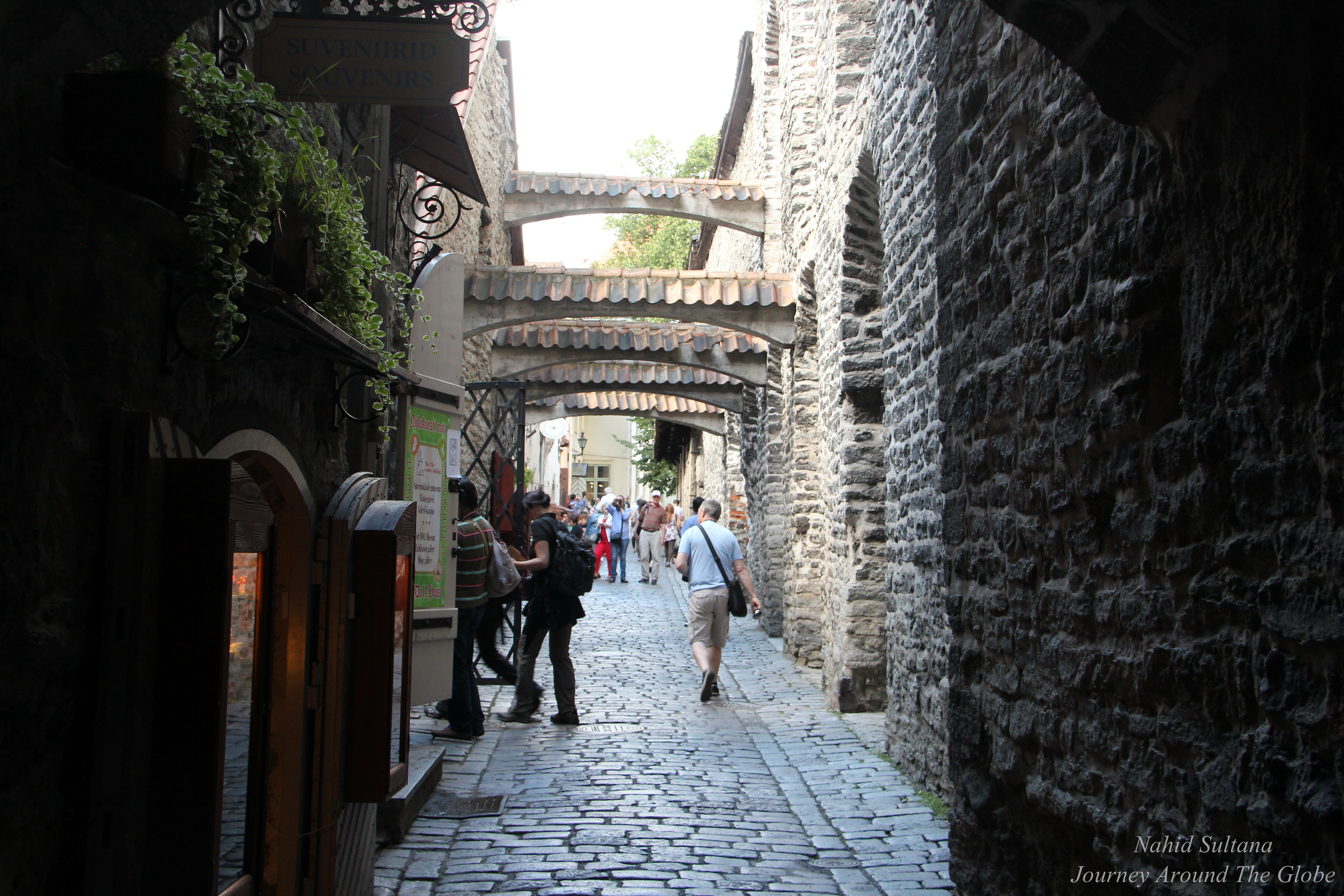
We toured around Tallinn with a guide from SPB Tour in a small group. My husband booked a package online thru this company for Warnemunde/Rostock, St. Petersburg, and Tallinn. The whole thing cost about $1200 (+ 15% tips to the guide) for all four of us.
TIME of TRAVEL: Tallinn was penultimate stop in our 12-day Baltic Cruise that we took in August of 2013. We drove to Calais, France from Belgium, took ferry across English Channel, and started sailing from Dover, England. It was a bit chilly and started to rain really badly towards the end of our day in Tallinn. But most of the day was very sunny and pleasant. Not sure where that rain popped up all of a sudden!
EATING and SHOPPING: Although we didn’t really try any Estonian food…we had some quick sandwiches from McDonald for lunch. But there were many lovely restaurants with outdoor sitting everywhere in the old town, especially in Lower Town. Food here supposed to be very close to German and Russian.
Juniper tree coasters and boxes are very common in Tallinn, just like Helsinki…may be a common Baltic thing. Amber is also very popular and we saw cluster of amber jewelry and décor stores in Upper Town. But our guide in Tallinn told us that these ambers are not really anything Estonian origin. For amber, Riga (in Latvia) is the way to go. You can also get very nice and warm winter coats, sweaters, and accessories here… may not be cheap but definitely good quality. Estonian white chocolate with blueberry was another unique thing that our guide mentioned…but I couldn’t find it anywhere. Lower Town, especially near Viru Gate, is loaded with many indoor stores and outdoor vendors. My husband bought me a nice thick knee-high sweater from one of the stores near our port terminal.
PLACES WE’VE VISITED: We got the chance to see Tallinn only for few hours. After visiting St. Petersburg, I really had very less expectation from Tallinn. But boy was I wrong. And our tour guide lady made this visit even more knowledgeable and fun.
Medieval Tallinn is divided into two parts – Upper and Lower. Our tour bus took us to the Toompea hill (The Upper Town) first and it ended at Viru Gate in the Lower Town. If I could spare some extra time, I would love to go to Ex-KGB Headquarter. This is where they interrogated and tortured suspects. Although this is not open to the public now, but you can go and visit its exterior. Medieval old town of Tallinn is very compact and best to be explored on foot.
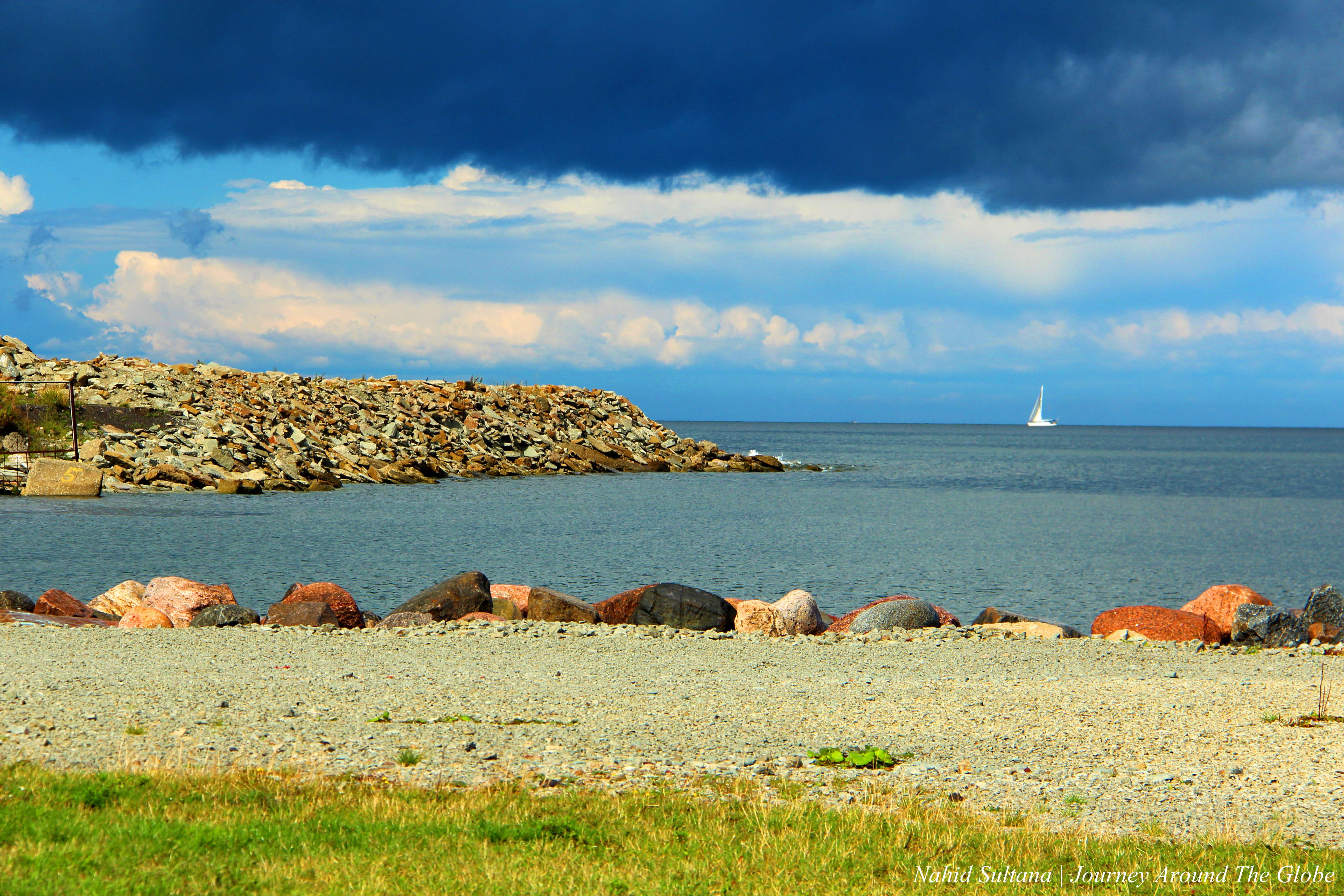
- Port of Tallinn, Estonia – where our ship, Carnival Legend, docked
1) TOOPEA HILL or UPPER TOWN: About 60m above sea-level, Toompea Hill was once the historical heart of the city. This is where the Danes once made their castle in 1219. In 1710, the ownership of Toompea was changed from Swedish to Russian Tsar Empire. Upper town used to be the dwelling place for rich and wealthy citizens of Old Tallinn. Cobbled streets filled with medieval houses and alleyways make this place a medieval charm. Upper Town can give you a beautiful panoramic view of the Lower Town, its towers, steeples, and picturesque red-tiled roofs.
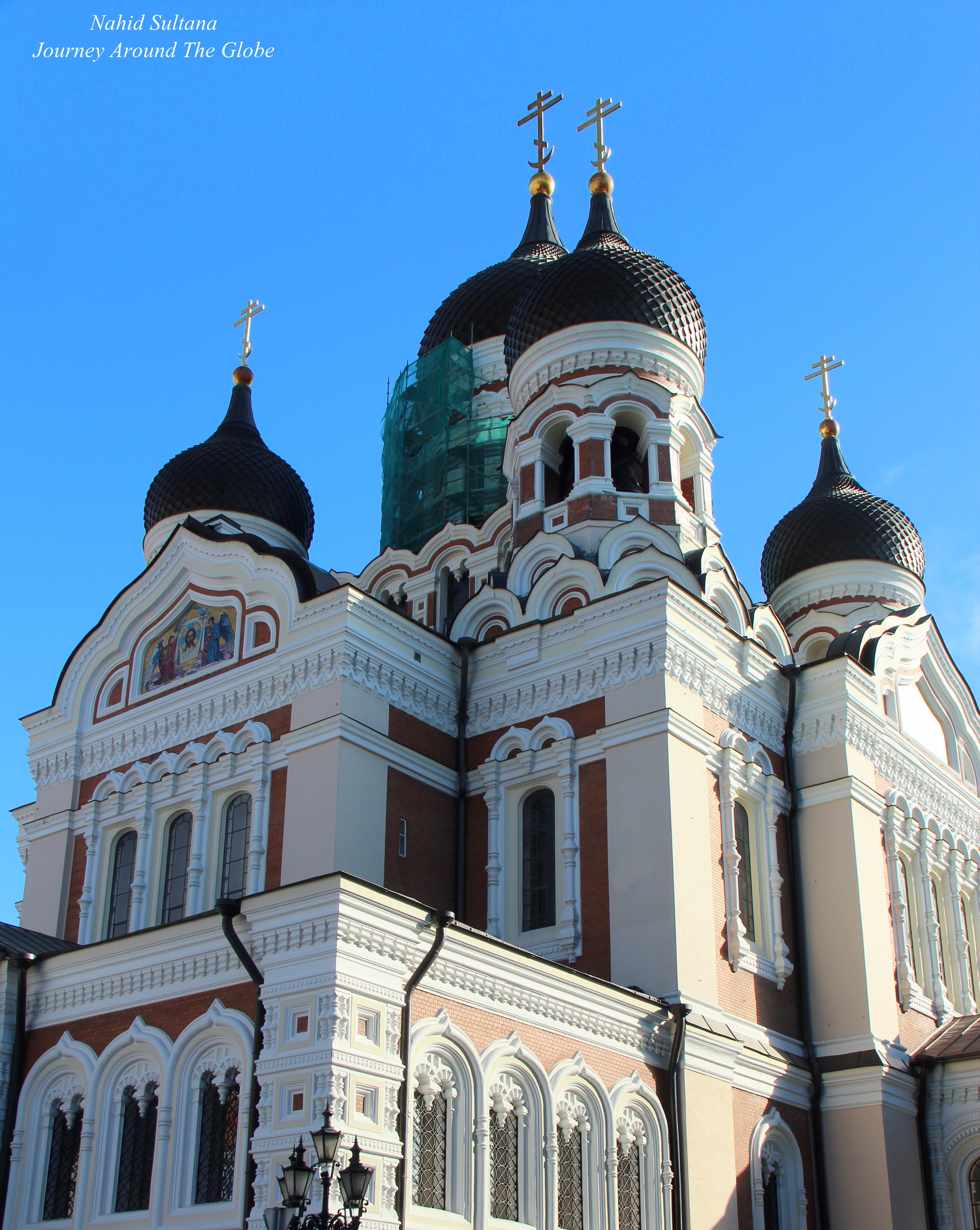
a) ALEXANDER NEVSKY CATHEDRAL: Our tour started with this impressive Russian Orthodox Cathedral of Alexander Nevsky. This is the oldest public building to have been erected in Toompea. It is a Russian Orthodox Church and therefore doesn’t really resemble Estonia’s typical local architecture. But gotta love the onion domes on the top. Built in the style of the churches of 17th century Moscow, its interior is full of pretty mosaics. Like any other Russian Orthodox churches, it doesn’t have any seating arrangements or a nave. But it has a gorgeous altar with portraits of saints. The present façade was constructed fairly recently in 1922. If I can remember correctly, I think our guide mentioned that it is still maintained by the churches of Moscow. It’s free to enter but since this is still an active church we weren’t allowed to take any picture inside.

- Alexander Nevsky Cathedral in Tallinn, Estonia – a Russian Orthodox Church with onion-domes
b) PARLIAMENT (RIIGIKOGU) and OLD TOWERS: Right opposite of Alexander Nevsky Cathedral is Estonian Parliament. It’s a pretty pink building which once used to be a castle, Toompea Castle, in the 13th century. Two towers out of the original four still remain.
c) DOME CHURCH or CATHEDRAL of ST. MARY THE VIRGIN: Through the cobble-stoned lanes of Upper Town we reached a Lutheran Church (originally a Catholic church), known as Dome Church. It’s the oldest church in Tallinn, originally built 780 years ago but the present building was constructed in 1224 by the Danes. It was changed to Baroque style in the 18th century. It is the only one of Tallinn’s medieval churches that is still active. Many local famous people were buried inside the church. In the medieval time many noble families had their own coat of arms and 107 coat of arms of some of such noble Estonian families still hang on the walls of this place. 2 euros to enter the church. In front of the church is the crossing point of eight streets in the middle of Toompea Hill.
d) THE VIEWING PLATFORMS: The Viewing Platform is one of the places tourist ought to visit in Tallinn. Most of the old town can be monitored from the edge of the Toompea Hill where the platform is located. You can see the Baltic, red-tiled roofs, some important landmarks, old city wall, and defense towers from up above. This beautiful and romantic place makes you wonder about the ancient time and legends lost in centuries.
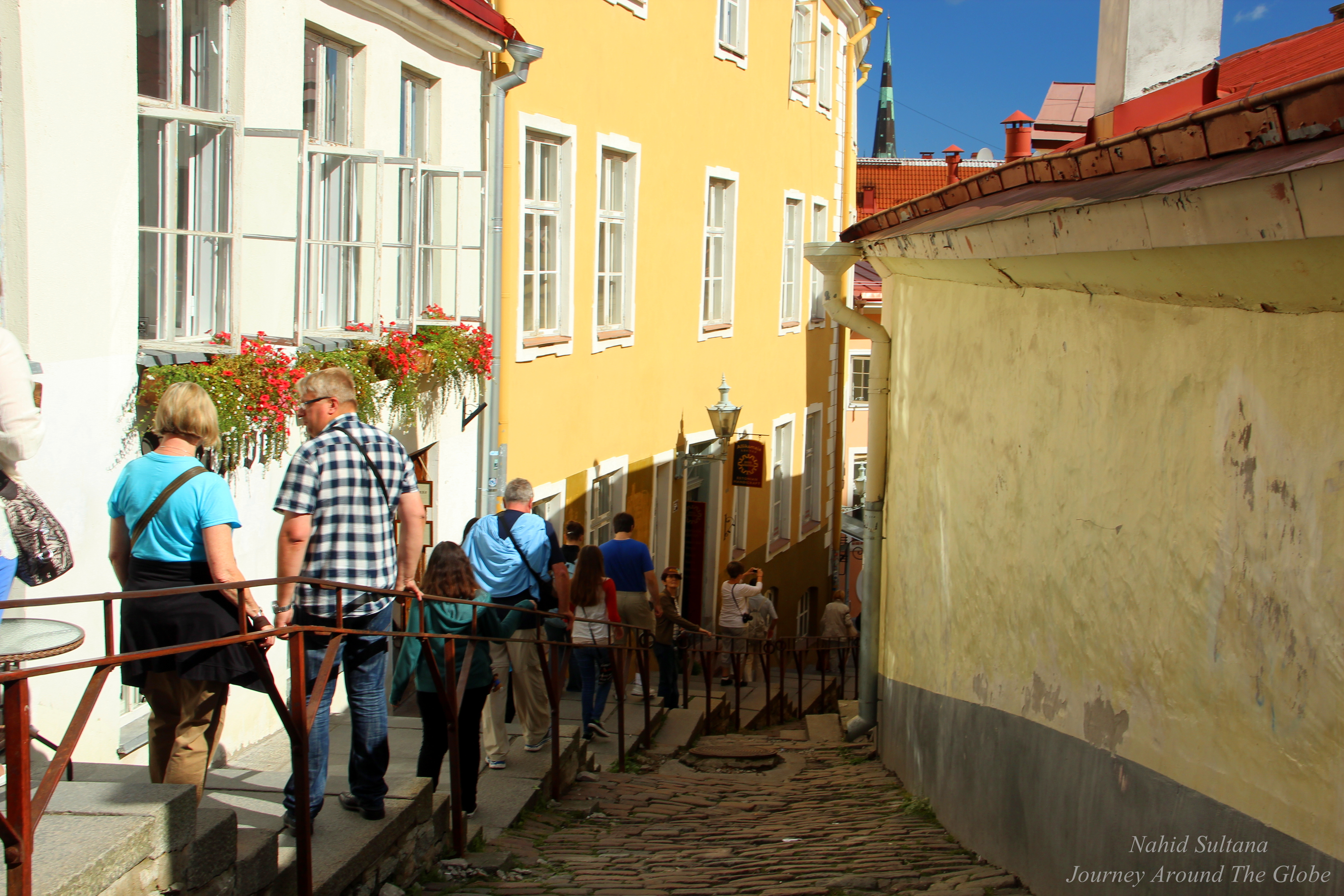
2) LOWER TOWN: After we were done with Upper Town, it was time to go down. We descended from Toompea Hill to visit the sites in Lower Town, the central intersection of the town’s network of cobble-stoned streets and alleys. There are two ways to go down to Lower Town from Toompea Hill. An old wall separates these two places. We took the short leg, which runs parallel to long leg but has steps and is much steeper. Lower Town spreads out from foot of the hill and is still protected by the remnants of a city wall. Lower town used to be the place for common men, merchants and shoppers in Old Tallinn. There was a distinct division between the Upper and the Lower Town back then and hence the wall with gates were constructed to separate the two parts. This gate used to be closed after sundown back in the old days.

- A small passageway with stairs that connects Upper Town and Lower Town of Tallinn in Estonia
a) ST. NICHOLAS CHURCH: German merchants started construction of this church in 1238 dedicating it to St. Nicholas – protector of businessmen and sailors. It’s not a working church, just a museum now. We didn’t go inside it, but this old building sure was marvelous.
b) CAT’S WELL: The legend about this well in Lower Town goes that a horrible spirit dwelling at the bottom of this well. It was said that the spirit would flood the entire city if an occasional sacrifice in the form of dead cats was not brought.
c) OLD MARKET PLACE: This was once used to be the main square during medieval time in Lower Town for the common man. A ring of cafes and shops now make this a cool place to hang out and do a little shopping.
d) TOWN HALL SQUARE or RAEKOJA PLATS: This was the heart of medieval Tallinn and still maintains that charm. It’s been a meeting place for the local for centuries. This is where people met for town meetings, celebrations, and receptions in the old days. It’s a big square with many old buildings, cafes, and shops. Also, interestingly, The Town Pharmacy of Tallinn the oldest working pharmacy in Europe from 1422 is also located here.
Town Hall Square is dominated by the town hall (of course) from 1371, which looked bit like a church to us with its spire. The present stone façade is from the 15th century and this is the only Gothic style town hall in whole Europe. We got a glimpse at this impressive architecture just from outside. It now houses Tallinn City museum and is open to the tourists.

- Old town hall of Tallinn in RAEKOJA PLATS

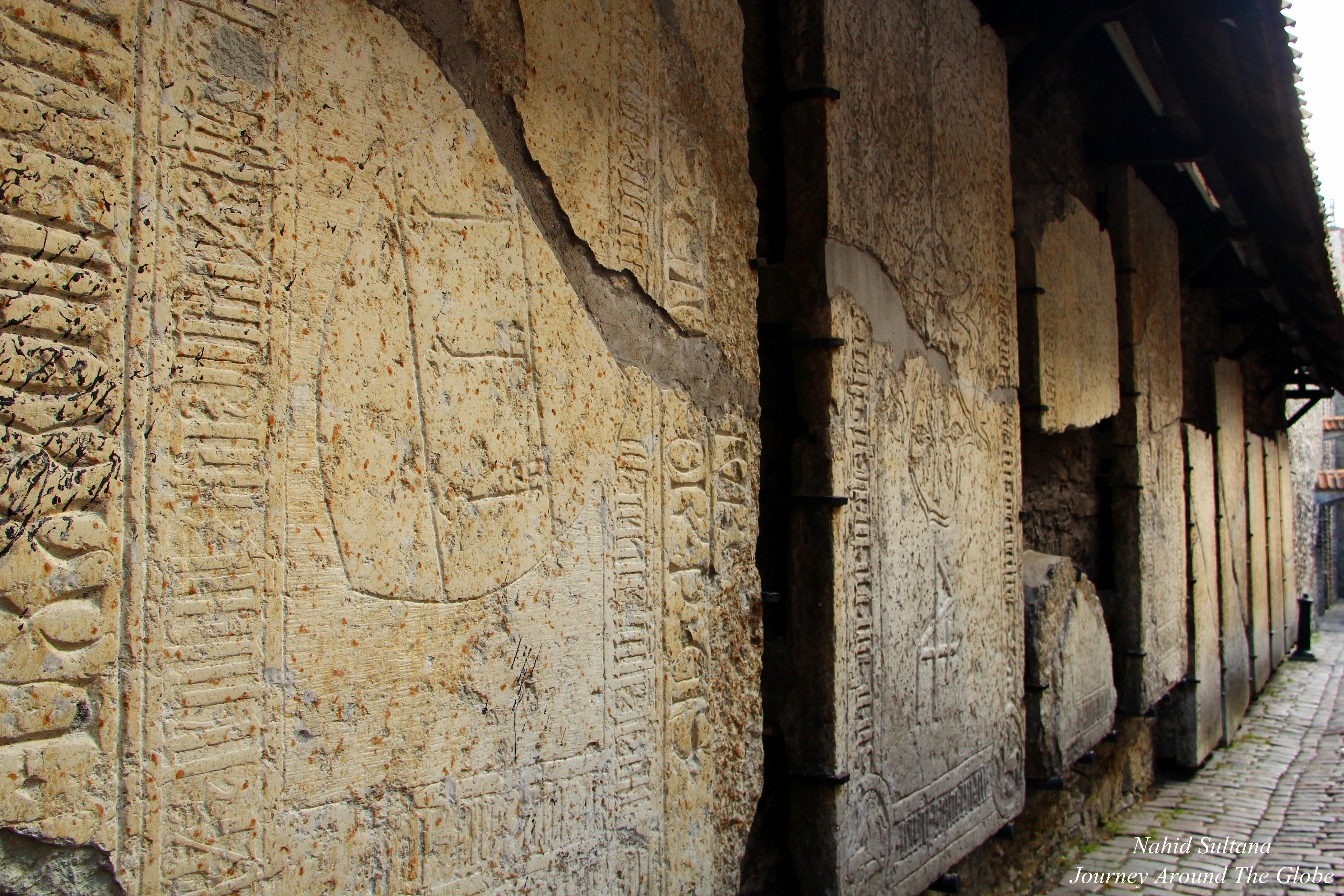
e) ST CATHERINE’S PASSAGE: This romantic old passage, connecting two streets, hosts many private artists’ studios. Along with that we saw a collection of 14th and 15th century medieval tombstones, located next to the old Dominican monastery. These tombstones are from the Church of St. Catherine of Alexandria and in the mid-19th century the best preserved ones were displayed on the wall. Don’t miss this passage when in Tallinn, it was very charismatic walking thru that narrow alley with small bridges on top of our heads.
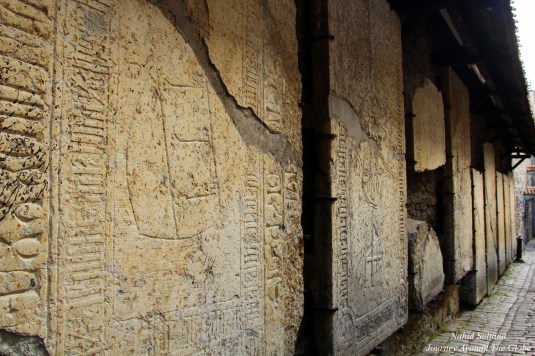
- Medieval tombstones on the walls of St. Catherine’s Passage in Tallinn, Estonia
f) ST. OLAV’S CHURCH and TOWER: This church with its high spire was built when Tallinn was still a small port city.
g) VIRU GATE: Our tour ended visiting the fortifying walls and towers that surround the city and which in the 16th century made Tallinn’s defense system one of the best and most powerful in Northern Europe. This is one of the two front gates of Tallinn left today from the 15th century. It has been repeatedly built throughout the centuries. But the adjacent buildings are relatively newer from the 19th century. Visitors can walk on the rampart of this wall for better view for 3 euros.
Related articles
- Tallinn Photo album http://photographsroom.wordpress.com/category/travel/baltics/tallinn/
- A Daytrip to Tallinn (lukislinn12.wordpress.com)
- My first month in Estonia (notamybutami.wordpress.com)
- Tallinn Architecture Biennale (halfdayahead.wordpress.com)
- #PHAforever – Long Study Tour to Tallinn and Helsinki (alltheprettydanes.wordpress.com)
- Toompea, Tallinn – An Afternoon in June (lenaweesar.wordpress.com)
- Tallinn: The city by the sea (tanushreez.wordpress.com)
Share this:

Business Excellence Award 2020 from AI Global Media for The Most Entertaining Personal Travel Blog – Pacific Northwest USA

Top Posts & Pages


Authors
 Globe Runner
Business Excellence Award 2020 for The Most Entertaining Personal Travel Blog – Pacific Northwest USA

Business Excellence Award 2020 from AI Global Media

 Journey Around The Globe