Journey Around The Globe
ready for the next destination
Pablo Picasso’s Birthplace – Malaga, Spain
MALAGA, SPAIN: “From a white father and a small glass of water of Andalusian life was I born. Born from a mother, daughter of a daughter aged fifteen from the district of Percheles in Malaga; that beautiful bull that engendered my forehead crowned with jasmines.” That was what the famous Spanish painter Pablo Ruiz Picasso said who was a talented son of Malaga.
Malaga is a big city in southern Spain and the largest city on the Costa del Sol. But unlike Barcelona and Madrid, Malaga didn’t give me a big-city feeling. Its old town setting still has a welcoming vibe. In summer, Costa del Sol region can be packed with tourists because of its appealing coastal line and beautiful sun and sand.
Not only Malaga, but whole of Andalusia seems like is decorated with orange trees; you can see them standing on the both ways of streets or almost anywhere you go. But don’t make mistake of eating them…not sweet at all.
Historically, the city was founded by the Phoenicians in the 8th century BC, on the lower slopes of the Mount of Alcazaba. Romans came here at the end of the 3rd century BC. In 711 AD, it fell in the hands of the Arabs, came to be part of the Cordoba Emirate. Some time later, from the 10th century onwards, it became prominent again amongst the Southern peninsula towns as first harbor of the Moorish kingdom of Granada, from where its major merchandise were shipped. Finally, the Catholic Monarchs conquered Malaga in 1487.
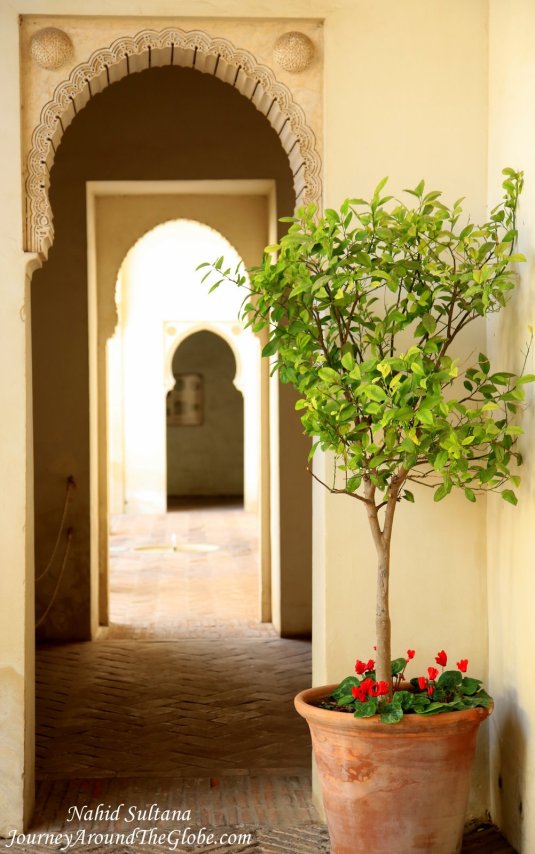
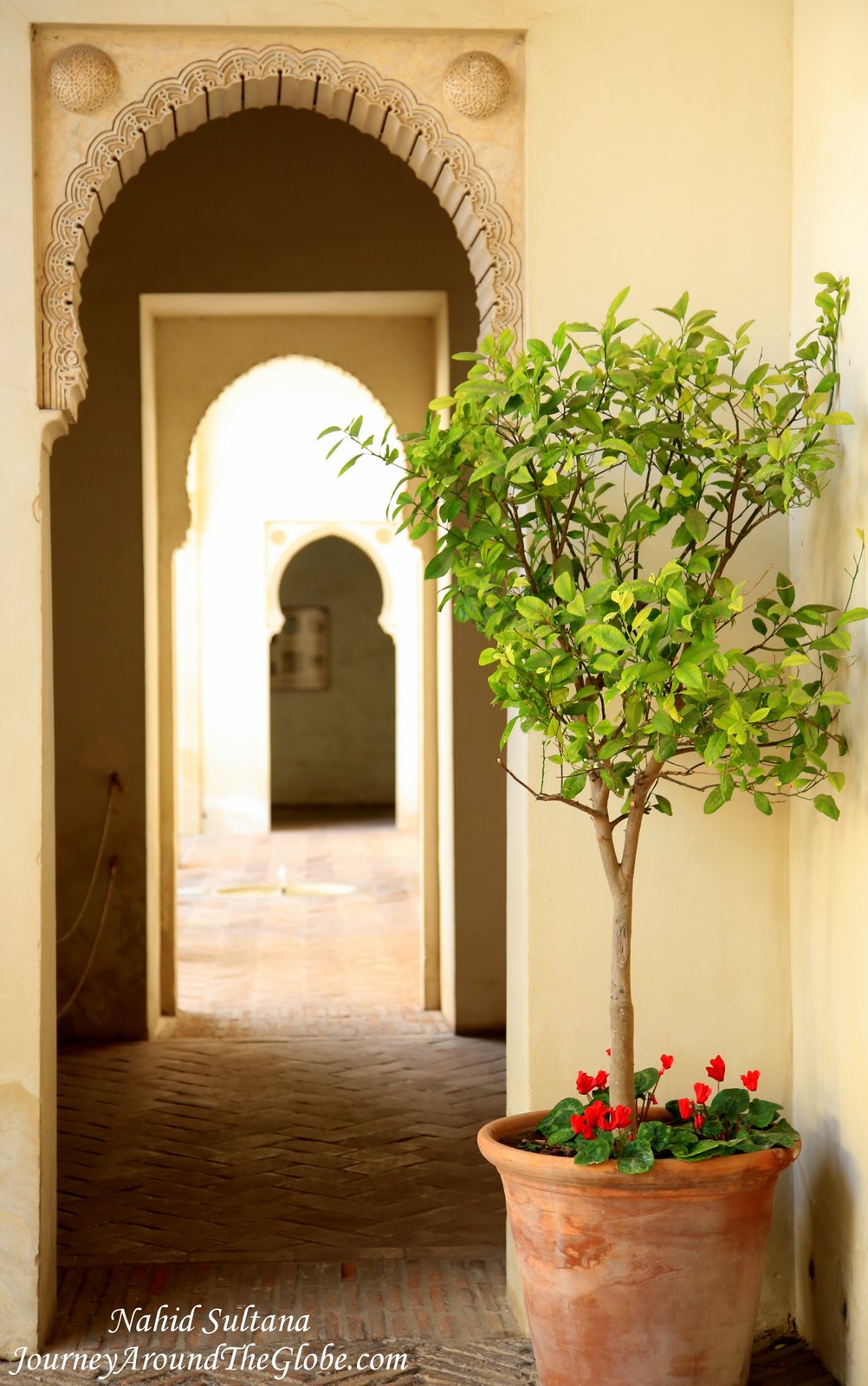
- Moorish architecture in Malaga, Spain
TIME of TRAVEL: We made our second trip to Spain this February of 2014. First time we came to Barcelona and Madrid during the winter break of 2011, so this time we were off to explore southern Spain, the most beautiful part of this country…Andalusia. We flew directly to Malaga from Charleroi. The weather in Malaga was fantastic. It was a bit chilly in the morning and after dark but bright and sunny during the day. Going from gloomy Belgian weather, it was a nice treat for all of us.
OUR HOTEL: We stayed in the heart of Malaga, few steps away from Plaza de la Constitucion. Hotel is called “Hotel Petit Palace Plaza Malaga”. The price didn’t include free breakfast (could get breakfast for 8 euros per adult) but had Wi-Fi in our room. The location of this hotel couldn’t have been any better. It was within walking distance from the cathedral, port, Alcazaba, and Roman Theater. Not to mention there are tons of shops and restaurants in this area. You can get typical Spanish dishes as well as some international cuisines. Probably only one downside of this hotel was that it didn’t have a parking garage close to it. Since we rented a car, my husband had to park near the harbor and walk about 15 minutes to the hotel.
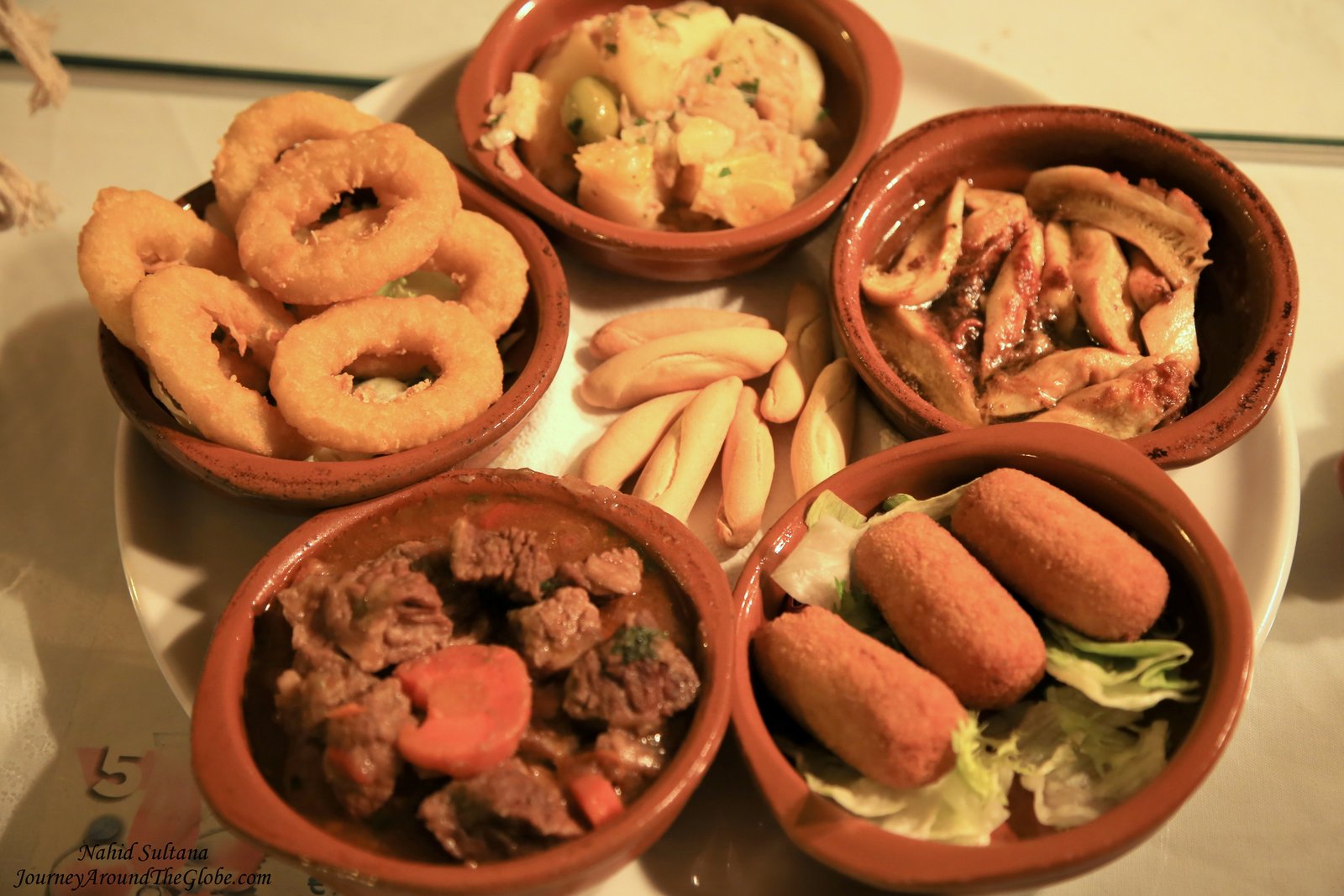
EATING and SHOPPING: We had our first dinner in Restaurant Plaza very close to Marquis de Alrios. And of course when you are in Spain you have to try paella and tapas. We went for seafood and chicken paella and a mixed variety of tapas. Tapas are basically appetizers or finger foods that originated in Spain. You can get all sorts of options in tapas, like marinated olives, fried calamari, fried squid, fish fingers, chicken balls, beef stew, and many other yummy knickknacks. Gazpacho soup or cold tomato soup, is very popular in Spain too. We tried it last time in Barcelona but I am not very fond of cold food, so didn’t try it this time. But it’s definitely something very Spanish. Then next day our lunch was near Roman Theater in a restaurant called, “Teatro Romano” where we ordered some pasta, but was very disappointed with the taste.
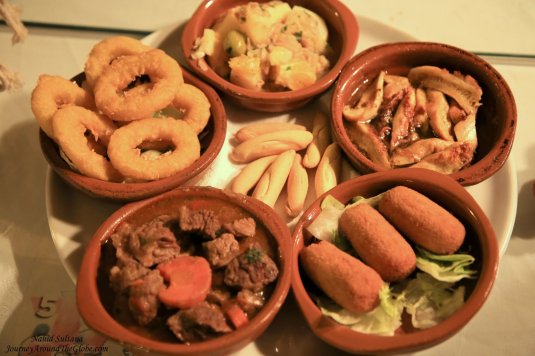
- Some tapas we had for dinner in Malaga, Spain
For those souvenirs hunters, old town near Alcazaba or cathedral are good places to buy some memoirs from Malaga. Small flamenco dresses are nice for little girls. Colorful potteries hand-painted in Spain, Spanish saffron or paella spices (if you are into cooking), flamenco designed apron or statues, and ceramic bulls are just some things I can name to remember your trip in Andalusia.
PLACES WE’VE VISITED: We had about a day and half in Malaga. And I managed to wake up one early morning here to go to the port and take some shots of the sunrise. It was fantastic and I absolutely loved it. There are many beaches and luxury resorts near Malaga and closest one to the city center is La Malagueta. We didn’t really go to any beach because the weather was not really hot to go to the water. Another place that we just saw from a distance and didn’t really take a tour inside was Malaga Bull-Ring or Plaza de Toros de la Malagueta. But this may be something that will interest many tourists. Malaga Bull-Ring also has a museum, Museo Taurino. Flamenco show are something really exciting to see in Spain, which we did in Cordoba in this trip. But if are interested, I’m sure your hotel can tell you where to go for a nice flamenco performance. If you have spare time and hungry for more sightseeing, drive or take a train to nearby cities like Granada, Cordoba, or Seville where you can see the rich history of Andalusia from the Muslim era, which makes Spain a unique country overall.
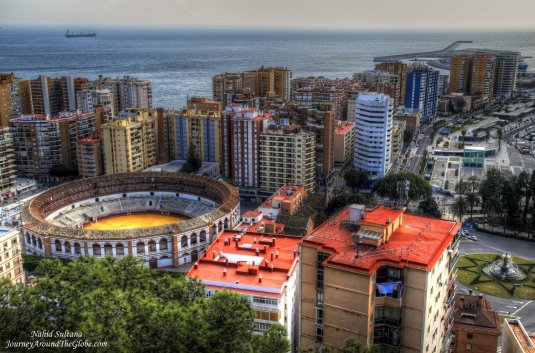
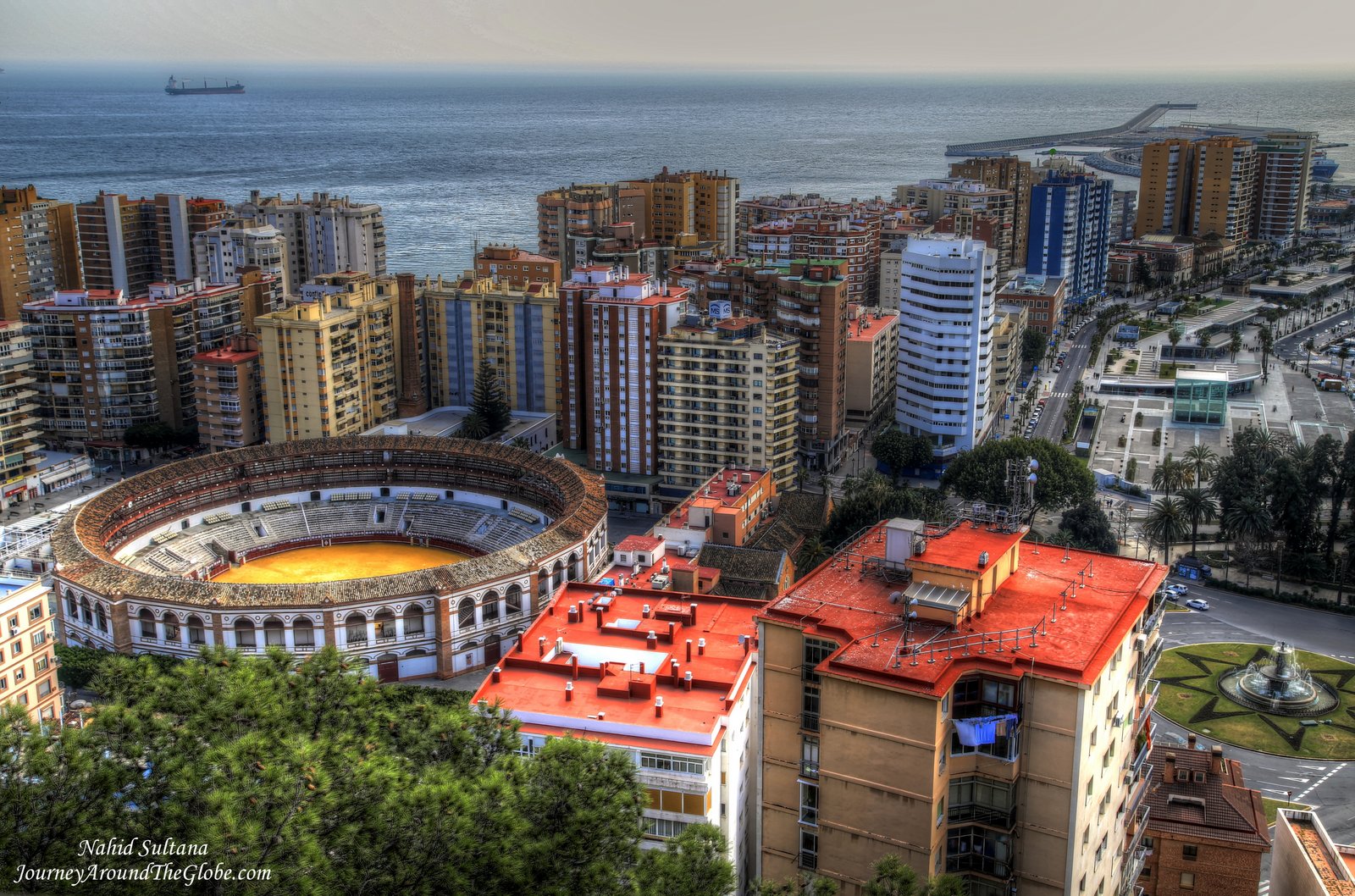
- Looking over Malaga Bullring as we were coming down from Gibralfaro Fortress
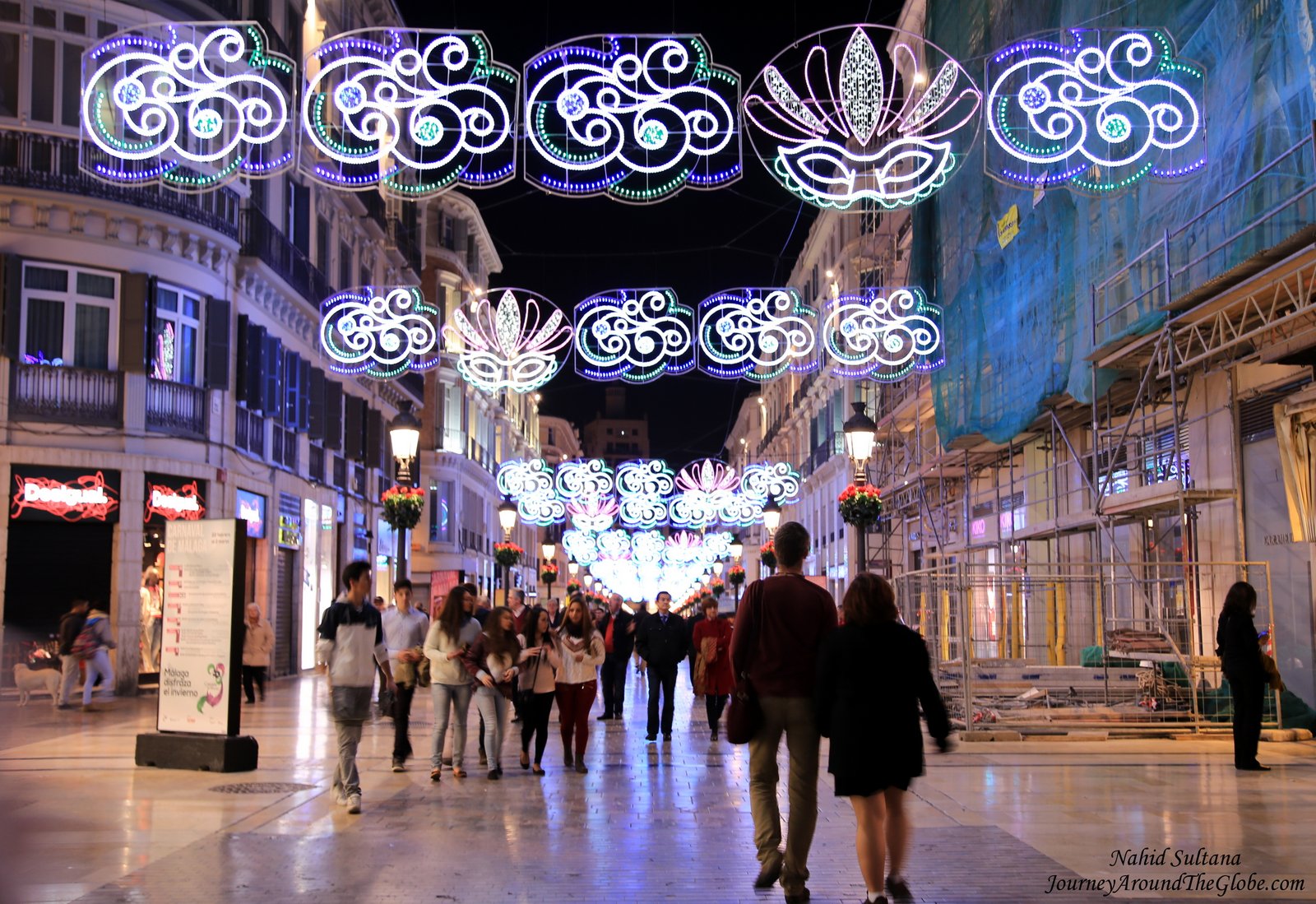
1) MARQUIS de ALRIOS: This is a long stretch of pedestrian street in the city center with lots of stores. It was right in front of our hotel and let me tell you, shopping was fun here. The street had beautiful lighting at night and gets really lively after dark. Marquis de Alrios has the Malaga Port (the port is actually across the street) at one end and Plaza de la Constitucion at the other end.
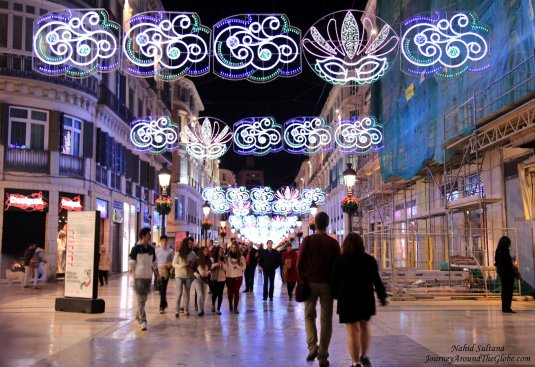
- Marquis de Alrios at night in Malaga, Spain
2) PLAZA de la CONSTITUCION: This is a nice square at one end of Marquis de Alrios, very close to our hotel. There are plenty of small alleys that starts from this square, great to just wander off.
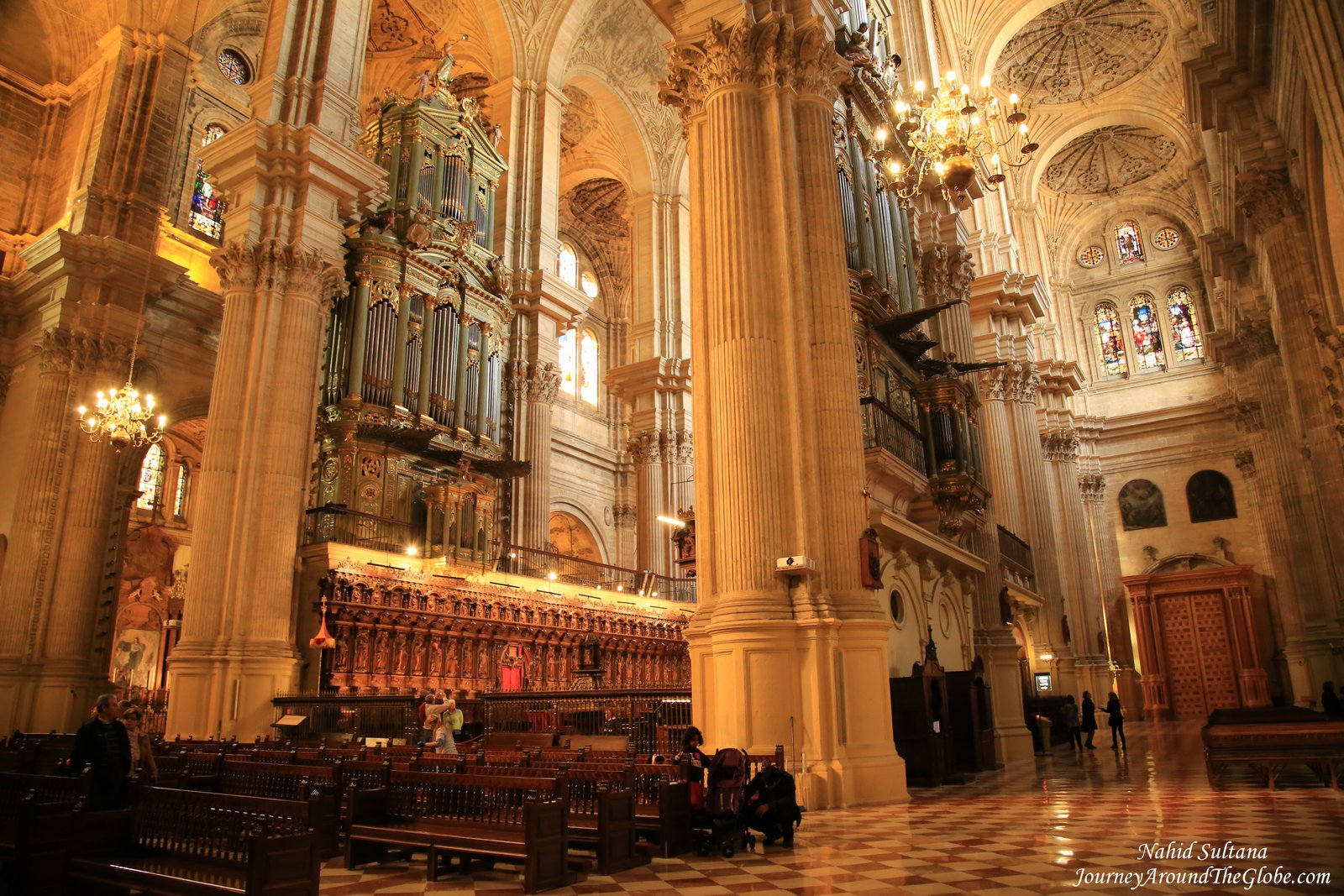
3) MALAGA CATHEDRAL and MUSEUM: This is a beautiful cathedral and definitely worth a visit. It is grand outside and inside. Interior is very ornate and huge. The decorative altar is the main focus and can’t miss total of four church organs.
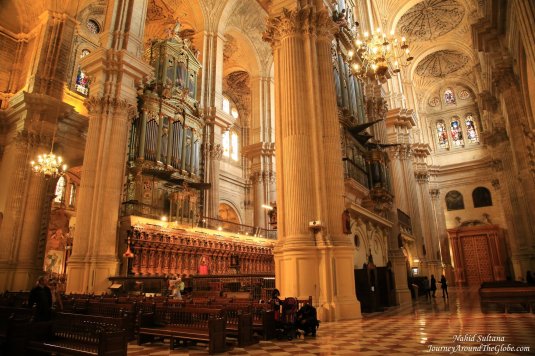
- Inside Malaga Cathedral
Museum of Malaga Cathedral is small with only couple rooms (we were done in 5 minutes) and located on the upper level. It holds some biblical paintings and statues.
The cathedral is located in the heart of Malaga city center. We paid 5 euros per adult to go inside the cathedral that includes its museum too.
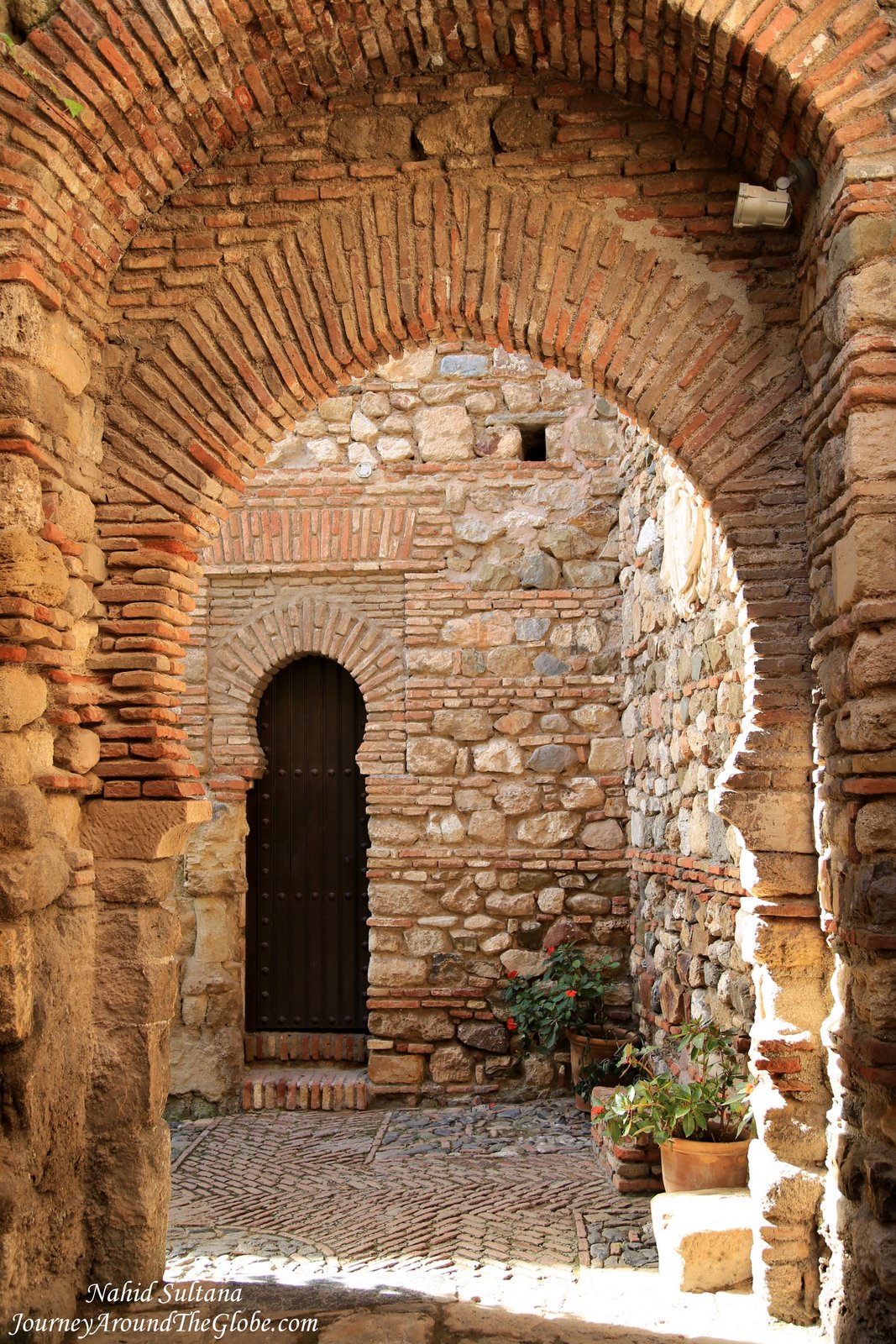
4) ALCAZABA de MALAGA: Alcazaba has to be a must-see place in Malaga. This Moorish palace fortress has been standing on a hill since the Muslim era in Andalusia and is one of the emblematic monuments of this town. It is the best preserved of its kind in Spain. Roaming around this old fort took me back to our trip to Morocco where we saw similar ‘Kasbah” style palaces.
This impressive group of buildings, originally dating from the 11th century, formed the palace-fortress of the Muslim rulers of the city. The palace inside this precinct was built around that time but the greater part of it is from the 14th century. Most of Alcazaba was built of limestone which crumbles easily. That’s why the fortress went under many rebuilding and restorations, last one being in 1930.
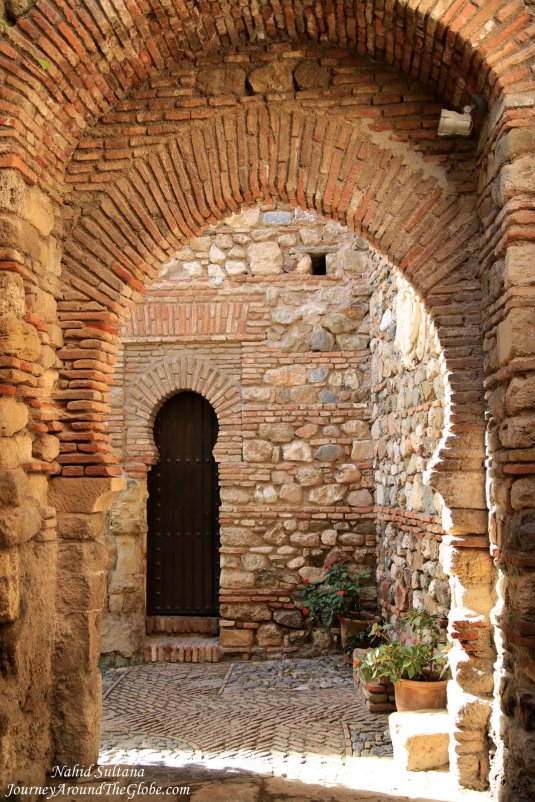
- Malaga Alcazaba – a Moorish castle in Malaga, Spain
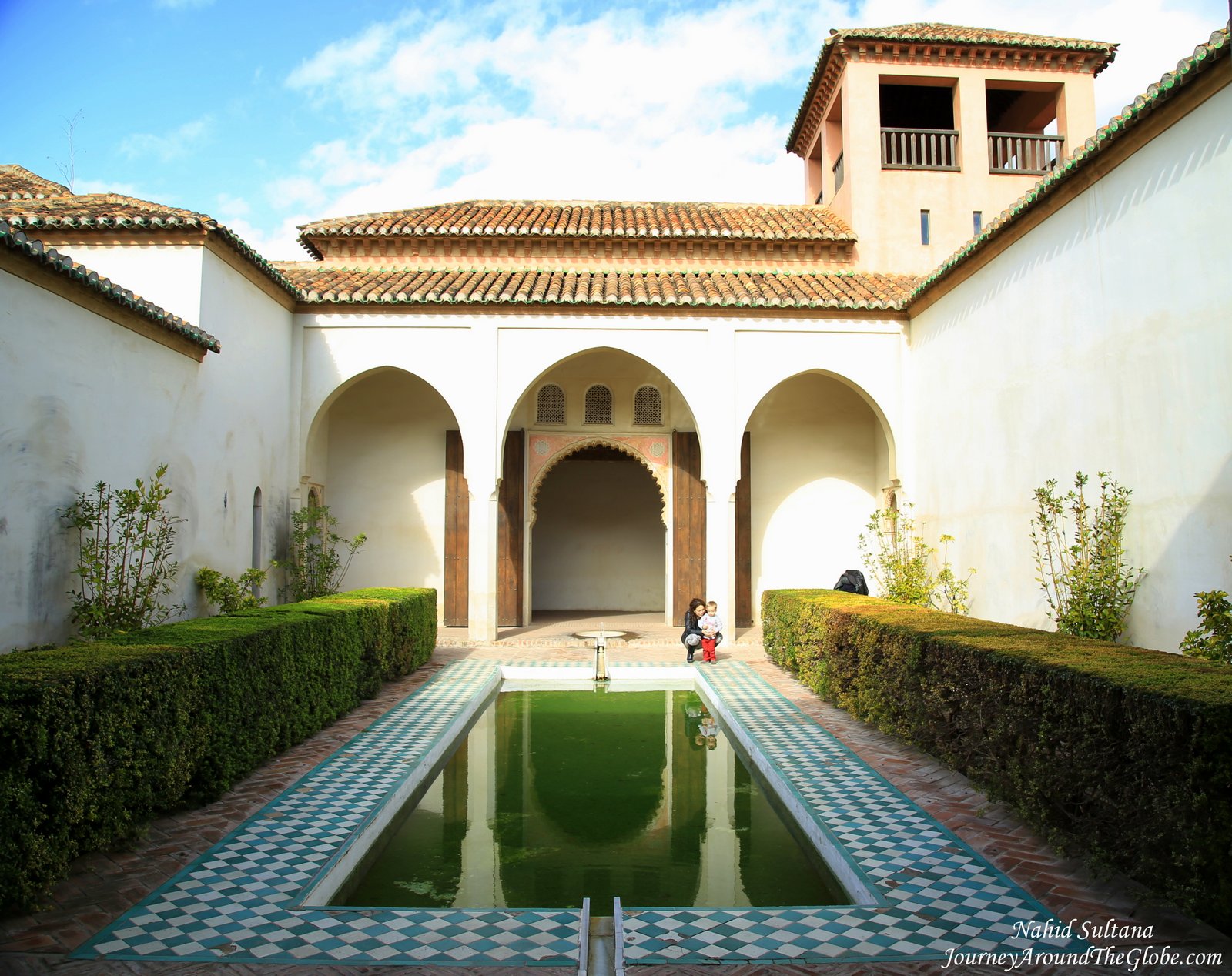
The Nasrid Palace is reached through a restored pavilion. The Orange Patio and Patio de la Alberca (with a pool) are remarkable. These courtyards and gardens in Nasrid Palace are some picture perfect places and shouldn’t be missed.
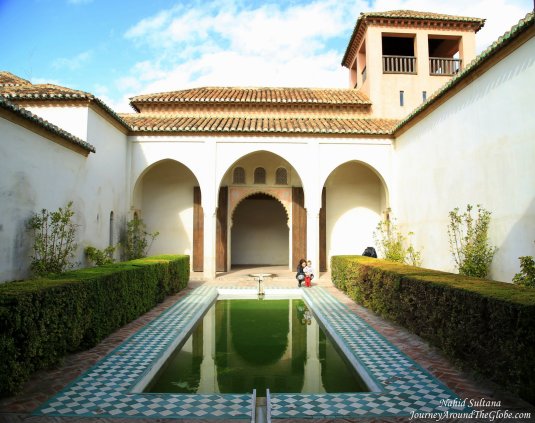
- A patio with pool in Nasrid Palace of Alcazaba in Malaga, Spain
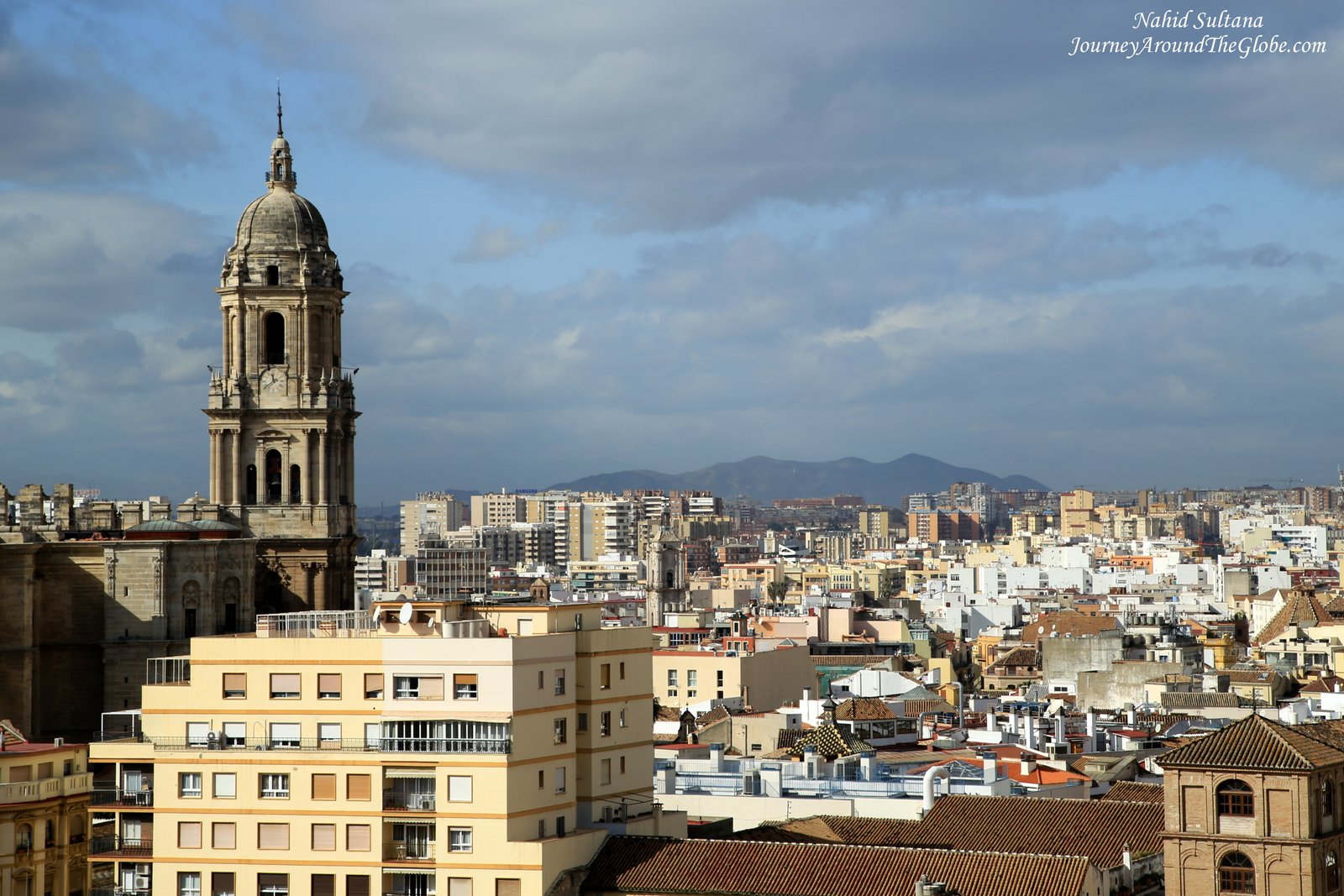
Different sections and ramparts of Alcazaba offer excellent views of the port nearby and the whole city. Don’t miss the exhibition on Muslim influenced ceramics and potteries. A small museum holds numerous items that they found from excavations on this site. Loved all the big and small courtyards, some with rows of caliphal arches and marble columns.
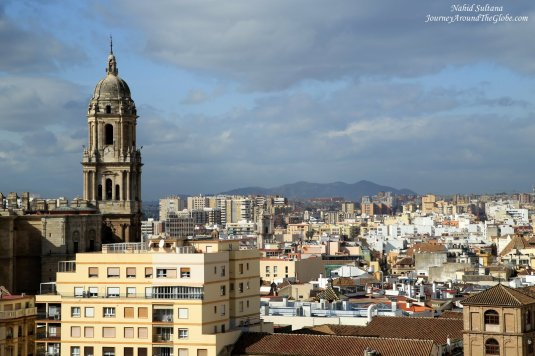
- View of Malaga Cathedral from Alcazaba
Alcazaba is open from 9:30am to 8pm in summer and 8:30am to 7pm in the winter time. It took us about little less than 2 hours here but people can easily spend half a day exploring each corner of this beautiful fortress. Ticket was only 5 euros for our whole family (2 adults and 2 kids)
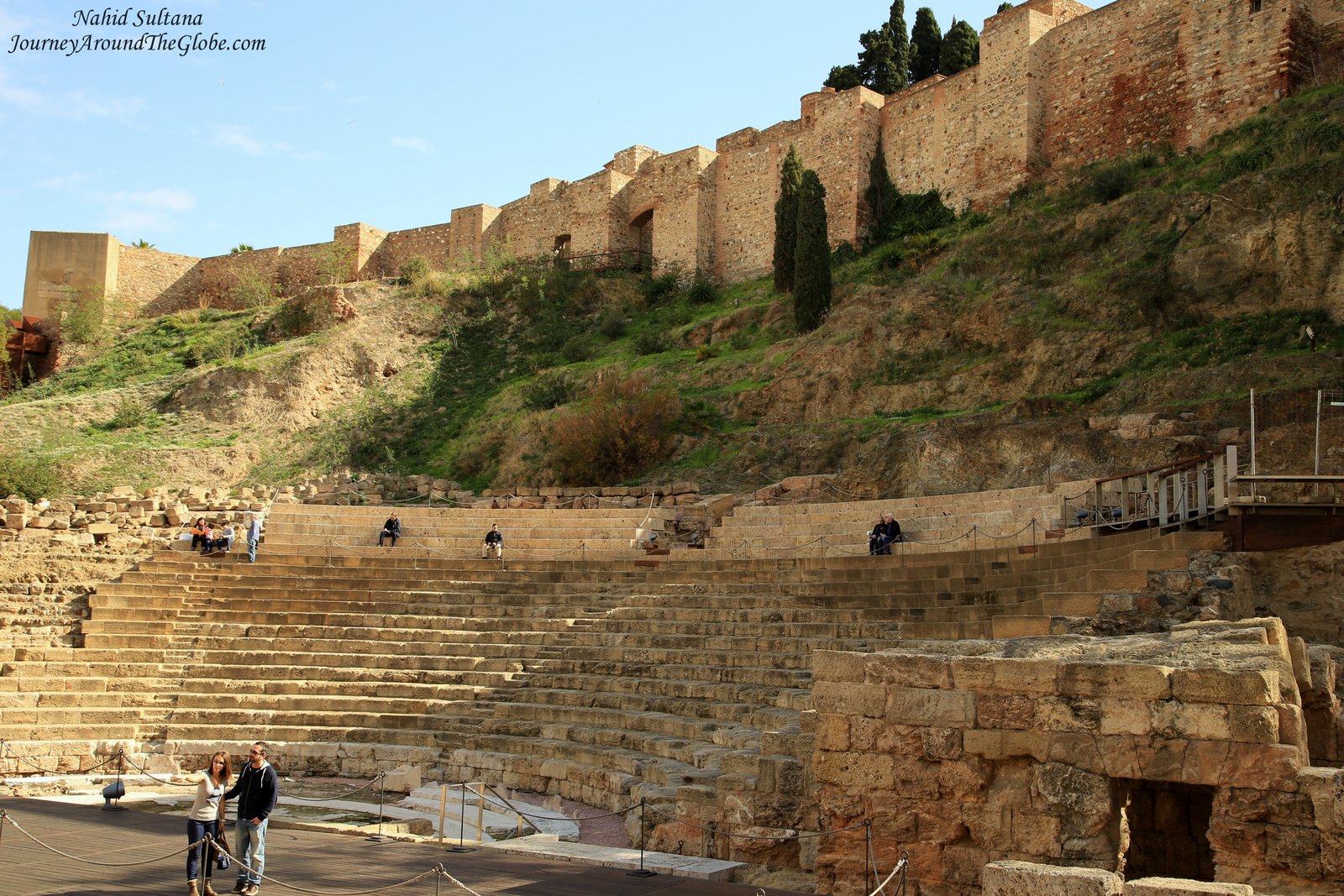
5) ROMAN THEATER or TEATRO ROMANO: At the foothill of Alcazaba is Roman Theatre. Built during the first years of the reign of Augustus (1st century A.D.), it was kept in use until the end of the 3rd century. The remains of this theater can be viewed anytime from the plaza in front. Tourists can walk on its old stone steps and explore this ancient site without paying any fees.
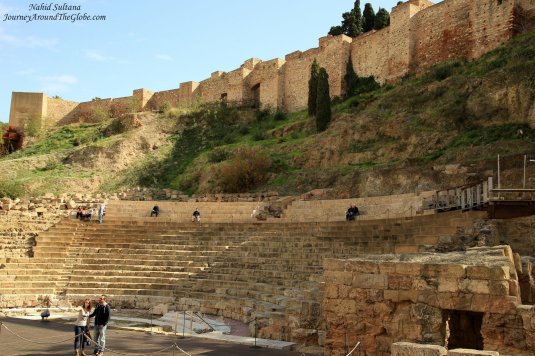
- Roman Theater from the 1st century at the foothill of Malaga Alcazaba in Spain
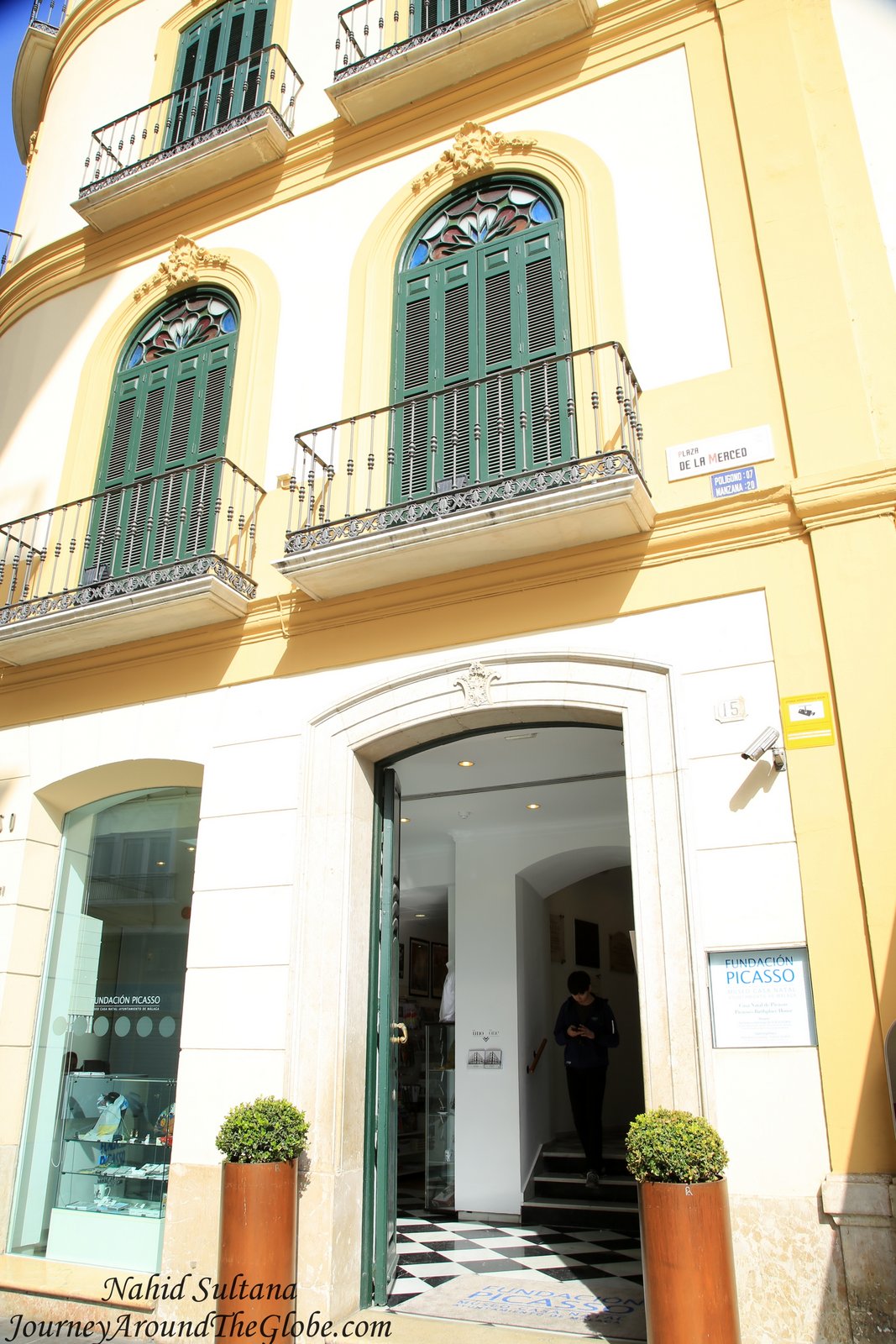
6) PICASSO’S BIRTHPLACE HOUSE or CASA NATAL de PABLO PICASSO: After Roman Theater and lunch, we walked over to the birthplace of world renowned Spanish painter and artist Pablo Picasso. Picasso’s relationship with his native city was distant but nostalgic. And it was thrilling to think that I was roaming around in Picasso’s city, Malaga, visiting the house where he was born and spent first few years of his childhood.
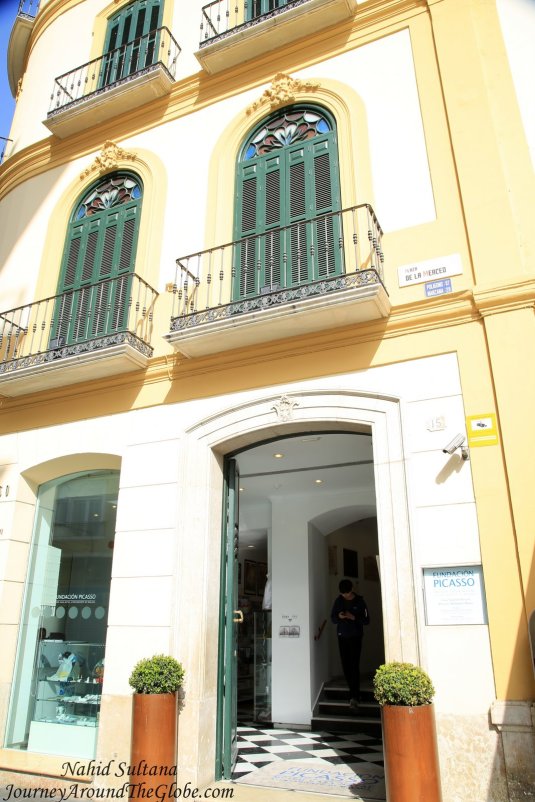
- The house where Spanish painter Pablo Picasso was born in Malaga, Spain
On the first floor, some temporary exhibition was going on an artist who was influenced by Pablo Picasso. In this building, on the 2nd floor, Pablo Picasso was born on October 25th, 1881 and lived here until 1884. This 19th century building houses works and objects of the artist and his family. Many documents, photographs, and personal belongings of the Ruiz Picasso family decorate the floors of this museum which witness the deep connection he had with his home town. You can also see some stuff that he created during his childhood. A specialized library and on-going program of temporary exhibitions and cultural activities complement the offer of Picasso’s Birth House.
The museum was opened to public in 1988 and is located in Plaza de la Merced which used to be a busy square back in Picasso’s time. An obelisk in the middle of this plaza was erected dedicating Torrijos and his comrades executed by firing squad in 1831 and whose remains lie there since 1842.
Museum is open Monday to Sunday from 9:30am to 8pm and closed every Tuesday in winter. It was 3 euros per adult. We couldn’t take any pictures inside the museum. It has two floors and took us less than half an hour.
7) CASTILLO de GIBRALFARO: This is another Moorish castle which was built to protect Alcazaba and to keep an eye on the port. This has been used as a coastal lookout post since 1487 and was used exclusively for military purposes.
A small museum, an old powder keg area from the 18th century, has exhibition which reflects castle life as a garrison and coastal watchtower from the 15th century. You can see urban evolution, weapons, uniforms, and objects of daily life from the 16th to 20th century.
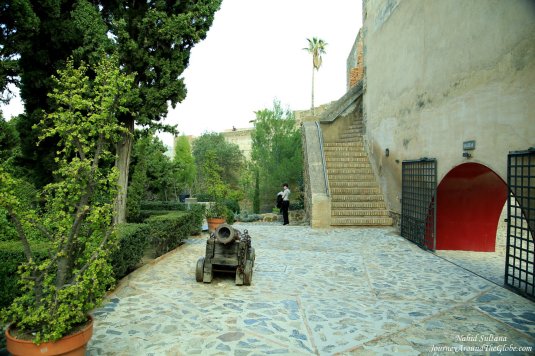
- Walking around Gibralfaro Fortress in Malaga, Spain
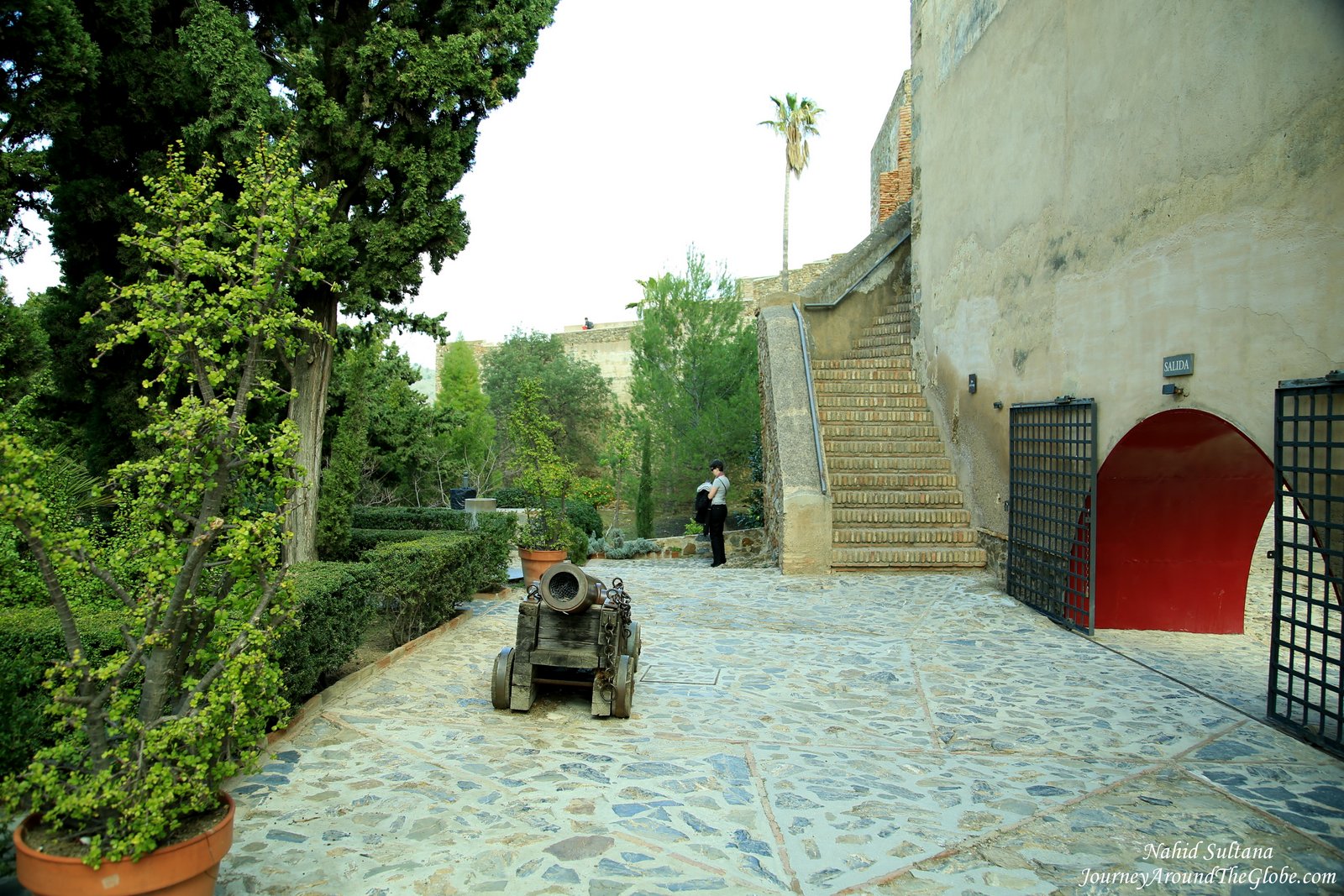
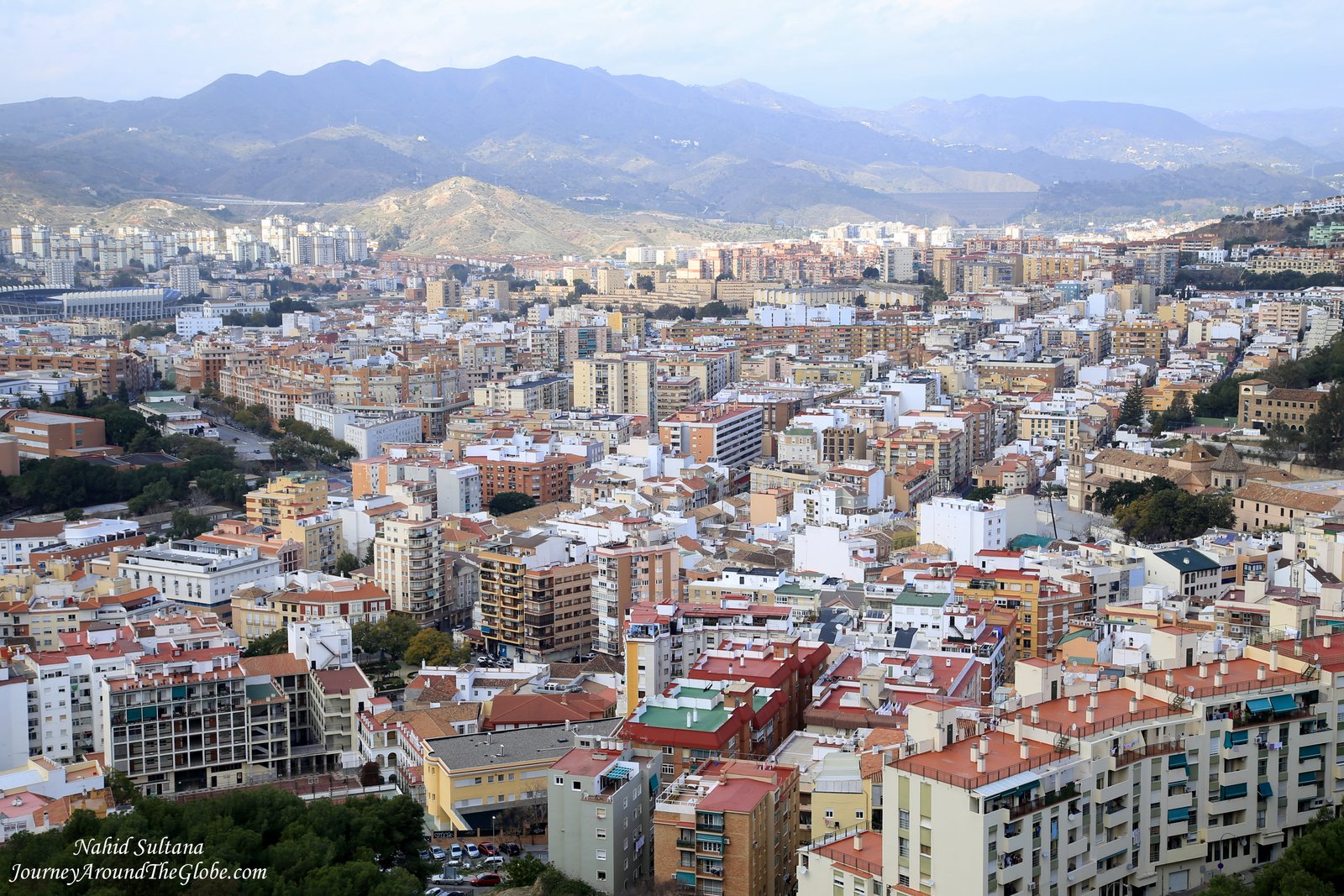
Gibralfaro also has an incredible view of the whole Malaga, may be better than Alcazaba since it sits on a higher ground. But there isn’t much to do or see here other than walking around different ramps among the old walls (you can also walk on the walls of this fortress) and checking out views from different angles.

- Overlooking the whole city of Malaga from Gibralfaro Fortress
This fortress is open from 9am to 8pm in summer and 9am to 6pm in winter. Although Gibralfaro looks over Alcazaba, the two monuments are not connected from inside anymore. We took taxi here from Picasso’s Birthplace House (was around 8 euros), but saw many people walking up the ramp (which can be a bit difficult with kids) and some also took Bus #35 to reach the top (2.20 euros per adult). We walked down on our way back which was easier and fun; you get to see many nice sites including a bird-eye view of Malaga Bullring.
8) PICASSO MUSEUM: Pablo Picasso is known as the father of Cubism and inventor of images that are syntheses of multiple viewpoints…both formal and conceptual.
The Renaissance building that houses the museum is itself a historic building, known as Buenavista Palace. In addition to Picasso’s works, the palace has an architectural site with remains of 17th century BC Phoenician Malaga as well as the elements dating from various periods of the Roman era and parts of the old Golden Age building (some from the 6th century).
This museum has life works and the largest collection of Pablo Picasso. The collection here spans eight decades of Picasso’s career, which is essential for an understanding of Western art. The displays in this museum show his relationship with Malaga and the unlimited versatility of his artistic talent. After Picasso died in 1973 in France, most of the collections here were donated by Picasso’s grandson Bernard Ruiz-Picasso. Some of his famous and exclusive paintings that we were lucky to see here includes “Mother and Child”, “Acrobat”, and many more.
Picasso Museum took us about an hour to visit all the rooms with displays. Ticket is 6 euros per adult.
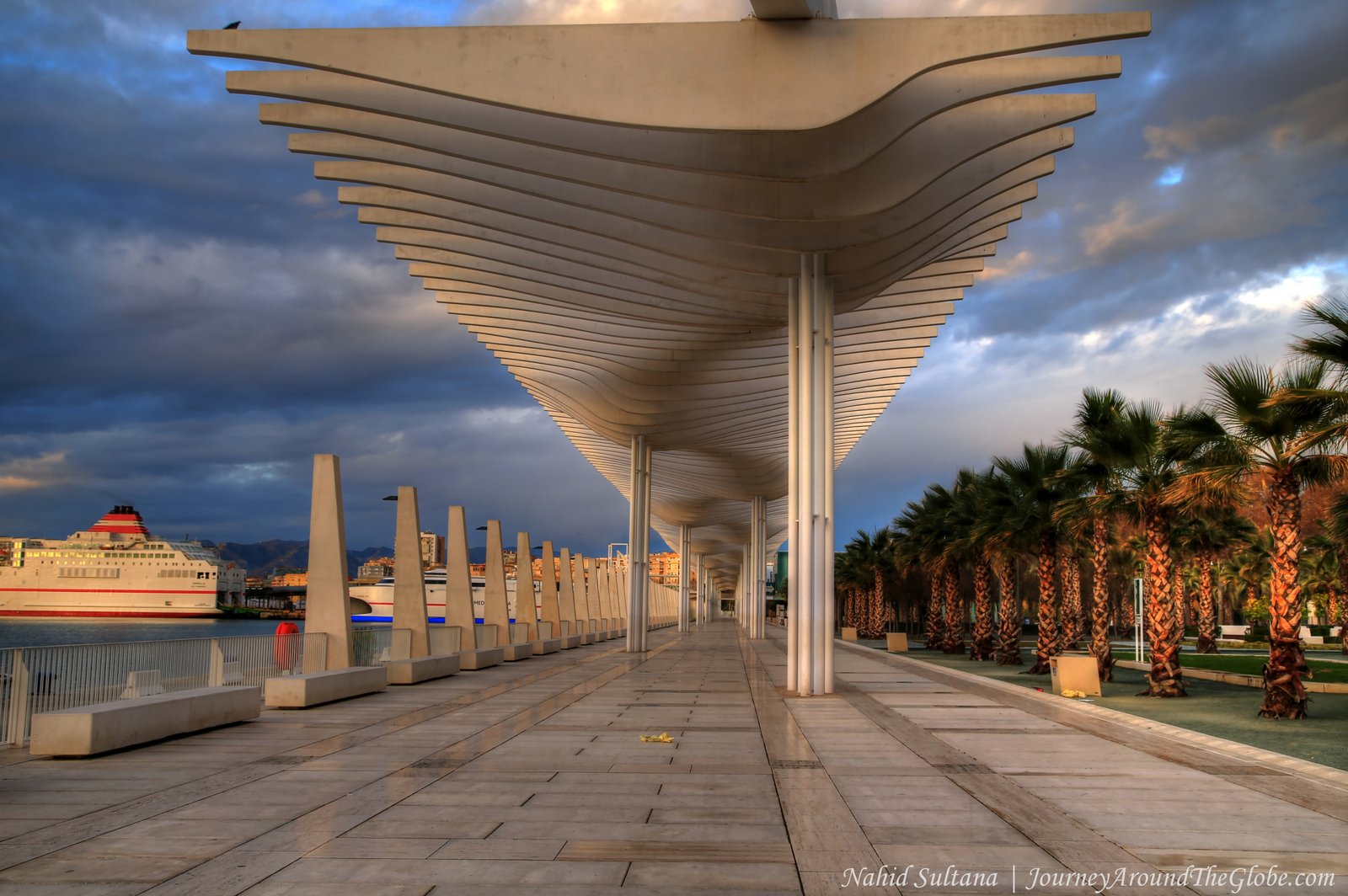
9) MALAGA PORT or HARBOR: This was not in our itinerary. It was so close to our hotel that I decided to take a walk before sunrise on our last day in Malaga. It is definitely a hype and trendy place to hang out or come for meal during normal hours. There were plenty of restaurants and shops on one side of the harbor facing the water. Although everything was closed, anything looks extra beautiful during sunrise.
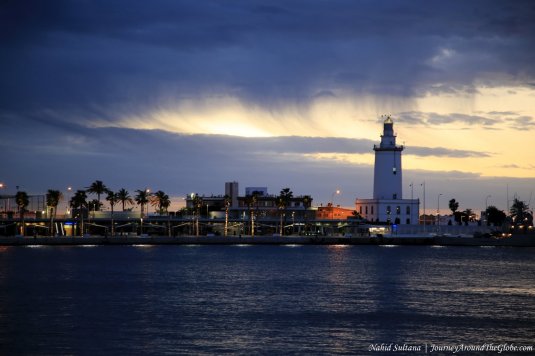
- Lighthouse in Malaga Port before sunrise
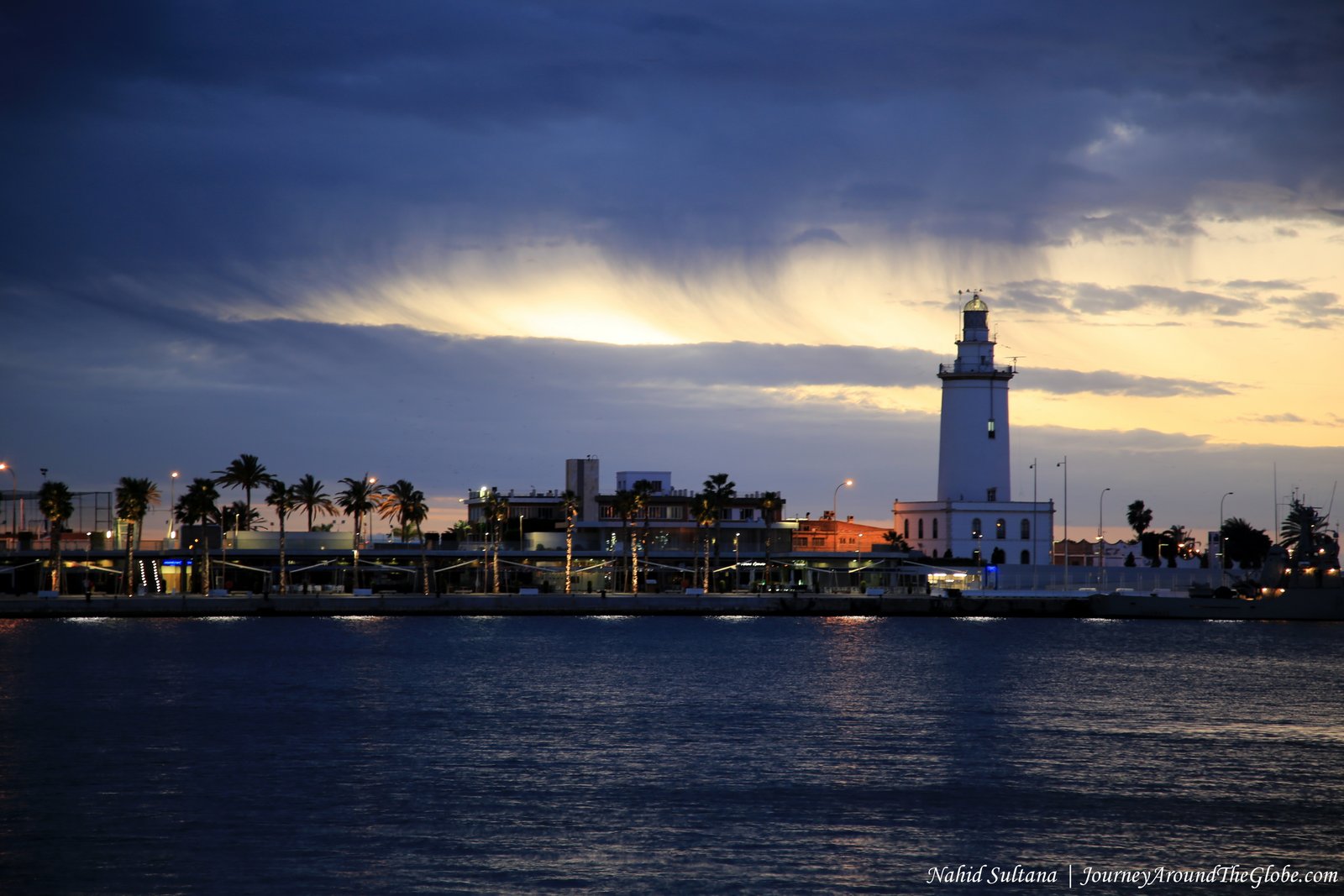
Spires of Malaga Cathedral and old walls of Alcazaba can be seen from the harbor. I walked all the way to the lighthouse there. There wasn’t much to do at this early morning, but that was one of the beautiful strolls I took in a long time.
- Right after sunrise in Malaga Port, walking back to my hotel
Share this:

“When will you realize, Vienna waits for you?”
VIENNA, AUSTRIA: Billy Joel sang this song “Vienna” in 1977 and the song brought back some awesome memories of our trip to Vienna while I was listening to it in YouTube. I had to dedicate this post on Vienna to that song and to Billy Joel.
Vienna is the capital and the largest city in Austria. Surprisingly, history of this town goes back to 25,000 years but the written history is from the Roman period about 2000 years ago. This was the home of the Habsburg family along with various empires from the past. For being the capital city of monarchy, you will see lots of rich cultural and historical buildings here. After WWII the city was left with much ruins. But thanks to Austrian authority, the city looks marvelous now with some touches from the past blending well with the look of present.
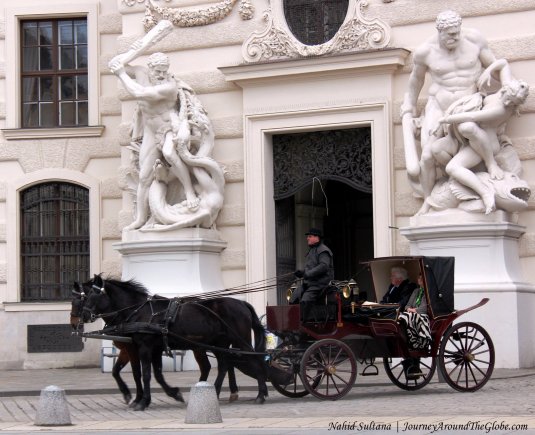
- Historic city center of Vienna – a UNESCO World Heritage Site (Michaerplatz near Hofburg Palace)
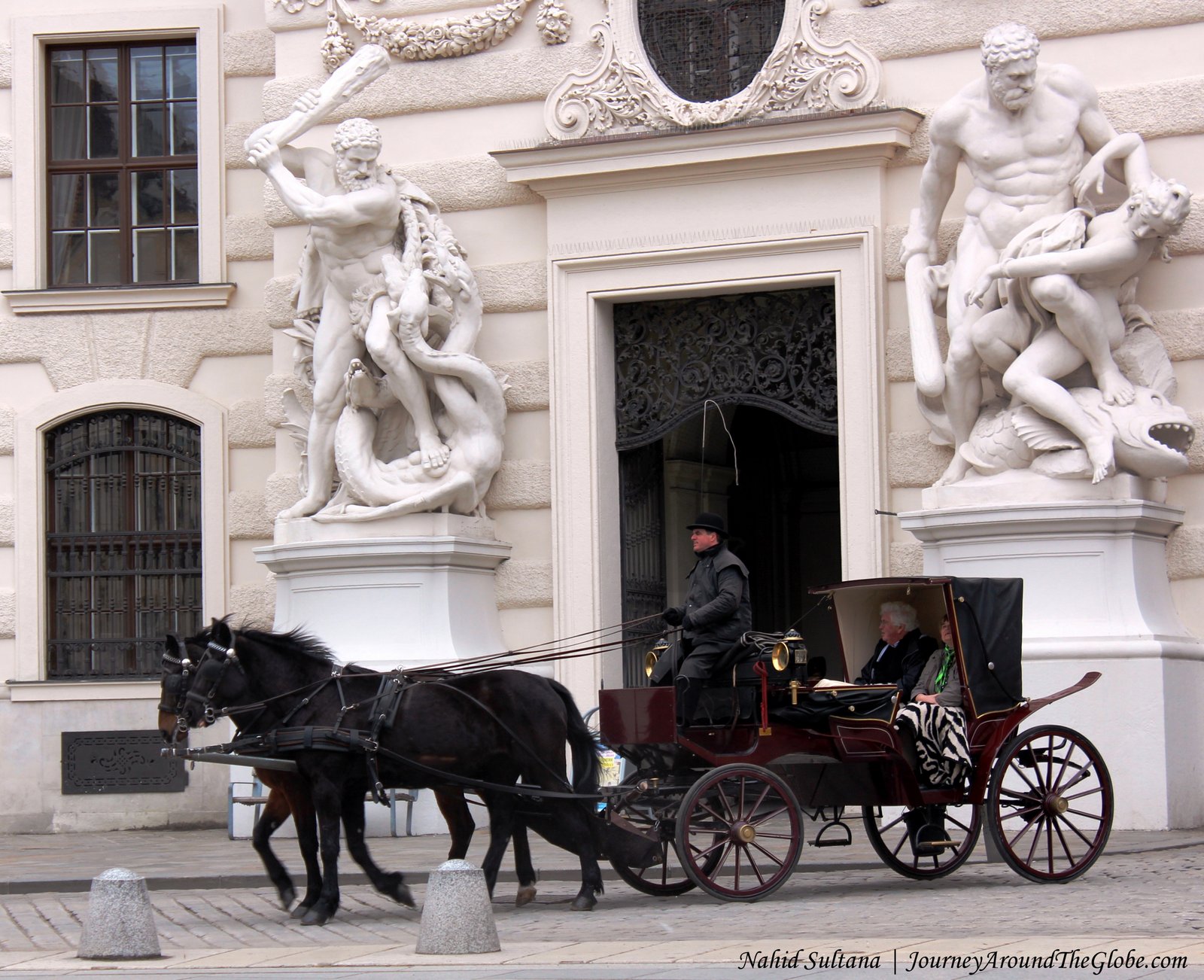
Austria is the country of Mozart and classical music. And just like Salzburg, you will see Mozart’s picture everywhere including in candy wrappers. Try to attend some symphonies or opera if time allows, you will see people selling tickets of various performances everywhere in old town.
I have to say there is something about Austria that leaves sweet feelings in your heart, not sure if it’s the people, or Mozart, or landscape, or history, or culture, or music or a combination of everything. I enjoyed Salzburg more than Vienna, 5 years ago (also recently in December 2013) when we came to Europe. But the charm of both the cities is undeniable.

- Innere Stadt or 1st District of Vienna, you can see the green dome of Hofburg Palace
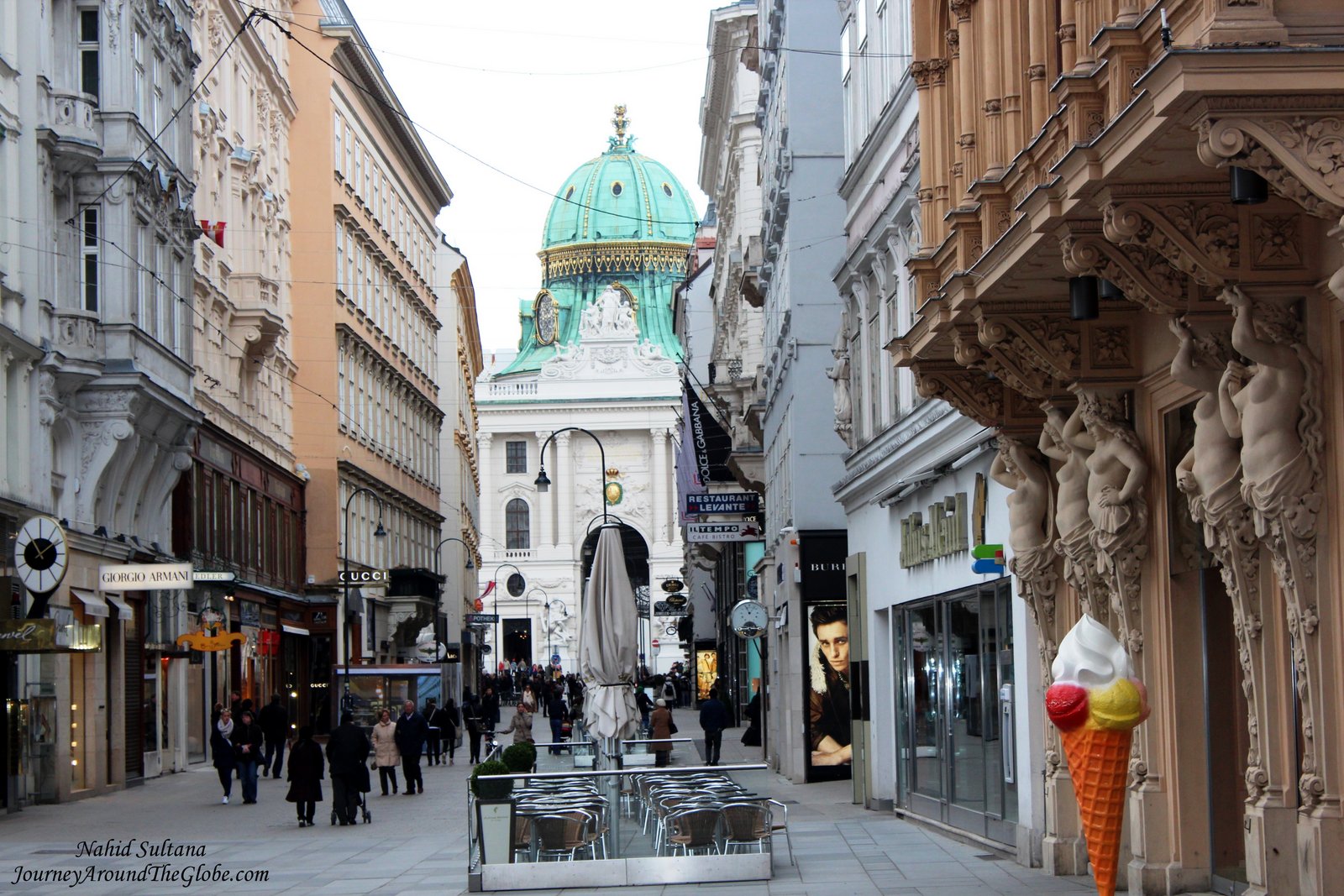
Austria is a German-speaking nation, but locals are very good at English too. This is a huge city and is divided in many districts. We mostly stayed in Innere Stadt, also known as 1st District. For day trips from Vienna, you can consider crossing the border and going to Bratislava in Slovakia.
TIME of TRAVEL: This was the second destination of Easter Break road trip that we took in April of 2012 (yeh, quite a long time ago, this post was overdue). After visiting Nurnberg, Germany, we drove about 5 hours to reach Vienna. It was a great day in Vienna when we arrived. After staying here two days we headed for Bratislava, Slovakia. It was not warm that day, we had to wear light jackets the whole time…but I guess that was expected in April here.
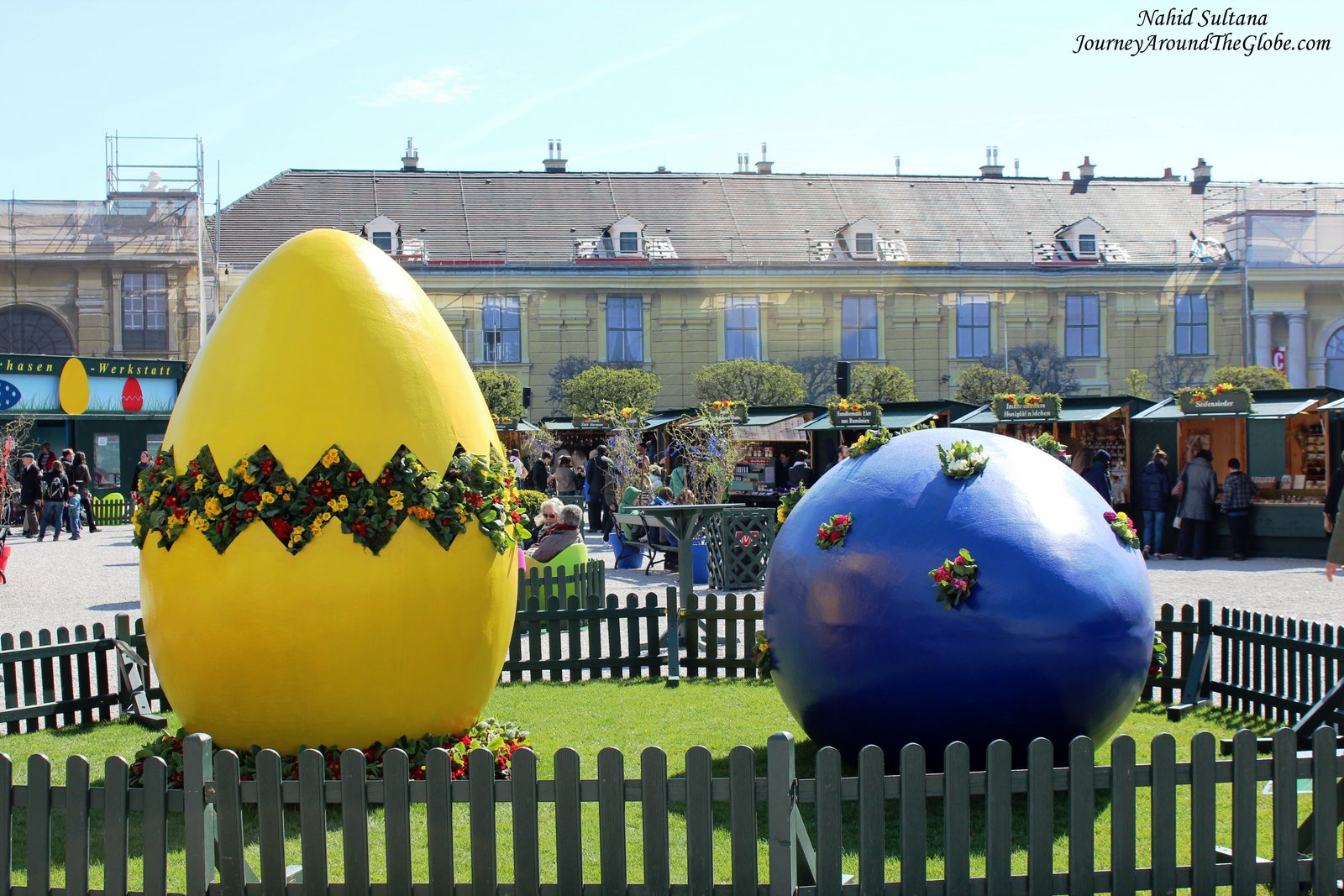
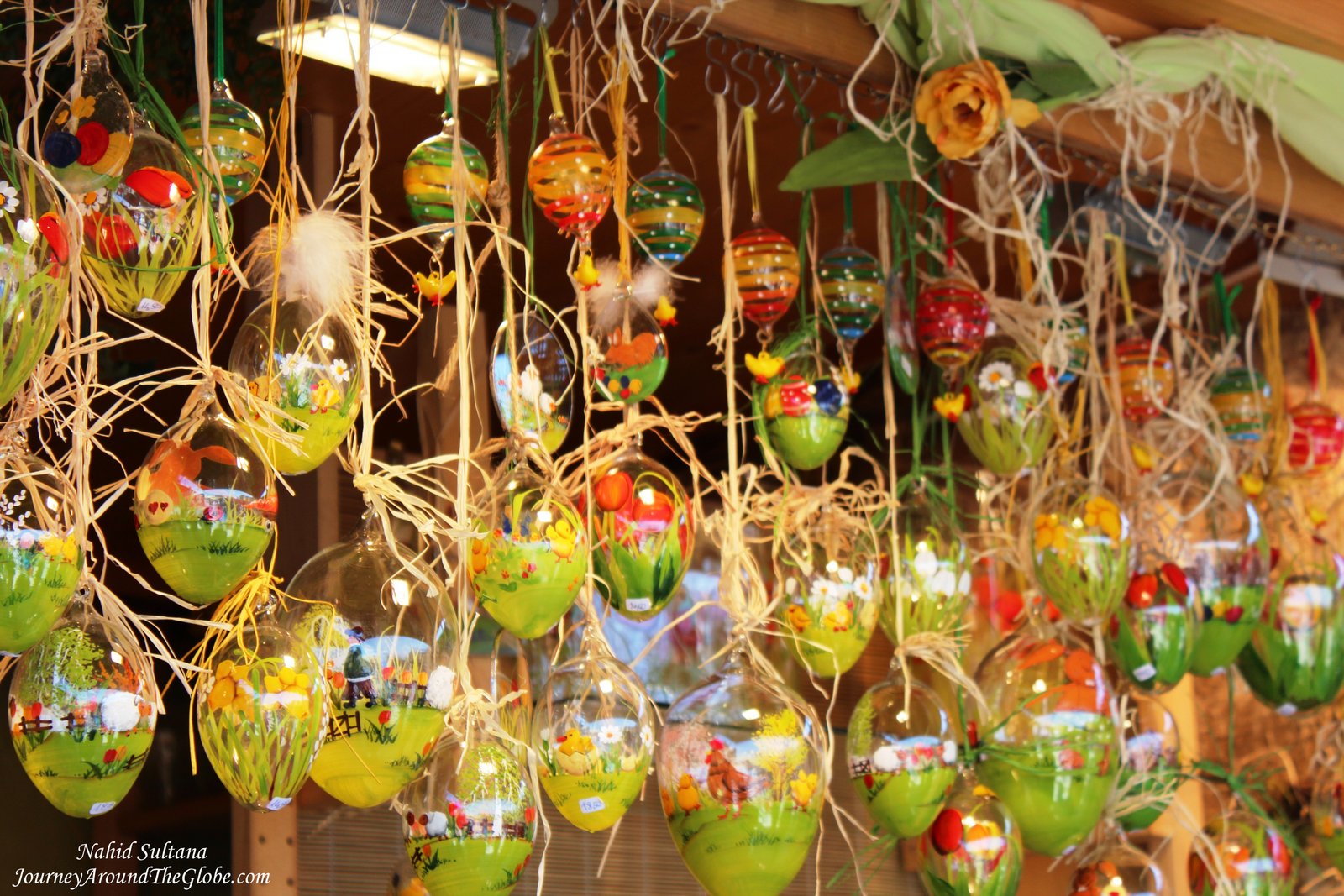
If you are here during Easter break, you will see that Easter in Europe is like Christmas in the U.S.A. It’s gorgeous, very festive, and more colorful than what I saw in America. Vienna was the same too…eggs, eggs everywhere.
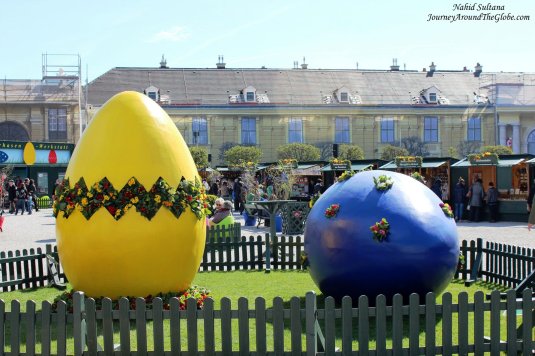
- Easter decoration in front of Schoenbrunn Palace in Vienna
OUR HOTEL: Our hotel was K&K Palais Hotel in Vienna, very close to the old town and within walking distance from most of the main attractions. It had free breakfast buffet and Wi-Fi. From outside, it looked like the hotel itself was a building from couple centuries back.
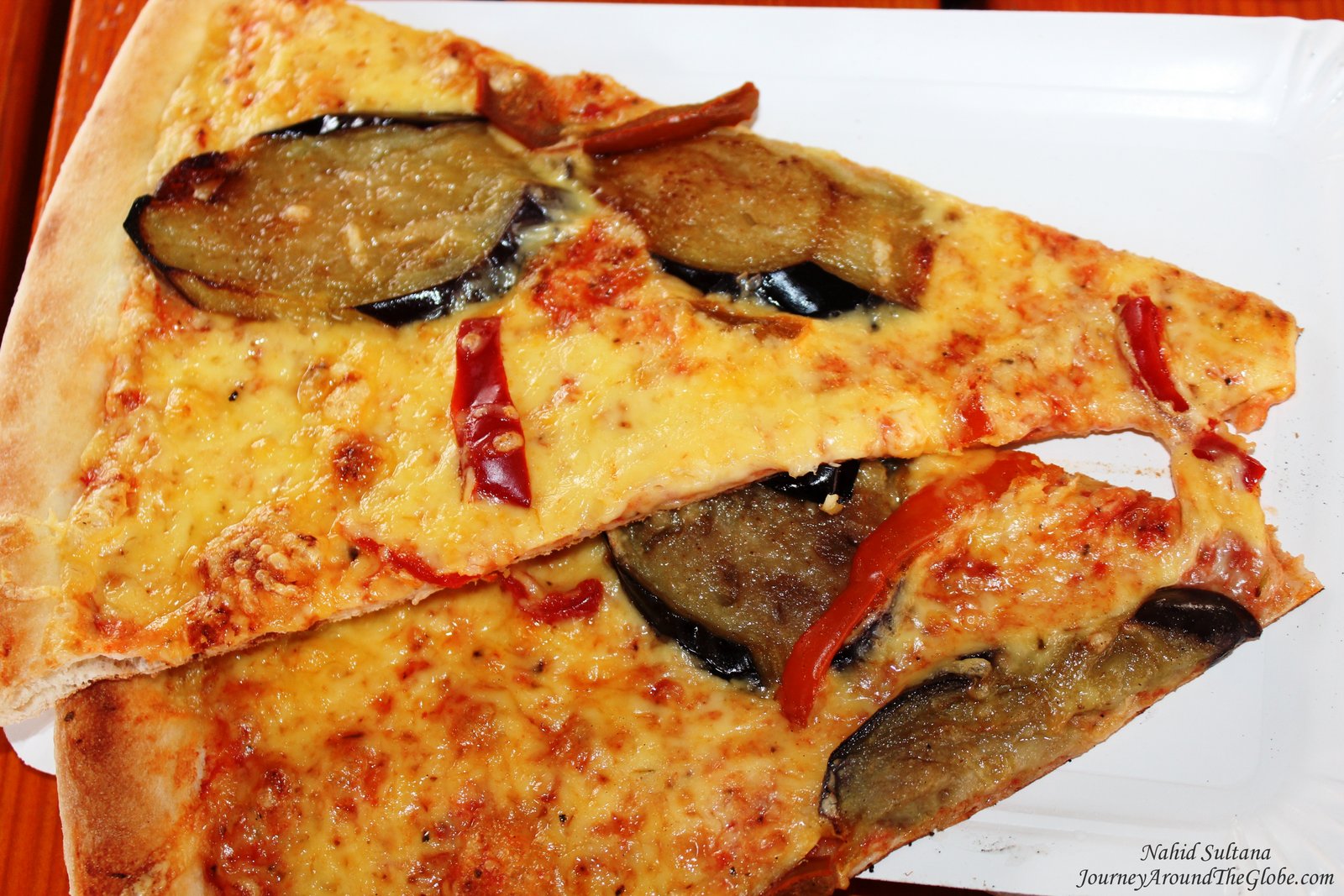
EATING and SHOPPING: I can’t remember now what we had for dinners in those two nights in Vienna. But for lunch, first day we picked up some pizza from a train station near Austrian Parliament. And let me tell you that was one of the best pizza I had in my life…because it had slices of eggplant on it, haha. Next day, we had again a quick lunch in the Easter market in front of Schoenbrunn Palace. Something you can try in all over Austria is schnitzel, a fried piece of meat with vegetables and potatoes.
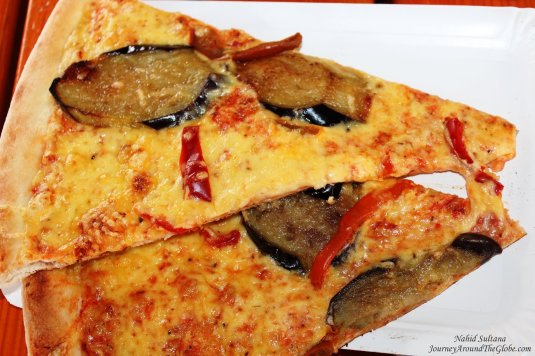
- Our first lunch in Vienna, a slice of pizza from a train station – pizza with slices of egg-plant…still can taste it in my mouth
Graben in old town is a very good place to buy souvenirs of Vienna. Also we saw a big Easter market in front of Schoenbrunn Palace and it was attractive. Buy Mozart CDs, Mozart chocolates – Mozart Kugel (candy with marzipan), and other Mozart related items from here.

- Easter market in front of Schoenbrunn Palace in Vienna
PLACES WE’VE VISITED: We had a day and half in Vienna. We spent a whole day in the old town on the first day and half a day in Schoenbrunn Palace the following day before we started our drive to Bratislava.
Old town of Vienna (Innere Stadt or 1st District) is beautiful beyond my words. This historic part is a UNESCO World Heritage site and like an open-air museum with things to see and enjoy all around. You just have to love its old artistic buildings everywhere. There are tons of museums near and around the city, one I was interested in was Sigmund Freud Museum, which we couldn’t go to. Old town and its surrounding are big but we did it on foot. Enjoy the abandoned famous and grand buildings while you are walking on cobblestone streets of Vienna. Here are the thing we could fit in during our visit to Vienna, lucky you if you have more time to spend here.

- Beautiful statue outside an old building of Vienna
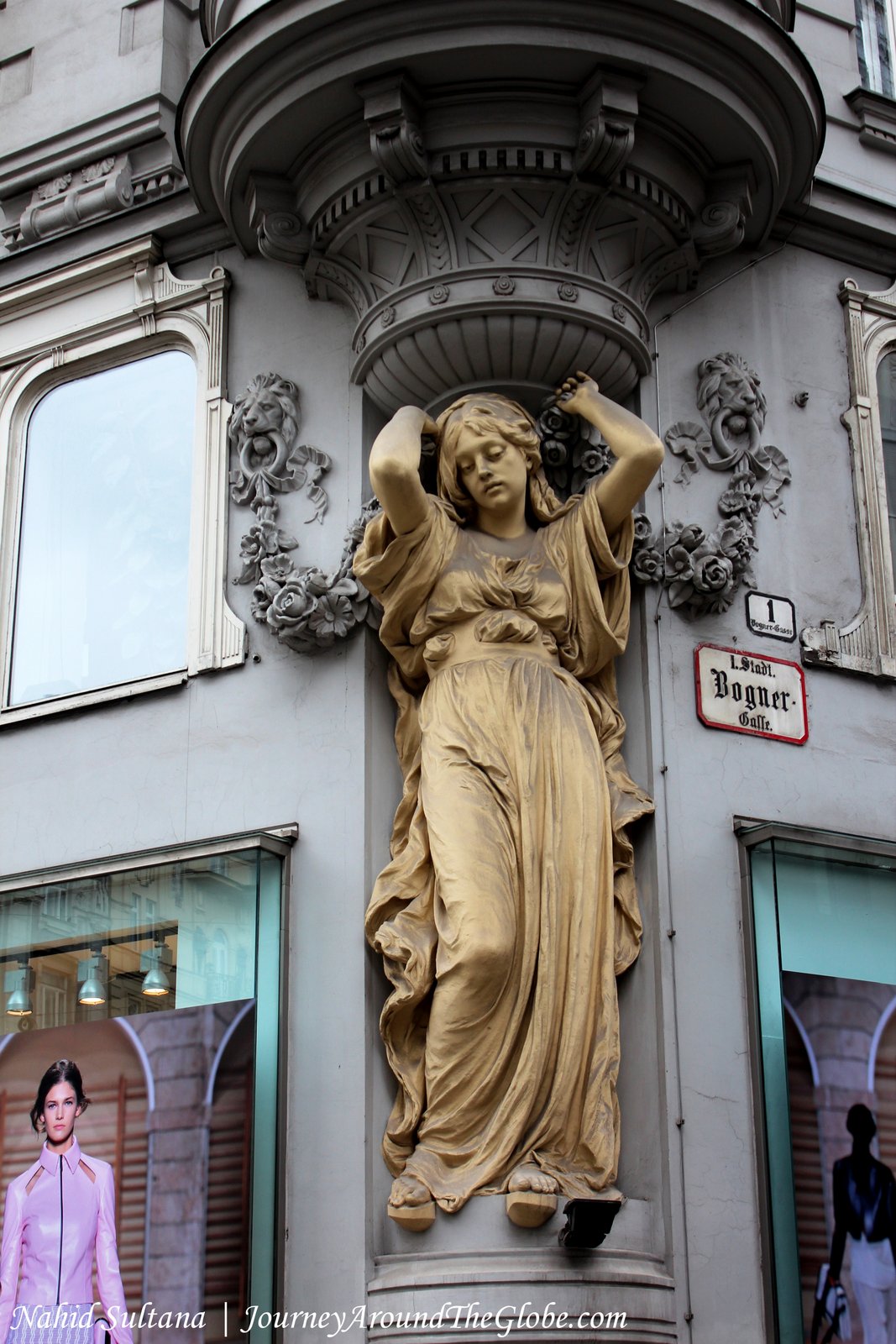
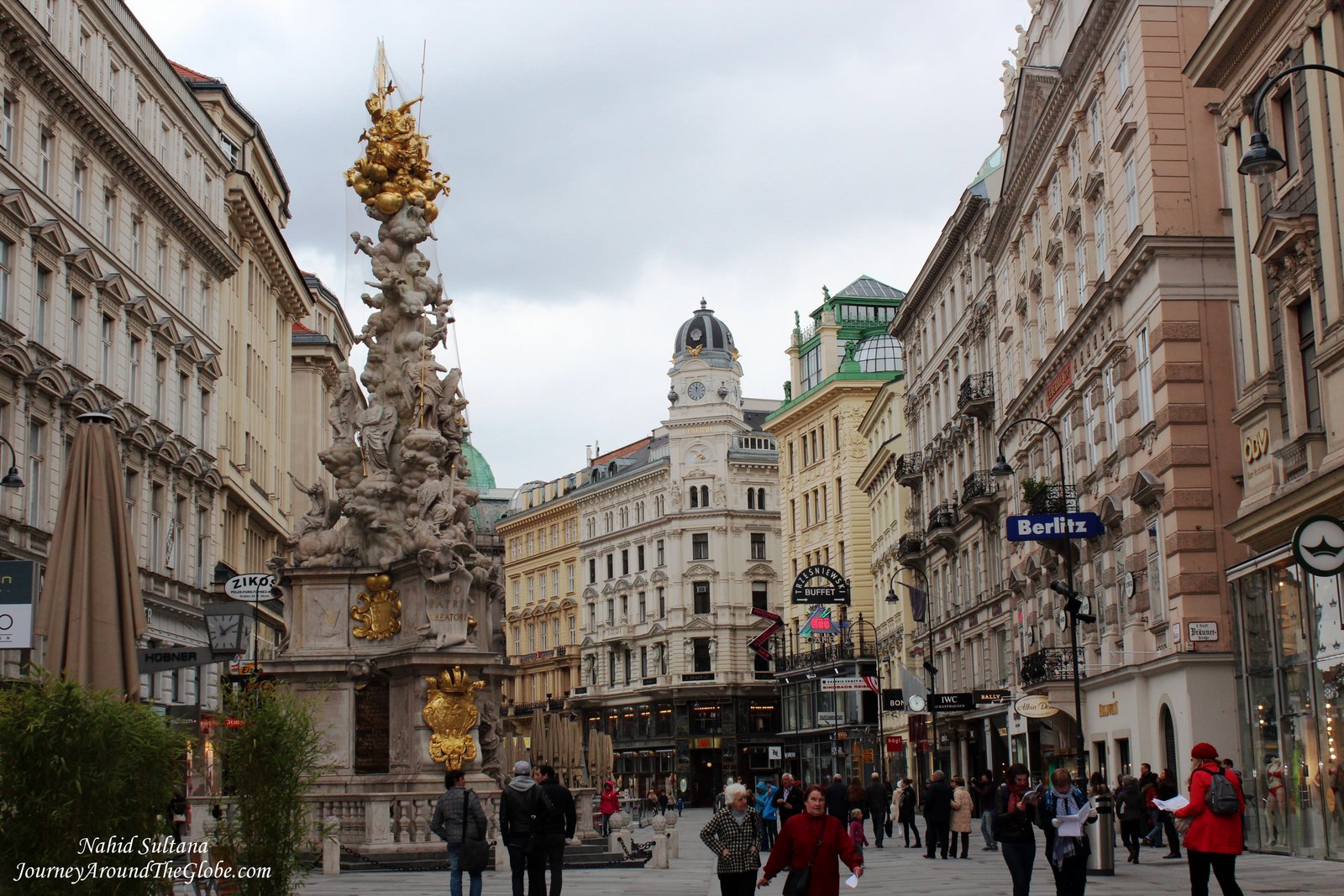
1) GRABEN: Graben is the old district of Vienna where we started our tour from. This is a pedestrian path full of cafes, boutique shops, and beautiful old buildings. This is a perfect place to watch street performers, sit down and watch people go by. An old statue “Pestsaule” stands in the middle of this cobble-stoned street surrounded by many sidewalk cafes and stores. The statue was constructed to commemorate people who died in plague.
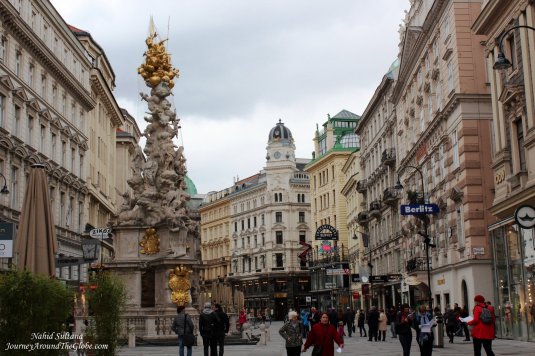
- Graben – a long stretch of cobble-stoned path in historic Vienna
You can see St. Peter Church in Peterplatz of Graben. We didn’t go inside but looks like an old church of Vienna…something we should have visited maybe.
2) MICHAELERPLATZ and ST. MICHAEL CHURCH: About few minutes of walk from Graben, Michaelerplatz is a nice square right in front of the entrance to Hofburg Palace. There was an excavation we saw from the Roman times (at least 2000 years old) in Michaelerplatz. Lots of boutique stores and designer shops are packed in Michaelerplatz. On one side stands beautiful St. Michael Church.
3) HOFBURG IMPERIAL PALACE: This is a must-see attraction of Vienna. Hofburg is the former palace of Austro-Hungarian Habsburg dynasty. It was their winter residence once but currently serves as the official residence of Austrian President. The palace once housed some of the most powerful people in the history of Austria and whole of Europe. You can visit the imperial apartments of Empress Sisi or Elizabeth and her husband Franz Joseph.
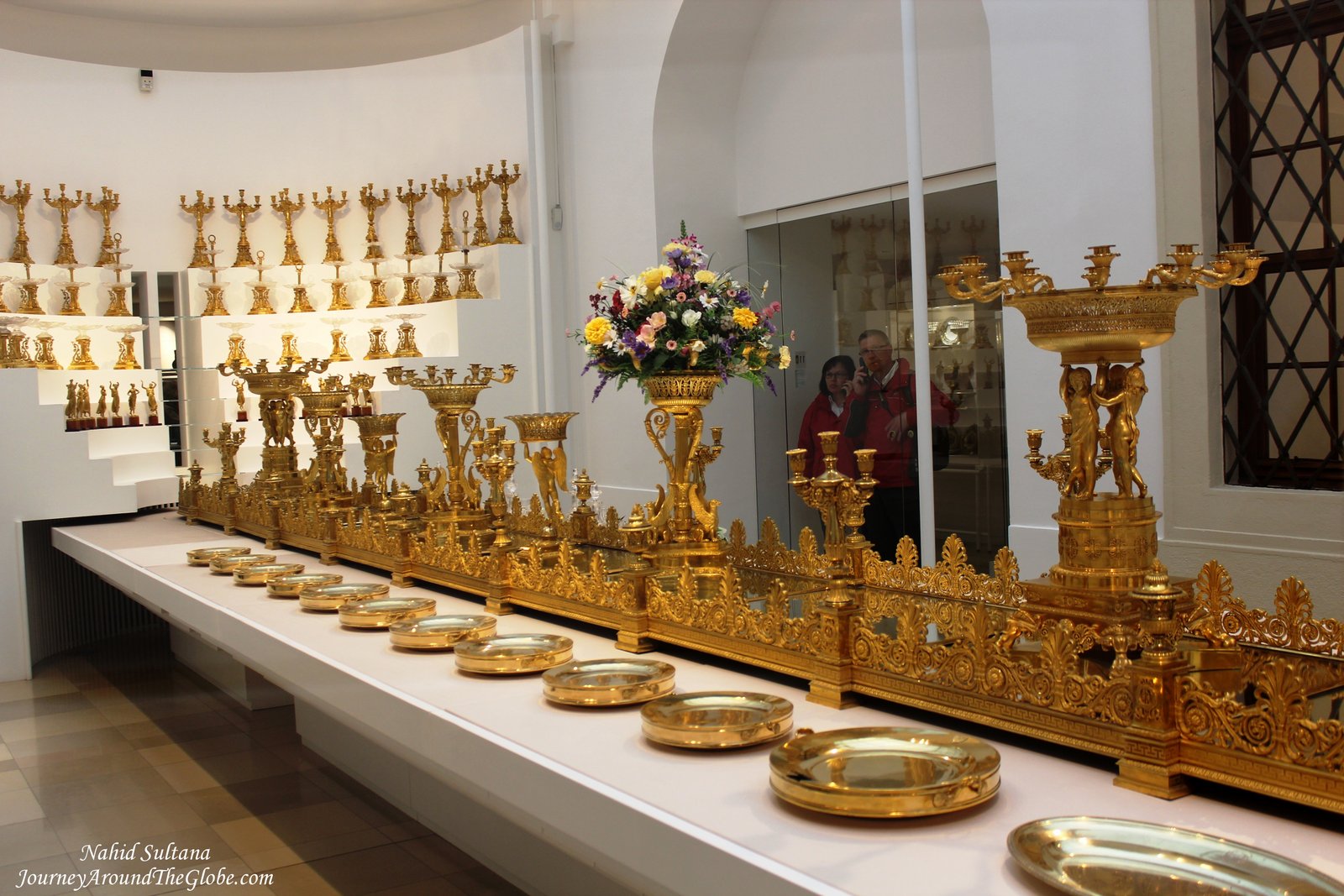
A big portion of the palace houses ceramics, porcelain, and potteries that were once used by Austro-Hungarian royal families. It’s a huge collection with room after room displaying Victorian styles of bone china, silverwares, dazzling ceramics, exclusive porcelain arts, dinnerware, centerpieces, glass works, and candle holders ….one is more elegant than the others. One of the grandest rooms displays the way tables were used to be decorated for royal guests…something I’ve never seen before.
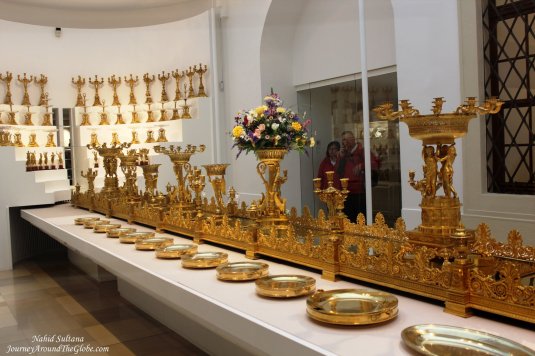
- Hofburg Imperial Palace in Vienna – the way dinner table used to be decorated for the royal guests
Hofburg Palace also houses Sisi Museum. Sisi was the daughter-in-law of Austro-Hungarian Empress Maria-Theresa and wife of Franz Joseph. She was a modern and a bit rebellious type of princess who broke some royal rules and was murdered at the age of sixty.
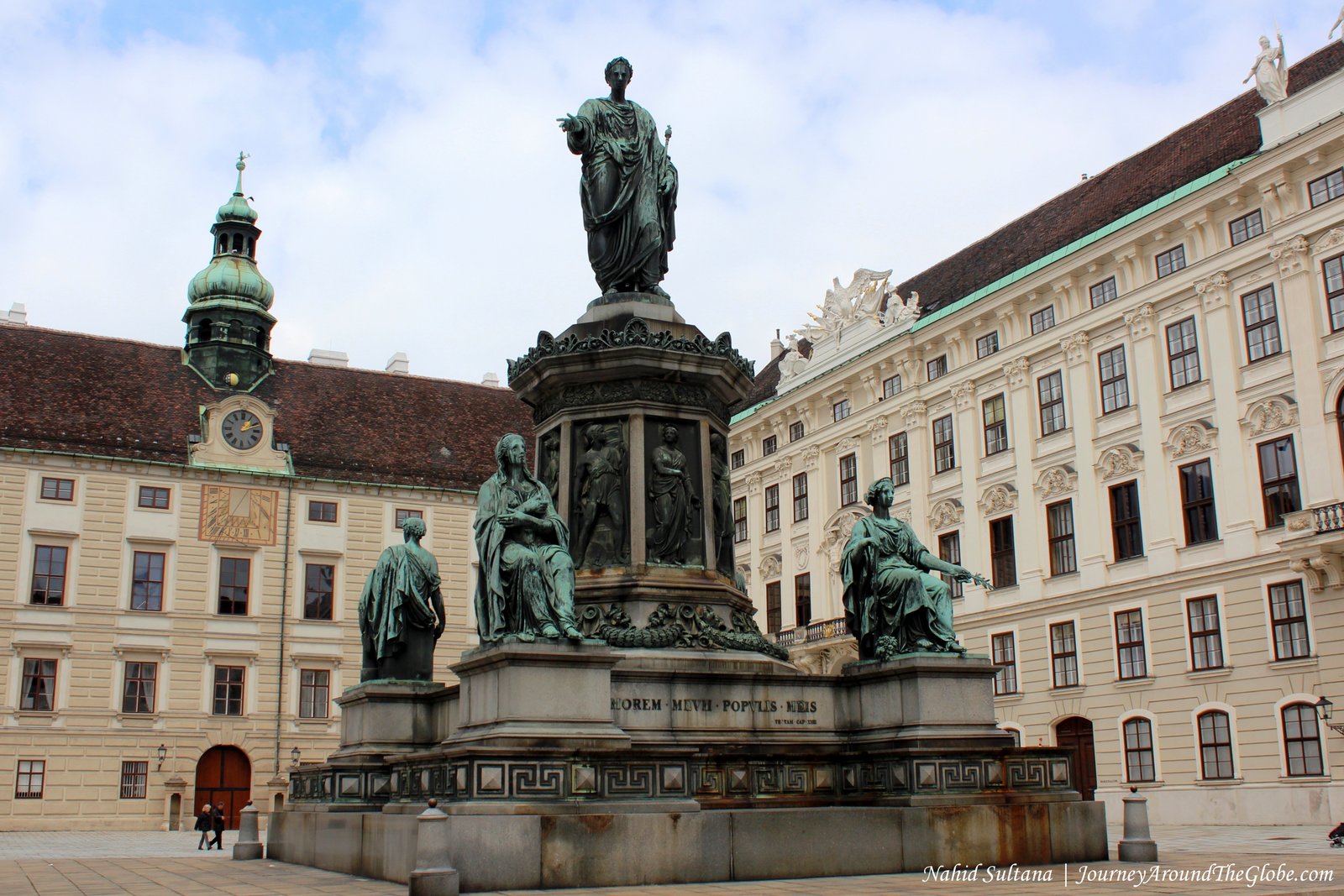
Other than the museums inside the palace, inner courtyard of Hofburg is a nice place to take a stroll and go back in time with the old façades of various buildings. Hofburg Palace houses number of interesting museums like weapons and armory collections, coin collections, musical instruments, and lots more.
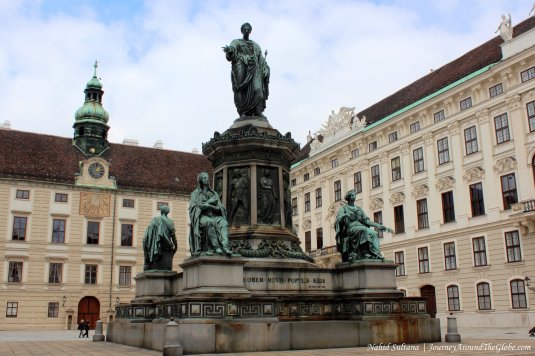
- A courtyard of Hofburg Palace in Vienna, Austria
It’s conveniently located in the heart of Vienna and has few gates to enter the palace. Plan to stay here about 2 hours or so. It was 10.50 euros per adult and 6.50 euros for kids 6 – 18 years of age. Audio tour for each visitor is included in the ticket.
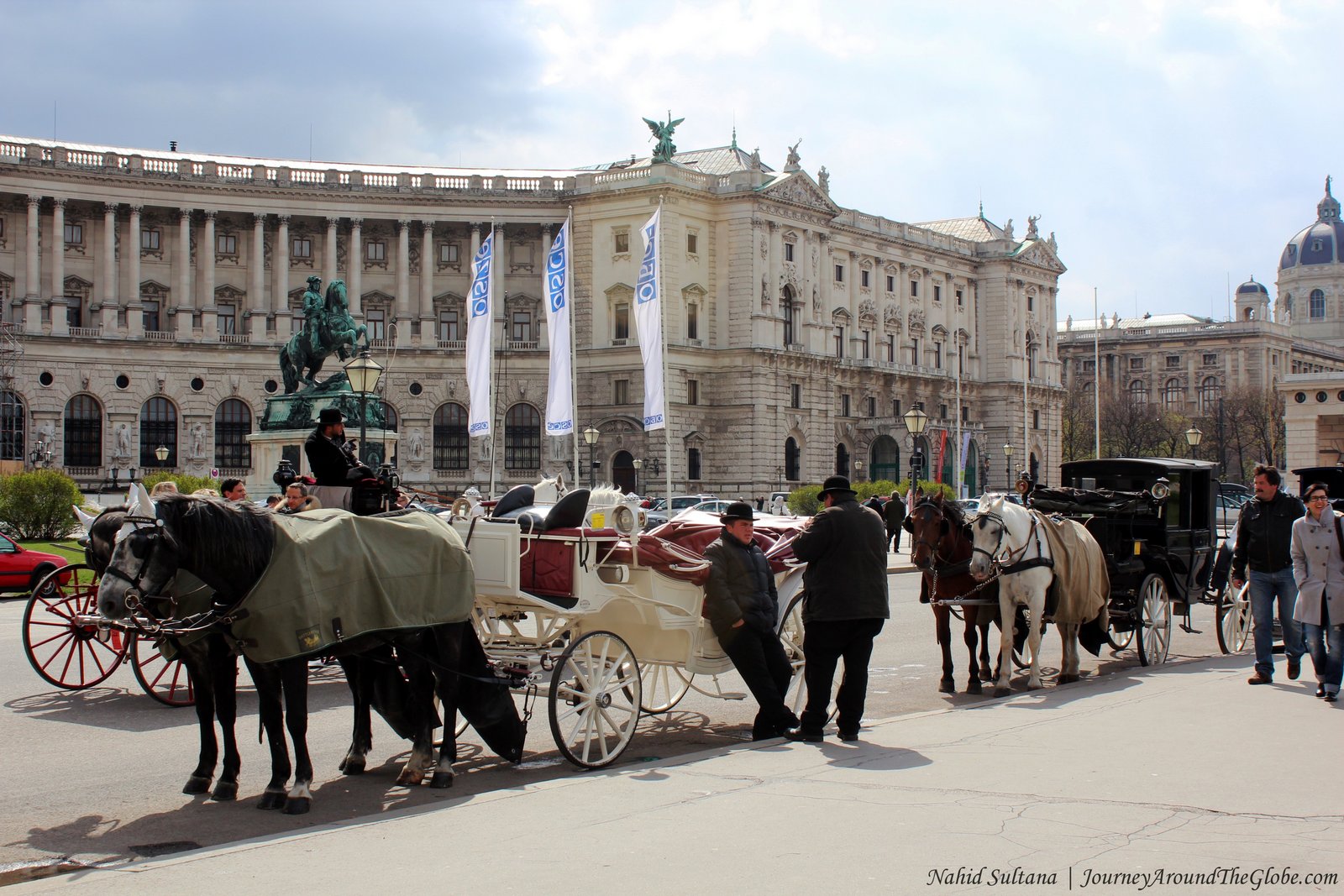
4) HELDENPLATZ: This is a beautiful square with some greens in the old part of Vienna. It’s a good place to get a horse-wagon to take you around. The most prominent building here is Austrian National Library with a statue in front. We didn’t go inside but I am sure you can take a tour inside the library and from the outer look of it, I could tell inside must be as grand as its front façade. From Heldenplatz, you can see Austrian National Parliament and the spires of Vienna Town Hall.
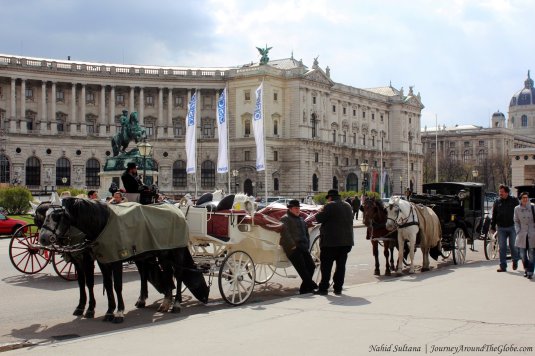
- Heldenplatz with Austrian National Library in the back
5) MARIA-THERESIEN PLATZ: Few steps away from Heldenplatz is Maria-Theresien Platz. A statue of Maria Theresa, who was a powerful Austro-Hungarian (Hapsburg) queen, dominates this square. The square is like a museum quarter, containing Natural History Museum, Art Museum, and couple other ones.
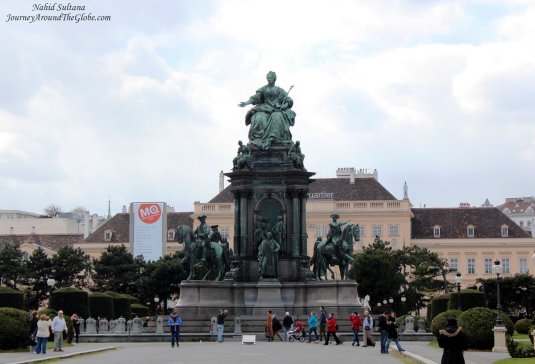
- Statue of Maria Theresa, a powerful Austro-Hungarian Queen, in Maria-Theresa Platz
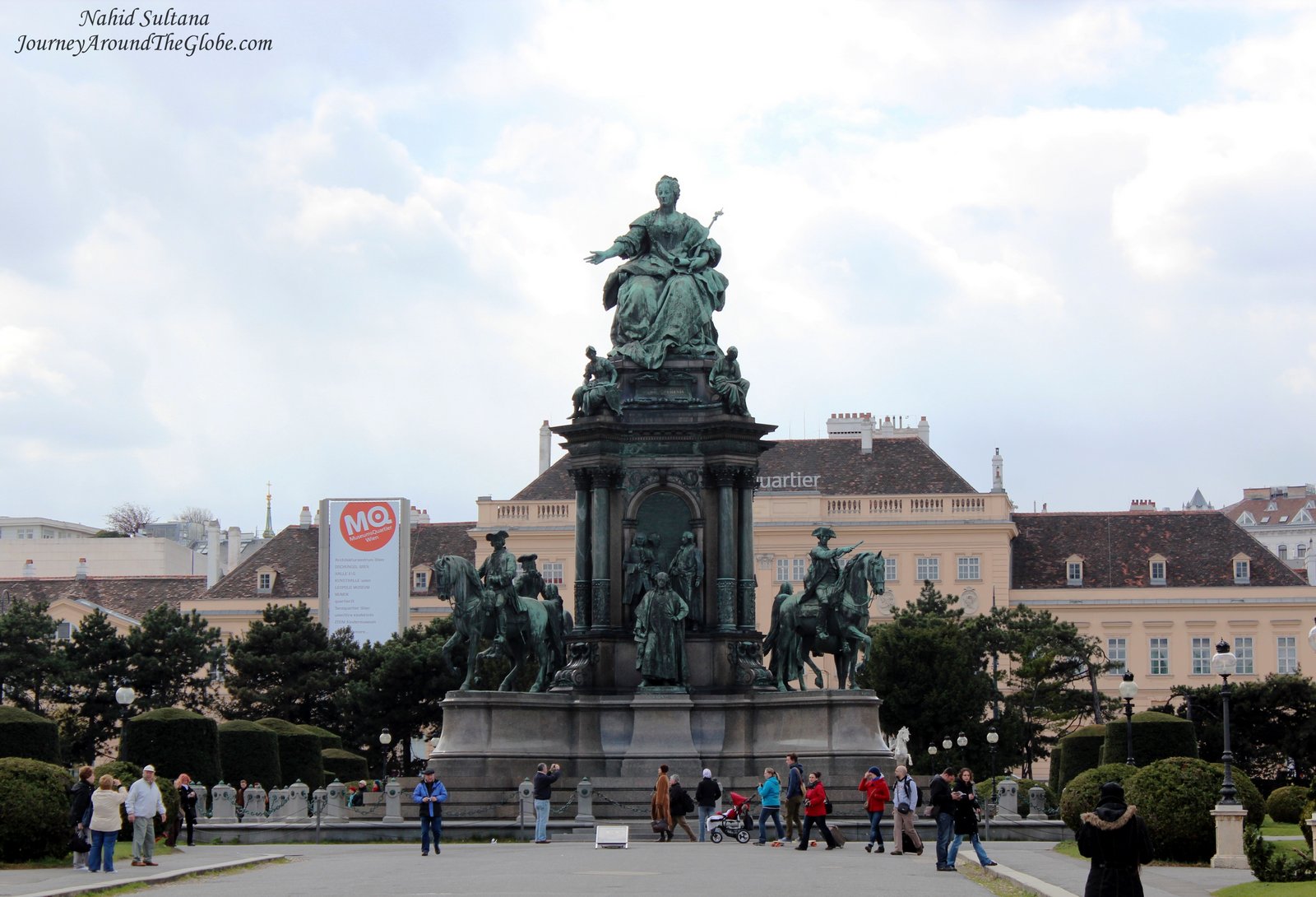
6) AUSTRIAN NATIONAL PARLIAMENT: After visiting the above square we came out of the old district and ventured into the newer part of Vienna. Austrian National Parliament is a handsome building with many statues in the front. It’s situated on a very busy area which is on the other side of Heldenplatz (about 5 minutes of walk). If I can remember correctly, the parliament was closed in weekends but tourists are welcome to take guided tours inside at regular business days or when not in session.

- Austrian National Parliament in Vienna, Austria
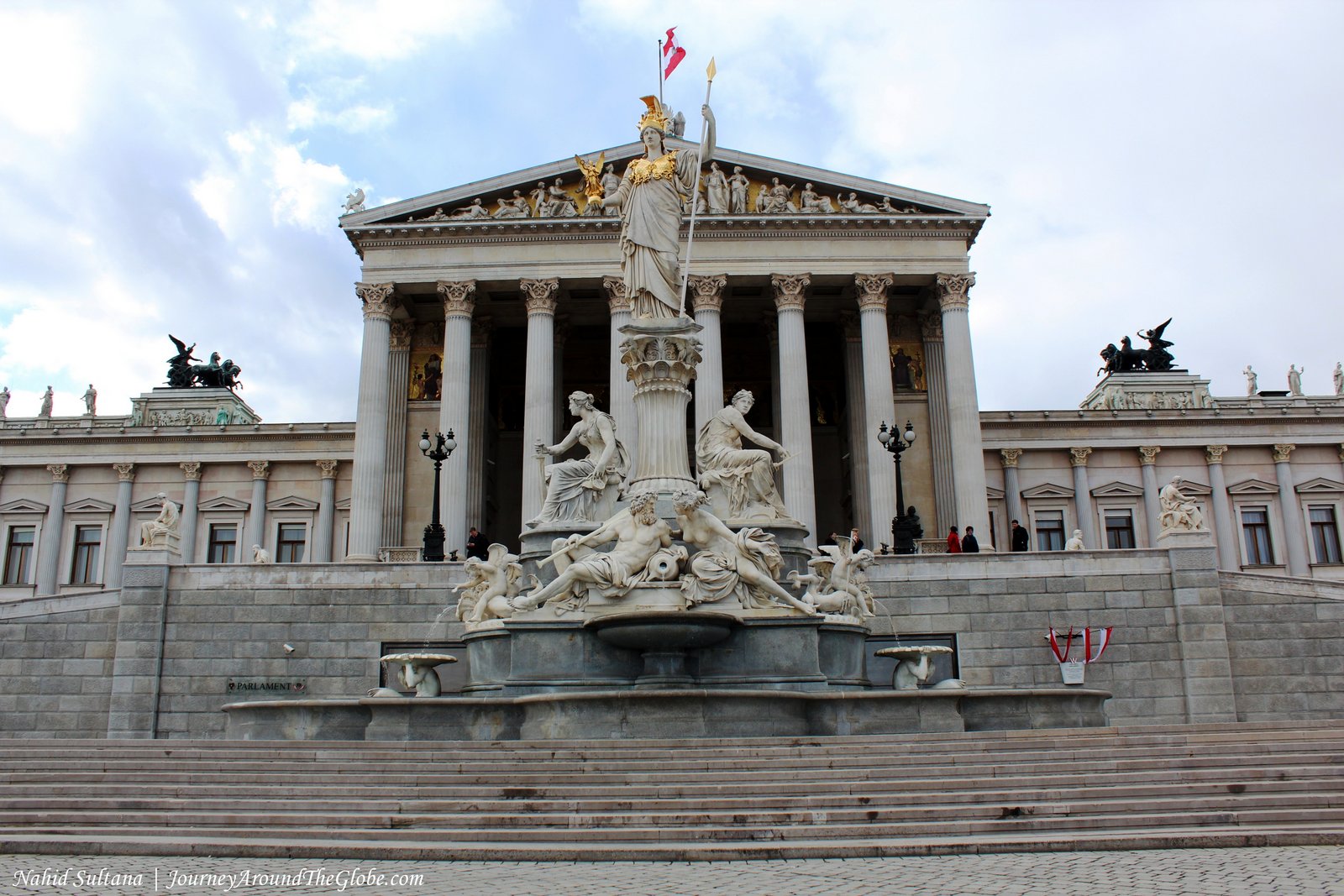
7) VIENNA CITY HALL (RATHAUS) and BURG THEATER: Vienna City Hall is very close to the parliament. It’s a stunning Gothic-style edifice with few spires reaching up to the sky. There is a big park in front and surrounding the city hall. And when we went, some kind of sporting event was going on here with some vendors selling sporting gears and goods, bicycling stunts, and etc.

- Gothic-style edifice of Vienna City Hall
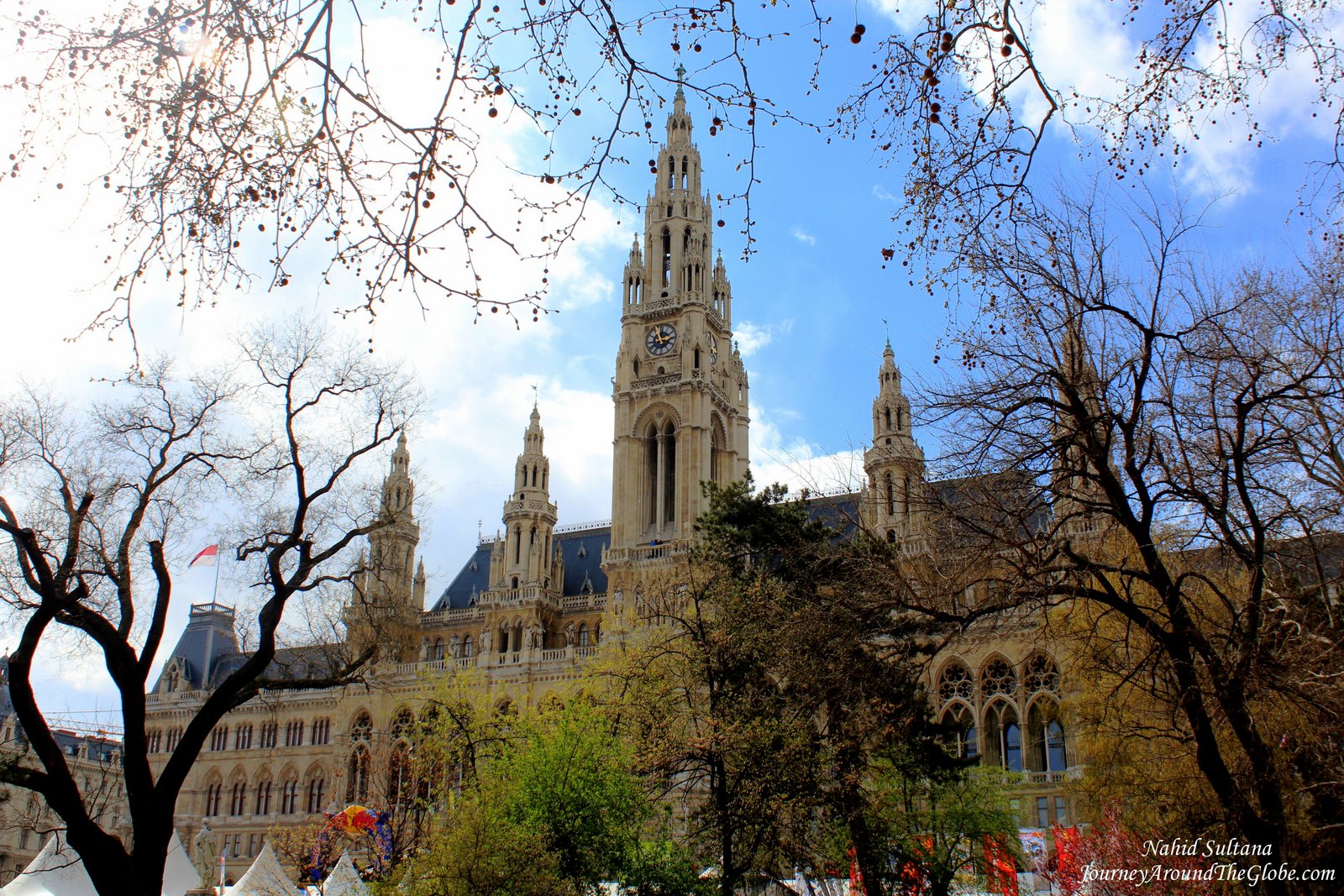
Across the park of city hall, on the other side of the street, is Vienna’s beautiful Burg Theater. This is another well-known landmark of the city.

- Burg Theater as seen from Volks Garden in Vinnea
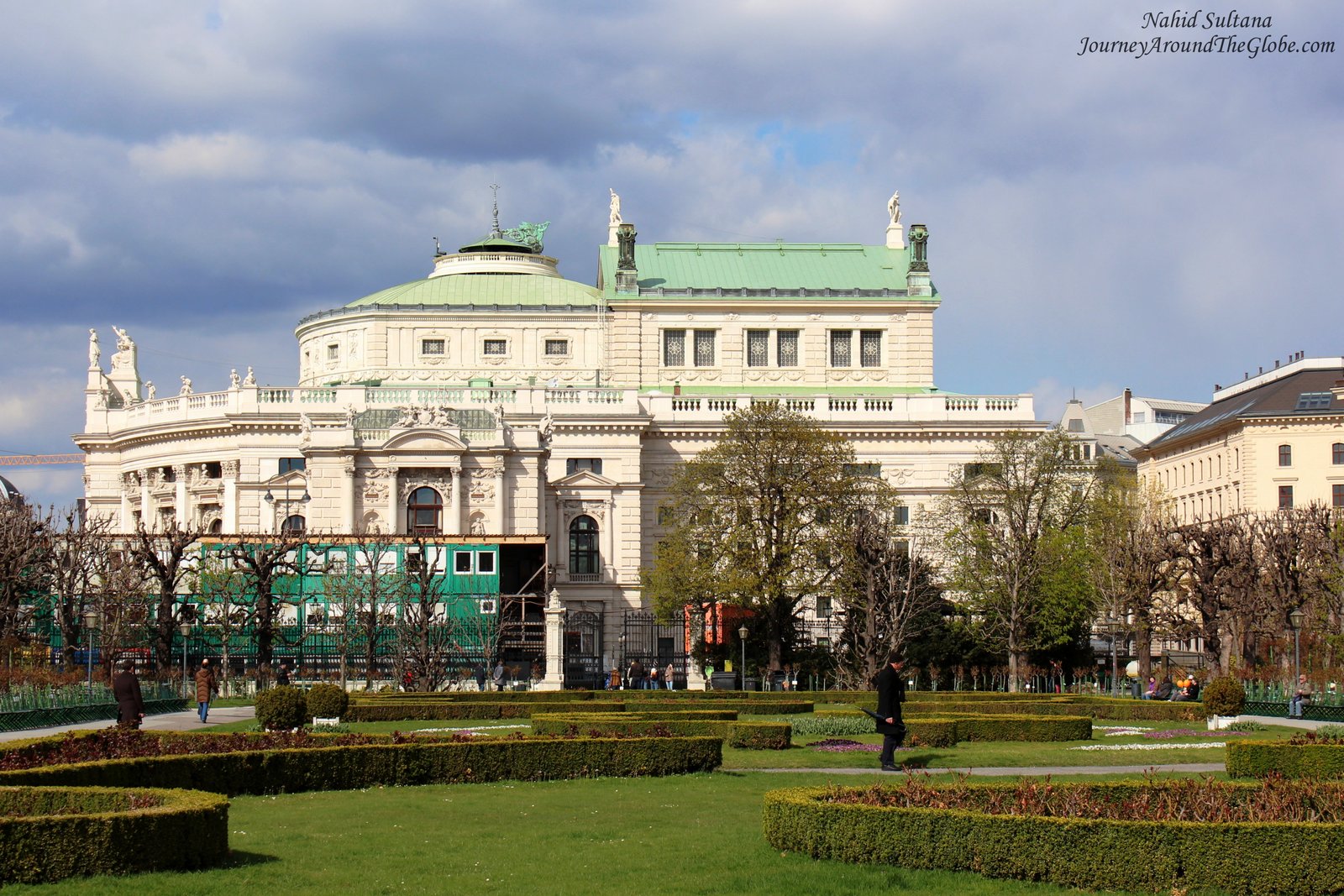
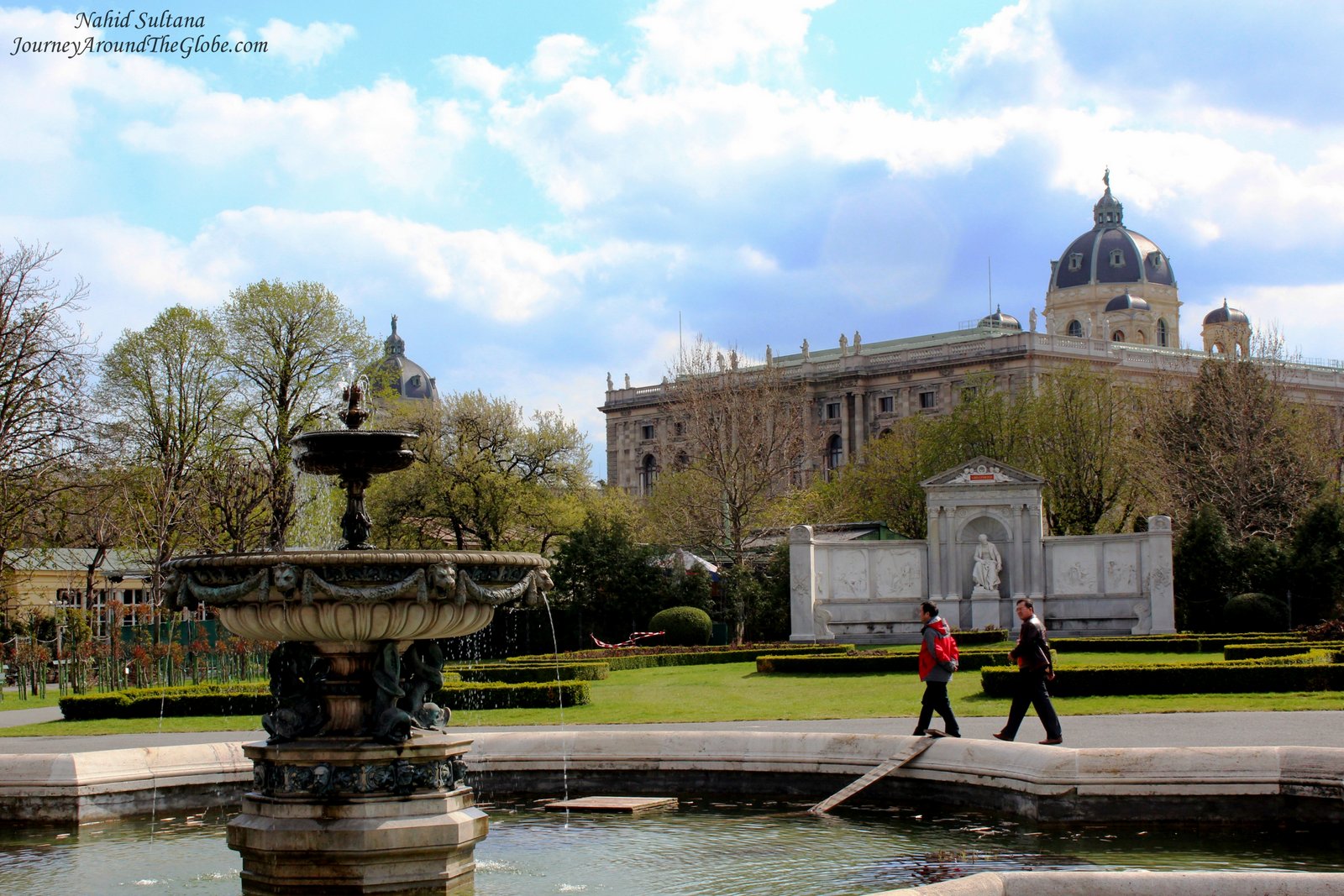
8) VOLKS GARDEN: Volks Garden is a beautiful greenery space in the heart of Vienna. Opposite of the parliament and town hall, and beside Burg Theater, Volks Garden is a place that connects old district to the new part. It was nice to walk around this garden and enjoy some beautiful sculptures, fountains, and trees.

- Volks Garden in Vienna, Austria
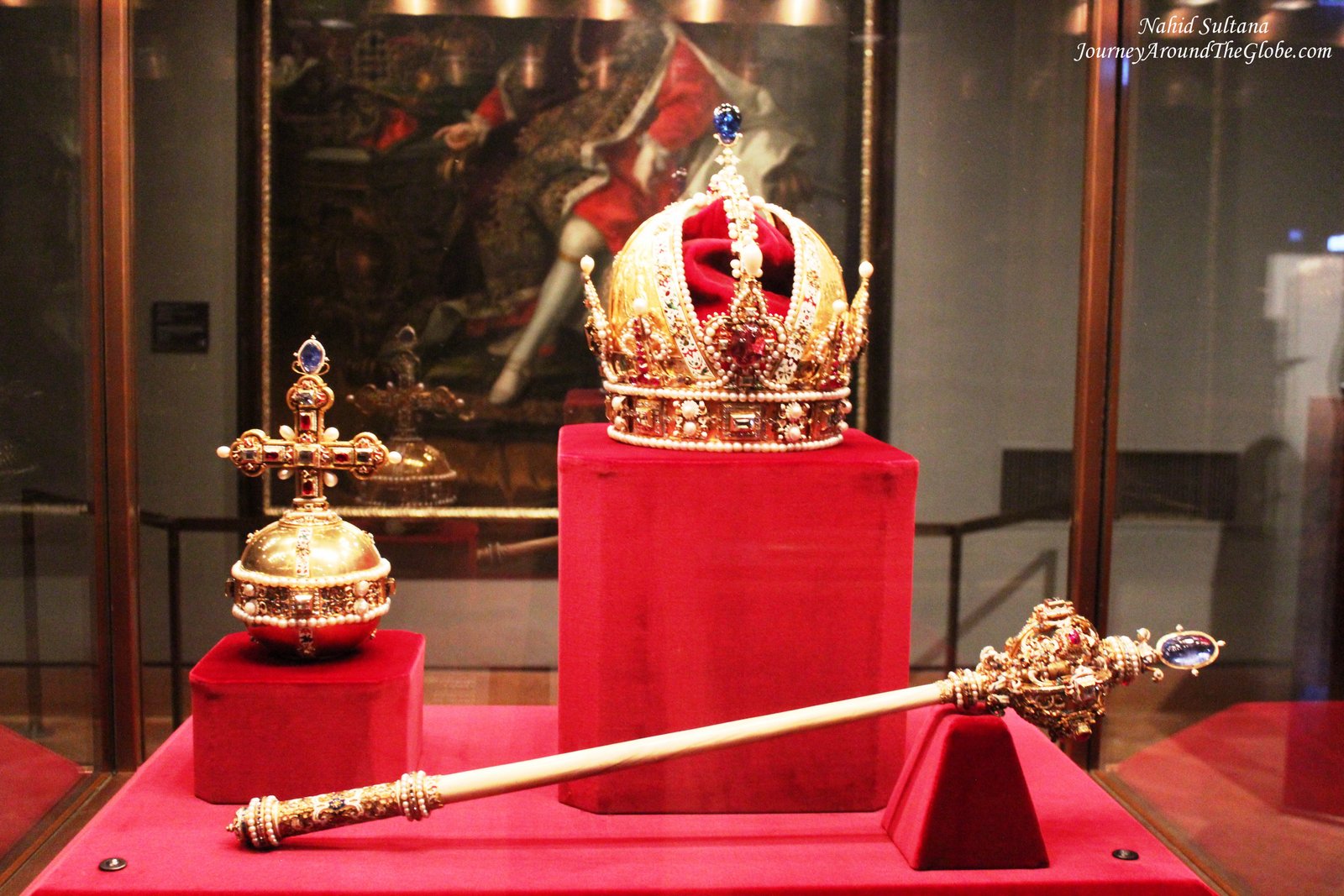
9) TREASURY MUSEUM: Next we came back to old town again and stopped at Treasury Museum. This is a royal treasury chamber where you can see some expensive imperial valuables including Hapsburg crown, scepter, sword, hand embroidered royal robes and capes, jewelries, religious items, and gold-plated serving dishes. May be the most significant of all is the gold royal crown decorated with many different precious stones and jewels.
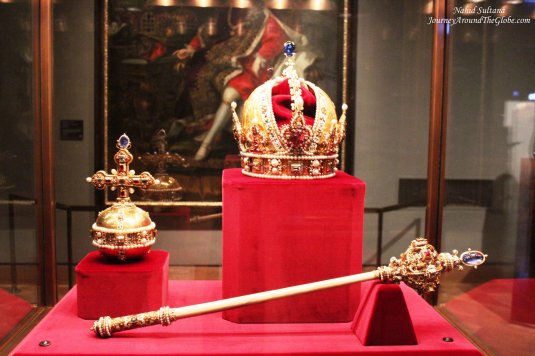
- Royal Crown and scepter in Treasure Museum of Vienna, Austria
It was 12 euros per adult and free for children under 18 years. Museum is open every day from 9am – 5:30pm except Tuesdays and last admission is at 5pm. It took us about an hour.
10) ST. STEPHEN’S DOME or STEPHANSDOM: This was our last stop of day 1 in Vienna. This is the most beautiful church in Vienna and one of the tallest churches in the world.

- St. Stephens Dome in Vienna, Austria
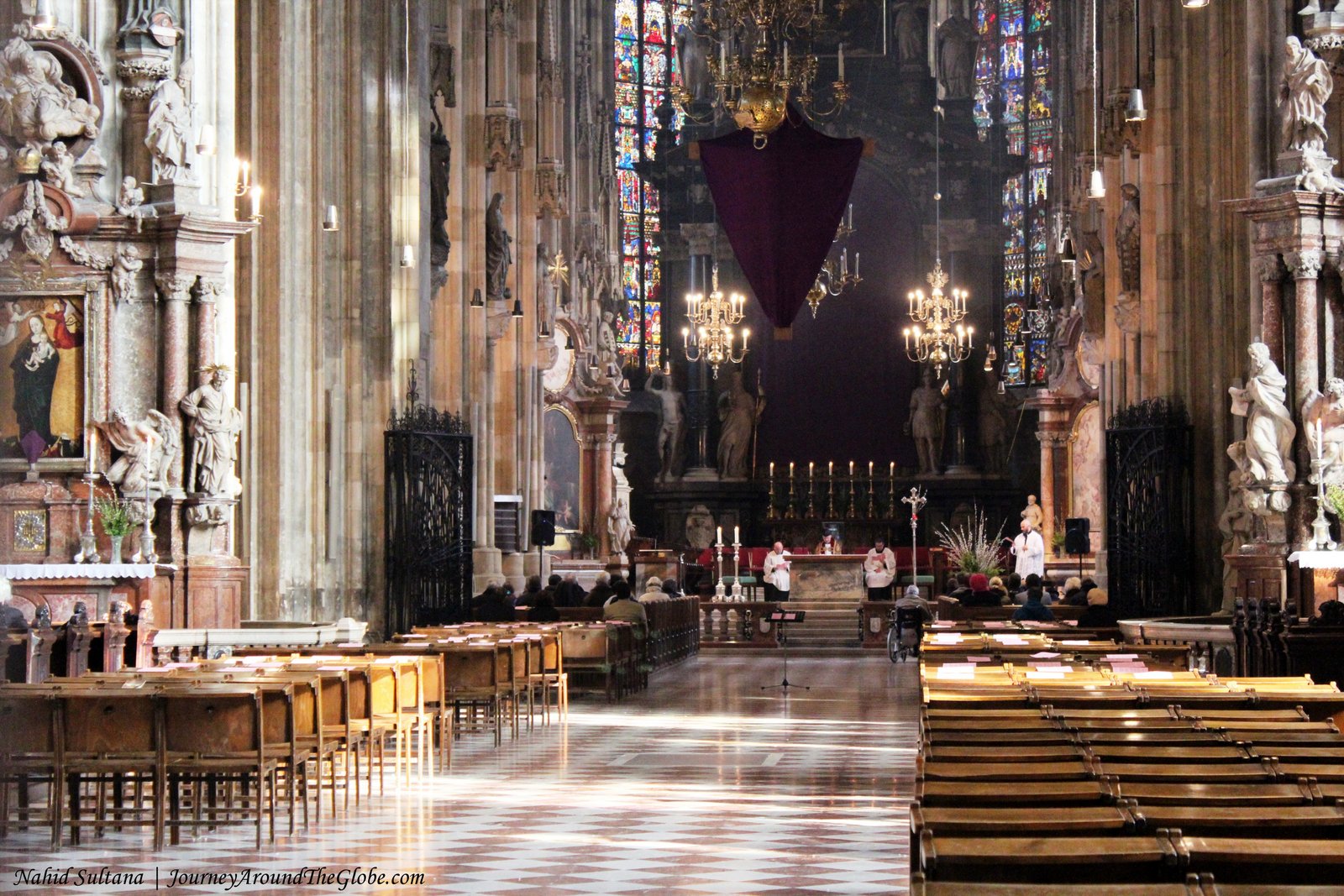
The dome is also located in old town, a bit further away from Hofburg Palace. The square in front of the church, Stephansplatz, is big and energetic place to hang out. It was very crowded but loved its lively atmosphere. Stephansplatz is packed with lots of shops, cafes, restaurants, and old historic buildings.
11) SCHOENBRUNN PALACE: This is one of the major touristic attractions of Vienna and you shouldn’t leave the city without visiting this place. The palace kind of reminded me of Versailles Palace in France. It is one of the most important cultural monuments in Austria and is a part of UNESCO World Heritage site.
The palace was a gift from Emperor Francis I to Austro-Hungarian queen Maria Theresa on their wedding. It was their preferred summer residence while Hofburg Palace served as their winter residence.

- Back of Schoenbrunn Palace and its garden in Vienna, Austria
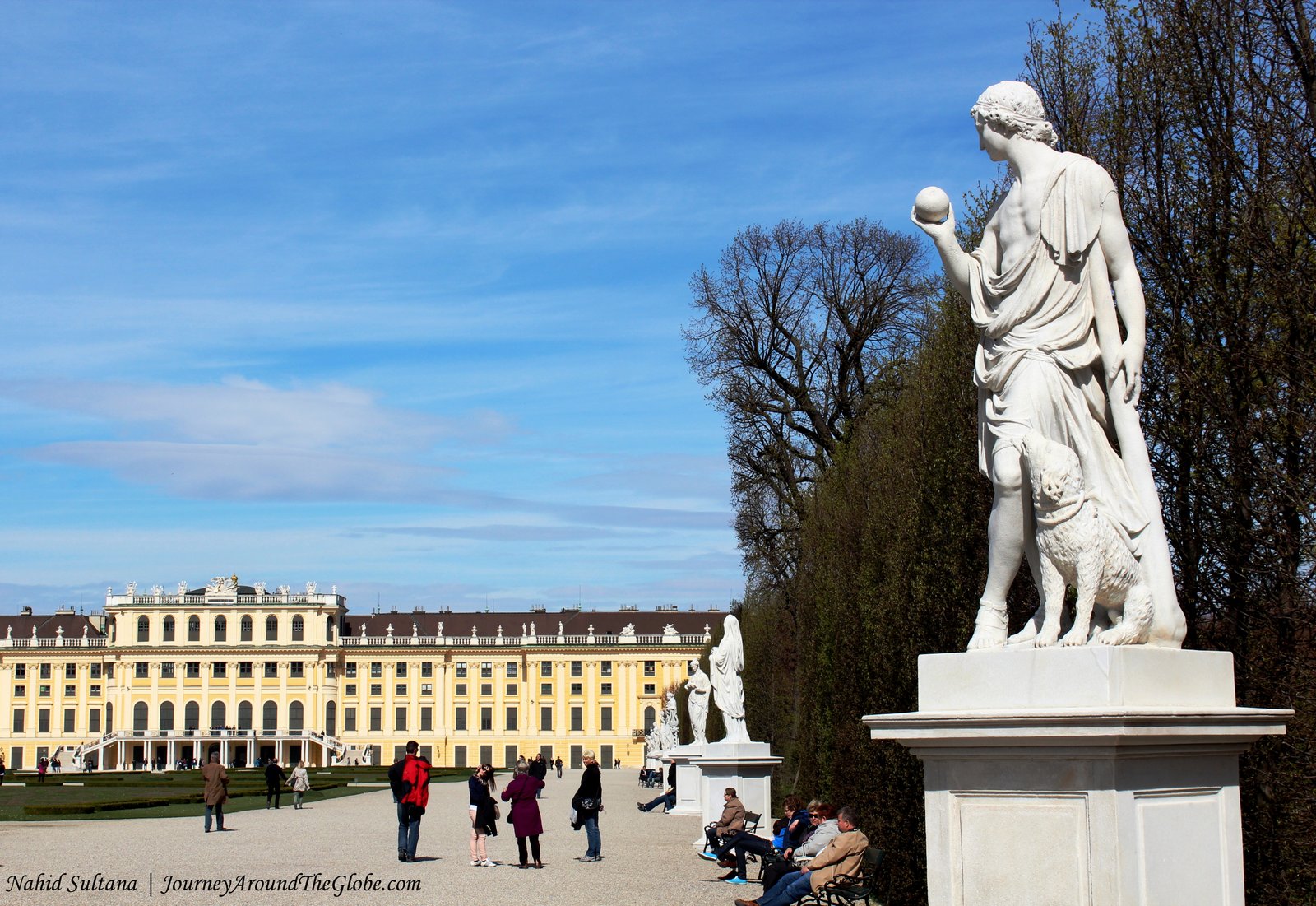
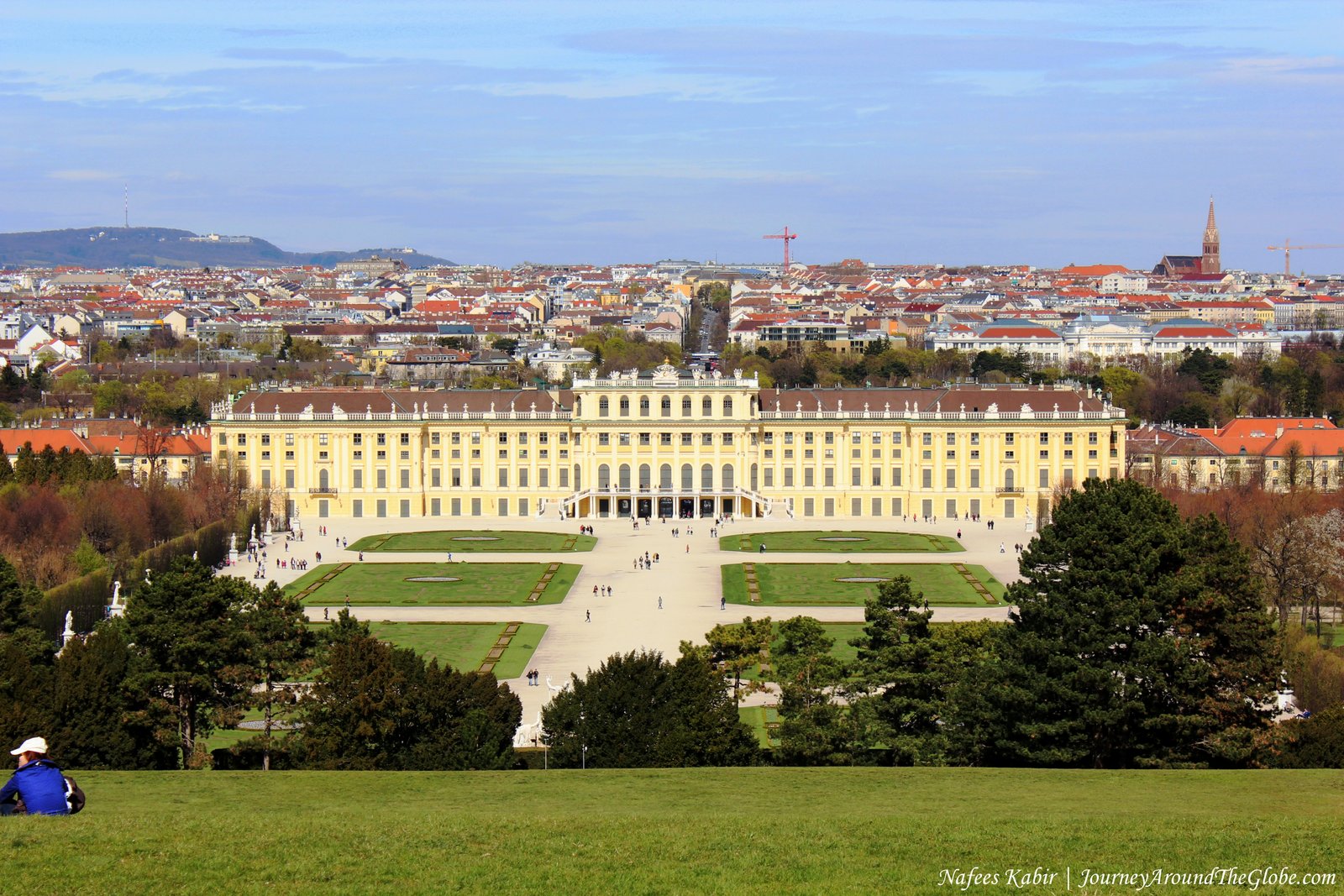
There are tons of things to do in Schoenbrunn Palace. You can spend a whole day here and will leave with more things to check out. After visiting inside the palace rooms (photos weren’t allowed) we came out to the garden. I am sure the garden looks better in summer, but even in April, it was nice walking on the ground towards the panoramic terrace. Privy Garden or Romantic Arbor is decorated with many sculptures and an impressive fountain on the other side. If you keep going up passing the fountain, you will see Gloriette or Panorama Terrace. The terrace is a bit elevated and view from there is stunning. You can see almost the whole of Vienna and the palace complex. There is an artificial lake in between the terrace and garden.

- Stunning view of Scheonbrunn Palace and Vienna from Panorama Terrace
Another section of Privy Garden includes a big part for the kids. We spent some time in the park, maze, and water fountain playgrounds with our girls. Finally, a palace which was kids-friendly! There is also a children’s museum inside the palace complex. Family ticket to the children museum is 20 euros for 2 adults and 3 kids.
It took us about half an hour from the old town Vienna to reach Schoenbrunn Palace. We had our own car but there are buses that leave daily from Innere Stadt. For private cars, a big parking ground is available very close to the palace. The palace offers different types of tours. “Classic Plus” covers everything except the zoo and takes about 4 hours. A self-guided audio tour is included in the price. With this tour you get to see the apartments which depicts life-style of the royals, garden, and its big complex.
Share this:

Tournai, Belgium
TOURNAI, BELGIUM: Interestingly, Tournai (or “Doornik” in Dutch) is a French-speaking Flemish town of Belgium. Meaning it is in Wallon region (French part) with lots of Flanders (Dutch) influences. This is in the Province of Hainaut which is very scenic and traditionally, rich in culture and heritage. Situated by River Scheldt, this is considered as one of the oldest cities in Belgium. It was badly damaged during WWII. Since then the city authority has been restoring the city to its old glory. If you are in Brussels and want to visit a less touristy city of Belgium, Tournai makes a perfect day-trip from the capital of Europe.

- Flemish style buildings in the old town of Tournai, Belgium
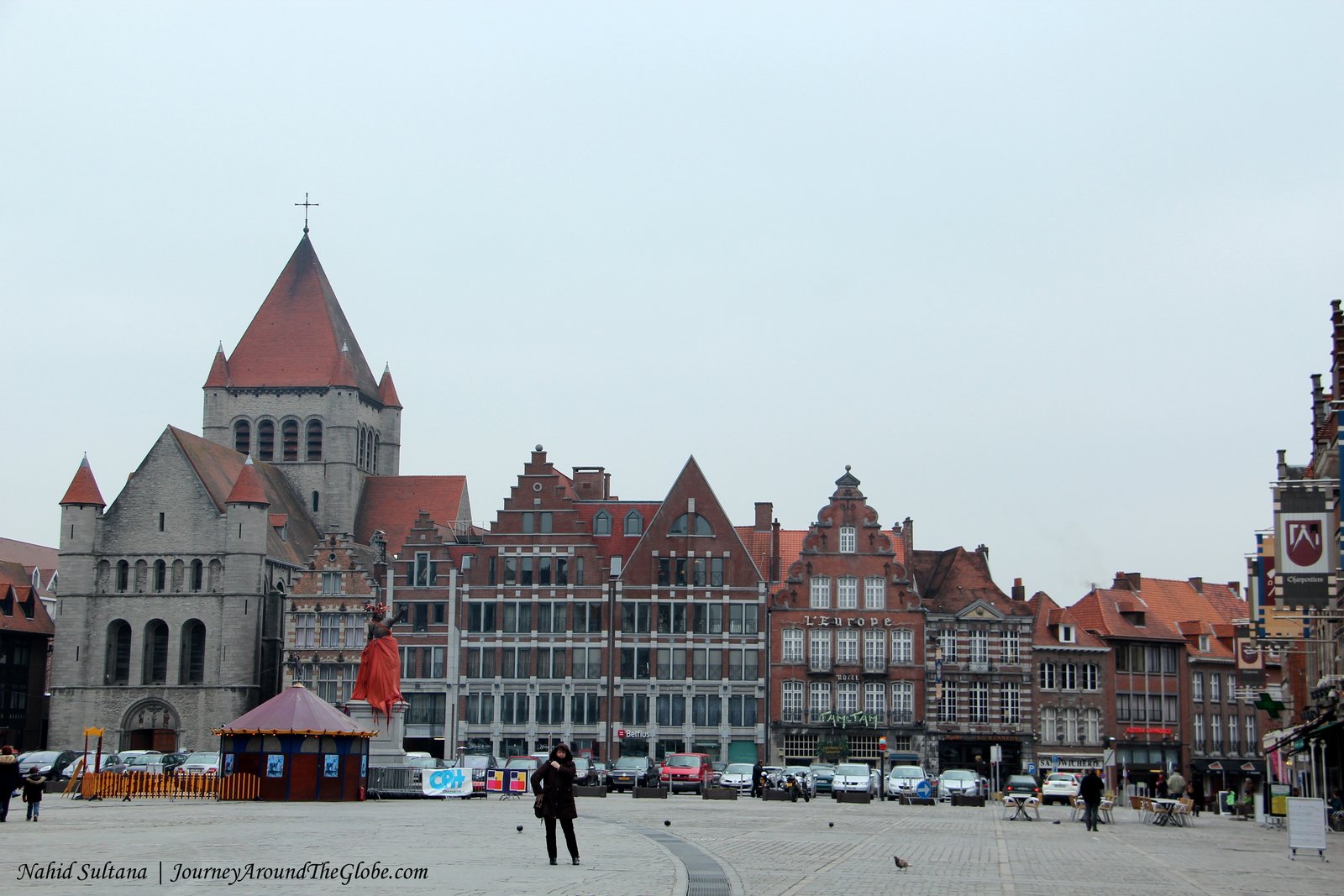
This was the religious capital of Flanders many centuries ago. Tournai marble/limestone is well-known in this region and was once used for sculpted items, especially in churches.
TIME of TRAVEL: We visited Tournai in March of 2013. It was a cold Saturday in Belgium. Everything was empty in Grand Place and other parts of Tournai.

- An empty square in Tournai, Belgium
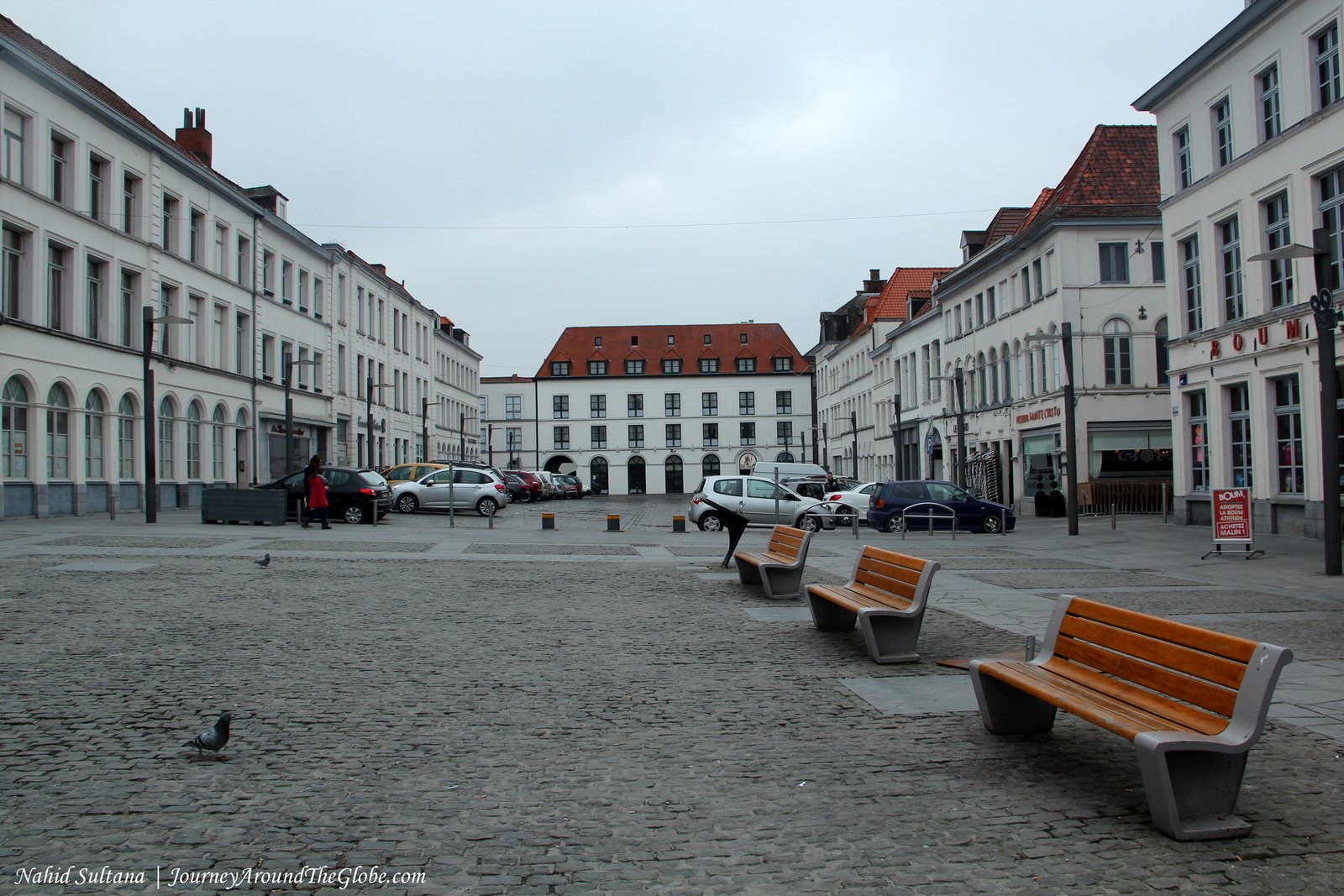
EATING and SHOPPING: Old town, especially Grand Place had some restaurants, cafés, and quick food places. I can’t even remember where we had lunch or if we had lunch in Tournai at all.
Historically, tapestries and draperies of Tournai are very famous and belong to the great Flemish school of tapestry. Being a Belgian city, you will find many chocolates and waffle stores by default. Grand Place had plenty of other stores for shopping too.
PLACES WE’VE VISITED: We literally spent only couple hours in Tournai. There are lots of things to do here. Since the weather wasn’t very pleasant, we kind of hurried and took a crush tour thru the city. Although we didn’t visit them, two of the oldest private houses in Europe (from the 12th century) are located in Tournai. If you can manage, visit the old city gates, museums, and Pont-des-Trous…a 13th century bridge on River Scheldt.
1) GRAND PLACE and CLOTH HALL: Grand Place is main square or heart of Tournai, like any other Belgian cities. It has several old buildings from the 15th and 16th century. There was a big fountain in the middle which was closed due to chilly weather outside (?).
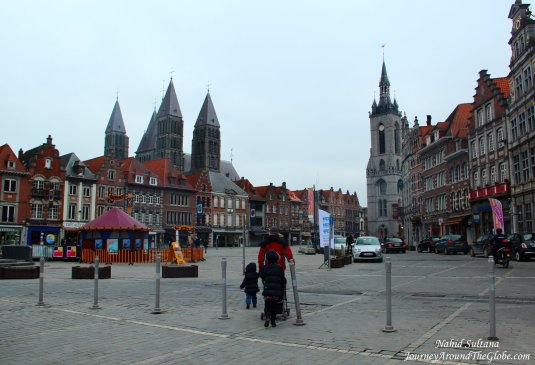
- Grand Place of Tournai, Belgium

2) SAINT QUETIN CHURCH: This is an old and beautiful church in Grand Place. The building caught our eyes and entrance was free to go inside, so wanted to check it out. It is a nice big church, and you can tell it has been standing there for a few centuries.
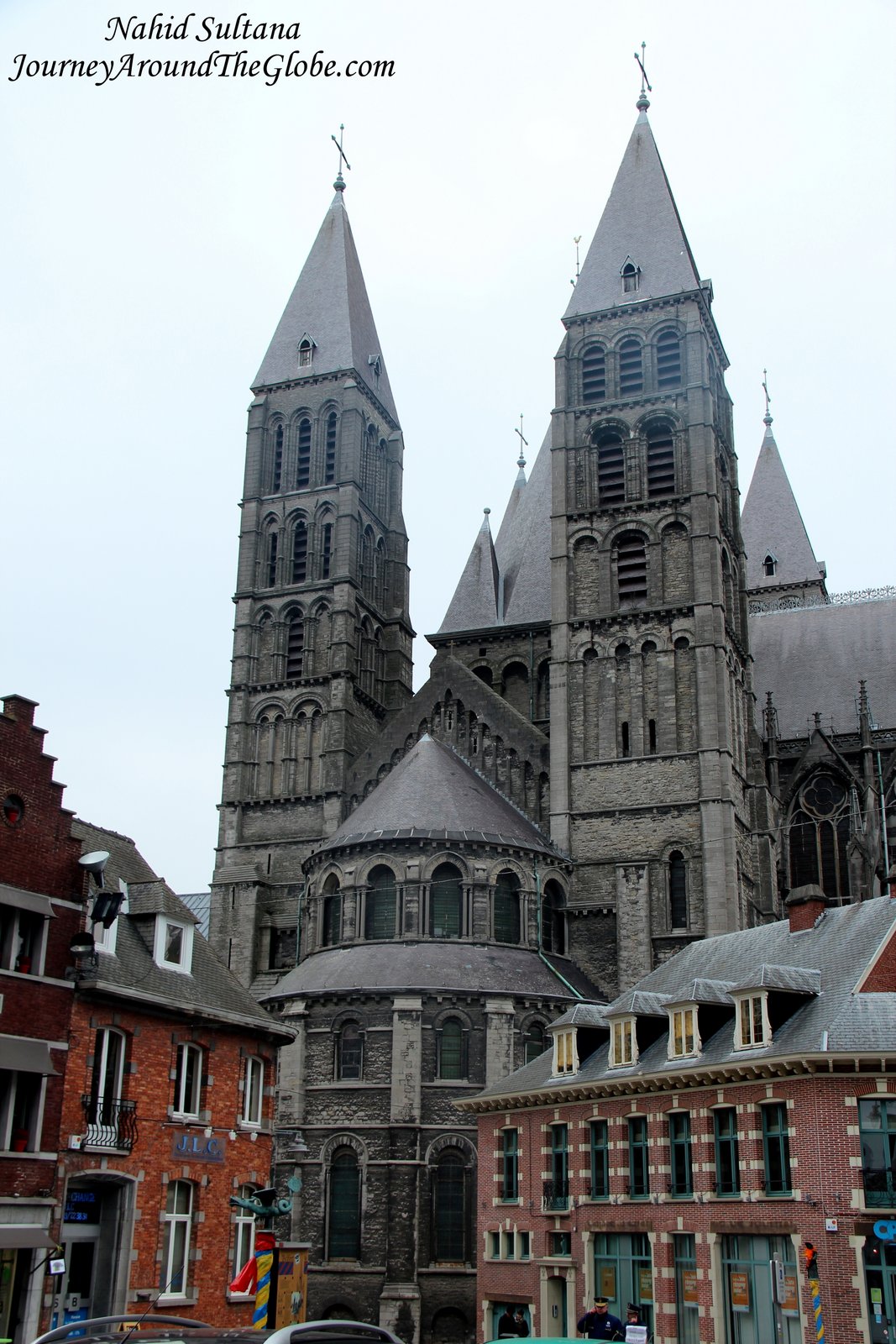
3) THE CATHEDRAL of NOTRE DAME de TOURNAI: This Romanesque and Gothic style cathedral is a UNESCO World Heritage Site of Tournai. The original cathedral on this spot was built somewhere around the 5th century. The current look of the cathedral is from the 12th century. The nave is in the Romanesque style and inspired by Norman churches. Later, the vaulting of the transept and the construction of the chancel were inspired by the Gothic period, with very high walls. The Gothic choir of this cathedral is a Flemish art element, very typical of this region.

- The Cathedral of Notre Dame de Tournai
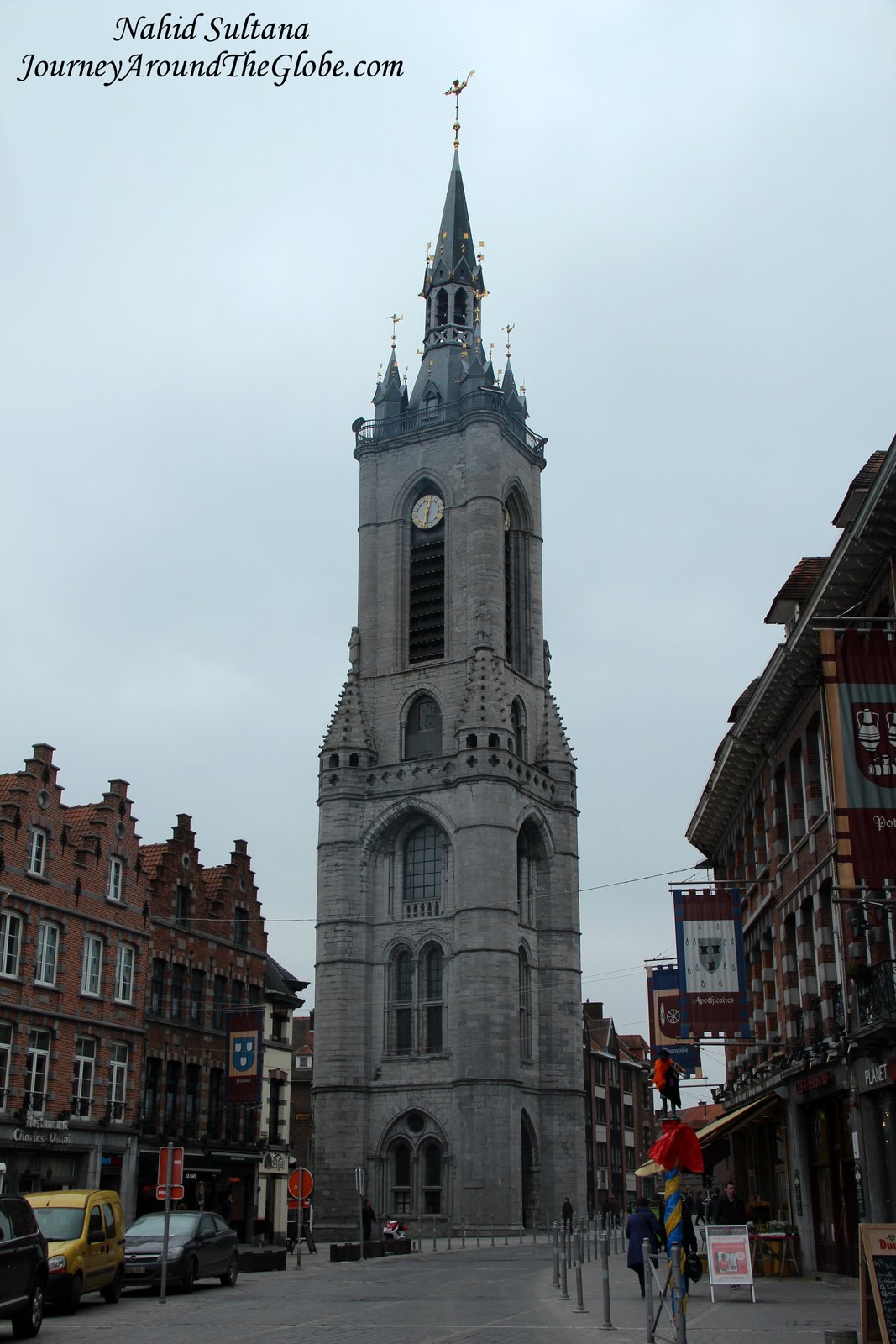
4) BELFRY of TOURNAI: This is the oldest belfry in Belgium and a UNESCO World Heritage Site. The construction of Tournai Bell Tower started from 1188. The spire is crowned by a dragon and the turrets are topped by statues of soldiers defending the city. The tower is 70 meters high and there are 257 steps leading to the top. It was closed and we couldn’t go up to the top.

- Tournai Belfry (Bell Tower) from the 12th century
5) LE CHATEAU de BELOEIL: After we were done with Tournai and heading home, we took saw a sign on the road side for this castle or château. Feeling curious, both my husband and I were curious to see this castle. After lots of twisting and turnings, we finally reached Le Chateau de Boleil. If I am not mistaking this small town in Wallonia is called Beloeil. The château sits on a majestic pond surrounded by beautiful landscape. The castle belonged to the princes “de Ligne” dynasty is one of thirty generations of lords, vice-rois, ambassadors, senators, warlords, writers, aviators, settled in Beloeil since 1394.

- Le Chateau de Beloeil in Belgium
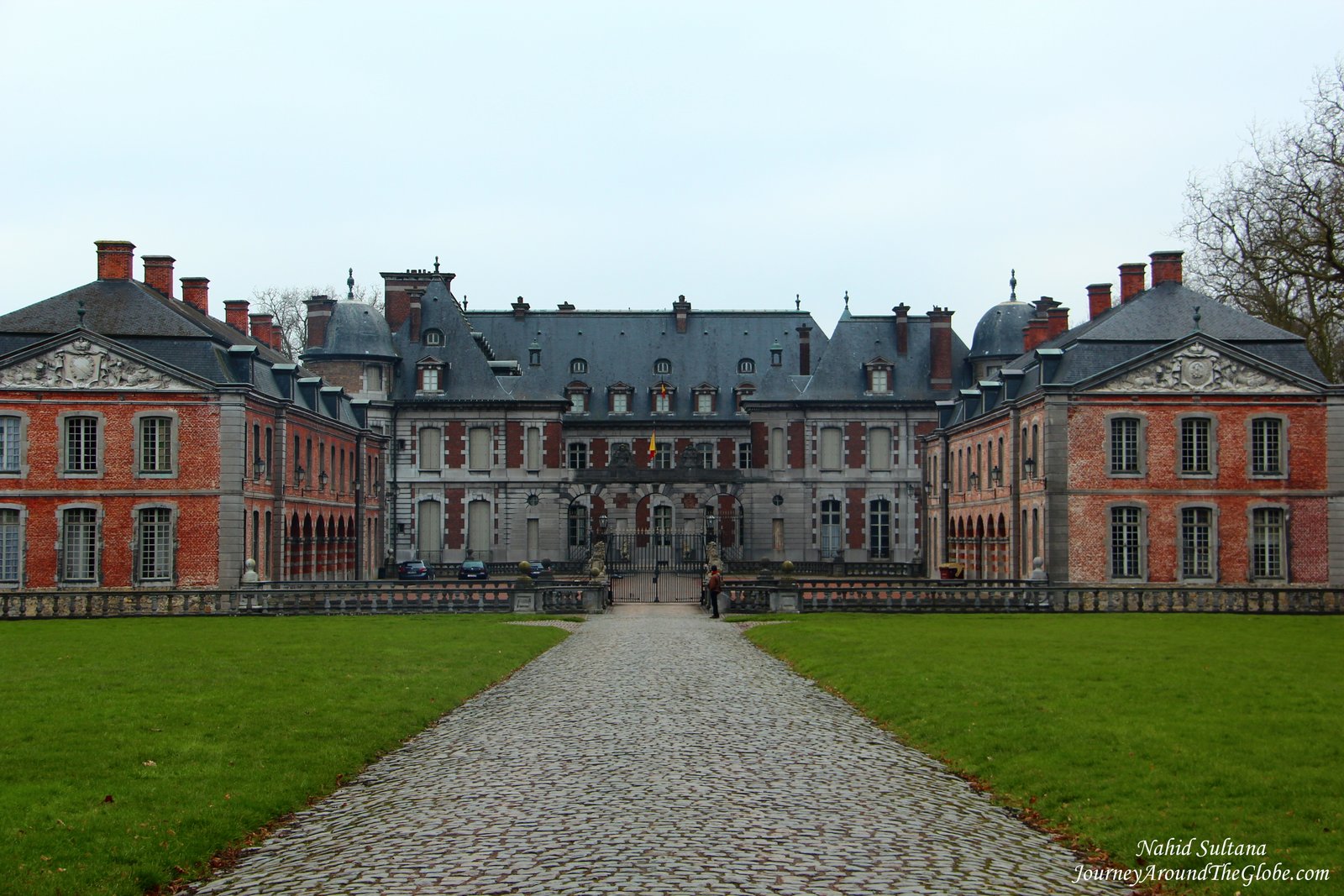
We didn’t go inside the castle and not sure if it can be visited at all. But it holds some fine paintings, furniture, and dishes dating essentially from the 14th century. Library of this castle is famous of housing some 20,000 old leather books.
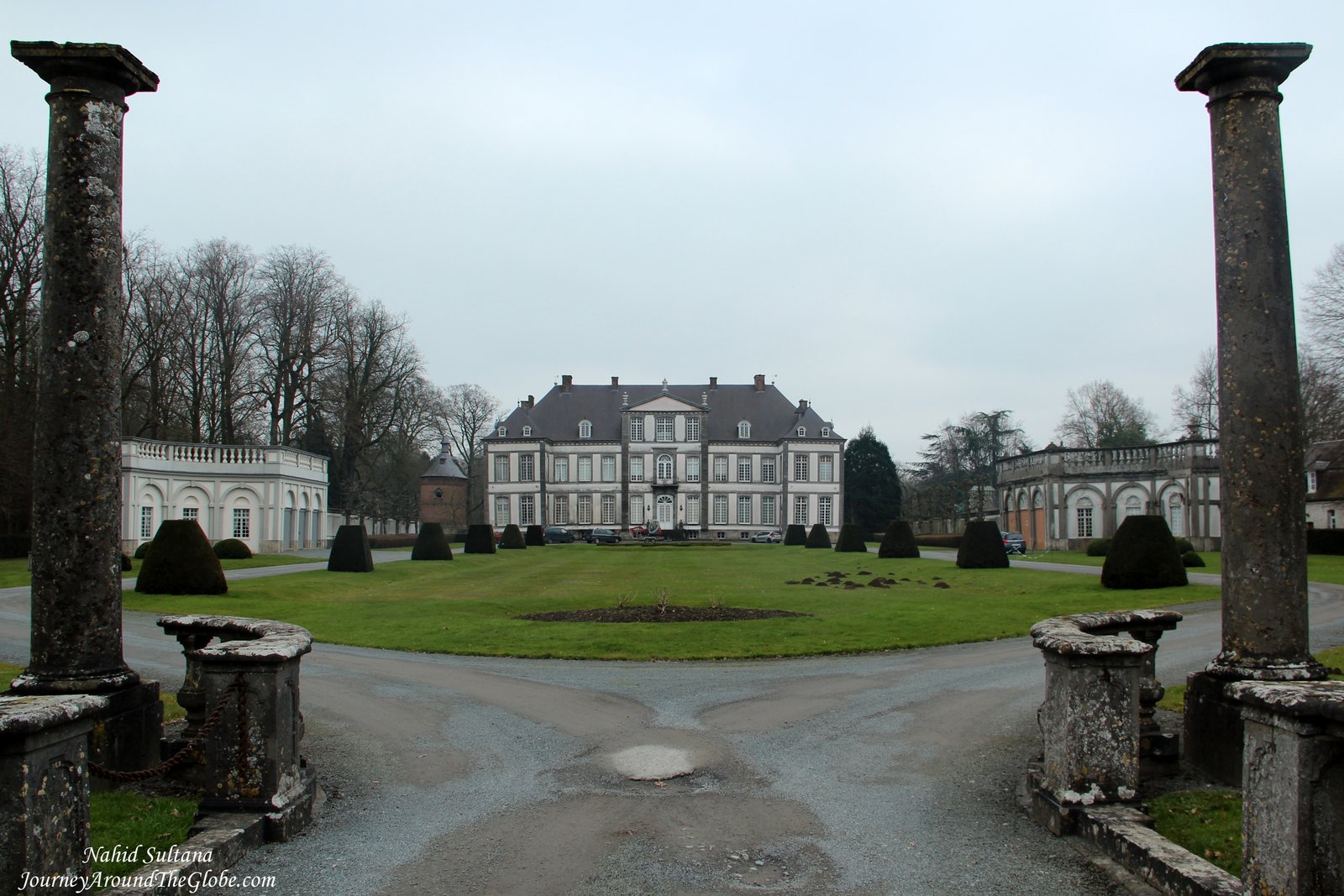
6) CHATEAU d’ATTRE: This was another château or castle we passed by while heading back home from Chateau de Beloeil. This was more like a big mansion in a beautiful setting. From the outside information board, it looked like that the castle and its park are open to visitors.

- Chateau d’Attre in Wallonia, the French-speaking region of Belgium
Share this:

A day in Hannover, Germany
HANNOVER, GERMANY: Hannover was one of the hardest hit cities during WWII. The city was left with only few historic landmarks after the war. It’s not a typical European city with pretty centuries-old buildings. Hannover has an energetic and thriving city center. The city is very modern and a good place for shopping or spend a day.
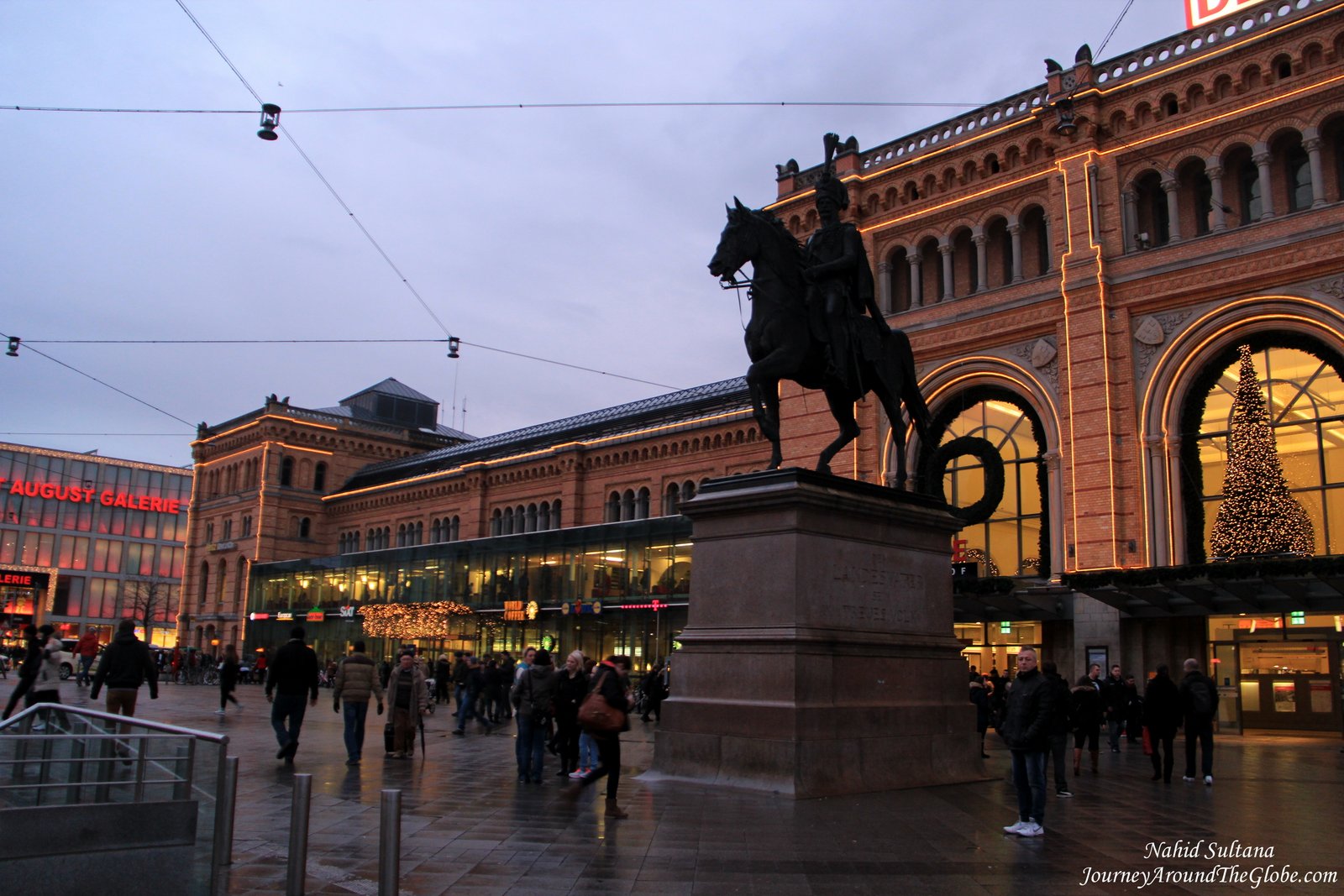
- Main train station or Hauptabahnof of Hannover, Germany
If you like to get to know Hannover on your own, there is a Red Thread – your personal tour guide. It’s a 4,200 meter long line on the sidewalk by the City of Hannover and leads you to the architectural, historical, and entertaining attractions. Accompanying literature and map can be obtained from the Tourist Information Hannover. We followed this Red Thread to discover Hannover…it was simple and doable on foot. It touches all the main spots of this city.
TIME of TRAVEL: So, after about 12 days of our winter road trip during Christmas holiday in 2013 comes to an end with a visit to Hannover, Germany. We drove from Brussels to Fussen, to Innsbruck, then Salzburg, to Prague, to Dresden, then Leipzig, and then finally to Hannover. It was cold here which was ok but then it started to drizzle towards the end of the day. At least it wasn’t snowing…

- Christmas decoration in Kropcke, the heart of Hannover, Germany
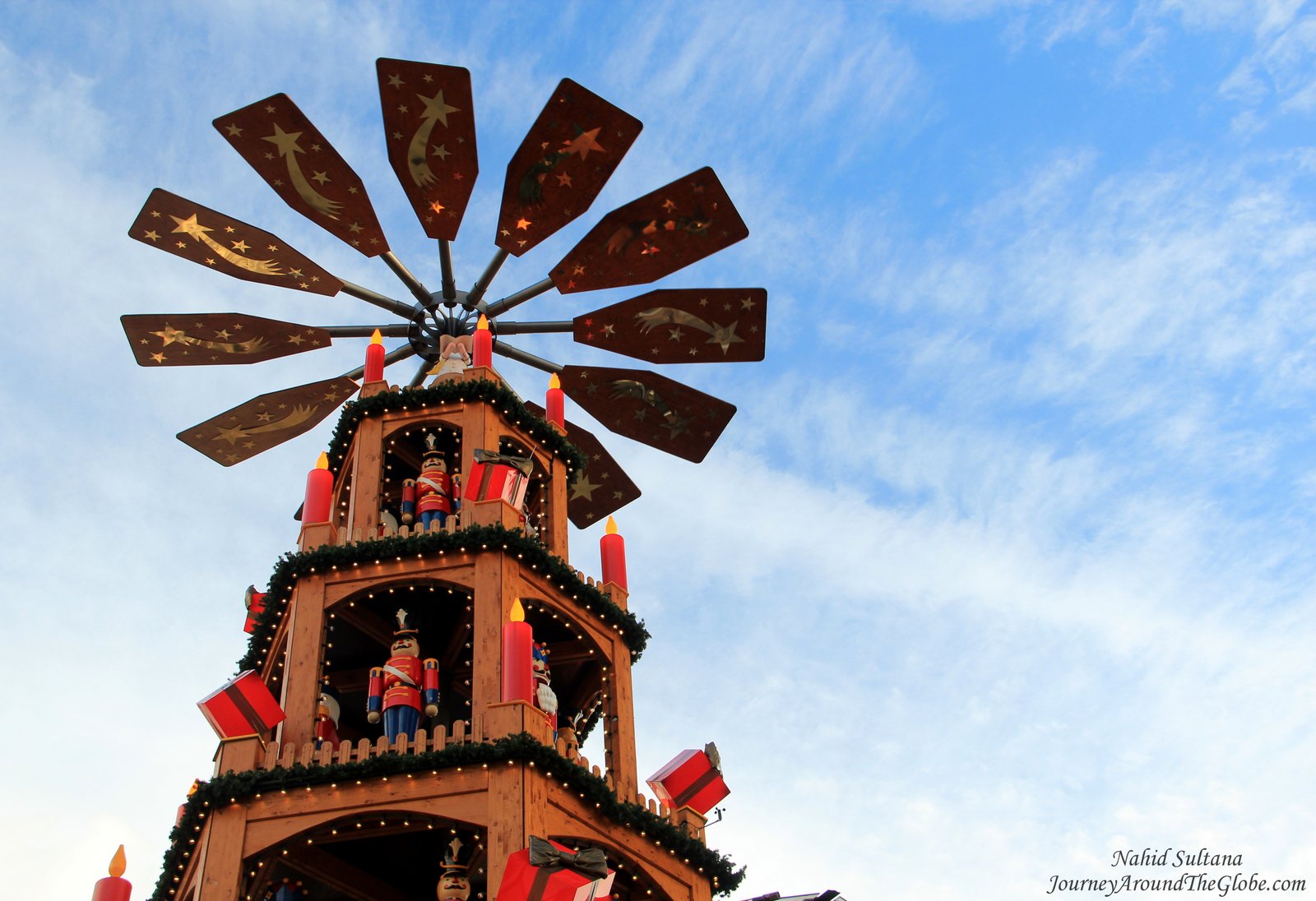
OUR HOTEL: This hotel we stayed in Hannover, Novotel, was a little far from the city center. We walked at least 20 minutes to get to the heart of Hannover. The walking was nice because we went through some local shops, passed few streets, and saw other parts of the city. Novotel is a popular hotel chain in Europe (not sure about other continents). They didn’t have breakfast but had free Wi-Fi. The best part was that there was an awesome Italian restaurant only a block away from our hotel where we had dinner twice.
EATING and SHOPPING: Kropcke and its surrounding areas are probably the best place to have meal in Hannover. It’s a crowded place with tons of choices to eat. You can get from street food to luxurious and fancy restaurants all in this pedestrian zone.
Again whole city center of Hannover is a marvelous place for shopping with many including some upscale brand stores and local boutique stores. Take a stroll through the elegant street of Georgestrasse, the top shopping destination for fine clothes and accessories.
PLACES WE’VE VISITED: We had a whole day to spend in Hannover. Other than the following places, Hannover’s main train station, Hauptbahnof is something to take a look at. It was built in 1879 and is known as Germany’s finest station. But wait, it’s not just any other train stations, it’s an outstanding shopping arcade too with lots of restaurants and snack-bars. We were there to take a short-ride back to our hotel from the city center at night…and it looked gorgeous with all the Christmas lighting.
Hannover also has lots of museums, like Hannover State Museum, Historic Museum, as well as many modern architecture to please your eyes.
1) KROPCKE: This is the historic city center and a meeting point for both young and old. This large pedestrian area in the heart of Hannover is a major shopping spot. You won’t have hard time choosing a restaurant here because there are tons of them.
2) OLD TOWN or ALSTADT: This is a delightful area with numerous half-timbered houses and romantic spots.

- Some half-timbered houses in the old town of Hannover, Germany
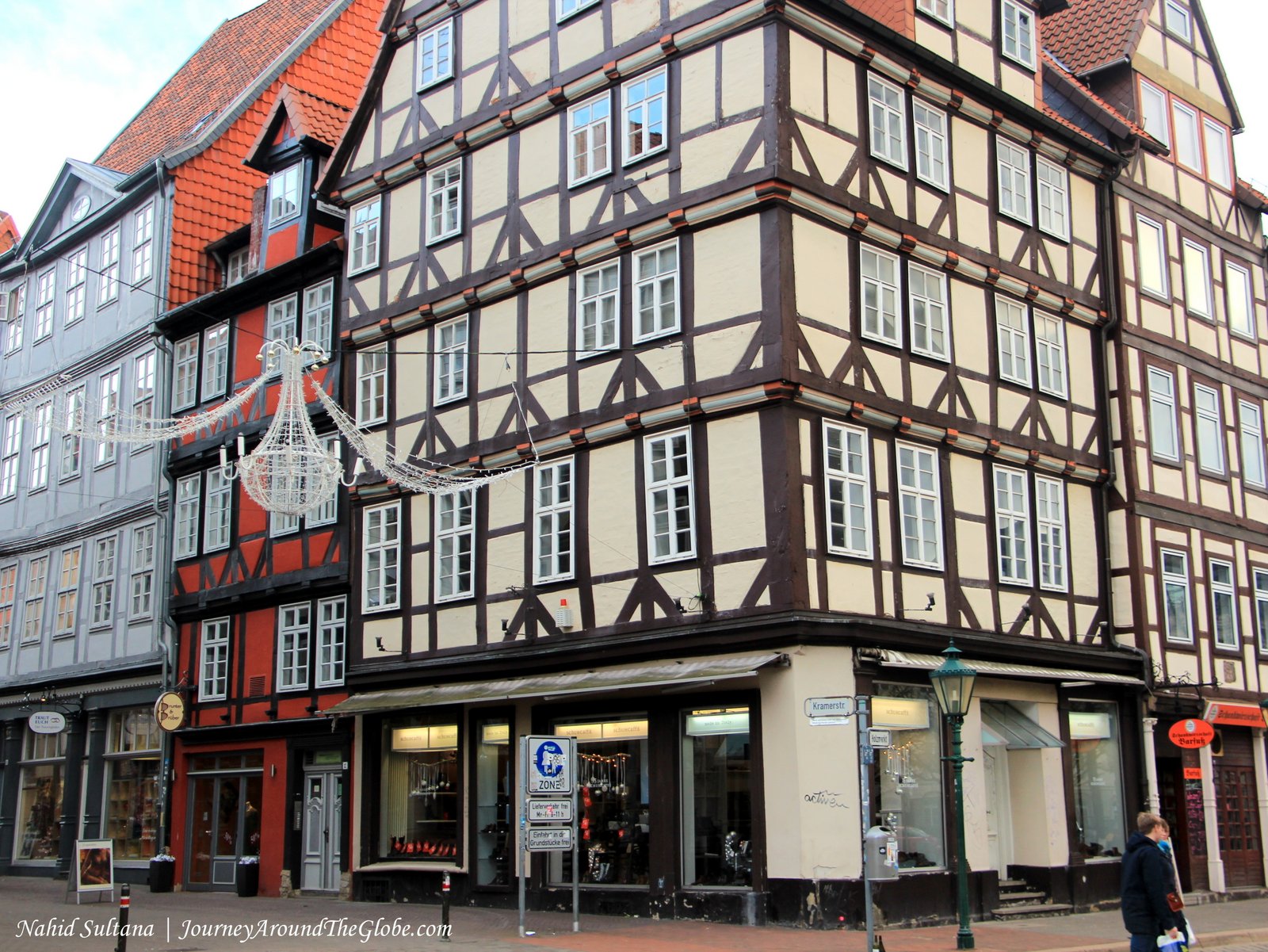
3) MARKET CHURCH: Built in 1359, this is a splendid example of German Brick Gothic style. It is an old building with simple altar and simple decorations. The organ looked newer compared to the other items in the church.
4) LEINE CASTLE: We passed by this old castle in the middle of the city. Don’t really know much of the history behind it. River Leine cuts thru the city here in front of this castle. It was in our Red Thread guide, but didn’t go inside.

- Leine Castle and its surrounding in Hannover, Germany
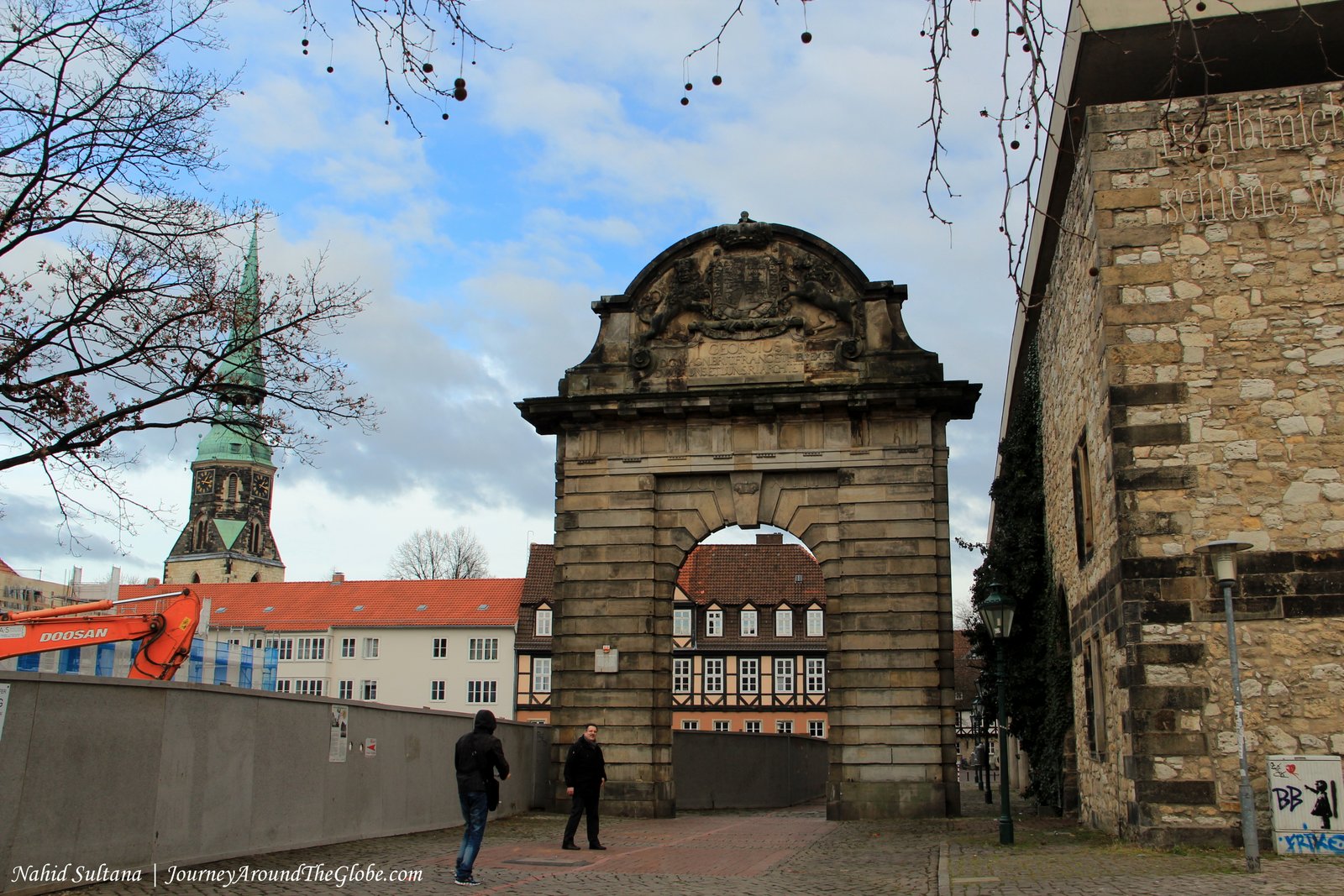
5) MUSEUM AUGUST KESTNER: The museum is named after August Kestner (1777 – 1853) who collected a considerable number of Egyptian and Greco-Roman craftwork as well as other art objects. His nephew inherited the collection with the proviso that it has to be presented to his native City of Hannover.

- August Kestner Museum in Hannover, Germany
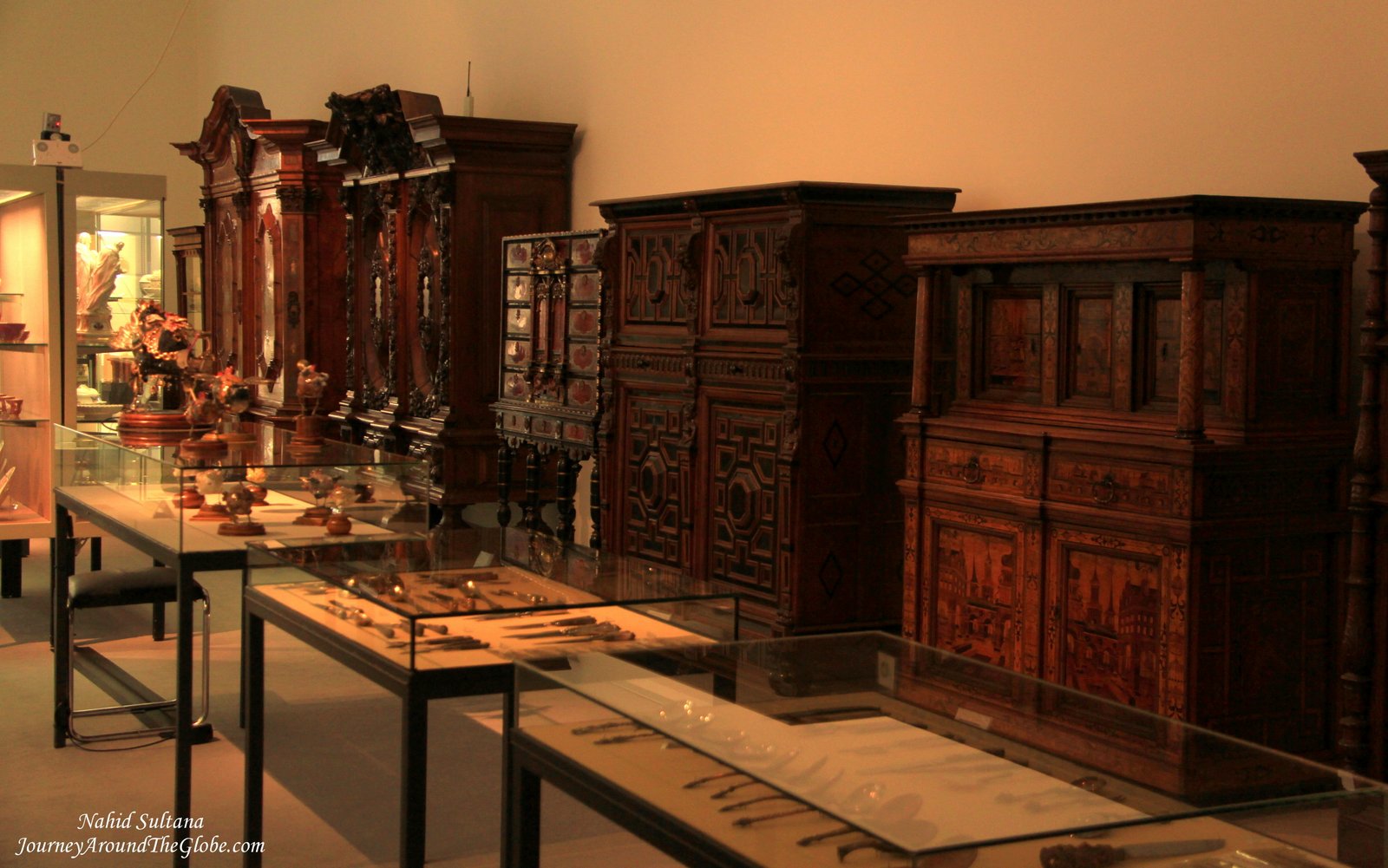
This is an interesting and one of a kind museum. Don’t miss collections from Egypt, as well as exhibits from the classical antiquity, history of design, and Coin Cabinet. Loved its antique and contemporary collections of artistic objects.
There is a cafeteria and a shop inside the museum. It has three levels and took us about little more than an hour to look around. It’s located beside New Town Hall of Hannover. Visitors can enter free on every Friday.
6) NEW CITY HALL: This is one attractive building in this city from the early 1900s. With a striking domed tower, this is a magnificent edifice dating from the Wilhelminian period. Inside the city hall is as beautiful as its front façade. We only stayed there for few minutes. Other than the building itself, something to see here is the different phases and faces of Hannover throughout its history. Miniature model city depictions show Hannover in the middle age, before and after WWII, and present time (1689, 1939, 1945, and 2000). You can see how Hannover got its present look…it’s fascinating.
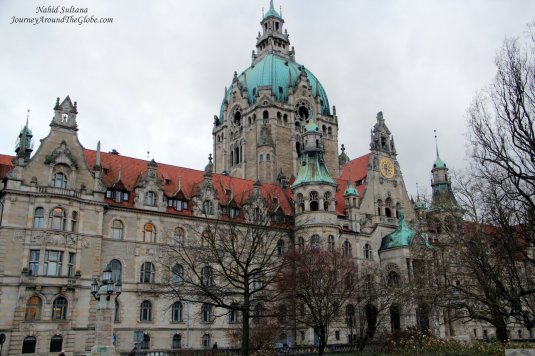
- Hannover’s New City Hall
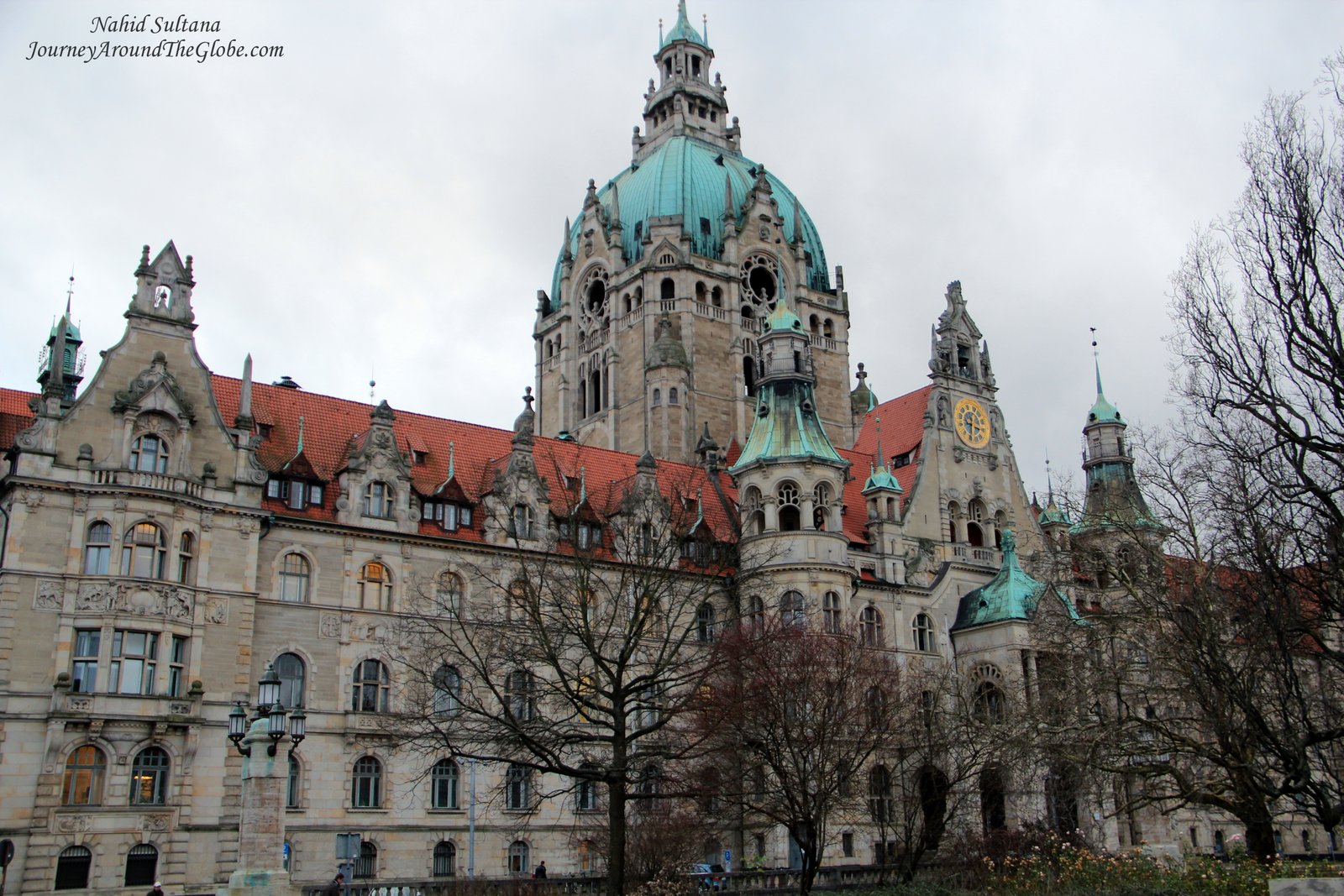
We didn’t take any tour here, although it’s available. There is no fee just to go in and check out its interior. You can visit its dome for a panoramic view with a little fee.
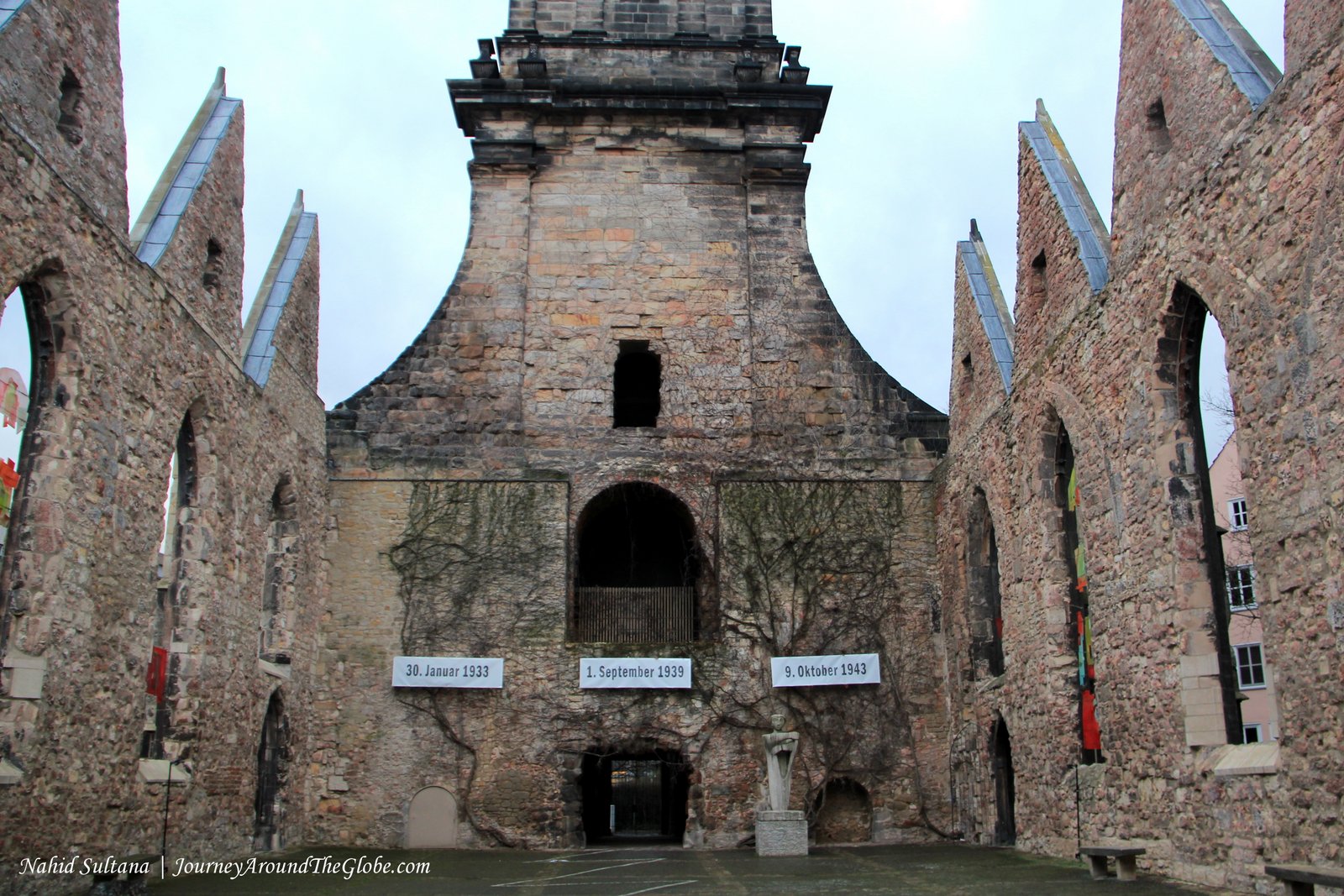
7) AEGIDIEN CHURCH: This is a 14th century church which was destroyed in WWII. They didn’t reconstruct this church and kept it as a memorial to the victims of war. There is a Hiroshima Peace Bell near where the old altar used to be. Only the skeleton of this church still stands to remind us all the damages a war can do.

- Ruins of Aegidien Church in Hannover, Germany
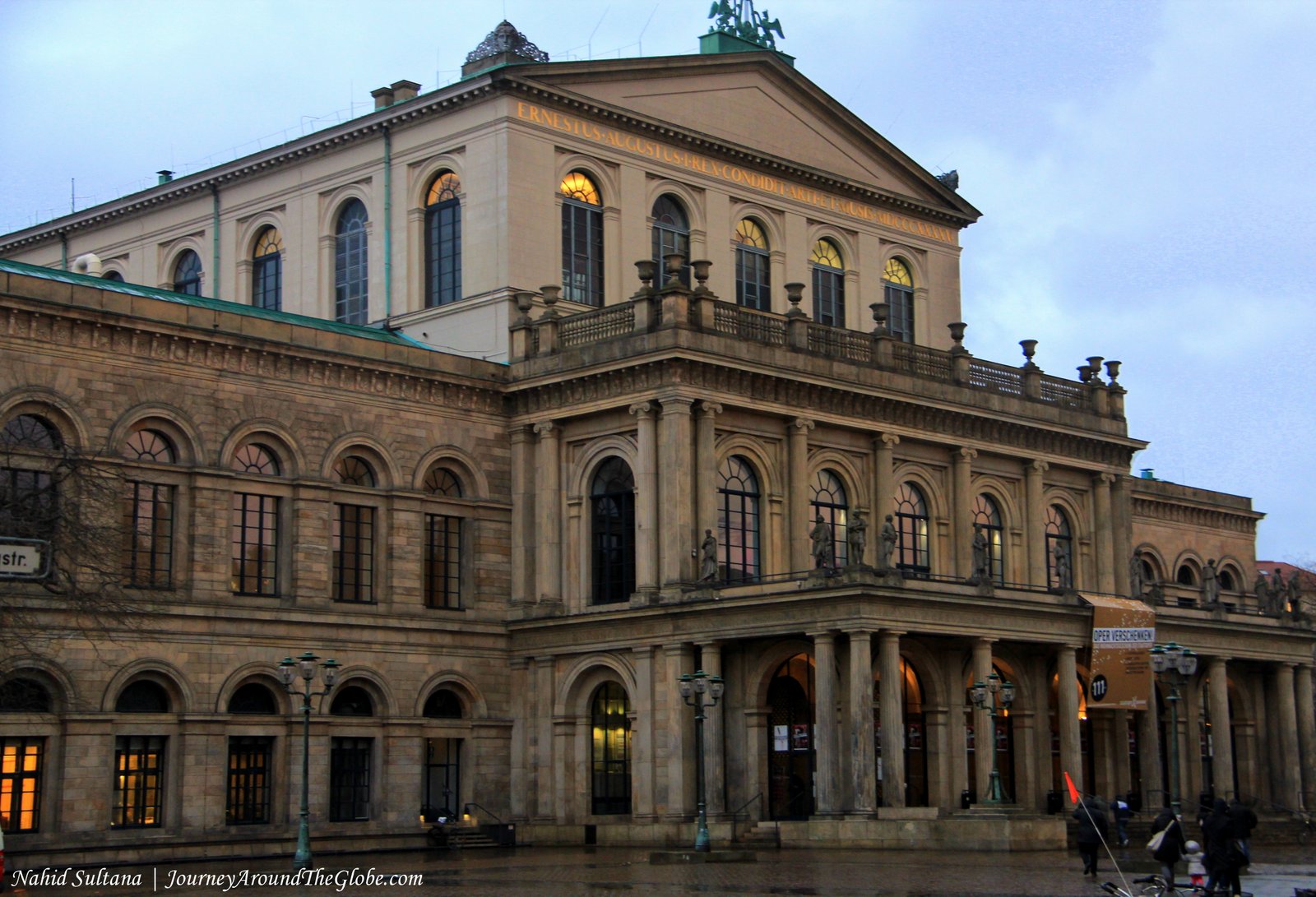
8) HANNOVER OPERA: This is another fantastic architecture of Hannover. It was built in 1852 and was ranked by the opera guide published in London as one of the ten best in the world.
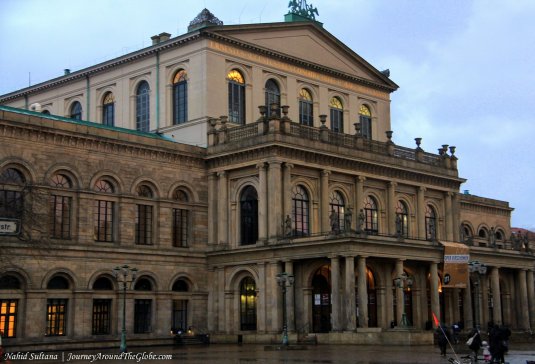
- Hannover Opera House in Germany
Share this:

Bach’s Birthplace – Leipzig, Germany
LEIPZIG, GERMANY: Leipzig is one of the largest cities of Saxony in Germany. Honestly, I wasn’t that excited about coming here, especially after visiting cities like Salzburg and Prague in this trip. Yes, of course, the city is ultra-modern and its city center is an energetic and vibrant place to hang out. But when my husband told me that Leipzig is the city where classical music composer Bach was born, my enthusiasm came back right away. We saw Beethoven’s birthplace in Bonn, Germany few months ago and Mozart’s birthplace few years ago (also again in this trip in Salzburg, Austria). Visiting Bach’s birthplace was almost like an obligation to me.
- Walking around the city center of Leipzig in Germany
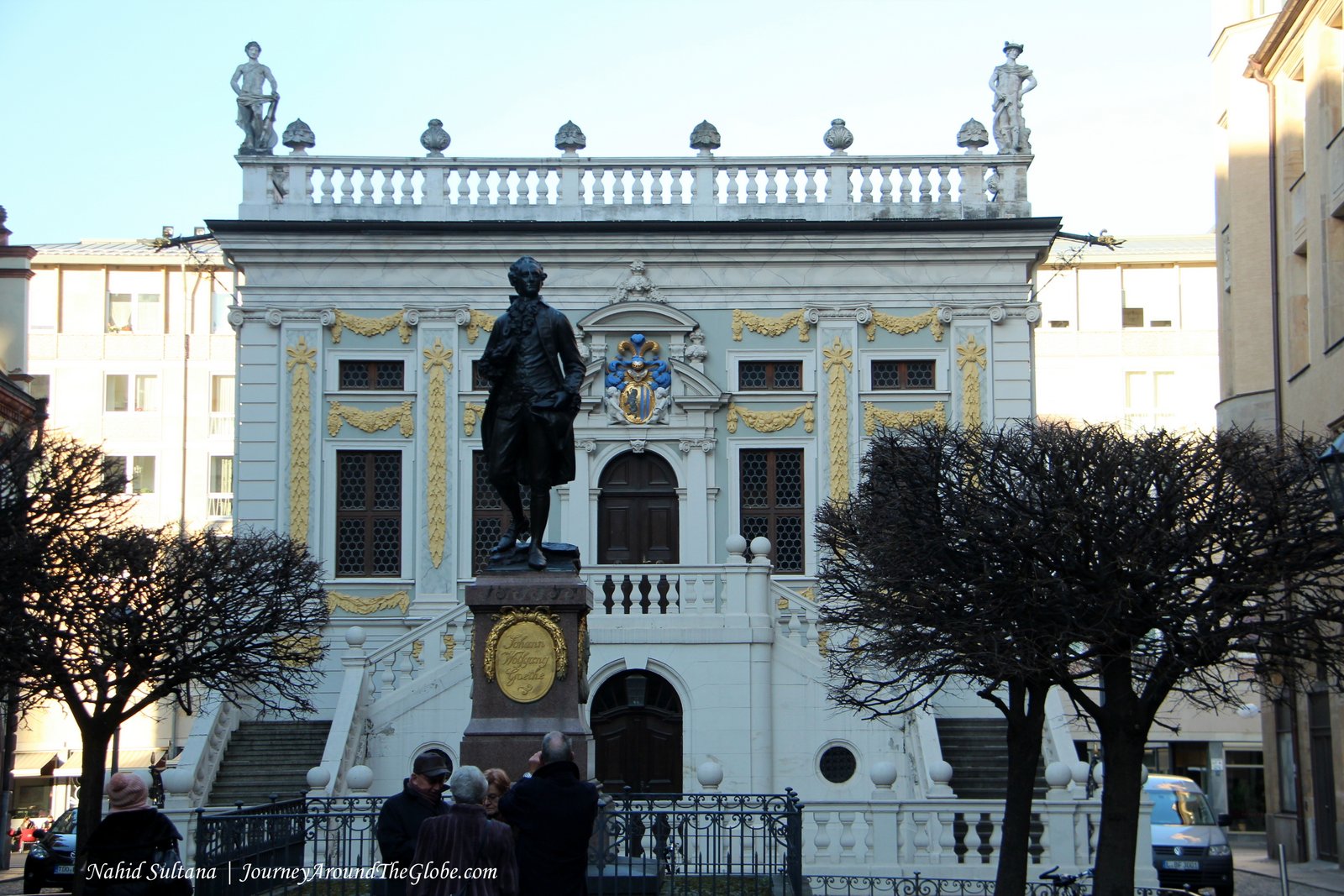
So, yes, Leipzig is the city of famous composer Johann Sebastian Bach. He was born here and spent 27 years of his life writing many of his most well-known music in this city. Bach’s main places of activity, St. Thomas Church and St. Nicholas Church are still standing in the main city center. Bach Museum holds Bach Festival each year in Leipzig, may be a good time for the Bach fans to visit this city.
Other than that Leipzig has Germany’s 2nd oldest university, The University of Leipzig, which was founded in 1409. The city also boasts for being the home of St. Nicholas Church (see below) which was the starting point of peaceful demonstrations against the communist regime which led to German Reunification.
TIME of TRAVEL: After visiting Fussen (Germany), Innsbruck, Salzburg (Austria), Prague (Czech Republic), Dresden (Germany) during our Christmas road trip in 2013 we arrived in Leipzig, Germany. Weather was fantastic, not freezing cold which I was scared about traveling to Germany in December.
OUR HOTEL: Our hotel in Leipzig was Novotel. It’s a well reputed hotel in Europe. We stayed in Novotel at different times in different cities. It was a fantastic location right across the main train station of Leipzig (Hauptabahnof) and only 5 minutes of walk from the city center. Hotel didn’t have free breakfast but had complementary Wi-Fi in the room. Bottom line is the location was good, especially with the kids. We could just walk across the street to the train station for many option of meal and breakfast.
EATING and SHOPPING: We did couple of our meals in Leipzig train station or Hauptabahnof. Station had some good pastries shops, fast foods, Pizza Hut, local chains, and other good places to eat. On New Year’s day we had dinner in old town in an Indian restaurant called India Gate. Leipzig old town/city center has at least five Indian restaurants here and there…we had to try at least one from there. India Gate was very nice place and the food was good too.
In old town, Grimmaische Strasse is a pedestrian street where tons and tons of stores are located. You can find brand name, local shops, boutique stores, and etc. on this street. Even if you don’t do any shopping it’s nice to just walk around and look thru to do some window-shopping. Another place of shopping would be the main train station, Hauptabahnof. It is a station alright, but looked more like a gorgeous shopping mall to me. Something special to buy from Leipzig is Bach’s CDs and other souvenirs related to him. I bought a Bach CD from Bach Museum.
PLACES WE’VE VISITED: We spent about a day and half in Leipzig. We could have done it in a day but Bach Museum was closed on the New Year’s Eve, so we had to wait ‘til the next day to visit it, after all it would be a crime to leave Leipzig without visiting his museum.
The city center or old town of Leipzig has a modern look with some old buildings standing shoulder to shoulder with many new architectures. These historical buildings were mostly constructed by the merchants in the old days. Old town is not that big and we covered it on foot.
1) ST. NICHOLAS CHURCH or NIKOLAIKIRCHE: As I mentioned above, St. Nicholas Church was the starting point of a peaceful demonstrations against the communist regime which led to German Reunification in 1989. It is that historic church also where Johann Sebastian Bach performed regularly during his lifetime. Nikolaikirche is the largest church in Leipzig with the biggest organ in whole of Saxony. But other than all these historical stats, this is an elegant looking church. From outside, you may not think so, but inside is sophisticatedly decorated and looks more contemporary than other German churches…a must-see place in Leipzig.
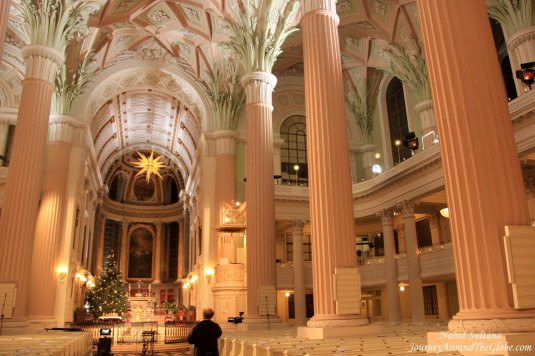
- St. Nicholas Church in Leipzig, Germany
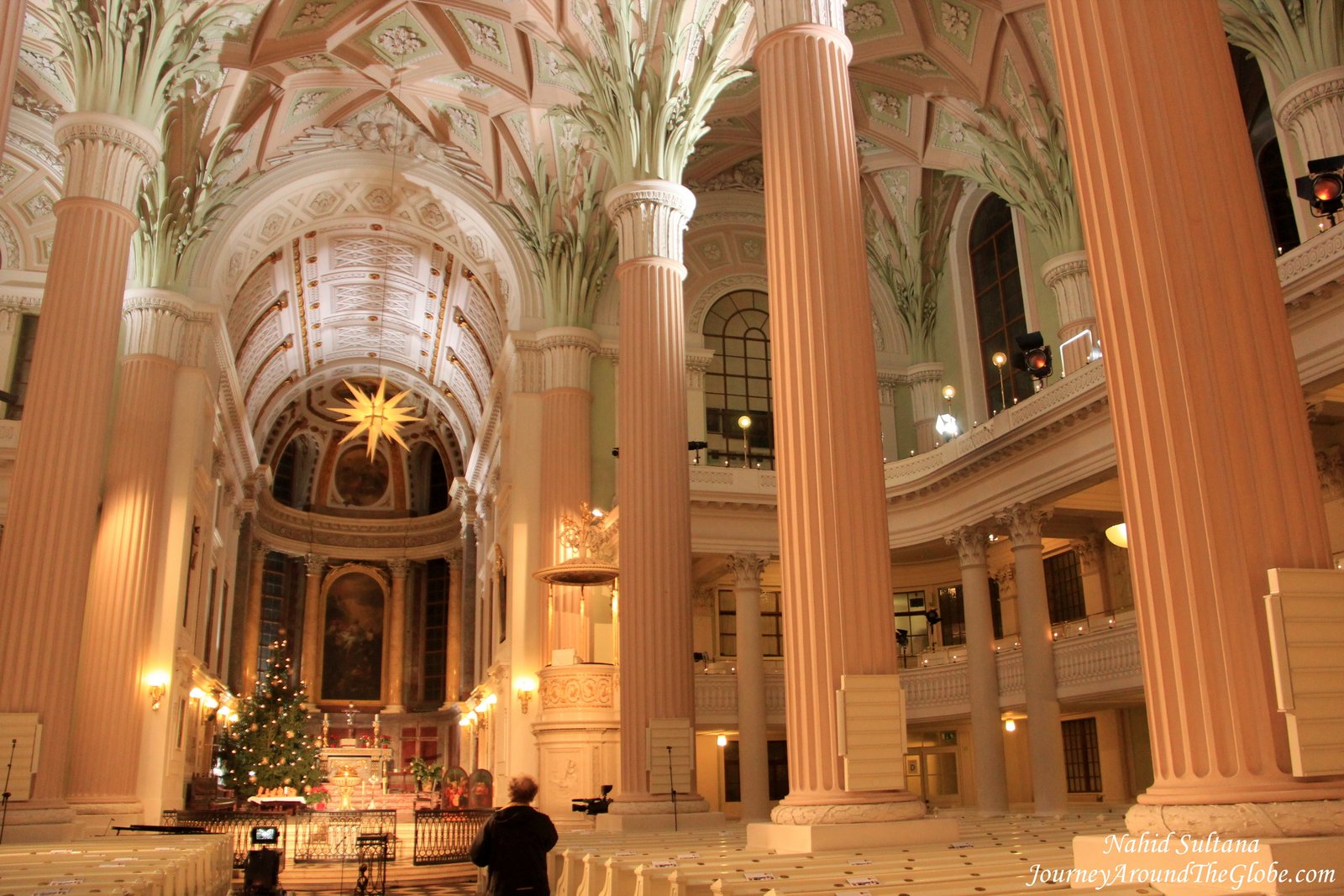
The church is located on the pedestrian zone of old town on Nikolaistrasse.
2) BATTLE of the NATIONS MONUMENT or VOLKERSCHLACHTDENKMAL: Built in 1813, this is the biggest monument in Europe. It commemorates the great Battle of Leipzig of the Napoleonic Wars where Napoleon was defeated at the cost of 100,000 lives. You can’t leave Leipzig without visiting this.
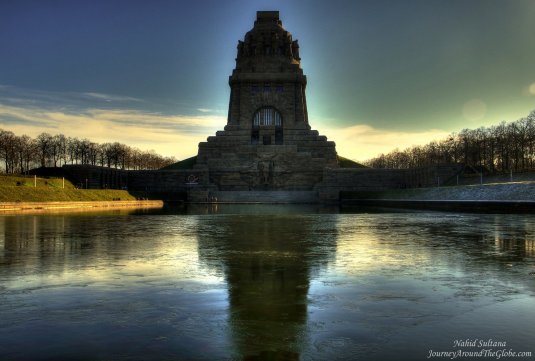
- Battle of the Nations Monument in Leipzig, Germany – the biggest monument in Europe
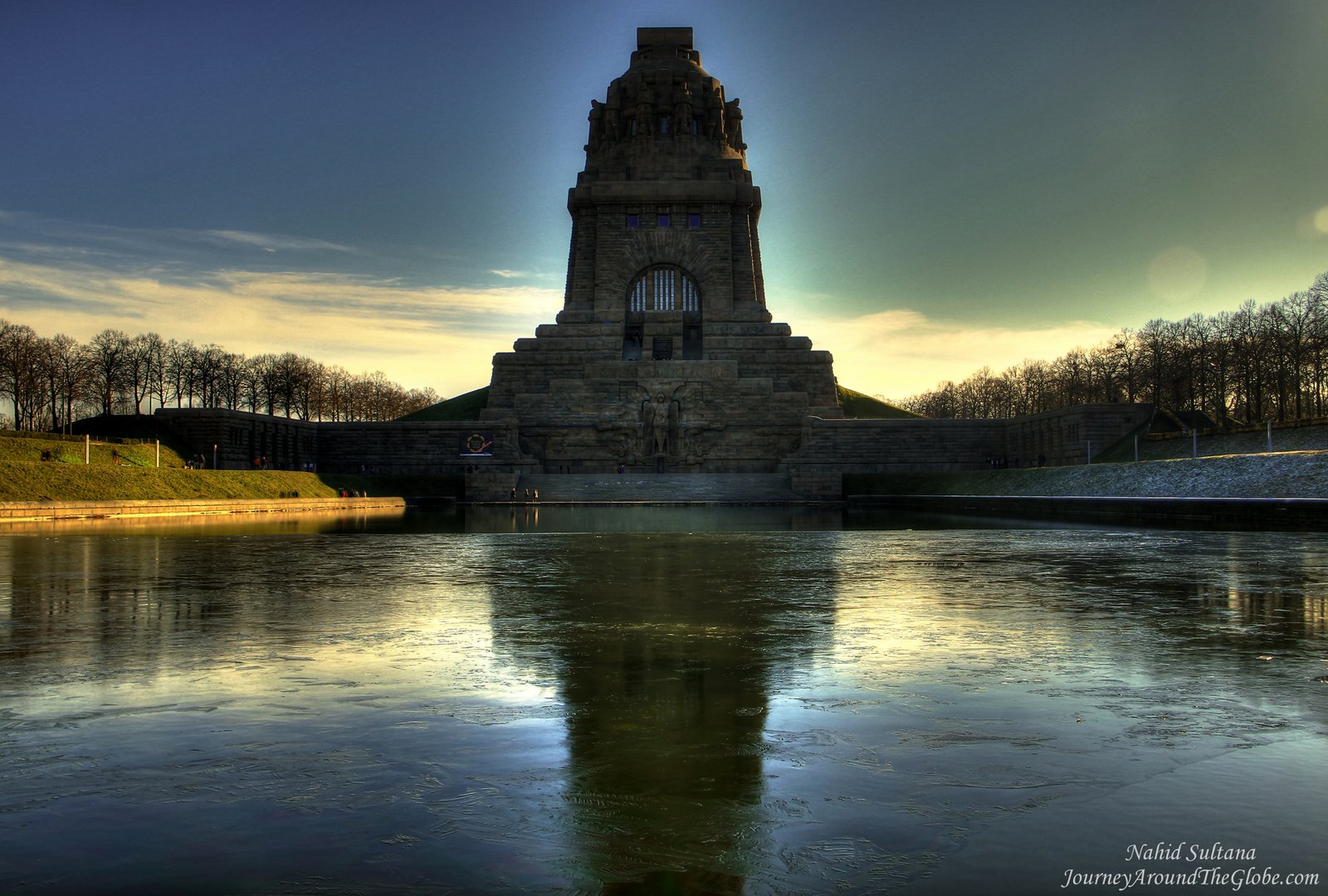
Since we went there on the January 1st, everything was closed. We only walked around the monument and went up the stairs just to look around from outside. When open, tourists can visit its upper observation platform, the dome, different galleries, hall of fame, and crypt. There are many steps to climb but if you can go all the way to top a fantastic view awaits as a reward.
We took tram #15 from Hauptabahnof (Leipzig’s main train station) to go there. After 8/9 stations, we got off at Meusdorf. There is a ticket to enter the museum and go inside the monument.
3) AUGUSTUSPLATZ: This is more like a modern shopping district in city center. You can see a nice blend of old and new buildings here. We came here both during day and at night and it’s a lively square to hang out anytime of the day.
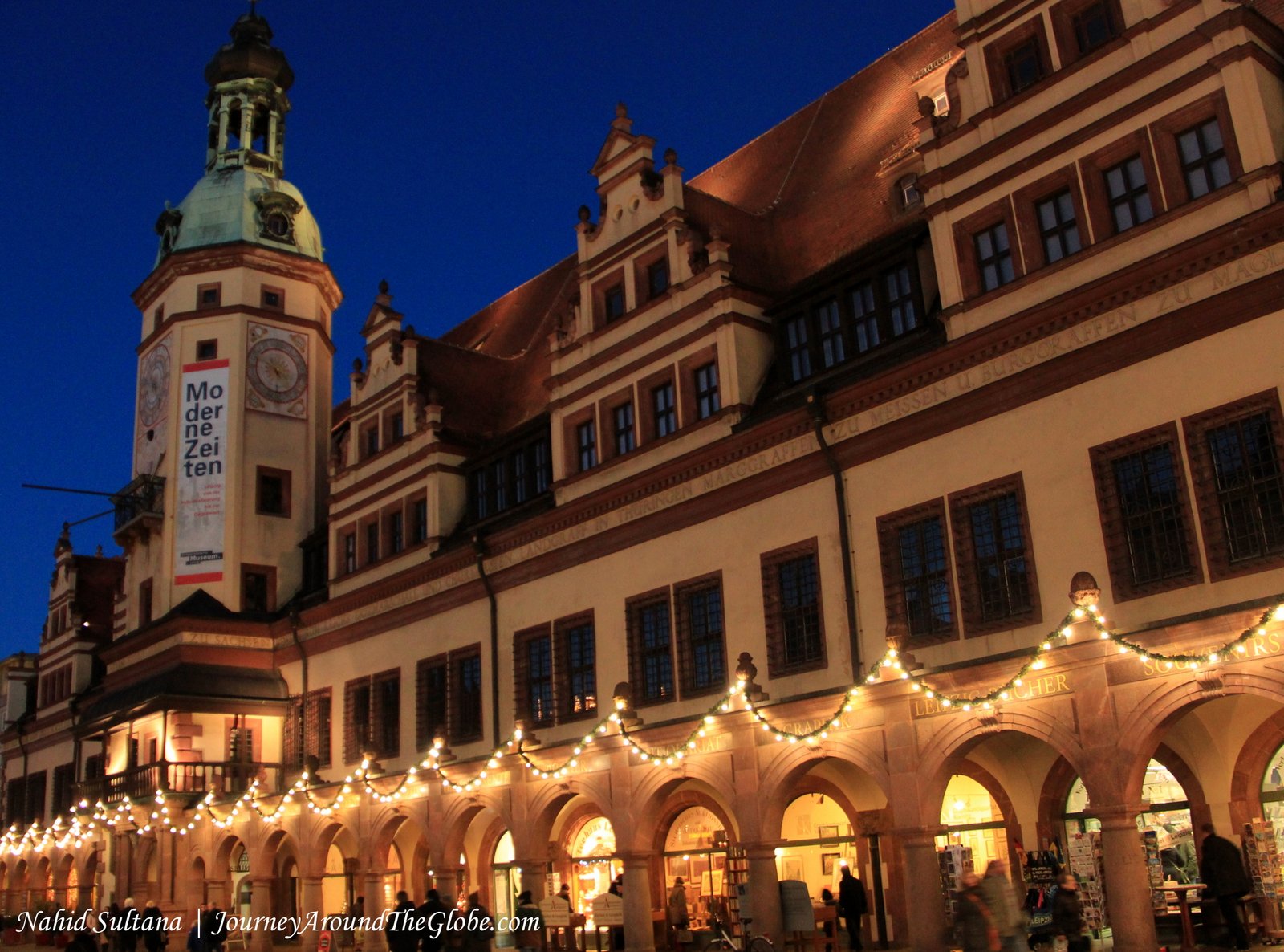
4) MARKT: This is a big square on Grimmaische Strasse where old town hall still stands. The old town hall houses some shops now. Christmas lightings looked fantastic at night.
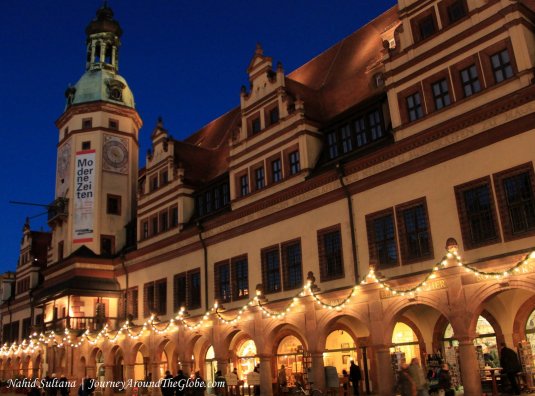
- Leipzig’s old Town Hall in Markt
5) BACH MUSEUM: Few steps further from Markt is Bach Museum. The building of Bach Museum once used to be the residence of Bose family in St. Thomas Square. They were affluent merchants of Leipzig back then and very close friends of the Bachs. Bach family lived in St. Thomas School which stood right across from the museum until it was demolished in 1902. Bach was from a renowned music family and for 27 years this square was Bach’s immediate environment. This is where he composed many of his most significant works. The museum gives a detailed account of the life, childhood, career as a musician, stories, and works of Johann Sebastian Bach. The permanent exhibition conveys a vivid impression of his music and displays original Bach manuscripts.

- Bach’s statue inside Bach’s Museum in Leipzig, Germany
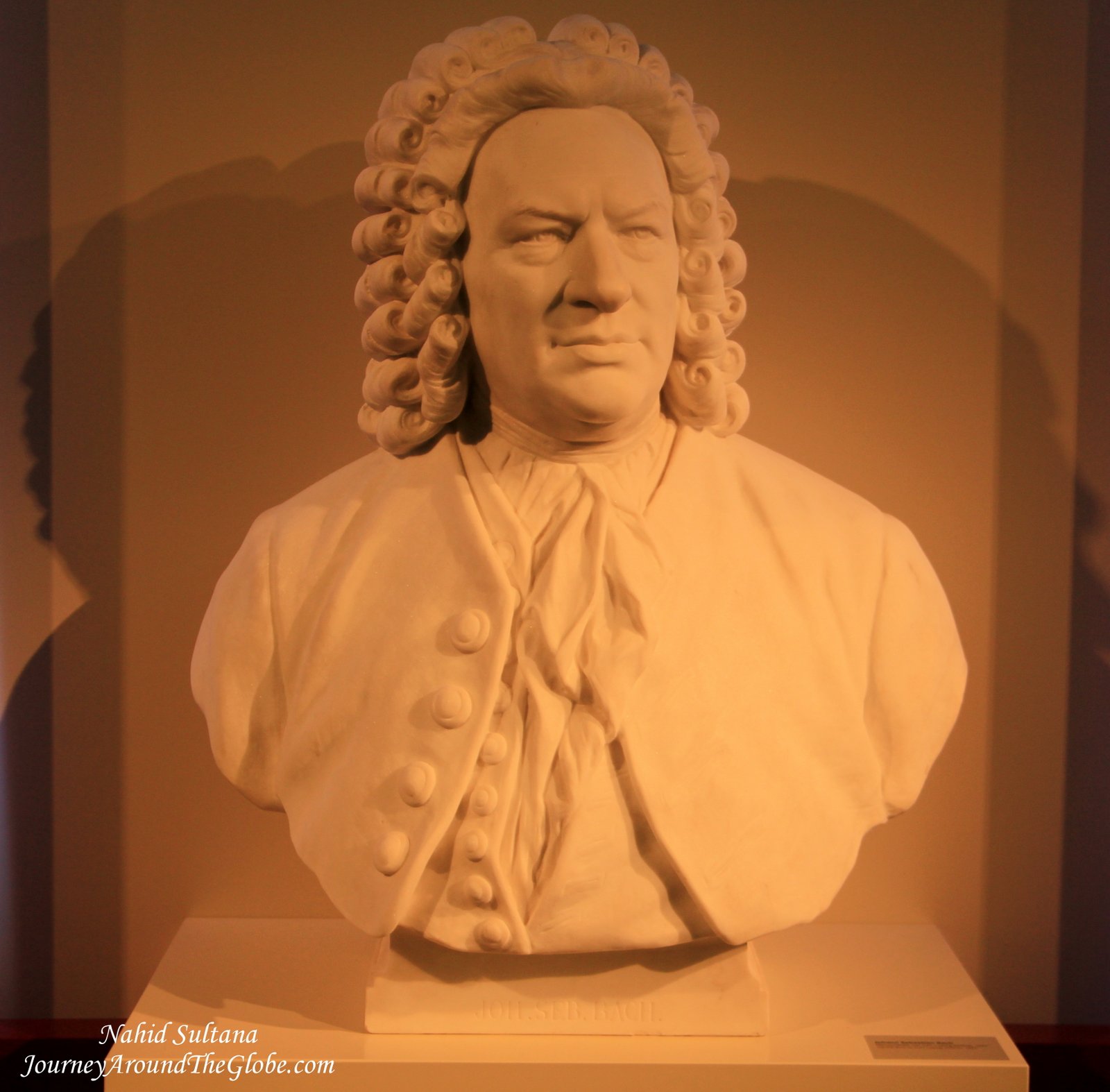
Bach appreciated no other musical instrument as he did the organ; he was an organ expert. Among the most interesting exhibits is the organ console from the St. John’s Church is the last relic of a Bach organ in Leipzig. Bach himself played it in the year 1743. Visit a double bass that was part of his orchestra and an iron chest – the only surviving piece of furniture from Bach’s household. A special highlight of the museum is the treasure chamber in which original Bach manuscripts are on display.
There are few listening booths in the museum to immerse yourself in Bach’s music. Every single one of his compositions can be called up from the media stations. Get acquainted with Baroque musical instruments and their specific timbres in his museum.
The museum is open from Tuesday to Sunday from 10am – 6pm. Ticket is 8 euros per adult, children under 16 are free. It includes audio guide. It’s not permissible to take any photos inside.
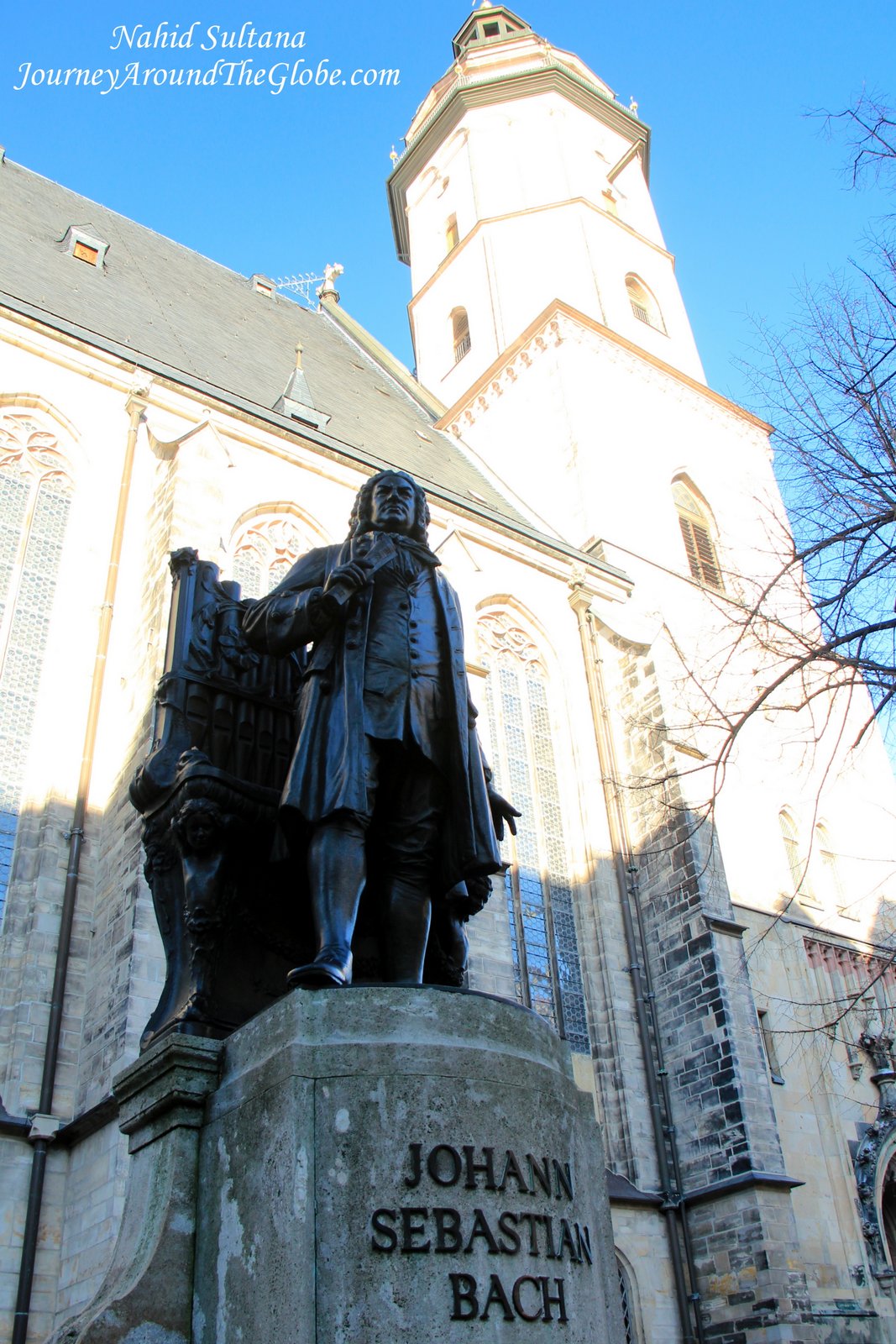
6) ST. THOMAS CHURCH or THOMASKIRCHE: Opposite of Bach Museum is St. Thomas Church in St. Thomas Square. From 1723 until his death in 1750, Johann Sebastian Bach was the highest ranking musician in Leipzig as Director and cantor at St. Thomas. As part of his official duties, Bach was responsible for the musical education of the boys at St. Thomas School and for the music in services at the two main churches – St. Thomas and St. Nicholas – as well as the New Church (later called St. Matthew) and St. Peter’s Church. He used to perform here every other Sunday with his choir and orchestra. With his second wife, Bach lived in the old St. Thomas School on the churchyard and went to this church for confession and to receive Holy Communion. A life-size statue of Bach in front of the church stands to commemorate his time in this church.
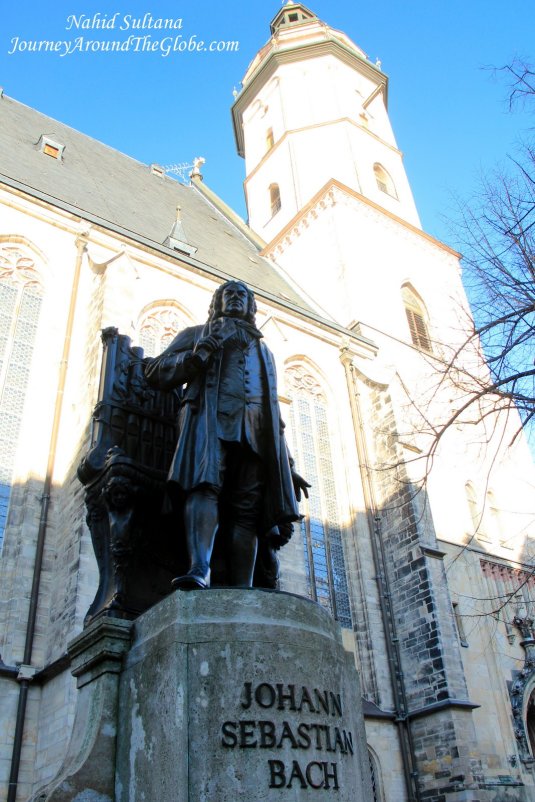
- Statue of Johann Sebastian Bach in front of St. Thomas Church in Leipzig, Germany
St. Thomas is a simple church but highlight of it is that it houses the tomb of Bach. His remains are buried under a bronze epitaph near the altar. On 28th July 1750, Bach dies in Leipzig. He was originally buried in the hospital cemetery of St. John’s Church. In 1949 the mortal remains of Johann Sebastian Bach were transferred to this church from the ruins of the St. John’s Church which was destroyed during WWII. In 1950 Bach’s grave was erected in the chancel to commemorate the 200th anniversary of the death of St. Thomas’ greatest choirmaster. When we went there a group of musicians were practicing some music composed by Bach for a concert that night.
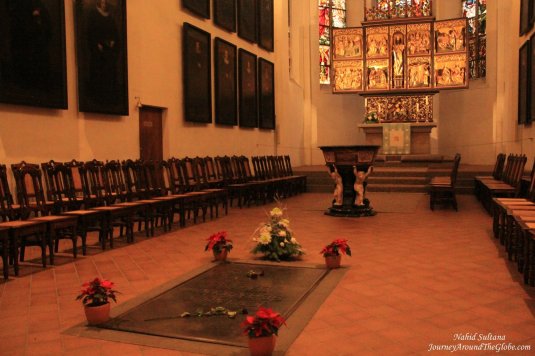
- Bach’s grave inside St. Thomas Church in Leipzig, Germany
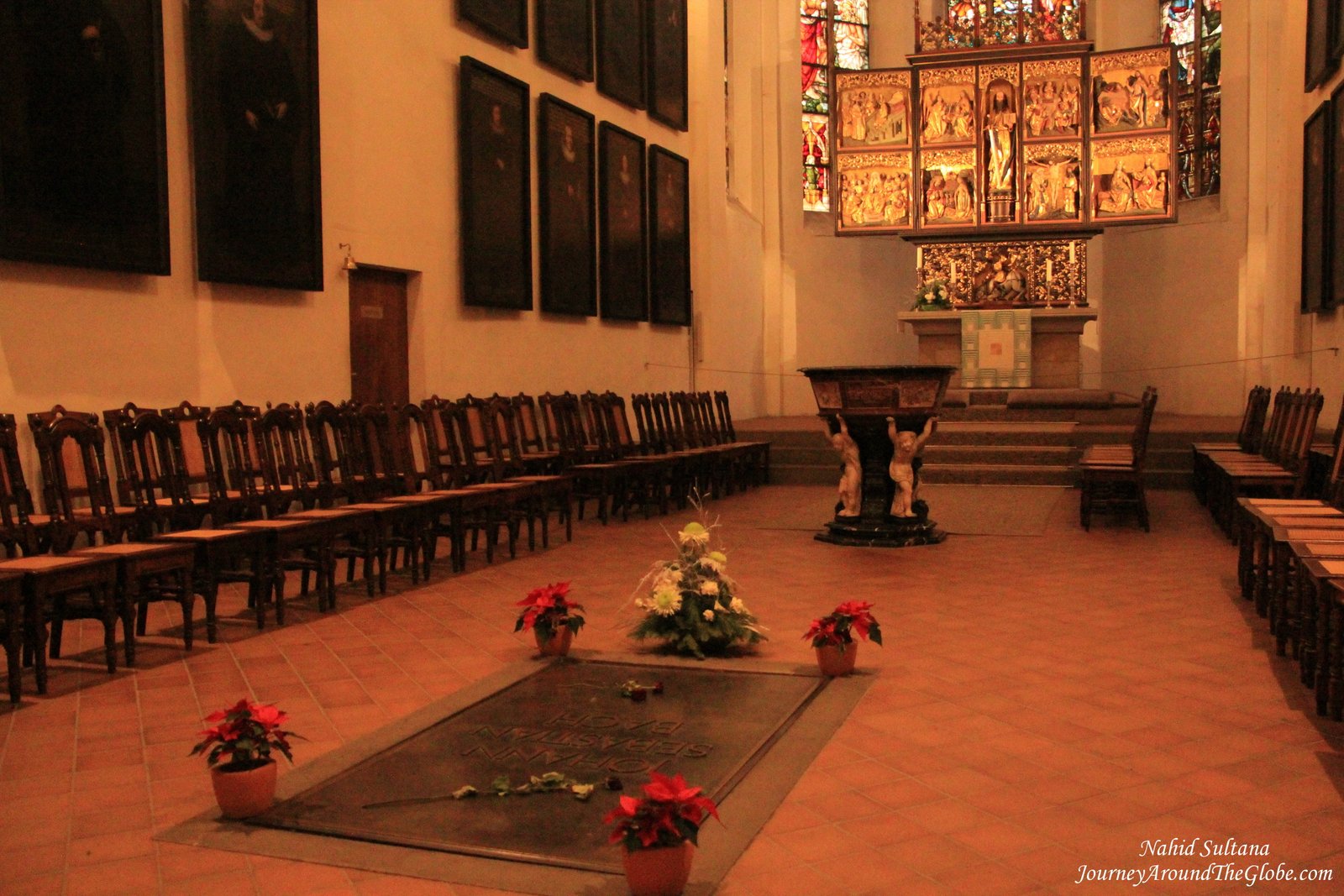
The interior of St. Thomas Church as it existed in Bach’s times has been removed almost entirely. Currently, the church has a splendid cross ribbed vaulted ceiling. The organ here is known as Bach Organ and has an impressive acoustics. One of the windows on the southern side of Gothic triple-nave basilica is called Bach Window. Built in 1895, it is a part of the five memorial windows of this church.
The church is located opposite to Bach Museum in St. Thomas Square and there is no fee to enter the church. Buying tickets ahead of time is recommended if you are interested in any of the concerts that the church holds every now and then.
Share this:

Business Excellence Award 2020 from AI Global Media for The Most Entertaining Personal Travel Blog – Pacific Northwest USA

Top Posts & Pages


Authors
 Globe Runner
Business Excellence Award 2020 for The Most Entertaining Personal Travel Blog – Pacific Northwest USA

Business Excellence Award 2020 from AI Global Media

 Journey Around The Globe