Journey Around The Globe
ready for the next destination
Godfrey’s Bouillon in Belgium
BOUILLON, BELGIUM: Bouillon is the city of Godfrey, a legendary knight of the first crusade from 11th century (remember him from the movie “Kingdom of Heaven”?). This is the “Jewel of the Semois Valley” and a paradise for gourmets, nature lovers, and history enthusiasts.
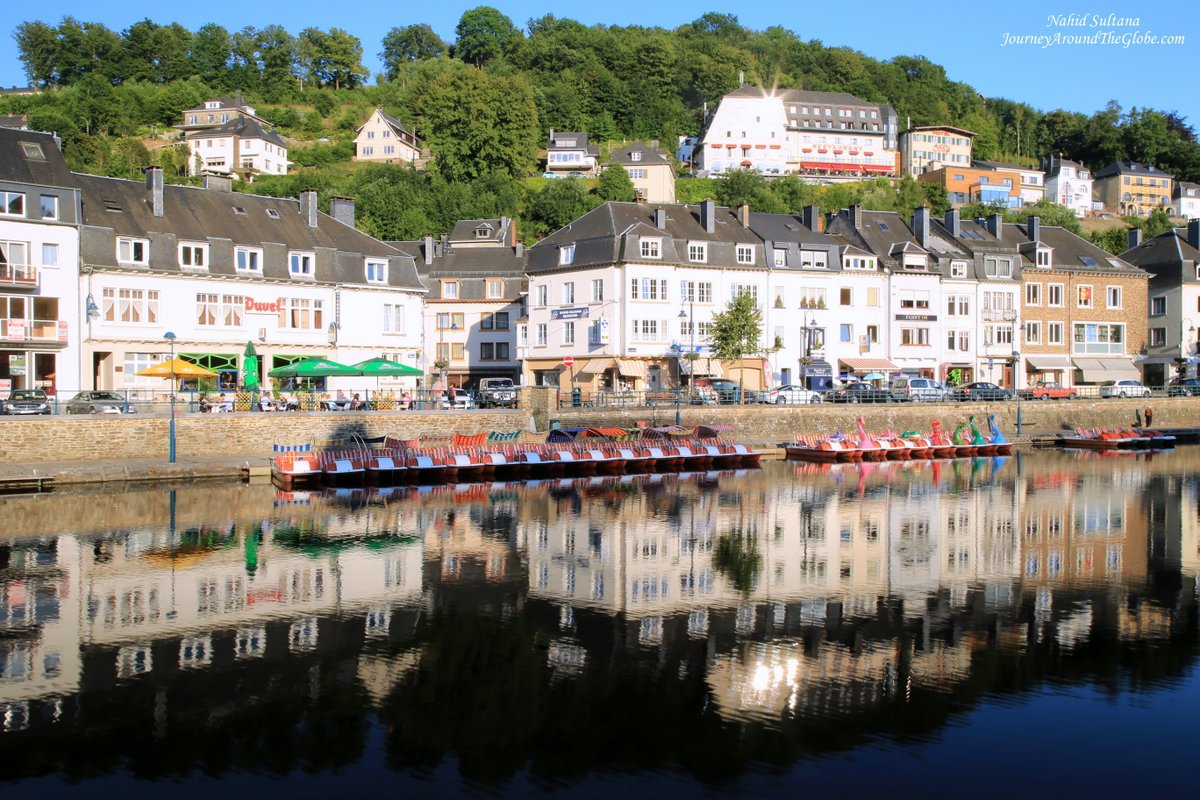
TIME of TRAVEL: As we are preparing ourselves to leave Belgium in just a few weeks, we are making good use of every weekend and holiday. Last week, on the 3rd Saturday of June 2014, we took a day-trip to Bouillon. It’s about 1 ½ hours of drive from Tervuren, Belgium, may be same time if you are driving from Brussels too.
EATING and SHOPPING: We had lunch at Pizza Hut in a service-inn on our way to Bouillon. We had some home-made gourmet ice-cream after we visited the castle and came down to the valley. And for dinner we sat down in a small restaurant on a small alley parallel to River Semois. Since we are big fans of FIFA World Cup, the restaurant “La Grignotte” were showing Argentina vs Iran match, so we decided to take a table there. It looked like the place is very well-known for their burgers and different kinds of sauces to eat with your burgers and fries. But they also had salad, pasta, sandwich, waffle, crepe, and omelets. But if you want to have your meal by the river-side, Bouillon has plenty of options for that too. There were countless big and small eateries by the river and they were all overcrowded with relaxers and chillers. Pick a place from there and enjoy a lazy meal or a drink by the water.
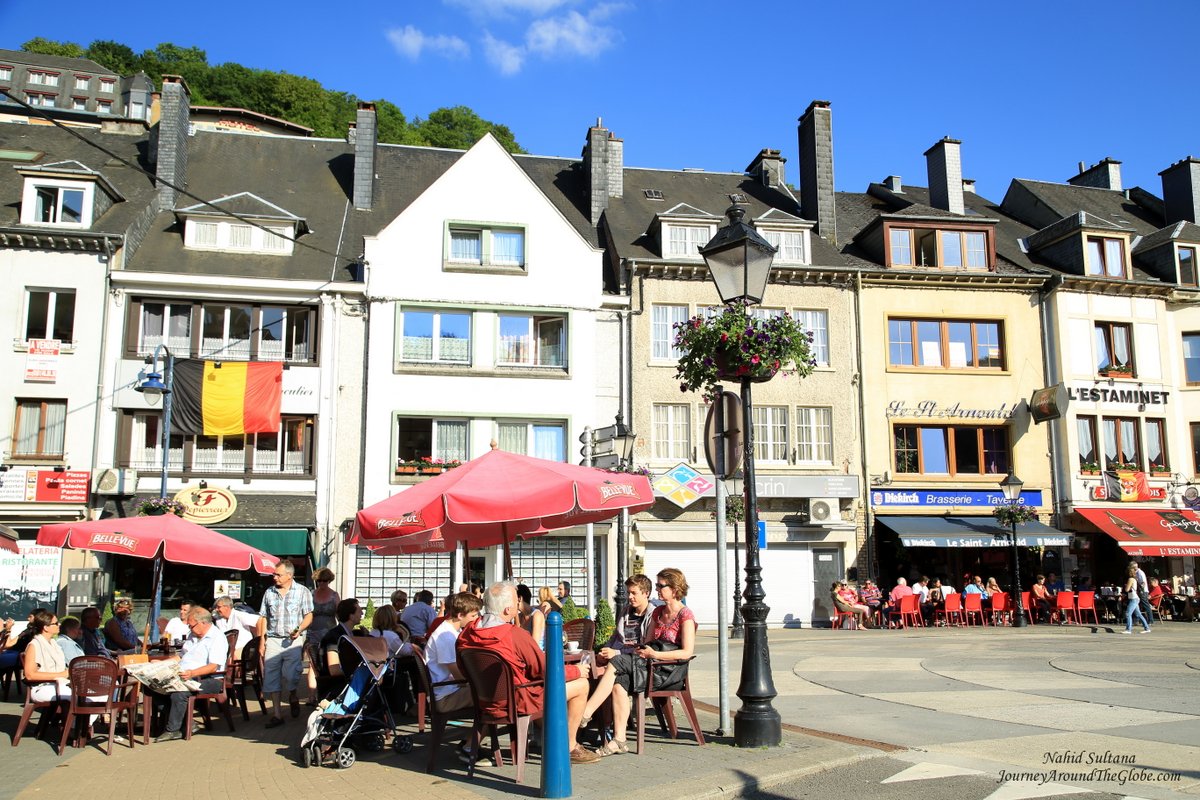
As for souvenirs or shopping, we didn’t see many shops along the riverside. May be the shopping streets were hiding in the more inner part of the city. However, we did see a tobacco shop where they were selling post-cards, shot-glasses, and other small things.
PLACES WE’VE VISITED: We reached Bouillon right after lunch, around 2pm. Since these summer days are longer, we were able to spend a good few hours here.
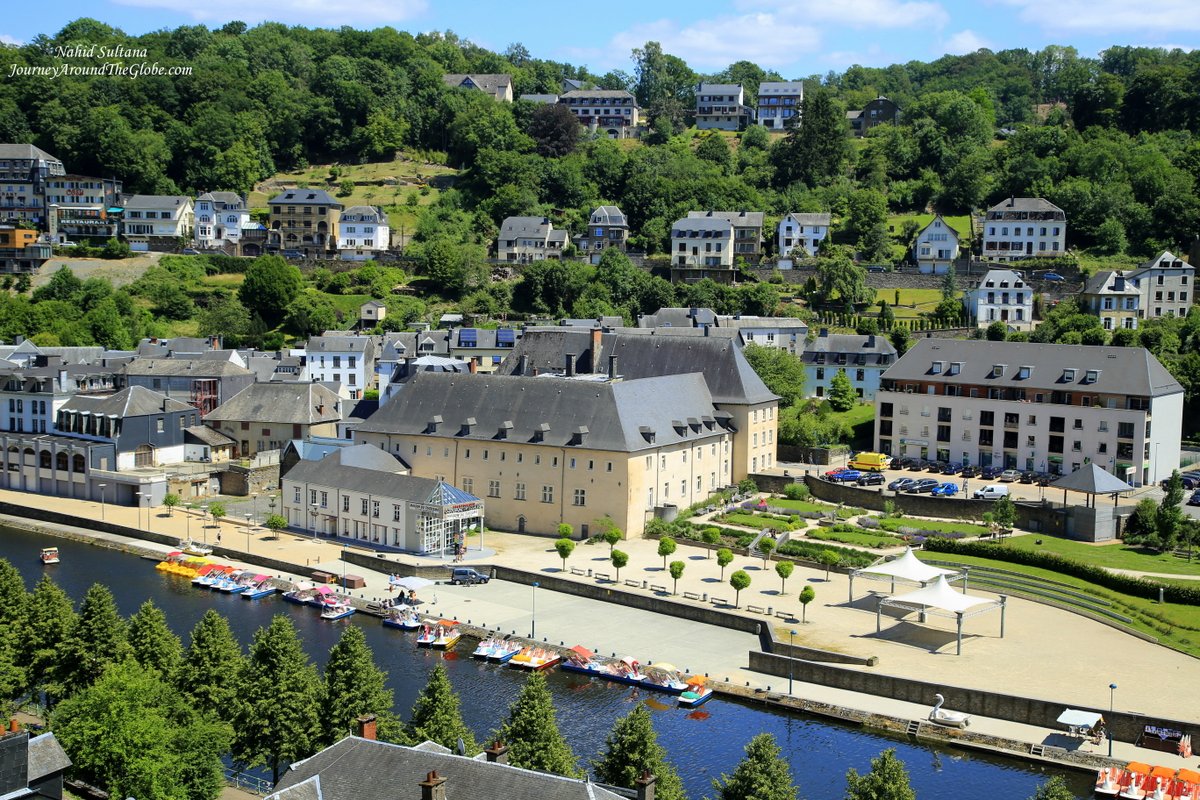
1) CHATEAU de GODEFRIOD de BOUILLON: This is the main attraction of Bouillon. Godfrey of Bouillon was one of the heroic knights of the very first crusade from the 11th century and His castle (from the 11th century too) in Bouillon is a major asset and a historic landmark in whole Belgium. The castle is also probably one of the best places to get some thrilling views of Semois Valley, the river, and town below.
We went thru two old tunnels “Pont a Bascule” and “Pont Levis” to come to the main front yard of the château where “Falcone Show” takes place few times a day. This was very exciting for our girls. The show was for half an hour and displayed all sorts of birds of prey. Two hosts were speaking mainly in French and Dutch, so we couldn’t really get the jokes, but really enjoyed the birds’ performance. Godfrey’s Chateau has a huge complex of medieval defense with old walls and stone buildings. All the accessible spots are marked with numbers. There are many underground tunnels that you can explore here with countless stairs going up or down.
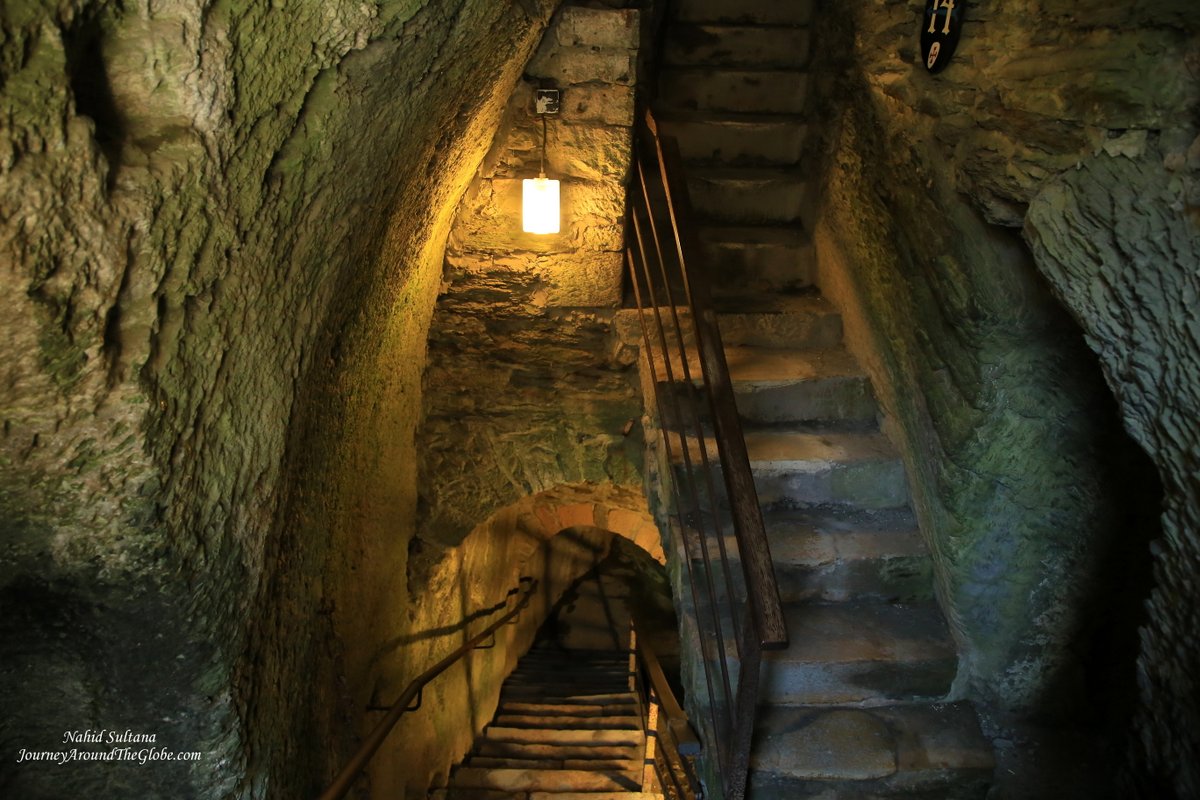
Visiting this castle was the most enriching travel through time of crusades in Bouillon. This is one of the oldest and most interesting feudal castles from that era. Visitors follow the footsteps of the crusaders in this castle…a bewitching place of walks and discoveries. There were some small exhibitions all around the castle. You can even see a medieval torture chamber and an underground prison.
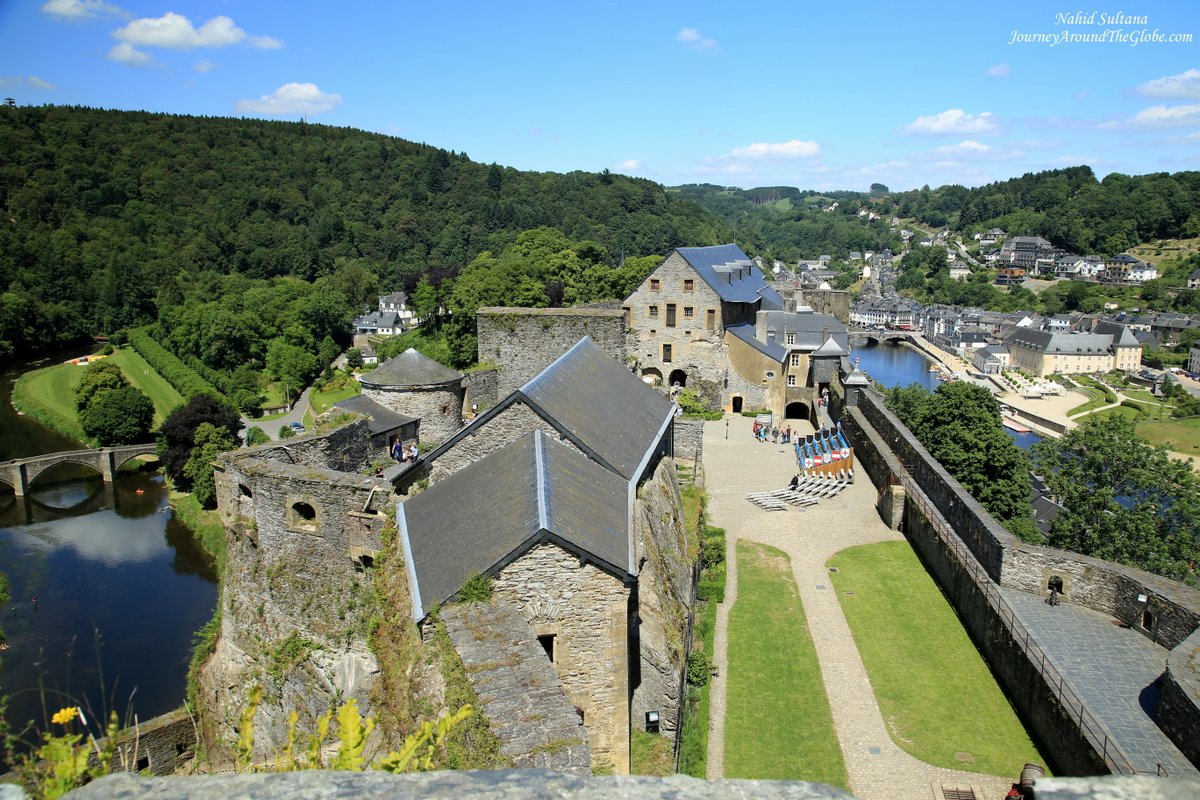
Most of the information inside the castle complex is written either in French or Dutch, so I would highly recommend getting an audio-tour. We brought our car to the small hill the castle is on and drove back to the city center after we were done with the castle. There are many parking spots both near the castle and down in the valley. Ticket is 6.50 euros per adult and 4.50 euros for kids. Audio tour is available at extra fee.
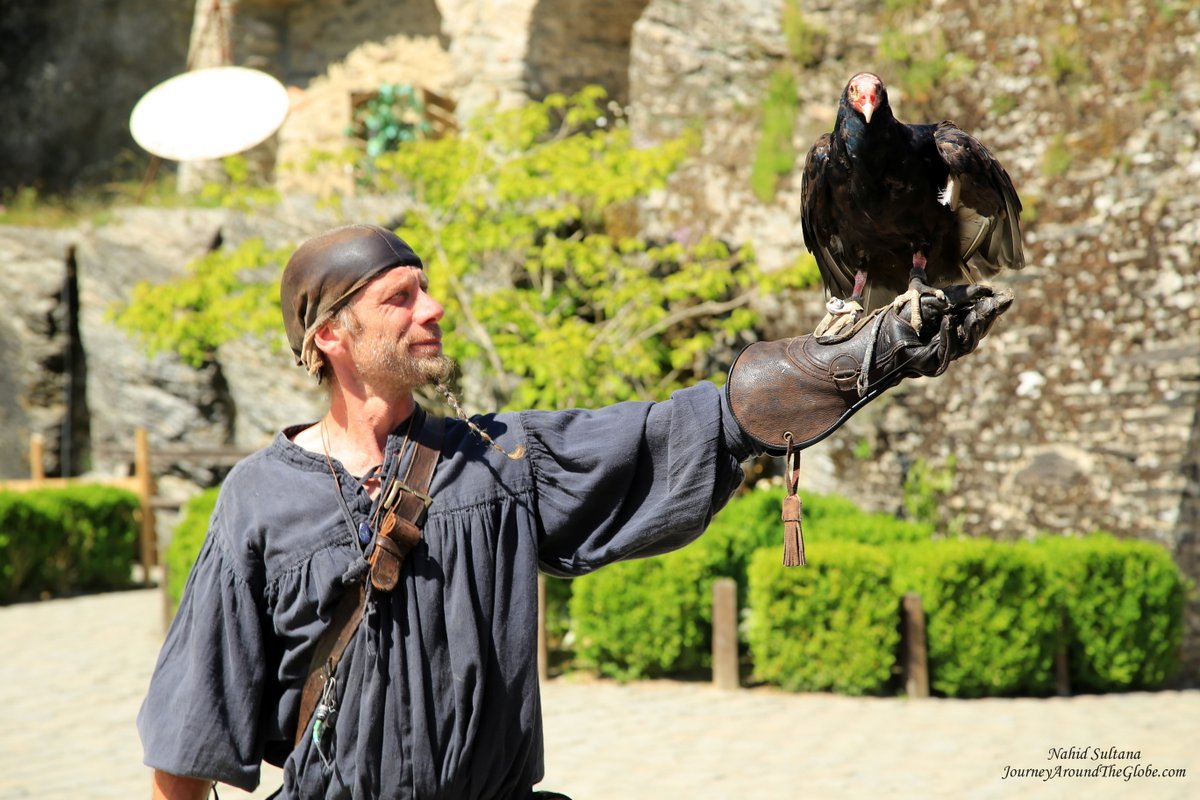
2) WALK by RIVER SEMOIS: After we came down to the valley and near the river, we parked the car, and began walking by River Semois. We started from one side, crossed a small bridge, and reached another longer bridge on the other side. We had river on left side and lots and lots of restaurants on our right side. It was simply relaxing looking at the small paddling boats on the river, expressive buildings, and people the cafes having good time.
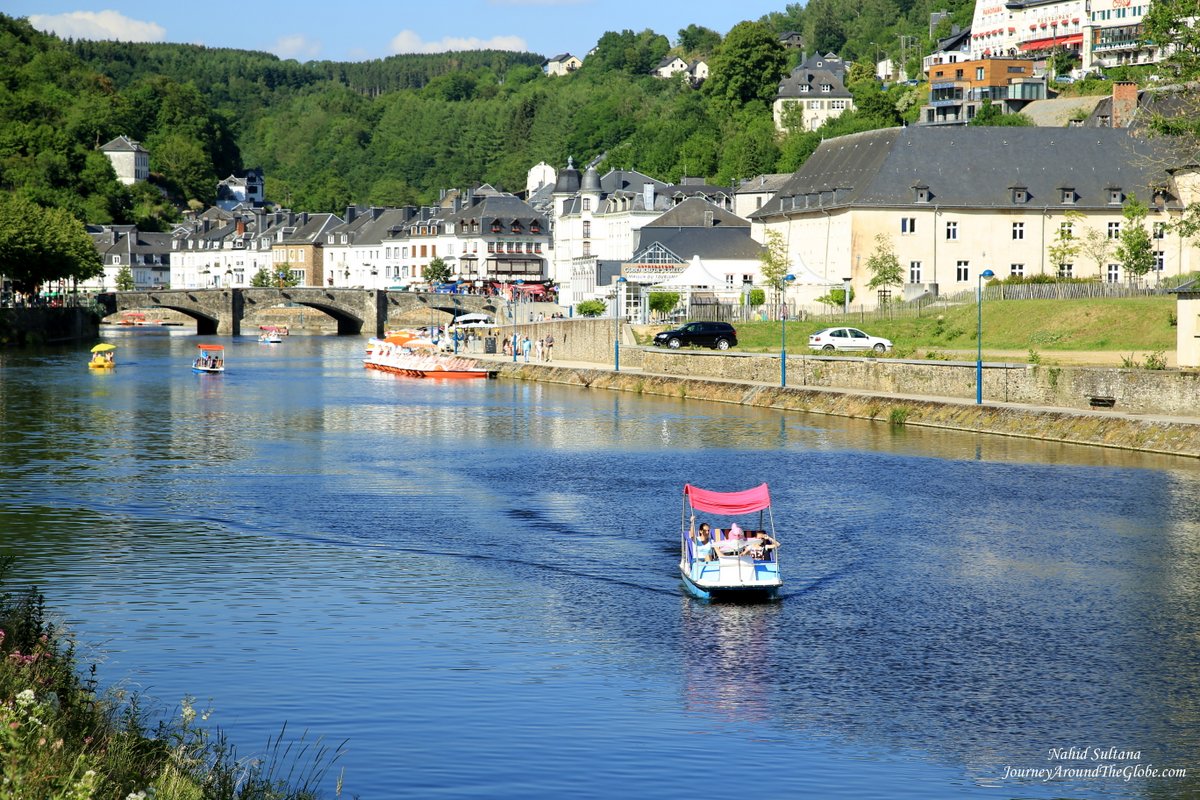
3) PADDLE BOAT on RIVER SEMOIS: Looking at other people paddling on River Semois, my elder daughter wanted to give it a go. We rode on camels in Giza, rode on donkeys in Petra, did plenty of horse-wagon rides, boat tours, cruising, and stuff…but never tried a paddle boat. So why not? It was a lazy late afternoon and we really had nothing else planned out to see or do. We crossed the small bridge to the other side of the river and rented a small shaded boat to explore pleasant River Semois.
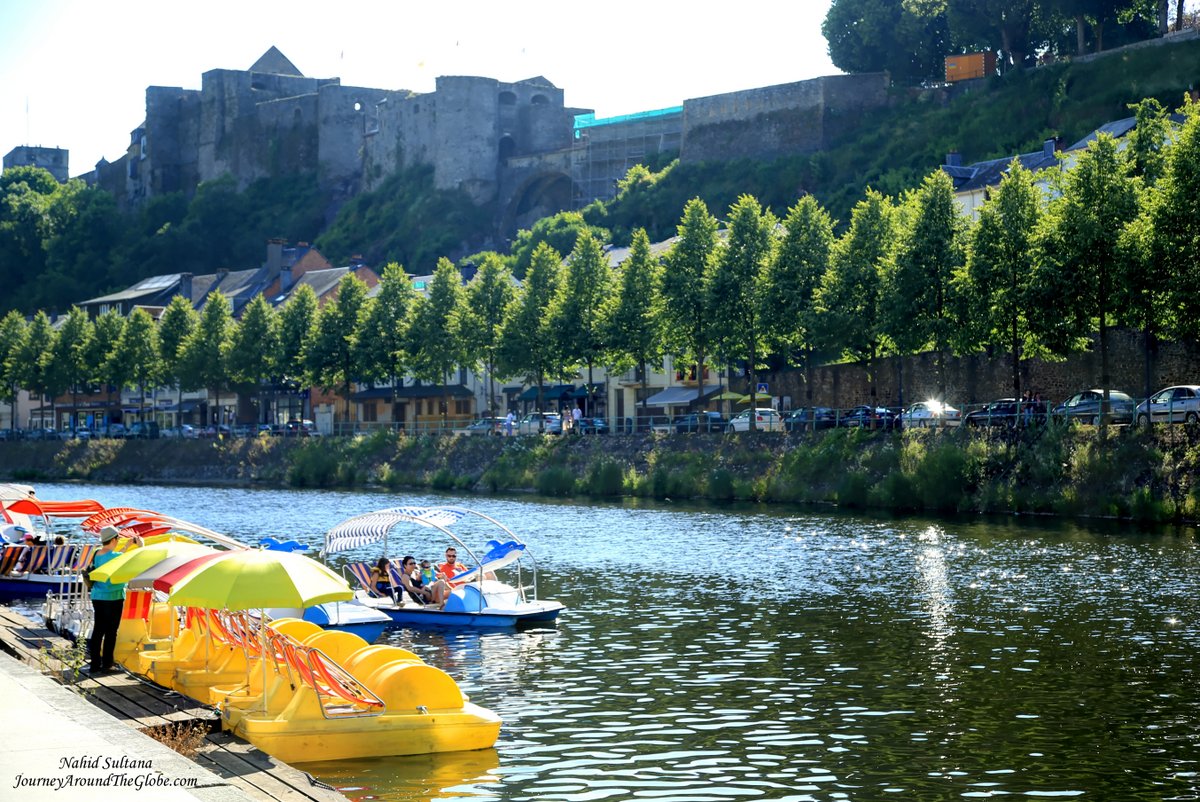
Boat is 3 euros per person for 30 minutes ride and 5 euros for an hour ride. It closes at 7pm in summer. We took a 30 minutes ride and it was enough to go around the river on one side by the old buildings, restaurants, and hotels.
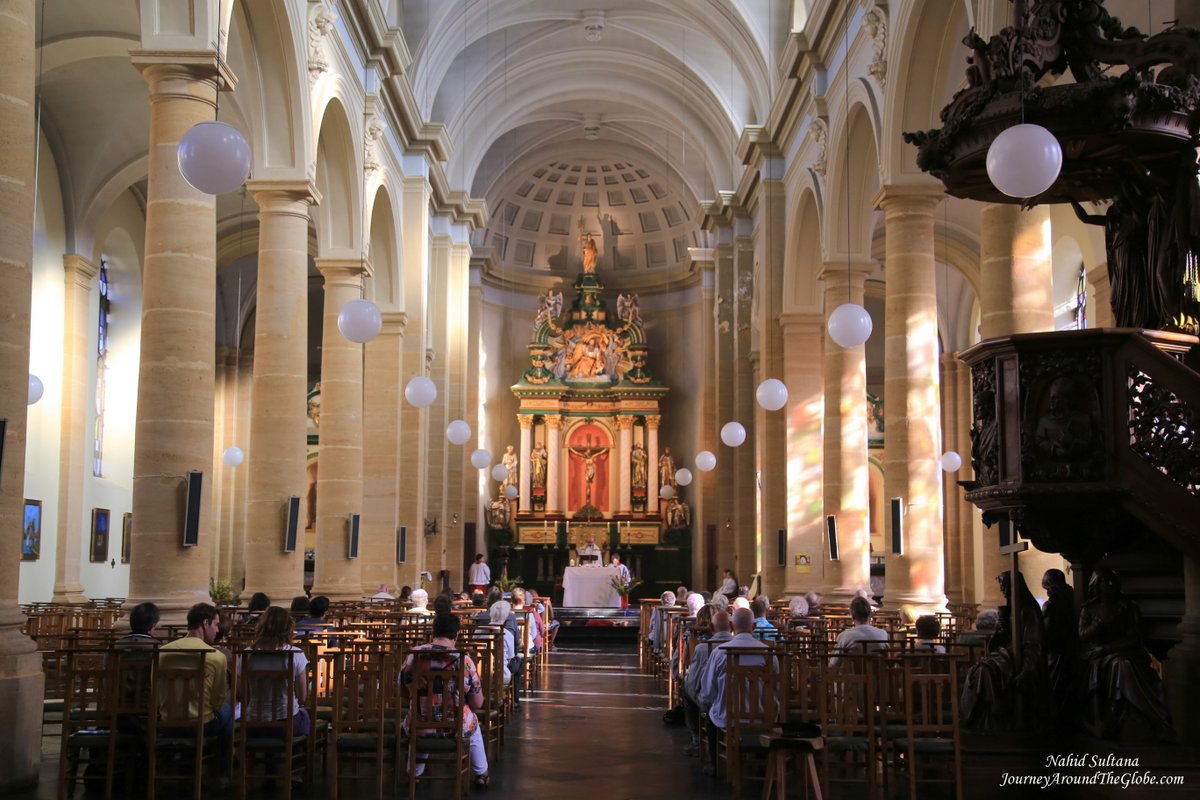
4) UNKNOWN CHURCH: One of the famous churches of Bouillon is Basilique de St. Hubert. We didn’t visit that one, but we found another one that’s steeple was raising high, dominating the old town of Bouillon, very close to River Semois. We couldn’t find the name of this church; tried searching its name in the web…but no luck. But it was a beautiful church outside and inside. There was a service going on when we arrive, so really couldn’t walk around to its dazzling altar that I saw from the entrance.
Share this:

2 Hours in Mainz, Germany
MAINZ, GERMANY: Mainz, a delightful German town situated at the confluence of River Rhine and River Main. This is the home of famous publisher Johannes Gutenberg who introduced printing to Europe and the town where one of the Europe’s oldest and largest music publishing house, Schott Music, is located. Old Town of Mainz is a little cozy place to hang out or get together with someone over a meal.

Most of the historic sites are in Old Town and have information boards near them; but they were all written in German, nothing in English. There is a paid parking lot very close to Mainz Dome and the Old Town.
TIME of TRAVEL: We were driving from Belgium to Stuttgart, Germany on the 2nd week of June 2014 to one of our friend’s house for one last time before leaving Belgium for good. We chose Mainz as our dinner-venue and to spend couple hours before reaching Stuttgart. It was already around 6pm when we reached Mainz and we stayed mainly in the Old Town.
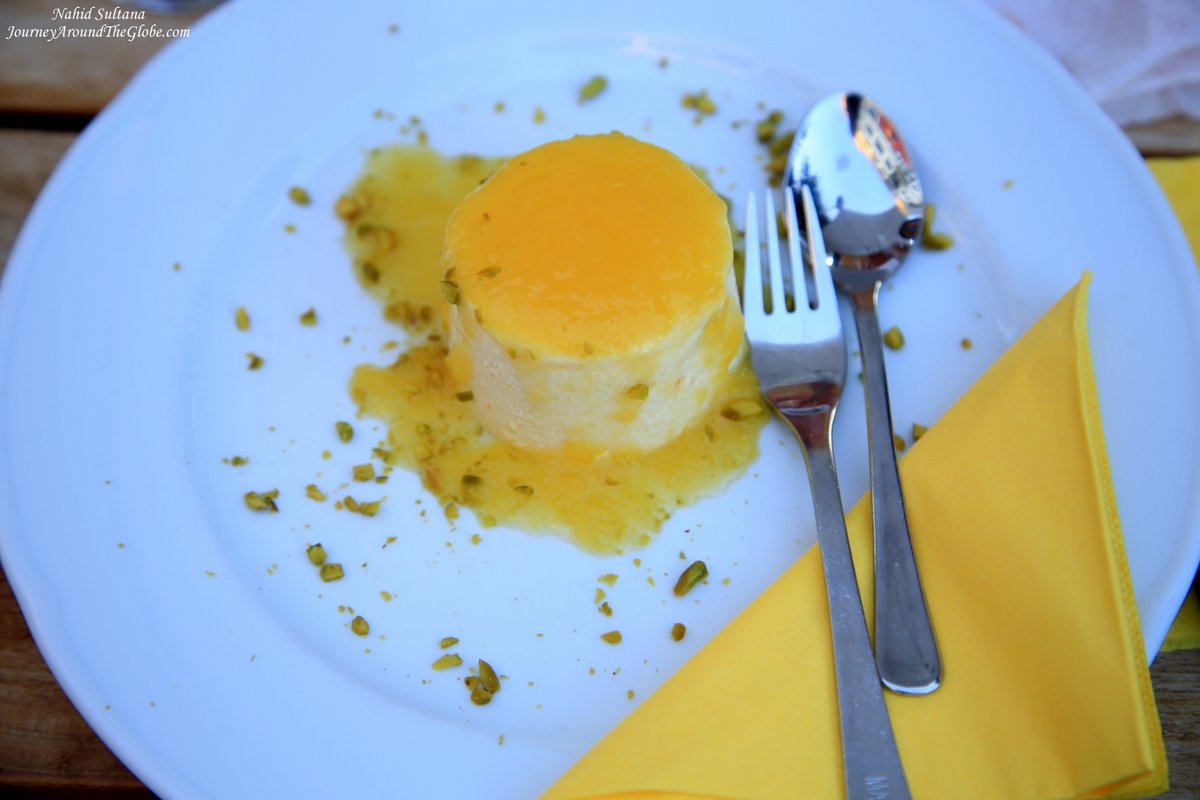
EATING and SHOPPING: Old Town has plenty of options for drinks or meal from McDonald’s to decent local or international kitchens (like “Konoba” a Croatian bar/restaurant). We had dinner at “Maredo” right opposite of Mainz Theatre in Gutenbergerplatz. They had many options for soup, salad bar, steak, and scrumptious choices for desserts.
It was already too late to find any store open when we arrived Mainz but Old Town has lots of fashion and other stores all around it. We couldn’t find a single souvenir shop, may be they were on the other streets or further down.
PLACES WE’VE VISITED: City center of Mainz is pretty compact and all the attractions are within walking distance. Here are only few things we could see in Mainz:
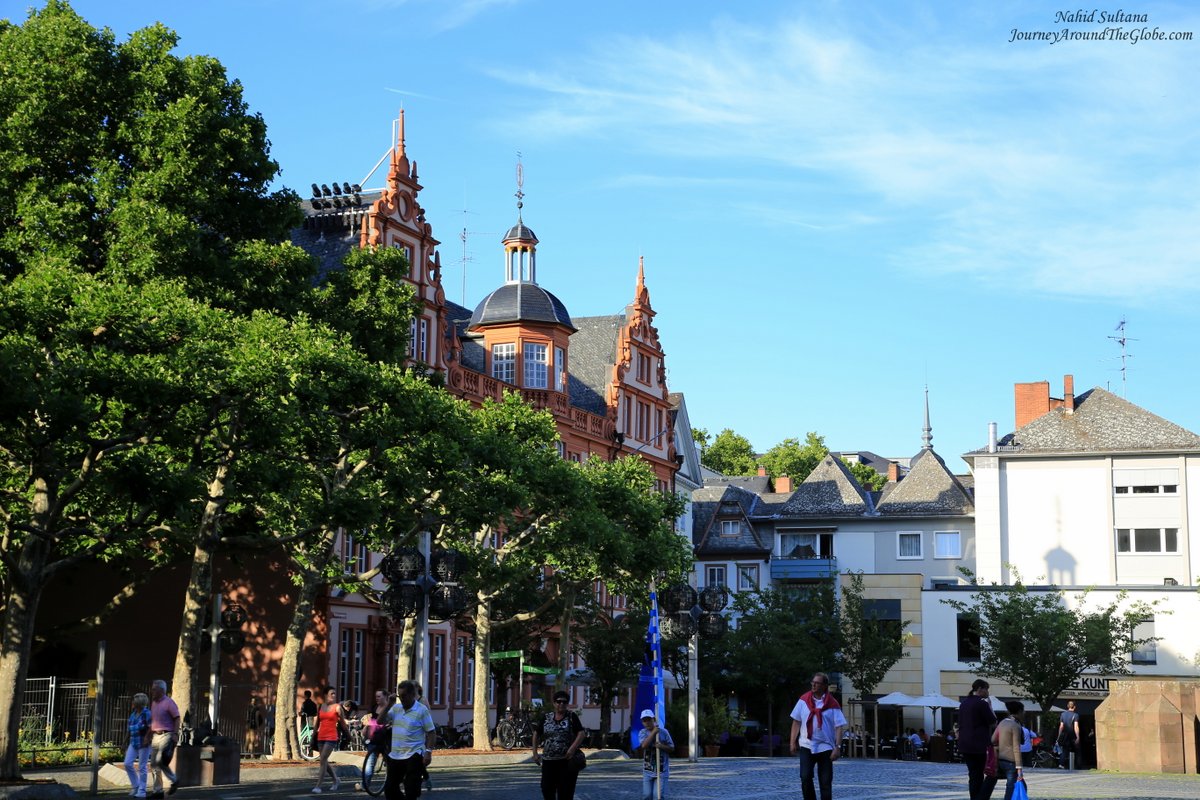
1) ALTSTADT or OLD TOWN: As I mentioned before, we mainly stayed in Altstadt of Mainz. This is the place to be on any lazy afternoon or for strolling after dinner or just for some coffee time. It’s lined with some very artistic and gorgeous buildings opposite of Mainz Dome. We sat down in front of a fountain while our girls were soaking their feet and playing in the water. All the stores were closed when we arrived, but I can imagine this place during day time when everything is open and locals are going on with their lives…a fantastic place to be a part of that atmosphere.

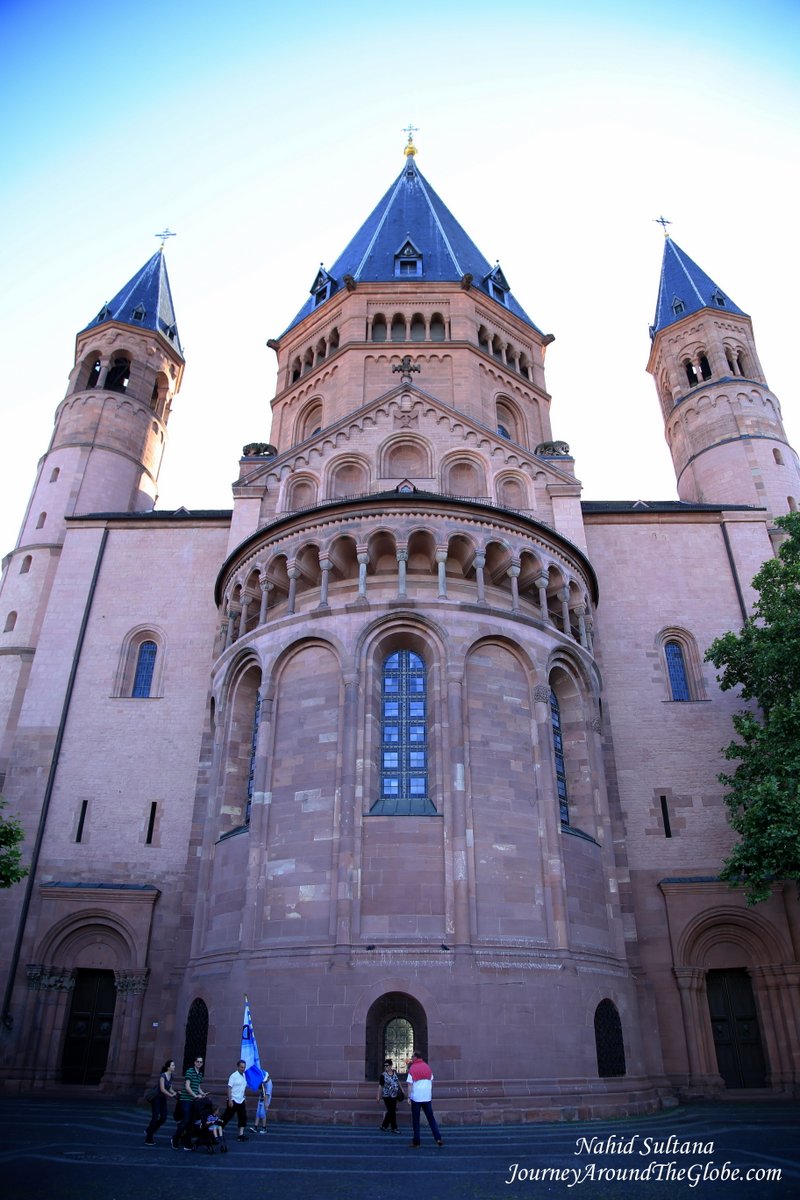
2) MAINZ DOME (CATHEDRAL of ST. MARTIN and ST. STEPHEN): The magnificent steeples of Mainz Dome dominate whole Altstadt and can be seen from any corner. Construction of this Romanesque cathedral started in 975 AD (yep, it’s that old), but its current look is from the 11th to 13th centuries. This is one of Germany’s oldest cathedral and a historic landmark of Mainz. It was closed by the time we were there, but still could enjoy its spectacular exterior from every side. Square in front of the cathedral “Markt”, and on the side are really beautiful. There is a miniature version of the dome in Markt.
3) GUTENBERGERPLATZ and MAINZ THEATER: Mainz Theater and opposite of it the statue of Johannes Gutenberg are the highlights of this square. Johannes Gutenberg was a well-known inventor who introduced printing in Europe. His invention of movable type printing is regarded as the most important event of modern printing and publishing. There is also “Gutenberg Museum” in Mainz for those who are interested.
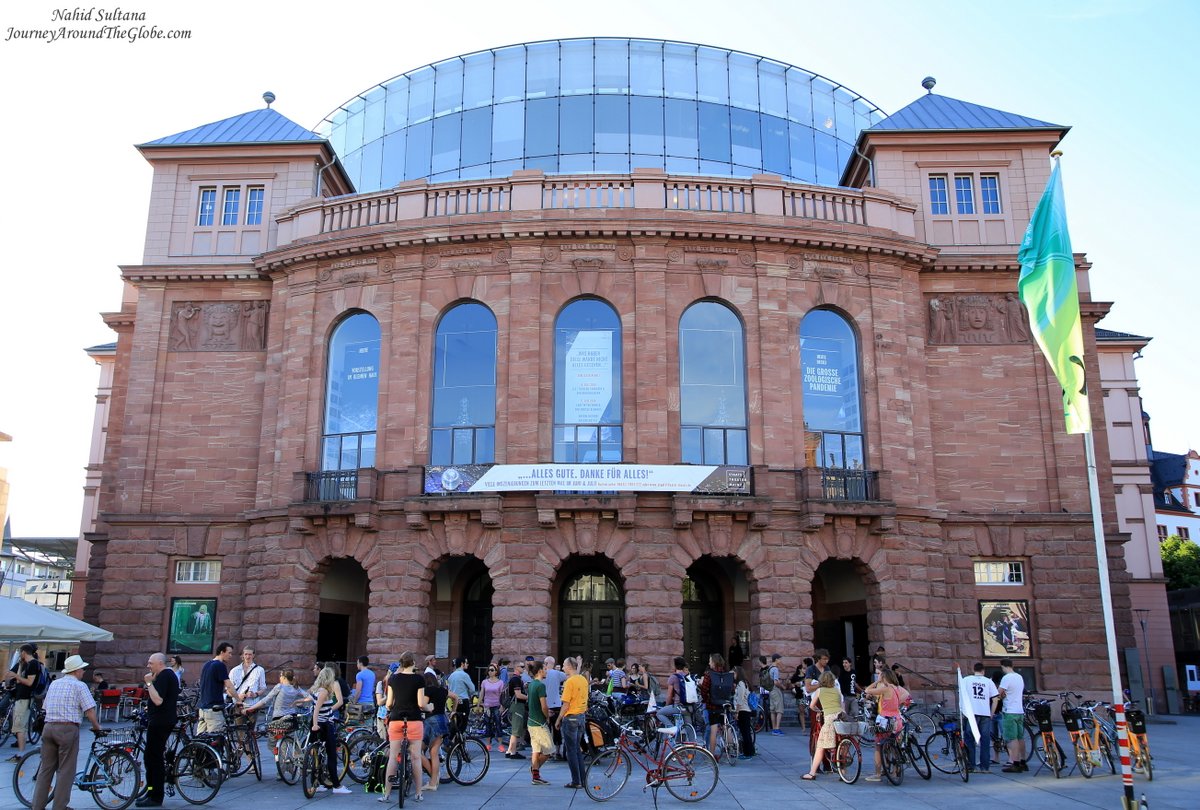
Gutenbergerplatz is surrounded by many cafes, restaurants, and old buildings. Bunch of young people gathered around in front of the theater and were chatting away and laughing. We didn’t go further down the street and stopped here to come back to our car after finishing the dinner. What a short but lovely trip that was!
Share this:

Dubrovnik – “City of Stone and Light”
DUBROVNIK, CROATIA: Dubrovnik, frequently known as “City of Stone and Light” doesn’t need much of introduction. It’s the home of HBO’s Game of Throne, one of the world’s top ten wedding destinations, abundance of breathtaking vistas, and coastline walks. And it’s an old city by the Adriatic Sea or as they call it “Pearl of the Adriatic”. It’s a prominent and elite tourist destination in Eastern Europe and all Mediterranean. No wonder George Bernard Shaw said “those who seek paradise on earth should come to Dubrovnik and find it”.
Around 7th century, this portion of land was under the protection of the Byzantium. Following the Crusades, Venice took over, and then Croatian-Hungarian kingdom. In the 14th century, the nobles of Dubrovnik bargained their freedom, and this become a city-state which flourished for four centuries, maintaining independence from invaders such as the Turks. Dubrovnik became such a powerful force in the Adriatic that it seriously rivalled Venice’s dominance in the region. Those golden days lasted until the beginning of the 19th century when the nobles here were tricked by Napoleon to letting his armies into the city in 1806.
Dubrovnik was one of the most prosperous and advanced maritime republics of all time. Its Old Town is the witness of impressive economic, social, and cultural achievements of Dubrovnik over the centuries. During the disintegration of Former Yugoslavia, the Republic of Serbia and Montenegro and the Yugoslav National Army commenced their aggression on Croatia. The brutal aggression on the city and the southern part of Croatia was part of the master-plan of the so-called Great Serbia. Many sites were damaged by the aggression on Dubrovnik by the Yugoslav army, the Serbs, and the Montenegrins in 1991 – 1992. In October 1991, the attack on Dubrovnik and the surrounding region was initiated from land, sea, and air. The southern part of Croatia was liberated in October of 1992. During this period, the City of Dubrovnik and its citizens underwent one of the greatest hardship in its history. Dubrovnik managed to retain its identity, uniqueness, and spirit throughout the long siege, without water and electricity, and cut off from the rest of Croatia and the world. The heroism of the city towards the daily bombardment the systematic destruction of world heritage monuments, and the suffering of its citizens living in shelters, as well as the courage demonstrated by the Croatian defenders and by many of the citizens involved in the resistance efforts of Dubrovnik, portray the brighter side of the Homeland War. The enemy blockade of the immediate area of the City of Dubrovnik lasted up until July 1992. In spite of Croatia’s international recognition, intermittent attacks on the Dubrovnik region continued until the summer of 1995. Between October 1991 to August 1995, more than 200 Croatian defenders died throughout the entire Dubrovnik region – soldiers, policemen, and sailors. More than 100 civilians died during the numerous attacks on Dubrovnik and its regions. More than 300 people from the Dubrovnik region were incarcerated and tortured months in the prisoner camps that were set up the Yugoslav National Army in Montenegro and eastern Herzegovina. Due to the aggression in the southernmost part of Croatia, about 33,000 people had to flee their homes.

TIME of TRAVEL: Dubrovnik was the last stop of our Easter Break 2014 trip. We visited Podgorica, Tirana, Skopje, Pristina, and Sarajevo before coming to Dubrovnik. First two days weather was beautiful but the last day when we were walking on the old fort’s walls, we were hit by heavy showers and hails for a little while. After that the sky got clear but gloominess didn’t go away. On an average it was a bit cold and wet during our visit but the best part was that we could avoid the massive summer crowd at this time.

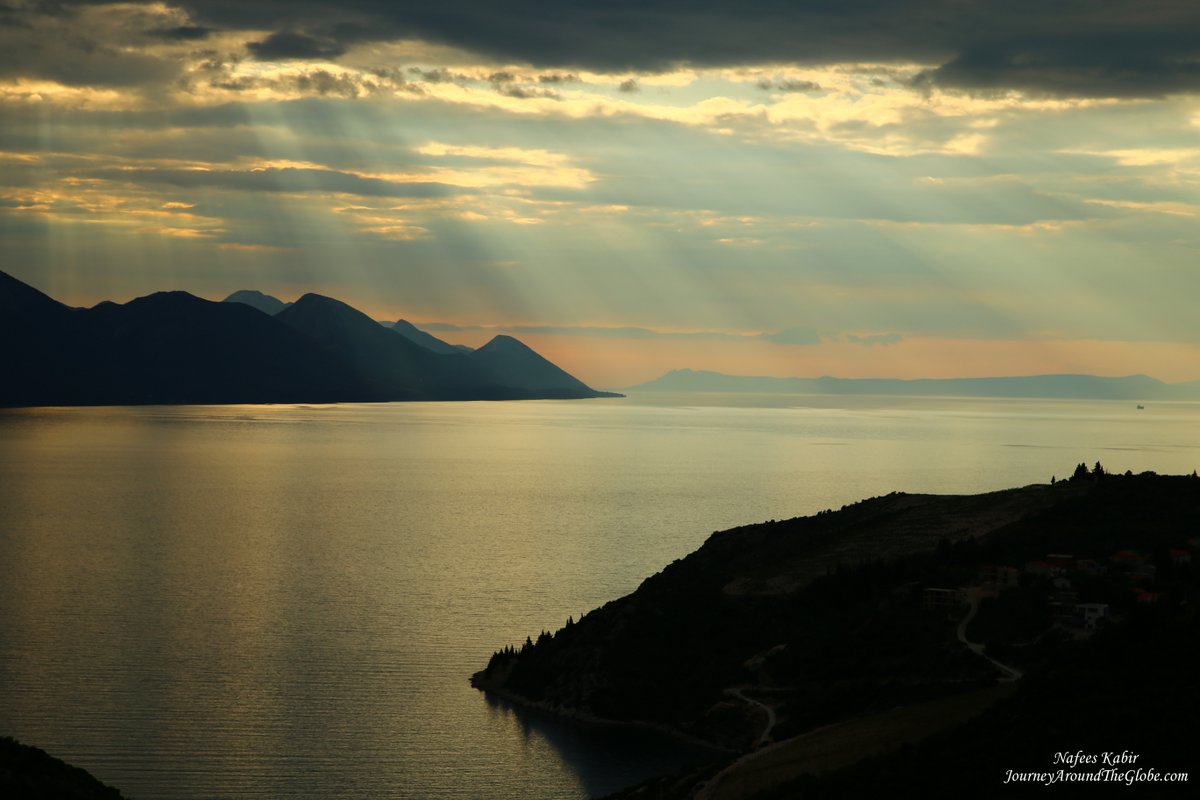
OUR HOTEL: Our hotel in Dubrovnik was fabulous Royal Princess Hotel by the Adriatic Sea. It’s a Five-Star ocean-front hotel and our family suite had a breathtaking view of the blue water. We could stand on the balcony and look at the limitless water at sunrise and sunset. We had free extraordinary breakfast buffet and Wi-Fi. Parking garage was available and bus-stand to the city center was only 3 minutes’ walk. Reception also had reduced bus tickets at their counter. We didn’t have to go too far for dinners either; there were few different restaurant options inside the hotel compound including a Mediterranean buffet. Overall, everything was just perfect in this hotel.
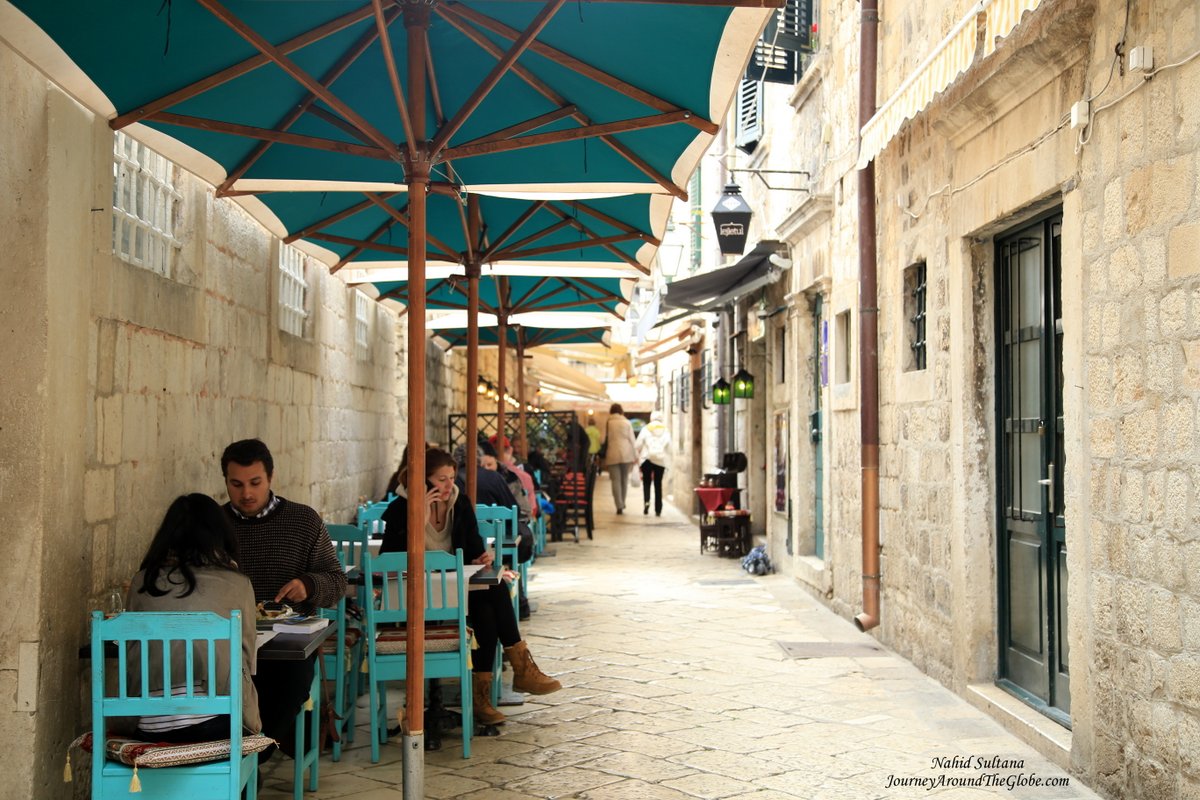
EATING and SHOPPING: Stradun is one of the best place for meal or drink. Sit down in one of the already-overcrowded cafes or restaurant and have some relaxed moments. Classic Dubrovnik cuisines are seasoned with parsley, garlic, olive oil, and lemon, and perhaps a touch of rosemary or bay leaf. You can get a true Mediterranean experience in their dishes. We usually came back to our hotel during the dinner time and since our hotel had more than just one option for meal, we explored few different restaurants at the end of each day. For our 1st lunch, we stopped at “Poklisar” in Old Town by the marina where daily boats leave for different trips. Their food was fantastic and had different variety of dishes, like pizza, pasta, salad, soup, and a nice selection of local traditional dishes. Also best part of this restaurant is that they don’t use any GMO products and all the ingredients are locally grown. 2nd lunch was at “Mea Culpa”, a bistro/trattoria also in Old Town on one of the smaller streets. This is known to be a good pizzeria with endless options of pizza, pasta, risotto, salad, and lasagna.
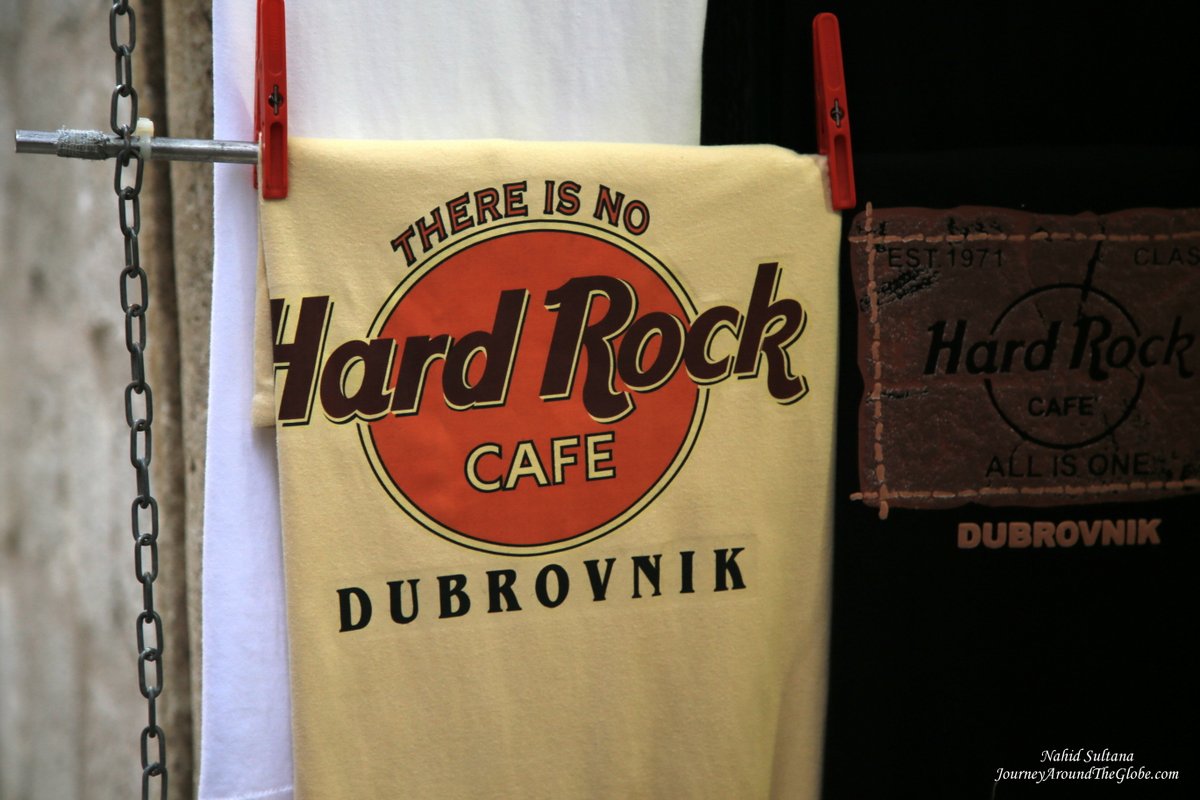
Most of the shops we saw are in the Old Town…some on Stradun and some on the off of Stradun in the smaller alleys. We saw canisters with Croatian maps, dolls with traditional dresses, and other generic gifts items almost in every store. For us, we bought a large print of painting near the Aquarium by marina.
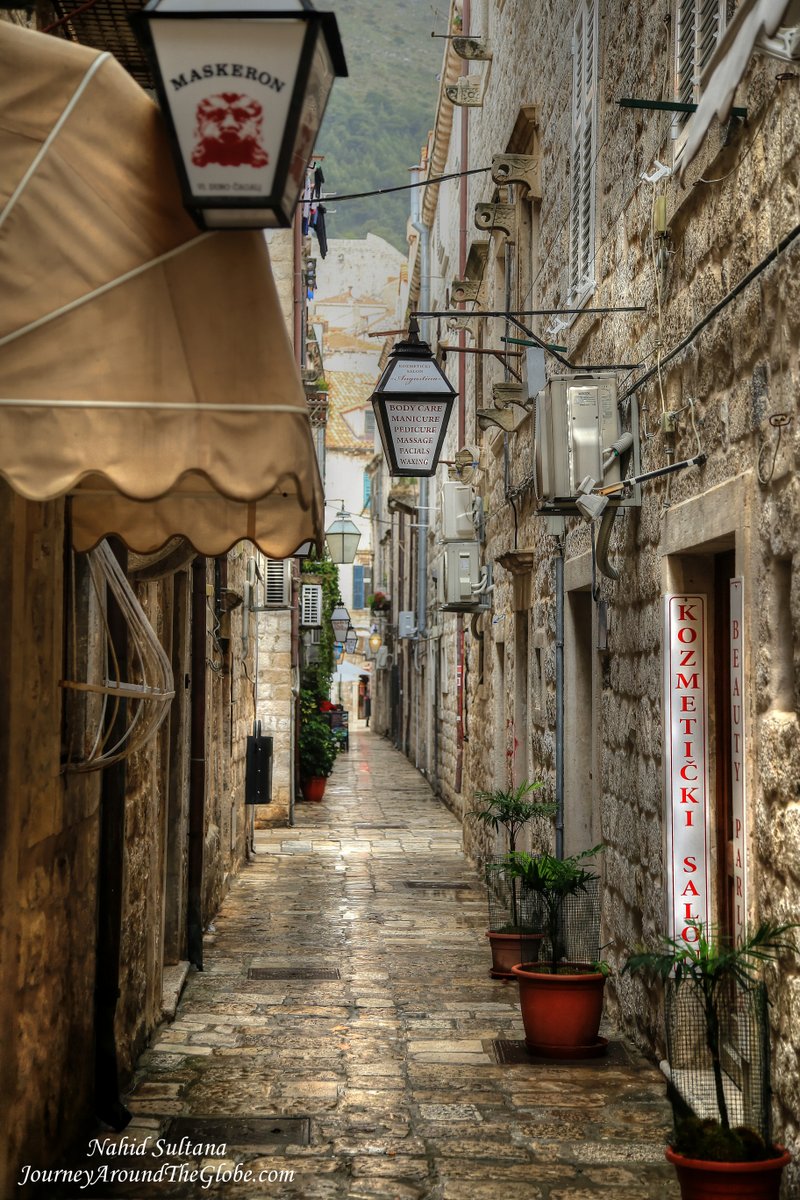
PLACES WE’VE VISITED: The love of beauty is visible with every step in the Old Town; this is a living museum and famous UNESCO World Heritage site. Although this portion of Dubrovnik was heavily bombed during the Yugoslavian war in the early 90s, the city came back to its original glorious look very soon. But you can still see some bullet holes and damages around the Old Town. Almost 3000 people live in Old Town now, some for many generations. Some of the streets here can be steep and uneven, make sure to wear comfortable walking shoes. Old Town of Dubrovnik can easily be covered on foot. Something you should notice in the old part that most of the stores in the small alleys have lamps above their entrances that mention the name of those stores…pretty unique.
We didn’t have chance to go Rector’s Palace…one of the loveliest 15th century buildings in the city which once was the palace of Major Council, is now a Cultural History Museum. Here you can view the richly appointed offices and quarters of the Rector, arsenal, courtroom, and prison cells. The city also has number of good museums and historic landmarks and buildings.
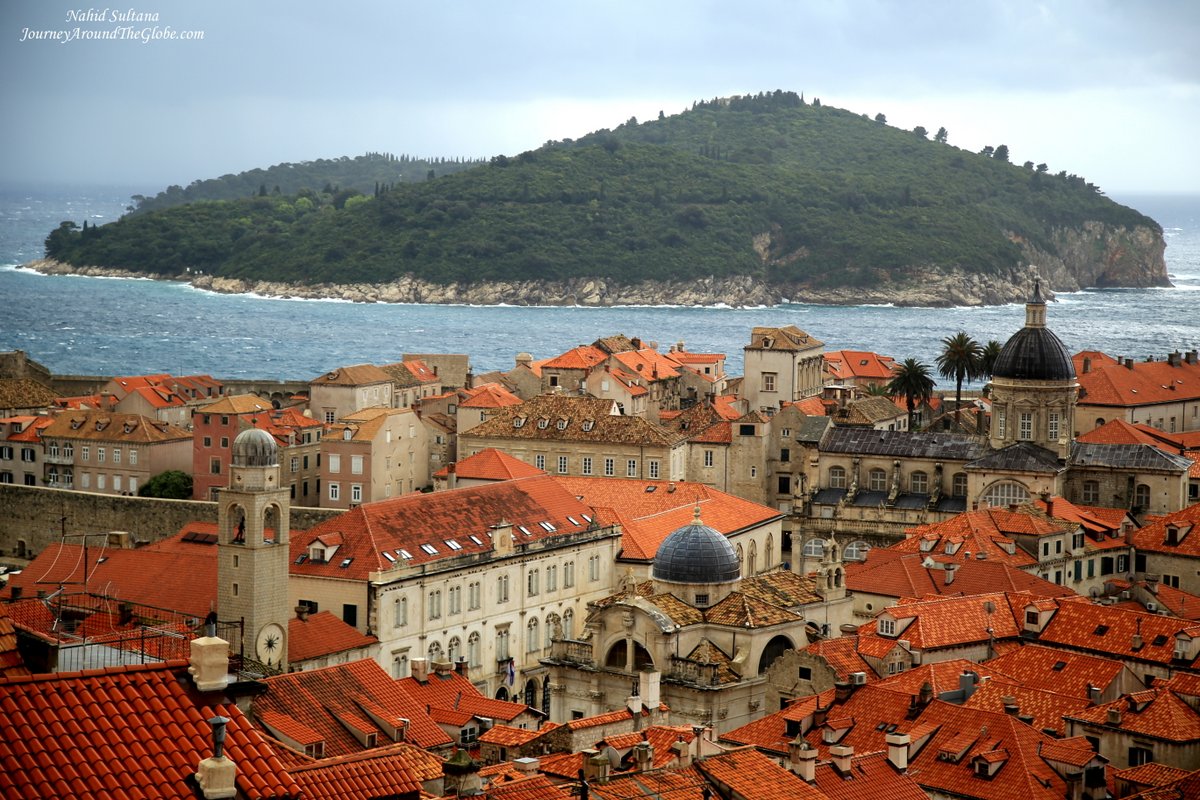
If you have more time in Dubrovnik, enjoy some of the finest beaches of the city. If you want to experience the tranquility of island life, you don’t have to go too far. Although we couldn’t manage to go, the island of Lokrum is a mere 15 minute boat cruise from the Old Town. The shores are rocky but it’s known to have some of the best swimming spots. Benedict monks in the 11th century built a monastery in this island. Austrian Archduke Ferdinand Maximillian Joseph built a summer house here and a botanical garden was founded in the late 1920s. Lokrum is a Nature Reserve now. You can supposedly get the best view from its star-shaped fort on the hill, built by the French in 1806.
1) PILE GATE and BIG ONOFRIUS FOUNTAIN: Near Pile Gate we got off the bus#6 on our first day. After crossing a stone bridge that ends in a drawbridge spanning the old moat (now filled with park benches and trees), we entered to Old Town thru Pile Gate. This is a nice starting point to stroll through the Old Town. Both Pile and Ploce gate (another gate to enter Old Town) are masterpieces with reliefs of St. Blaise, protector of the city, above the gates.
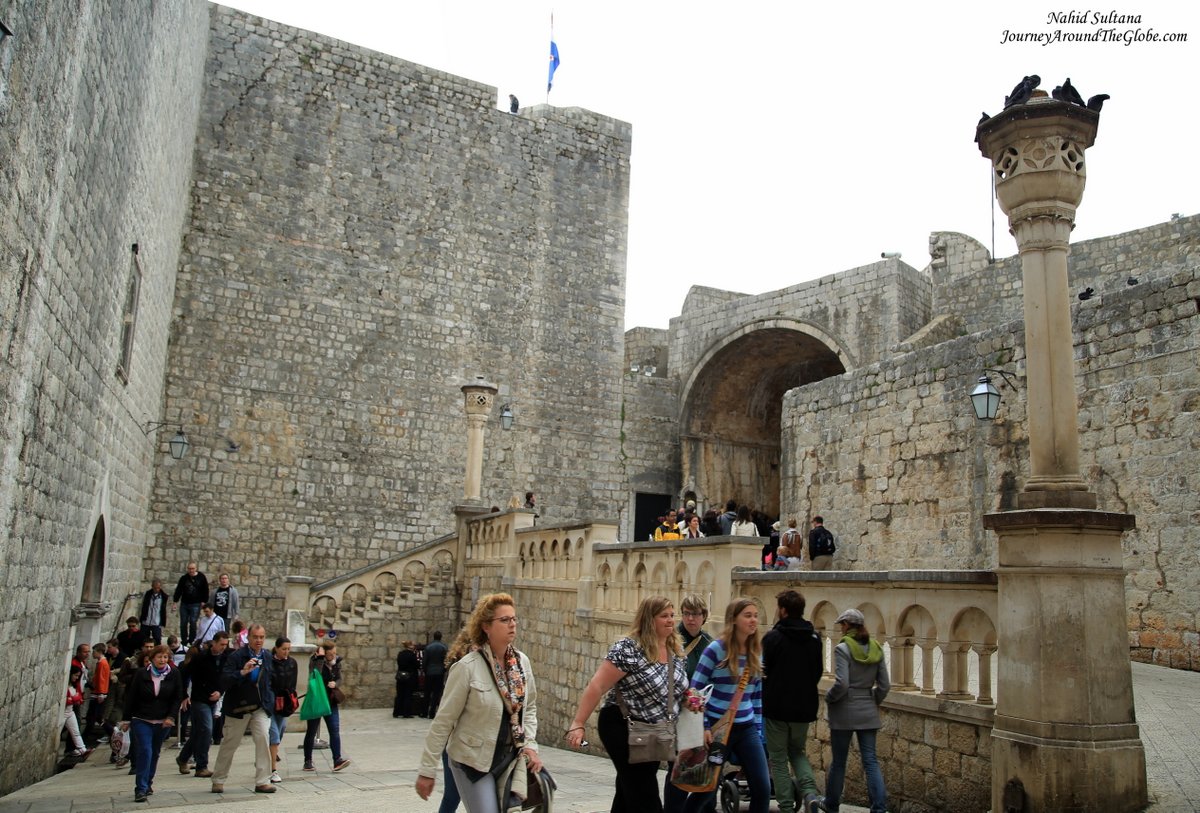
One of the first spectacular sights that greets you when you enter Stradun from the Pile Gate is the Great Onoforio Fountain with its huge central dome and 16 water taps all around. A ledge and steps around the water trough provide a perfect resting spot for tired sightseers and pigeons or meeting place for the local youth. This old fountain is at the western end of Stradun (the main pedestrian street). There is another “Onoforio”, called Small Onoforio, an elegant masterpiece decorated with playful dolphins near the tower at the other end of Stradun.
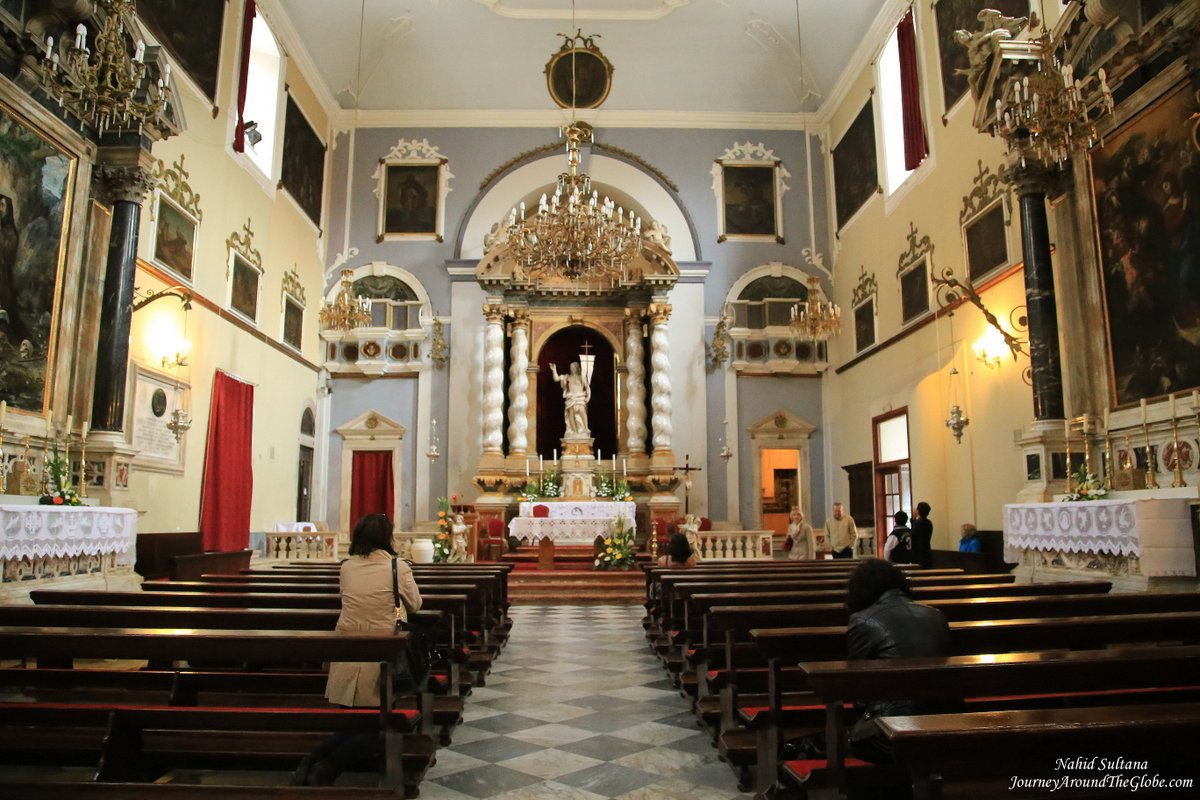
2) CHURCH of ST. SAVIOUR: After entering the Old City from the Pile Gate, this is the first church we saw opposite of Great Onoforio Fountain. It was closed at first but we came back the next day and went inside then. Thank god that we had the chance of seeing its inner beauty. It was built around 1520 – it is said that even the city’s aristocratic ladies helped with carrying wood and stone.
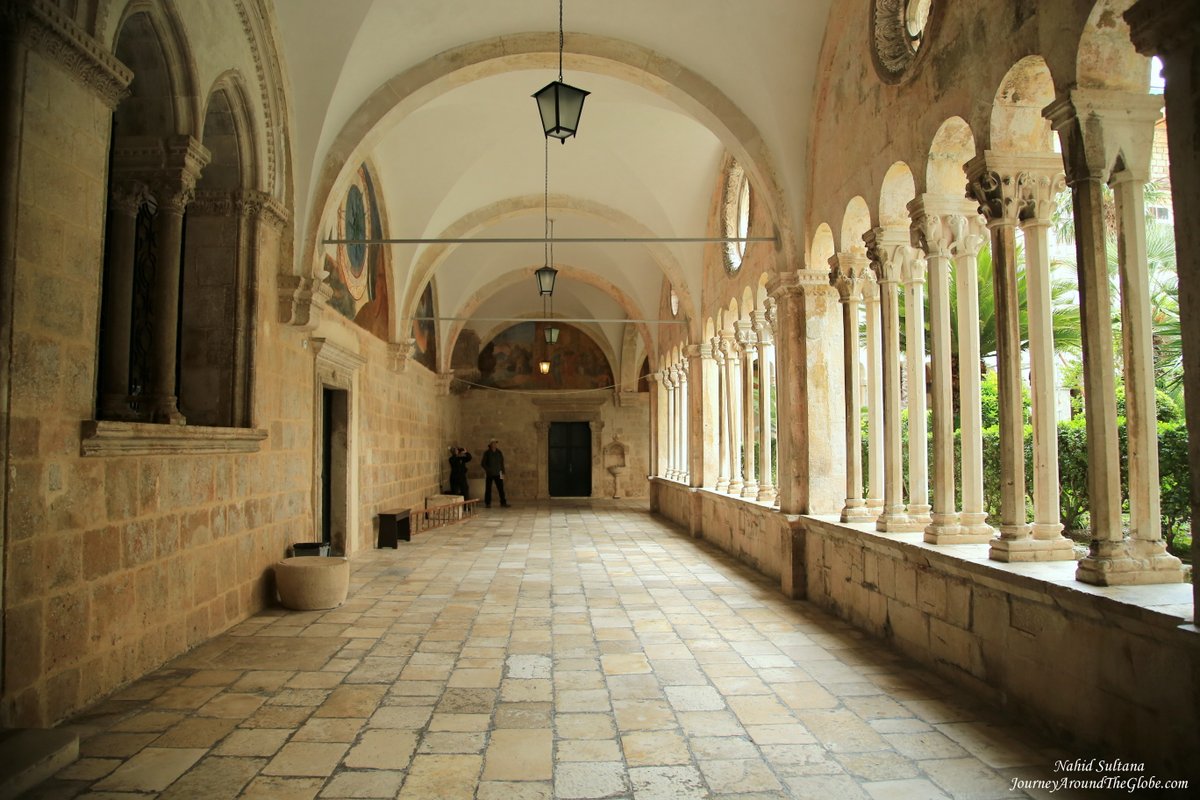
3) FRANCISCAN MONASTERY and OLD PHARMACY: Right beside Church of St. Savior is this monastery with Baroque church. The Romanesque cloister of Franciscan Monastery is an absolute delight, guarded by delicate columns and decorated with the remnants of old frescoes, a garden where orange trees grow.
The monastery is most famous for its pharmacy. This is among the oldest in Europe, 3rd oldest in the world, and the oldest one still working. The pharmacy houses many old paintings, artifacts from the 15th/16th century. In the museum of monastery, you can see the original items from the pharmacy, plus an extensive library with manuscripts, a large collection of musical notations and a treasury of artworks. Interesting thing we noticed inside the monastery was you can still see some damages that Serbian army caused during the war of 1999.
The museum of monastery is open from 9 – 6 and costs 30 kn/4 euros per person.
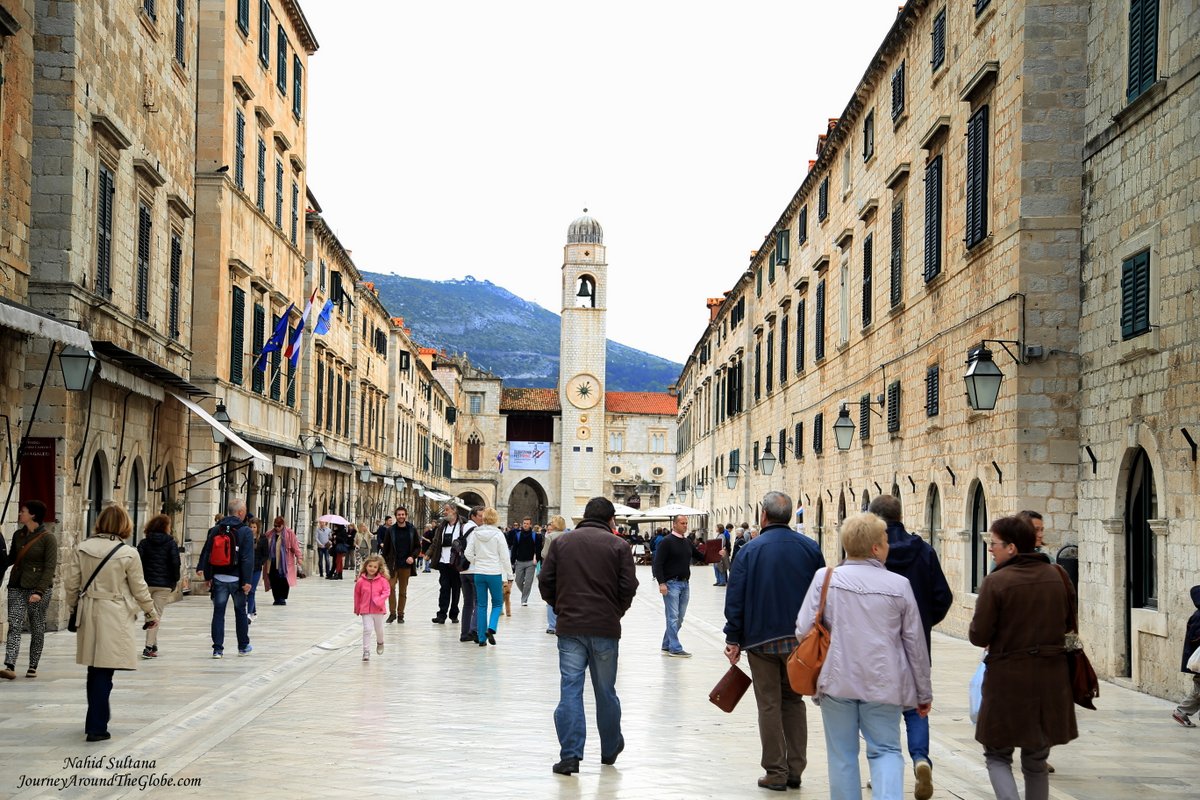
4) STRADUN, PLACA: Stradun is not usually in the maps of Dubrovnik (may be in some), it’s the unofficial name for the main pedestrian street that joins two main entrance to the Old Town. This is the spine of Old Town you can say with uniform Baroque buildings on both sides. It’s here where visitors usually come to take a stroll or for an evening coffee time. You will find countless cafes, restaurants, shops, and boutiques on this long stretch of street. Wander off to one of many smaller alleys from Stradun; some of the best eateries with nice atmosphere can be found in these alleys. Today, Placa is the shopping center and venue of major events.
5) ST. IGNATIUS of LOYOLA: We took a smaller alleys off of Stradun and started walking leisurely towards this church. St. Ignatius church was designed by a Roman architecture based on the church of St. Ignatius in Rome. Construction started in 1699 and was completed in 1725. This is a wonderfully ornate Jesuit church with marvelous ceiling, dome, and paintings. The sanctuary was painted by a Sicilian artist. The ceiling of the dome represents the glory of St. Ignatius. There are four side altars in the church. Near the entrance, on the right, is the grotto of Our Lady of Lourdes, one of the oldest grottos built in Europe (1885). Its present appearance is the work of a Croatian artist from 1966.
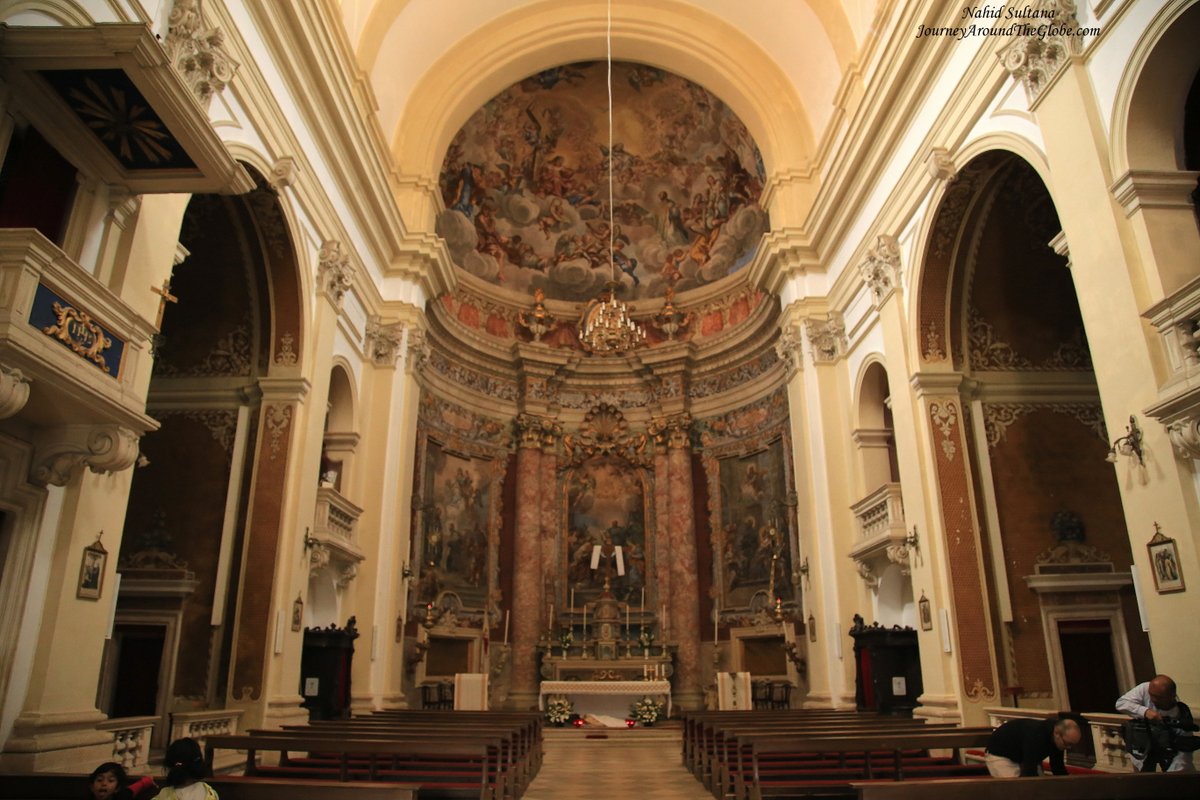
The church is on a fine complex on an elevated square close to the southern edge of Old Town. We approached the church via romantic 18th century Baroque staircase which is modelled on the Spanish Steps in Rome. Both the staircase and the square in front of the church are atmospheric spots in the oldest part of the city.
The church is located closer to the east end of Stradun and there is no fee to enter.
6) DUBROVNIK CATHEDRAL: This is the beauty and the pride of Dubrovnik. With its imposing forms and beauty it dominates the core of the Old Town. Its dome gracefully tops the skyline whichever way you look at it. This white Baroque building glitters in the center and its lovely dome rises above other buildings. The cathedral is closely connected with the history of Dubrovnik, and it reflects all the periods in town’s past: its rise, destruction, and rebirth in the course of thousand years of long history. The cathedral is most famous for its collection of treasures.

The cathedral was built in 1713 on an early Romanesque cathedral from the 12 century. But after an earthquake in 1979, more excavations showed that there was an even earlier Byzantine cathedral from the 7th or 8th century.
The present day Baroque cathedral, the third church built on the same site was built between 1672 – 1713 on the remains of the former Romanesque cathedral, which was erected between 1131 – 1157 and destroyed by a disastrous earthquake in 1667. In 1979, another earthquake hit Dubrovnik which considerably damaged the Baroque cathedral which had to be repaired.
7) CITY BELL TOWER, CITY HALL, and ORLANDO’S COLUMN: The Bell Tower crowns the east end of Stradun and we could see it all the way from the west end as soon as we entered Old Town thru Pile Gate. If you look carefully you’ll notice the figures of two men, called “The Green Ones” poised with hammers. Bell is the only original part of the tower – an older one dating back to 1444 was destroyed and rebuilt in 1928 and it weighs two tons. The gigantic bell is rung every hour.
On the eastern end of Stradun begins a remarkable chain of buildings. City Hall is one of those buildings next to City Bell Tower and opposite of St. Blaise Church. An old Arsenal and Marin Drzic Theatre are part of this complex.
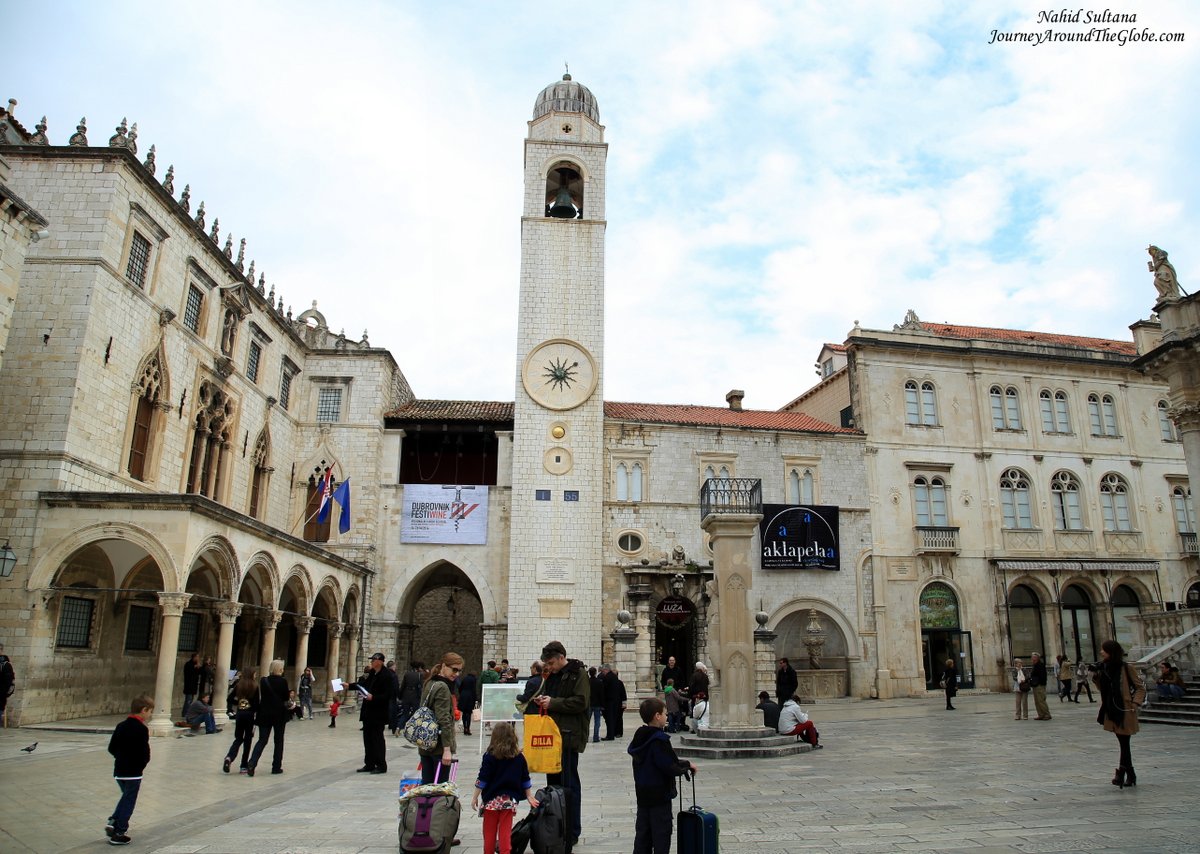
At one end of Stradun, near St. Blaise, and in front of Bell Tower stand a column with a carving of Orlando (or Rolando), a legendary knight embodying freedom and nobility. We saw statues of Rolando in various Hanseatic League statues in Germany, like Bremen. This one in Dubrovnik was raised in 1418. This spot once was the marketplace and the “political” heart of the city.
8) SPONZA: Next to Bell Tower is the grand entrance of Sponza, a Gothic Renaissance palace. This is one of the few buildings that survived catastrophic 1667 earthquake. The City of Dubrovnik dedicated a memorial Room, called “The Memorial Room of Dubrovnik Defenders”, with eternal respect and gratitude to the Croatian defenders of the Dubrovnik region, who died under various circumstances in the defense and liberation of southern Croatia during the Homeland War – to those most deserving who ensured that the City of Dubrovnik would remain eternally – the City of Freedom. The mostly features history and many pictures of heroes who fell during the war of 1991. There is no entrance fee.
9) DOMINICAN MONASTERY: This monastery was established in the 13th century and a century later, it became an important part of city’s defense. It’s an exceptionally valuable historic complex for being at a strategic corner of the Old Town, vulnerable to attack from land and sea.
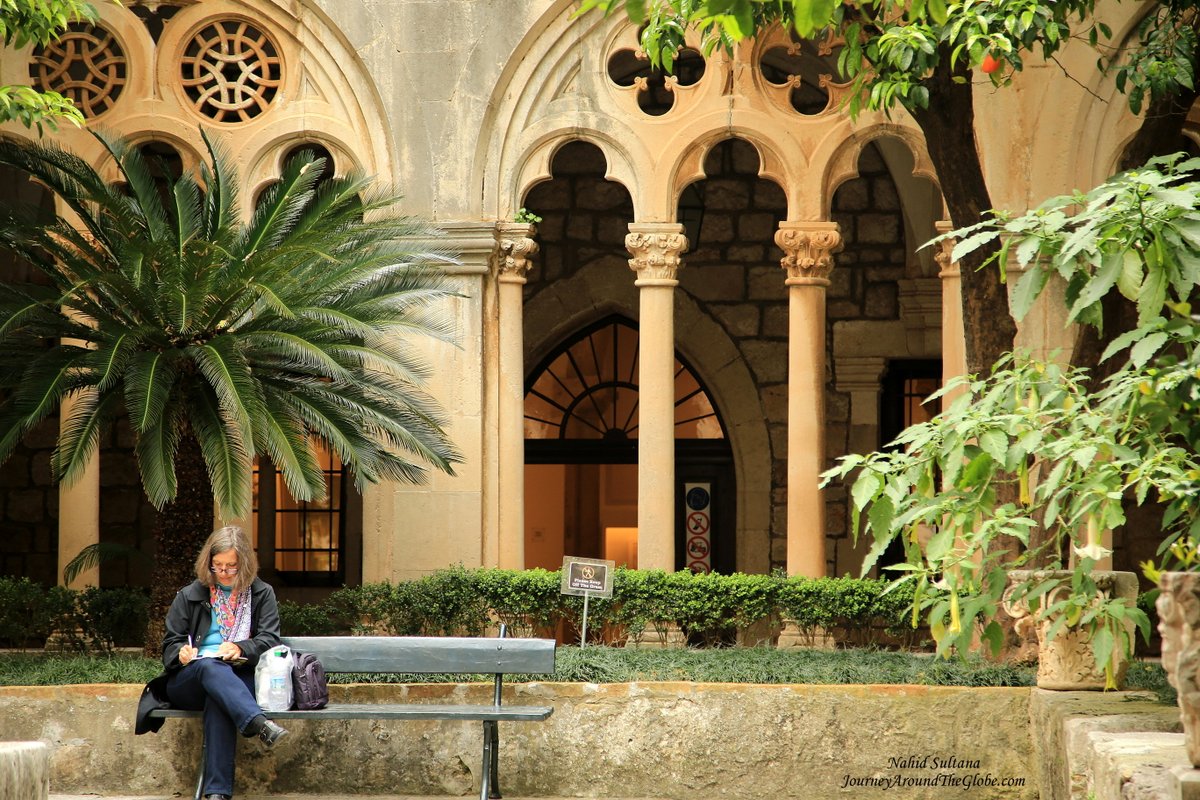
Graceful stone steps lead up to the complex. The monastery hides a jewel of a Gothic and Renaissance cloister from 1469 with a thick carpet of grass in the center. This peaceful cloister is something similar to Franciscan Monastery but the garden is more beautiful. Interior of the monastery is delightfully simple with a wooden roof and some fine stone furniture. Dominican Monastery, like Franciscan, holds an important library and collection of art including a painting of Dubrovnik before the great earthquake. A small museum holds many old religious paintings and items from the 15th/16th century. Beside its religious purpose, the monastery represents an important artistic treasury of ancient Dubrovnik.
It’s 30kn per person. Visitors have to climb few stairs to the entrance.
10) ST. BLAISE CHURCH: The church was named after the protector saint of Dubrovnik and perhaps the most beloved church of the locals. A church has stood on this spot since 1368, but after a fire this new church was built in Baroque style in 1717. The Venetian architect, Marino Gropelli, who designed this church also is the sculptor of the statue of St. Blaise standing above the entrance, protectively holding a scale model of the Old Town in his hand. Inside is pretty small but very elegantly adorned.
The church is located on Stradun where Bell Tower and Statue of Orlando are located. There is no fee to enter.
11) SERBIAN ORTHODOX CHURCH: Built in 1877, Dubrovnik’s Orthodox Church stands behind impressive wrought iron gates. The church houses number of icons, mainly Byzantine and Cretan. This is another small but gorgeous church and worth a visit.
12) THE AQUARIUM: This was a treat for our girls. It’s small but it gives you the chance to get to know the sea life of the Adriatic without having to eat it. Our daughters loved the small collection of local sea creatures here. It took us about half an hour to finish it off.
The Aquarium is housed in magnificent St. John’s fortress by the marina. It’s 30kn per adult, over 6 is 15kn and infants are free.
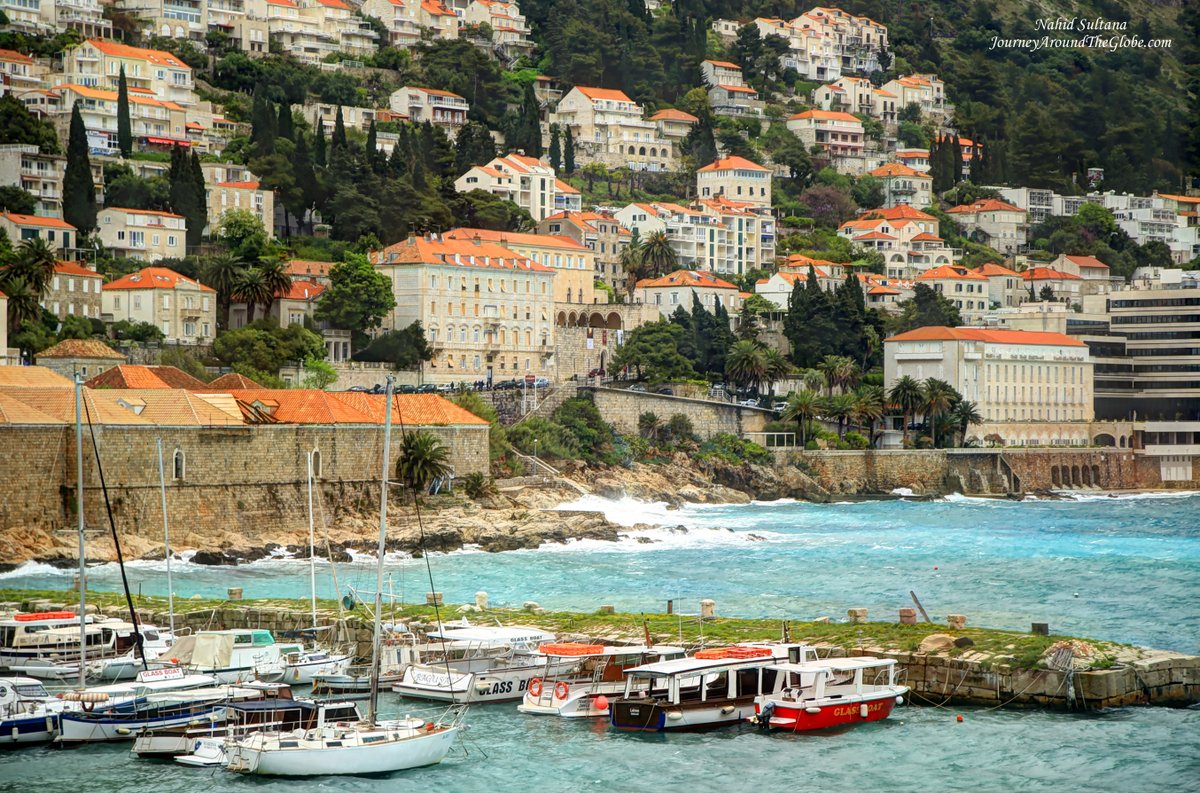
13) CITY HARBOR: This harbor was one of my favorites here. It lay at a natural resting point on the maritime trade routes that existed even before the Roman Empire. Now this is the shelter for embarking on a boat tour or for enjoying a good meal. You get a nice view of the harbor if you take the City Wall Walking Tour.
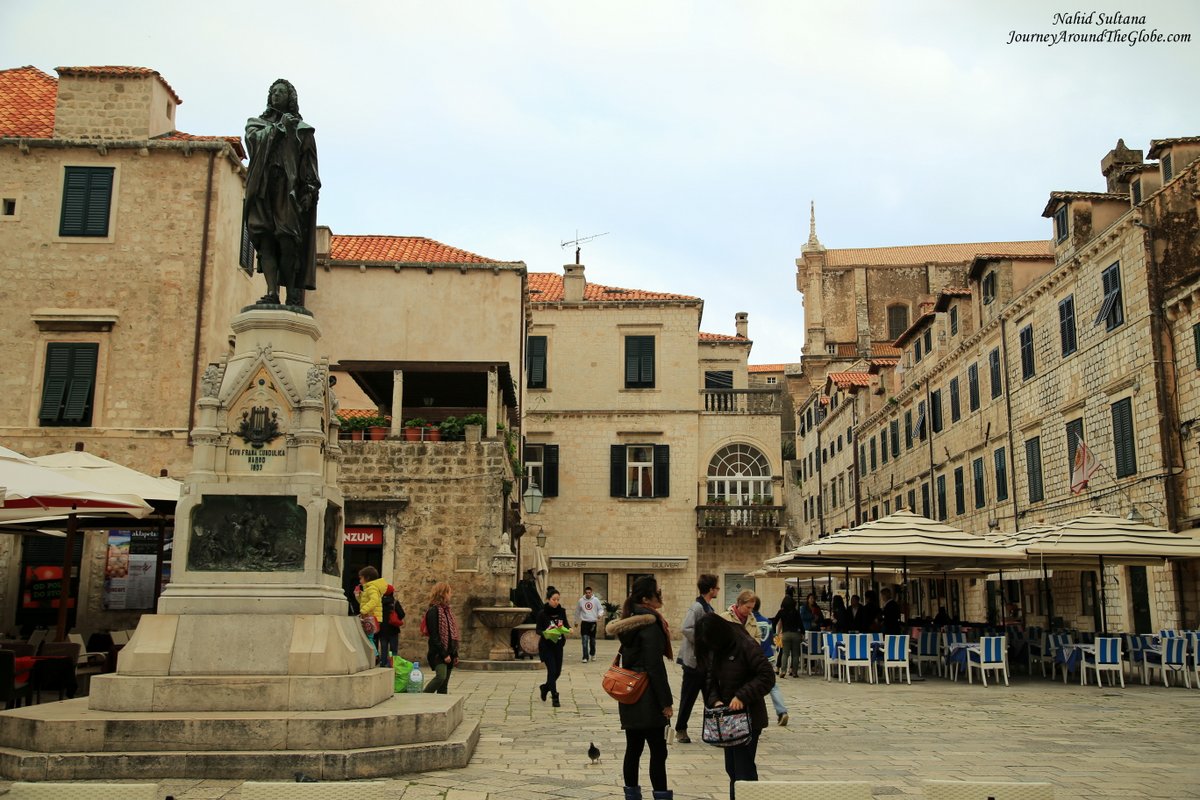
14) GUNDULIC SQUARE: This square come to us as a surprise when we were walking back to Pile Gate at the end of day-2 in Dubrovnik. The square was named after a Baroque poet, Ivan Gundulic, whose verse set the standard for literary Croatian which is still accepted today. His statue in the center of the square was erected in 1893. Gundulic Square is bordered by elegant shops, restaurants, and homes the Old Town’s fruit market in the mornings.
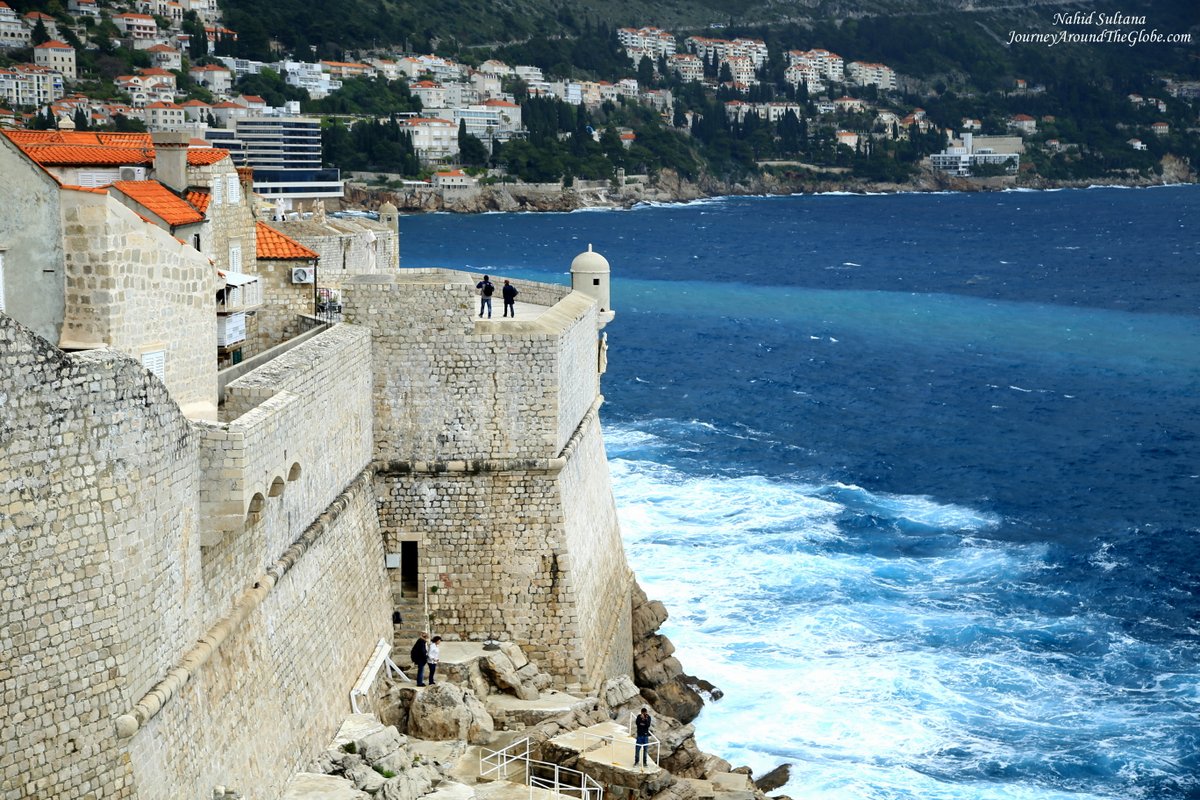
15) CITY WALL WALK: Anyone who walked on the City Wall of Dubrovnik will tell you this is an absolute must. It gives you a different perspective of the old town, its history, and surrounding stunning beauty. You get some of the best shots of Adriatic Sea, Old Fort, terracotta ceilings of Old Town, adjacent Lokrum Island, and the harbor as you walk along the old wall.

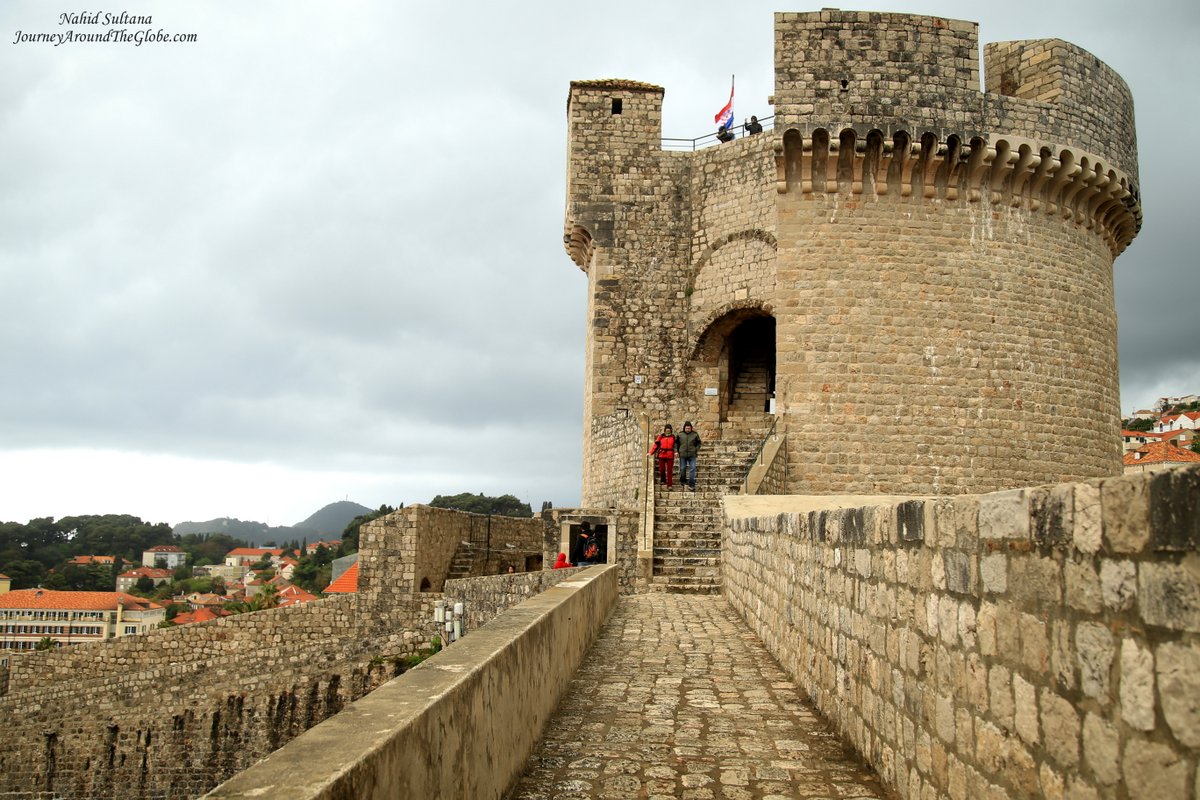
Almost 2km long, Dubrovnik’s city walls are among the best preserved and most attractive on this planet. There are a total of 1080 stairs throughout the walls. The defenses were built between the 8th and the 16th century. In some places the wall is about 6m thick and they were strengthened by myriad towers and bastions and were never breached.
City Wall Walk is 100kn per person and is 2km long. They accept only Kuna or Credit cards, no euros or dollars. There are few different entrances to start your tour on the wall. It took us little more than an hour. But it was first drizzling then started pouring really badly, so we had to take shelter in a shaded area of the walls. There are some small snack bars on the wide parts of the walls where you can sit down for tea or knick-knacks. But for us, that day was a wet and rainy day…at one point we literally had to run to avoid the rain.
Share this:

Visiting Amsterdam for the last time
For those of you who have been reading my blog for sometime, you may already know that I am an ex-pat living in Belgium for the past three years with my family. Unfortunately or fortunately we are leaving Europe and going back to our home in the USA in less than a month. It’s a mixed feeling for all of us…we kind of got used to this relaxed life in Belgium, at the same time we missed our friends, families, and familiar things of what we left behind in Oregon. I do want to thank you all my readers and followers for supporting me with your “Likes” and your nice comments. After moving back to the USA, our goal is to start exploring South America, Australia, and some parts of Asia.
Only 4 weeks left before we say good-bye to this beautiful land of Belgium and all Europe. We may come here in the future again to visit but won’t be for this long. After we came back from Belgrade, Serbia we are utilizing every weekend to go everywhere for one last time. We visited Germany 2 weeks ago and were in Amsterdam for the last time this past weekend. We will probably make one last trip to Paris and some other old/new places, and the last weekend we kept it to visit Mont Blanc … the French Alps that we have been longing to go for a long time.
So saying it all, here are some of the stuff we did during our last visit to Amsterdam.
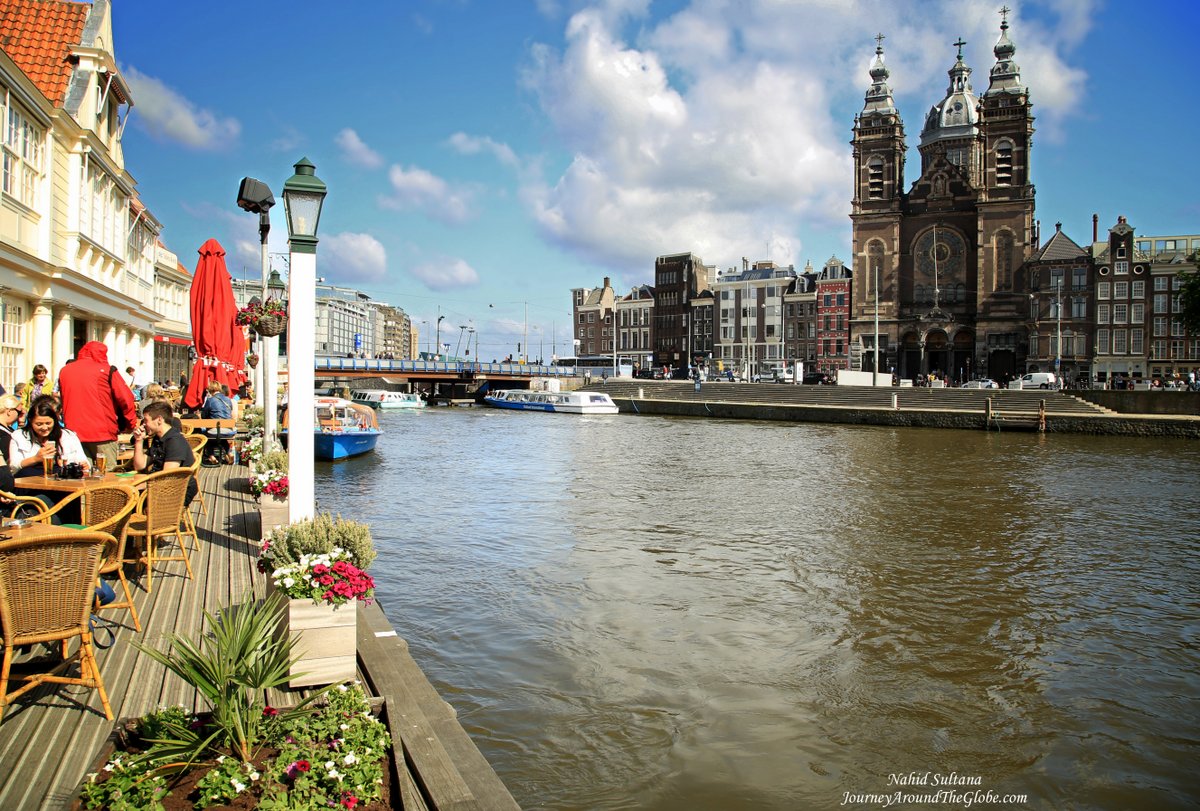
First time we came to Amsterdam was when we were flying from Portland, Oregon, USA to Stuttgart, Germany. We had a stop over in Amsterdam Airport Schipol for few hours. We had only 5 hours to explore the city before our next flight to Germany. It was 1st week of April and the weather was simply marvelous. Second time we went there was in 1st week of September, 2011, on a Saturday. The weather was awesome, not too hot and luckily no rain. Another time we were in Amsterdam was when we took our Baltic Sea Cruise by Carnival Legend in August of 2013. We only visited Van Gogh Museum the day we docked in this city. Last time we went to Amsterdam was before we left Europe for good, in June of 2014. My husband’s aunt was here from Virginia and we spent a weekend there to enjoy all the Dutch environment we could for one last time. Weather was nice, around mid 60s during day and a bit on the cold side after evening.
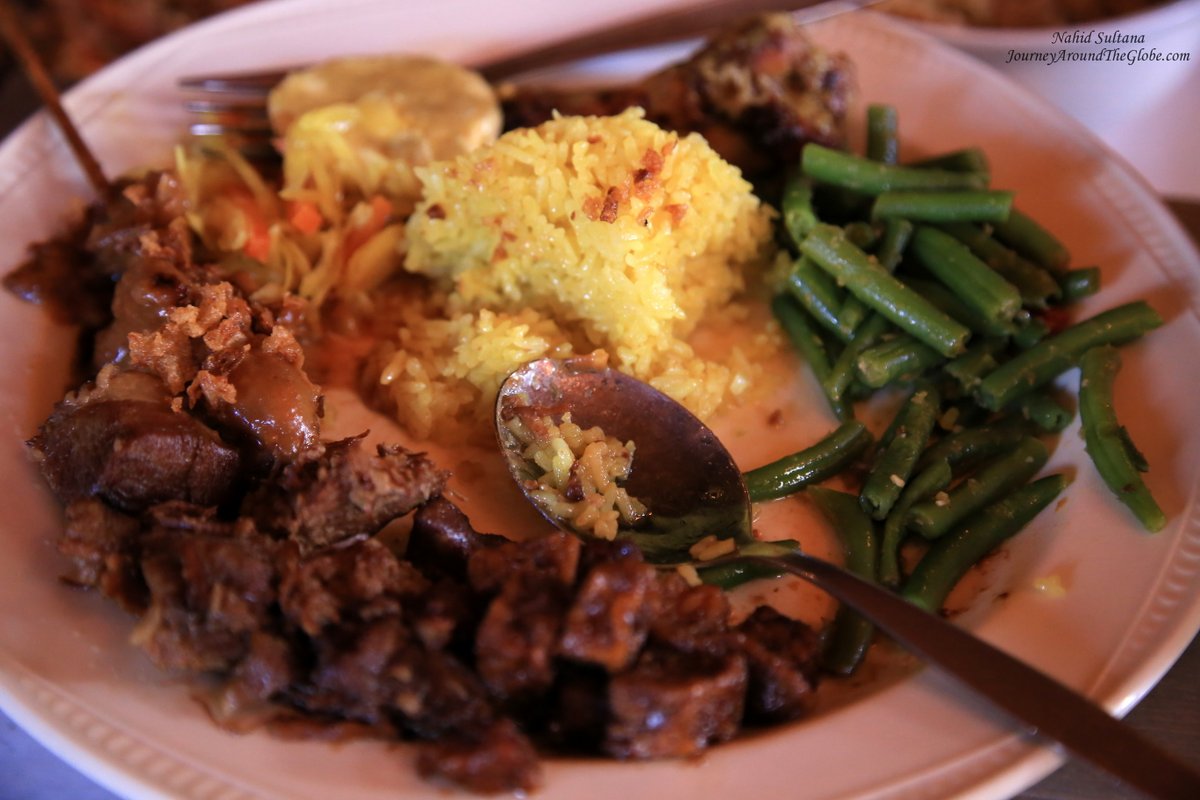
EATING and SHOPPING: Few times we were in Amsterdam, we had mostly fast food or street food, like hotdogs, Subway, and Burger King. We were told by few people that Amsterdam is well-known for Indonesian restaurants. So when we visited Amsterdam for the last time before leaving Europe, we had to try some Indonesian food. There are plenty of them in the center, and all around. We sat down in “Srikandi” near Rijksmuseum. This is a small but very homely restaurant. They have a wide range of options but no pork or ham. It’s a bit pricey, dishes start from 20 euros, but very tasty food with rich flavors. We had fried rice, yellow rice, spicy beef, whole fish, and a mix meat platter…every single dish was unbelievably good. For dessert, we had Javanese cinnamon cake, coconut slices in syrup, and some exotic fruits with ice-cream.
For shopping, Damrak or the small streets near Dam Square and in city center are very good. When you are in The Netherlands, you gotta buy wooden shoes, ceramic windmills, or wooden tulips. You can also find blue and white Delft potteries in most of the stores along with generic t-shirts, mugs, magnets, post-cards, key-rings, and etc.
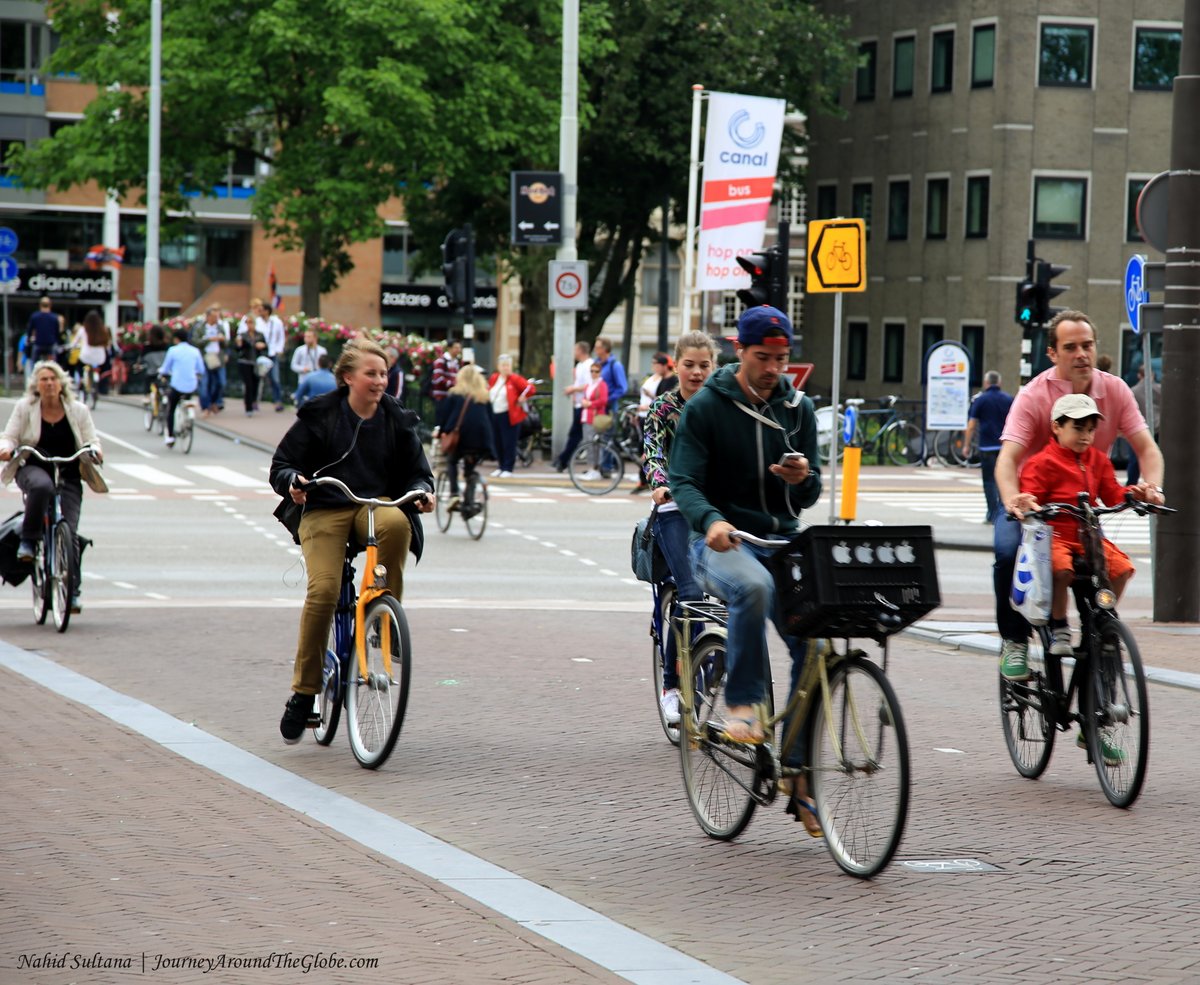
PLACES WE’VE VISITED:We were lucky enough to get many chances of visiting Amsterdam from time to time. Different times we visited different sections of this town. Most of the attractions are in or around Dam Square. Museumplein is the best place to hangout for all the museum-lovers. Walking in Amsterdam can be a bit hard because of overly crowded tourists, locals, and bi-cycles, but this the best way to enjoy its true beauty. For me, canals of Amsterdam are the most unique and I prefer walking over anything to get the most of it. There are trams, rickshaws, and other public transportation available if it’s too much for you. This time we visited Rijksmuseum, took a canal cruise, saw the beautiful building of Central Station and walked along Damrak.
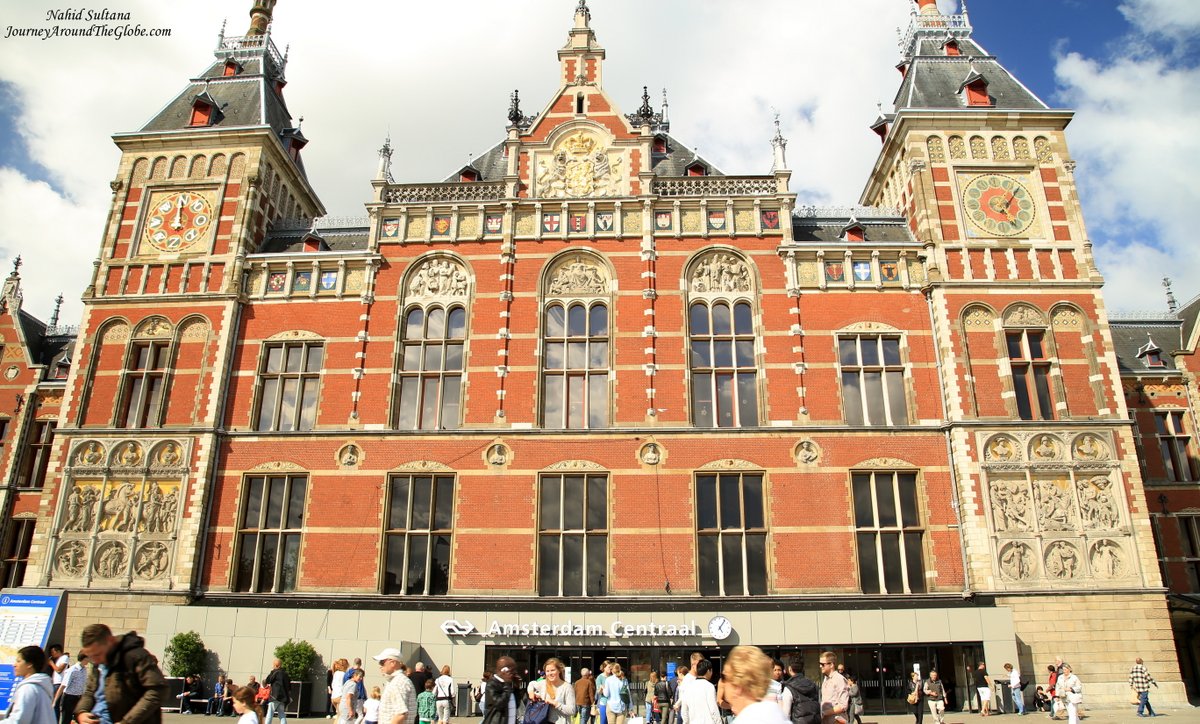
DAMRAK and CENTRAL STATION: Damrak is main street that connects Dam Square and Amsterdam Central Station. Damrak is the place to for souvenirs hunters, but shops are a bit pricey on this street. You can find plenty of cafes, snack-bars, restaurants here as well. Sex Museum, Medieval Torture Museum are also located on this crowded street. The walk between Dam Square and Central station is less than 10 minutes. Central Station is where we came to first time we reached Schiphol Airport in The Netherlands. This is an imposing building inside and out. Trains for all the big cities, like Paris, Brussels come here everyday.
RIJKSMUSEUM: On our last visit to Amsterdam, we had only two agendas – one was to visit Rijksmuseum and another was to take a boat ride in the canals. Rijksmuseum is considered as one of the top ten museums in the world. The building itself of this museum is very artistic from outside. There are total four immensely big floors to explore in Rijksmuseum and each floor has two wings to cover.
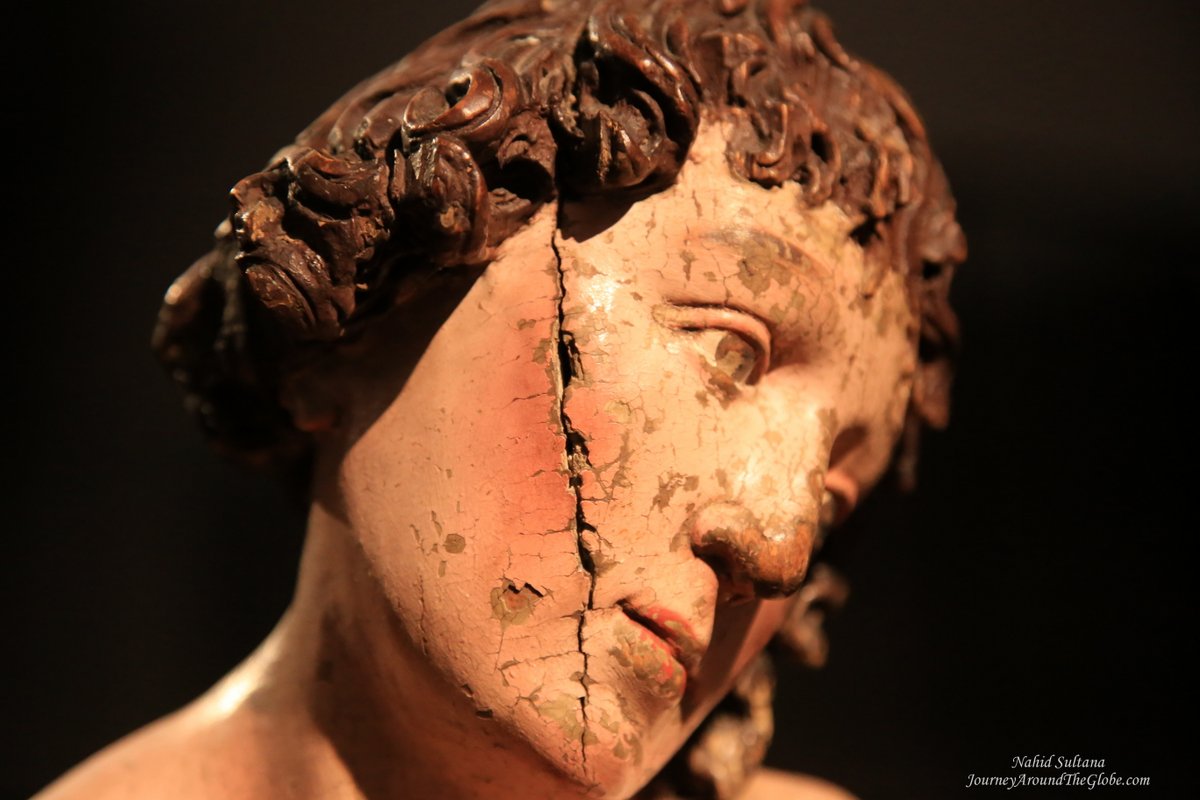
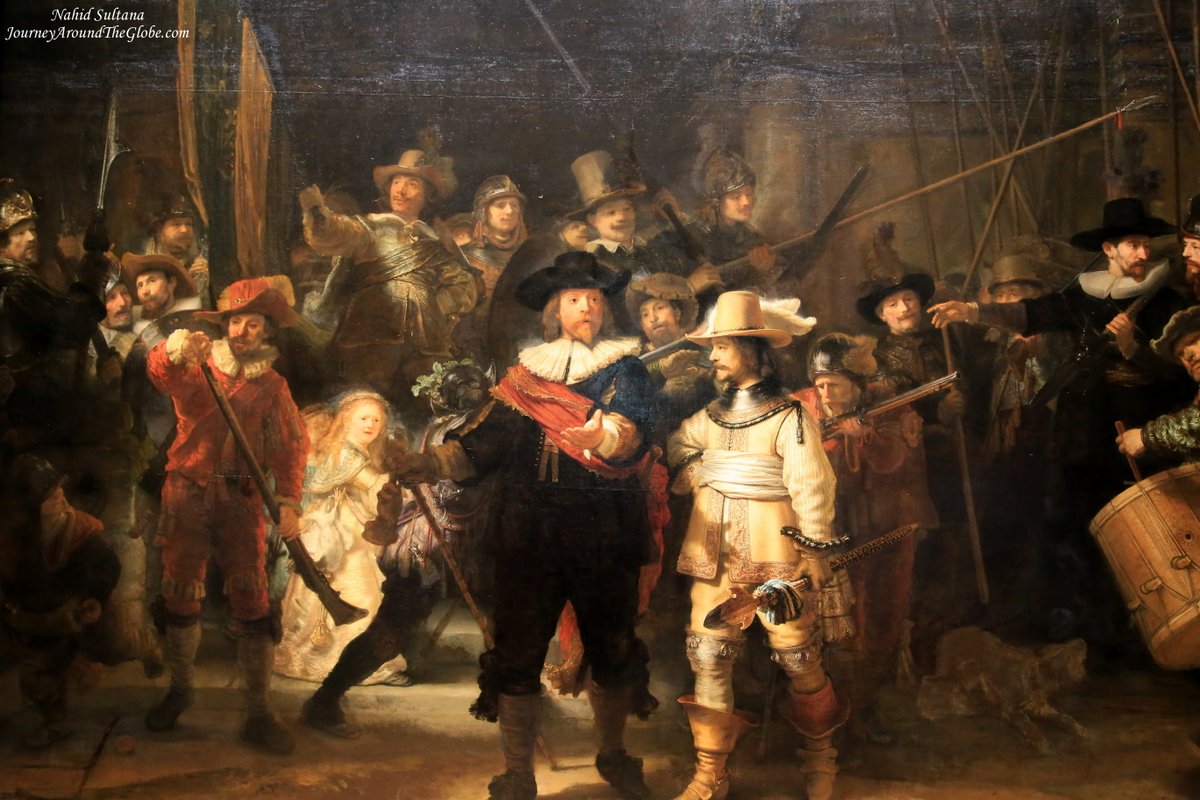
The museum has unique collections of some of the extraordinary masterpieces of famous Dutch painters like Rembrandt, Van Gogh, Vermeer, and many other medieval and contemporary artists. Arts and artifacts here are from 1100s up to 2000s. Delft collections and other ceramics/potteries left me in awe for more. There is also a small portion of Waterloo, ship models, dolls’ houses, art nouveau, arms, jewelries are just some of the sections you have to visit in Rijksmuseum.
Rijksmuseum is located near Museumplein and the “Amsterdam” sign. Ticket is 15 euros per adult and free for anyone below 19 years of age. Guided tour is available for 5 euros only which takes about an hour. We toured the museum by ourselves and it took about three hours…may take more for others if you take time to go thru everything. There are some cafes/restaurants inside the museums as well as a big gift shop. Despite having hundreds and thousands of visitors each day, the staffs of Rijksmuseum is extremely helpful and friendly.
AMSTERDAM by BOAT: I couldn’t leave Europe without taking a boat ride in the canals of Amsterdam at least once. Opposite of Rijksmuseum, there were few boat companies who offer different options for canal tours. The one we took was “Lovers”. It was a 45-minutes ride which starts in front of the museum and took us to the big canal near Central Station. We were dropped off very close to the main train station. The boat runs thru historic buildings and landmarks like Anne Frank’s House and famous churches and cathedrals. You also have the option of getting off at any particular spot and get on the boat again when you are done.
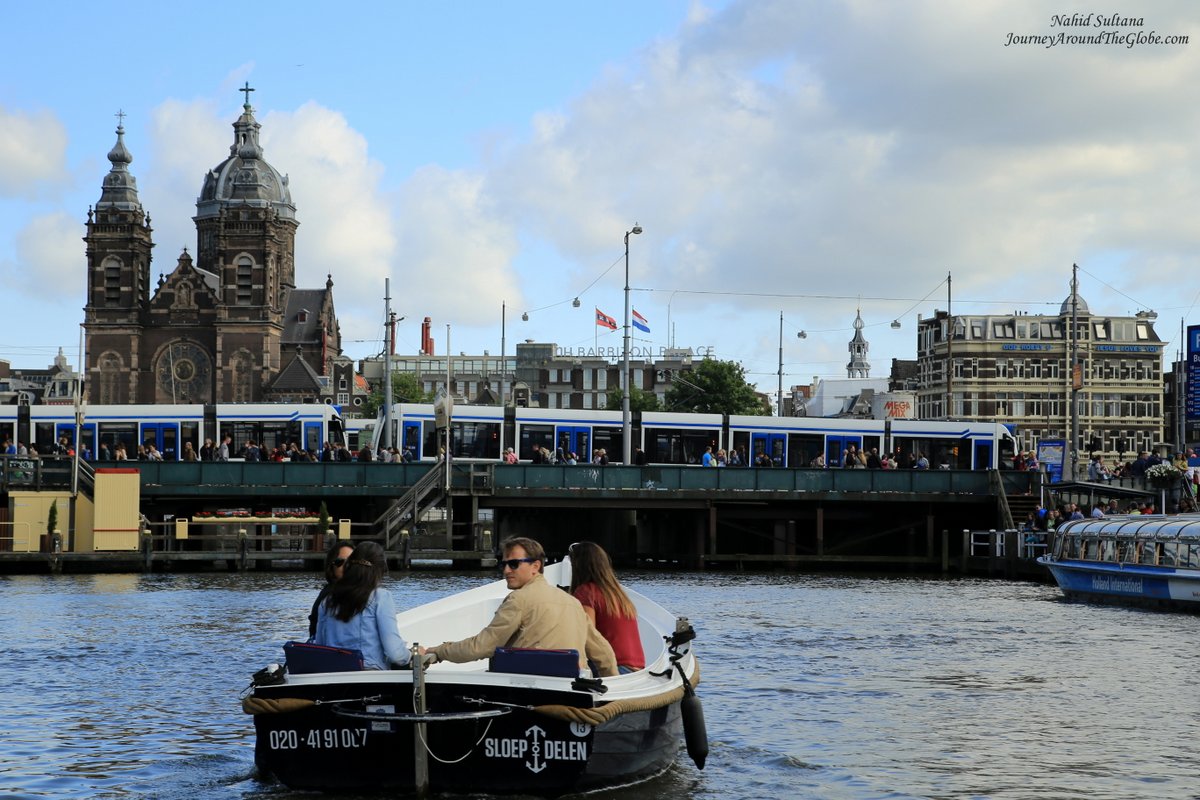
Our one-way ticket was 10 euros per person. Round trips are also available for 14 euros which is for 1 1/2 hours ride.
Thanks for being with me in all my journeys. I still have many places left that I need to post about…keep in touch.
Share this:

Waking up in Belgrade, Serbia
BELGRADE, SERBIA: Local name of Belgrade is “Beograd” which means the “White City”…not sure how the capital of Serbia got its name, but it is one of the diverse metropolitan and booming cities in the Eastern European Bloc.
The city was shaped by unique characteristics of Ottomans and Austro-Hungarian emperors. After the formation of Kingdom of Yugoslavia, Belgrade became the capital of the whole federation. And it stayed as the capital of Serbia after Yugoslavia broke into smaller countries.
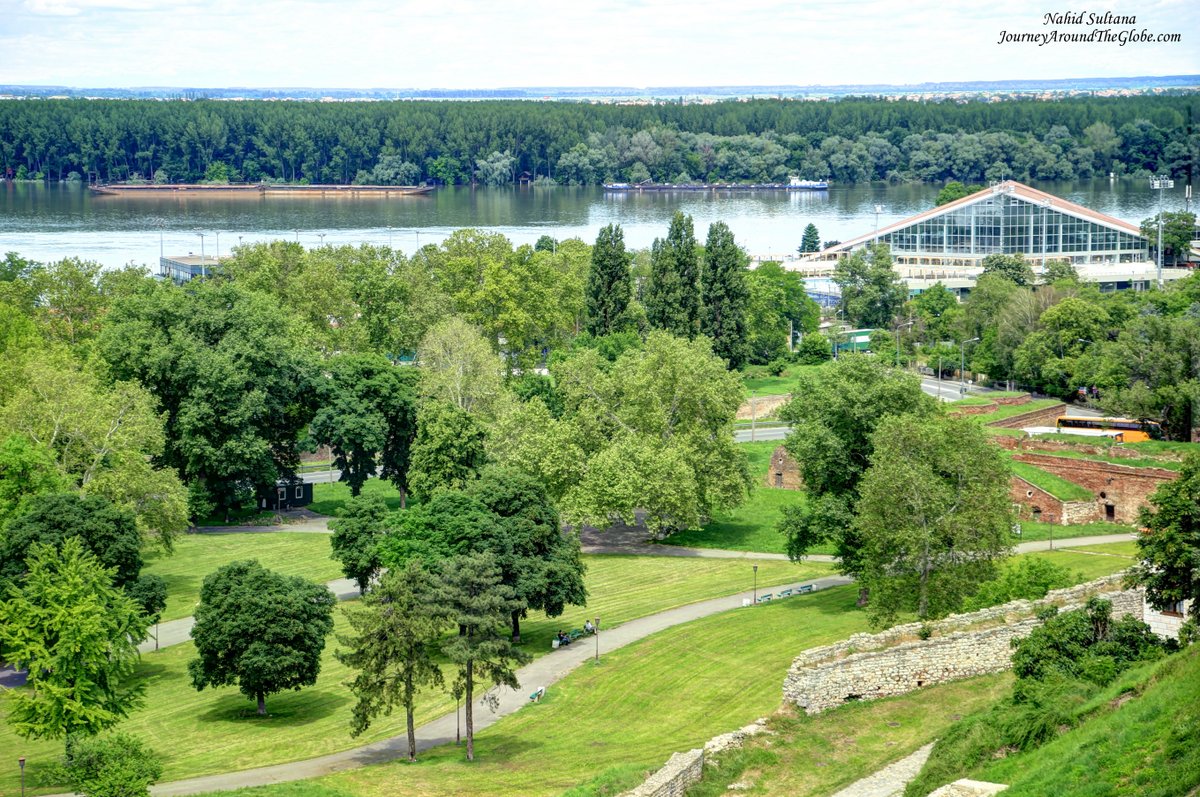
While it may not be a typical European touristic spot, the city is an energetic and a thriving place with lots of things to do and see.
TIME of TRAVEL: This is a bit sad that Belgrade was our last trip in Europe in airplane before leaving for our home in the US. We will take few more trip before leaving Belgium but those will be all by road. We flew to Belgrade end of May, 2014. Fortunately, we had a stopover in Rome, Italy for few hours and we managed to take a taxi to Rome city center and got to spent little more than two hours. It was nice to go back to the Eternal City after more than two years and pass by Trevi Fountain, Pantheon, and Piazza Navonna one last time. The weather in Belgrade was good, pleasant during the day and slightly cold in the evening. Luckily, we got no rain.
OUR HOTEL: We stayed in Hotel Srbija Garni, about ten minutes’ walk from Knez Mihailova Street. The hotel is by a big street (Bronkova) surrounded by some old buildings and many restaurants/fast foods. We had free good quality breakfast buffet and Wi-Fi. Although we didn’t have any car with us, the hotel provides parking garage for its customers. The people were pretty helpful giving us all the information on the city and what to do and see in Belgrade. Our room was pretty spacious too, decorated with contemporary and trendy furniture, art décor, and clean linens. I would recommend it to anyone visiting Belgrade.
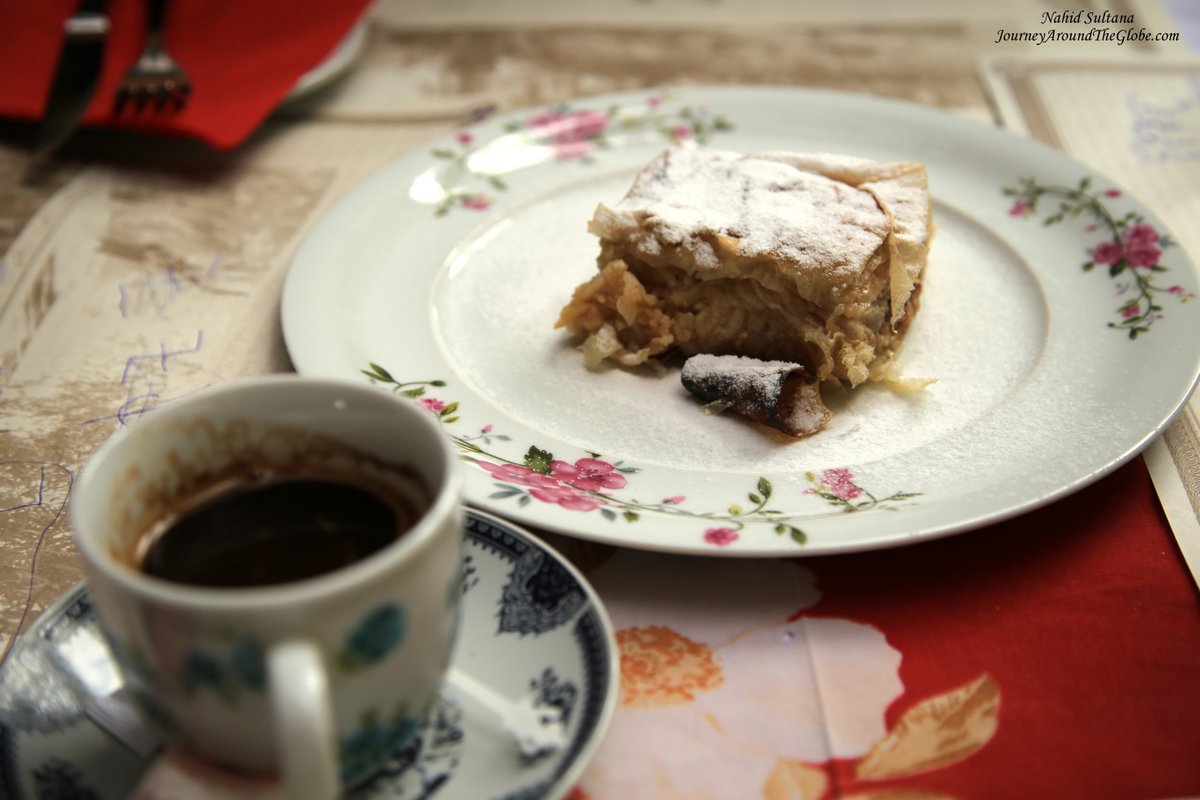
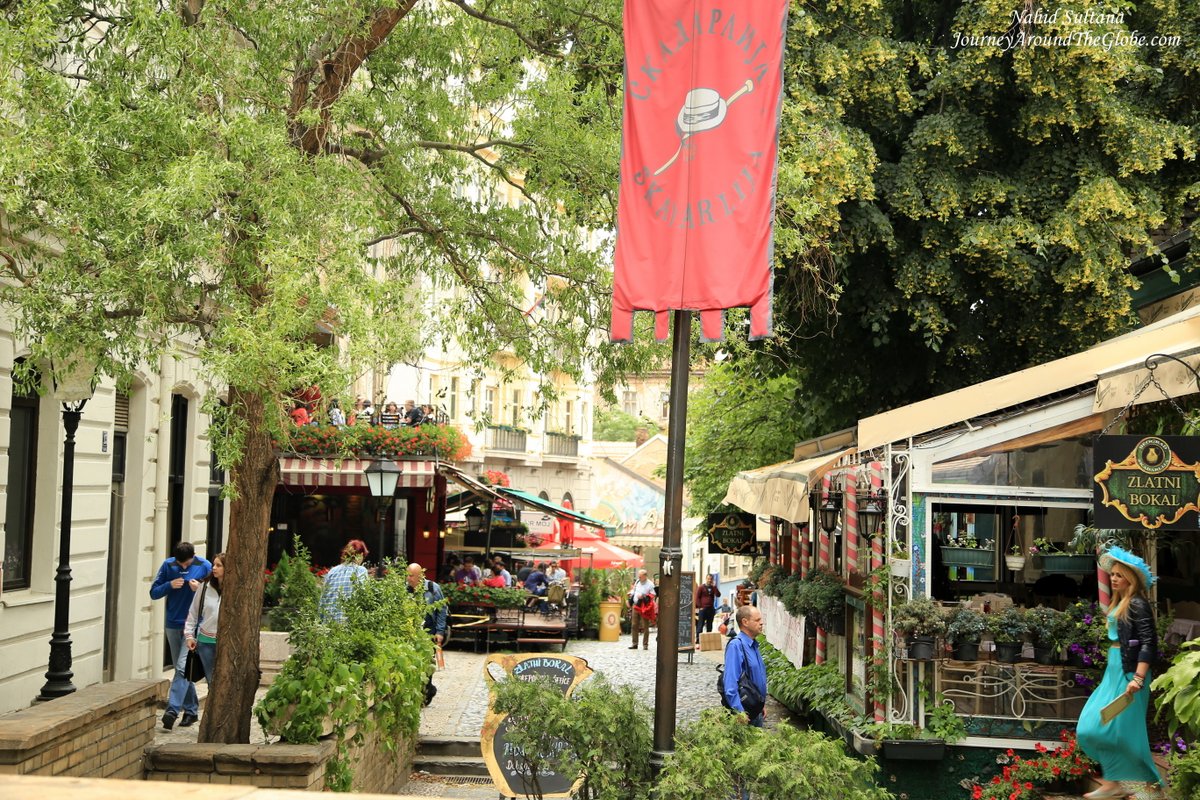
EATING and SHOPPING: Serbian food is very similar to Turkish food, just like other Balkan countries. Since we made a big Balkan tour last month during the Easter Break of 2014, we mainly had pizza, Chinese, fast food in this trip. Skadarlija is a fantastic place to try local dishes in an alluring atmosphere. We had Serbian coffee (again, very similar to Turkish coffee) and a slice of apple pie in a restaurant called Zlatni Bokal. Our last lunch in Belgrade was in a good Serbian place near our hotel. I can’t remember its name but the food was delicious for its price. We had fried cheese, fish soup, grilled trout with spinach and potatoes, and baked fish. What we saw in other Balkan countries is true in Belgrade too…food is very reasonable and cheaper than western European countries. You can get big dish of quality cuisine for around 7/8 euros in decent restaurants.
Entrance to Belgrade Fortress from Knez Mihailova Street is a good place to buy souvenirs. These are small carts that sell some attractive local trinkets for good prices. We bought a ceramic vase with two Serbian dolls embossed on it and a set of glass jars hanging from a wooden holder. They both were under 12 euros each. Other than these, Serbian dolls, ceramics, wooden bear/water bottles are very traditional of this country. You will find some carts on Knez Mihailova Street too selling t-shirts, post-cards, and small stuffs.

PLACES WE’VE VISITED: We spent almost 2 ½ days in Belgrade. Honestly speaking, we could be done with all the things we wanted to see in about a day or little more and may be keep another day to make a daytrip to nearby somewhere. But our little girl fell sick and had high fever during this trip, so we decided to take it slow and do little a day. On our first day we visited Knez Mihailova Street, Belgrade Fortress, Belgrade Cathedral, and Republic Square. Day 2, we took a taxi to St. Sava Cathedral, then to St. Mark’s Church, Nikola Pasic Square, and Skadarlija. Last day our flight was in the evening, we took a taxi from our hotel to Tito’ Mausoleum and House of Flowers and that was it for that day.
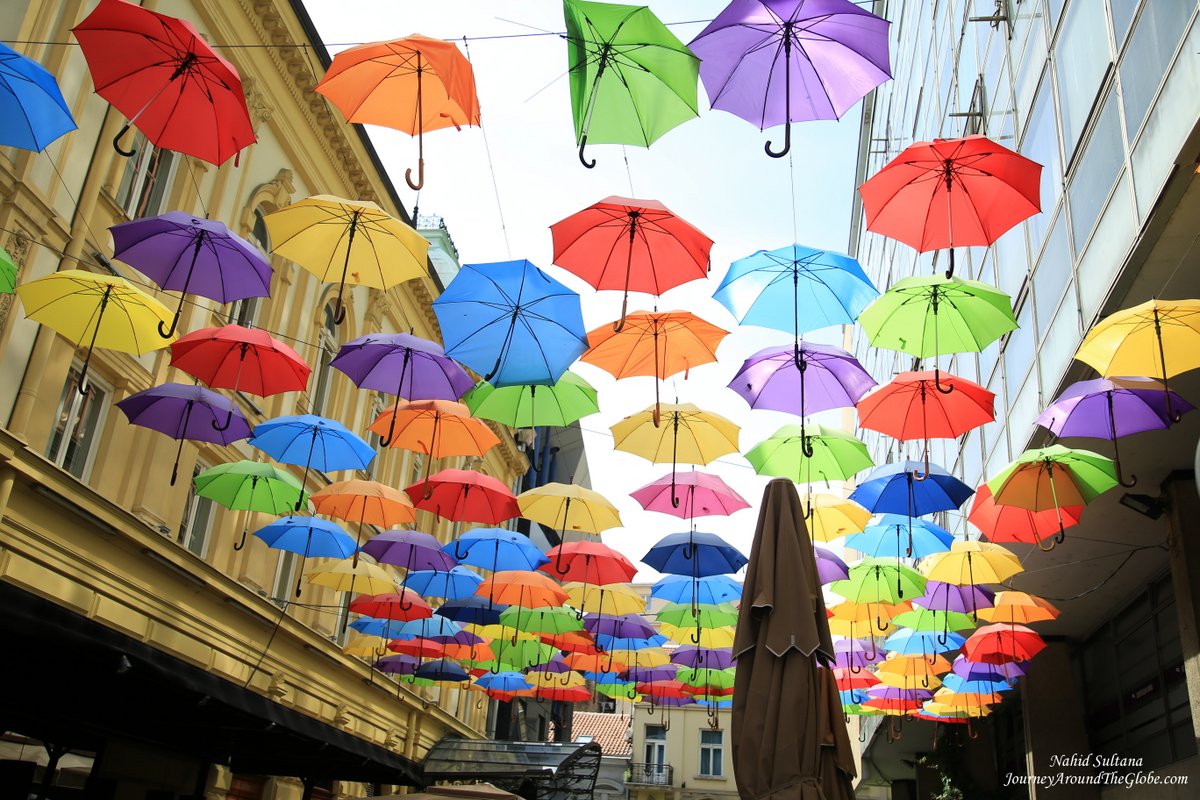
One of the place we could have gone to was Zemun district which is supposed to be a nice place to hang out that has plenty of restaurants and pretty neighborhoods. Moskva Hotel is a historic building which once was the Russian house at one point. If you are interested in visiting church, most (if not all) of the churches in Belgrade were built 1931 and later. Other than the churches I’ve listed below you can also visit Church of St. Alexander Nevsky, Church of Holy Virgin, and Monastery Rakovica. From museums, the National Museum, Historical Museum of Serbia, Museum of Serbian Orthodox Church, Gallery of Frescoes, Military Museum inside Belgrade Fortress, and Nikola Tesla Museum should be nice to tour around.
1) KNEZ MIHAILOVA STREET: This is the main pedestrian street of the city where we had our first dinner and came back again next morning. It seemed like this place is always crowded with locals, tourists, and artists. Numerous cafes, restaurants, and trendy stores (like Zara, Sephora etc.) stand on both sides of this street. It is a long stretch of lively path with some fountains, a perfect place to start your tour in Belgrade.
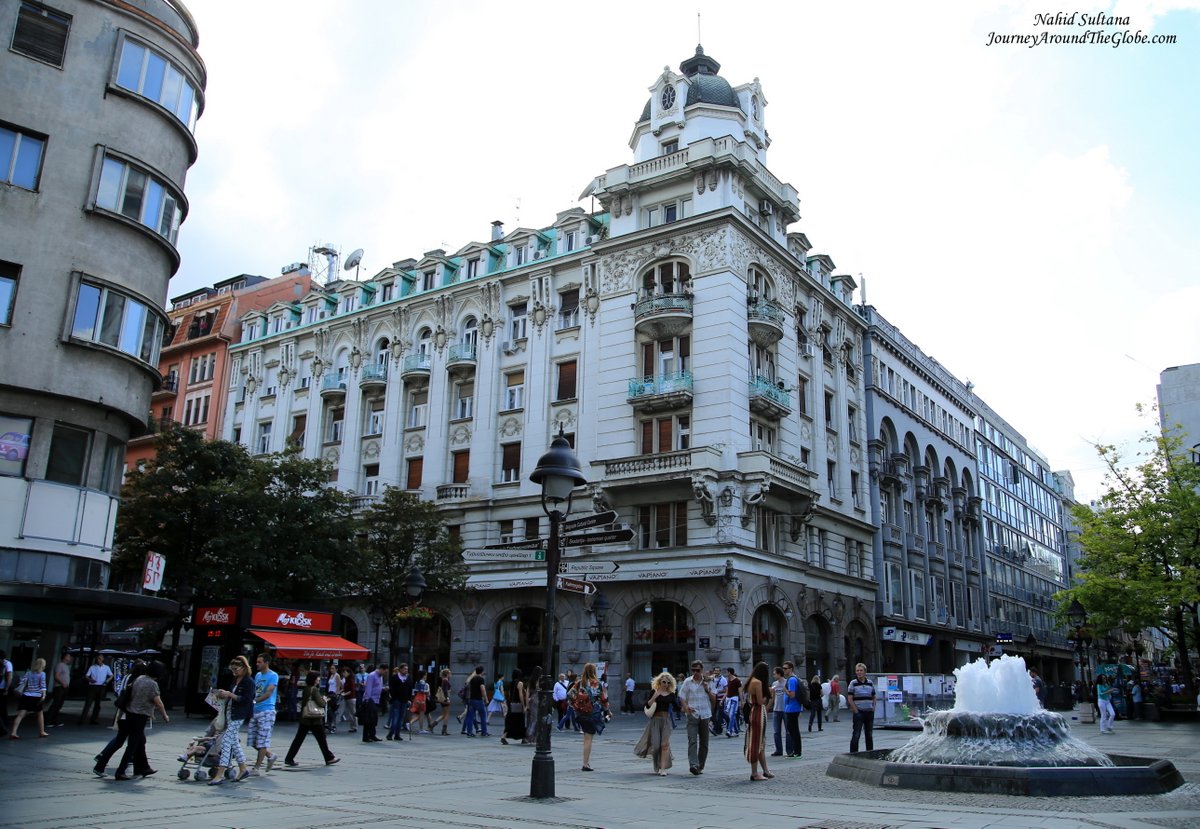
2) KALEMEGDAN – BELGRADE FORTRESS: Our first morning in Belgrade, we started our tour from one end of Knez Mihailova Street and walked all the way to the other end to Kalemegdan or Belgrade Fortress. Here are some of the important spots of the fortress:
Monument of Gratitude to France is a sculpture at one entrance of this fortress which was erected in 1930 in token of gratitude to France for its help to Serbia during WWII. A gate thru which we entered the inner ground of this fortress, called Stambol Gate, was built around 1750. Another gate, called Karadjordje’s Gate of Kalemegdan is from the 18th century. You will also see a guardhouse from 19th century which houses the National History Museum Gallery at present time. And the Military Museum here was established by Prince Milo in 1878. The first exhibition in this museum was on the occasion of marking the centenary of the First Serbian Uprising. In the course of the first siege of Belgrade in 1718, the Austrians built a large gunpowder magazine at one section of the fortress which was a safe storage for gunpowder. Corner tower of upper fortification is from the first decades of 15th century. In the 18th century, it was the seat of fortress commander, and since 1964 it houses the National Observatory. The half-timbered looking square house is the Institute for the Protection of Cultural Monuments of Belgrade which was established in 1960, for the purposes of exploration, studying, evaluation, and protection of the cultural and historic heritages of Belgrade and of Belgrade Fortress. There is also a tomb, known as Tomb of Damat Ali Pasha “The Conqueror of Morea” who fell in the Battle of Petrovaradin in 1716. Sahat Tower (Clock Tower) can be seen from miles away and is an iconic landmark of this fortress.
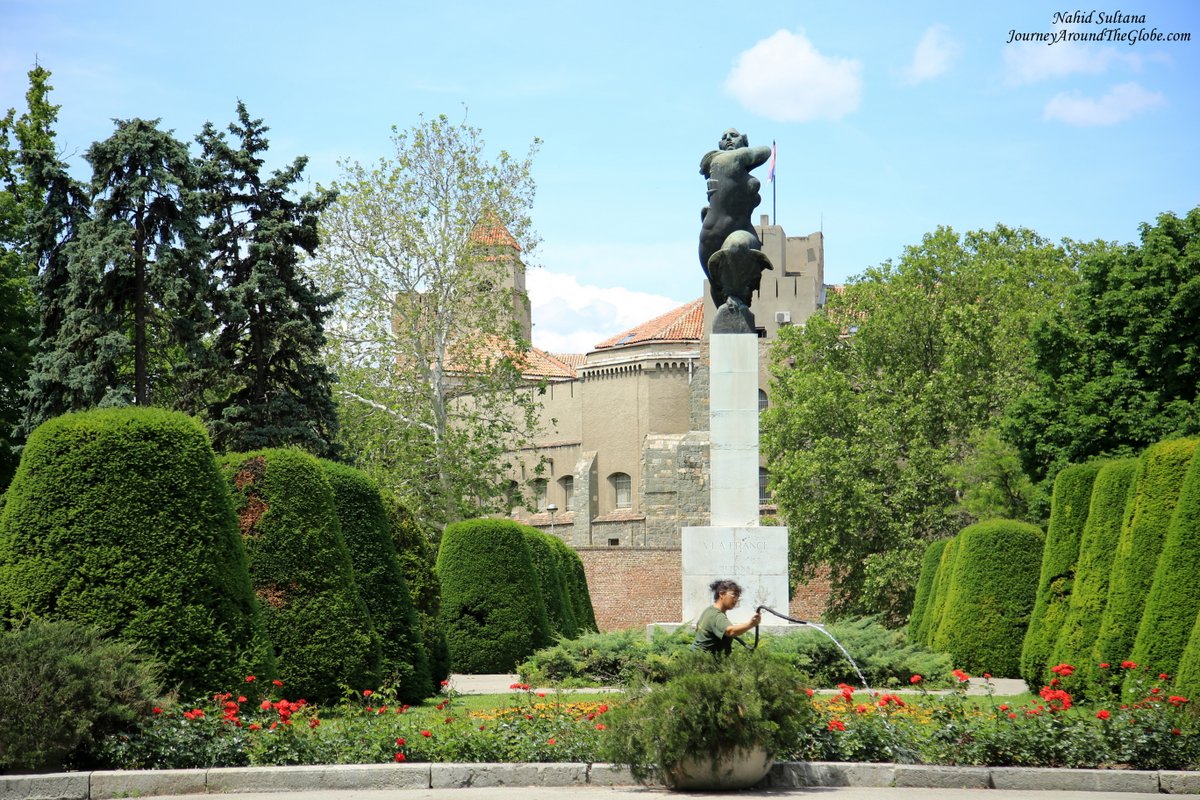
There aren’t much left of the original fortress. This is more like a central park of Belgrade now. Many ruins and old walls cover some portion of the complex. Overview of the confluence of River Danube and River Sava is something spectacular to see from here. Also, sunset is supposed to be a nice one from the hill, although we couldn’t watch it.
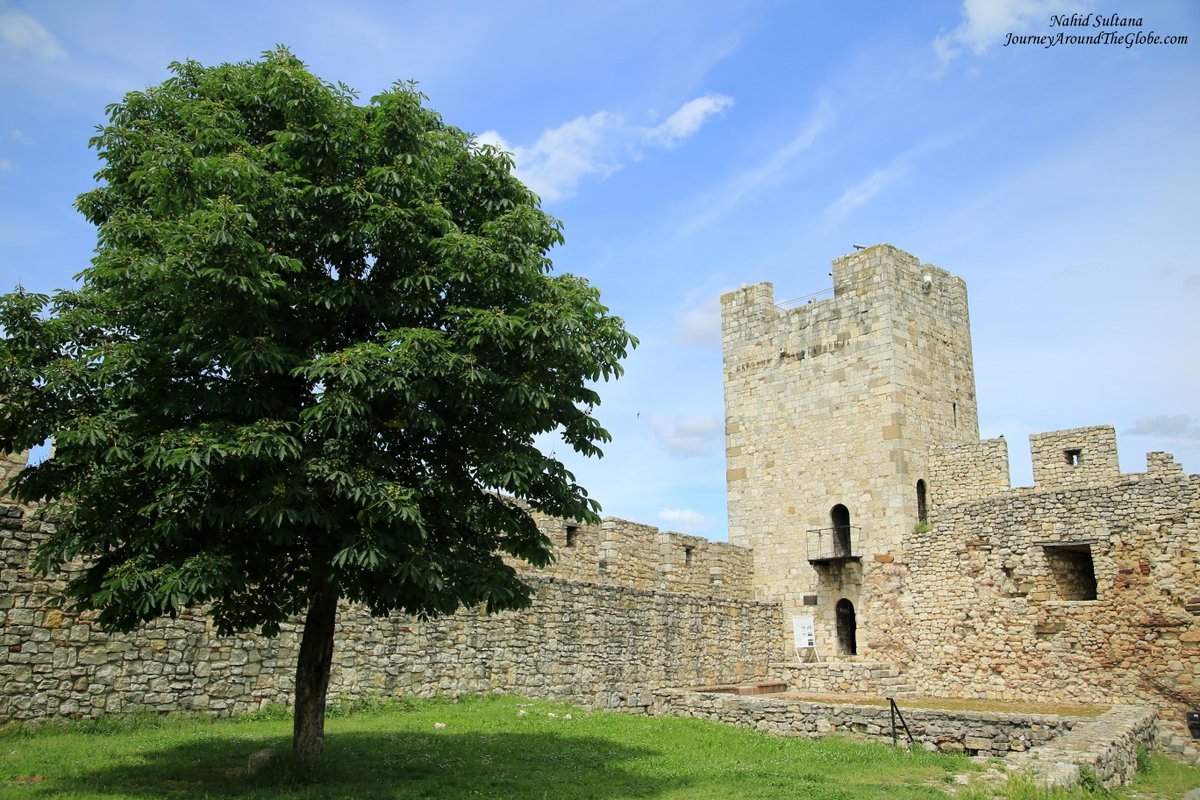
It’s free to roam around the fortress ground. We didn’t go to the Military Museum; it contains old tanks and weapons. The fortress is located at one end of Knez Mihailova Street in the old part of Belgrade. There are couple entrances to the fortress. We entered from Knez Mihailova Street, you just have to keep walking straight all the way and you will be right in front of Monument of Victory near Kalemegdan.
3) BELGRADE CATHEDRALE: From Kalemegdan we started walking towards Knez Mihailova Street again and from there we just followed the crowned steeple of Belgrade Cathedral. This Serbian Orthodox Church is also known as St. Michael’s Cathedral. Interior of the cathedral is very ornate and luxuriously decorated. Stained glass windows with different saints’ portraits, decorative altar, painted walls and ceilings…everything is very richly adorned. There is no charge to enter and it’s located opposite of Residence of Princess Ljubica. Taking pictures inside is not permitted.
4) REPUBLIC SQUARE: Republic Square is the main big square here, and also a meeting point. It’s on the other end of Knez Mihailova Street, opposite of Belgrade Fortress. You can see statue of Serbian Prince Mihailo Obrenovic riding on his horse back in the middle of the square. It was erected on 1882. This may be a good point to spend few hours visiting National Theater and National Museum. We were interested in National Museum but it was under major reconstruction and we were told some of its sections were closed. We didn’t go inside any of these buildings, just stayed in the square for few minutes and off to our hotel.
5) THE CATHEDRAL of ST. SAVA: Next day we hired a taxi and drove to St. Sava Cathedral. This is the biggest Eastern Orthodox Church in the world. The original construction started in 1935 but interior still hasn’t been finished yet. Main altar, dome, wall, floors, and ceiling are all under construction. From its outside grand look and inside glimpse of some work, you can tell that it will be something extraordinary when it’s done. Entrance was free to this cathedral.
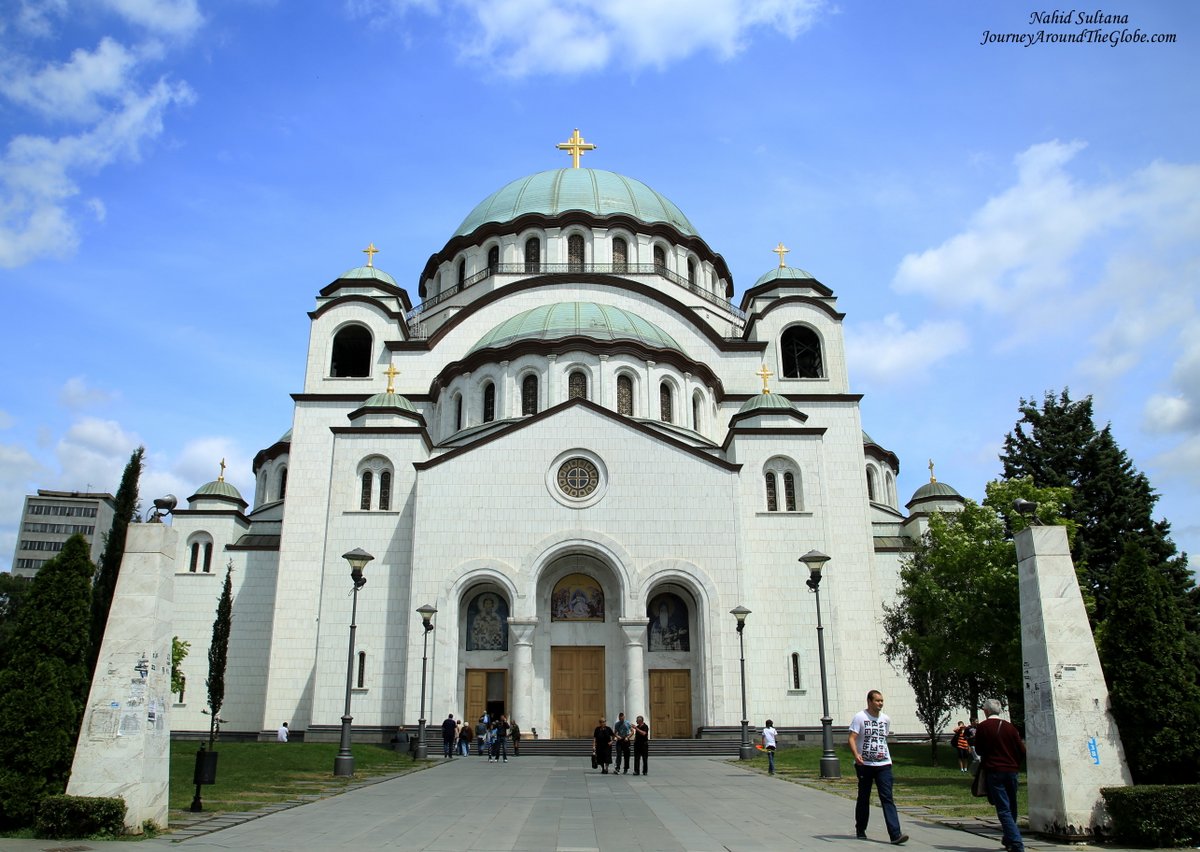
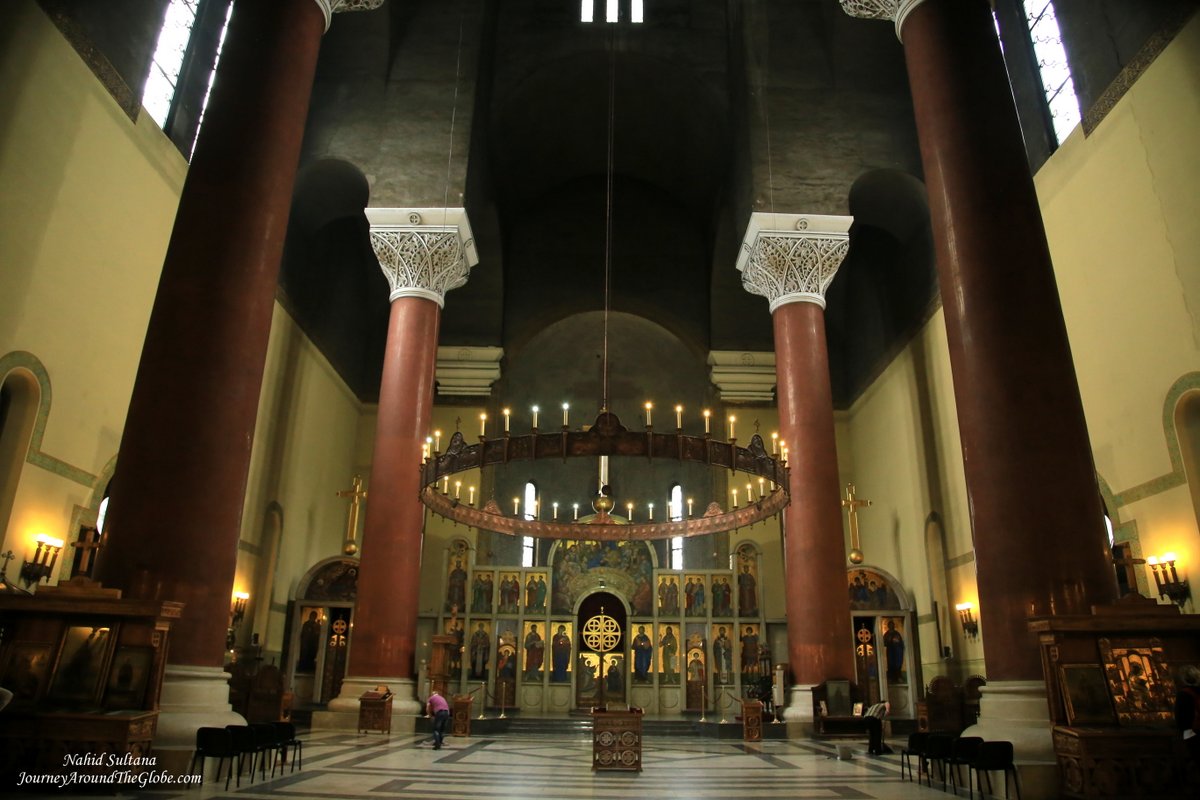
6) ST. MARK’S CHURCH: From St. Sava, we took another taxi to St. Mark’s Church. Just like other temples in Belgrade, this one is also a recent building from 1931. It’s a nice building from outside; inside is not very ornate but the altar and high dome are pretty. There are some portraits of saints on the main altar and like other orthodox churches, this one doesn’t have any sitting arrangements for the worshippers. It’s free to enter the church.
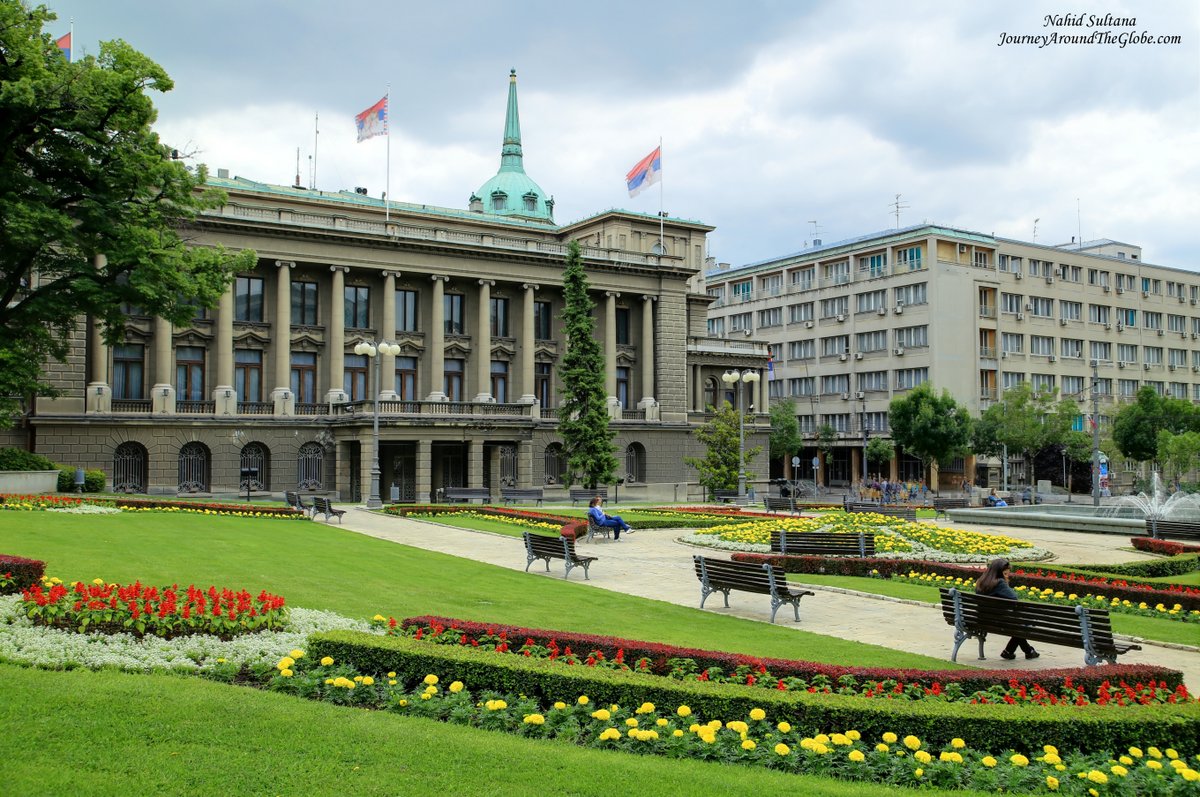
7) NIKOLA PASIC SQUARE (Old Royal Palace, New Palace, and National Assembly of Serbia): Nikola Pasic Square is a huge square that houses some of the important buildings of the city and country. Three of them are the National Assembly of Serbia, the Old Royal Palace, and the New Palace. National Assembly of Serbia and the Old Royal Palace are located opposite of each other divided by a major street in the middle. National Assembly is an elegant building with few domes at one side of Nikola Pasic Square. We saw the Old Royal Palace from the other side of its garden. Built in 1881, the Old Royal Palace is now used as Belgrade Town Hall.
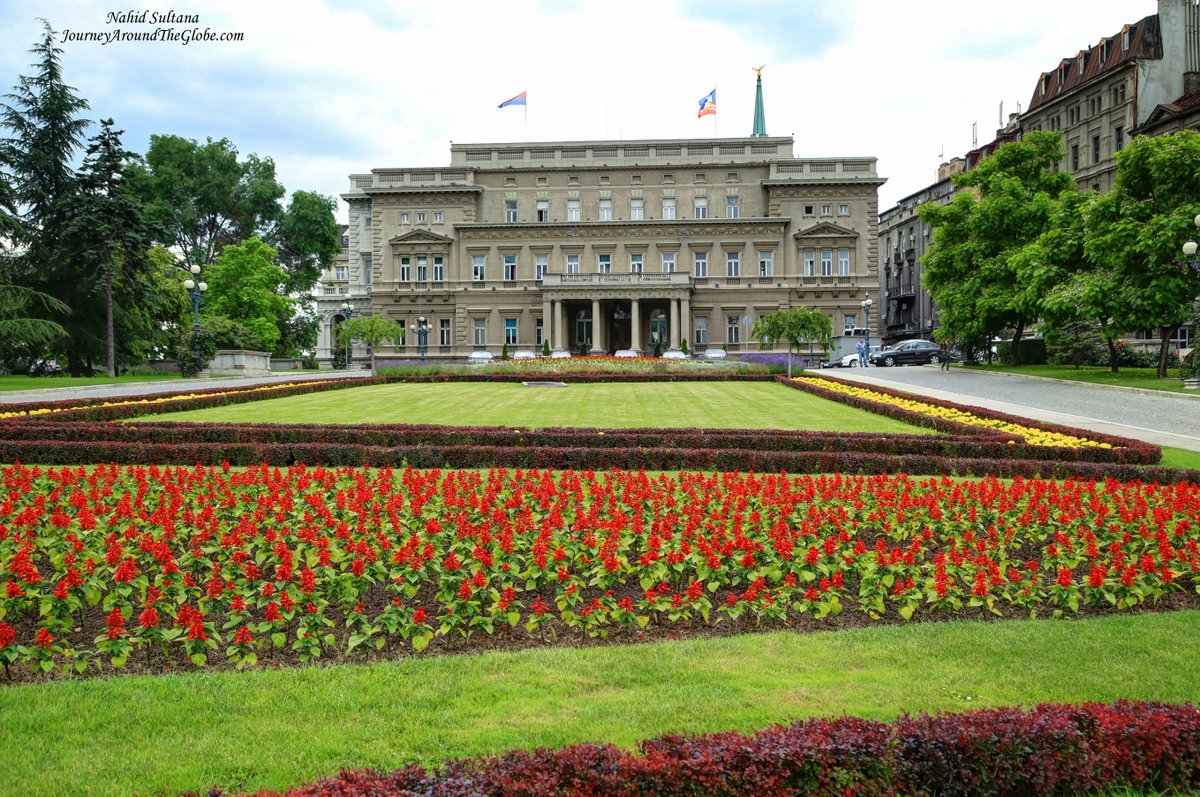
Beside the Old Royal Palace, is the New Royal Palace. The palace was built in 1922, today this is the official seat of the President of Serbia. There is a beautifully maintained park/garden by the palace, a nice spot to sit down.
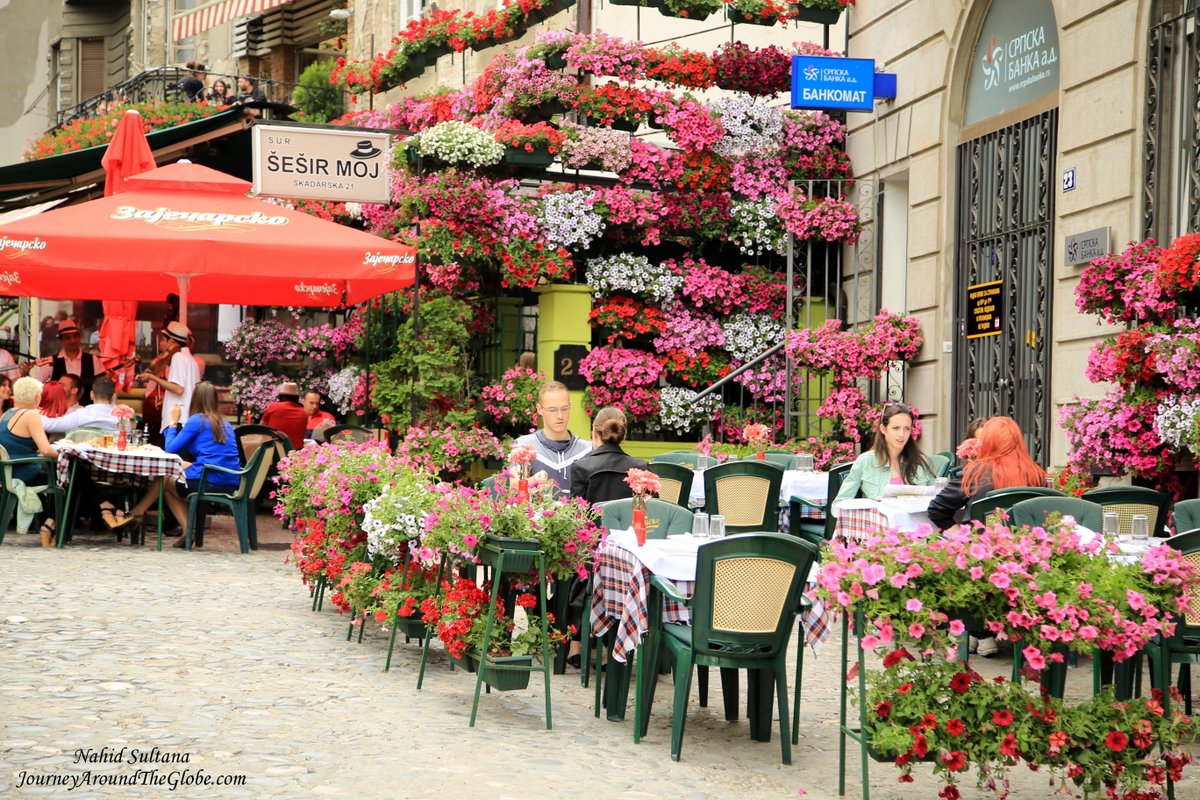
8) SKADARLIJA (Skadarska Street): Skadarlija is an enchanting 800m long pedestrian street in the old part of Belgrade. This is actually the oldest part of the town now paved with cobblestone and decorated with flower in every corner and artistic items. Filled with traditional and international cuisines and live music, this is a perfect place for meals or drink. You can find kebab, Greek style salad, and other Balkan dishes in these places. There is an old sabilj/public fountain at one end of this alley. There is a beautiful oil painted mural at one section of this street giving it an atmospheric vibe.
This is a small note we saw on an information board on Skadarlija. A caricaturist/writer, Zuko Dzumhur, wrote this on behalf of the street. I think it pretty much sums up its past and present. Here it goes: “My name is Skadarlija or Skadarska Street, whichever you prefer. I am no boulevard, I am no avenue. Neither am I a highway. I am a simple, steep, winding, and poorly cobbled alley in the heart of Belgrade. And that would be everything worth saying about me if I did not have my Bohemian past and if I did not have my dilapidated roofs, rickety chairs, and an open ditch.
My guests have always been famous men of letters. My first guests were Belgrade’s actors, poets, directors, painters, and writers.
I have also hosted ministers and esteemed governors; I have hosted saddlers, boza sellers, kebab restaurant keepers, school dropouts, and learned professors. They all sand and partied under my roofs and on my cobble stones.
And then, all of a sudden, I was surrounded by a large, noisy, million city. New, proper streets were built as well as stately mansions. Luckily, I was either forgotten or bypassed.
My enemies did build several unwieldy, ugly-looking buildings on my sides in order to damage and ruin me. But my friends and those close to me, fought to preserve me and to save at least a small part of my spirit and my ancient glory.
They know very well that I am an inexhaustible source of human joy and craziness and I am sincerely grateful for their kindness.”
9) MUSEUM of The HISTORY of YUGOSLAVI and HOUSE of FLOWERS: On the 3rd and last day in Belgrade we had only few hours to see some last minutes stuff in Belgrade before our flight in the evening. We were interested in knowing about the former Federation of Yugoslav…how the provinces of Yugoslavia lived their lives, their systems, why it worked, and why it broke out into pieces, what went wrong, and a history from Serbian perspective. We visited the other former federations of Yugoslavia, like Serbia, Slovenia, Macedonia, Montenegro, Croatia, and Bosnia and heard their sides of the stories. This museum really didn’t answer all our questions but it came closest to what we wanted to know.
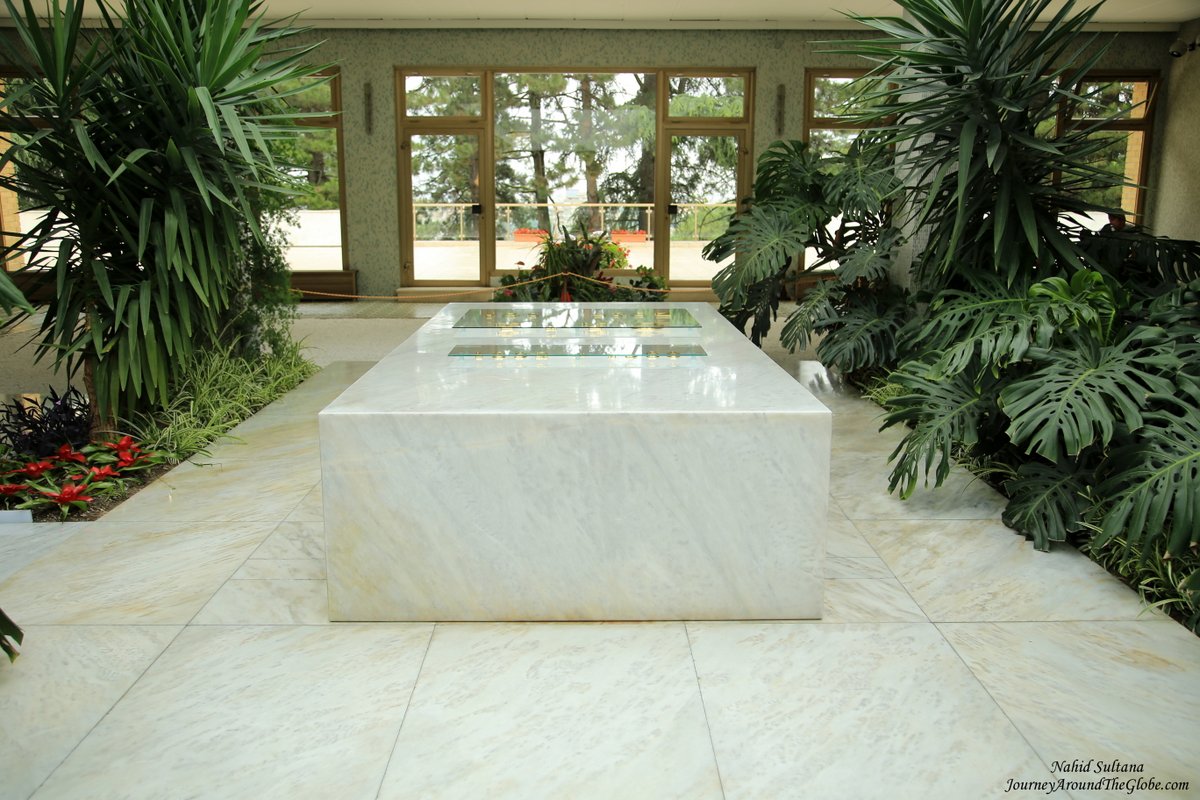
Museum of History of Yugoslavia was built in 1996. This was originally, Yugoslavia’s charismatic dictator Josep Broz Tito’s summer house. Many of his personal belongings and gifts are displayed here in different sections of this museum. Museum’s ground and the garden have many statues and fountains. The House of Flowers was built in 1975 as a winter garden, a facility for work and relaxation of Tito and his wife, in the close vicinity of the official residence where they lived. Their personal wishes were honored, and both were buried in the central area of the garden in 1980 and 2013 respectively.
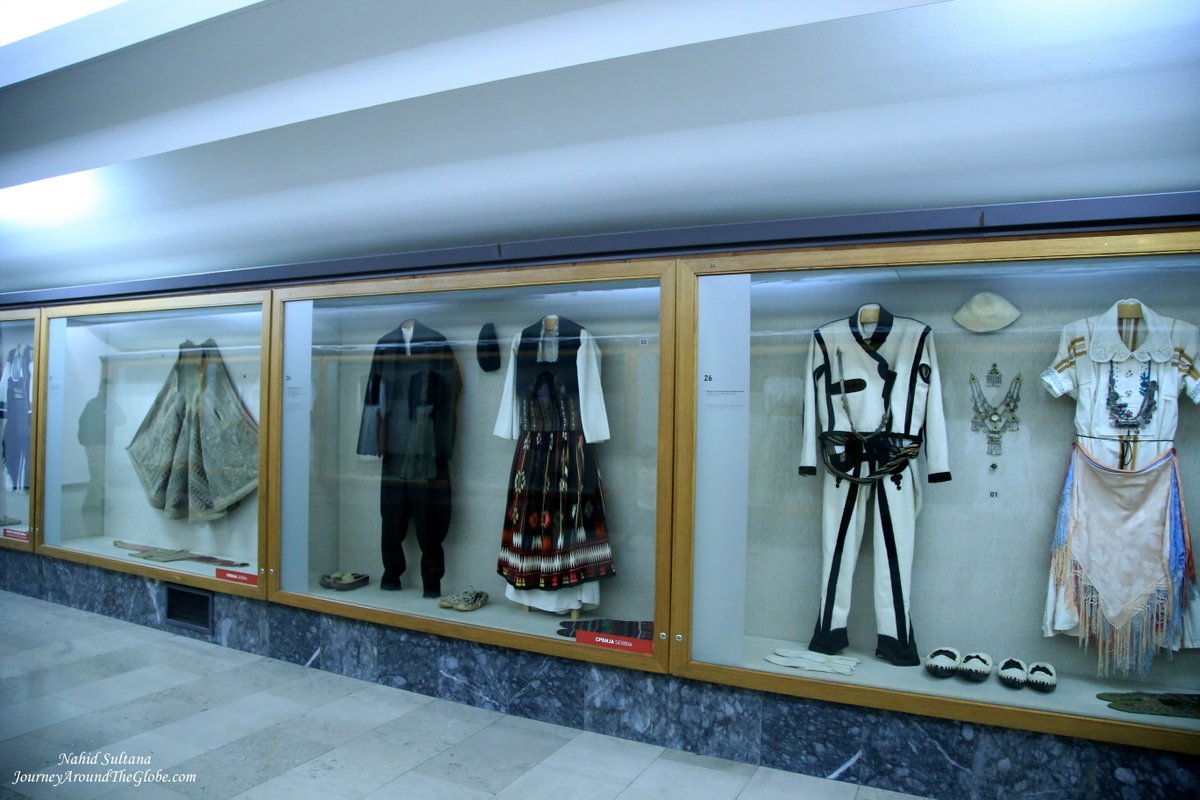
Old Museum and the ethnographic collection of the Museum of Yugoslav History has a unique collection of rarities. The permanent exhibition “Old Museum” focuses on the exclusive quality of certain items. They have artifacts (like handmade weapons, traditional costumes) from the former Yugoslavia and gifts from around the world given to Tito in his years as president. This section of the museum is known as “Around the World” to emphasize the variety of origin of the items. This portion contains more than 4000 items. These include vivid national costumes (gifts from throughout the former Yugoslavia and other countries including Mongolia, the USSR, India, Burma, Ethiopia, Mexico, Chile, and Bolivia), richly decorated towels, hand-woven rugs and tapestries, folk instruments, and hand-crafted weapons from many parts of the world. The ethnographic collection also boasts a variety of handcrafts such as old carved wood chests, pipes, chibouks, spinning wheels, and a vibrant collection of dolls in national costumes.
Ticket is 200 denars per adult and 100 denar for kids. We got a free guided tour with the ticket. She was a professor and took us around the garden, House of Flowers, and Ethnographic Museum as she spoke and gave us some brief information. Guide tour is available for the museum for free in English every Saturdays and Sundays at 11 am.
Share this:

Business Excellence Award 2020 from AI Global Media for The Most Entertaining Personal Travel Blog – Pacific Northwest USA

Top Posts & Pages


Authors
 Globe Runner
Business Excellence Award 2020 for The Most Entertaining Personal Travel Blog – Pacific Northwest USA

Business Excellence Award 2020 from AI Global Media

 Journey Around The Globe